USS Wisconsin (BB-64) | |
|---|---|
| 国家 | 美国 |
| 类和类型 | 爱荷华州级战舰 |
| 推出 | 1943年12月7日 |
| 家庭港 | 诺福克弗吉尼亚 |
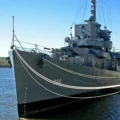
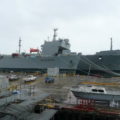
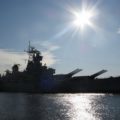
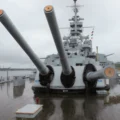
威斯康星州 (BB-64) is an Iowa-class battleship, the second ship of the United States Navy to be named in honor of the U.S. state of Wisconsin. She was built at the Philadelphia Naval Shipyard in Philadelphia, Pennsylvania and launched on 7 December 1943 (the second anniversary of the Pearl Harbor raid), sponsored by the wife of Governor Walter Goodland of Wisconsin. During her career, Wisconsin served in the Pacific Theater of World War II, where she shelled Japanese fortifications and screened United States aircraft carriers as they conducted air raids against enemy positions. During the Korean War, Wisconsin shelled North Korean targets in support of United Nations and South Korean ground operations, after which she was decommissioned. She was reactivated on 1 August 1986; after a modernization program, she participated in Operation Desert Storm in January and February 1991.
源: 威斯康星号(BB-64)在维基百科上
| USS Wisconsin BB-64 Walk Around | |
|---|---|
| 摄影师 | 弗拉基米尔·亚库博夫 |
| 本地化 | 未知 |
| 照片 | 200 |


另请参阅:


The Peak of American Dreadnoughts
这 USS Wisconsin (BB-64) 是一个 Iowa-class battleship, designed for the “Fast Carrier Task Forces” of WWII. These ships were unique because they combined heavy armor and massive 16-inch guns with a top speed exceeding 30 knots—allowing them to keep pace with modern aircraft carriers. Built at the Philadelphia Naval Shipyard, she was the last battleship to be commissioned by the United States, marking the end of the “Big Gun” era.
| Attribute | Technical Specification (1991 Modernized) |
|---|---|
| 类 | Iowa-class Fast Battleship |
| 长度 | 887 ft 3 in (270.4 m) |
| 主要武器装备 | 9 × 16-inch (406 mm) / 50 cal Mark 7 guns |
| 次要武器 | 12 × 5-inch (127 mm) / 38 cal dual-purpose guns |
| Modern Missiles | 32 × Tomahawk Cruise Missiles; 16 × Harpoon Anti-Ship Missiles |
| Armor (Belt) | 12.1 inches (307 mm) Class A armor |
| Max Speed | 33 knots (61 km/h; 38 mph) |
| Complement | Approx. 1,800 (1980s configuration) |
Engineering Marvels: Speed and Firepower
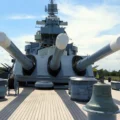
- The 16-inch/50 Cal Mark 7: These guns could fire 2,700-pound “super-heavy” armor-piercing shells over a range of 23 miles (37 km). At the peak of their trajectory, these shells reached higher than Mt. Everest.
- “Panamax” Design: Despite her massive length, the Wisconsin was built with a beam (width) of exactly 108 feet, allowing her to fit through the Panama Canal with only 12 inches to spare on either side.
- The 1980s Modernization: To counter the Soviet threat, she was reactivated and fitted with 方阵 CIWS for anti-missile defense and armored box launchers for Tomahawk missiles, making her a formidable power-projection tool in the missile age.
- Citadel Armor: The ship utilized an “All or Nothing” armor scheme, concentrating massive protection around the “citadel” (engines and magazines) while leaving non-essential areas lightly armored to save weight for speed.
Historical Legacy: “Temper, Temper”
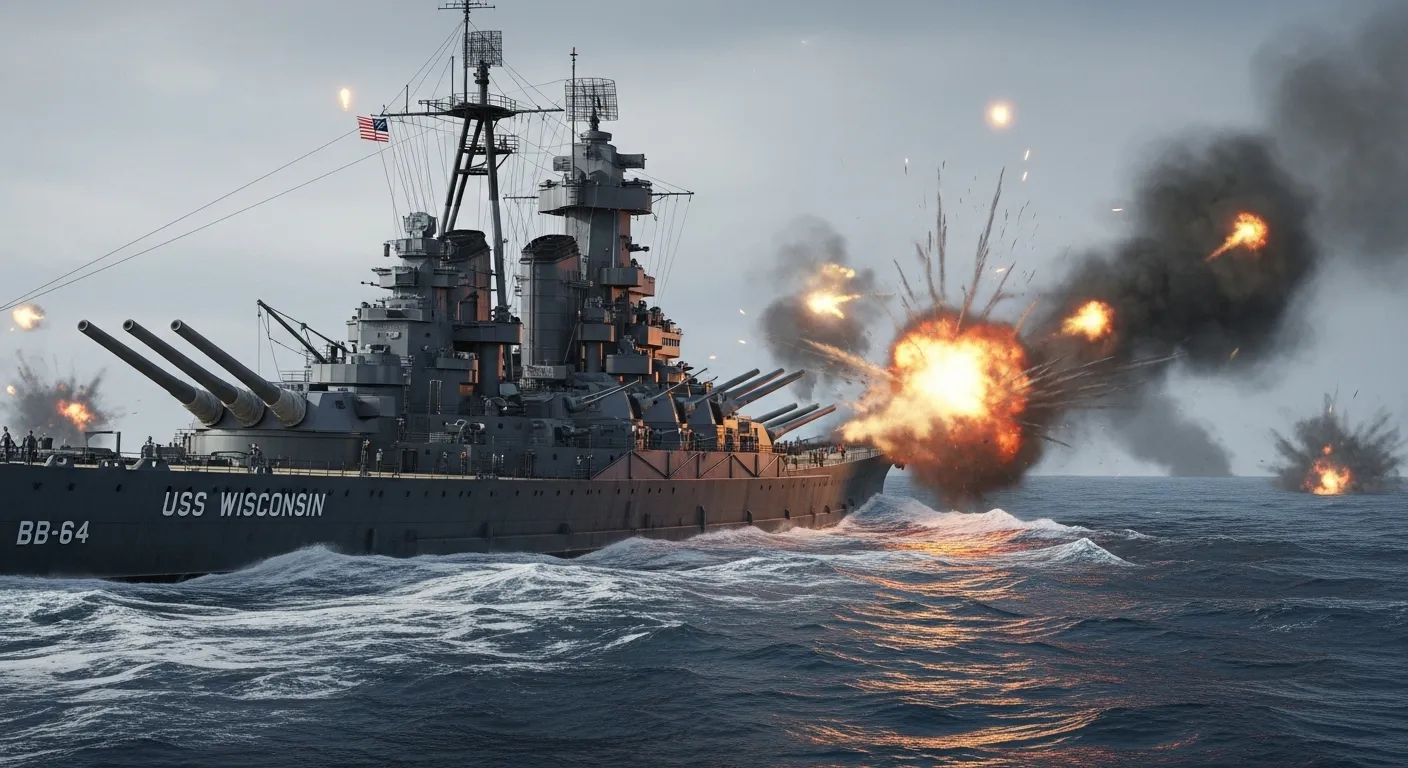
- Korean War Duel: In 1952, a North Korean 155mm battery hit the Wisconsin. She responded by firing all nine 16-inch guns at the battery’s location, completely erasing it. Her escorting destroyer, the USS Buck, famously signaled “Temper, Temper” to the battleship.
- The Big Collision: In 1956, she collided with the destroyer USS Eaton in heavy fog. To repair her bow quickly, the unfinished bow of her sister ship, the USS Kentucky (BB-66), was grafted onto her—making the Wisconsin technically part of two different ships.
- Operation Desert Storm: In 1991, the Wisconsin fired the first Tomahawk missiles of the war and served as the “Master of the Gulf,” using her drones to direct 16-inch fire against Iraqi shore defenses.
- Museum Ship: Today, she is preserved at Nauticus in Norfolk, Virginia, where visitors can walk her teak decks and tour the “City at Sea” inside her hull.
视图: 2563