Ball-Bartoe Jetwing | |
|---|---|
| 国家 | 美国 |
| 作用 | 研究飞机 |
| 首次飞行 | 1977年7月11日 |
| 建立 | 01 |
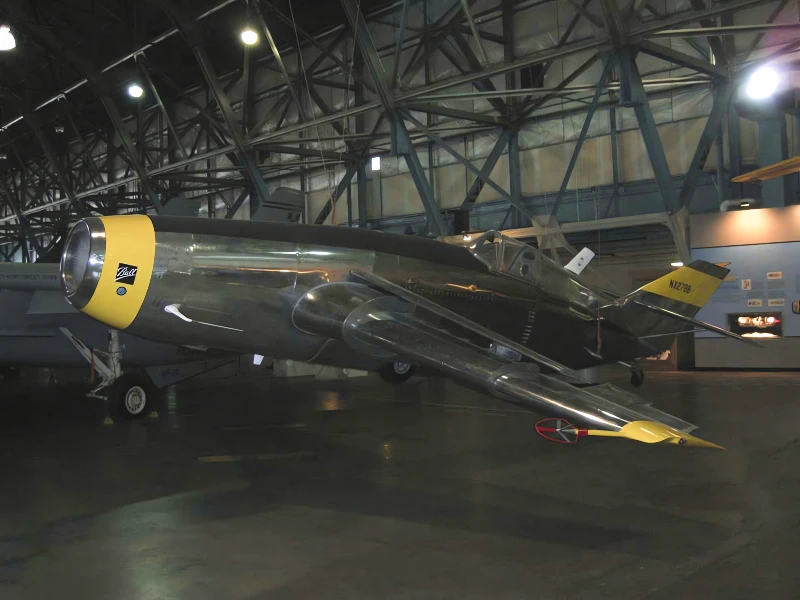
这 球巴托 JW-1 喷气翼 是一架美国研究飞机,在20世纪70年代飞行,以调查吹翼技术。
源: 维基百科上的球巴托喷气翼
| 球巴托 Jw - 1 喷气翼四处走动 | |
|---|---|
| 摄影师 | 兰迪·雷 |
| 本地化 | 落基山脉航空航天博物馆的翅膀 |
| 照片 | 24 |

另请参阅:


The Radical Coanda-Effect STOL Technology Demonstrator
这 球巴托 JW-1 喷气翼 was an experimental research aircraft built in the mid-1970s by the Ball-Bartoe Aircraft Corporation of Boulder, Colorado. Designed by Otto E. “Pete” Bartoe and backed by the Ball Corporation (better known for commercial glass jars and aerospace technology), the Jetwing was built to evaluate a radical upper-surface blown (USB) wing concept utilizing the Coanda effect to achieve extreme Short Takeoff and Landing (STOL) performance. The aircraft featured a unique propulsion layout where the entire thrust output of its small turbojet engine was duct-routed over the top surface of the wing inside a specialized “slot duct.” By directing high-velocity jet exhaust across the upper wing surface and blown flaps, the Jetwing generated immense super-circulation lift at ultra-low airspeeds, serving as a groundbreaking flight testbed for blown-lift aerodynamics.
| Attribute | Technical Specification (Ball-Bartoe JW-1 Jetwing) |
|---|---|
| 作用 | Single-Seat Experimental STOL / Coanda-Effect Technology Demonstrator |
| 船员 | 1 (Test Pilot) |
| 动力装置 | 1 × Pratt & Whitney Canada JT15D-1 turbofan engine (2,200 lbf / 9.78 kN thrust) |
| 最高速度 | ~640 km/h (400 mph / 347 knots) maximum speed | ~60 km/h (37 mph) stall speed |
| Gross / Takeoff Weight | 1,480 kg (3,260 lbs) maximum gross weight | ~1,070 kg (2,360 lbs) empty weight |
| Service Ceiling / Operational Range | ~8,200 m (26,900 ft) ceiling | ~640 km (400 miles) range |
| Wing Structure & Span | Wingspan: 6.68 m (21 ft 11 in) | Short, straight wing with full-span blown trailing-edge flaps |
| Lift Augmentation System | Upper-surface slot duct blowing 100% of engine exhaust over the inner 70% of the wing span |
| Construction Materials | All-metal aluminum alloy airframe with titanium heat-shielding along exhaust-contact surfaces |
| Production Total | 1 single prototype (N2711M / later civilian research registration) built and flown |
Design Engineering: Coanda Upper-Surface Blowing and Exhaust Nozzles
- Upper-Surface Blown (USB) Slot Duct: The defining feature of the Jetwing was its engine integration. Rather than mounting the JT15D turbofan below or inside the fuselage, the engine was mounted inside the forward upper fuselage. 100% of the engine’s bypass fan and core exhaust were routed through a flat, rectangular slot nozzle that discharged directly over the upper surface of the wing.
- Coanda Effect Lift Augmentation: As high-velocity exhaust air flowed across the upper wing curve, the aerodynamic Coanda effect forced the air stream to sheet smoothly across the wing contour and adhere to the trailing-edge flaps. When the pilot extended the flaps downward, the jet exhaust turned sharply downward with them, creating massive powered lift without tilting the entire aircraft nose-up.
- Co-Flowing Augmentor Wing: To enhance mass flow and prevent engine heat from damaging the aluminum wing structure, the exhaust nozzle drew ambient fresh air into the stream through a secondary intake cowl. This cool ambient air mixed with the jet exhaust, increasing total airflow volume over the wing while lowering thermal stress on the airframe.
- Titanium Thermal Protection: Because hot turbofan exhaust directly washed over the wing root and flap surfaces, these sections were skinned with high-temperature titanium sheet metal to withstand continuous thermal and acoustic vibration during low-speed high-thrust flight.
Operational History: Flight Testing, NASA Evaluation, and Museum Legacy
- Maiden Flight and Test Program (1977): The JW-1 Jetwing made its first flight on July 11, 1977, piloted by H.H. “Pete” Hospers. Flight testing quickly confirmed the validity of Pete Bartoe’s math: the aircraft demonstrated remarkably low stall speeds under 40 mph and extremely short takeoff rolls, taking off in less than one-third the runway distance required by conventional jets of similar weight.
- NASA Flight Research Contract: The Jetwing’s remarkable powered-lift performance caught the attention of NASA and the US Navy. The aircraft was loaned to NASA’s Ames Research Center and the University of Tennessee Space Institute (UTSI) for extensive flight evaluation, gathering baseline flight data on upper-surface blown wing concepts.
- Influence on Military Heavy Lifters: Data collected from the Ball-Bartoe Jetwing contributed significantly to the research supporting larger upper-surface blowing programs, directly influencing the development of military STOL transports like the YC-14 prototype and the operational Boeing C-17 Globemaster III (which uses a similar blown-flap technique).
- Retirement and Preservation: After fulfilling its experimental flight test objectives and accumulating dozens of test flight hours, the sole Jetwing prototype was retired. The aircraft was eventually donated to the Wings Over the Rockies Air & Space Museum in Denver, Colorado, where it remains preserved as an exceptional monument to American aerodynamic innovation.
视图: 1575