Sholef so sídlom v Merkave

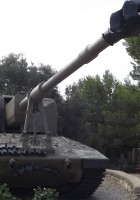
Húfnice Merkava Sholef

KrajinyIzrael
TypSamohybné delostrelectvo
FotografieSasha Lev
Tému

Album 23 Fotografie prechádzky "Merkava húfnice Sholef"

Fotogaléria Húfnice Merkava Sholef, Two prototypes of Sholef (“Slammer”, Hebrew slang for “Gunslinger”) 155 mm self-propelled howitzer with automatic loading system were built by Soltam in 1984–1986. The 45-ton vehicle had a long 155 mm gun barrel giving a range of 45+ km. Using GPS, inertial navigation, and an internal fire control computer, it was also capable of direct fire while on the move. It never entered production. The Slammer is a heavily armored artillery gun mounted on a modified Merkava Mk 1 chassis. Many of these vehicles are Merkava Mk 1 that were retired after the Merkava Mk 2 and Merkava Mk 3 came into service. The Slammer has a long 52-caliber gun barrel that allows +10% range. Reload speed may be decreased to 1 for one minute every 10 minutes through use of an automatic loader. Ammunition racks are large. The Slammer is ready for autonomous operation (without an FDC) if the target’s location is known within 15 seconds of a halt, using GPS, inertial navigation, and an internal fire control computer. The Slammer 155 mm self-propelled howitzer is based on a modified Merkava MBT chassis fitted with a new welded steel turret, designed by Soltam Systems. Development commenced in the 1970s. The project was considered of high national priority and incorporated the newest technological developments. Instead the Israeli Defense Forces selected an upgraded version of American M109 howitzer.

Zdrojový: Merkava húfnice Sholef na Wikipédii

Pokračovať v čítaní

Zobrazenia : 3473

Samohybná pištoľ Sexton

Samohybná pištoľ Sexton

KrajinyKanada
TypSamohybné delostrelectvo
V prevádzke1943–1956
Postavený2150

25pdr SP, sledované, Sexton bolo samohybné delostrelecké vozidlo druhej svetovej vojny. Bol založený na kanadských verziách amerického tankového podvozku M3 Lee a M4 Sherman, ktoré vstúpili do výroby v Kanade ako Ram a Grizzly. Keď sa výroba Shermanu v USA rozšírila a dodávka už nebola problémom, v roku 1943 bolo rozhodnuté zmeniť kanadské výrobné linky na výrobu Sextonu, aby britská armáda získala mobilnú delostreleckú zbraň pomocou svojej húfnice Ordnance QF 25, ktorá by mohla vystreliť 87, 6 mm (3, 45 palca) 11, 5 kg (25 lb) HE granát alebo pancierový náboj. Našiel uplatnenie v kanadskej a britskej armáde, ako aj v mnohých ďalších britských impériách a pridružených silách. Tesne po vojne bolo niekoľko Grizzly a Sextonov predaných Portugalsku, ktoré ich používalo do roku 1980.

Zdrojový: Samohybná pištoľ Sexton na Wikipédii

Pokračovať v čítaní

Views : 3406

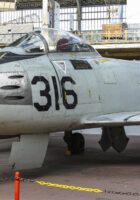
Severoamerický F-86F Sabre

Severoamerický F-86 Sabre

KrajinySpojené štáty americké
ÚlohuStíhacie lietadlá
Prvý let1. októbra 1947
Postavený9860

Komisia Severoamerický F-86 Sabre, niekedy nazývané Sabrejet, bolo transonické prúdové stíhacie lietadlo. Sabre, ktorý vyrobila spoločnosť North American Aviation, je najlepšie známy ako prvý americký bojovník s krídlami, ktorý by mohol čeliť podobne okrídlenému sovietskemu MiG-15 vo vysokorýchlostných psích zápasoch o oblohu kórejskej vojny (1950–1953). F-86, považovaný za jedno z najlepších a najdôležitejších stíhacích lietadiel v tejto vojne, je tiež vysoko hodnotený v porovnaní so stíhačkami iných období. Hoci bol vyvinutý koncom 1940. rokov a do konca 50. rokov bol zastaraný, Sabre sa ukázal ako všestranný a prispôsobivý a pokračoval ako bojovník v prvej línii v mnohých vzdušných silách, až kým posledné aktívne operačné príklady neboli vyradené bolívijským letectvom v roku 1994.

Zdrojový: Severoamerický F-86 Sabre na Wikipédii

Pokračovať v čítaní

Zobrazenia : 8977

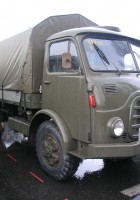
Steyr 680M

Steyr 680M

KrajinyRakúsko
TypTruck
FotografieGunther Neumahr
Obdobie výroby1960-1984
Tému

Album 19 fotografie prechádzky okolo «Steyr 680M»

Fotogaléria Steyr 680M, The Steyr 680M was a truck of the brand Steyr. It was produced from 1960 to about 1984 of the former Steyr Daimer Puch AG in Austria and in its branch in Greece. The vehicle is powered by a liquid-cooled , six-cylinder four-stroke – diesel engine series WD-609 (Vorkammereinspritzer) or WD-610 (direct injection) with 88 kW (120 hp), and from 1979 to the from the Steyr 91 derived, and 142 PS ( 104 kW) payable WD-612 operated. The design speed is 80 km / h, the range is 450 km. Overall, it can be loaded in the two-axle version with up to 4,500 kg, the maximum permissible total weight is 10,100 kg. The three-axle version 680M3 makes the largely identical engine through turbocharging 110 kW (150 hp) or the series of motors WD612 125 kW (170 hp). The payload is 5.5 tons and the maximum permissible total weight of 12 tons. The five-speed transmission of 680ers is not synchronized , it must therefore with declutching are switched and double domes. When off-road driving means of switchable are front-wheel drive , the reduction gear and the rear axle is available. Partly also vehicles were equipped with a mechanical winch fitted. In the 1990s, the Steyr 680M was combat performance increased. He was charged with double exterior mirrors, reinforced flatbed, new brakes, new roof and the dashboard of the truck Steyr 12M18 equipped.

Zdrojový: Steyr 680M na Wikipédii

Pokračovať v čítaní

Zobrazenia : 4423

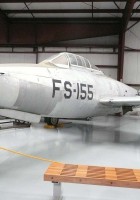
Republika F-84 Thunderjet

Republika F-84 Thunderjet

KrajinySpojené štáty americké
ÚlohuStíhací bombardér
Prvý let28. februára 1946
Postavený7524

Fotogaléria Republika F-84 Thunderjet, The Republic F-84 Thunderjet was an American turbojet fighter-bomber aircraft. Originating as a 1944 United States Army Air Forces (USAAF) proposal for a “day fighter”, the F-84 first flew in 1946. Although it entered service in 1947, the Thunderjet was plagued by so many structural and engine problems that a 1948 U.S. Air Force review declared it unable to execute any aspect of its intended mission and considered canceling the program. The aircraft was not considered fully operational until the 1949 F-84D model and the design matured only with the definitive F-84G introduced in 1951. In 1954, the straight-wing Thunderjet was joined by the swept-wing F-84F Thunderstreak fighter and RF-84F Thunderflash photo reconnaissance aircraft.

Zdrojový: Republika F-84 Thunderjet na Wikipédii

Pokračovať v čítaní

Views : 7340

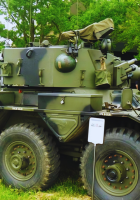
Alvis Saladin FV601

Šalátové obrnené auto

KrajinyVeľká Británia
TypObrnené auto
MiestoMúzeum Yad La-Shiryon, Latrun.
Tému

Album 225 Fotografie chodiť okolo "Saladin Obrnené auto"

Fotogaléria Šalátové obrnené auto, The Saladin (FV601) is a six-wheeled armoured car built by Alvis, and fitted with a 76mm gun. Used extensively by the British Army, it replaced the AEC Armoured Car that had been in service since World War II. The Saladin was the armoured car of Alvis’ FV600 series, using similar suspension and drive train components to the Saracen armoured personnel carrier, Stalwart high mobility load carrier and Salamander fire tender. It is named after the warrior Saladin, Alvis using names beginning with an “S” for the whole range of FV600 vehicles.

Zdrojový: Saladin Obrnené auto na Wikipédii

Pokračovať v čítaní

Views : 4161

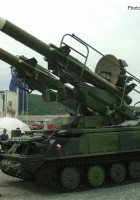
SA-6 Zárobková

SA-6 Zárobková

KrajinySovietsky zväz
TypSledovaný raketový systém stredného doletu

Fotogaléria SA-6 Zárobková, The 2K12 “Kub” (Russian: 2К12 “Куб”; English: cube) (NATO reporting name: SA-6 “Gainful”) mobile surface-to-air missile system is a Soviet low to medium-level air defence system designed to protect ground forces from air attack. “2К12” is the GRAU designation of the system. Each 2K12 battery consists of a number of similar tracked vehicles, one of which carries the 1S91 (SURN vehicle, NATO designation “Straight Flush”) 25 kW G/H band radar (with a range of 75 km (47 mi)) equipped with a continuous wave illuminator, in addition to an optical sight. The battery usually also includes four triple-missile transporter erector launchers (TELs), and four trucks, each carrying three spare missiles and a crane. The TEL is based on a GM-578 chassis, while the 1S91 radar vehicle is based on a GM-568 chassis, all developed and produced by MMZ.

Zdrojový: SA-6 Zárobky na Wikipédii

Pokračovať v čítaní

Views : 5009

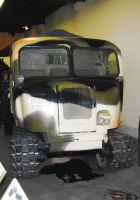
Raupenschlepper Ost typ 01

RSO M 75mm PAK

KrajinyNacistické Nemecko
TypCaterpillar Traktor
PostavenýNeznáme

Fotogaléria RSO M 75mm PAK, Raupenschlepper Ost, literally “Caterpillar Tractor East”, is more commonly abbreviated to RSO. This fully tracked, lightweight vehicle was conceived in response to the poor performance of wheeled and half-tracked vehicles in the mud and snow during the Wehrmacht’s first autumn and winter on the Soviet Front. The RSO was a contemporary with somewhat similar Allied full-tracked small artillery tractors in use in other armies (such as the Soviet STZ-5 “Stalingradec”, and the U.S. Army’s own M4 Tractor), mostly originated from the pre-war light to medium series of Vickers artillery tractors. Two variants of this vehicle were built: the basic cargo carrier, and a self-propelled antitank vehicle armed with a PaK 40 gun. Both shared the same chassis.

Zdrojový: RSO M 75mm PAK na Wikipédii

Pokračovať v čítaní

Views : 2786

Rooikat

Rooikat

KrajinyJužná Afrika
TypKolesové obrnené bojové vozidlo
FotografJacques Pienaar
Tému

Album 56 fotografie prechádzky «Rooikat»

Fotogaléria Rooikat, The Rooikat (Afrikaans for “Caracal”; literally “Red cat”) is a wheeled armoured fighting vehicle built in South Africa for the South African Army. It was designed for combat reconnaissance and seek and destroy operations. Its secondary roles include combat support, anti-armour and anti-guerrilla operations. The Rooikat is intended for deep penetration missions, so the wheeled design was needed for speed and to counter sandy desert conditions that might slow tracked vehicles.

Zdrojový: Rooikat na Wikipédii

Pokračovať v čítaní

Zobrazenia : 2923

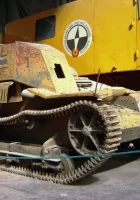
Gepanzerte-MG-Trager Renault UE(f)

Tanketa Renault UE

KrajinyFrancúzsko
ÚlohuTankette (Tankette)
Vyrobené1932 – marec 1941
Postavený50000+

Fotogaléria Tanketa Renault UE, The Renault UE Chenillette was a light tracked armoured carrier and prime mover produced by France between 1932 and 1940. In 1930 the French Infantry decided to develop a light armoured vehicle able to tow and supply small cannon and mortars. In 1931 the Renault company was given the contract for production of its Renault UE, combined with the Renault UK trailer. In 1937, from a number of competitors, the Renault UE2 was chosen as an improved type for large-scale production. Of both types combined over five thousand were built, including licence production in Romania, and they were part of the standard equipment of all French infantry divisions. Most Renault UE vehicles in French service were unarmed; those in 1940 captured by Germany were used for a variety of purposes, including being armed with machine-guns, antitank-guns and rocket artillery.

Zdrojový: Renault UE Tankette na Wikipédii

Pokračovať v čítaní

Views : 3973