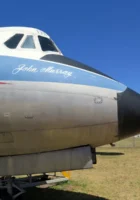
Visconde V.818

Vickers Viscount

PaísReino unido
PapelAvião turboélice
Primeiro voo16 de julho de 1948
Construído445

O Visconde Vickers was a British medium-range turboprop airliner first flown in 1948 by Vickers-Armstrongs. A design requirement from the Brabazon Committee, it entered service in 1953 and was the first turboprop-powered airliner. The Viscount was well received by the public for its cabin conditions, which included pressurisation, reductions in vibration and noise, and panoramic windows. It became one of the most successful and profitable of the first post-war transport aircraf, 445 Viscounts were built for a range of international customers, including in North America.

Fonte: Vickers Viscount na Wikipédia

Continue lendo

Views : 1664

LARC V

LARC-V

PaísEua
PapelVeículo de carga anfíbio
ProduzidoAnos 50
ConstruídoDesconhecido

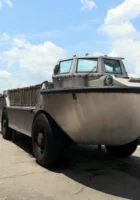
LARC-V (Lighter, Amphibious Resupply, Cargo, 5 ton), is an aluminium-hulled amphibious cargo vehicle capable of transporting 5 tons. It was developed in the United States during the 1950s, and is used in a variety of auxiliary roles to this day. In addition to the United States, Larc-Vs have been used by military forces in Australia, Argentina, Portugal, Philippines, Singapore and Iceland. Approximately 968 were made. About 500 were destroyed, most by scuttling during the American withdrawal from South Vietnam. About 200 have been retained in U.S. military service. Roughly 100 are privately owned and mostly used for tourism. These include tourist trips on the Jökulsárlón ice lake in Iceland and city and harbour tours in Halifax, Nova Scotia.

Fonte: LARC-V na Wikipédia

Continue lendo

Visualizações : 3328

Avro Canada VZ-9AV Avrocar

Avro Canada VZ-9 Avrocar

PaísEua
PapelVeículo VTOL experimental
Primeiro voo12 de novembro de 1959
Construído2

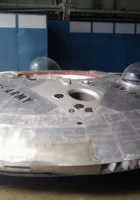
The Avro Canada VZ-9 Avrocar was a VTOL aircraft developed by Avro Canada as part of a secret U.S. military project carried out in the early years of the Cold War. The Avrocar intended to exploit the Coandă effect to provide lift and thrust from a single “turborotor” blowing exhaust out the rim of the disk-shaped aircraft. In the air, it would have resembled a flying saucer. Originally designed as a fighter-like aircraft capable of very high speeds and altitudes, the project was repeatedly scaled back over time and the U.S. Air Force eventually abandoned it. Development was then taken up by the U.S. Army for a tactical combat aircraft requirement, a sort of high-performance helicopter. In flight testing, the Avrocar proved to have unresolved thrust and stability problems that limited it to a degraded, low-performance flight envelope; subsequently, the project was cancelled in September 1961.

Fonte: Avro Canada VZ-9 Avrocar na Wikipédia

Continue lendo

Visualizações : 2090

Sino UH-13H Sioux

Bell H-13 Sioux

PaísEua
PapelHelicóptero de observação de luz
Primeiro voo8 de dezembro de 1945
Construído2400+

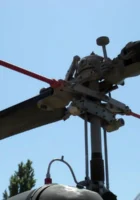
O Sino H-13 Sioux foi um helicóptero de luz monomotor monomotor construído pela Bell Helicopter. A Westland Aircraft fabricou os Sioux sob licença para os militares britânicos como os Sioux AH.1 e HT.2.

Fonte: Sino H-13 Sioux na Wikipédia

Continue lendo

Visualizações : 4991

Doak 16 VZ-4DA

Doak VZ-4

PaísEua
PapelConversão de pesquisa VTOL
Primeiro voo25 de Fevereiro de 1958
Construído1

O Doak VZ-4 (ou Doak Model 16) foi um protótipo de aeronave americana de decolagem e pouso vertical (VTOL) construído na década de 1950 para serviço no Exército dos Estados Unidos. Apenas um único protótipo foi construído, e o Exército dos EUA o retirou dos testes ativos em 1963.

Fonte: Doak VZ-4 na Wikipédia

Continue lendo

Views : 2086

Compósitos em escala Modelo 348

Scaled Composites Model 348

PaísEua
PapelPorta-aviões voador
Primeiro voo21 de dezembro de 2008
Construído1

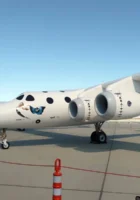
O Compósitos em escala Modelo 348 White Knight Two (WK2) is a quadjet cargo aircraft that is used to lift the SpaceShipTwo spacecraft to release altitude. It was developed by Scaled Composites from 2007 to 2010 as the first stage of Tier 1b, a two-stage to suborbital-space manned launch system. WK2 is based on the successful mothership to SpaceShipOne, White Knight, which itself is based on Proteus. With an “open architecture” design and explicit plans for multi-purpose use, the aircraft could also operate as a zero-g aircraft for passenger training or microgravity science flights, handle missions in high-altitude testing more generally, or be used to launch payloads other than SpaceShipTwo. A study of use of the aircraft as a forest fire water bomber has also been mentioned, one that would utilize a large carbon composite water tank that could be quickly replenished to make repeat runs over fires.

Fonte: Compósitos em escala Modelo 348 na Wikipedia

Continue lendo

Visualizações: 1115

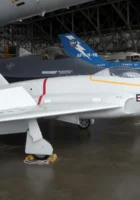
Northrop X-4 Bantam

Northrop X-4 Bantam

PaísEua
PapelProtótipo de aeronave sem cauda
Primeiro voo15 December 1948
Construído2

O Northrop X-4 Bantam was a prototype small twinjet aircraft manufactured by Northrop Corporation in 1948. It had no horizontal tail surfaces, depending instead on combined elevator and aileron control surfaces (called elevons) for control in pitch and roll attitudes, almost exactly in the manner of the similar-format, rocket-powered Messerschmitt Me 163 of Nazi Germany’s Luftwaffe. Some aerodynamicists had proposed that eliminating the horizontal tail would also do away with stability problems at fast speeds (called shock stall) resulting from the interaction of supersonic shock waves from the wings and the horizontal stabilizers. The idea had merit, but the flight control systems of that time prevented the X-4 from any success.

Fonte: Northrop X-4 Bantam na Wikipédia

Continue lendo

Views : 1835

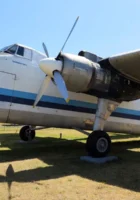
Cargueiro Bristol 170

Bristol Freighter

PaísReino unido
PapelAeronaves de carga
Primeiro voo2 de dezembro de 1945
Construído214

O Cargueiro Bristol Tipo 170 was a British twin-engine aircraft designed and built by the Bristol Aeroplane Company as both a freighter and airliner. Its best known use was as an air ferry to carry cars and their passengers over relatively short distances. A passenger-only version was also produced, known as the Wayfarer. The Freighter was developed during the Second World War, having attracted official attention from the British Air Ministry, which sought the development of a rugged vehicle capable of carrying various cargoes, including a 3-ton truck. Various changes to the design were made to accommodate their requirements, but being completed too late to participate in the conflict, the majority of sales of the Freighter were to commercial operators. In response to customer demand, an enlarged version to maximise vehicle-carrying capacity, known as the Bristol Superfreighter, was developed.

Fonte: Bristol Freighter na Wikipédia

Continue lendo

Visualizações : 2377

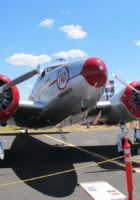
Lockheed Electra 12A

Lockheed Electra 12

PaísEua
PapelAeronaves utilitárias civis e militares
Primeiro voo27 de junho de 1936
Construído130

O Lockheed Modelo 12 Electra Junior, mais conhecido como Lockheed 12 ou L-12, é um avião de transporte bimotor de oito lugares e seis passageiros totalmente metálico do final da década de 1930, projetado para uso por pequenas companhias aéreas, empresas e indivíduos privados ricos. Uma versão reduzida do Lockheed Model 10 Electra, o Lockheed 12 não era popular como um avião, mas era amplamente utilizado como um transporte corporativo e governamental. Vários também foram usados para testar novas tecnologias de aviação.

Fonte: Lockheed Electra 12 na Wikipédia

Continue lendo

Visualizações : 2216

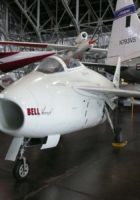
Sino X-5

Bell X-5

PaísEua
PapelAeronaves de pesquisa
Primeiro voo20 June 1951
Construído2

O Sino X-5 was the first aircraft capable of changing the sweep of its wings in flight. It was inspired by the untested wartime P.1101 design of the German Messerschmitt company. In contrast with the German design, which could only have its wing sweepback angle adjusted on the ground, the Bell engineers devised a system of electric motors to adjust the sweep in flight.

Fonte: Bell X-5 on Wikipedia

Continue lendo

Visualizações: 1287