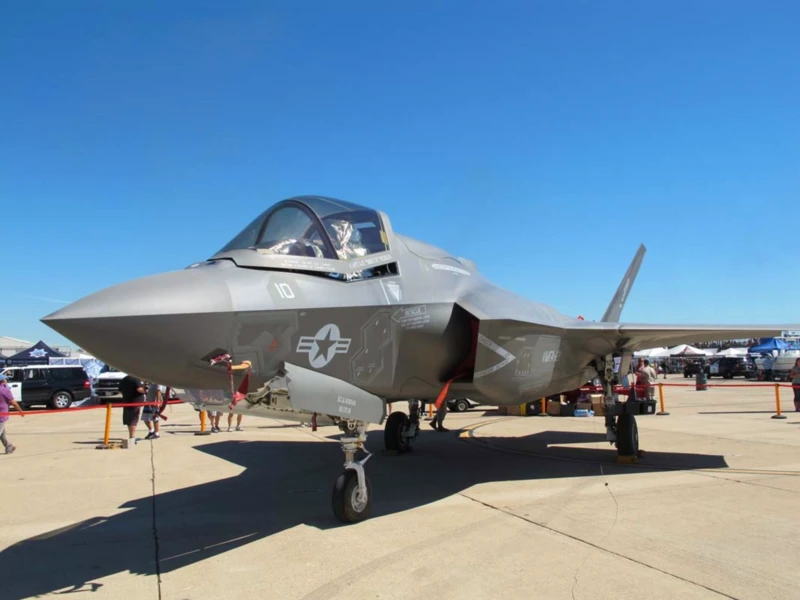
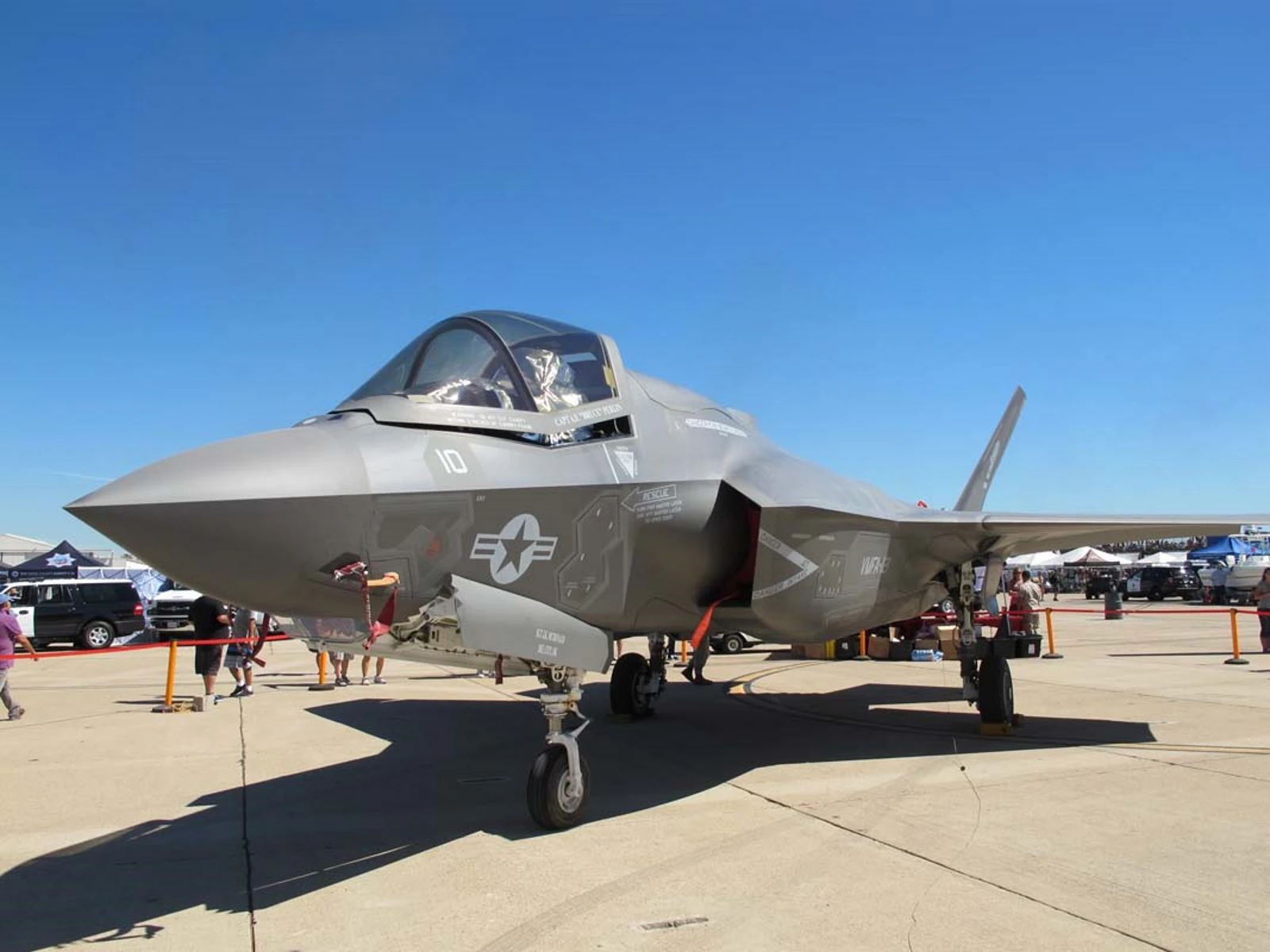
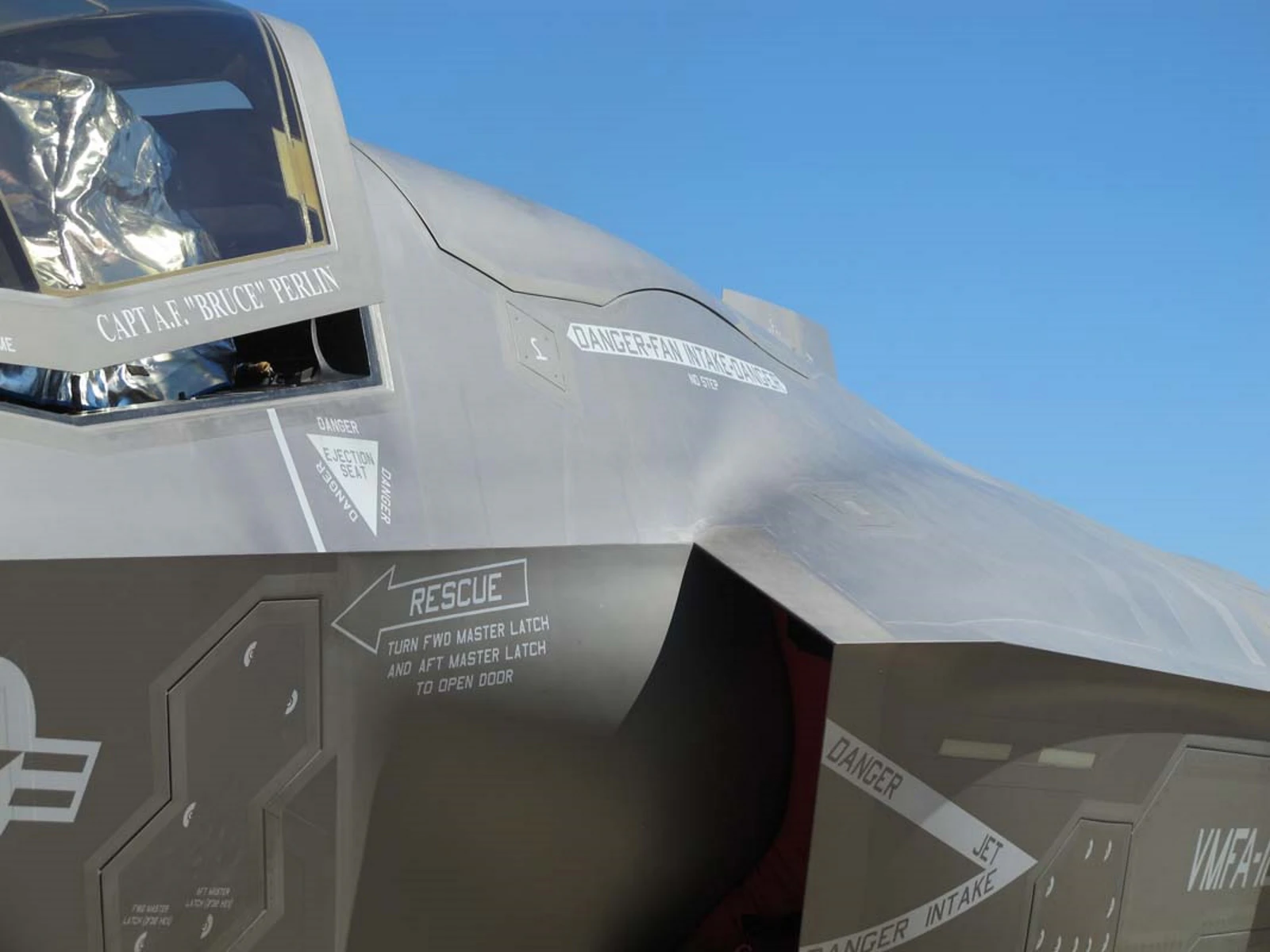
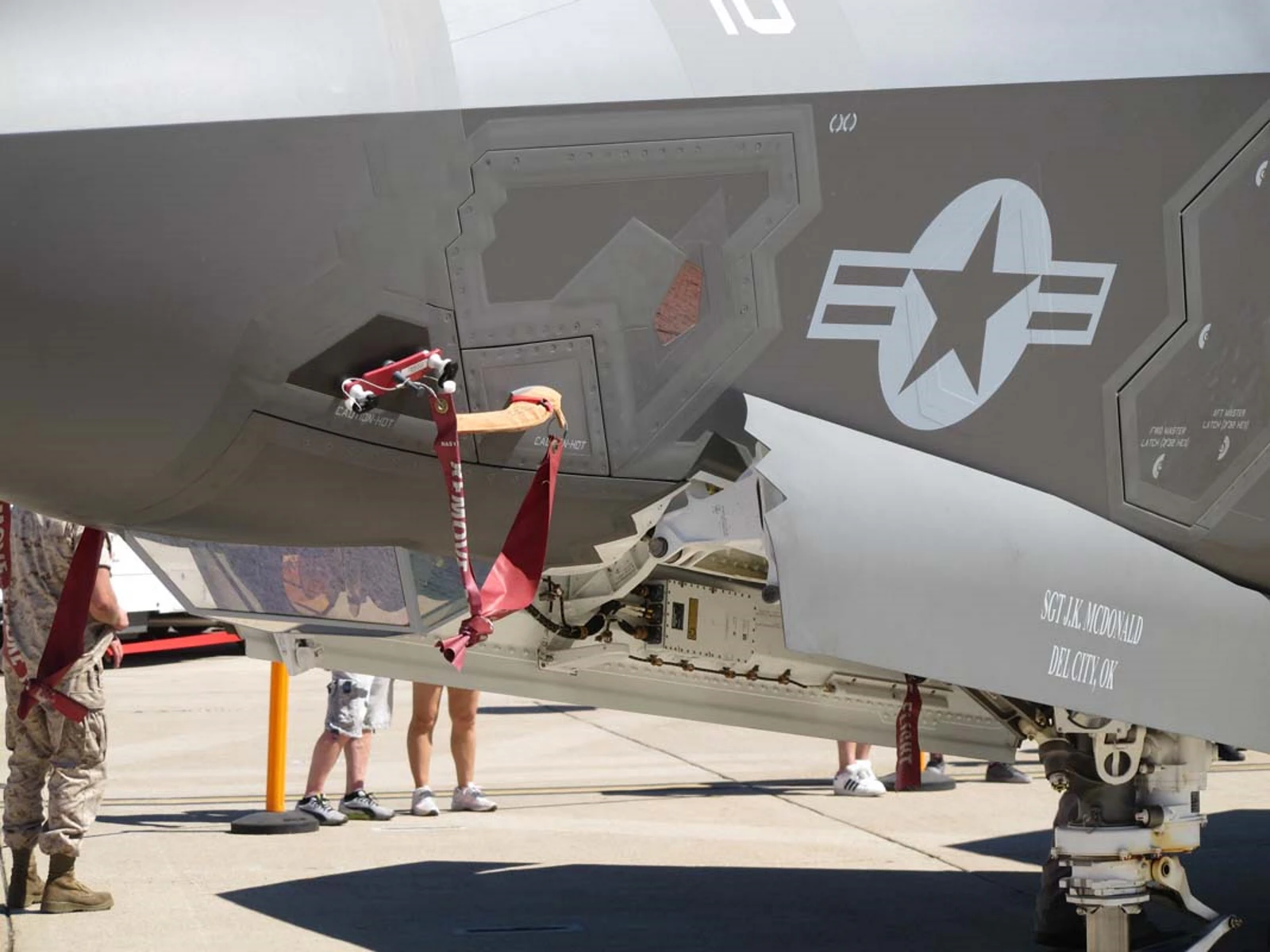
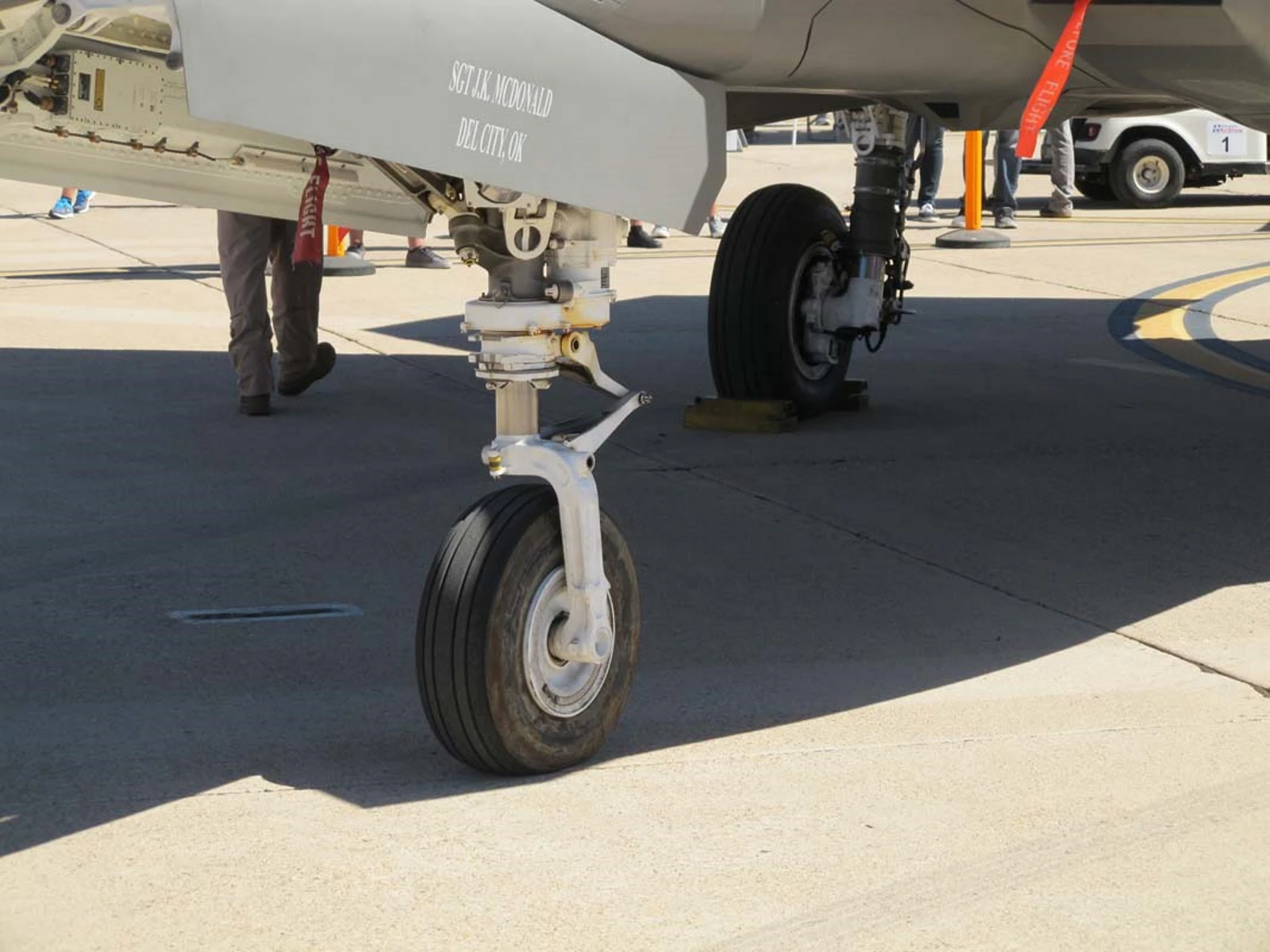
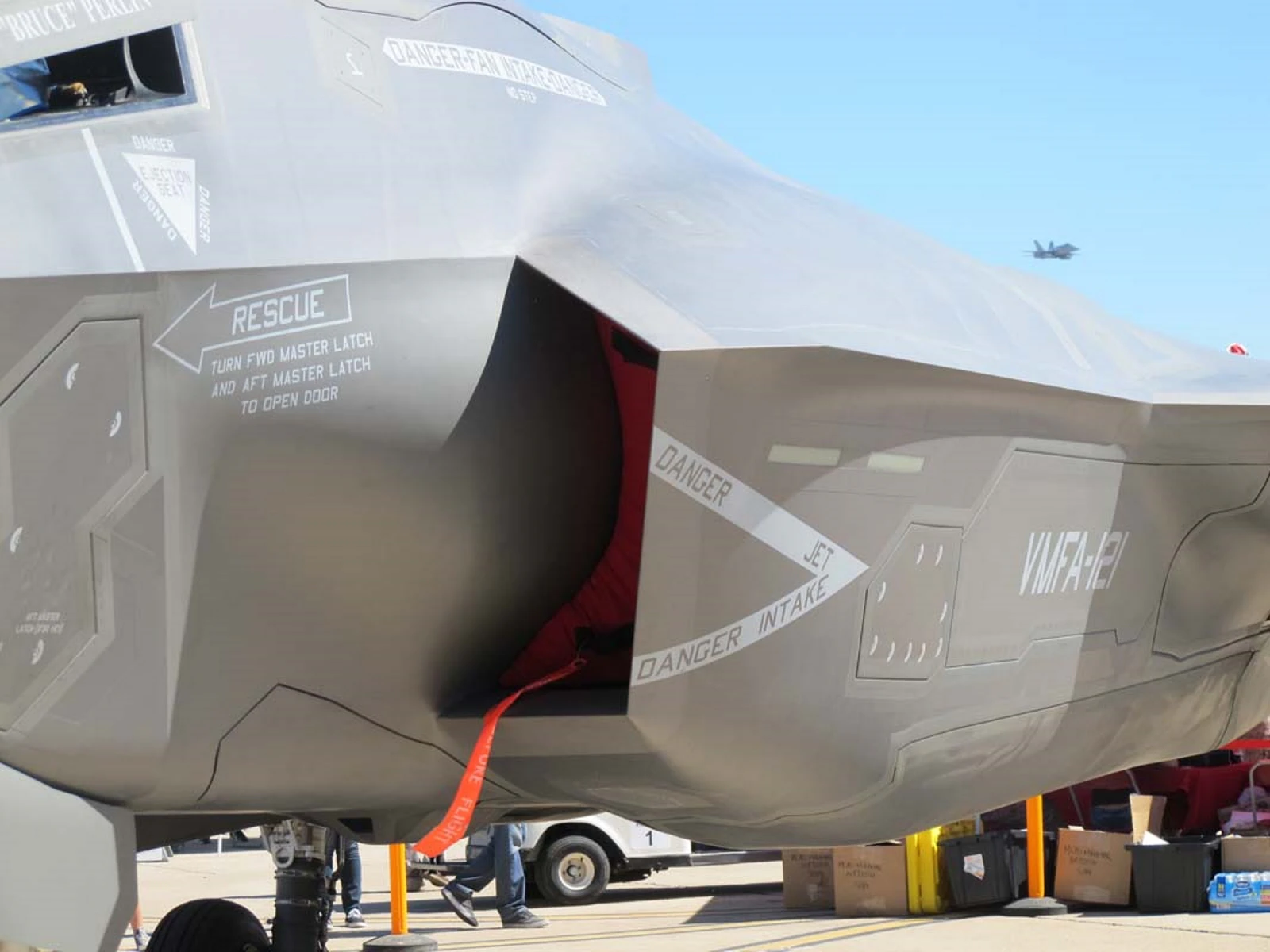
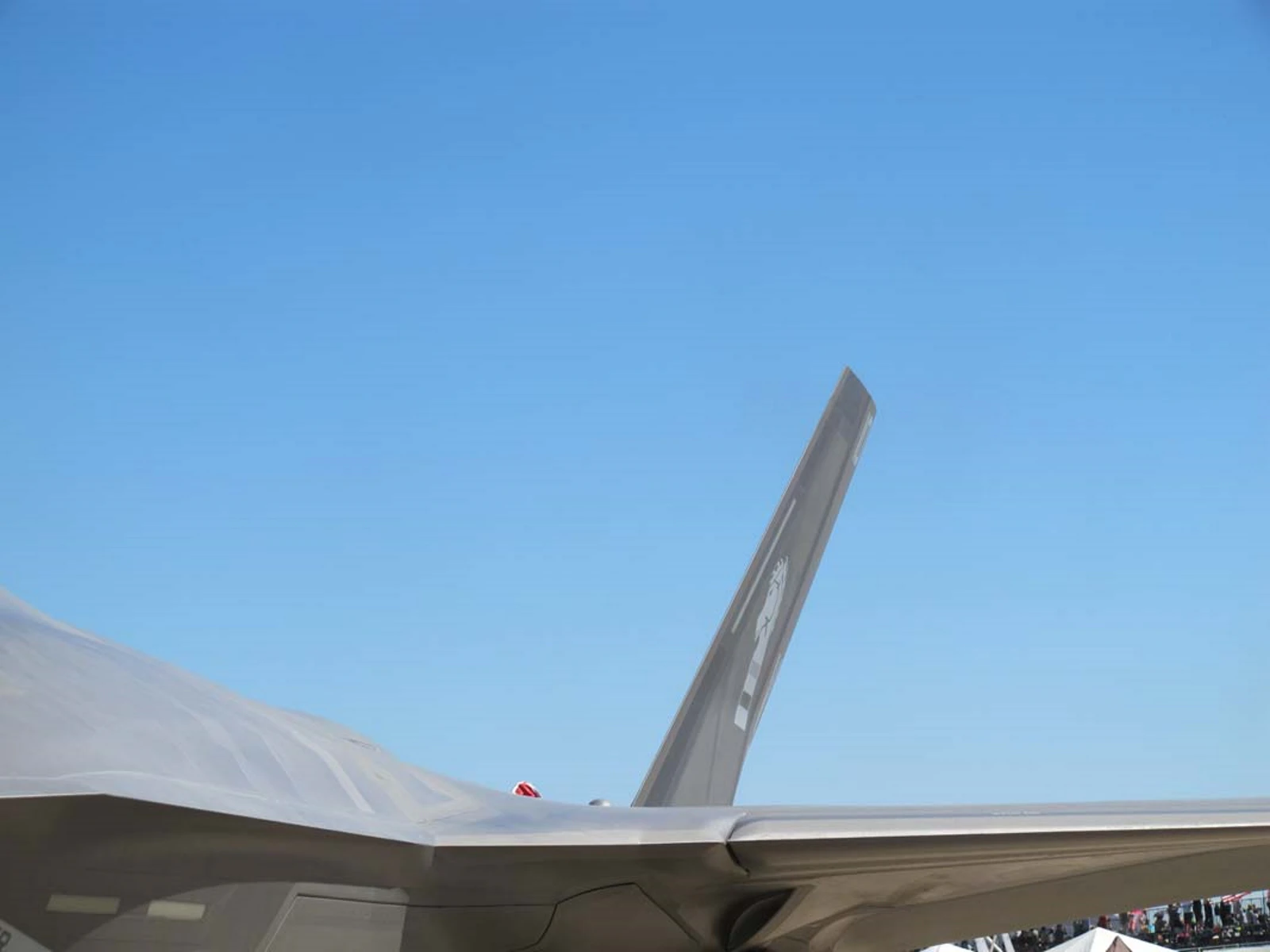
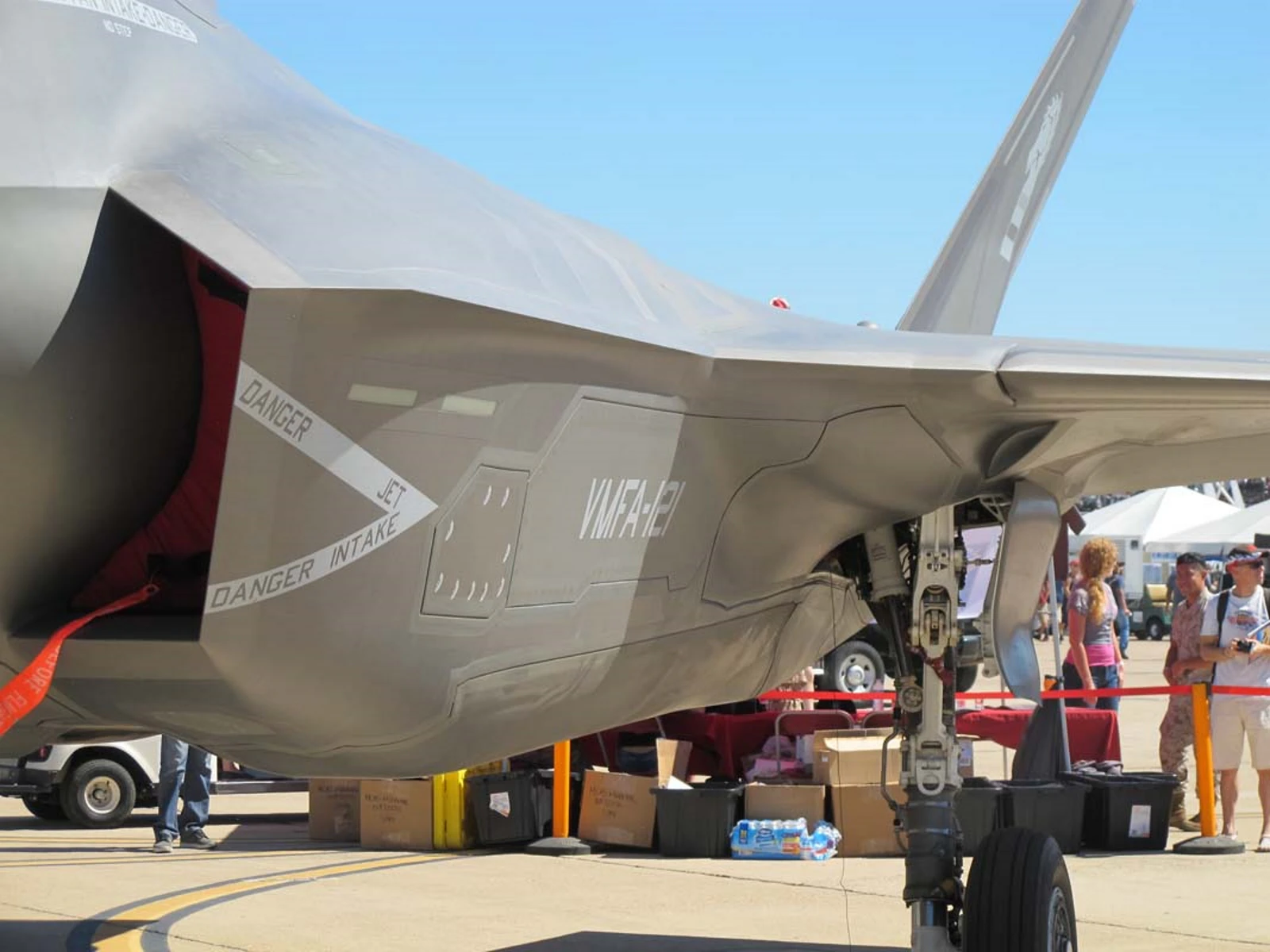
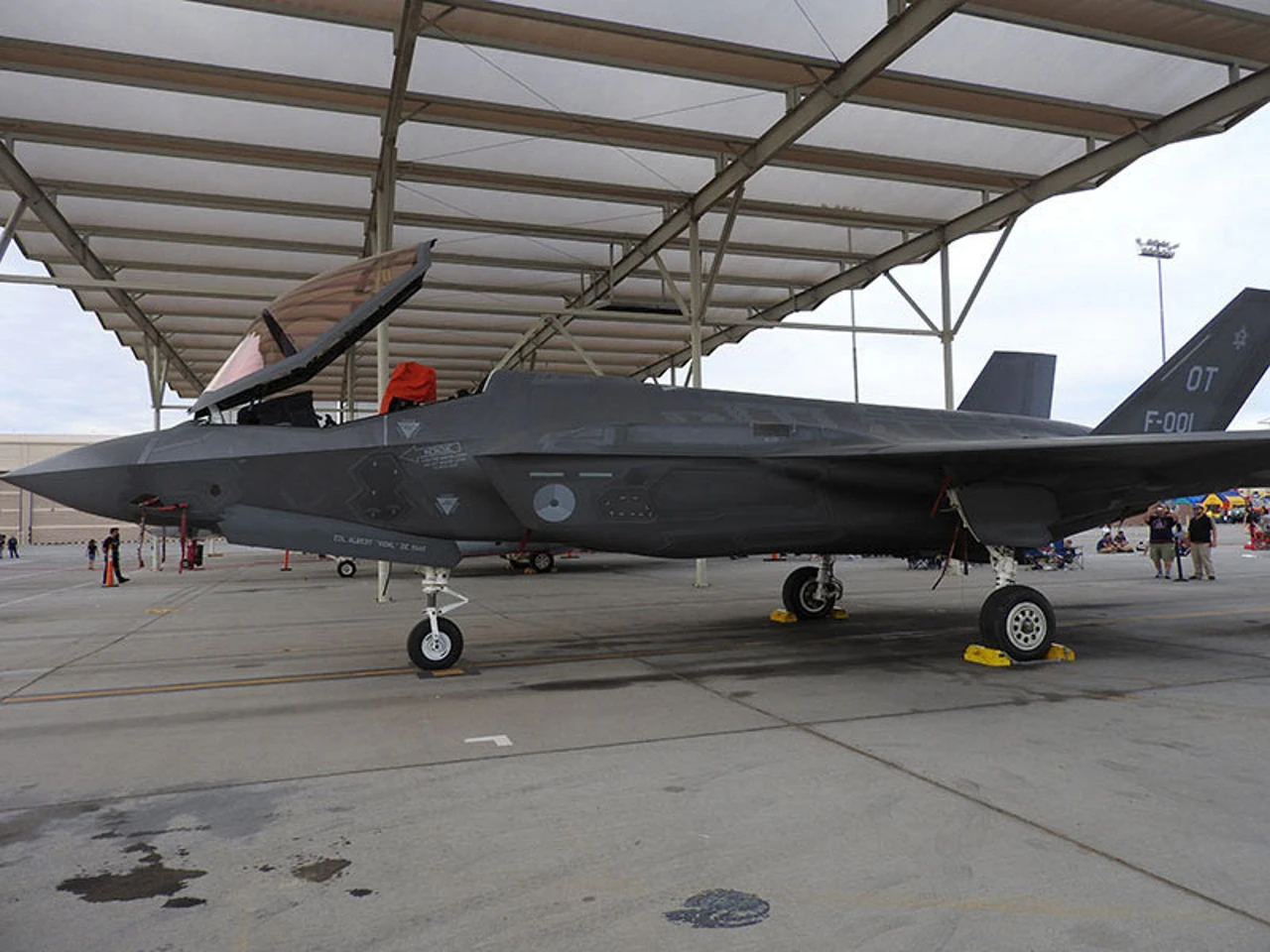
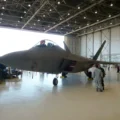
The Lockheed Martin F-35 Lightning II is a family of single-seat, single-engine, all-weather stealth multirole fighters undergoing final development and testing by the United States. The fifth generation combat aircraft is designed to perform ground attack and air defense missions. The F-35 has three main models: the F-35A conventional takeoff and landing (CTOL) variant, the F-35B short take-off and vertical-landing (STOVL) variant, and the F-35C carrier-based Catapult Assisted Take-Off But Arrested Recovery (CATOBAR) variant. On 31 July 2015, the first squadron was declared ready for deployment after intensive testing by the United States.
Wait, Searching Lockheed F-35B Lightning II photos for you…
Role :Stealth multirole fighter
National origin : United States
Manufacturer : Lockheed Martin Aeronautics
First flight : 15 December 2006
Introduction :
-F-35B: 31 July 2015
-F-35A: Q3 2016
-F-35C: 2018
Primary users :
-United States Air Force
-United States Marine Corps
-United States Navy
-Royal Air Force
Produced : 2006–present
Number built : 171
The Lockheed Martin F-35 Lightning II is the most ambitious military aircraft program in history. Designed to replace a wide variety of 4th-generation fighters (F-16, A-10, F/A-18, and Harrier), the F-35 is less of a traditional dogfighter and more of a “quarterback in the sky.” Its true power lies in its Stealth, Sensor Fusion, and Network-Centric Warfare capabilities, allowing it to see enemies from hundreds of miles away and share that data with every ship, tank, and plane in the fleet before the enemy even knows it is there.
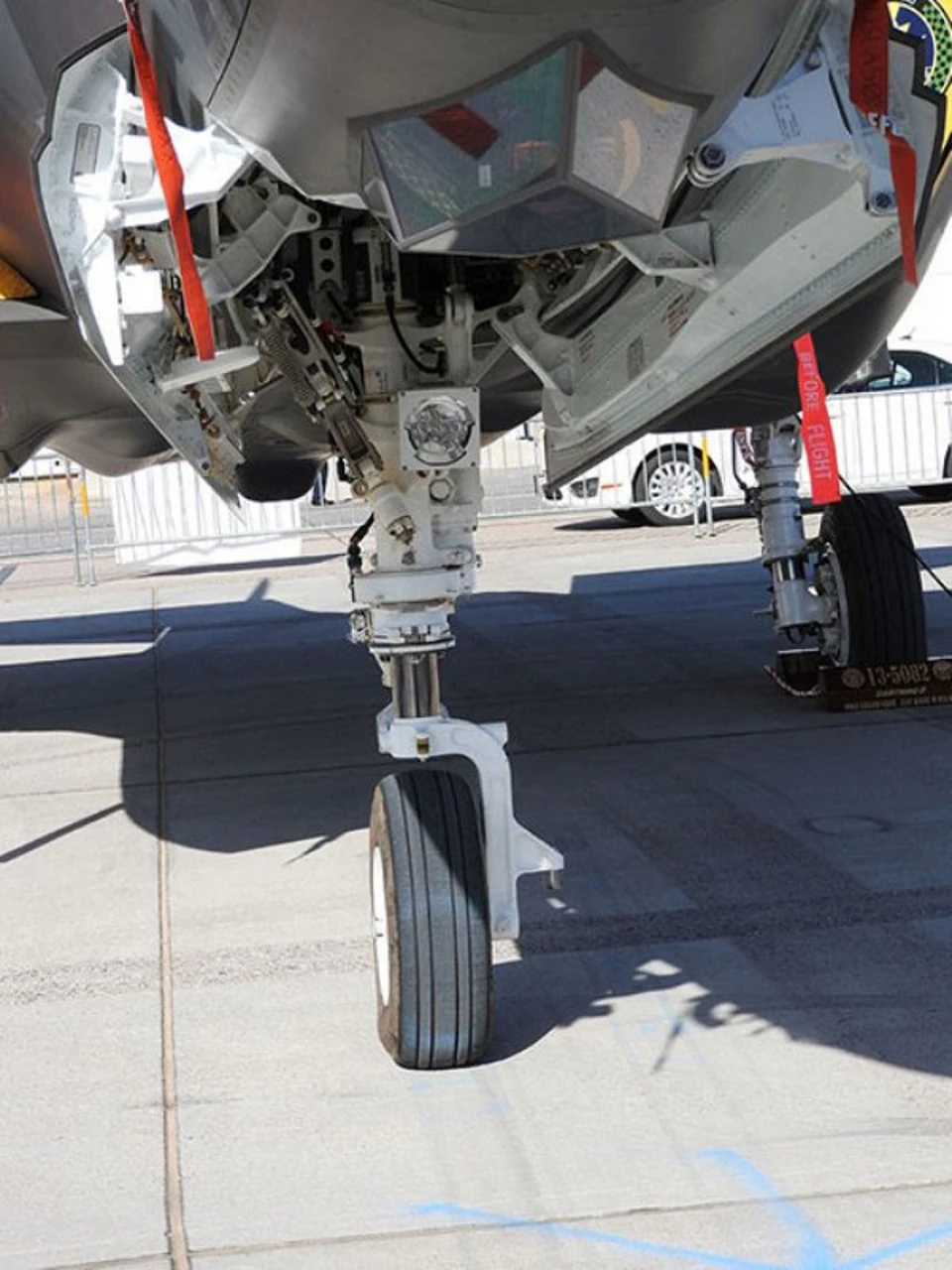
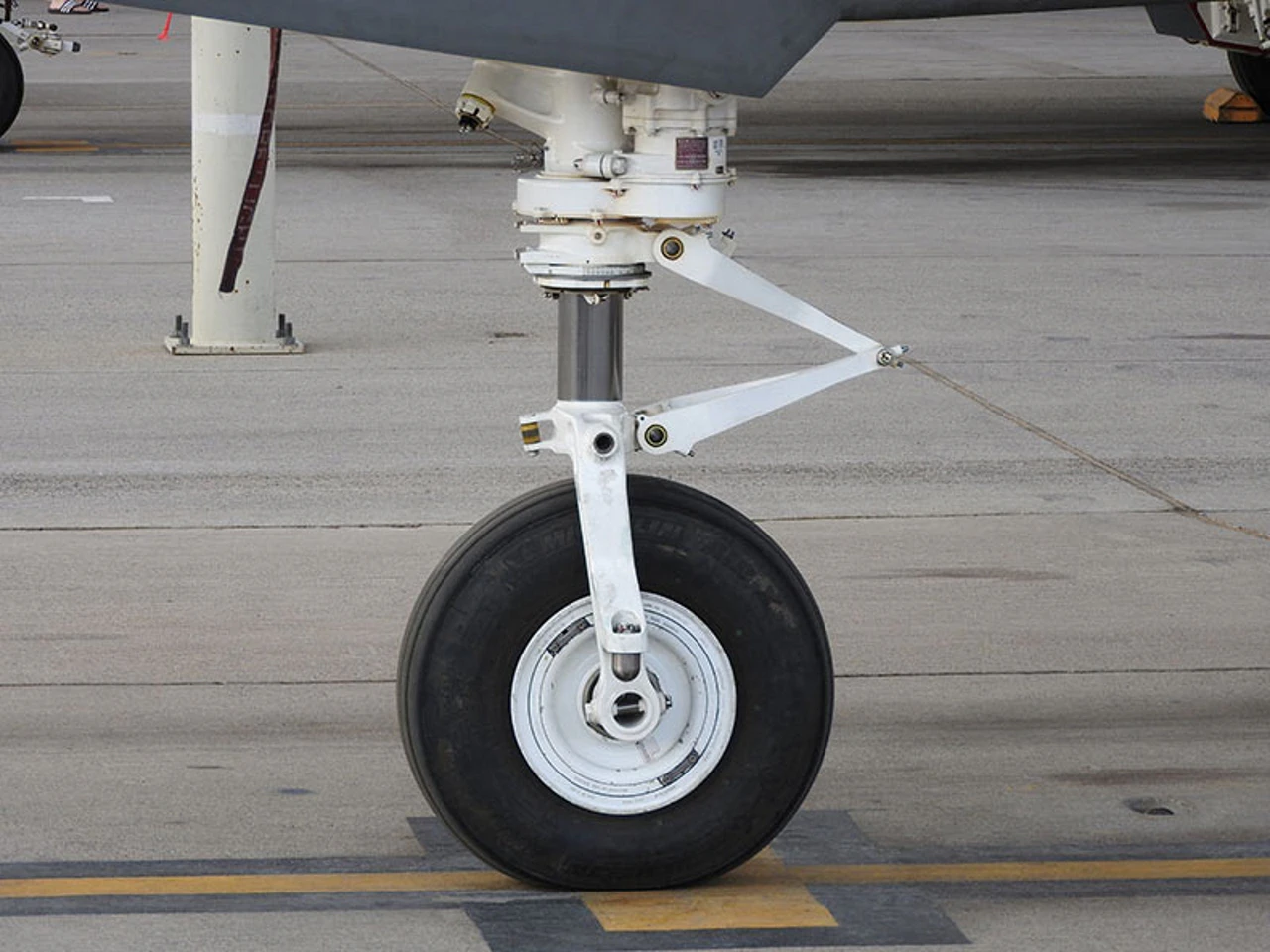
The Variant Split: To satisfy different service needs, the F-35 was built in three versions. The F-35A (USAF) is the conventional takeoff version; the F-35B (USMC) features a massive lift-fan for Short Takeoff/Vertical Landing (STOVL); and the F-35C (Navy) has larger wings and beefier gear for carrier traps.
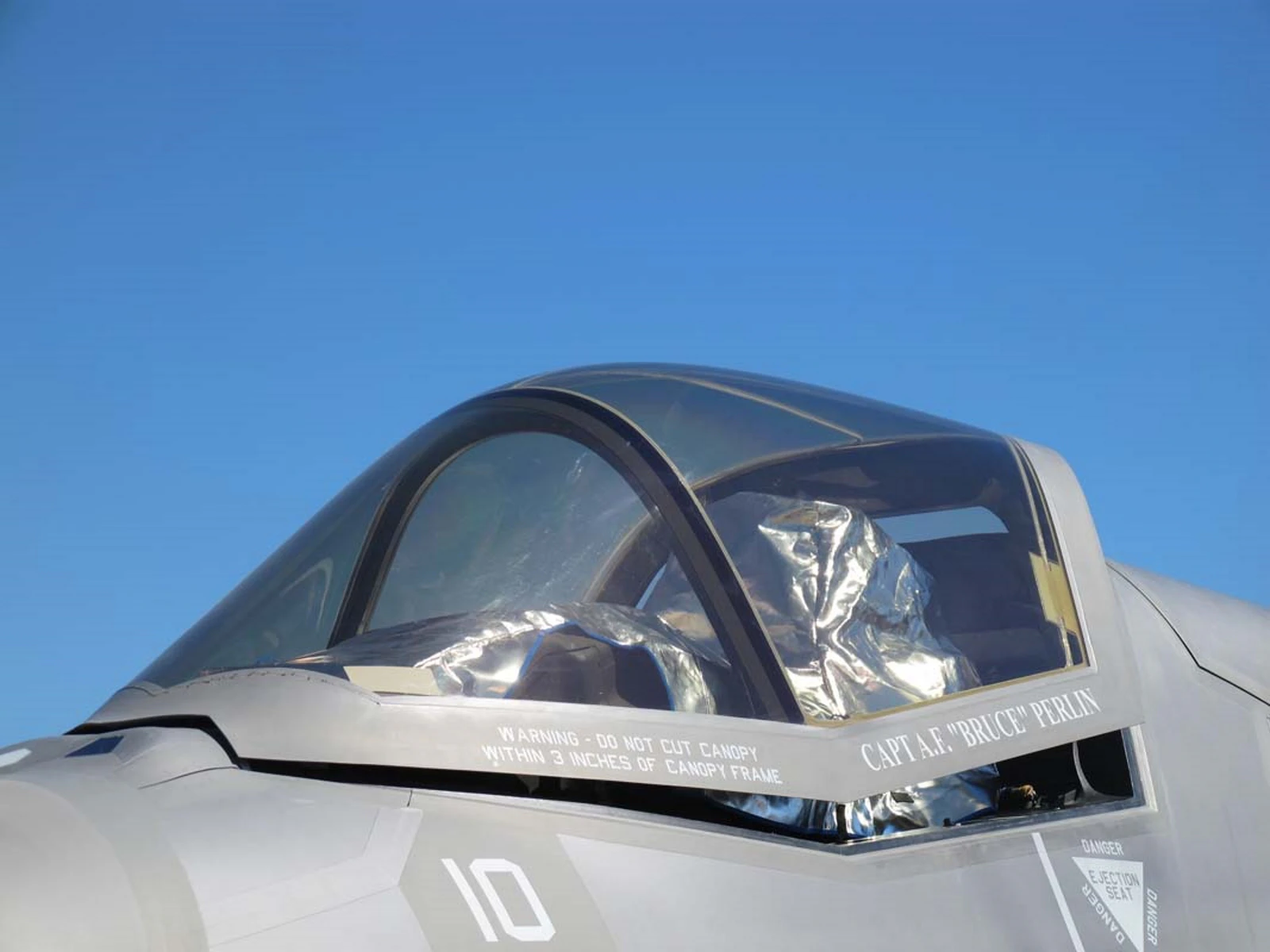
Sensor Fusion & DAS: The F-35 features the Distributed Aperture System (DAS)—six infrared cameras mounted around the fuselage. This allows the pilot to “look through” the floor of the cockpit via their helmet-mounted display, providing 360-degree situational awareness.
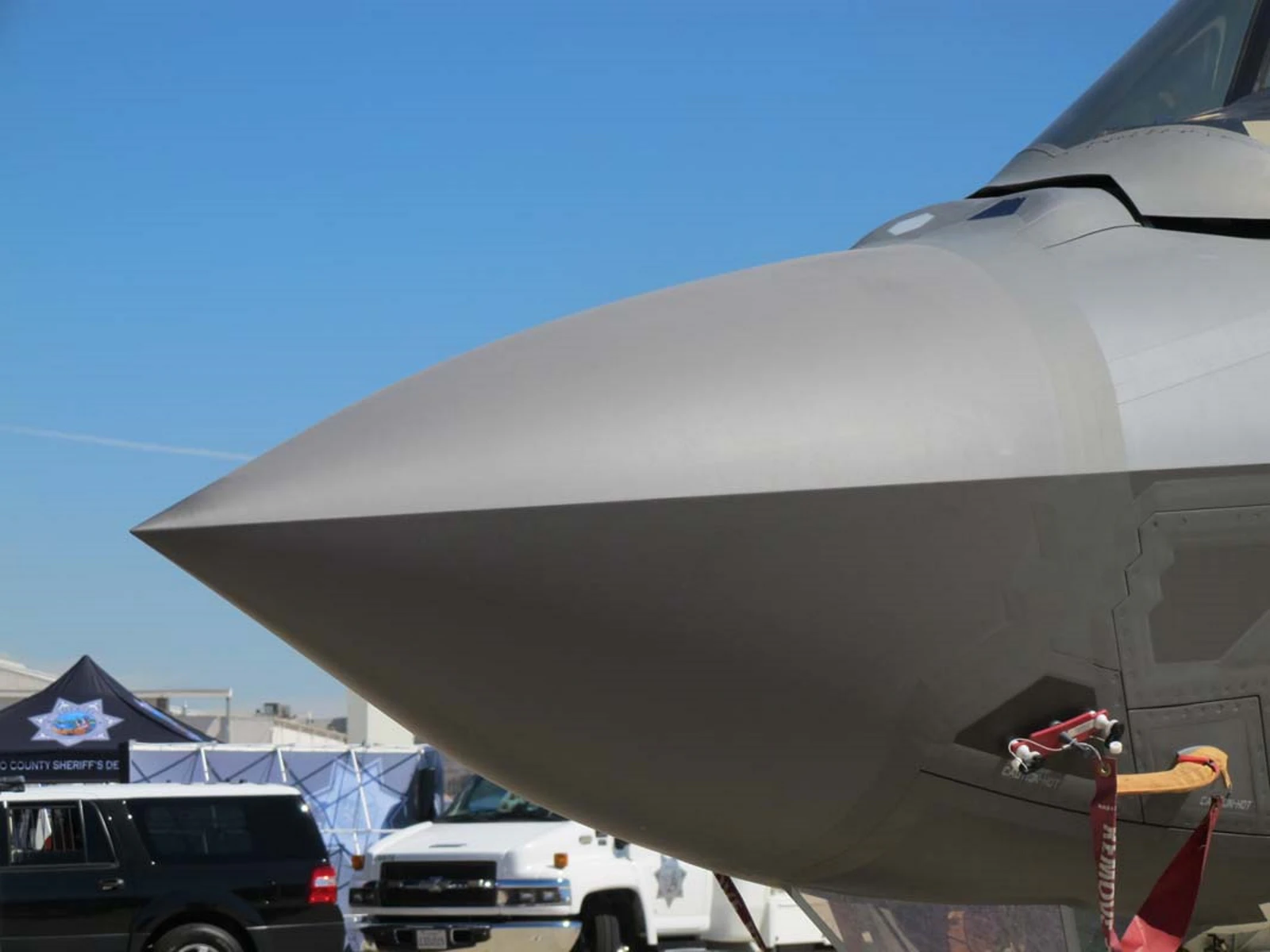
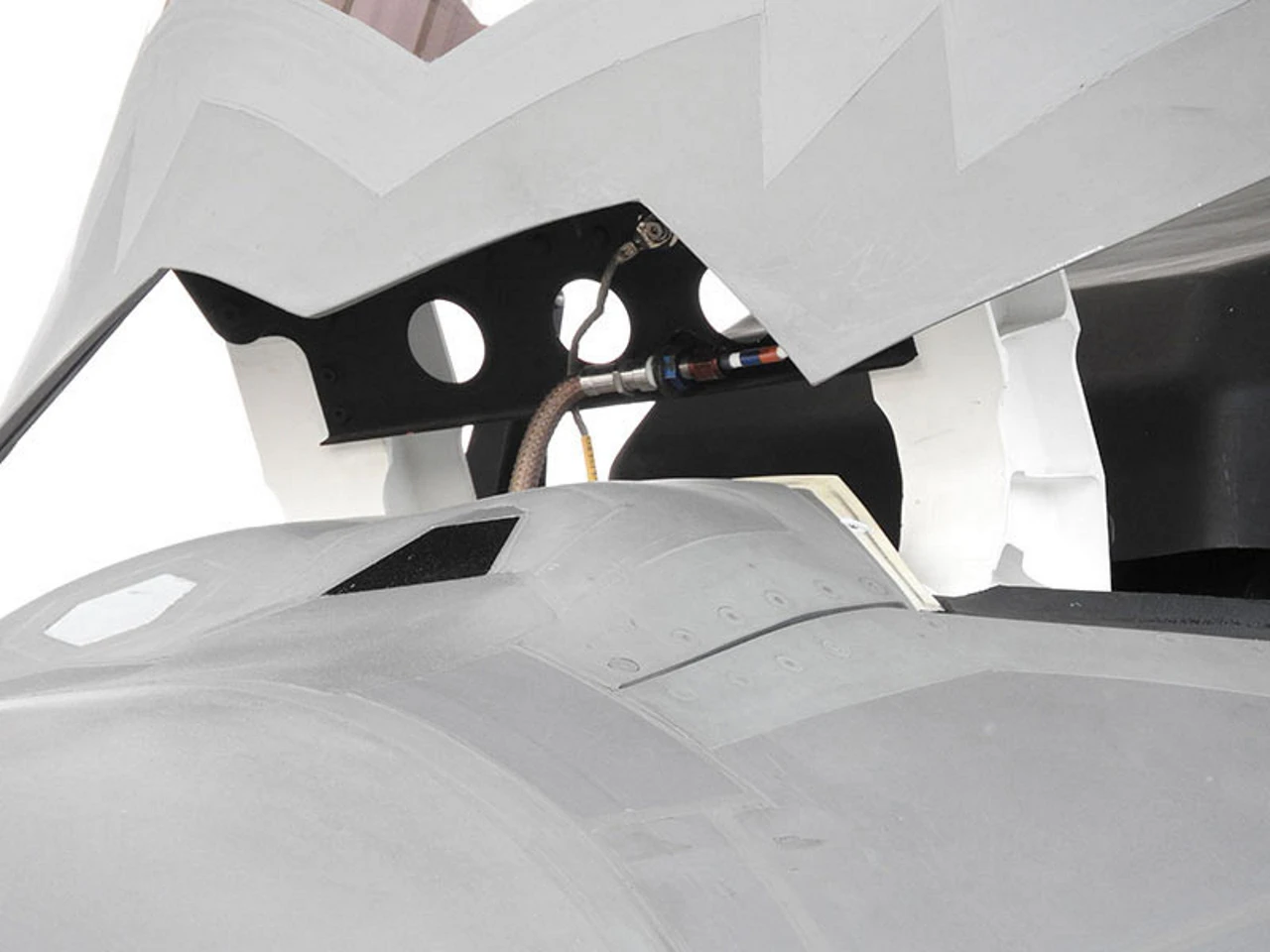
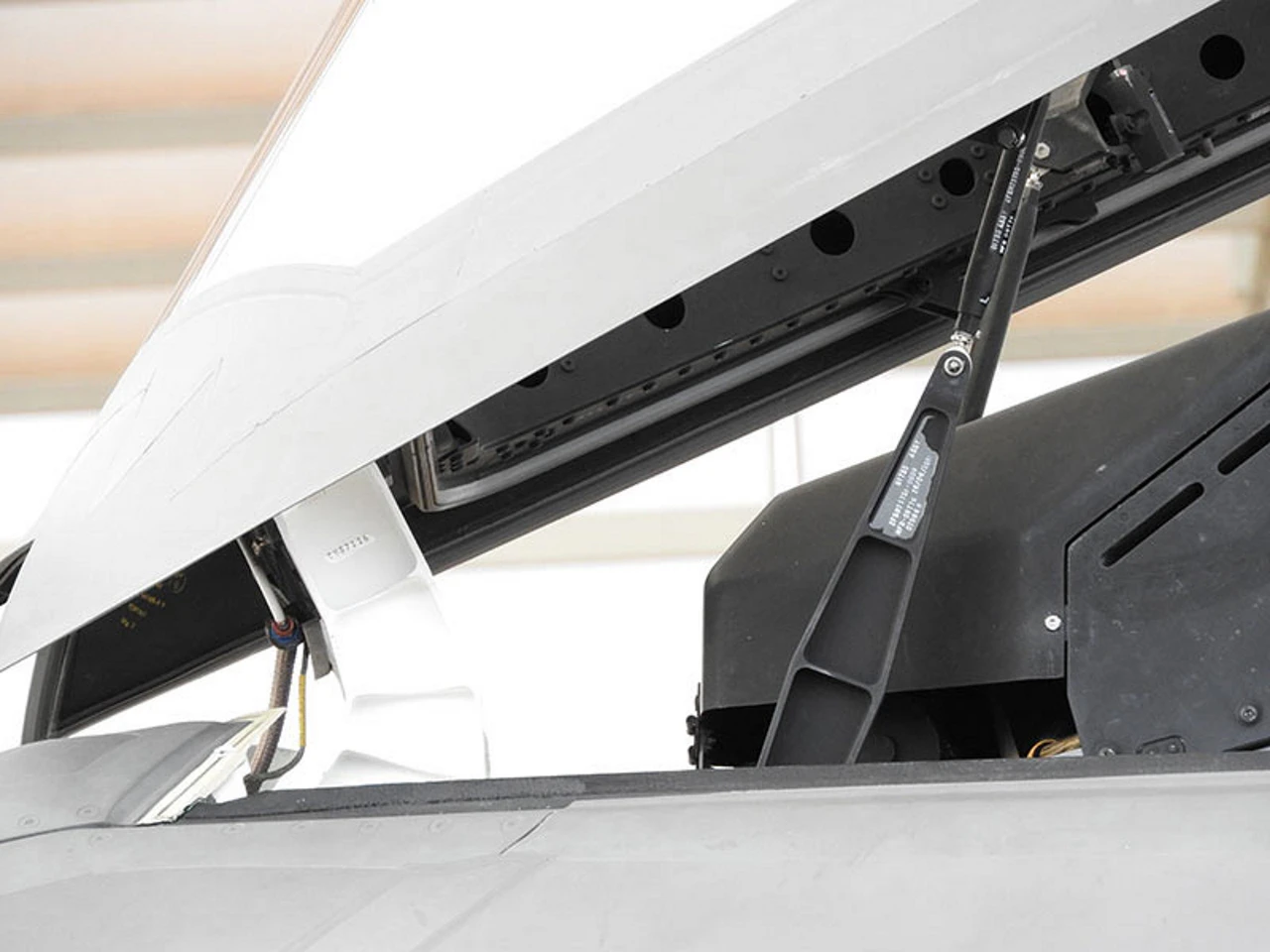
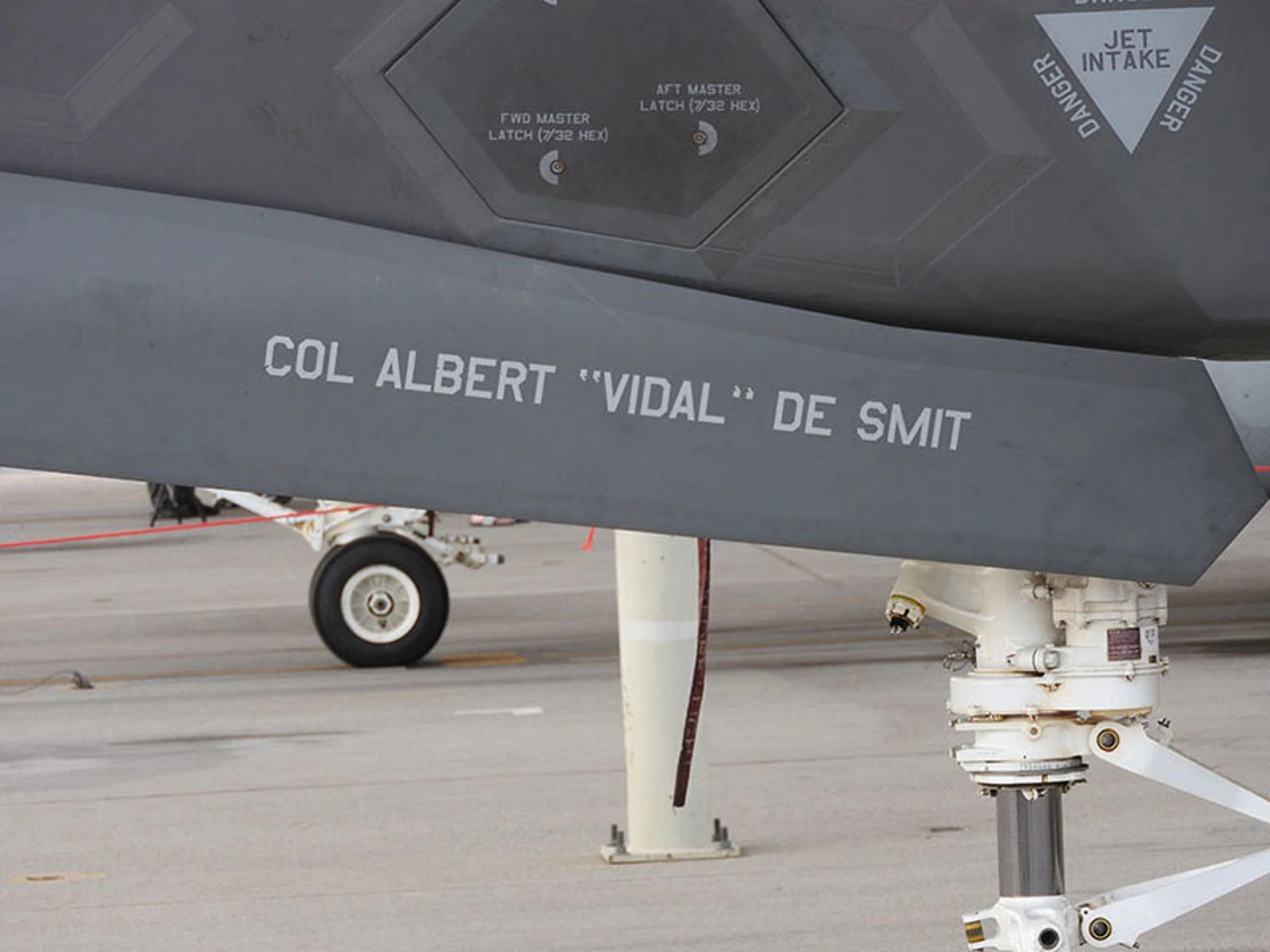
Stealth by Design: Unlike older jets that use radar-absorbent RAM tape that peels off, the F-35’s stealth is baked into the “fiber mat” skin and the very geometry of the airframe, including serrated edges on doors and internal weapon bays.
The F135 Engine: The world’s most powerful fighter engine, the F135, provides enough electricity to power the jet’s massive suite of electronics while producing over 40,000 lbs of thrust.
Combat Role: The Silent Killer
Information Superiority: In Red Flag exercises, F-35s have achieved kill ratios as high as 20:1. Most “enemy” pilots report being “shot down” by an F-35 they never saw on radar and never spotted visually.
“Beast Mode”: When stealth is no longer required (after enemy air defenses are destroyed), the F-35 can carry up to 18,000 lbs of ordnance on its external wings, transforming from a ghost into a heavy-hitting truck.
Electronic Warfare: The F-35’s AN/APG-81 radar isn’t just for finding targets; it can also act as a powerful electronic jammer, blinding enemy radars and disrupting communications without the need for a dedicated EW aircraft like the Growler.
Global Fleet: With over 1,000 aircraft delivered to over a dozen allied nations, the F-35 has become the standard for Western airpower, ensuring that allies can “plug and play” their data streams during joint operations.

 Buy Me a Coffee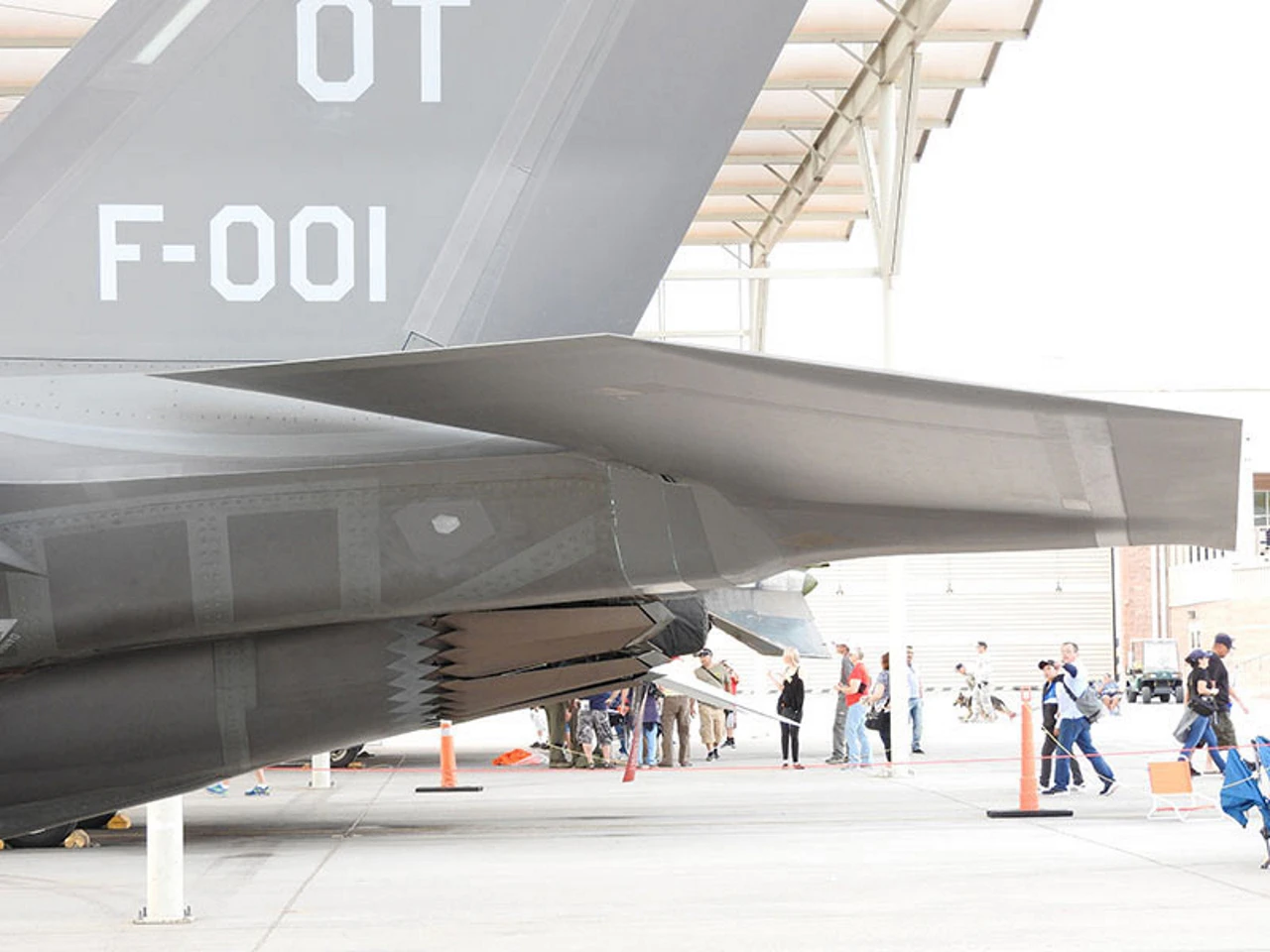


 Lockheed Model 10 Electra – Photos & Videos
 Lockheed C-5 Galaxy – Photos & Videos
 Lockheed L-049 Constellation – Photos & Videos
 Lockheed LC-130 – Photos & Videos
 Lockheed YO-3 – Photos & Video
 Lockheed P-2 Neptune – Photos & Video
 Lockheed EC-121 Warning Star – Photos & Video
 Lockheed C-141 Starlifter – Photos & Video
 Lockheed P-38 Lightning – Photos & Video
 Lockheed F-22A Raptor – Photos & Video