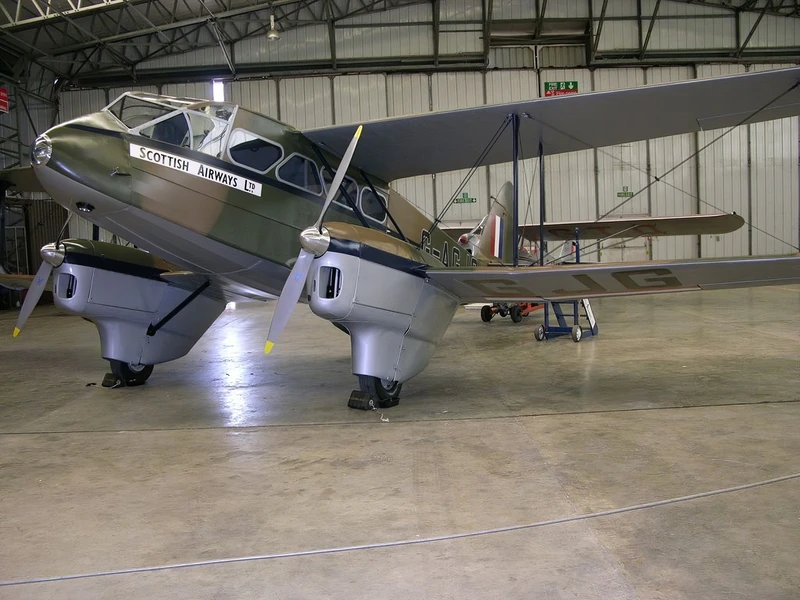
| de Havilland Dragon Rapide | |
|---|---|
| Land | Storbritannia |
| Rolle | Kortdistansefly |
| Første flytur | 17. april 1934 |
| Bygget | 727 |
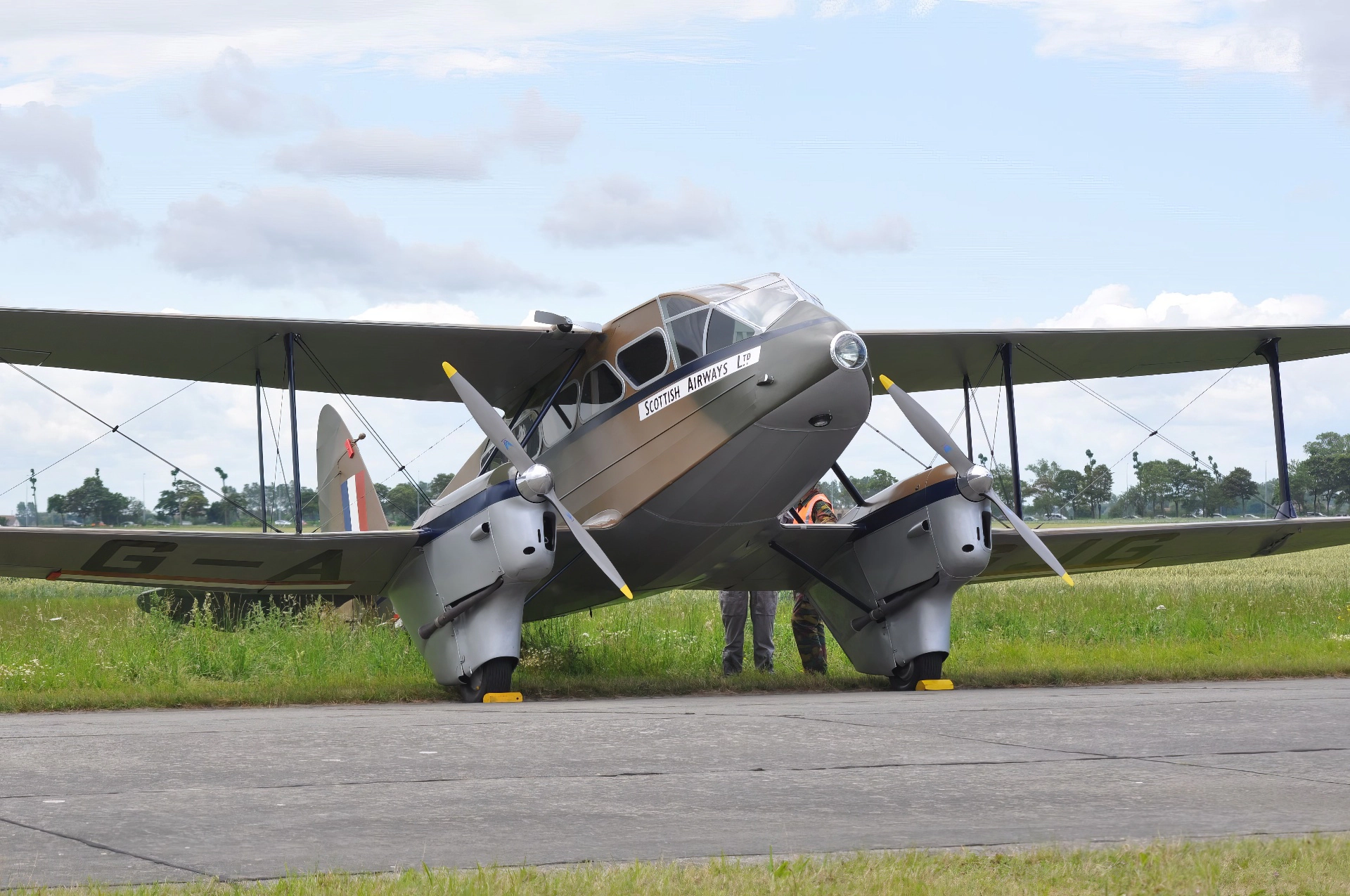
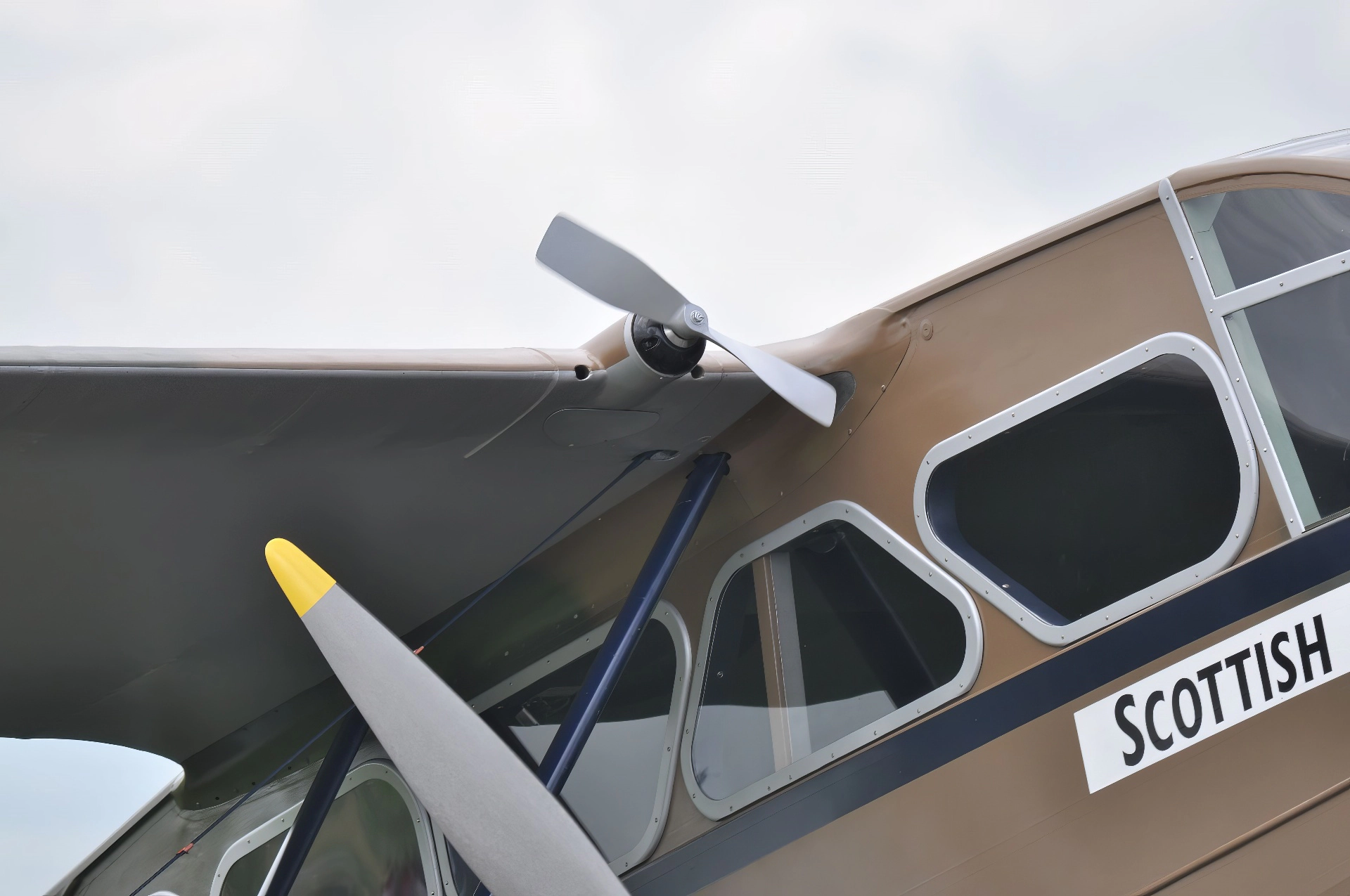
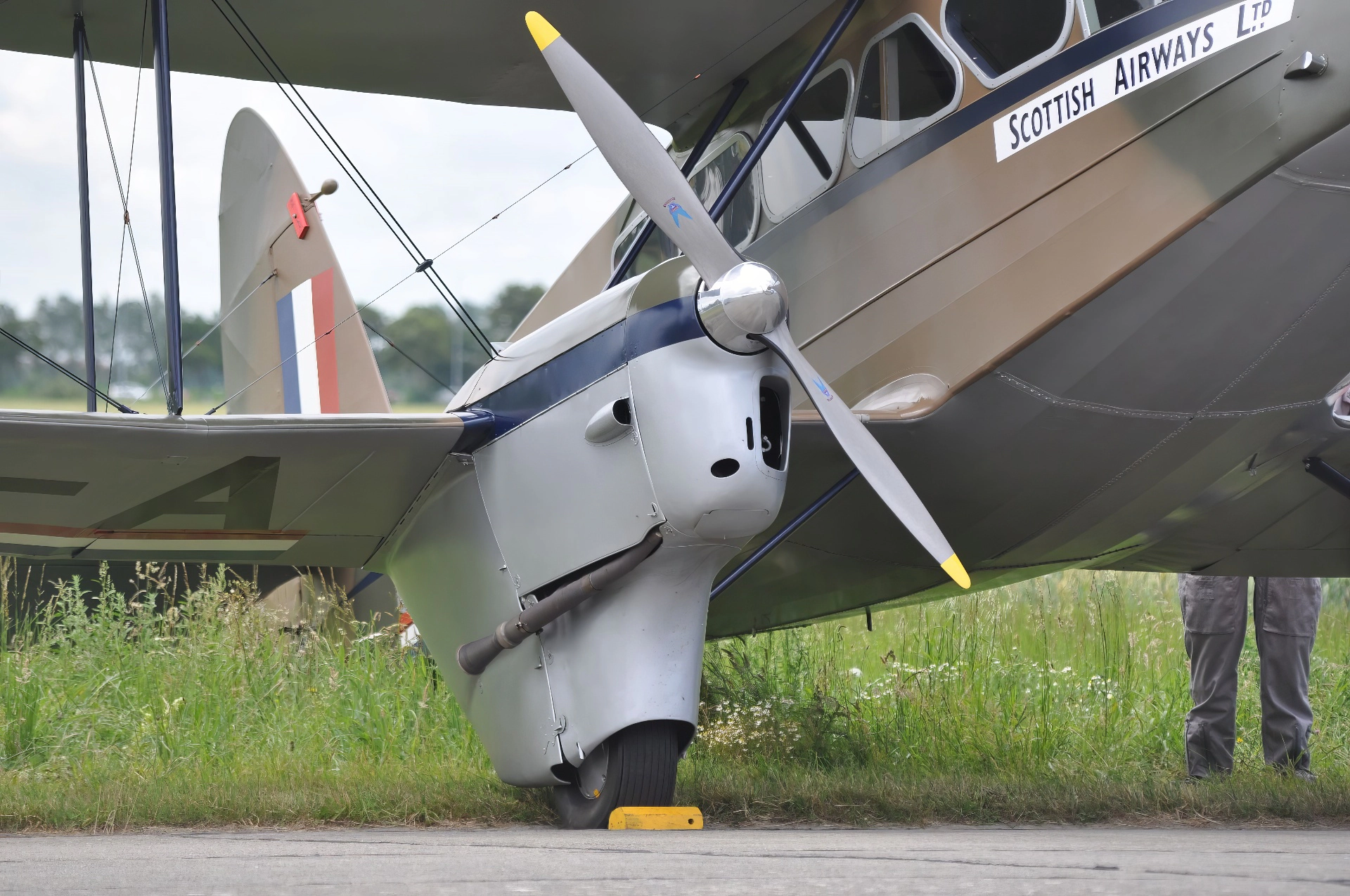
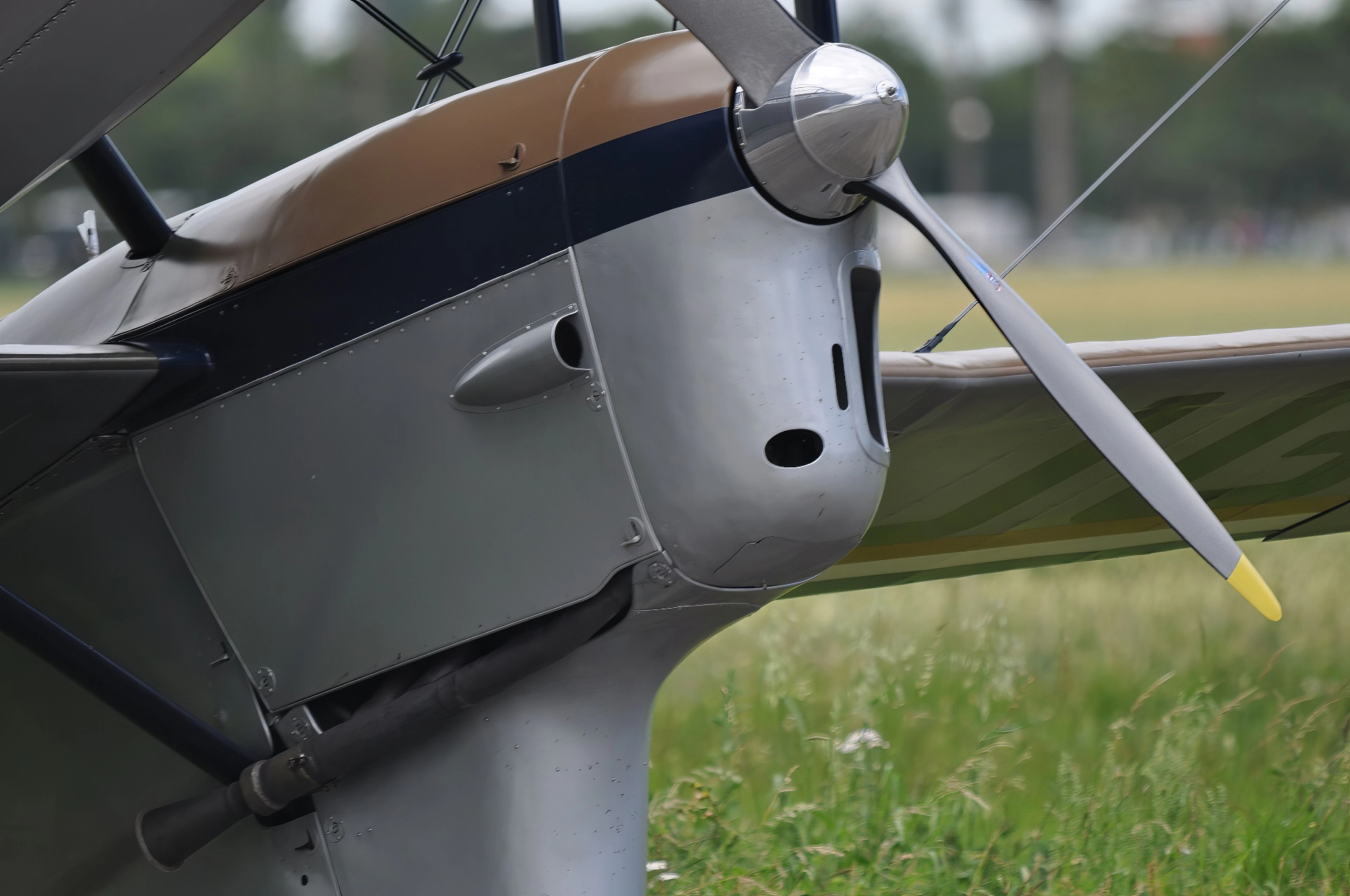
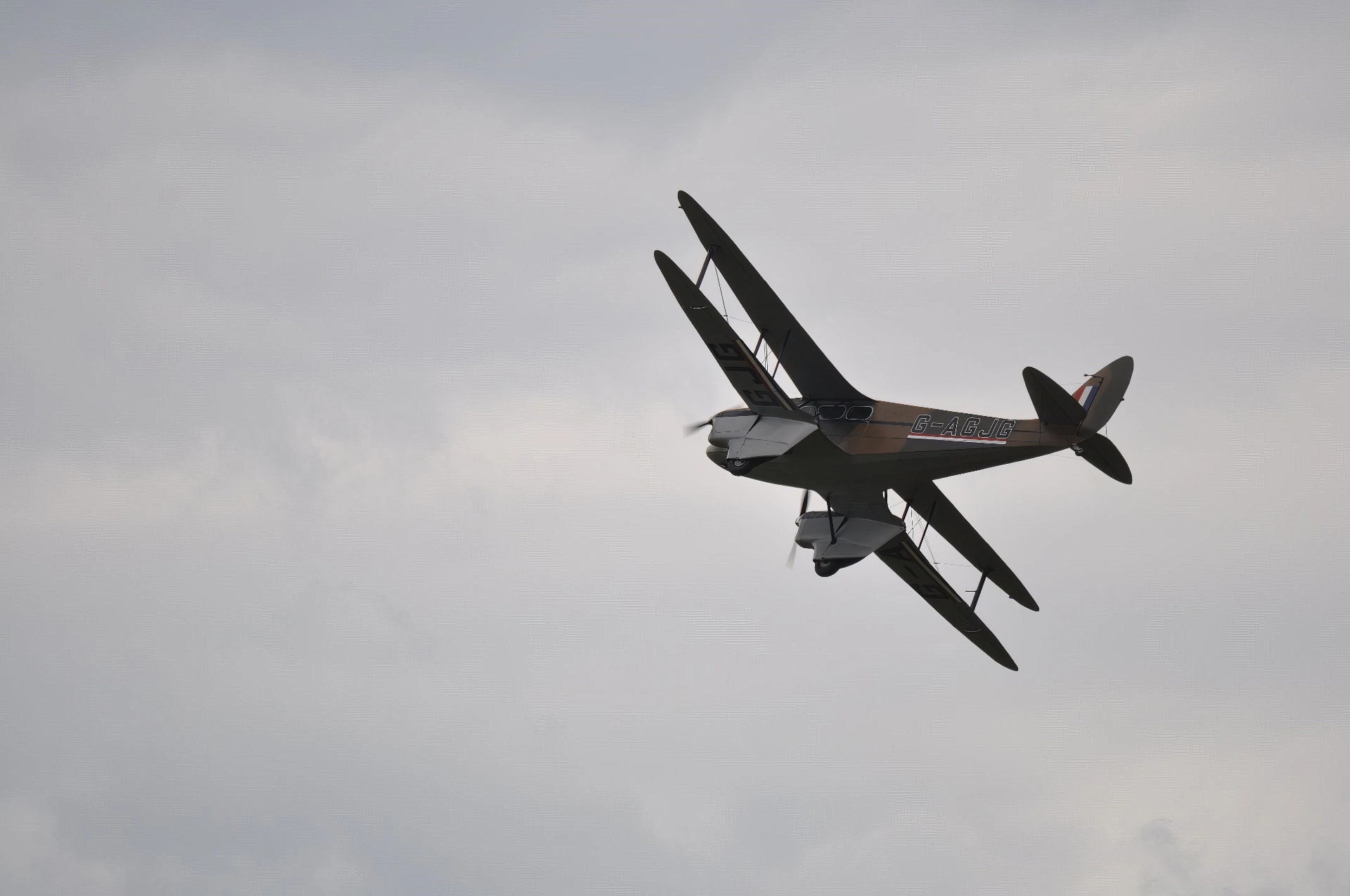
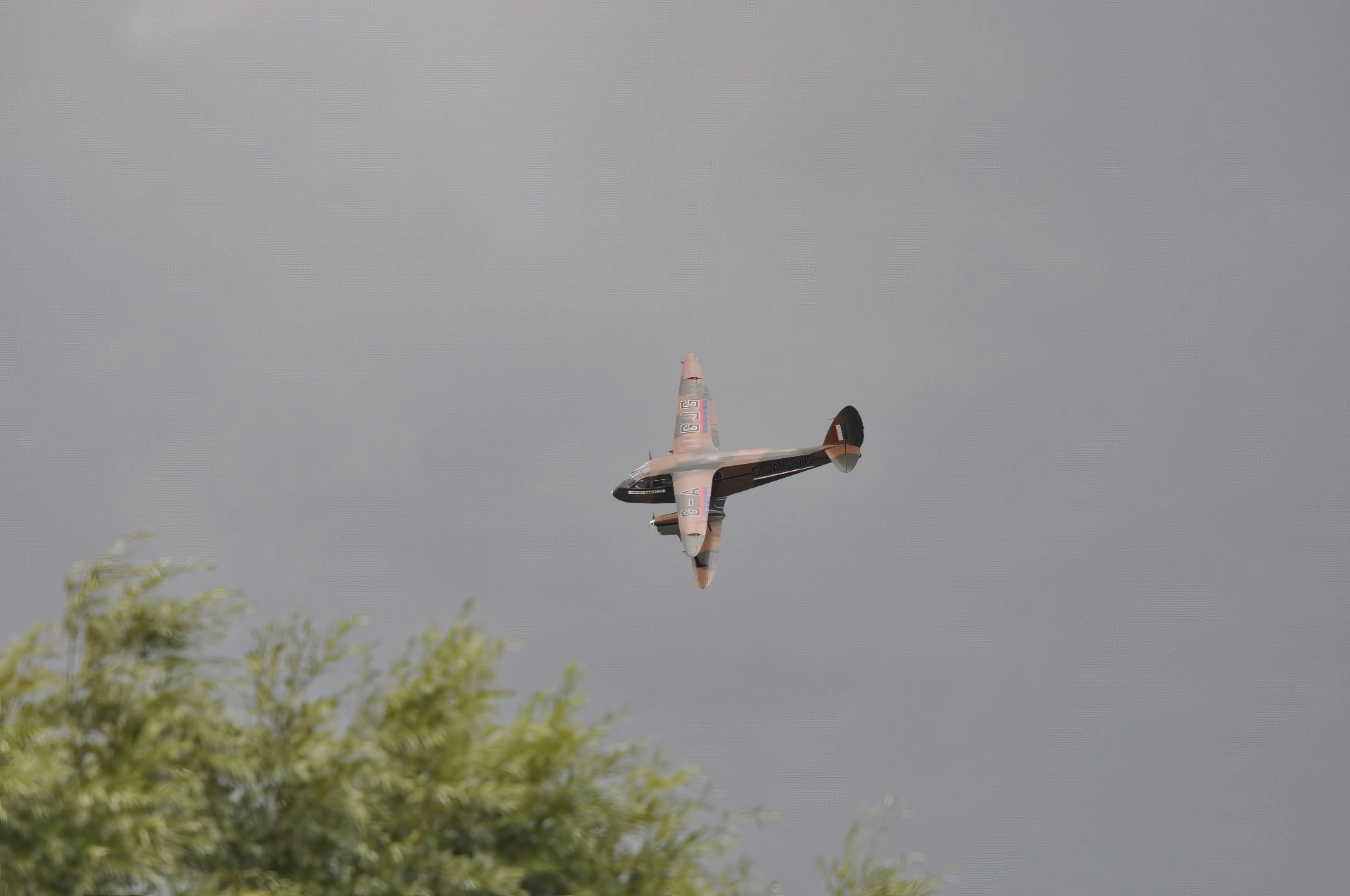
Den de Havilland DH.89 Drage Rapide is a 1930s short-haul biplane airliner developed and produced by British aircraft company de Havilland. Capable of accommodating 6–8 passengers, it proved an economical and durable craft, despite its relatively primitive plywood construction. Developed during the early 1930s, the Dragon Rapide was essentially a smaller, twin-engined version of the four-engined DH.86 Express, and shared a number of common features, such as its tapered wings, streamlined fairings and Gipsy Six engines. First named the “Dragon Six”, the type was marketed as “Dragon Rapide” and later simply known as the “Rapide”. Upon its introduction in summer 1934, it proved to be a popular aircraft with airlines and private civil operators alike, attaining considerable foreign sales in addition to its domestic use.
| de Havilland DH.89 Dragon Rapide Gå Rundt | |
|---|---|
| Fotograf | Unknow |
| Lokalisering | Unknow |
| Bilder | 30 |
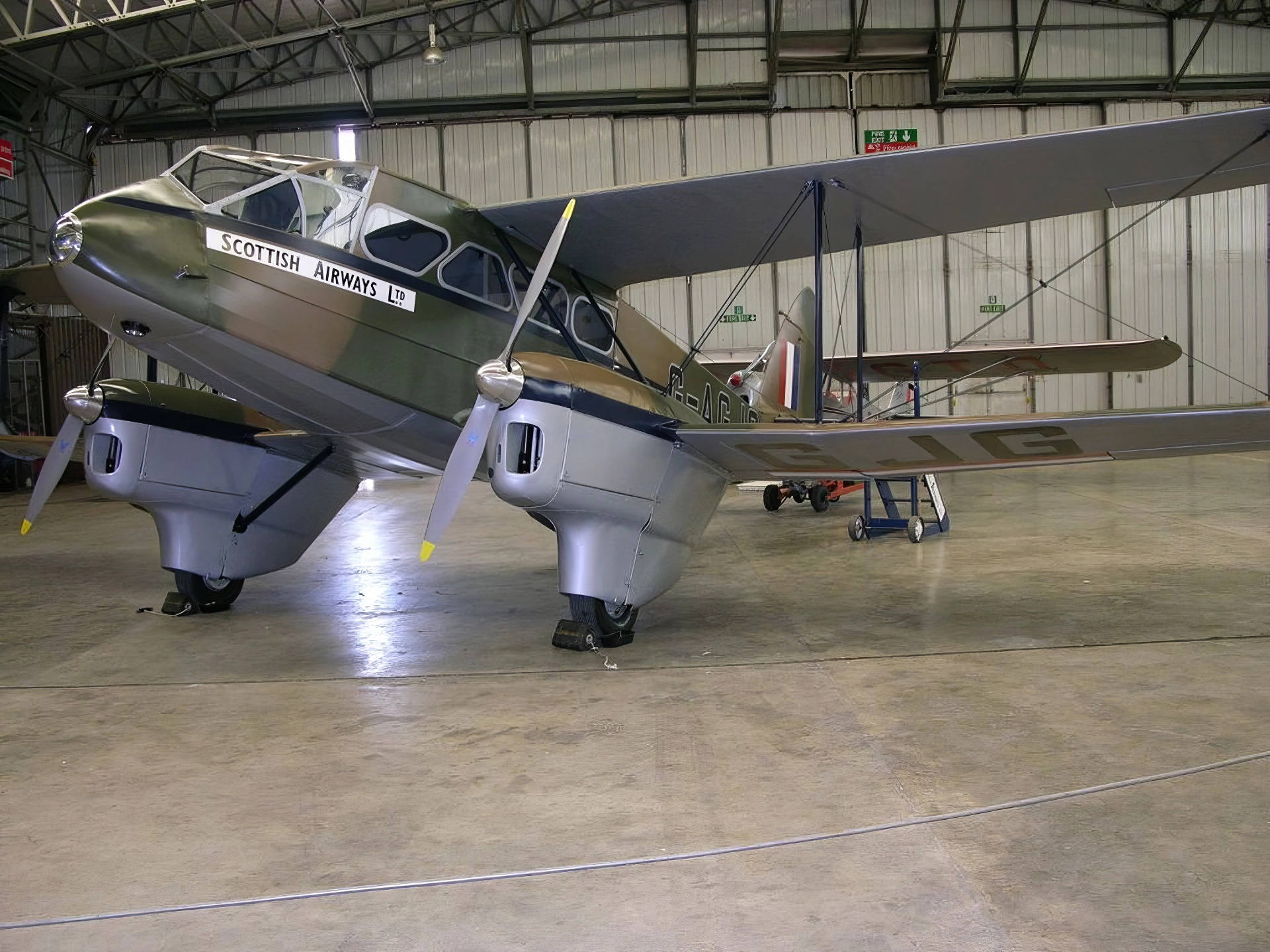
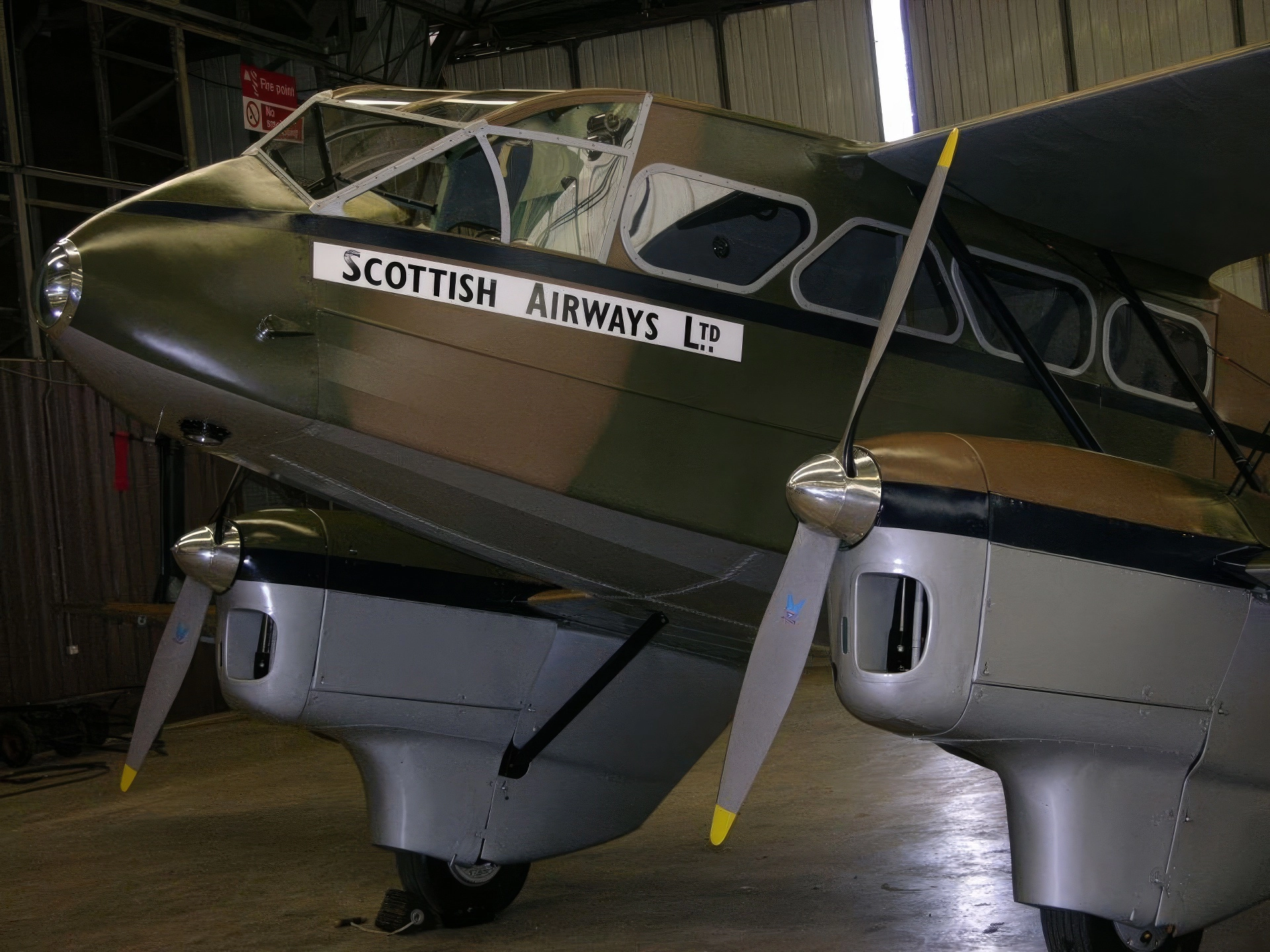
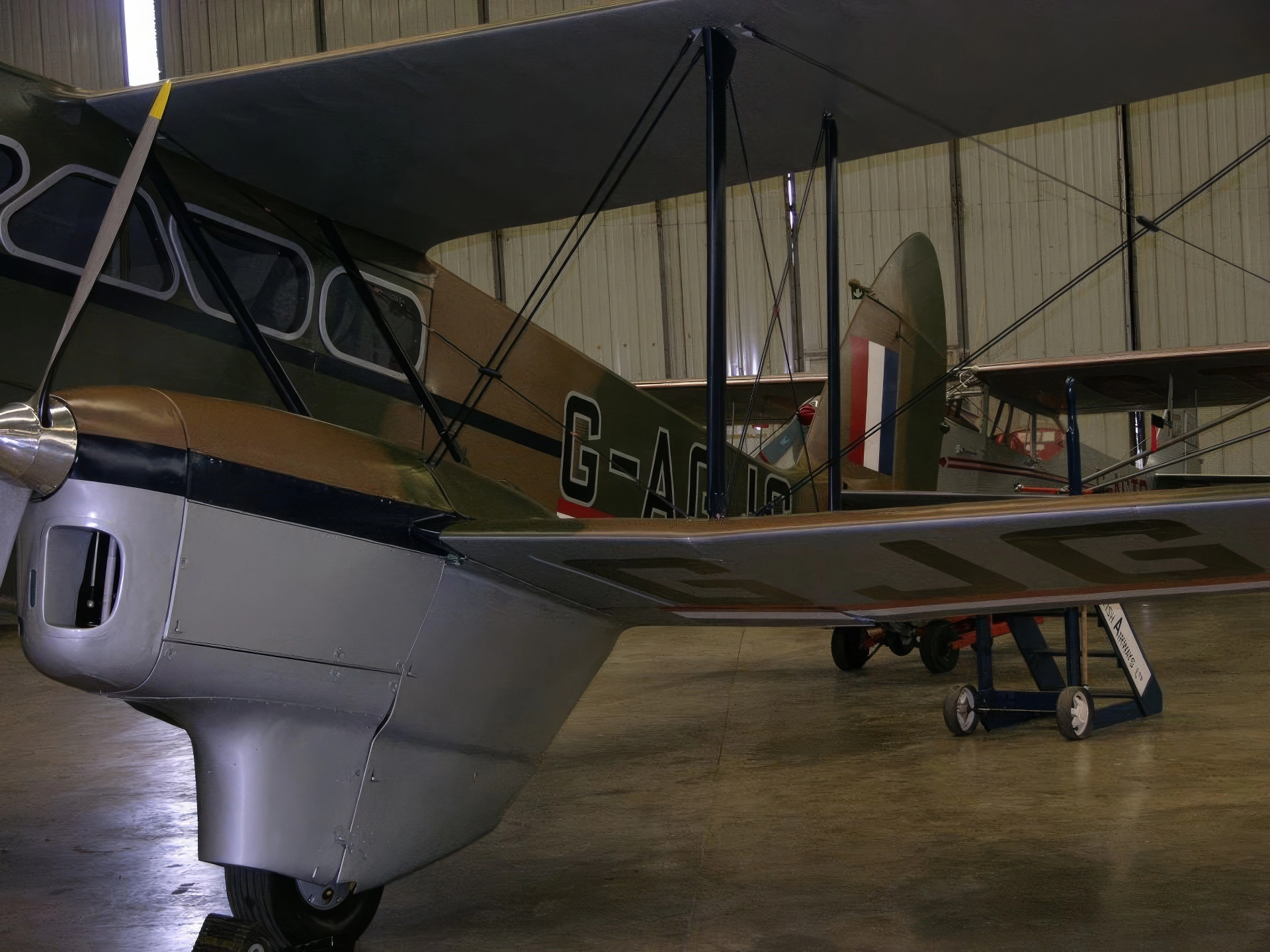


Les også:


General Characteristics
The de Havilland DH.89 Dragon Rapide is a classic British twin-engine biplane airliner from the 1930s. Designed as a faster and more comfortable successor to the DH.84 Dragon, it proved to be a highly successful, economical, and durable short-haul transport aircraft despite its primary construction of wood (spruce and plywood) and fabric skin. Its popularity was immense, and during World War II, many were pressed into military service with the RAF and Royal Navy as the de Havilland Dominie, primarily for navigation training and light transport roles.
| Property | Typical Value (DH.89A) |
|---|---|
| Rolle | Short-Haul Airliner, Transport, Trainer (as Dominie) |
| National Origin | Storbritannia |
| Produsenten | de Havilland flyselskap |
| First Flight | April 17, 1934 |
| No. Built | ~728 (including military Dominie) |
| Mannskapet | 1 (or 2) |
| Passenger Capacity | 6–8 |
| Lengde | 10.5 m (34 ft 6 in) |
| Vingespenn | 14.6 m (48 ft 0 in) |
| Max Takeoff Weight | 2,495 kg (5,500 lb) |
Powerplant and Performance
- Engine: 2 x de Havilland Gipsy Six 6-cylinder air-cooled, inverted inline piston engines. (Later variants sometimes used the Gipsy Queen engine).
- Power Output (each): 149 kW (200 hp).
- Maximum Speed: 253 km/h (157 mph) at 305 m (1,000 ft).
- Cruise Speed: 212 km/h (132 mph).
- Range: 920 km (573 miles).
- Service Ceiling: 5,090 m (16,700 ft).
- Key Variant Feature: The DH.89A introduced small trailing-edge flaps to the lower wings for improved landing performance.
Design and Operational History
- Design Concept: Essentially a twin-engine, scaled-down version of the four-engined DH.86 Express, sharing tapered wings and streamlined fairings.
- Construction: Featured a simple, durable, wood-frame and fabric-skin construction, which contributed to its low operating costs and commercial success.
- Wartime Service (Dominie): Served extensively during WWII as a reliable trainer, transport, and air ambulance for the RAF and Royal Navy.
- Legacy: A number of Dragon Rapides still fly today, a testament to their enduring design and reliability, nearly a century after their first flight.
Visninger : 1266
Du kan også se :
 de Havilland DH.104 Dove - Bilder og videoer
 de Havilland Canada DHC-2 - Bilder og videoer
 de Havilland DH.60 Moth - Bilder og videoer
 de Havilland DH112 Venom - Bilder og videoer
 de Havilland Canada DHC-4 Caribou - Bilder &; Video
 de Havilland Mosquito - Bilder &; Video
 de Havilland DH.88 Comet - Bilder og Video
 de Havilland Vampire - Bilder og Video
 de Havilland DH112 Venom - Bilder og Video
 de Havilland DH.82 Tiger Moth - Bilder og Video