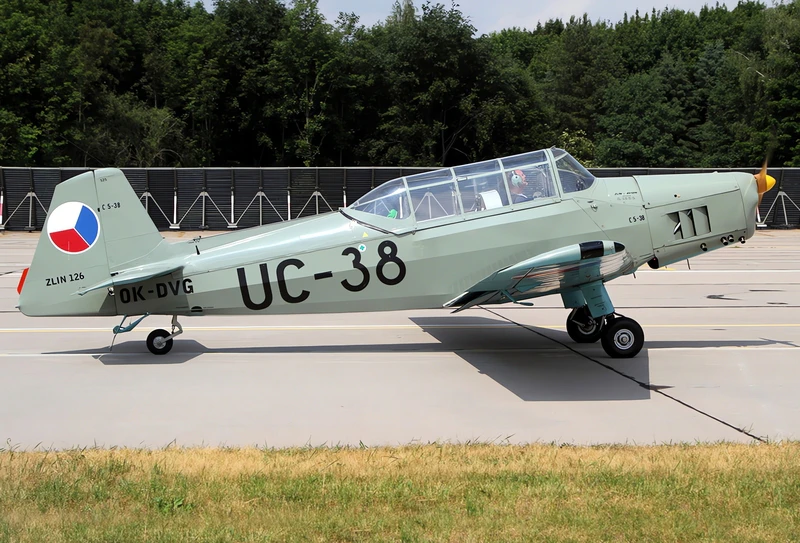
Zlin Z-26 Trener | |
|---|---|
| Paese | Cecoslovacchia |
| digitare | Aerei da addestramento |
| Prodotto | 1948–1977 |
| Costruito | Inconsapevole |
Le Zlin Z-26 Trener era un aereo da addestramento di base biposto costruito dalla società cecoslovacca Moravan. Un monoplano ad ala bassa di costruzione in gran parte in legno, è stato sviluppato in una serie di addestratori interamente in metallo. Molti sono stati prodotti anche in varianti acrobatiche, conosciute come Akrobat.
fonte: Zlin Z-26 Trener su Wiki
| Zlin Z-126 Trener | |
|---|---|
| Fotografo | Unknow |
| Localizzazione | Inconsapevole |
| Foto | 100 |

 Comprami un caffè

Vedi anche:


General Characteristics (Z-26 Original Variant)
The Zlin Z-26 Trener (“Trainer”) is the foundational aircraft of a successful family of Czechoslovakian tandem-seat trainers and single-seat aerobatic aircraft (Akrobat). Designed to replace older biplanes in the late 1940s, the Z-26 was known for its robust construction, stable handling, and excellent aerobatic capability, which led to a long service history and many international competition wins for its successors.
| Property | Typical Value (Z-26) |
|---|---|
| Ruolo | Basic Trainer / Aerobatic Aircraft |
| Produttore | Zlin / Moravan Otrokovice |
| First Flight | October 20, 1947 |
| Equipaggio | 2 (Student and Instructor, in tandem) |
| Lunghezza | 7.80 m (25 ft 7 in) |
| Apertura alare | 10.29 m (33 ft 9 in) |
| Empty Weight | 570 kg (1,257 lb) |
| Max Takeoff Weight | 820 kg (1,808 lb) |
Design and Powerplant
- Engine: One Walter Minor 4-III four-cylinder, air-cooled inverted in-line piston engine (Original Z-26). Later variants (Z-226, Z-326) used the more powerful Walter Minor 6-III six-cylinder engine.
- Horsepower: Approximately 78 kW (105 hp) for the Z-26; 118 kW (160 hp) for the Z-226/Z-326.
- Construction: Low-wing monoplane featuring mixed construction: a welded steel tube fuselage (fabric covered at the rear) and wooden wings (replaced by all-metal wings in the Z-126 variant).
- Landing Gear: Fixed tailwheel undercarriage (Original Z-26 and Z-126); later variants (Z-326 and up) featured an electrically retractable undercarriage.
- Purpose: The design philosophy focused on a highly maneuverable aircraft suitable for full aerobatics and instrument flying training.
Performance and Variants
- Maximum Speed (Z-26): Up to 220 km/h (137 mph, 119 knots).
- Maximum Speed (Z-226/Z-326): Up to 243 km/h (151 mph, 131 knots).
- Service Ceiling: Approximately 5,300 m (17,400 ft).
- Range: Approximately 485 km (301 miles).
- Rate of Climb: Approximately 5 m/s (980 ft/min).
- Key Variants (Progressive Development):
- Z-26: Original version (mixed construction, 4-cylinder engine, fixed gear).
- Z-126: Introduced an all-metal wing structure.
- Z-226: Introduced the 6-cylinder engine; produced in trainer (T) and single-seat aerobatic (A) versions.
- Z-326 Trener-Master: Introduced electrically retractable landing gear.
Punti di vista : 790
Puoi anche vedere:
 Sikorsky S-39 – Foto e Video
 North American NA-64 Yale – Foto e Video
 Sud-Ouest Triton – Foto e Video
 Culver PQ-14 Cadet – Foto e Video
 Northrop F-20 Tigershark – Foto e Video
 Aeronca L-3 – Foto e Video
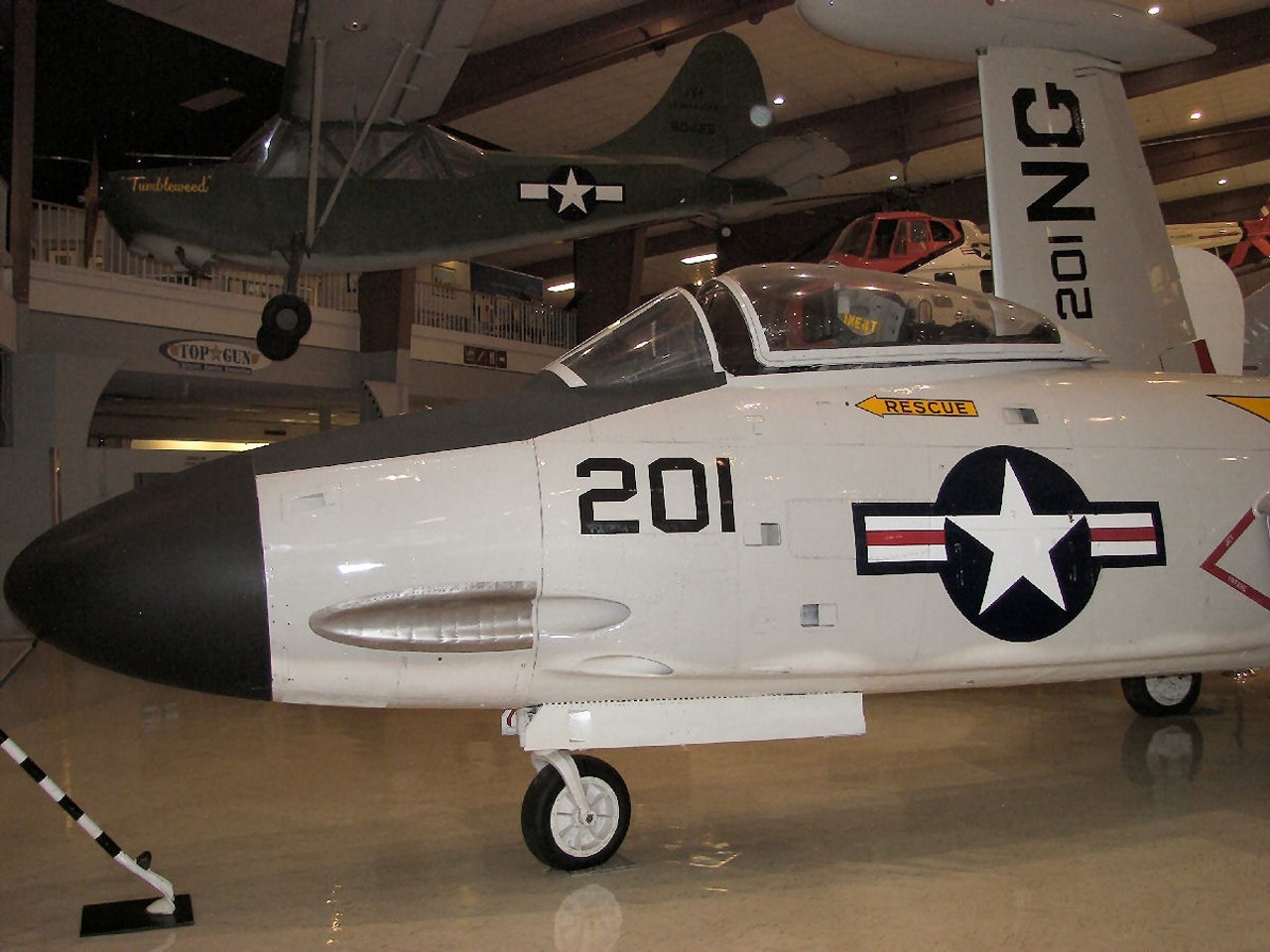 McDonnell F2H Banshee – Foto e Video
 Macchi MC-202 - WalkAround
 Battaglia di Fairey - WalkAround
 Hawker Sea Fury - Passeggiata in giro (Walk Around)