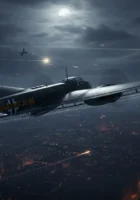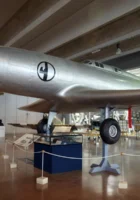
Campini-Caproni C.C.2

Caproni Campini N.1

PaeseItalia
RuoloAerei sperimentali
Primo voloIl 27 agosto 1940
Costruito2

Le Caproni Campini N.1, also known as the C.C.2, was an experimental jet aircraft built in the 1930s by Italian aircraft manufacturer Caproni. The N.1 first flew in 1940 and was briefly regarded as the first successful jet-powered aircraft in history, before news emerged of the German Heinkel He 178’s first flight a year earlier. During 1931, Italian aeronautics engineer Secondo Campini submitted his studies on jet propulsion, including a proposal for a so-called thermo-jet to power an aircraft. Following a high-profile demonstration of a jet-powered boat in Venice, Campini was rewarded with an initial contract issued by the Italian government to develop and manufacture his envisioned engine. During 1934, the Regia Aeronautica (the Italian Air Force) granted its approval to proceed with the production of a pair of jet-powered prototype aircraft. To produce this aircraft, which was officially designated as the N.1, Campini formed an arrangement with the larger Caproni aviation manufacturer.

fonte: Caproni Campini N.1 su Wiki

Continua a leggere

Visualizzazioni : 1907

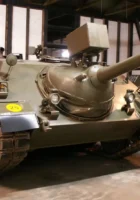
Jagdpanzer Kanone 90

Jagdpanzer Kanone 90

PaeseGermania Ovest
RuoloCacciacarri
Prodotto1965–1967
Costruito770

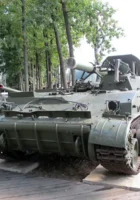
Le Kanonenjagdpanzer (KanJPz; noto anche come Jagdpanzer Kanone 90mm, "cacciacarri, cannone 90mm") era un cacciacarri tedesco della Guerra Fredda equipaggiato con un cannone anticarro da 90 mm preso dagli obsoleti carri armati M47 Patton. Il suo design era molto simile a quello del Jagdpanzer IV della seconda guerra mondiale.

fonte: Jagdpanzer Kanone 90 su Wikipedia

Continua a leggere

Visualizzazioni : 2768

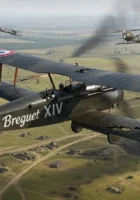
Breguet XIV war

Breguet XIV

PaeseFrancia
RuoloBomber
Primo volo21 novembre 1916
Costruito8000+

Le Bréguet 14 · was a French biplane bomber and reconnaissance aircraft of World War I. It was built in very large numbers and production continued for many years after the end of the war. Apart from its widespread usage, the Bréguet 14 is known for being among the first mass-produced aircraft to use large amounts of metal, rather than wood, in its structure. This allowed the airframe to be lighter than a wooden airframe of the same strength, in turn making the aircraft relatively fast and agile for its size; in combat it was able to outrun many contemporary fighters. The Bréguet 14’s strong construction allowed it to sustain considerable damage, in addition to being easy to handle and possessing favourable performance. The type has often been considered to have been one of the best aircraft of the war.

fonte: Breguet XIV su Wiki

Continua a leggere

Punti di vista: 1682

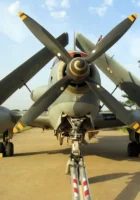
Breguet Aviation Br.1050 Alize

Bréguet 1050 Alizé

PaeseFrancia
RuoloAerei antisommergibile
Primo volo6 ottobre 1956
Costruito89

Le Bréguet Br.1050 Alizé Il "Tradewind") era un aereo da guerra antisommergibile francese. Fu sviluppato negli anni '50, liberamente basato sul secondo prototipo di aereo d'attacco Bréguet Vultur che era stato modificato nell'aereo da guerra antisommergibile Bréguet Br.965 Épaulard.

fonte: Bréguet 1050 Alizé su Wiki

Continua a leggere

Visualizzazioni : 2417

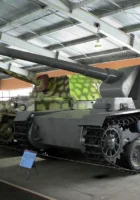
Sturer Emil 12.8cm Kanone L61

Sturer Emil

PaeseGermania nazista
RuoloCacciacarri pesante
In servizio1942-1943
Costruito2

Il 12.8 cm Selbstfahrlafette auf VK 30.01(H) "Sturer Emil" (tedesco per "Stubborn Emil") era un cannone anticarro semovente tedesco sperimentale della seconda guerra mondiale. Era basato sul telaio Henschel VK30.01 e armato con un cannone Rheinmetall K40 L/61 da 12,8 cm (basato sul FlaK 40 da 12,8 cm). Questa pistola poteva attraversare 7 ° su ciascun lato, elevare di 10 ° e premere -15 °. Trasportava 15 colpi per la pistola principale.

fonte: Sturer Emil su Wikipedia

Continua a leggere

Visualizzazioni : 2958

Junkers Ju 86 war

Junkers Ju 86

PaeseGermania nazista
RuoloBombardiere, aereo di linea, aereo da ricognizione
Primo volo4 novembre 1934
Costruito900

Le Junkers Ju 86 era un bombardiere monoplano tedesco e un aereo di linea civile progettato nei primi anni 1930 e impiegato da varie forze aeree su entrambi i lati durante la seconda guerra mondiale. Il modello civile Ju 86B poteva trasportare dieci passeggeri. Due sono stati consegnati a Swissair e cinque a Deutsche Luft Hansa. Inoltre, un singolo Ju 86Z civile è stato consegnato alla svedese AB Aerotransport.

fonte: Junkers Ju 86 su Wikipedia

Continua a leggere

Visualizzazioni : 2157

2S4 Tiulpan

2S4 Tyulpan

PaeseUnione Sovietica
RuoloMalta semovente
Prodotto1969–1988
Costruito588

Le 2S4 Tiulpan (spesso scritto Tulpan, russo: 2С4 «Тюльпан»; Tulipano) è un mortaio pesante semovente sovietico da 240 mm. "2S4" è la sua designazione GRAU. Il Tyulpan è il più grande sistema di malta in uso oggi.

fonte: 2S4 Tyulpan su Wikipedia

Continua a leggere

Views : 1889

JH 7A Leopardo Volante

Xi’an JH-7

PaeseRepubblica popolare cinese
RuoloCacciabombardardo
Primo volo14 dicembre 1988
Costruito270+

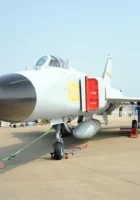
Lo Xi'an JH-7 (Jianjiji Hongzhaji – cacciabombardardardo; Il Nome flounder ( Nato Reporting Name Flounder), noto anche come FBC-1 (Fighter/Bomber China-1) Flying Leopard, è un cacciabombardardo bimotore tandem in servizio con la People's Liberation Army Naval Air Force (PLANAF), e la People's Liberation Army Air Force (PLAAF). I principali contraenti sono Xi'an Aircraft Industrial Corporation (XAC) e il 603rd Aircraft Design Institute (in seguito chiamato First Aircraft Institute of AVIC-I).

fonte: Xi'an JH-7 su Wikipedia

Continua a leggere

Numero visioni : 1033

Nachang A-5 Fantan

Nanchang Q-5

PaeseRepubblica popolare cinese
RuoloAerei da attacco al suolo
Primo volo10 giugno 1965
Costruito1300+

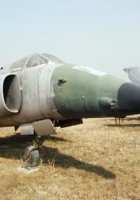
Le Nanchang Q-5 (Cinese: 强-5; pinyin: Qiang-5; Fantan, noto anche come A-5 nelle sue versioni di esportazione, è un aereo da attacco a terra monoposto a doppio motore a reazione di costruzione cinese basato sul MiG-19 sovietico. Tuttavia, l'aereo è utilizzato principalmente per il supporto aereo ravvicinato.

fonte: Nanchang Q-5 su Wikipedia

Continua a leggere

Visualizzazioni: 1633