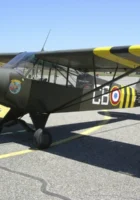
Piper PA-18 Super Cub

Piper PA-18

Paese Usa
Ruolo Aerei utilitari leggeri
Primo volo 1949
Costruito 10326
Le Piper PA-18 Super Cub è un monoplano monomotore biposto. Introdotto nel 1949 dalla Piper Aircraft, è stato sviluppato dal Piper PA-11 e fa risalire il suo lignaggio attraverso il J-3 al Taylor E-2 Cub del 1930. In quasi 40 anni di produzione, ne sono stati costruiti oltre 10.000. I Super Cubs si trovano comunemente in ruoli come il bush flying, il traino di striscioni e il traino di alianti.
fonte: Piper PA-18 su Wikipedia
Continua a leggere

Punti di vista: 1364

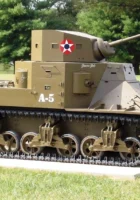
M2A1 Serbatoio leggero

M2 light tank

PaeseUsa
RuoloCarro leggero
Prodotto1935–42
Costruito698

Le Serbatoio leggero M2, officially Light Tank, M2, was an American pre–World War II light tank which saw limited use during World War II. The most common model, the M2A4, was equipped with one 37 mm (1.5 in) M5 gun and five .30 cal M1919 Browning machine guns. It was originally developed from the prototype T2 light tank built by Rock Island Arsenal, which had a Vickers-type leaf spring suspension. The suspension was replaced by the superior vertical volute system in the T2E1 series of 1935. This was put into production with minor modifications as the M2A1 in 1936, with ten produced. The main pre-war version was the M2A2, with 239 produced, becoming the main tank in the US Army infantry units in the interwar period. The Spanish Civil War showed that tanks armed only with machine guns were ineffective. This led to the M2A4 with a 37 mm gun as the main armament. A total of 375 were delivered, the last ten as late as April 1942.

fonte: Carro armato leggero M2 su Wikipedia

Continua a leggere

Visualizzazioni : 1297

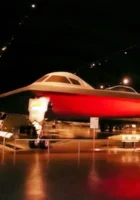
Northrop B-2 Spirito

Northrop Grumman B-2 Spirit

PaeseUsa
RuoloBombardiere pesante strategico stealth
Primo volo17 luglio 1989
Costruito21

Le Northrop (in seguito Northrop Grumman) B-2 Spirit, noto anche come Stealth Bomber, è un bombardiere strategico pesante americano, con tecnologia stealth a bassa osservabilità progettato per penetrare dense difese antiaeree. Progettato durante la Guerra Fredda, è un progetto di ala volante con un equipaggio di due persone. Il bombardiere è subsonico e può schierare sia armi convenzionali che termonucleari, come fino a ottanta bombe a guida GPS Mk 82 JDAM di classe 500 libbre (230 kg) o sedici bombe nucleari B83 da 2.400 libbre (1.100 kg). Il B-2 è l'unico velivolo riconosciuto in grado di trasportare grandi armi standoff aria-superficie in una configurazione stealth.

fonte: Northrop Grumman B-2 Spirit su Wikipedia

Continua a leggere

Punti di vista : 937

Morris Auto blindata

Morris CS9

PaeseRegno unito
RuoloAuto blindata leggera
Periodo1936+
CostruitoInconsapevole

Il veicolo era basato su un Morris Commercial C9 4×2 15 long cwt (760 kg) truck chassis. On this chassis, a riveted hull was mounted with an open-topped two-man turret. The armament consisted of either Boys anti-tank rifle and Bren light machine gun or Vickers machine gun. The vehicle carried a No. 19 radio set. The prototype was tested in 1936. A further 99 cars were ordered and were delivered in 1938. Thirty-eight of these cars were used by the 12th Royal Lancers in the Battle of France, where all of them were destroyed or abandoned. Another 30 served with the 11th Hussars in the North African Campaign. It was found that, when fitted with desert tyres, the vehicle had good performance on soft sand. However, its armour and armament were insufficient. The vehicle was retired halfway through the North African Campaign.

fonte: Morris CS9 su Wikipedia

Continua a leggere

Visualizzazioni: 935

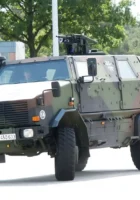
ATF Dingo 2A2-A2,3

ATF Dingo

PaeseGermania
RuoloVeicolo di mobilità della fanteria
In servizio2000 – Presente
CostruitoInconsapevole

Le ATF Dingo is a German heavily armored military MRAP infantry mobility vehicle based on a Unimog chassis with a V-hull design, produced by the company Krauss-Maffei Wegmann (KMW). The first prototype of the Dingo 1 was completed in 1995 and the first production Dingo 1 entered service in 2000 with the German Army. It is designed to withstand land mines, rifle fire, artillery fragments and NBC-threats. ATF stands for Allschutz-Transport-Fahrzeug, meaning all-protected transport vehicle in German. It is named after the Australian native dog, the dingo. The Dingo 2 entered service in late 2004 after undergoing trials from November 2003-May 2004. Currently KMW is developing the Dingo 2 GFF for the German Army with increased internal volume. Textron signed an exclusive deal to produce and market KMW’s Dingo in the United States. However, Textron chose its own more expensive and heavier M1117 Armored Security Vehicle for the MRAP competition, which did not receive a contract.

fonte: ATF Dingo su Wikipedia

Continua a leggere

Visualizzazioni : 1286

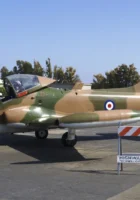
British Aircraft Jet Provost T.Mk.5A

BAC Jet Provost

PaeseRegno unito
RuoloAerei da addestramento militare
Primo volo26 giugno 1954
Costruito734

Le BAC Jet Provost è un aereo da addestramento a reazione britannico che è stato in uso con la Royal Air Force (RAF) dal 1955 al 1993. È stato originariamente sviluppato da Hunting Percival dal precedente addestratore di base Percival Provost con motore a pistoni, e successivamente prodotto dalla British Aircraft Corporation (BAC). Oltre ai molteplici ordini della RAF, il Jet Provost, a volte con armamento leggero, fu esportato in molte forze aeree in tutto il mondo. Il progetto è stato anche ulteriormente sviluppato in una variante di attacco al suolo più pesantemente armata sotto il nome di BAC Strikemaster.

fonte: BAC Jet Provost su Wikipedia

Continua a leggere

Visualizzazioni : 960

Sd.Kfz. 250 war

Sd.Kfz. 250

PaeseGermania
digitareVeicolo corazzato semicingolato per il trasporto di personale
In servizio1941–1945
Costruito6600+

Le Sd.Kfz. 250 (German: Sonderkraftfahrzeug 250; ‘special motor vehicle’) was a light armoured half-track, very similar in appearance to the larger Hanomag-designed Sd.Kfz. 251, and built by the DEMAG firm, for use by Nazi Germany in World War II. Most variants were open-topped and had a single access door in the rear. The Sd. Kfz 250 was adopted in 1939 to supplement the standard half-track. Production delays meant that the first vehicle did not appear until mid-1941.

fonte: Sd.Kfz. 250 su Wikipedia

Continua a leggere

Punti di vista : 3499

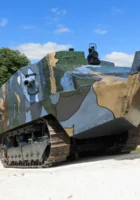
Schneider CA1

Schneider CA1

PaeseFrancia
digitareCarro pesante
In servizio1916–1918 (Francia) / 1921–1936 (Spagna)
Costruito400

Le Schneider CA 1 (originally named the Schneider CA) was the first French tank, developed during the First World War. The Schneider was inspired by the need to overcome the stalemate of trench warfare which on the Western Front prevailed during most of the Great War. It was designed specifically to open passages for the infantry through barbed wire and then to suppress German machine gun nests. After a first concept by Jacques Quellennec devised in November 1914, the type was developed from May 1915 onwards by engineer Eugène Brillié, paralleling British development of tanks the same year. Colonel Jean Baptiste Eugène Estienne in December 1915 began to urge for the formation of French armoured units, leading to an order in February 1916 for four hundred Schneider CA tanks, which were manufactured by SOMUA, a subsidiary of Schneider located in a suburb of Paris, between September 1916 and August 1918.

fonte: Schneider CA1 su Wkipedia

Continua a leggere

Punti di vista: 1881

Opel Olympia

Opel Olympia

PaeseGermania
digitareAuto
Produzione1935–1970
CostruitoInconsapevole

Le Opel Olympia is a compact car produced by the German automaker Opel from 1935 to 1940, from 1947 to 1953 and again from 1967 to 1970. The 1935 Olympia was Germany’s first mass-produced car with an all-steel unitized body (monocoque). This revolutionary technology reduced the weight of the car by 180 kilograms (400 lb.) compared to its predecessor. Production of the unibody design required new production methods and materials. Spot welding, advanced types of steel, and a new production line layout were among the many advances introduced by the Olympia.

fonte: Opel Olympia su Wikipedia

Continua a leggere

Visualizzazioni : 1707

Bartini Beriev VVA-14

Bartini Beriev VVA-14

PaeseUnione Sovietica
digitareAerei anfibi ASW
Primo volo4 settembre 1972
Costruito2

Le Bartini Beriev VVA-14 Vertikaľno-Vzletayushchaya Amfibiya (aereo anfibio a decollo verticale) era un aereo ad effetto ala-in-terra sviluppato in Unione Sovietica durante i primi anni 1970. Progettato per essere in grado di decollare dall'acqua e volare ad alta velocità su lunghe distanze, doveva fare veri voli ad alta quota, ma anche avere la capacità di volare in modo efficiente appena sopra la superficie del mare, utilizzando l'effetto suolo aerodinamico. Il VVA-14 è stato progettato dal designer italiano Robert Bartini in risposta a un requisito percepito di distruggere i sottomarini missilistici Polaris della Marina degli Stati Uniti. L'ultimo aereo fu ritirato nel 1987.

fonte: Bartini Beriev VVA-14 su Wiki

Continua a leggere

Punti di vista : 3499