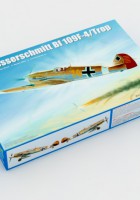
Messerschmitt Bf 109F-4/Trop - Trombettista 02293

Trumpeter

Ref 02293
digitareKit modello
Scala1/32
Argomento

Messerschmitt Bf 109F-4/Trop

Un modello del marchio Trumpeter il kit: Messerschmitt Bf 109F-4/Trop – Trumpeter 02293.

Features : The kit consists of over 240 parts Fuselage -Left and right fuselage moulded w/ authentic details Engine -Finely detailed engine. Interior -Finely detailed engine accessory compartment, -Finely detailed cockpit Wings – Optional position flaps – Rubber tires. PE -Photo-etched parts to upgrade details

The second major redesign of Bf109 is the F series. The “Friedrich” saw a complete redesign of the wings, the cooling system and fuselage aerodynamics, and was powered by the 1,175 PS DB 601N (F-1, F-2) or the 1,350 PS DB 601E (F-3, F-4). Considered by many as the high watermark of the Bf 109 development, the F series abandoned the wing cannon and concentrated all armament in the forward fuselage: a pair of machine guns above and a single 15 or 20mm cannon behind the engine, the latter firing between the cylinder banks and through the propeller hub and spinner. This configuration was used by all subsequent variants. A handful of Bf 109Fs were used operationally late in the Battle of Britain in 1940, but only become widespread in service in the first half of 1941, replacing the Bf109E.

fonte: Trombettista

Continua a leggere

Visualizzazioni : 2414

Sturmgeschütz

Sturmgeschütz

Argomento

Album di 156 foto dello Sturmgeschütz

PeriodoSeconda guerra mondiale
EsercitoWehrmacht tedesca

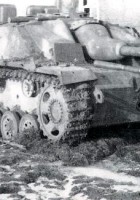
Sturmgeschütz (or StuG) is an “assault gun” used by the German Wehrmacht during the Second World War. The vehicle was built on the chassis of the proven Panzer III. Initially intended as a mobile, armoured light gun for providing close fire support to infantry, panzer, and panzergrenadier units, the StuG was continually modified throughout its existence. It was often used as a mobile artillery platform to destroy bunkers, pillboxes and other entrenched positions. After the invasion of Soviet Russia in 1941, the StuG III was also converted to use as a tank destroyer because its main armament was the only weapon with sufficient power to take on the Soviet T-34 or KV-1 tanks. It would go on to become Nazi Germany’s most produced armoured fighting vehicle during World War II. The StuG was used primarily within the Sturmartillerie, a branch of the artillery in the Wehrmacht.

fonte:

Continua a leggere

Views : 5744

Medal "For the Defence of Leningrad"

Unione Sovietica

digitareMedaglia della campagna
AmmissibilitàCittadini dell'Unione Sovietica
Premiato perParticipation in the defence of Leningrad
Stabilito22 dicembre 1942
Totale assegnato1,470,000

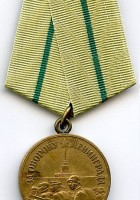
The Medal “For the Defence of Leningrad” was a World War 2 campaign medal of the Soviet Union established on December 22, 1942 by decree of the Presidium of the Supreme Soviet of the USSR to recognise the valour and hard work of the Soviet civilian and military defenders of Leningrad during the 872 day siege of the city by the German armed forces between September 8, 1941 and January 27, 1944.

fonte: Wikipedia

Continua a leggere

Views : 1338

Imperial Japanese Army Type 95 Light Tank "Ha-Go" Early Production - DML 6767

Dragon Model

Ref 6767
digitare1/35 Militare
Scala1/35
Argomento

Imperial Japanese Army Type 95 Light Tank “Ha-Go” Early Production

Un modello del marchio Modello drago il kit : Imperial Japanese Army Type 95 Light Tank "Ha-Go" Early Production – DML 6767

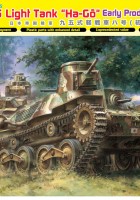
Dragon has introduced a great many exciting new kits in 2012, and there is one more 1/35 scale AFV gem to come this year. The new item is a Type 95 “Ha-Go” light tank of the Imperial Japanese Army (IJA). The Type 95 tank was used in combat against China and Russia, as well as fully participating in operations in WWII. Weighing just 7.4 tonnes, it was designed primarily as an infantry support weapon. Indeed, it was the most common light tank used by the IJA in the Pacific, with about 2,300 units manufactured. It had a crew of three, and the main armament was a Type 94 37mm gun. Its maximum speed was 45km/h.

The kit depicts an Early-Production variant and it’s based on actual measurements from real tanks. Although it’s a small vehicle, Dragon’s 1/35 scale kit is brimming with detail, something facilitated by the widespread use of slide molds. In fact, every single sprue in the kit employs slide molds, which is an astounding achievement! For example, the turret is of single-piece construction, with the multi-directional slide mold allowing details such as rivets to be rendered. The commander’s cupola is a similar story. The one piece lower hull has the correct armor panels and bolts on it. The upper hull is also one piece, and the gun barrel has a hollow end. The road wheels, idlers, sprockets and return rollers are slide-molded too. The DS slide-molded track links are accurately replicated in miniature so as to incorporate side details. This is an extremely exciting subject from Dragon, and because the Ha-Go was used in such diverse locations, modelers can produce any scenario such as jungle-clad terrain or a Pacific island!

fonte: Modelli di Dragon

Continua a leggere

Numero visioni : 1366

Pz.Kpfw.III (5cm) Ausf.G, Sd.Kfz.141, Produzione precoce - DML 6639

Dragon Model

Ref 6639
digitare1/35 Militare
Scala1/35
Argomento

Pz.Kpfw.III (5cm) Ausf.G, Sd.Kfz.141, Early Production

Un modello del marchio Modello drago il kit : Pz.Kpfw.III (5cm) Ausf.G, Sd.Kfz.141, Early Production – DML 6639

Storia: Panzer III era il nome comune di un carro armato medio che è stato sviluppato nel 1930 dalla Germania ed è stato ampiamente utilizzato nella seconda guerra mondiale. La designazione ufficiale tedesca era Panzerkampfwagen III Sd Kfz. 141 (abbreviato PzKpfw III) che si traduce come "veicolo corazzato da combattimento". Era destinato a combattere altri veicoli corazzati da combattimento e servire a fianco del Panzer IV che supportava la fanteria. Tuttavia, mentre i tedeschi affrontavano il formidabile T-34, erano necessari cannoni anticarro più forti. Poiché il Panzer IV aveva un anello di torretta più grande, il ruolo fu invertito. Il Panzer IV montò il cannone KwK 40 a canna lunga da 7,5 cm e si impegnò in battaglie tra carri armati. Il Panzer III divenne obsoleto in questo ruolo e per la maggior parte degli scopi fu soppiantato dal Panzer IV. Dal 1942, l'ultima versione del Panzer III montava il 7,5 cm KwK 37 L/24, più adatto per il supporto della fanteria. La produzione del Panzer III terminò nel 1943. Tuttavia, il telaio capace del Panzer III fornì scafi per lo Sturmgeschütz III fino alla fine della guerra.

fonte: Wikipedia e Modelli di Dragon

Continua a leggere

Visualizzazioni : 1378

Antonov AN-2W Colt - HOBBY BOSS 81706

Hobby Boss

Oggetto

Antonov AN-2W Colt

Scala1/48
Ref81706

Un modello del marchio HobbyBoss il kit : Antonov AN-2W Colt – HOBBY BOSS 81706

Caratteristiche : the kit consists of over 230+ parts -Detailed fuselage&wing w/accurate design -Detailed cockpit

The An-2 Colt has been used as a paratroop transport, glider tug, navigation trainer, utility transport and light bomber. The An-2 prototype was first flown on August 31, 1947, and the aircraft is still in production, although the Antonov Bureau has not produced any since 1960. The An-2s designer, Oleg Antonov, had been an aircraft designer during the Second World War. Originally designed for the Ministry of Agriculture and Forestry in the former Soviet Union, the aircraft was soon adopted by the Soviet Air Force and built for its client states. It is ideally suited to less developed countries because it requires little maintenance and is easy to fly.

fonte: Hobby Boss

Continua a leggere

Visualizzazioni: 963

Pz.Kpfw.VI Tiger I Ausf.E produzione media - ITALERI 6507

Italeri

Ref 6507
digitareKit modello
Scala1/35
Argomento

Pz.Kpfw.VI Tiger I Ausf.E a metà produzione

Un modello del marchio Italeri il kit Pz.Kpfw.VI Tiger I Ausf.E mid production – ITALERI 6507.

Le Tigre I Il carro armato, che è stato prodotto nella seconda metà del 1943, era basato sullo scafo della prima versione operativa utilizzata in Nord Africa e Russia. All'inizio questo carro armato aveva ruote con cerchio in gomma, che verranno sostituite nelle produzioni successive a partire dal febbraio 1944, ma fu dotato della nuova torretta con protezione maggiorata e cupola migliore per il comandante. Inoltre, alcuni di questi veicoli mantenevano il caratteristico sistema di filtri antipolvere, Feifel e i lanciagranate fumogene. Sui carri armati prodotti a partire dall'agosto 1943 fu applicata anche una pasta magnetica da mina che diventerà standard su tutti i carri armati dell'esercito tedesco.

fonte: Italeri

Continua a leggere

Visualizzazioni : 1721

Sd. Kfz. 251/16 Flammpanzerwagen - ITALERI 7067

Italeri

Ref 7067
digitareKit modello
Scala1/72
Oggetto

Sd. Kfz. 251/16 Flammpanzerwagen

Un modello del marchio Italeri il kit Sd. Kfz. 251/16 Flammpanzerwagen – ITALERI 7067.

Storia:

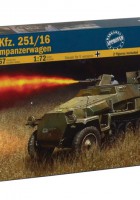
The Sd.Kfz.251 half-track was an armored fighting vehicle and was used by the Wehrmacht on all fronts, during the Second World War. Powered by a Maybach 6-cylinder petrol engine was able to achieve, even in off-road terrain, the speed of 55 km / h. Produced in huge numbers, it was mainly used to transport the “Panzergranadiers” but, during the war, several versions has been developed to meet various operational needs. The half-track Sd.Kfz. 251/16 Flammpanzerwagen was developed as real flame tank to support infantry attacks against fortification or enemy positions. It was equipped with two flamethrowers on the sides of the vehicle. Furthermore, inside the vehicle, two tanks of flammable liquid, that allowed weapons to operate for about 160 seconds, has been installed.

fonte: Italeri

Continua a leggere

Visualizzazioni : 1540

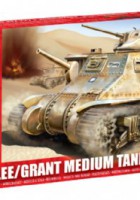
M3 Lee Grant Medium Tank - Airfix A01317

Airfix

RefA01317
digitareKit modello
Scala1/76
Argomento

M3 Lee Grant Carro medio

Un modello del marchio Airfix il kit : M3 Lee Grant Medium Tank – Airfix A01317.

Chiamato Generale Lee se equipaggiato con la torretta più alta progettata dall'America e il General Grant se equipaggiato con la torretta più piccola costruita dai britannici, il Lee Grant fu uno dei primi carri armati americani a raggiungere gli inglesi durante la seconda guerra mondiale. Utilizzato anche in tutto il Pacifico, il Lee Grant portò alla progettazione del carro armato Sherman, il carro armato più importante e numericamente vitale degli Alleati della guerra.

fonte: M3 Lee Grant Medium Tank su Airfix

Continua a leggere

Punti di vista: 1681

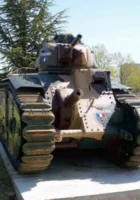
Renault B1 Bis

Renault B1 bis

PaeseFrancia
Modello

B1 bis

digitareCarro pesante
In servizio1936–1940 (Francia)
Costruito405)

Galleria fotografica di un Renault B1 bis, Lo sviluppo del serbatoio si è rivelato un processo lungo e non è stato standardizzato immediatamente a causa di problemi economici, politici e internazionali. Per gli stessi motivi, le quantità ordinate sono state mantenute ridotte. Un primo ordine di «serie» è firmato il 6 aprile 1934 per 7 esemplari, un secondo nell'ottobre 1934 per altri 20 e l'ultimo un terzo di 5 il 29 aprile 1935. 50, con i 3 prototipi, il totale ammonta a 35 esemplari, sufficienti per equipaggiare un battaglione completo. La costruzione è affidata ai diversi co-appaltatori del programma, l'assemblaggio finale è responsabilità sia di Renault che di FCM.

fonte: Tracce

Continua a leggere

Visualizzazioni : 5630