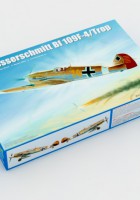
Messerschmitt Bf 109F-4/Trop - Trubec 02293

Trumpeter

Ref 02293
TypSúprava modelov
Rozsahu1/32
Tému

Messerschmitt Bf 109F-4/Trop

Model značky Trumpeter súprava: Messerschmitt Bf 109F-4/Trop – Trumpeter 02293.

Features : The kit consists of over 240 parts Fuselage -Left and right fuselage moulded w/ authentic details Engine -Finely detailed engine. Interior -Finely detailed engine accessory compartment, -Finely detailed cockpit Wings – Optional position flaps – Rubber tires. PE -Photo-etched parts to upgrade details

Druhým veľkým redizajnom Bf109 je séria F. "Friedrich" videl kompletný redizajn krídel, chladiaceho systému a aerodynamiky trupu a bol poháňaný 1 175 PS DB 601N (F-1, F-2) alebo 1 350 PS DB 601E (F-3, F-4). Séria F, ktorú mnohí považujú za vysoký vodoznak vývoja Bf 109, opustila krídlové delo a sústredila všetku výzbroj do predného trupu: dvojicu guľometov vyššie a jediné 15 alebo 20 mm delo za motorom, ktoré strieľalo medzi brehmi valcov a cez náboj vrtule a spinner. Túto konfiguráciu používali všetky nasledujúce varianty. Hŕstka Bf 109F bola použitá operatívne neskoro v bitke o Britániu v roku 1940, ale v prevádzke sa rozšírila až v prvej polovici roku 1941 a nahradila Bf109E.

Zdrojový: Trumpeter (Volút)

Pokračovať v čítaní

Počet videní : 2414

Sturmgeschütz

Sturmgeschütz

Tému

Album 156 fotografií Sturmgeschütz

ObdobieDruhá svetová vojna
ArmádaNemecký Wehrmacht

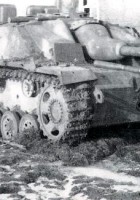
Sturmgeschütz (or StuG) is an “assault gun” used by the German Wehrmacht during the Second World War. The vehicle was built on the chassis of the proven Panzer III. Initially intended as a mobile, armoured light gun for providing close fire support to infantry, panzer, and panzergrenadier units, the StuG was continually modified throughout its existence. It was often used as a mobile artillery platform to destroy bunkers, pillboxes and other entrenched positions. After the invasion of Soviet Russia in 1941, the StuG III was also converted to use as a tank destroyer because its main armament was the only weapon with sufficient power to take on the Soviet T-34 or KV-1 tanks. It would go on to become Nazi Germany’s most produced armoured fighting vehicle during World War II. The StuG was used primarily within the Sturmartillerie, a branch of the artillery in the Wehrmacht.

Zdrojový:

Pokračovať v čítaní

Views : 5744

Medal "For the Defence of Leningrad"

Sovietsky zväz

TypMedaila kampane
SpôsobilosťObčania Sovietskeho zväzu
Udelené zaParticipation in the defence of Leningrad
Stanovené22. decembra 1942
Celkový počet udelených grantov1,470,000

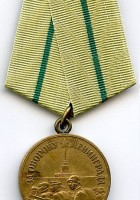
The Medal “For the Defence of Leningrad” was a World War 2 campaign medal of the Soviet Union established on December 22, 1942 by decree of the Presidium of the Supreme Soviet of the USSR to recognise the valour and hard work of the Soviet civilian and military defenders of Leningrad during the 872 day siege of the city by the German armed forces between September 8, 1941 and January 27, 1944.

Zdrojový: Wikipedia

Pokračovať v čítaní

Pohľady : 1338

Imperial Japanese Army Type 95 Light Tank "Ha-Go" Early Production - DML 6767

Dragon Model

Ref 6767
Typ1/35 Vojenské
Rozsahu1/35
Tému

Imperial Japanese Army Type 95 Light Tank “Ha-Go” Early Production

Model značky Dragon Model súprava: Cisárska japonská armáda Typ 95 Ľahký tank "Ha-Go" Skorá výroba - DML 6767

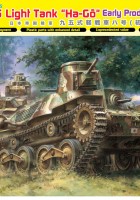
Dragon has introduced a great many exciting new kits in 2012, and there is one more 1/35 scale AFV gem to come this year. The new item is a Type 95 “Ha-Go” light tank of the Imperial Japanese Army (IJA). The Type 95 tank was used in combat against China and Russia, as well as fully participating in operations in WWII. Weighing just 7.4 tonnes, it was designed primarily as an infantry support weapon. Indeed, it was the most common light tank used by the IJA in the Pacific, with about 2,300 units manufactured. It had a crew of three, and the main armament was a Type 94 37mm gun. Its maximum speed was 45km/h.

The kit depicts an Early-Production variant and it’s based on actual measurements from real tanks. Although it’s a small vehicle, Dragon’s 1/35 scale kit is brimming with detail, something facilitated by the widespread use of slide molds. In fact, every single sprue in the kit employs slide molds, which is an astounding achievement! For example, the turret is of single-piece construction, with the multi-directional slide mold allowing details such as rivets to be rendered. The commander’s cupola is a similar story. The one piece lower hull has the correct armor panels and bolts on it. The upper hull is also one piece, and the gun barrel has a hollow end. The road wheels, idlers, sprockets and return rollers are slide-molded too. The DS slide-molded track links are accurately replicated in miniature so as to incorporate side details. This is an extremely exciting subject from Dragon, and because the Ha-Go was used in such diverse locations, modelers can produce any scenario such as jungle-clad terrain or a Pacific island!

Zdrojový: Modely Dragon

Pokračovať v čítaní

Počet zobrazení: 1366

Pz.Kpfw.III (5cm) Ausf.G, Sd.Kfz.141, Skorá výroba - DML 6639

Dragon Model

Ref 6639
Typ1/35 Vojenské
Rozsahu1/35
Tému

Pz.Kpfw.III (5cm) Ausf.G, Sd.Kfz.141, Early Production

Model značky Dragon Model súprava: Pz.Kpfw.III (5cm) Ausf.G, Sd.Kfz.141, Skorá výroba – DML 6639

História: Panzer III bol bežný názov stredného tanku, ktorý bol vyvinutý v roku 1930 Nemeckom a bol vo veľkej miere používaný v druhej svetovej vojne. Oficiálne nemecké označenie bolo Panzerkampfwagen III Sd Kfz. 141 (skrátene PzKpfw III) v preklade "obrnené bojové vozidlo". Bol určený na boj s inými obrnenými bojovými vozidlami a slúžil po boku pechotného Panzera IV. Keď však Nemci čelili impozantnému T-34, boli potrebné silnejšie protitankové zbrane. Keďže Panzer IV mal väčší vežový krúžok, úloha bola obrátená. Panzer IV namontoval dlhú hlavňovú 7,5 cm zbraň KwK 40 a zapojil sa do bitiek medzi tankami. Panzer III sa v tejto úlohe stal zastaraným a pre väčšinu účelov ho nahradil Panzer IV. Od roku 1942 posledná verzia Panzer III namontovala 7,5 cm KwK 37 L/24, vhodnejší pre podporu pechoty. Výroba Panzer III skončila v roku 1943. Schopný podvozok Panzer III však poskytoval trupy pre Sturmgeschütz III až do konca vojny.

Zdrojový: Wikipédia a Modely Dragon

Pokračovať v čítaní

Prezretí: 1378

Antonov AN-2W Colt - HOBBY BOSS 81706

Hobby Šéf

Predmet

Antonov AN-2W Colt

Rozsahu1/48
Ref81706

Model značky HobbyBoss (Slovenský) súprava: Antonov AN-2W Colt – HOBBY BOSS 81706

Funkcie : the kit consists of over 230+ parts -Detailed fuselage&wing w/accurate design -Detailed cockpit

The An-2 Colt has been used as a paratroop transport, glider tug, navigation trainer, utility transport and light bomber. The An-2 prototype was first flown on August 31, 1947, and the aircraft is still in production, although the Antonov Bureau has not produced any since 1960. The An-2s designer, Oleg Antonov, had been an aircraft designer during the Second World War. Originally designed for the Ministry of Agriculture and Forestry in the former Soviet Union, the aircraft was soon adopted by the Soviet Air Force and built for its client states. It is ideally suited to less developed countries because it requires little maintenance and is easy to fly.

Zdrojový: Hobby Šéf

Pokračovať v čítaní

Zobrazenia : 963

Pz.Kpfw.VI Tiger I Ausf.E stredná výroba - ITALERI 6507

Italeri (12.

Ref 6507
TypSúprava modelov
Rozsahu1/35
Tému

Pz.Kpfw.VI Tiger I Ausf.E mid production

Model značky Italeri (12. Súprava Pz.Kpfw.VI Tiger I Ausf.E mid production – ITALERI 6507.

Komisia Tiger I. tank, which has been produced in the second half of 1943, was based on the hull of the firstoperational version used in North Africa and Russia. At the beginning this tank had wheels with rubber rim,which will be replaced in the following productions starting from February 1944, but it was equipped withthe new turret with increased protection and better cupola for the commander. Besides some of thesevehicles maintained the characteristic system of dust filters Feifel, and the smoke grenade launchers. On thetanks produced since August 1943 was also applied a magnetic mine paste that will become standard on alltanks of the German Army.

Zdrojový: Italeri (12.

Pokračovať v čítaní

Pohľady : 1721

Sd. Kfz. 251/16 Flammpanzerwagen - ITALERI 7067

Italeri (12.

Ref 7067
TypSúprava modelov
Rozsahu1/72
Predmet

Sd. Kfz. 251/16 Flammpanzerwagen

Model značky Italeri (12. Súprava Sd. Kfz. 251/16 Flammpanzerwagen – ITALERI 7067.

História:

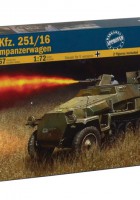
The Sd.Kfz.251 half-track was an armored fighting vehicle and was used by the Wehrmacht on all fronts, during the Second World War. Powered by a Maybach 6-cylinder petrol engine was able to achieve, even in off-road terrain, the speed of 55 km / h. Produced in huge numbers, it was mainly used to transport the “Panzergranadiers” but, during the war, several versions has been developed to meet various operational needs. The half-track Sd.Kfz. 251/16 Flammpanzerwagen was developed as real flame tank to support infantry attacks against fortification or enemy positions. It was equipped with two flamethrowers on the sides of the vehicle. Furthermore, inside the vehicle, two tanks of flammable liquid, that allowed weapons to operate for about 160 seconds, has been installed.

Zdrojový: Italeri (12.

Pokračovať v čítaní

Views : 1540

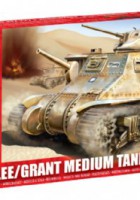
Stredná nádrž M3 Lee Grant - Airfix A01317

Airfix

RefA01317
TypSúprava modelov
Rozsahu1/76
Tému

M3 Lee Grant Medium Tank

Model značky Airfix súprava: M3 Lee Grant Medium Tank – Airfix A01317.

Called the Generál Lee if fitted with the American designed taller turret and the General Grant if fitted with the British built smaller turret, the Lee Grant was one of the first American tanks to reach the British during the Second World War. Also used across the Pacific, the Lee Grant led to the design of the Sherman tank, the Allies’ most important and numerically vital tank of the war.

Zdrojový: M3 Lee Grant Medium Tank on Airfix

Pokračovať v čítaní

Pohľady : 1681

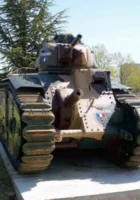
Renault B1 Bis

Renault B1 bis

KrajinyFrancúzsko
Model

B1 bis

TypŤažká nádrž
V prevádzke1936–1940 (Francúzsko)
Postavený405)

Fotogaléria Renault B1 bis, Vývoj nádrže sa ukázal ako dlhý proces a nebol okamžite štandardizovaný z dôvodu hospodárskych, politických a medzinárodných problémov. Z tých istých dôvodov boli objednané množstvá ponechané v malom. Prvá "sériová" objednávka je podpísaná 6. apríla 1934 pre 7 exemplárov, druhá v Oecember 1934 pre ďalších 20 a posledná tretina z 5 29. apríla 1935. 50, s 3 prototypmi, spolu predstavuje 35 exemplárov, čo postačuje na vybavenie celého práporu. Výstavba je zverená rôznym zmluvným partnerom programu, pričom za konečnú montáž sú zodpovední Renault aj FCM.

Zdrojový: Tracktory

Pokračovať v čítaní

Zobrazenia : 5630