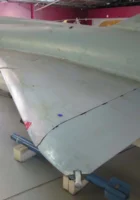
Dassault Mirage III-O

Dassault Mirage III-O

PaeseFrancia
RuoloCaccia
Primo voloIl 17 novembre 1956
Costruito1422

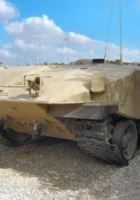
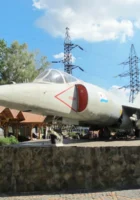
Galleria fotografica di un Dassault Mirage III-O , The Dassault Mirage III is a family of single-seat, single-engine, fighter aircraft produced by Dassault Aviation for the French Air Force and widely exported. Prominent operators included Australia, Argentina, South Africa, Pakistan and Israel, as well as a number of nonaligned nations. Though an older design, the second generation fighter is still a fairly maneuverable aircraft and an effective opponent in close range dogfighting. In French service it was armed with air-to-ground ordnance or R.550 Magic air-to-air missiles. Miraggio IIIO: Single-seat all-weather fighter-bomber aircraft for the Royal Australian Air Force. Single prototype powered by 53.68 kN (12,070 lbf) dry thrust and 71.17 kN (16,000 lbf) Rolls-Royce Avon Mk.67 turbojet engine, but order placed for aircraft based on Mirage IIIE, powered by Atar engine in March 1961. 100 aircraft built, of which 98 were built under licence in Australia. The first 49 were Mirage IIIO(F) interceptors which were followed by 51 Mirage IIIO(A) fighter bombers, with survivors brought up to a common standard later

fonte: Dassault Mirage III su Wikipedia

Continua a leggere

Visualizzazioni : 11375

M3 Scout trasformata in un'auto blindata

M3 Scout trasformata in un'auto blindata

PaeseUsa
digitareAutoblindata
FotografiaVladimir Jakubov
DescrizioneAlbum di 101 foto di un «M3 Scout trasformato in auto blindata»

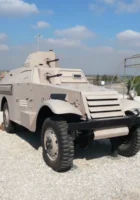
Galleria fotografica di un M3 Scout trasformata in un'auto blindata, The M3 Scout Car was an armored car in U.S. service during World War II. It was also known as the White Scout Car, after its manufacturer, the White Motor Company. It was used in various roles, including patrol, scouting, command vehicle, ambulance and gun tractor.

fonte: M3 Scout convertito in auto blindata su Wikipedia

Continua a leggere

Visualizzazioni : 2634

Daimler Auto Blindata Mk II

Daimler Auto Blindata Mk II

PaeseRegno unito
digitareAutoblindo
FotografiaVladimir Jakubov
DescrizioneAlbum di 139 foto walk-around di una «Daimler Armoured Car Mk II»

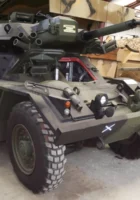
Galleria fotografica di un Daimler Auto Blindata Mk II, The Daimler Armoured Car was a successful British armoured car design of the Second World War which continued in service into the 1950s. It was designed for scouting and liaison work but could prove useful in ‘police actions’ as a wheeled tank.

Marco II: torretta migliorata, montaggio del cannone modificato, radiatore migliore, portello di fuga del conducente incorporato nel tetto, contenitore della granata WP montato nella torretta e contenitore del generatore di fumo modificato.

fonte: Daimler Armoured Car Mk II su Wikipedia

Continua a leggere

Views : 8055

FV721 Fox CVR

FV721 Fox CVR

PaeseRegno unito
digitareRicognizione di veicoli da combattimento
FotografiaVladimir Jakubov
DescrizioneAlbum di 20 foto walk-around di un «FV721 Fox CVR»

Galleria fotografica di un FV721 Fox CVR, The FV721 Fox Combat Vehicle Reconnaissance (Wheeled) (CVR(W)) was a 4×4 armoured car manufactured by Alvis, deployed by the British Army as a replacement for the Ferret scout car and the Saladin Armoured Car. The Fox was introduced into service in May 1973 and withdrawn in 1993/4.

fonte: FV721 Fox CVR su Wikipedia

Continua a leggere

Views : 3029

Yak-38M ·

Yakovlev Yak-38

PaeseUnione Sovietica
digitareVTOL Aerei da combattimento
Primo volo1971
Costruito231

Le Yakovlev Yak-38 (in russo: Яковлев Як-38; Nome in codice NATO: "Forger") è stato l'unico aereo da combattimento operativo VTOL dell'aviazione navale sovietica, oltre ad essere il suo primo aereo operativo ad ala fissa basato su portaerei. È stato sviluppato appositamente e servito quasi esclusivamente sulle portaerei classe Kiev.

Yak-36M "Forgiatore" : La versione iniziale di pre-produzione, differisce leggermente dallo Yak-38. Pesava solo 6.650 kg (14.660 libbre) rispetto ai 7.370 kg (16.250 libbre) dello Yak-38 e i motori erano leggermente meno potenti.

fonte: Yakovlev Yak-38 su Wikipedia

Continua a leggere

Punti di vista : 5897

Ba-27

Ba-27

PaeseUnione Sovietica
digitareAutoblindo
FotografiaVladimir Jakubov
DescrizioneAlbum di 45 foto walk-around di un «Ba-27»

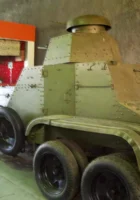
Galleria fotografica di un Ba-27, The BA-27 was a Soviet first series-produced armoured car, manufactured from 1928 to 1931, and used for scouting and infantry support duties early in the Second World War. The BA-27 was a heavy armoured car, having the same turret and armament as the first Soviet tank, T-18, manufactured at the same time: the main gun was a modified copy of the French 37 mm Puteaux SA 18 cannon, and it was supported by an additional machine gun. The production of the first Soviet truck, AMO-F-15 truck (a copy of the Fiat F-15), started in 1924. Using the chassis of this truck, the Izhorsky Factory design team developed BA-27 heavy armoured car in 1927. There was no significant production of AFVs in Russia since 1918, and the indigenous automobile industry was practically non-existent at the time. After lengthy trials, the new vehicle was accepted into Soviet Red Army service in 1929. 215 were built between 1928–31. The last batch of BA-27 was mounted on Ford Model AA truck chassis. Both chassis were found to be inadequate to carry the heavy armour, and around 20 were later rebuilt on heavier, three-axle Ford-Timken truck chassis at Repair Base No. 2 (Rembaz No. 2), bearing designation BA-27M.

fonte: Ba-27 su Wikipedia

Continua a leggere

Views : 2321

T-28 Super Heavy Tank

T-28 Super Heavy Tank

PaeseUsa
digitareCacciacarri/Carri armati super-pesanti
Prodotto1945
Costruito2

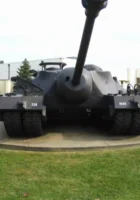
Galleria fotografica di un T-28 Super Heavy Tank, The T28 Super Heavy Tank was an American heavily armored tank self-propelled gun designed for the United States Army during World War II. It was originally designed to be used to break through German defenses of the Siegfried Line, and was later considered as a possible participant in the planned invasion of the Japanese mainland. The 100-ton vehicle was initially designated a heavy tank, it was re-designated as the 105 mm Gun Motor Carriage T95 in 1945, and then renamed in 1946 as the Super Heavy Tank T28.

fonte: T-28 Super Heavy Tank su Wikipedia

Continua a leggere

Viste: 5442

Supermarine Scimitar F.1

Supermarine Scimitar F.1

PaeseRegno unito
digitareCaccia
FotografiaVladimir Jakubov
Argomento

Album di 76 foto walk-around di un «Supermarine Scimitar F.1»

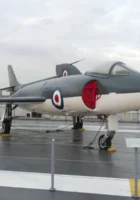
Galleria fotografica di un Supermarine Scimitar F.1, The Supermarine Scimitar was a British naval fighter aircraft operated by the Royal Navy Fleet Air Arm. The prototype for the eventual production version flew in January 1956 and production aircraft were delivered in 1957. It saw service with the Royal Navy from 1958 until 1969.

fonte: Supermarine Scimitar F.1 su Wikipedia

Continua a leggere

Visualizzazioni : 3393

Portante universale T-16

Portante universale T-16

PaeseCanada
digitareVettore universale
FotografiaDaryl Nightingale
Argomento

Album di 19 foto walk-around di un «Universal Carrier T-16»

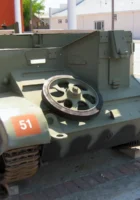
Galleria fotografica di un Portante universale T-16, The Universal Carrier, also known as the Bren Gun Carrier from the light machine gun armament, is a common name describing a family of light armoured tracked vehicles built by Vickers-Armstrong and other companies. The first carriers – the Bren Carrier and the Scout Carrier with specific roles – entered service before the war, but a single improved design that could replace these, the Universal, was introduced in 1940. The vehicle was used widely by British Commonwealth forces during the Second World War. Universal Carriers were usually used for transporting personnel and equipment, mostly support weapons, or as machine gun platforms. With some 113,000 built by 1960 in the United Kingdom and abroad, it is the most produced armoured fighting vehicle in history

Variante T-16: The Carrier, Universal, T16, Mark I. was a significantly improved vehicle based upon those built by Ford of Canada, manufactured under Lend Lease by Ford in the United States from March 1943 to 1945. It was longer than the Universal with an extra road wheel on the rear bogie, the engine was a Ford Mercury delivering the same power. Instead of the steering wheel controlling the combination brake/warp mechanism, the T-16 had track-brake steering operated by levers (two for each side). During the war, it was chiefly used by Canadian forces as an artillery tractor. After the war, was used by Argentine, Swiss (300) and Netherlands forces.

fonte: Universal Carrier T-16 su Wikipedia

Continua a leggere

Visualizzazioni : 3849