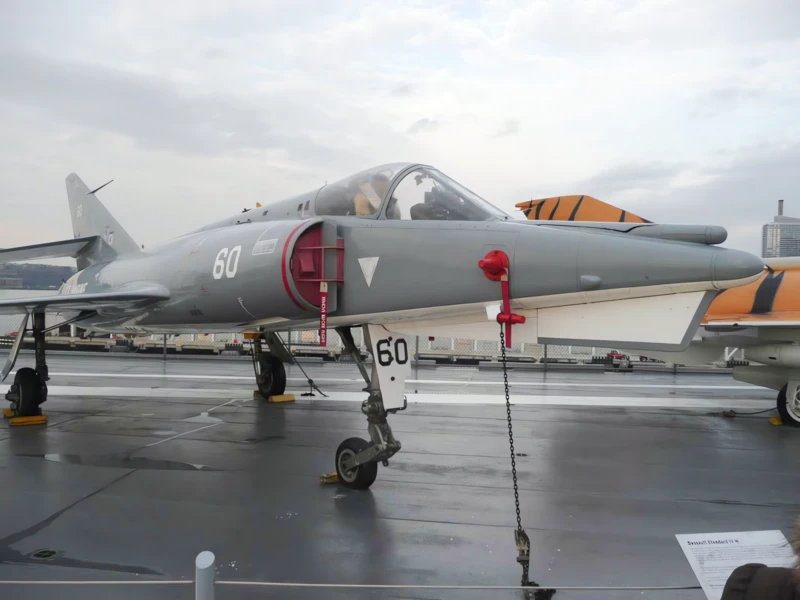
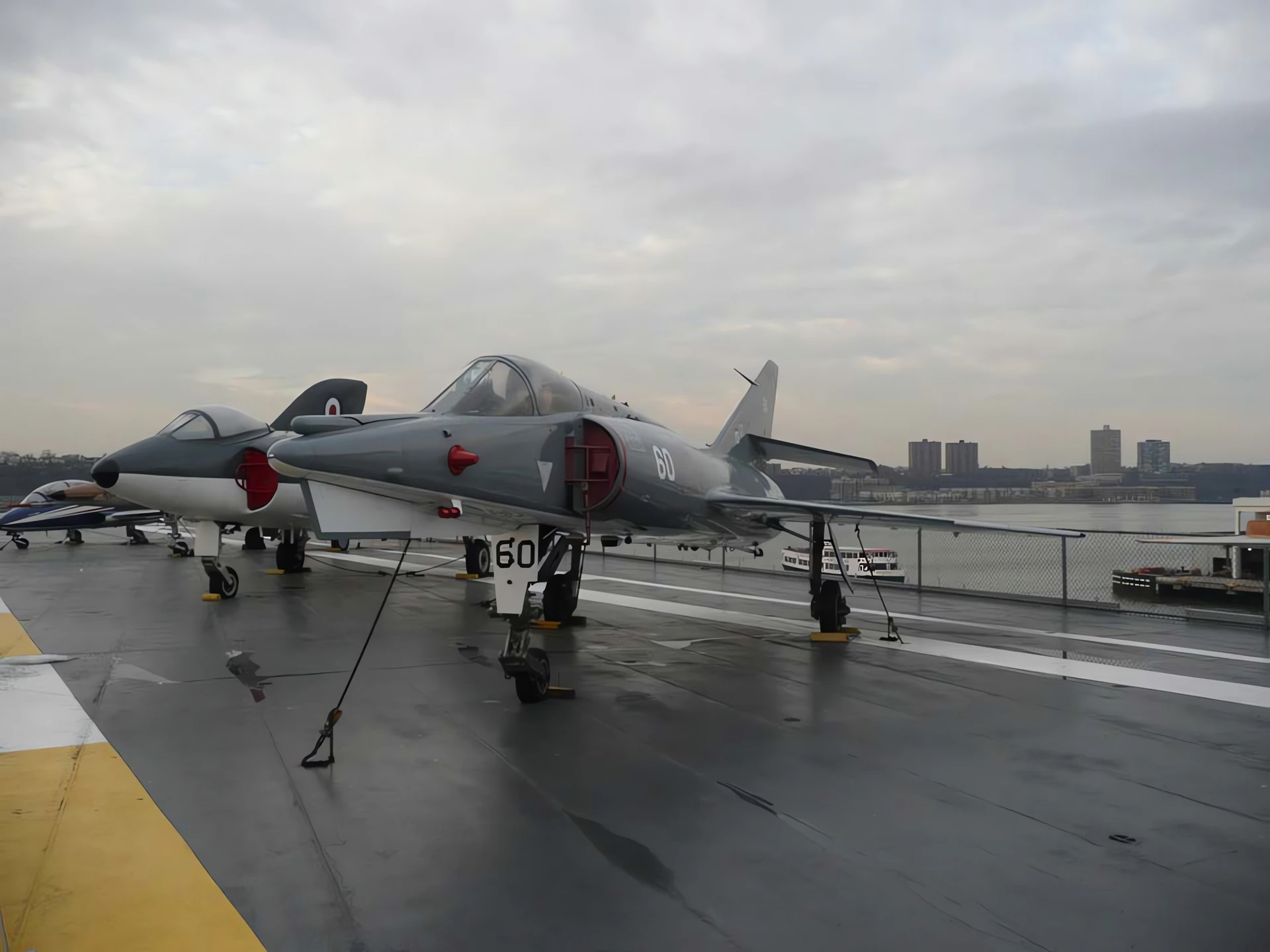
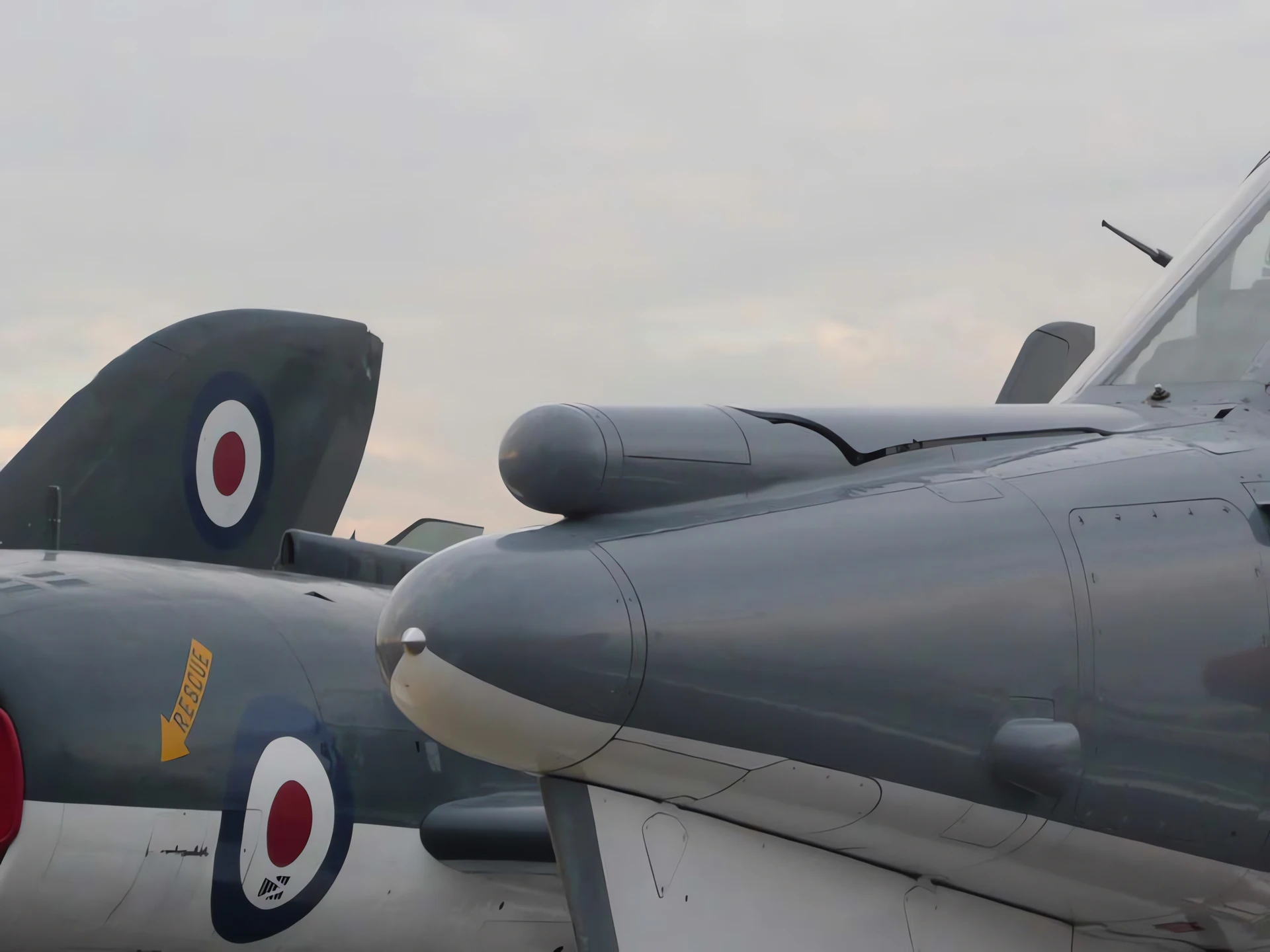
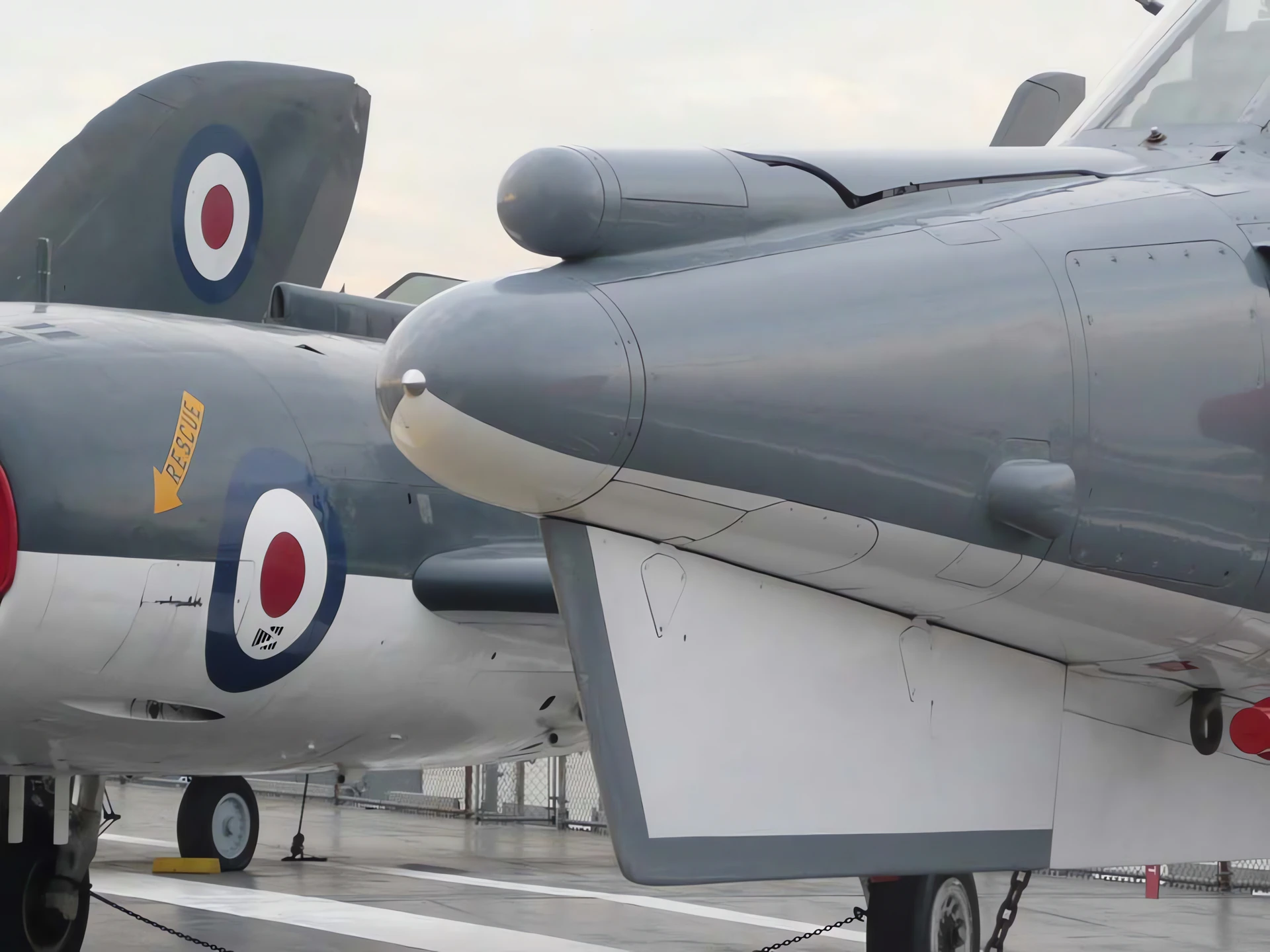
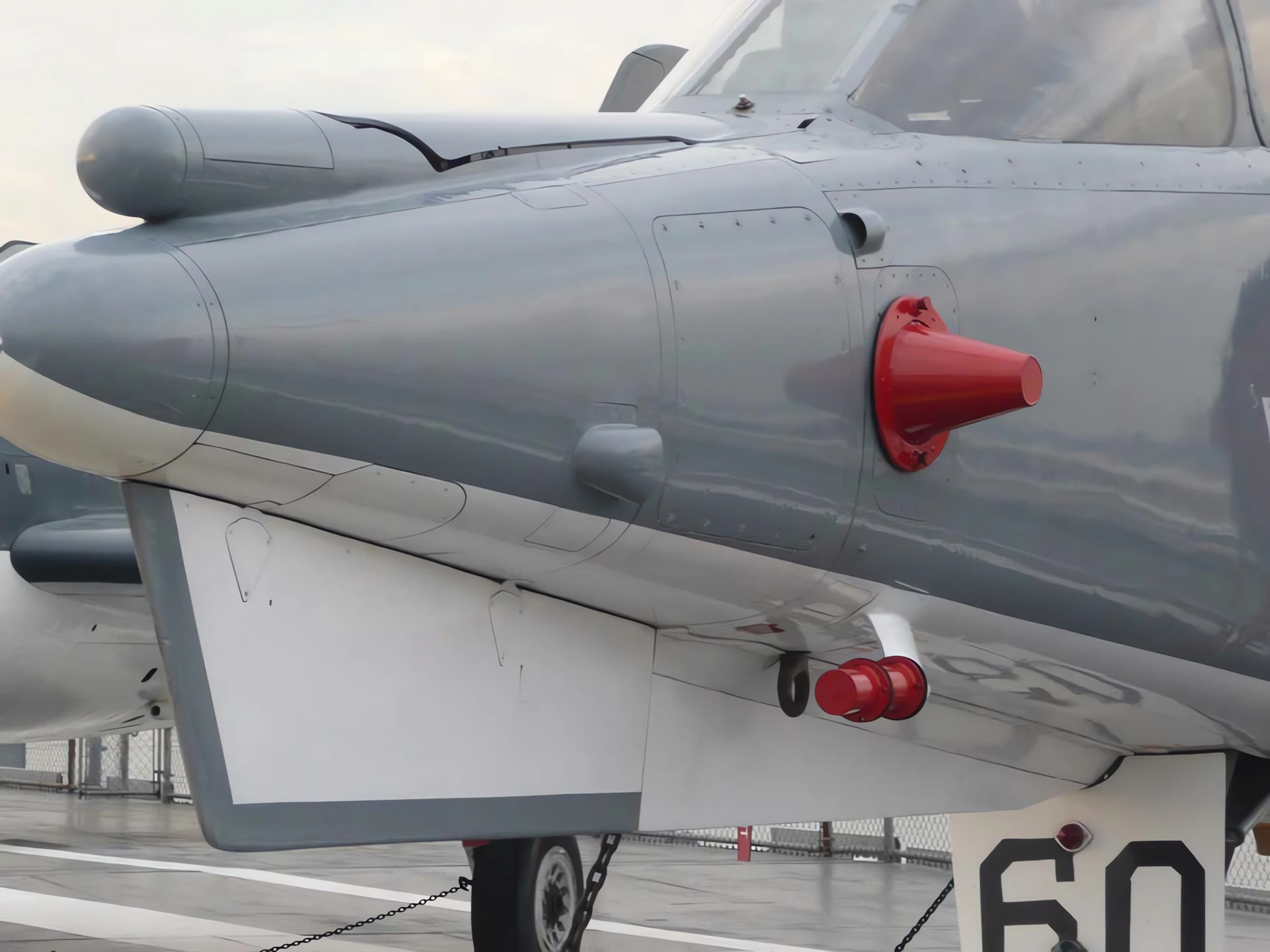
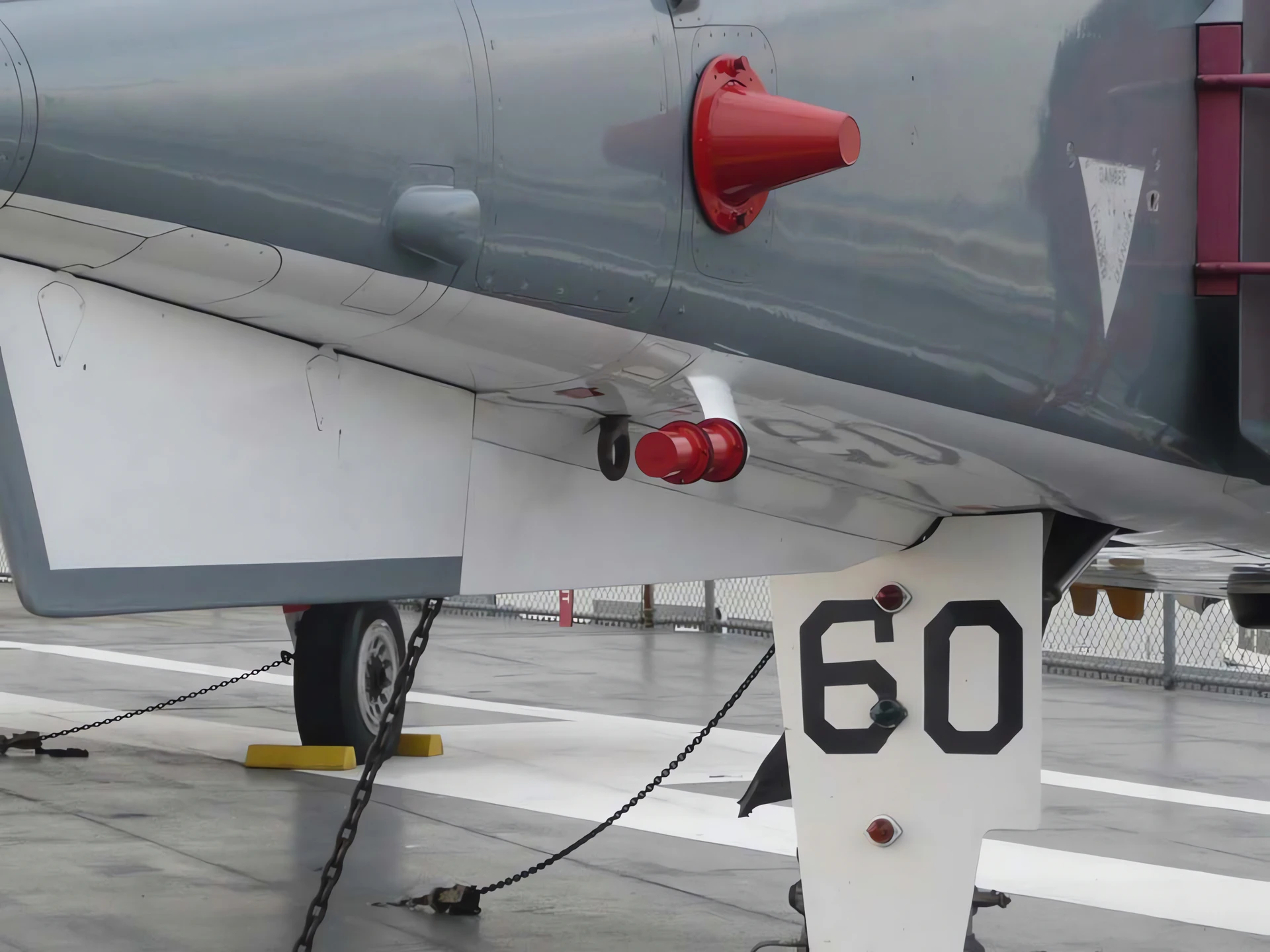
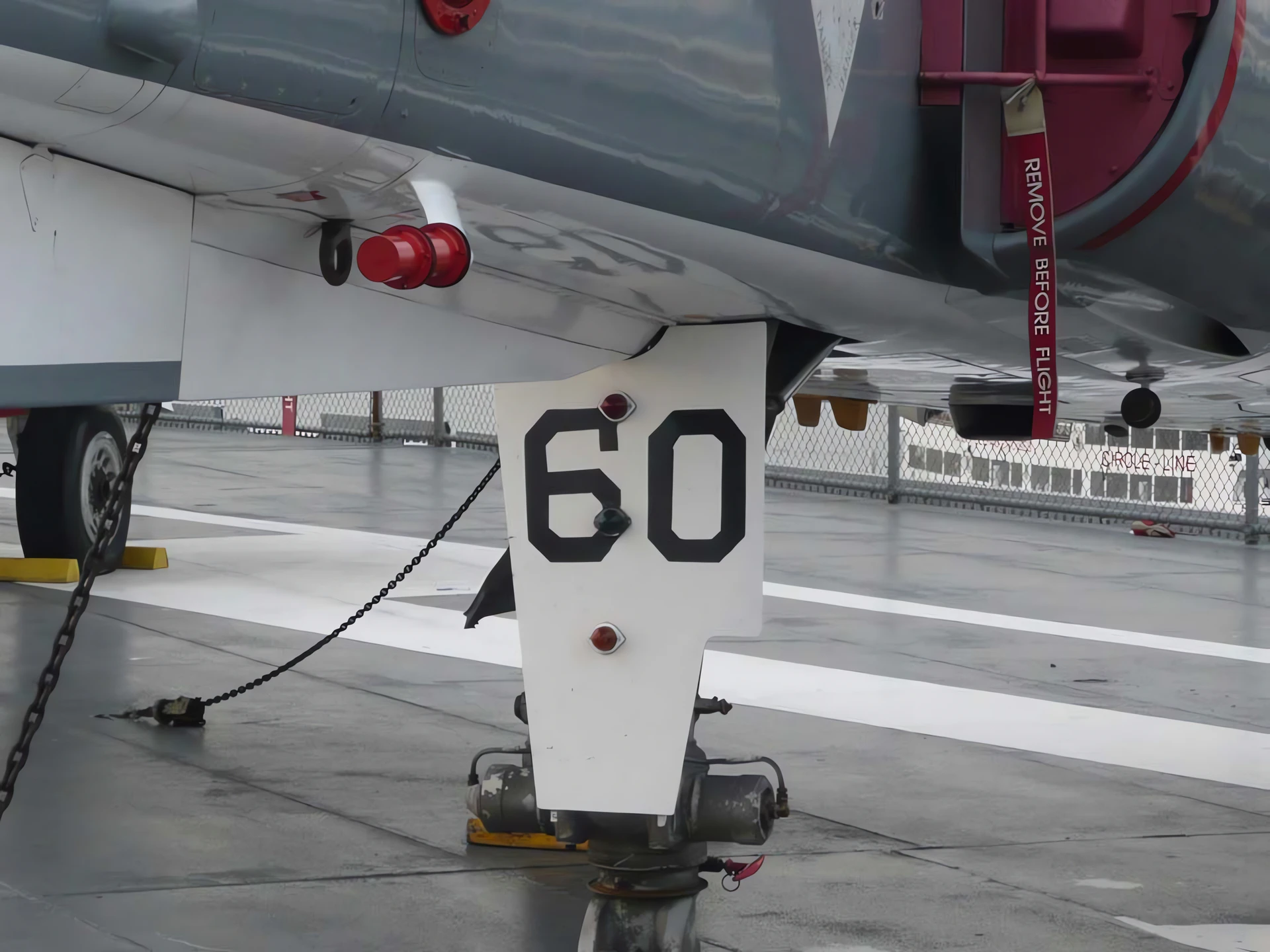
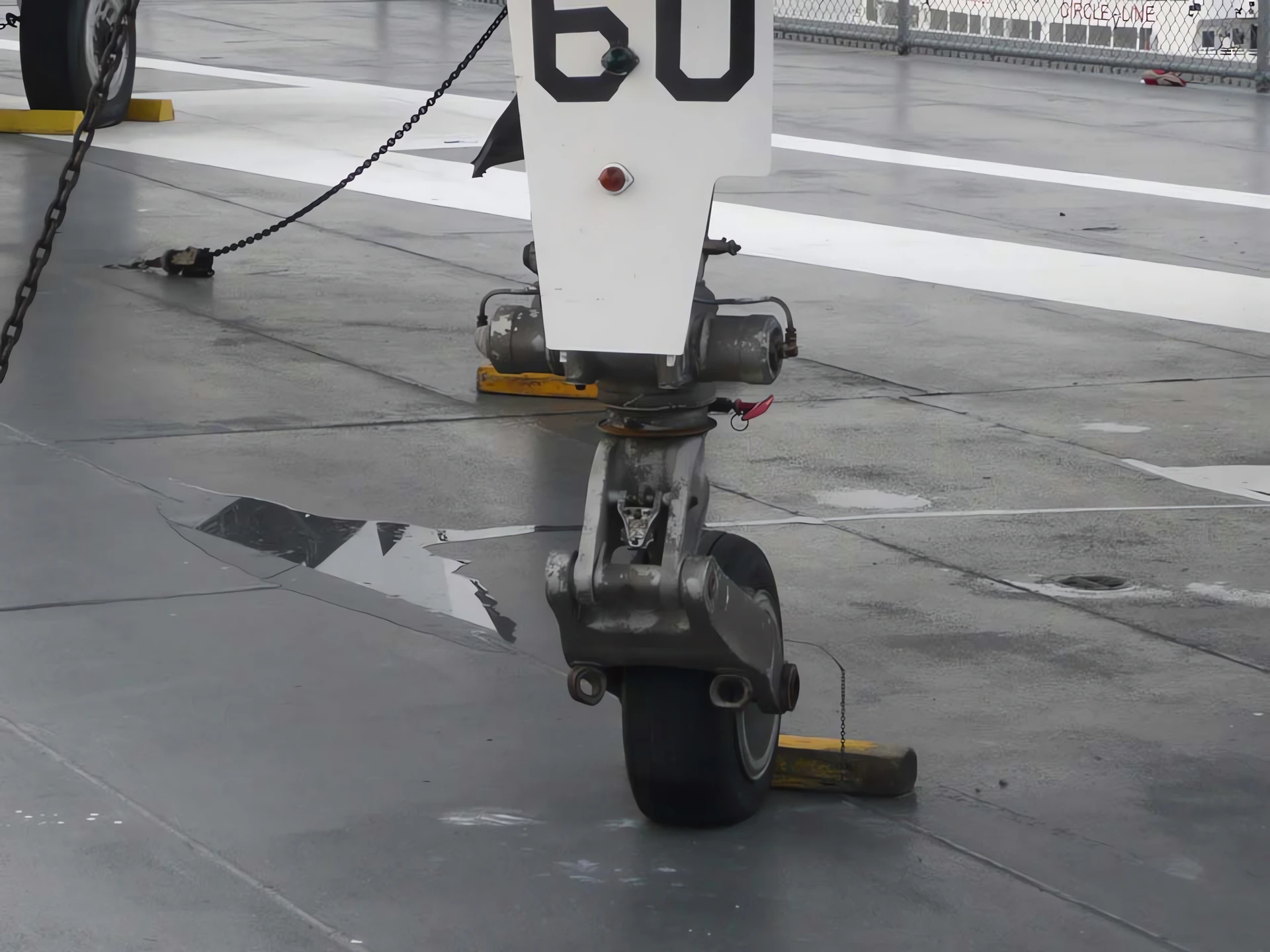
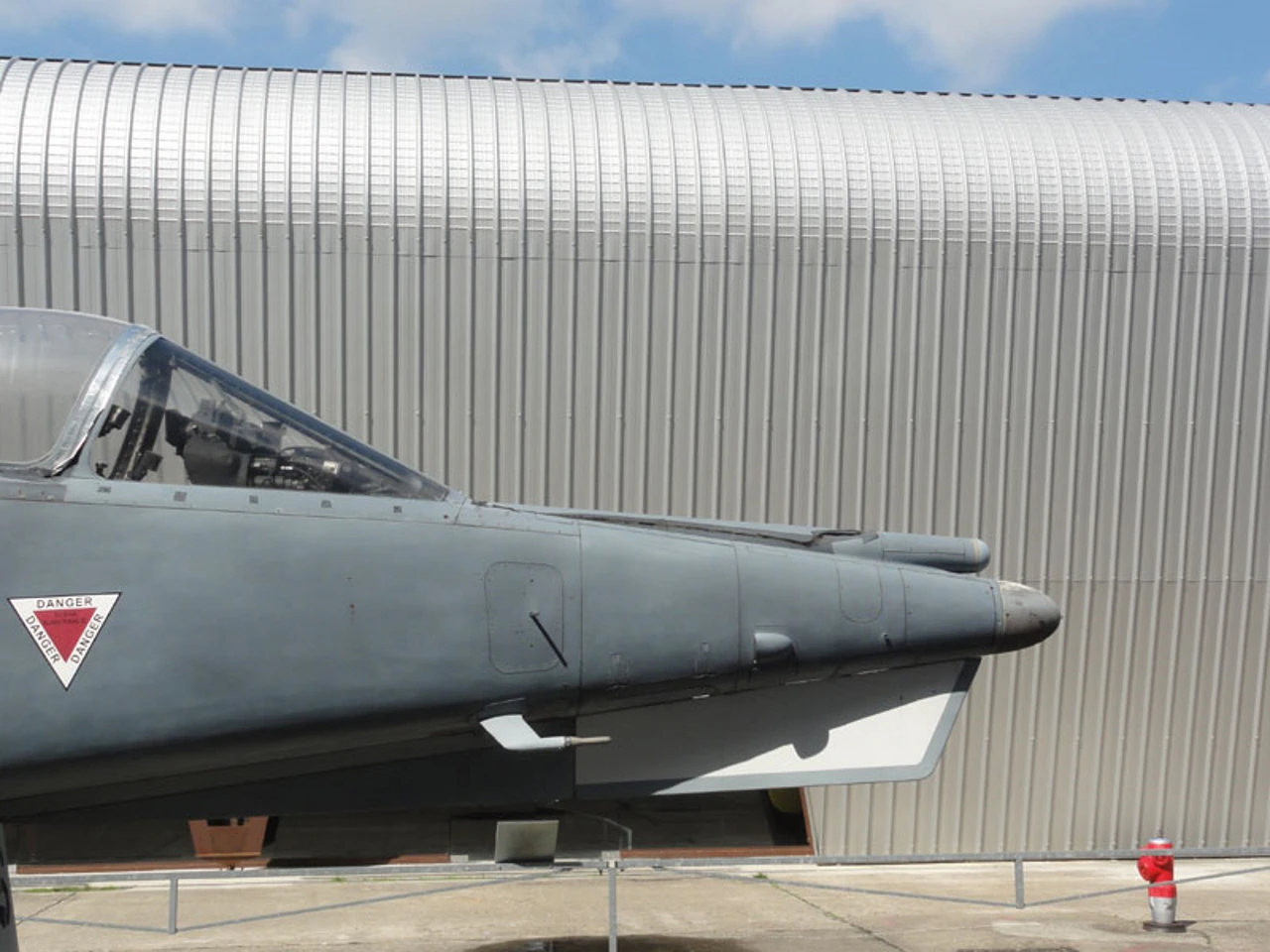
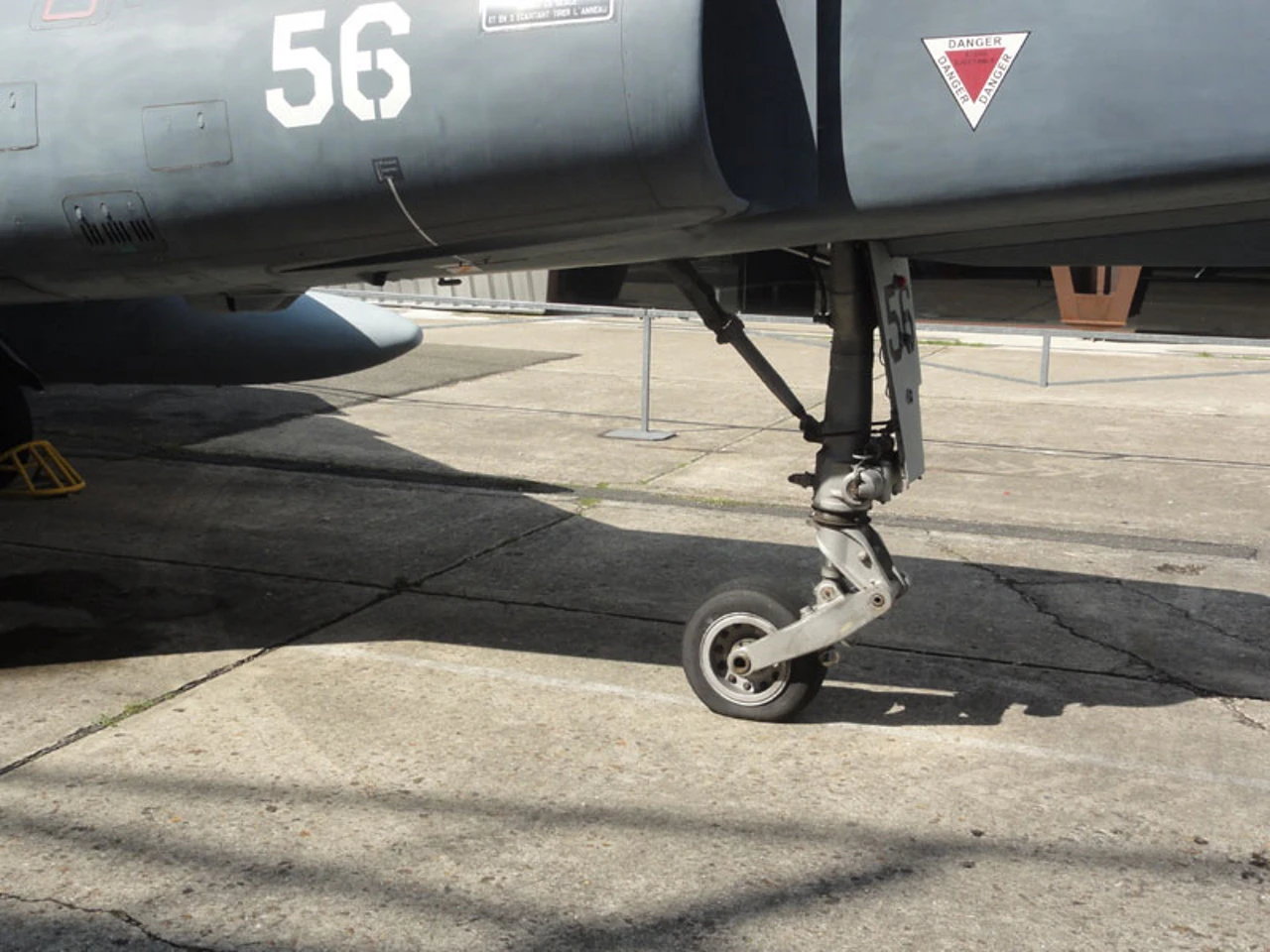
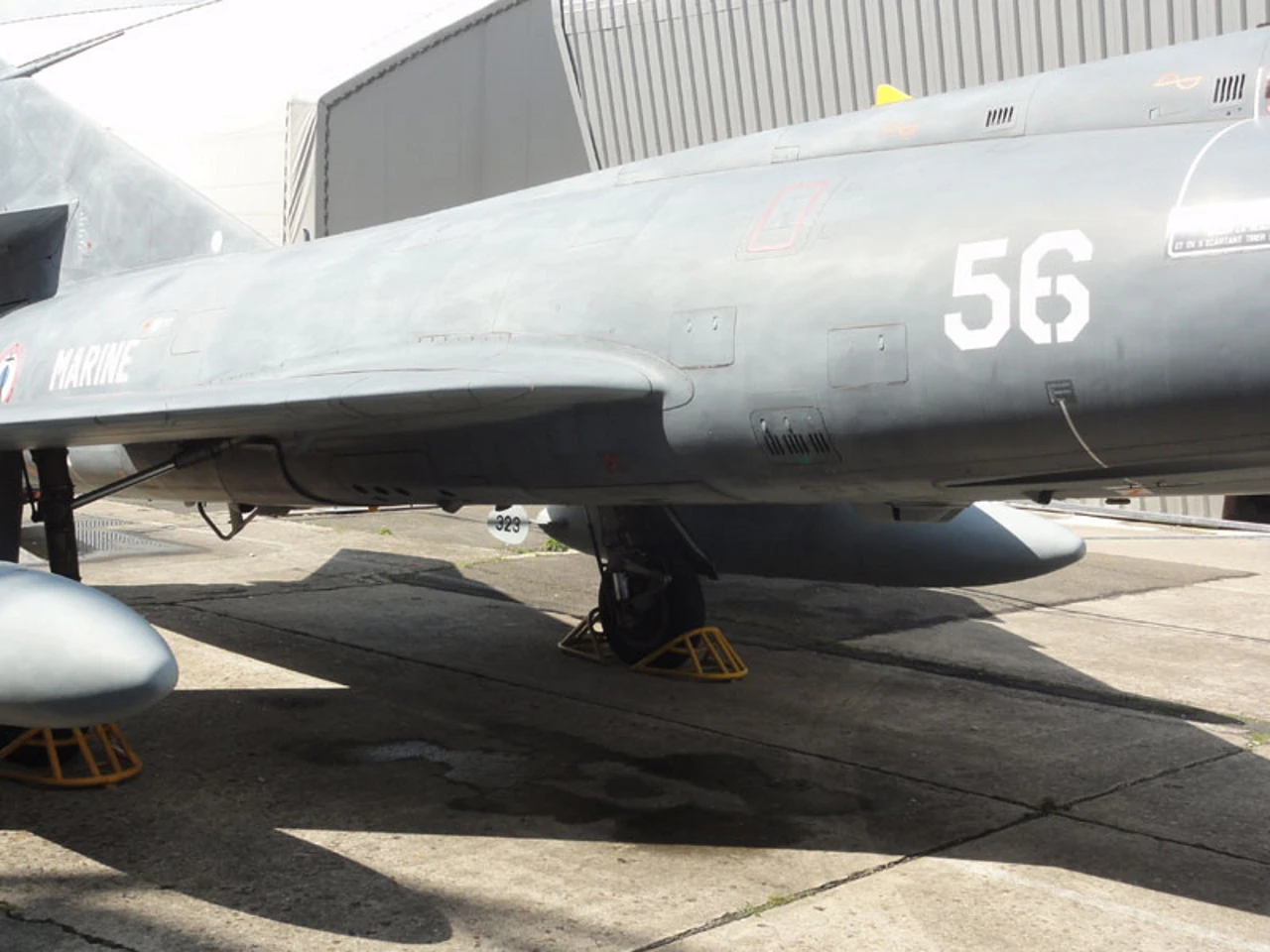
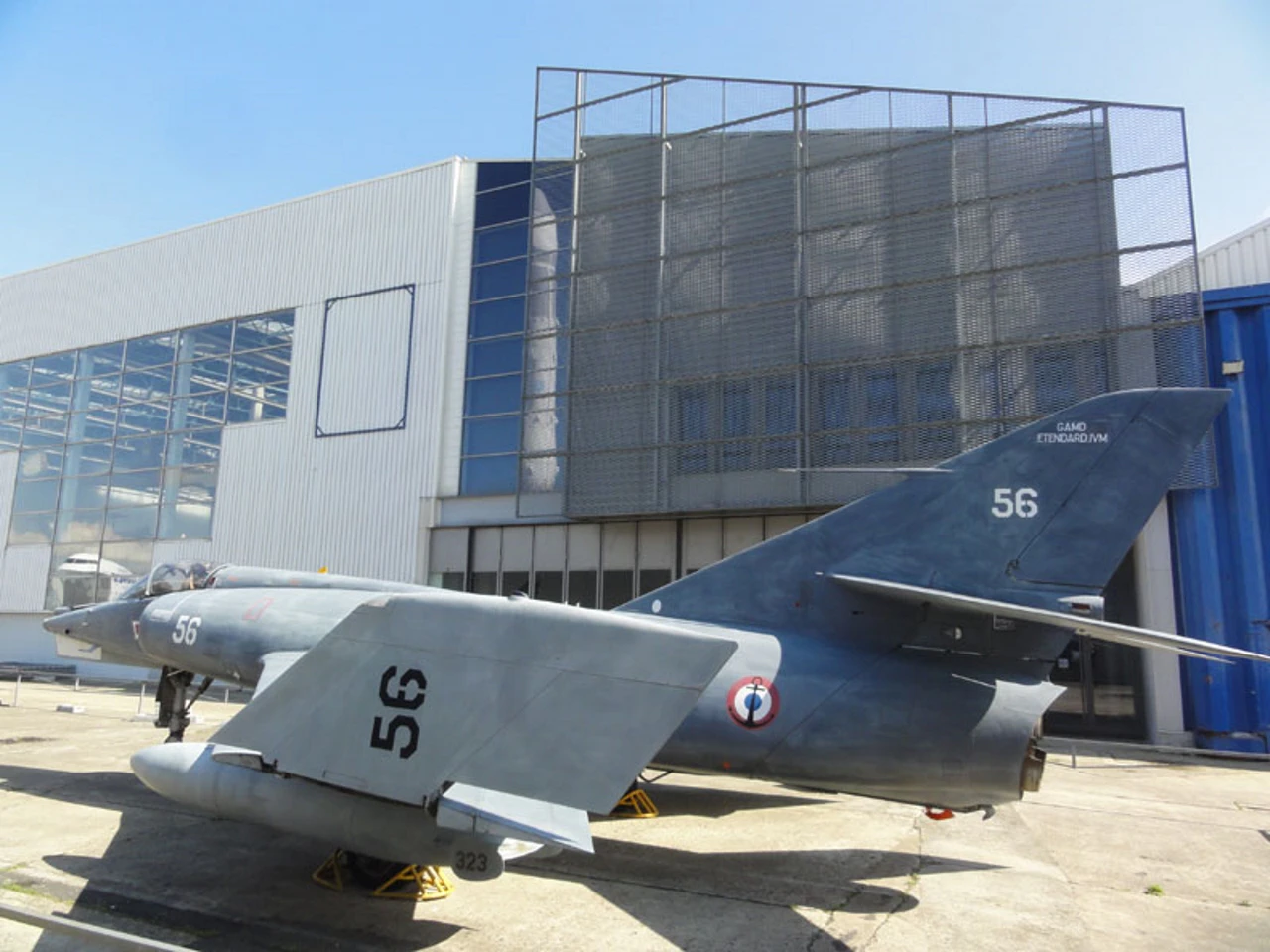
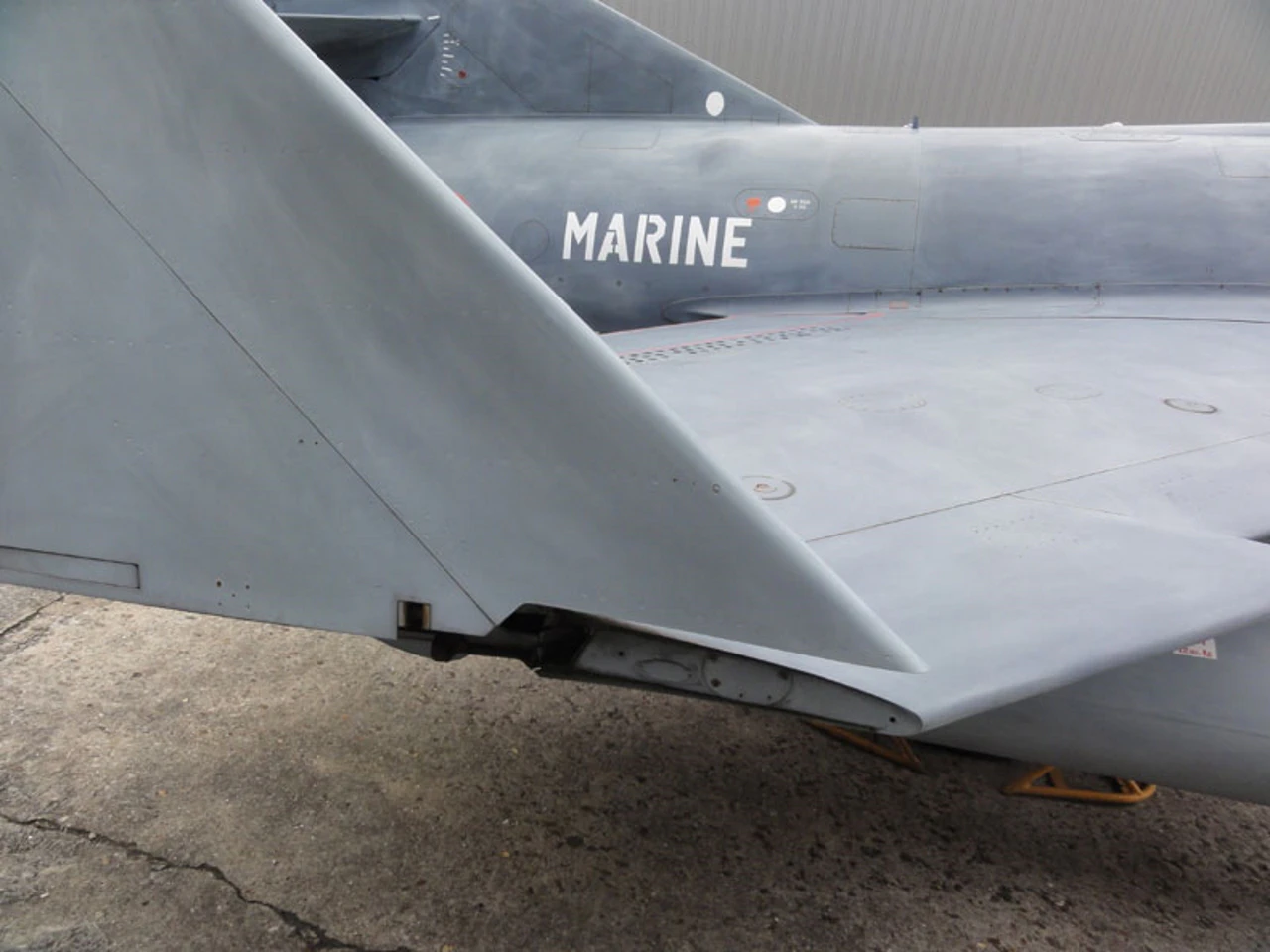
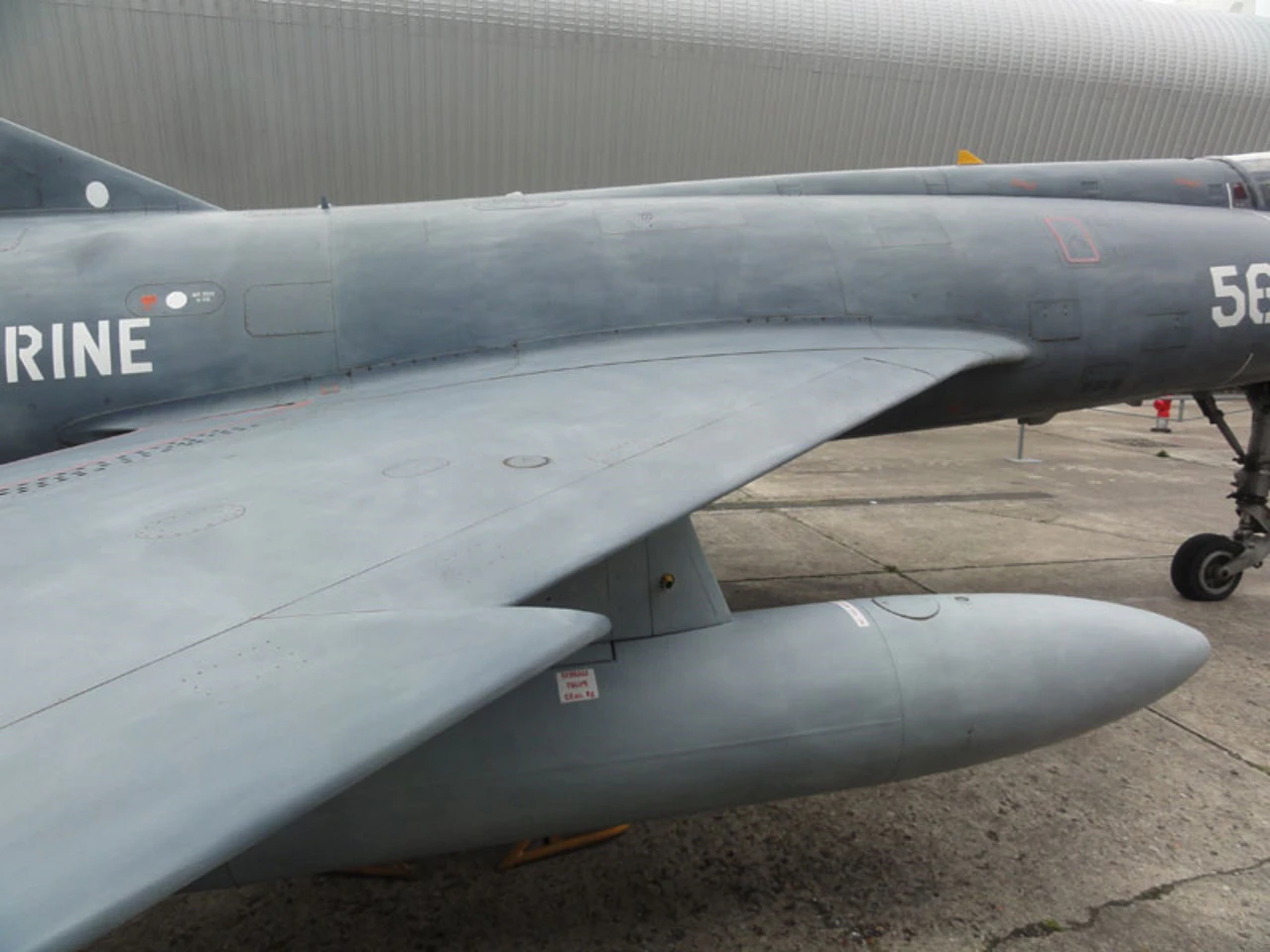
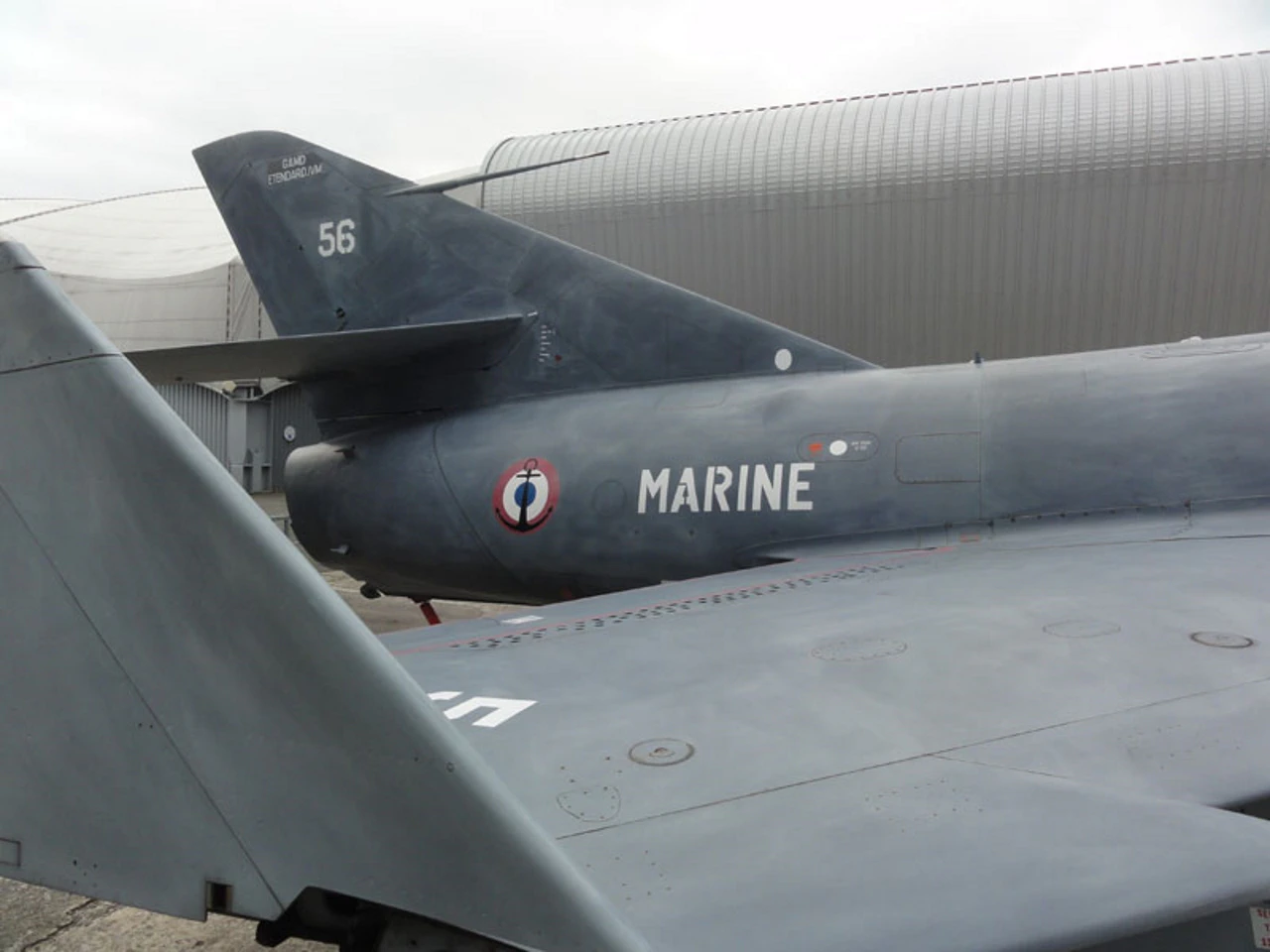
Galerie de photos d’un Dassault Etendard IV M,
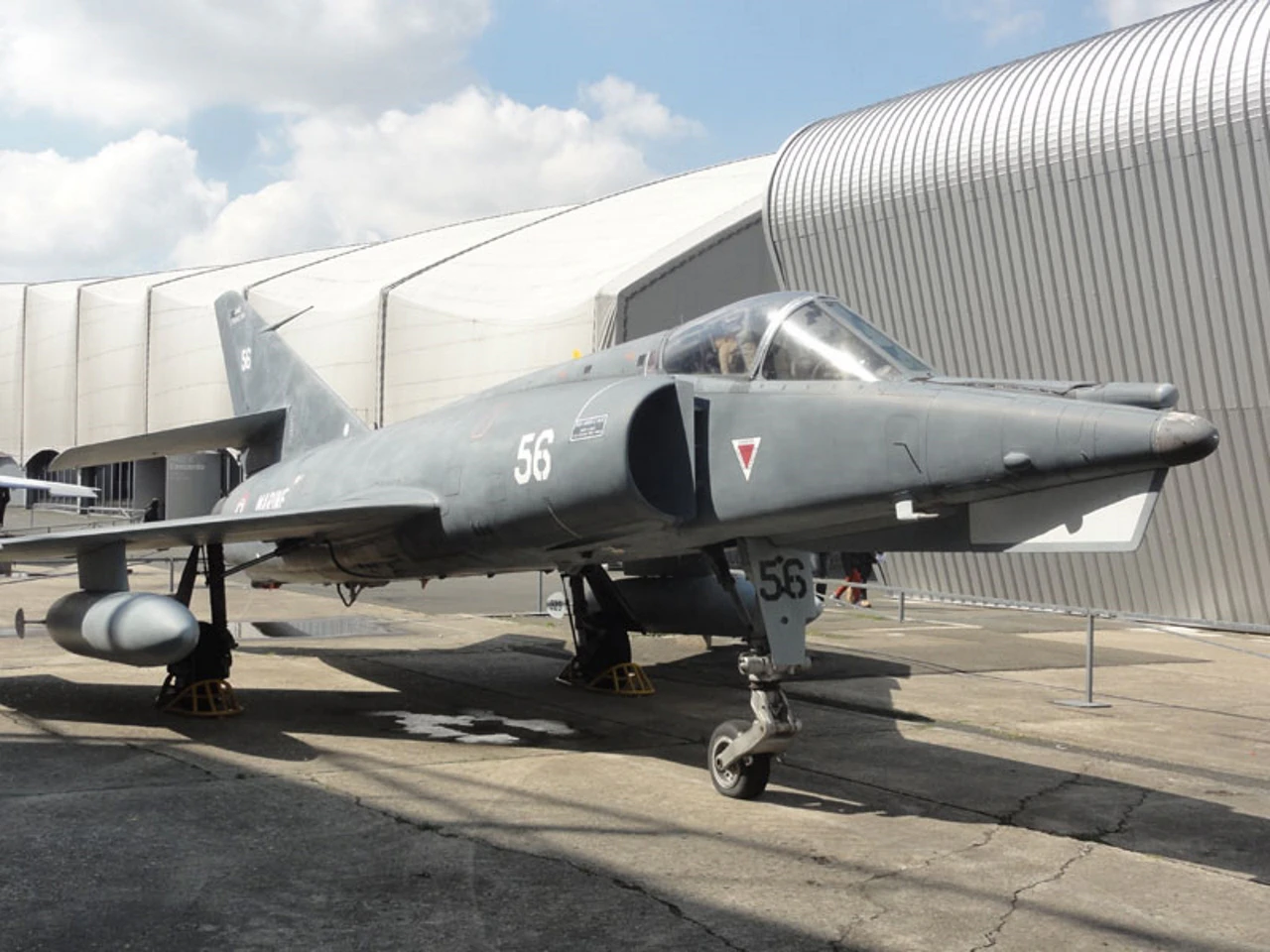
The Dassault Étendard IV was a subsonic carrier-borne strike fighter aircraft, which entered service with the French Navy in 1962. It served as the basis for the more advanced Dassault-Breguet Super Étendard. During the 1970s, it had been intended to replace the Étendard IV with a navalised version of the SEPECAT Jaguar, designated as the Jaguar M, however development of the Jaguar M was cancelled and shortly replaced by the Super Étendard. The Étendard IV was progressively withdrawn during the 1980s and finally retired from service with its sole operator in 1991.Étendard IVM:
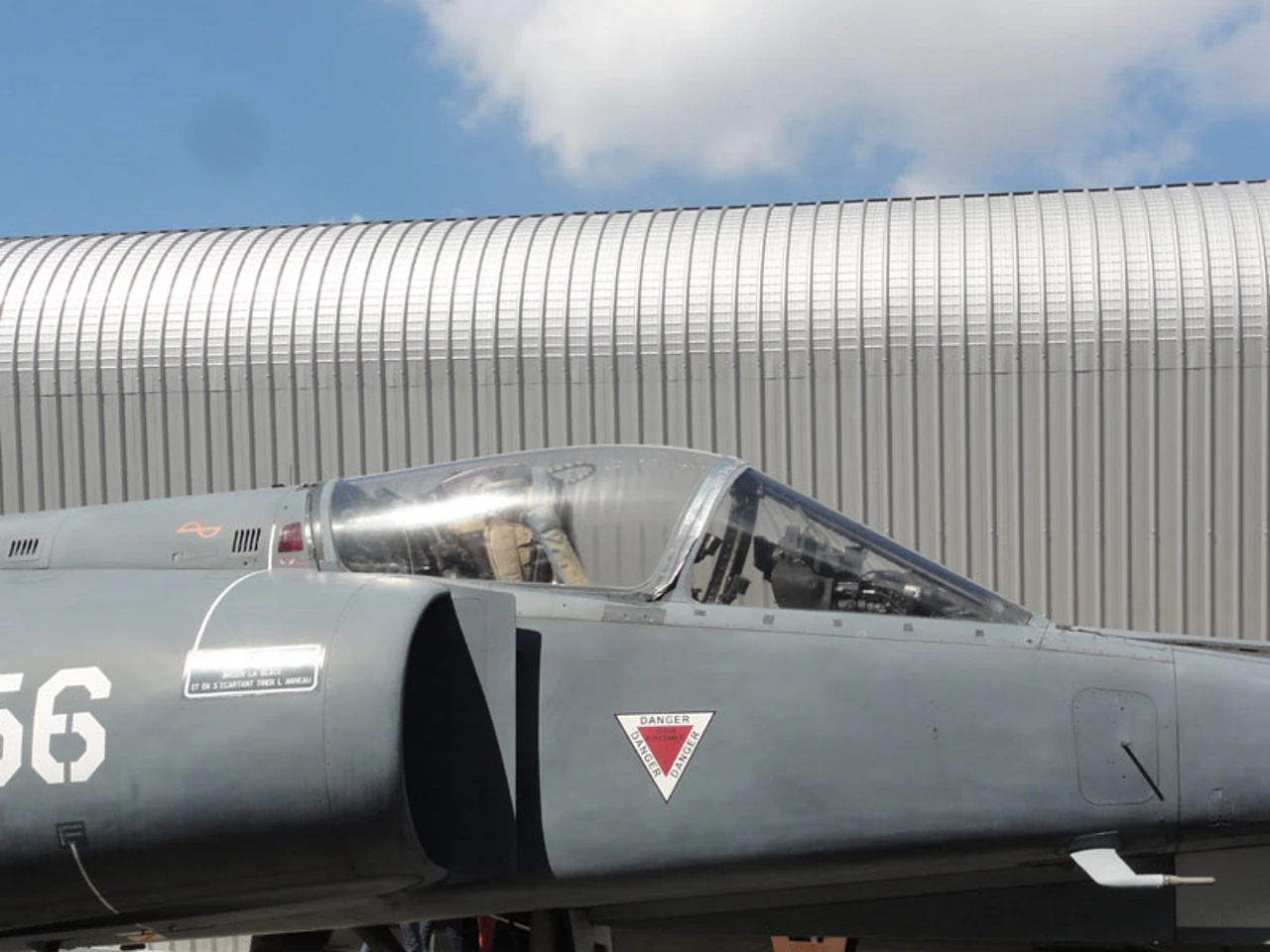
Single-seat Maritime strike fighter aircraft for the French Navy.
Attendez, Recherche Dassault Super Etendard pour vous...
The Pride of the Aéronavale
Lla Dassault Étendard IVMwas a landmark achievement for the French aerospace industry. Entering service in 1962, it was the first carrier-borne jet fighter developed entirely in France to reach operational status. Designed to operate from theClemenceau-class aircraft carriers, the Étendard (meaning « Standard » Ou « Banner ») provided the French Navy with a rugged, multi-role platform capable of interception, ground attack, and reconnaissance. Though it was transonic rather than a Mach 2 powerhouse, its excellent low-speed handling made it an ideal « deck-runner » for the relatively small French carriers.
Attribute
Technical Specification (Étendard IVM)
Rôle
Carrier-based Strike Fighter
Crew
1 (Pilot)
Groupe motopropulseur
1 × SNECMA Atar 08B turbojet
Thrust
9,700 lbf (43.16 kN)
Vitesse maximale
1,099 km/h (683 mph / Mach 0.97)
Combat Radius
300 km (190 miles) / Ferry: 2,100 km
Service Ceiling
15,500 m (50,900 ft)
Armement
2 × 30mm DEFA cannons; 1,360 kg (3,000 lb) of bombs/missiles
Design Engineering: Navalization and the « S » Snout
The SNECMA Atar:Unlike many contemporary jets that used afterburners, the IVM used a non-afterburning Atar 08B. While this limited its top speed, it simplified maintenance and improved fuel efficiency for long patrols over the Mediterranean and Atlantic.
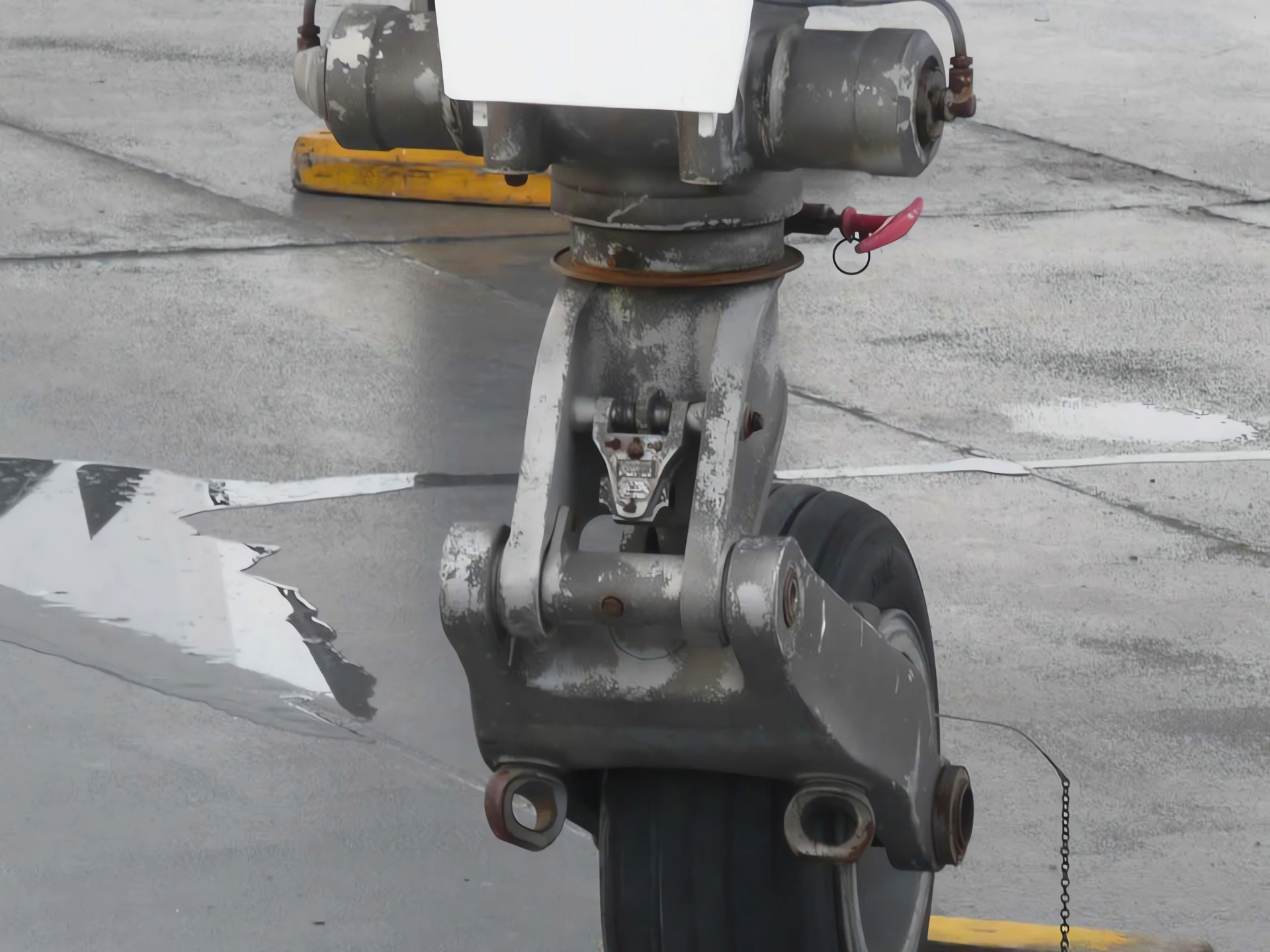
Carrier-Specific Gear: Lla « M » in IVM stood forMarine. It featured high-pressure tires, a strengthened airframe to withstand catapult launches, and a massive, distinctive arrestor hook. Its folding wingtips allowed it to be packed tightly into carrier hangars.
The Étendard IVP:A specialized reconnaissance variant, the IVP, was developed simultaneously. It replaced the cannons with five cameras in a redesigned « long nose » and featured a permanent refueling probe, allowing it to act as a « buddy tanker » for other jets.
Dogtooth Leading Edge:The wings featured a « dogtooth » Ou « sawtooth » extension on the leading edge. This improved airflow over the wing at high angles of attack, crucial for the slow, dangerous approach to an aircraft carrier’s deck.
Combat History: From Lebanon to the Adriatic
Operation Olifant (1983):During the Lebanese Civil War, Étendards from the carrierFochconducted strike missions against battery positions in the Bekaa Valley after French peacekeepers were attacked.
Longevity over the Super Étendard:Interestingly, the reconnaissance IVP version outlived the fighter version by decades. While the strike role was taken over by theSuper Étendardin the 1970s, the IVP remained the French Navy’s primary « eye in the sky » until 1991.
The Adriatic Missions:During the Yugoslav Wars in the early 1990s, the aging Étendard IVPs performed high-risk photo-reconnaissance missions over Bosnia, proving their worth one last time before retirement.
Legacy of the Delta:The design lessons learned from the Étendard—particularly in low-speed naval aerodynamics—led directly to the development of the Super Étendard, which famously used the Exocet missile to change the face of naval warfare.

 Achetez-moi un café

 Dassault Mystère IV – Photos & Video
 Dassault Falcon 2000 – Photos et vidéos
 Dassault MD 315 Flamant – Photos & Videos
 Dassault Mystere – Photos & Vidéo
 Dassault Mirage 4000 – Photos & Vidéo
 Dassault Mirage F.1 – Photos & Vidéo
 Dassault Super Mystere B.2 – Photos & Vidéo
 Dassault Mirage III-O – Photos & Vidéo
 Dassault / Dornier Alpha Jet - WalkAround
 Dassault Rafale M – WalkAround