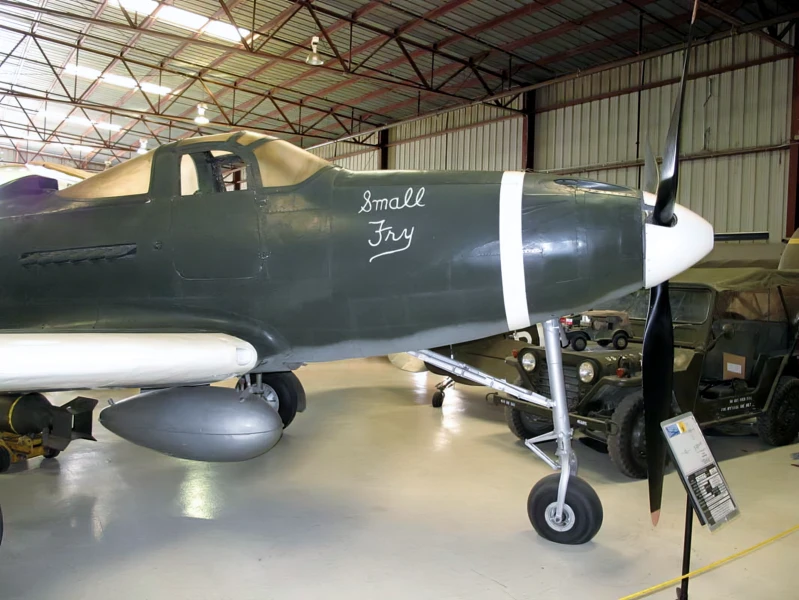
Bell P-39 Airacobra | |
|---|---|
| Pays | Usa |
| Rôle | Combattant |
| Première mouche | Le 6 avril 1938 |
| Construit | 9588 |
Lla Bell P-39 Airacobra était l’un des principaux avions de chasse américains en service lorsque les États-Unis sont entrés dans la Seconde Guerre mondiale. Le P-39 a été utilisé par l’armée de l’air soviétique, et a permis aux pilotes soviétiques individuels de recueillir le plus grand nombre de meurtres attribués à n’importe quel type de chasseur américain piloté par une force aérienne dans n’importe quel conflit. Parmi les autres grands utilisateurs du type figuraient le Free Français, la Royal Air Force, les Forces aériennes de l’armée de l’air des États-Unis et la Co-Belligerent Air Force italienne.
| Bell P-39N Airacobra | |
|---|---|
| Photographe | Inconnu |
| Localisation | Inconnu |
| Photos | 49 |
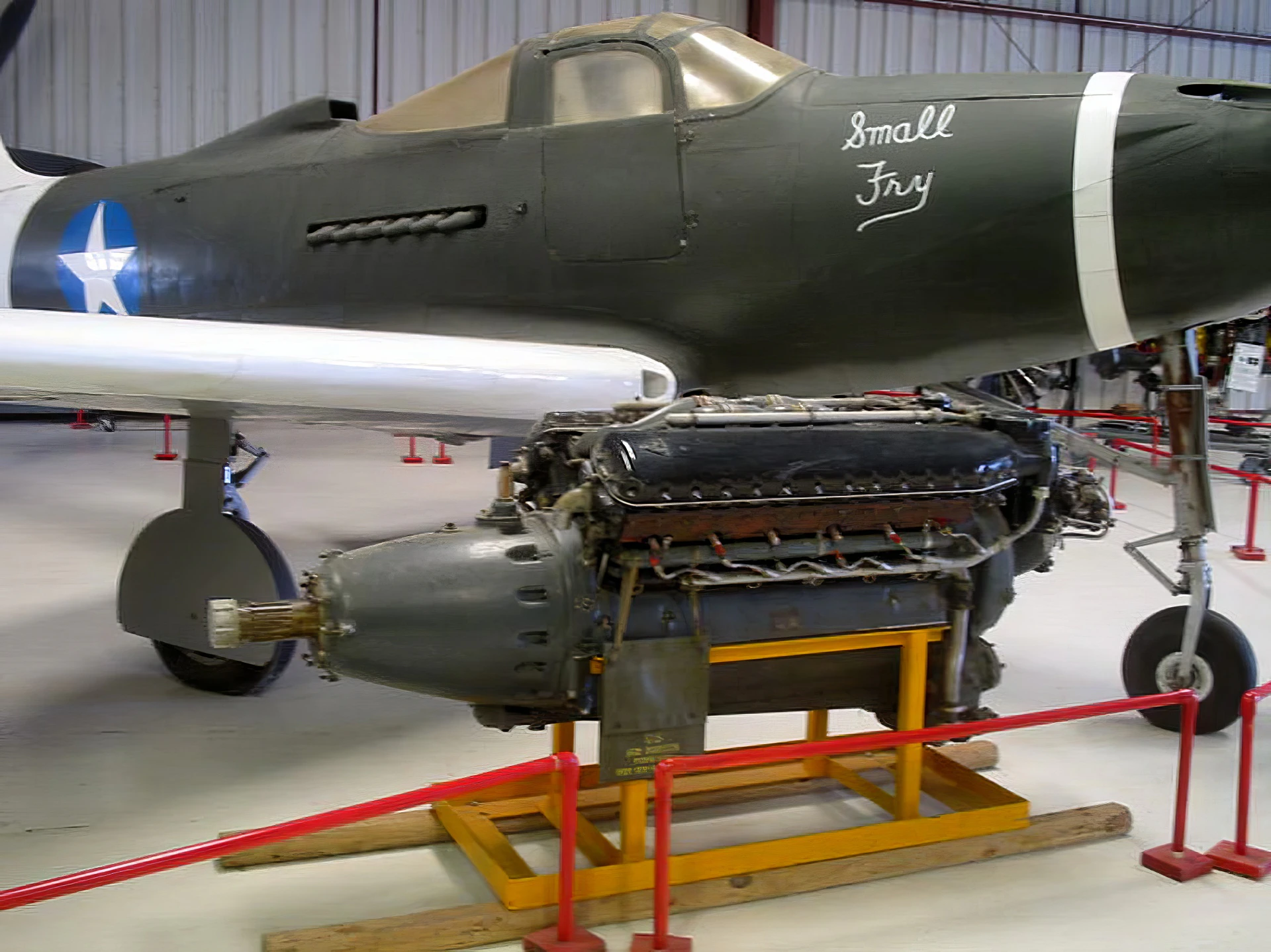
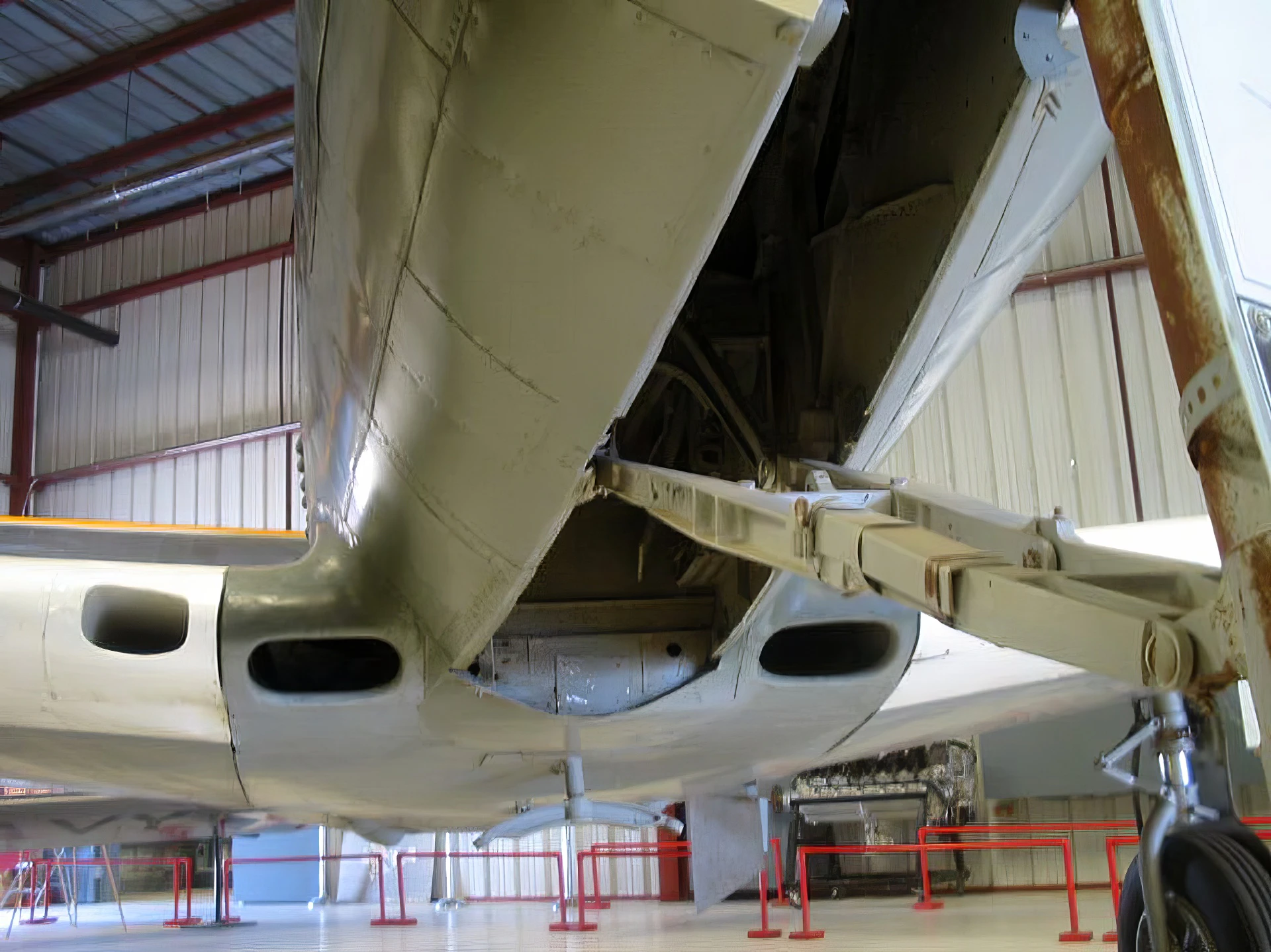
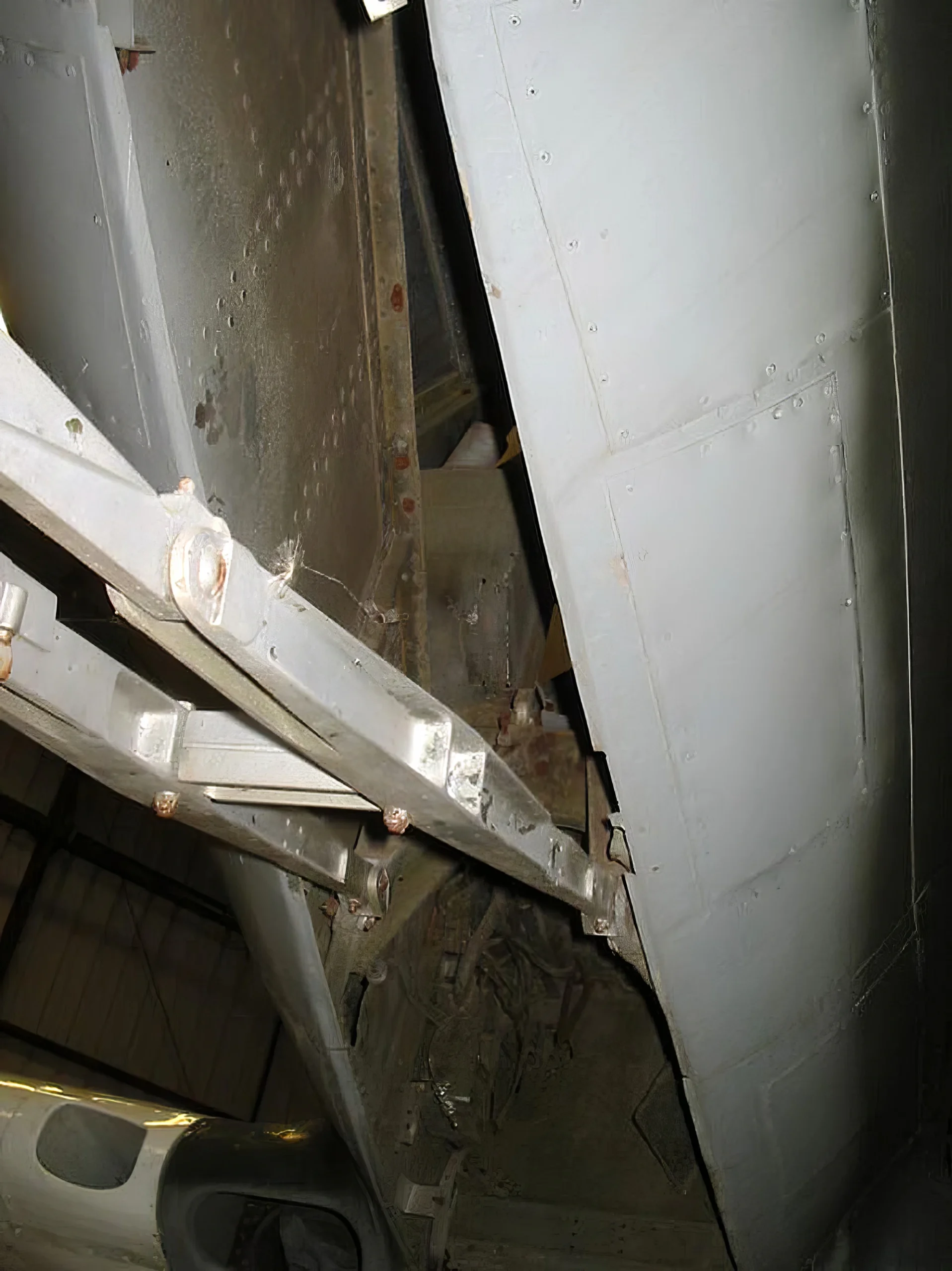
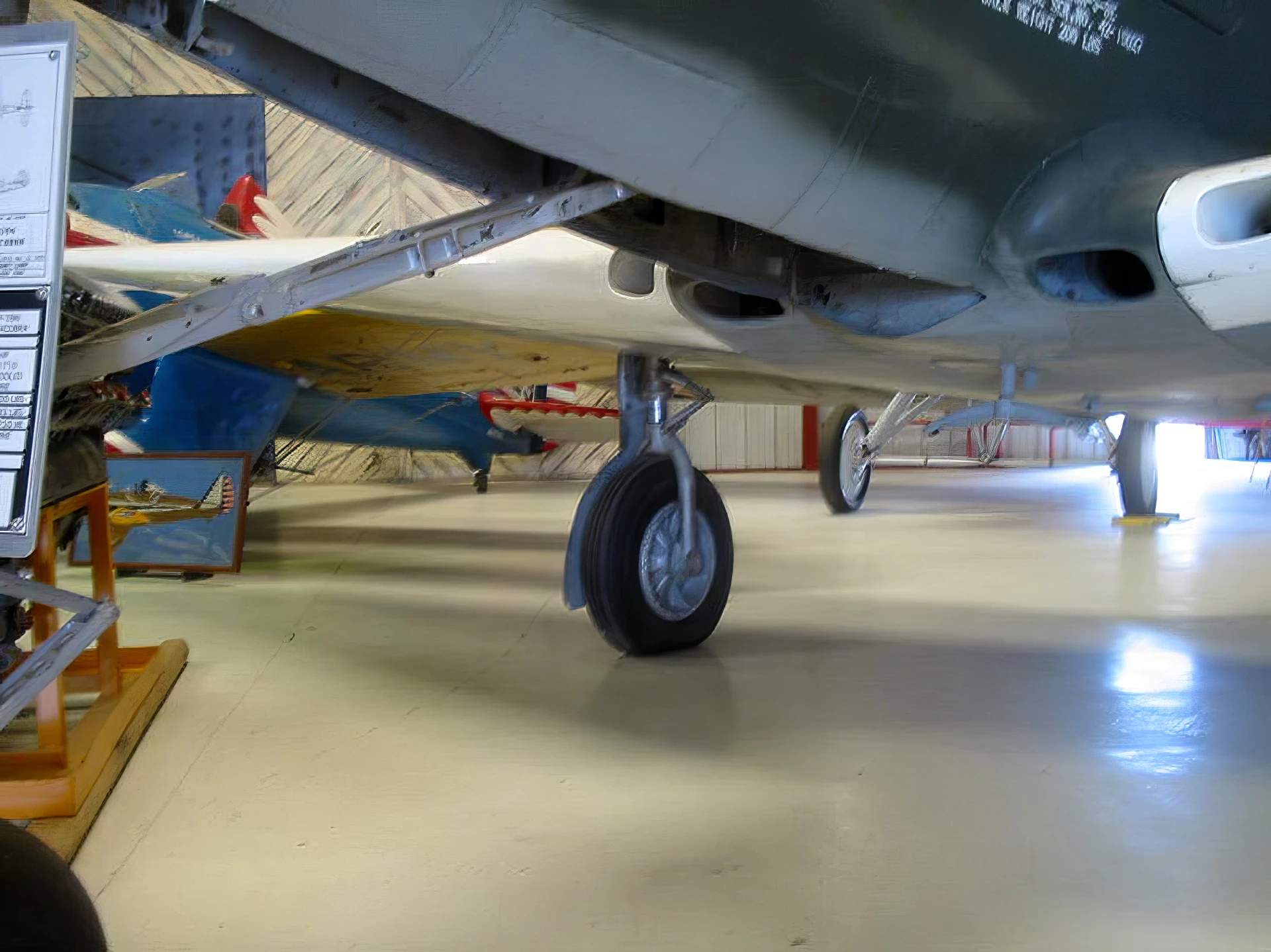

| Bell P-39Q Airacobra | |
|---|---|
| Photographe | Stewart Bailey |
| Localisation | Inconnu |
| Photos | 120 |
| P-39Q Airacobra Walk Around | |
|---|---|
| Photographe | David Spurgeon-Jackson, Michael Benolkin |
| Localisation | Inconnu |
| Photos | 21 |
Voir aussi :


| Bell P-39Q Airacobra Walk Around | |
|---|---|
| Photographe | Unknow |
| Localisation | Inconnu |
| Photos | 116 |
The Bell P-39 Airacobra was one of the United States’ principal fighter aircraft in service at the start of World War II. The P-39N was a major production variant, focusing on structural lightening and using an upgraded engine. The aircraft’s highly unconventional design placed the engine behind the pilot, driving the propeller through a long shaft.
While the P-39’s performance was considered poor by US and British pilots for high-altitude interception due to the absence of an effective turbo-supercharger, its heavy nose-mounted cannon armament and excellent low-to-medium altitude performance made it highly successful when operated by the Soviet Air Force on the Eastern Front, primarily in the tactical fighter and ground-attack roles.
Unique Design and Key Features
Mid-Engine Configuration and Drivetrain
- Engine Placement: The Allison V-1710 V-12 liquid-cooled engine was mounted in the fuselage center, behind the pilot. This novel layout was intended to shift the center of gravity and free up the nose.
- Driveshaft: The propeller was driven by a long extension shaft that ran beneath the cockpit floor to a gearbox in the nose, a distinguishing engineering feature.
- Armament Bay: The space vacated by the engine in the nose allowed for the mounting of the aircraft’s powerful primary weapon, a large-caliber cannon, to fire through the propeller hub.
Structural and Operational Characteristics
- Landing Gear: The P-39 was the first American fighter to feature a tricycle landing gear configuration, which provided excellent visibility and easier ground handling.
- Cockpit Entry: Uniquely, the pilot entered the cockpit via automobile-style doors with roll-down windows on either side, rather than a sliding canopy.
- Altitude Limitation: The production P-39s were limited to a single-stage, single-speed supercharger. The lack of an efficient turbo-supercharger severely handicapped its performance above 15,000 feet (4,500 m), rendering it unsuitable for high-altitude air combat over Western Europe.
P-39N Variant Specifications and Armament
P-39N Specifics
The P-39N series (including N-1 and N-5 sub-variants) were the most numerous production run, incorporating efforts to reduce weight (sometimes by reducing internal fuel capacity) and installing the more powerful V-1710-85 engine. The P-39N-1 introduced a wider 11 ft 7 in (3.53 m) Aeroproducts propeller.
Armament (Typical P-39N Configuration)
| Weapon Type | Calibre | Emplacement | Purpose/Note |
|---|---|---|---|
| Cannon (M4) | 37 mm | Nose (firing through propeller hub) | Primary anti-aircraft/ground attack weapon (low rate of fire, high impact) |
| Machine Guns (Synchronized) | 2 × .50 cal (12.7 mm) | Nose (firing through propeller arc) | Heavy machine guns for close-range fighting |
| Machine Guns (Wing) | 4 × .30 cal (7.62 mm) | Wings | Additional firepower (sometimes replaced by two .50 cal guns in the later Q-model) |
Performance Data (P-39N)
| Spécification | Detail |
|---|---|
| Fabricant | Bell Aircraft Corporation |
| Engine Power | 1,200 hp (Allison V-1710-85) |
| Max Speed | Approx. 385 mph (620 km/h) at optimal altitude |
| Service Ceiling | Approx. 35,000 ft (10,670 m) (though effective performance was lower) |
| Total P-39N Production | 2,095 aircraft |
Vues : 8897
Vous pouvez voir aussi :
 Cessna 310 – Photos et vidéos
 Curtiss P-36 Hawk – Photos & Vidéos
 Cessna T-37 Tweet – Photos et vidéos
 Boeing KC-97 Stratofreighter – Photos & Vidéos
 Fokker S.14 Machtrainer – Photos & Vidéos
 Aichi D3A – Photos & Vidéos
 Curtiss P-40 Warhawk - WalkAround
 Messerschmitt Me 163B - WalkAround
 McDonnell Douglas F-4 Phantom II - WalkAround
 Sukhoi Su-32FN - WalkAround