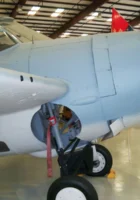
FM-1 Divoká kočka

FM-1 Divoká kočka

ZeměSPOJENÉ STÁTY
První mouchapondělí 2. září 1947
Postaven7885

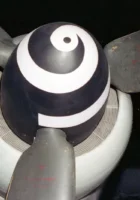
Grumman F4F Divoká kočka was an American carrier-based fighter aircraft that began service with both the United States Navy and the British Royal Navy (as the Martlet) in 1940. First used in combat by the British in Europe, the Wildcat was the only effective fighter available to the United States Navy and Marine Corps in the Pacific Theater during the early part of World War II in 1941 and 1942; the disappointing Brewster Buffalo was withdrawn in favor of the Wildcat and replaced as units became available. With a top speed of 318 mph (512 km/h), the Wildcat was outperformed by the faster and more nimble 331 mph (533 km/h) Mitsubishi A6M Zero, but its ruggedness, coupled with tactics such as the Thach Weave, resulted in an air combat kill-to-loss ratio of 5.9:1 in 1942 and 6.9:1 for the entire war. GM produced the FM-1, identical to the F4F-4, but reduced the number of guns to four, and added wing racks for two 250 lb (110 kg) bombs or six rockets. Production later switched to the improved FM-2 (based on Grumman’s XF4F-8 prototype) optimized for small-carrier operations, with a more powerful engine (the 1,350 hp (1,010 kW) Wright R-1820-56), and a taller tail to cope with the torque.

Zdroj: FM-1 Wildcat na Wiki

Pokračovat ve čtení

Views : 5853

B-25J Mitchell

B-25J Mitchell

ZeměSPOJENÉ STÁTY
Typ

Střední bombardér

Téma

Album 27 fotografie procházky «B-25J Mitchell»

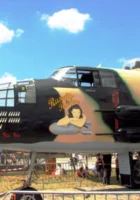
Fotogalerie B-25J Mitchell, The Severoamerický B-25 Mitchell byl americký dvoumotorový střední bombardér vyráběný společností North American Aviation. Byl používán mnoha spojeneckými vzdušnými silami, v každém divadle druhé světové války, stejně jako mnoha dalšími vzdušnými silami po válce a viděl službu po čtyři desetiletí.

Zdroj: Wikipedie

Pokračovat ve čtení

Zobrazení: 3764

Messerschmitt Me 163B

Messerschmitt Me 163B

ZeměNěmecko
RoliStíhací letouny s raketovým pohonem
První let1. září 1941
Postaven370

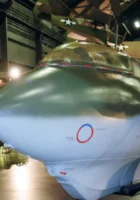
Messerschmitt Me 163 Komet byl německý raketový stíhací letoun. Byl navržen Alexandrem Lippischem a je to jediný raketový stíhací letoun, který kdy byl v provozu, a první pilotovaný letoun jakéhokoli typu, který za letu překročil rychlost 1000 km/h. Jeho design byl revoluční a jeho výkon bezprecedentní. Německý zkušební pilot Heini Dittmar na začátku července 1944 dosáhl rychlosti 1130 km/h, což je neoficiální letový rekord, který téměř deset let nepřekonal proudový letoun. Bylo vyrobeno více než 300 letadel, ale Kometa se ukázala jako neúčinná ve své vyhrazené roli stíhacího letadla a byla zodpovědná za zničení pouze asi devíti až osmnácti spojeneckých letadel proti deseti ztrátám. Kromě bojových ztrát bylo mnoho pilotů zabito během testování a výcviku.

Zdroj: Messerschmitt Me 163 Komet na Wikipedii

Pokračovat ve čtení

Views : 4318

Malé řetězové kolo - Zbraně Arsenal 148

Zbraně Arsenal

Ref

Zbraně Arzenál 148

Autor
Předmět

Kleines Kettenkraftrad

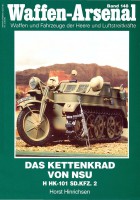
Une dokumentace signée Zbraně Arsenal la revue «Malý Kettenkraftrad – Waffen Arsenal 148» .

SdKfz 2, známější jako Kleines Kettenkraftrad HK 101 ou Kettenkrad est un “Sonderkraftfahrzeug” (SdKfz) ce qui signifie véhicule spécial à moteur. Il s’agit d’un modèle d’autochenille. Produit de 1940 à 1948, il ne transporte que 2 hommes, mais atteint 70 km/h et se comporte très bien sur tout type de terrain. C’était au départ un petit tracteur pour troupes aéroportées. Ce véhicule a été conçu pour être livré par des avions Junkers Ju 52, mais pas par parachute. Le véhicule avait l’avantage d’être le seul petit tracteur d’artillerie, assez petit pour tenir dans la soute du Ju 52. Il a été utilisé comme transport de troupe, mais aussi pour d’autres missions, notamment le déroulage de câbles téléphoniques ou le tractage de pièces d’artillerie légères. Il pesait à vide 1235 kg.

Zdroj: Wikipedie

Pokračovat ve čtení

Počet zobrazení: 1220

186 – Tanky americké námořní pěchoty z druhé světové války

Publikování Osprey

Ref

New Vanguard 186

Isbn9781849085601
Autor
IllustratorRichard Chasemore

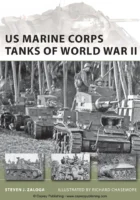
During World War II, the US Marine Corps formed six tank battalions that battled through the harsh conditions of the Pacific Theatre. Using the same basic tanks as the US Army, notably the M3 and M5A1 light tanks and the M4 Sherman medium tank, the marines made both technical and tactical innovations to make them more effective in the fight against the Japanese. Deep wading equipment, flamethrower tanks, and even wooden armor all became part of the Marine arsenal. This book examines the tactics and technology that made the US Marine Corps tank service unique in the annals of warfare.

Zdroj: Orlovec říční

Pokračovat ve čtení

Zobrazení : 1530

Renault R35

Renault R35

ZeměFrancie
Typ

Lehká pěchotní nádrž

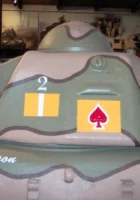
Fotogalerie tanku Renault R35, The Renault R35, an abbreviation of Char léger Modèle 1935 R or R 35, was a French light infantry tank of the Second World War. Designed from 1933 and produced from 1936, the type was intended as a light infantry support tank, equipping autonomous tank battalions, that would be allocated to individual infantry divisions to assist them in executing offensive operations. To this end it was relatively well-armoured but slow and lacking a good antitank-capacity, fitted with a short 37 mm gun. At the outbreak of the war, the antitank-role was more emphasized leading to the development and eventual production from April 1940 of a subtype with a more powerful longer gun, the Renault R40. It was planned to shift new production capacity to the manufacture of other, faster, types, but due to the defeat of France the R35/40 remained the most numerous French tank of the war, about 1685 vehicles having been produced in June 1940. At that moment it had also been exported to Poland, Romania, Turkey and Yugoslavia. For the remainder of the war Germany and its allies would use captured vehicles, some of them rebuilt into tank destroyers.

Zdroj: Renault R35 na Wiki

Pokračovat ve čtení

Zobrazení : 8409

Das waffen arsenal 085 - Heinkel He 162

Zbraně Arsenal

Ref

Waffen Arsenal 085

Autor
Předmět

Der VolksJäger He 162

Une dokumentace signée Zbraně Arsenal la revue «Der VolksJäger He 162 – Waffen Arsenal 085» .

Le Heinkel On 162 Volksjäger ou Salamander est un avion de chasse intercepteur de la Seconde Guerre mondiale.

Zdroj: On 162 sur Wikipedie

Pokračovat ve čtení

Zobrazení: 1713

Das waffen arsenal 080 - Die großen Dessauer

Waffen Arsenal

Ref

Waffen Arsenal 080

Author
Subject

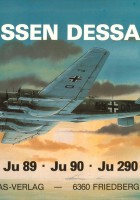
Grossen Dessauer

Une dokumentace signée Zbraně Arsenal la revue «Grossen Dessauer – Waffen Arsenal 080» .

C’est en 1942 que les premiers Ju 290 furent utilisés par la Luftwaffe. Il s’agissait de deux avions de pre-série Ju 290 A-0 obtenus à partir de Ju 90 (de) civils, et de cinq Ju 290 A-1 assemblés en tant que tel. Plusieurs de ces avions participèrent à la bataille de Stalingrad pendant l’hiver 1942-1943. Précisément, ils participèrent au pont aérien mis en place pour ravitailler la 6e armée de Paulus, alors encerclée dans la ville. La production de série prit place dans l’usine Letov de Prague. Après la version A-1, une version A-2 de patrouille maritime emportait un radar. Des versions A-3, A-4, et A-5 ont suivi, elles se distinguent essentiellement par leur armement. Soixante-cinq appareils furent produits.

Zdroj: Wikipedie

Pokračovat ve čtení

Zobrazení: 1077

Focke-Wulf Fw 190D-9

Focke-Wulf FW-190

ZeměNěmecko
Typ

Jednomotorové stíhací letouny

První let1. června 1939
Postaven20000+

Fotogalerie Focke-Wulf FW-190A-9, The Focke-Wulf Fw 190 Würger (Shrike) byl německý jednomístný jednomotorový stíhací letoun navržený Kurtem Tankem na konci 30. let 20. 190, poháněný radiálním motorem, měl dostatek energie a byl schopen zvednout větší zatížení než jeho známý protějšek Messerschmitt Bf 109. 190 byl používán Luftwaffe v široké škále rolí, včetně denního stíhacího letounu, stíhacího bombardéru, pozemních útočných letadel a v menší míře nočního stíhače.

Zdroj: Focke-Wulf na Wikipedii

Pokračovat ve čtení

Zobrazení: 29704