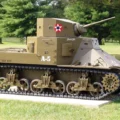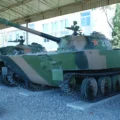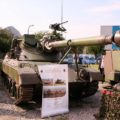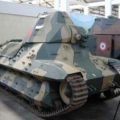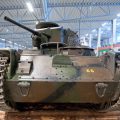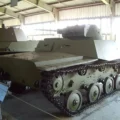
BT-7 | |
|---|---|
| Страна | Съветски съюз |
| Роля | Кавалерия танк |
| Произведени | 1935–40 |
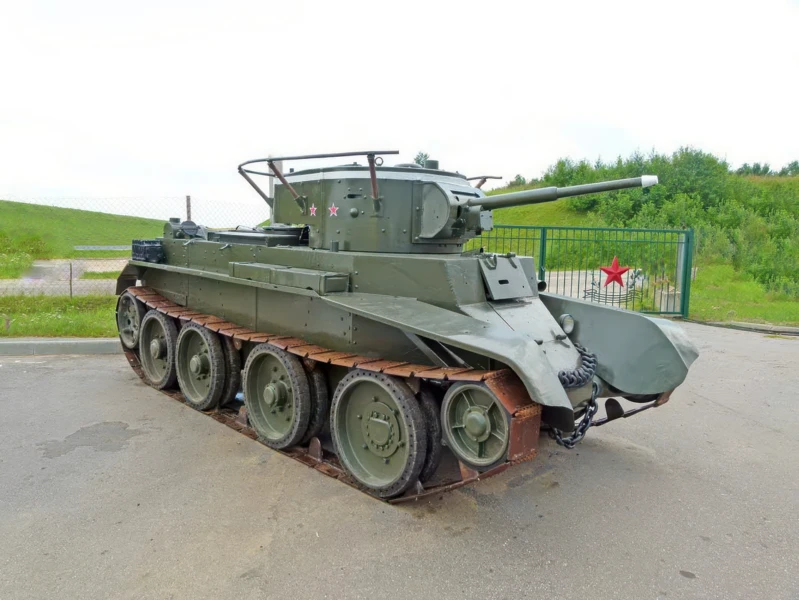
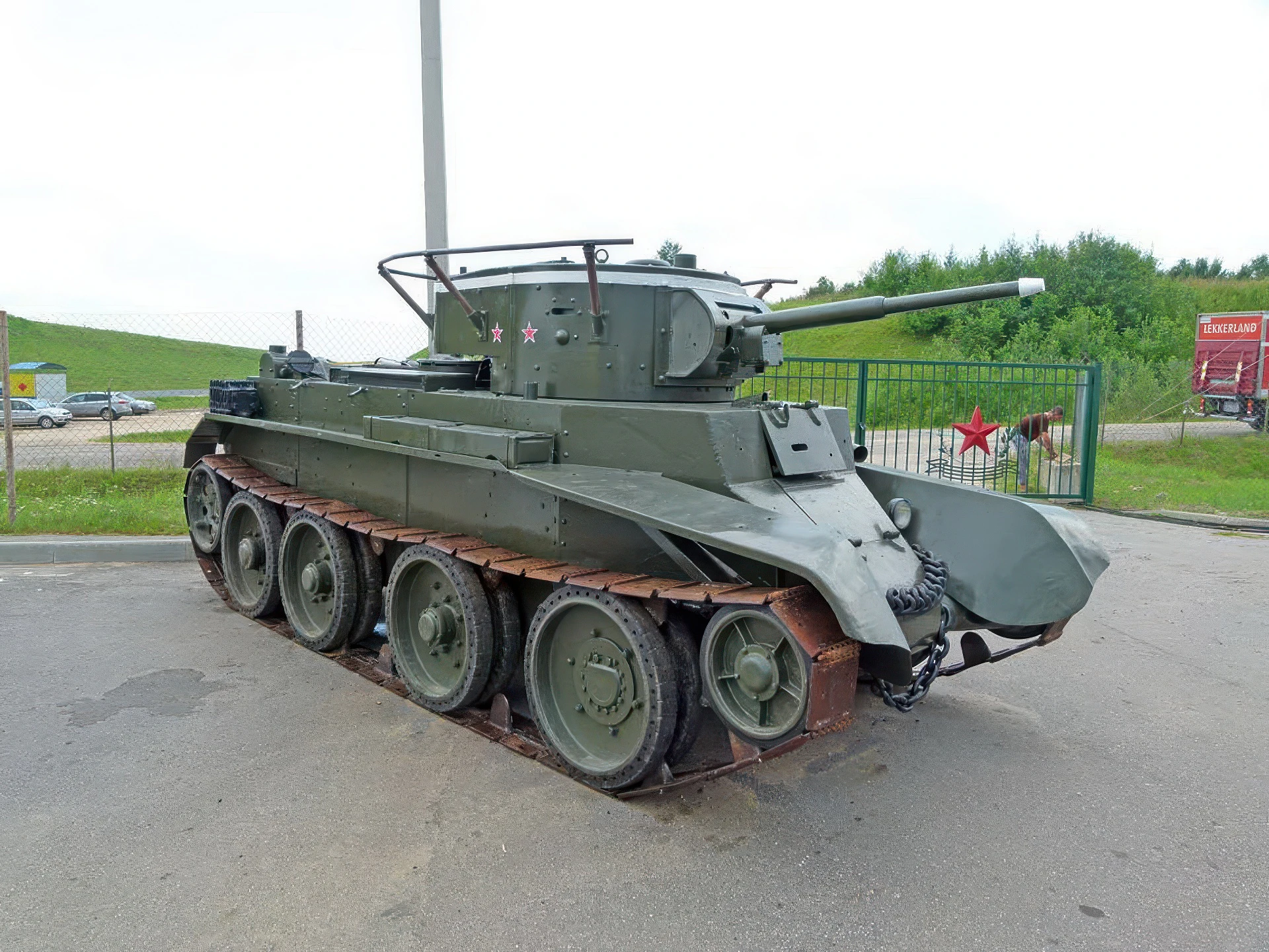
1. БТ-7 е последната от bT серията съветски кавалерийни танкове, които са произведени в големи числа между 1935 и 1940. Те бяха леко бронирани, но разумно добре въоръжени за времето си, и имаха много по-добра мобилност от други съвременни дизайни на танкове. Танковете БТ са били известни с прякора Бетка от акронима, или неговата слабоумна Бетушка.
Източник: резервоар BT-7 в Уикипедия
| Soviet cavalry tank BT-7 | |
|---|---|
| Фотограф | Не знам |
| Локализация | Не знам |
| Снимки | 180 |
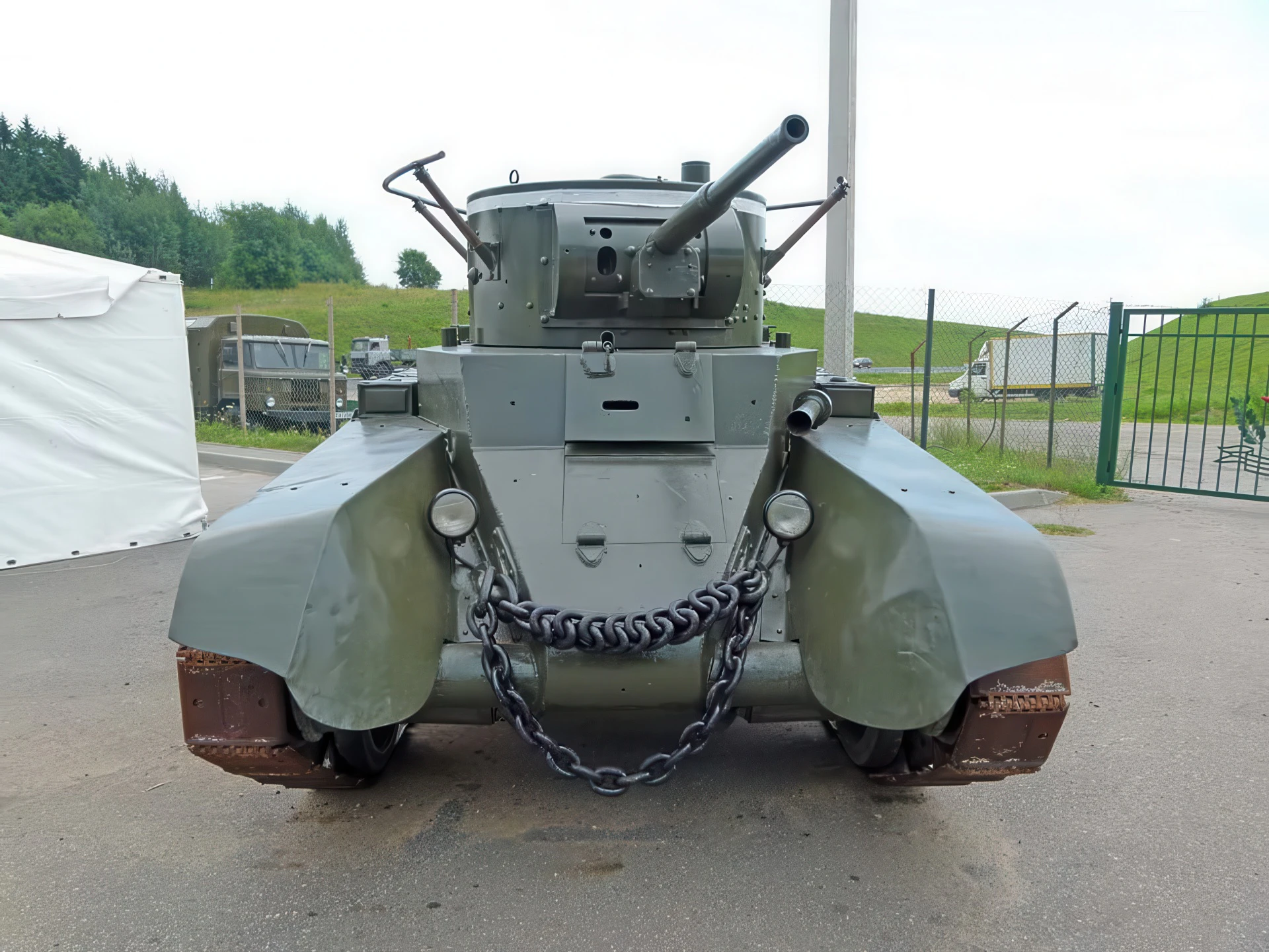
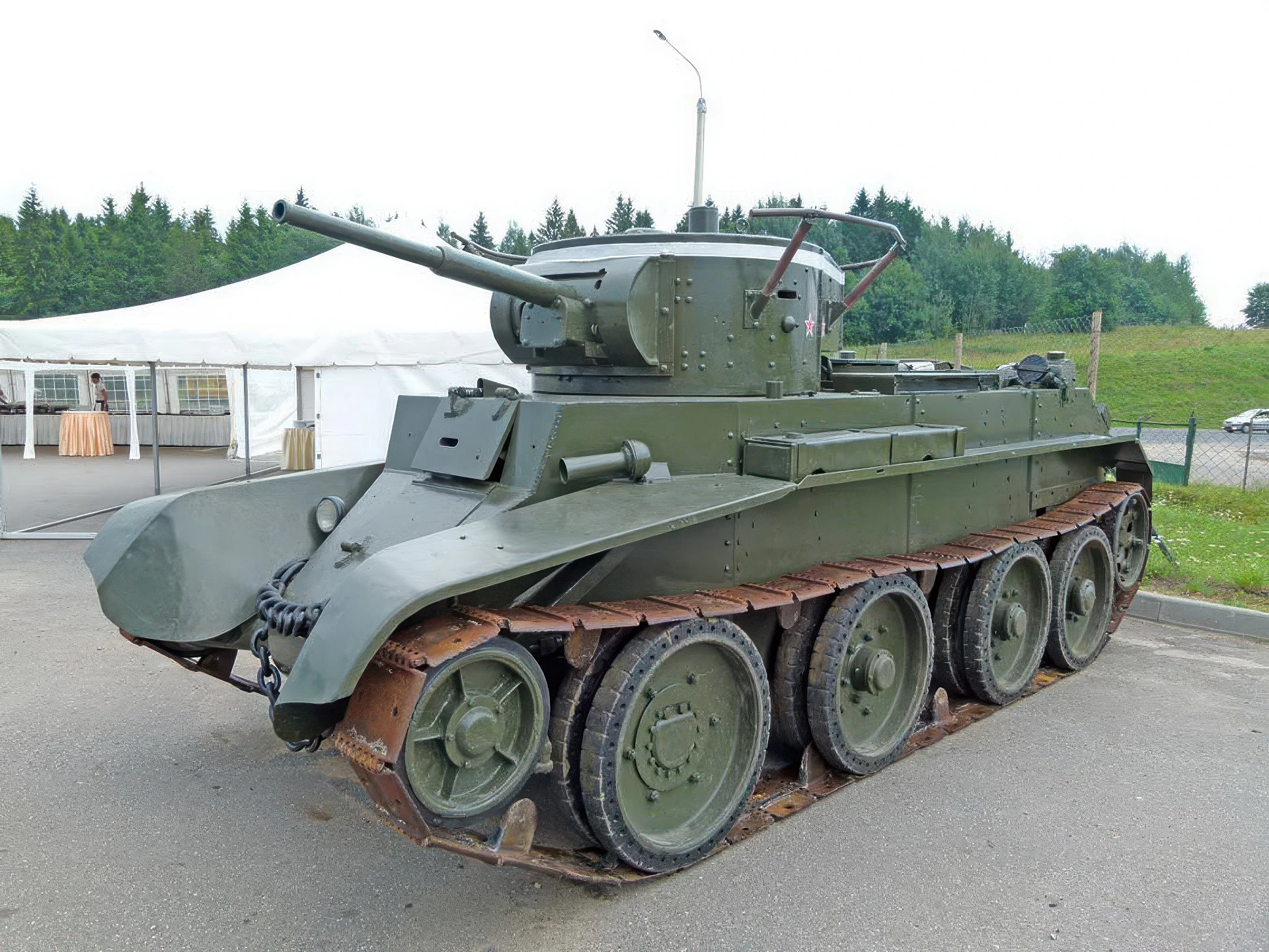
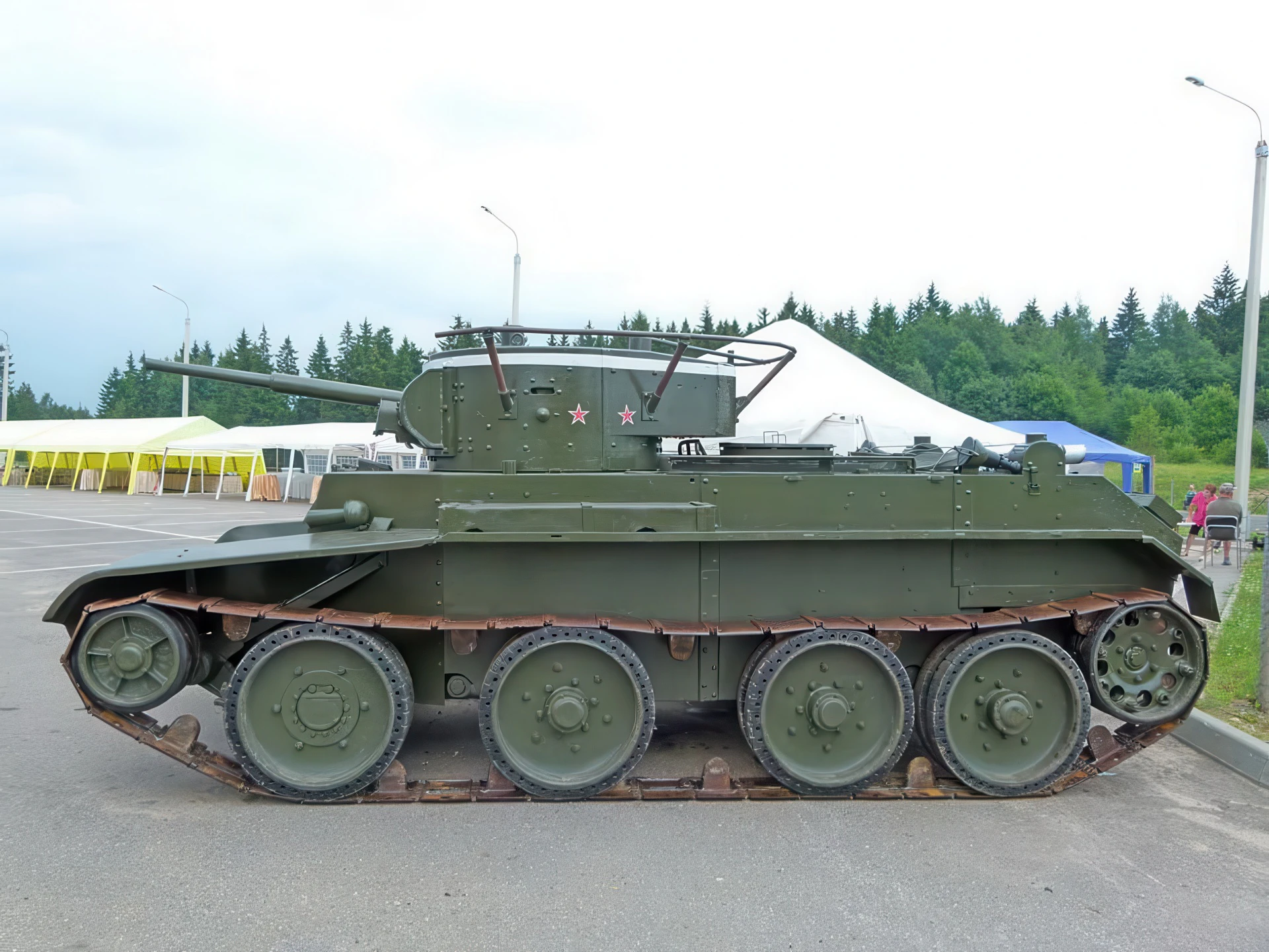
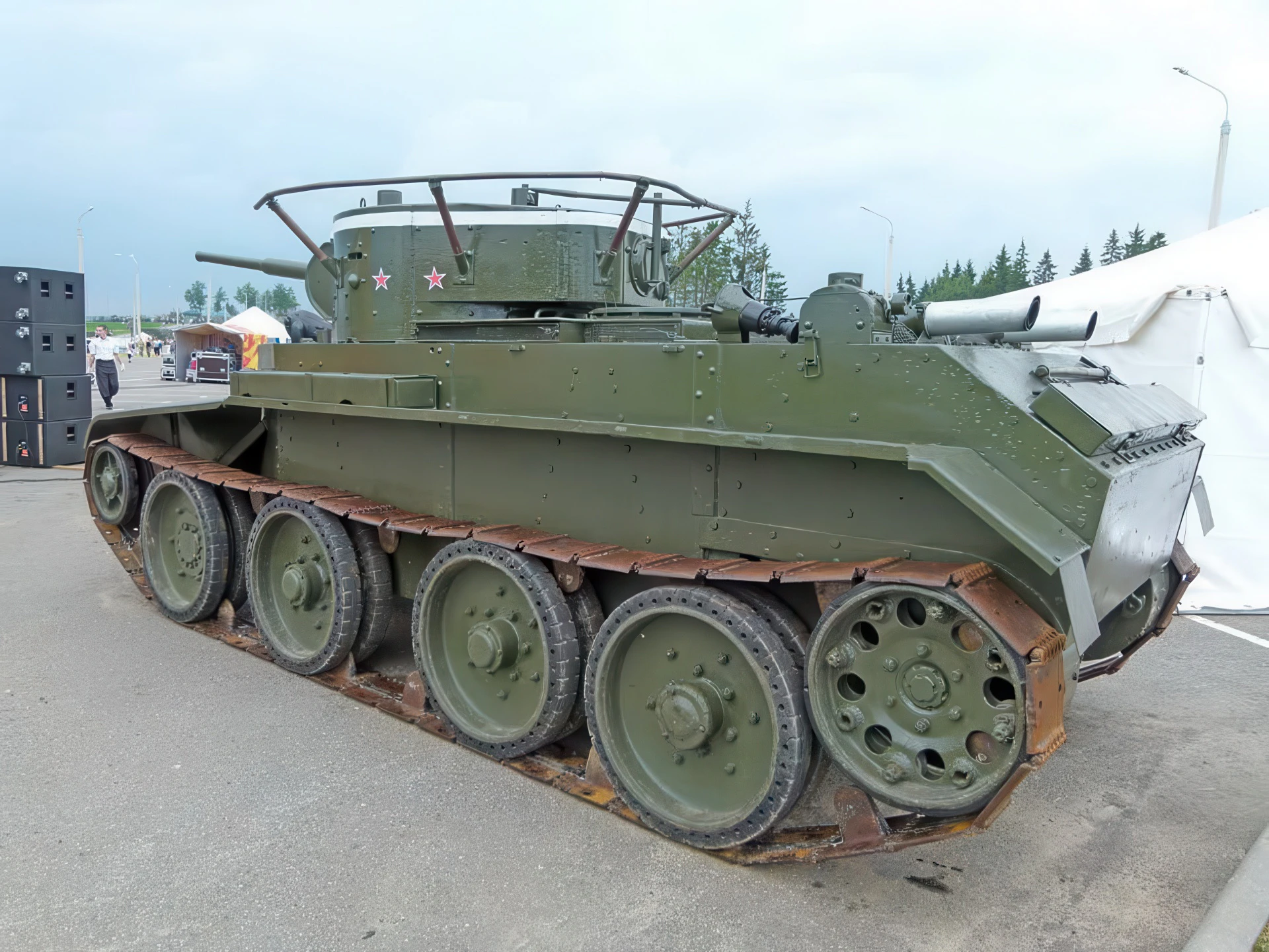
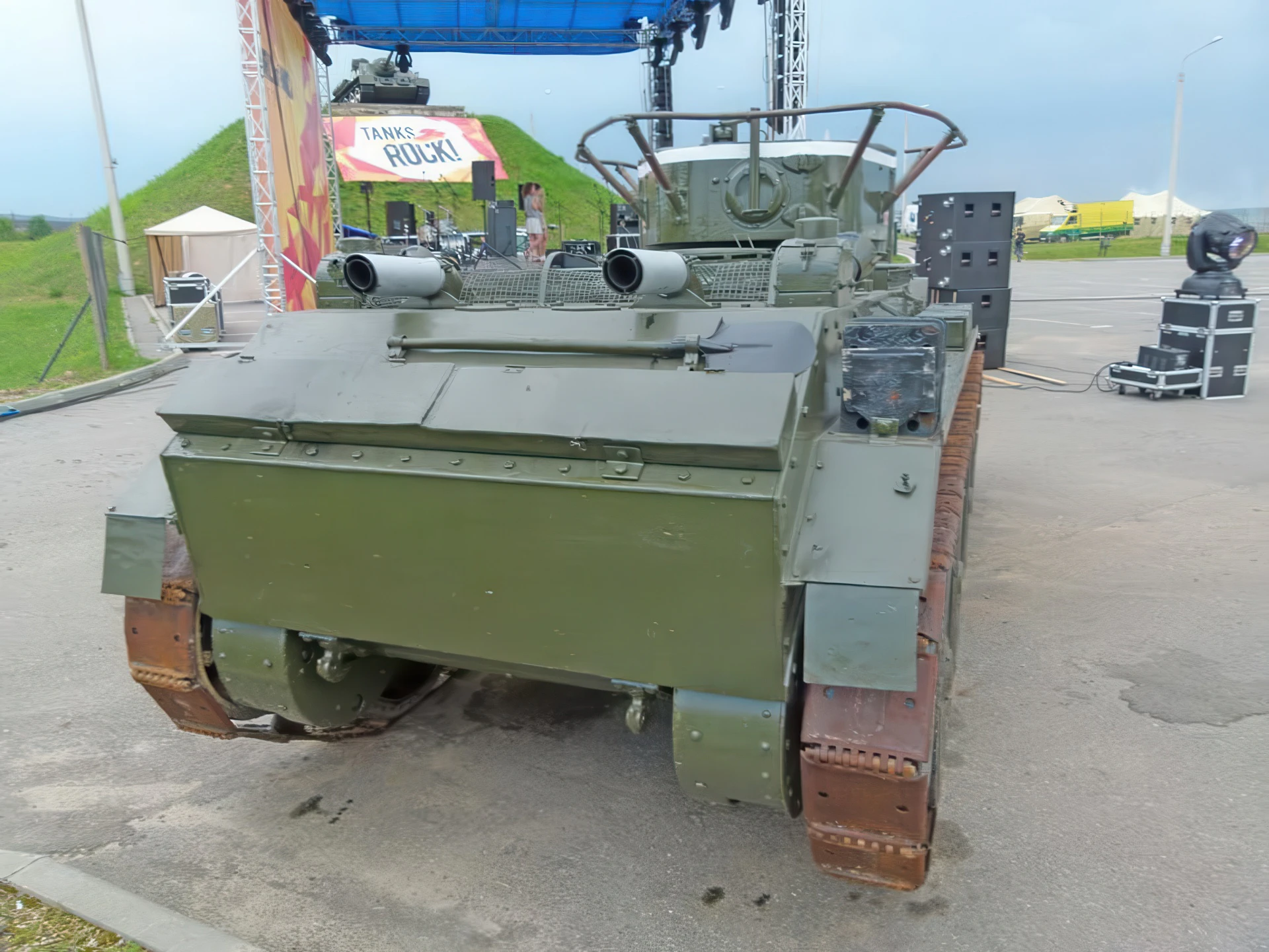
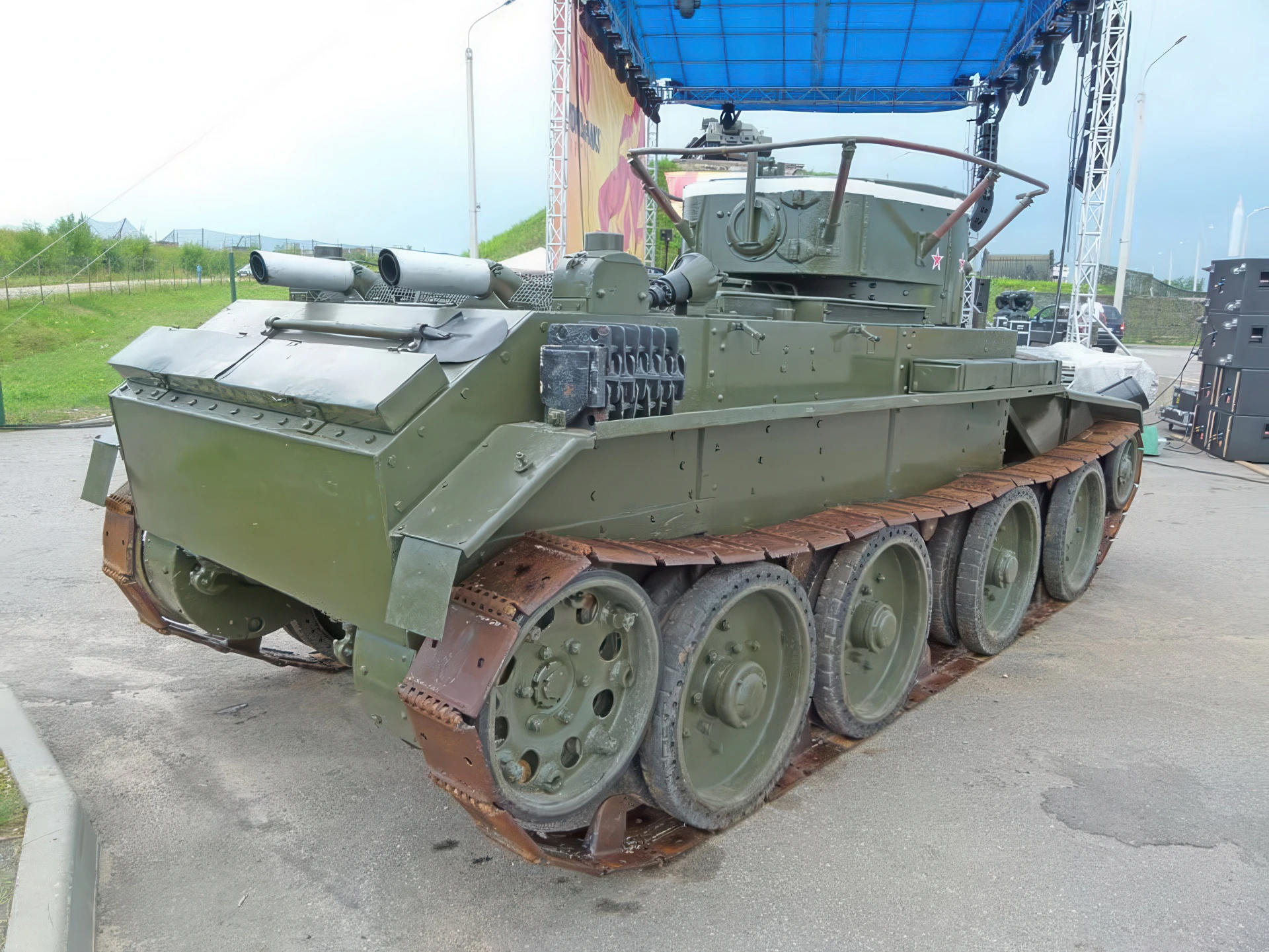
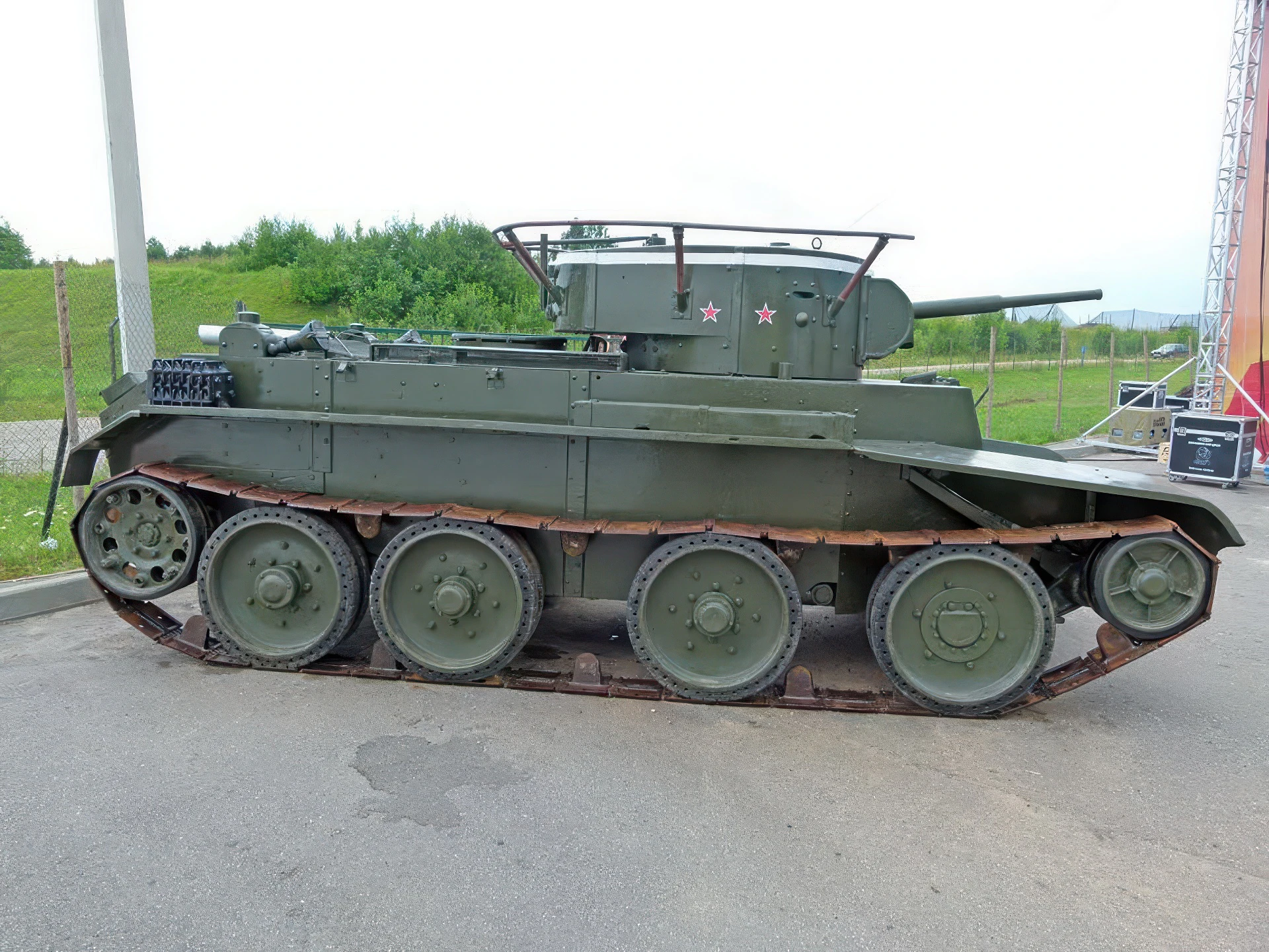
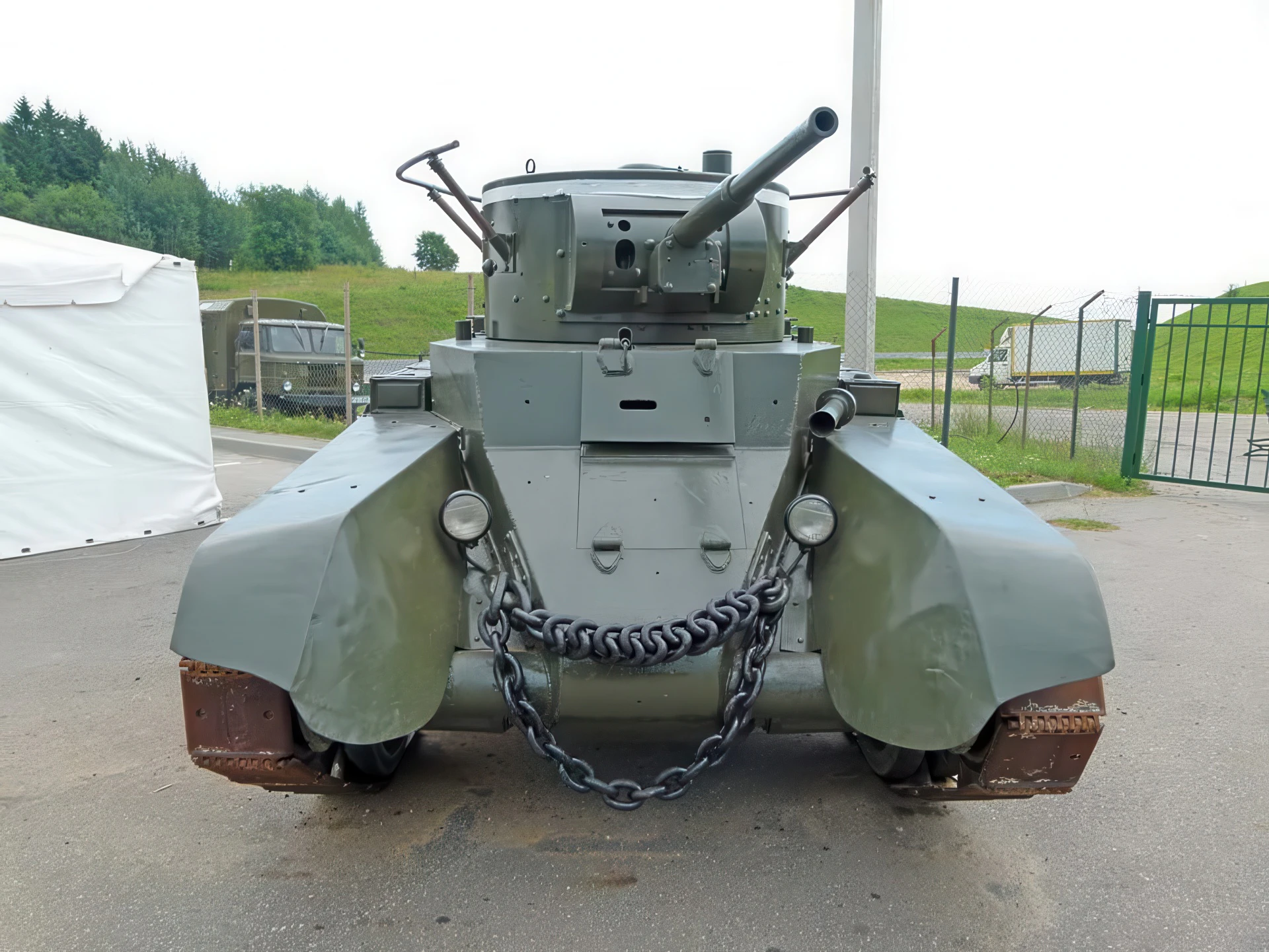

| BT-7 Walk Around | |
|---|---|
| Фотограф | Aleksandr Rodionov |
| Локализация | Не знам |
| Снимки | 105 |
| BT-7 Model 1935 Walk Around | |
|---|---|
| Фотограф | Yuri Pasholok |
| Локализация | Не знам |
| Снимки | 335 |
Вижте също:


The **BT-7** was a Soviet light cavalry tank produced in large numbers between 1935 and 1940. It was the final and most technologically advanced of the BT series, succeeding the BT-5. The BT designation stands for **Bystrokhodnyy Tank** (Fast Tank), reflecting its core design philosophy: extreme mobility and speed, at the expense of armor protection.
Mobility: The Christie Suspension
The BT-7’s exceptional speed derived from the American-designed **Christie suspension** system, which the Soviets acquired and adapted. This feature made the BT series **”convertible”**: the tank could run on its tracks for cross-country movement or, in about 30 minutes, the tracks could be removed, and a chain drive engaged to power the rear set of large roadwheels. This allowed it to achieve very high speeds (up to 86 km/h or 53 mph) on roads, functioning essentially as an armored car.
Armament and Protection
- Main Gun: The tank was typically armed with a high-velocity **45 mm 20-K anti-tank gun**. This gun was effective against most contemporary light and medium tanks of the mid-1930s.
- Secondary Armament: A coaxial 7.62 mm DT machine gun was mounted in the turret.
- Защитна обвивка: Armor was thin, generally 6 mm to 20 mm of rolled homogeneous steel. This protection was minimal, making the BT-7 vulnerable to dedicated anti-tank weapons and heavy machine gun fire.
- Варианти: The later **BT-7M** (sometimes called BT-8) introduced the powerful **V-2 diesel engine**, a key innovation that improved range and significantly reduced the fire risk common to the earlier gasoline-fueled models.
Significance and Legacy
The BT-7 saw service in the Far East (against Japan at Khalkhyn Gol) and heavily during the initial stages of World War II, including the Winter War and the opening of Operation Barbarossa in 1941. While many were lost due to obsolescence, mechanical failure, and combat damage, the experience gained and the technologies developed for the BT-7, particularly the **V-2 diesel engine** and the concept of sloped armor (seen in its conical turret and later applied radically to its successor), directly paved the way for the legendary **T-34 medium tank**.
Views : 14153