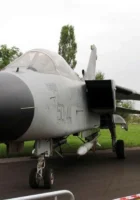
Tornado ECR

Tornado

CountryGermany
RoleCombat aircraft
First flight14 August 1974
Built992

The Panavia Tornado is a family of twin-engine, variable-sweep wing combat aircraft, which was jointly developed and manufactured by the United Kingdom, West Germany and Italy. There are three primary variants of the Tornado; the Tornado IDS (interdictor/strike) fighter-bomber, the suppression of enemy air defences Tornado ECR (electronic combat/reconnaissance) and the Tornado ADV (air defence variant) interceptor. The Tornado was developed and built by Panavia Aircraft GmbH, a tri-national consortium consisting of British Aerospace (previously British Aircraft Corporation), MBB of West Germany, and Aeritalia of Italy. It first flew on 14 August 1974 and was introduced into service in 1979–1980. Due to its multirole nature, it was able to replace several different fleets of aircraft in the adopting air forces. The Royal Saudi Air Force (RSAF) became an export operator of the Tornado in addition to the three original partner nations. A tri-nation training and evaluation unit operating from RAF Cottesmore, the Tri-National Tornado Training Establishment, maintained a level of international cooperation beyond the production stage.

Source: Tornado on Wikipedia

Continue reading

Views : 9131

Leopard 2E

Leopard C2

CountryGermany
TypeMain battle tank
TopicAlbum of 146 photos walk-around of a Leopard 2E

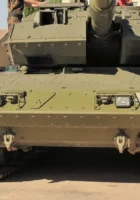
Photo gallery of a Leopard 2E, The Leopard 2E (E stands for España, Spanish for Spain) is a variant of the German Leopard 2 main battle tank, tailored to the requirements of the Spanish army, which acquired it as part of an armament modernization program named Programa Coraza, or Program Breastplate. The acquisition program for the Leopard 2E began in 1994, five years after the cancellation of the Lince tank program that culminated in an agreement to transfer 108 Leopard 2A4s to the Spanish army in 1998 and started the local production of the Leopard 2E in December 2003. Despite postponement of production owing to the 2003 merger between Santa Bárbara Sistemas and General Dynamics, and continued fabrication issues between 2006 and 2007, 219 Leopard 2Es have been delivered to the Spanish army.

Source: Loepard 2E on Wki

Continue reading

Views : 10467

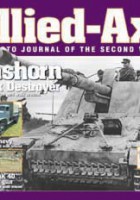
The Photo Journal of the Second World War No.16 - ALLIED-AXIS 16

Ampersand Publishing

Ref

Allied-Axis 16

Author
Subject

Nashorn

Signed documentation Ampersand Publishing le livre «The Photo Journal of the Second World War No.16 – ALLIED-AXIS 16» .

  • Chevrolet one and a half ton truck
  • Nashorn tank destroyer
  • 7.5cm Panzerabwehrkanone 40
  • Odd DUKW, modifications and uses

Continue reading

Views : 1059

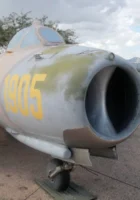
Mikoyan-Gurevich MiG-17

Mikoyan-Gurevich MiG-17

CountrySoviet Union
Type

High-subsonic fighter aircraft

First flight14 January 1950

The Mikoyan-Gurevich MiG-17 (Russian: Микоян и Гуревич МиГ-17; NATO reporting name: Fresco) is a high-subsonic fighter aircraft produced in the USSR from 1952 and operated by numerous air forces in many variants. It is an advanced development of the similar looking MiG-15 of the Korean War. The MiG-17 was license-built in China as the Shenyang J-5 and Poland as the PZL-Mielec Lim-6.

Continue reading

Views : 6539

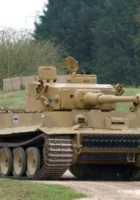
Tiger Tank in Action

Tiger Tank

CountryGermany
Type

Heavy Tank

Description

Album of 27 photos walk-around of a «Tiger Tank»

Photo gallery of a Tiger Tank in action, The Tiger I is the common name of a German heavy tank developed in 1942 and used in World War II. The final official German designation was Panzerkampfwagen VI Tiger Ausf.E, often shortened to Tiger. It was an answer to the unexpectedly formidable Soviet armour encountered in the initial months of the Axis invasion of the Soviet Union, particularly the T-34 and the KV-1. The Tiger I design gave the Wehrmacht its first tank mounting the 88 mm gun, in its initial armored fighting vehicle-dedicated version, which in its Flak version had previously demonstrated its effectiveness against both air and ground targets. During the course of the war, the Tiger I saw combat on all German battlefronts. It was usually deployed in independent tank battalions, which proved to be quite formidable.

Continue reading

Views : 11126

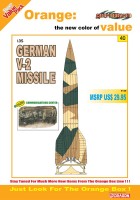
German V-2 Missile - Cyber-Hobby 9140

Cyber-Hobby

Ref 9140
TypeOrange Series
Scale1/35
Topic

German V-2 Missile

A model of the brand Cyber-Hobby the kit : German V-2 Missile – Cyber-Hobby 9140.

Features: Bonus Communications Center The Vergeltungswaffe 2 (“Retaliation Weapon 2”, or V-2) was one of Germany’s wonder weapons, and it was certainly revolutionary at the time. It holds the distinction of being the world’s first long-range ballistic missile, and rockets were used widely against London and later Antwerp. Indeed, more than 3,000 V-2s were launched from September 1944 onwards, resulting in the deaths of some 7,250 people. The V-2 was also known technically as the A4, and it was the progenitor of all modern rockets. A V-2 could reach a maximum altitude of 88km before beginning its ballistic free-fall trajectory. One of the key designers behind the liquid-fuelled rocket project was Wernher von Braun. The 12,500kg and 14m-long rockets were constructed by prisoners at Mittelwerk, and they were fired from mobile launchers that proved difficult for Allied aircraft to target.

Orange Box has an astonishing 1/35 scale plastic kit of the famous, or perhaps infamous, V-2 rocket. This is an older Dragon kit but it has stood the test of time well, plus it includes a launch platform. Also, it is many years since Dragon’s V-2 was available, so this Orange Box release allows modelers to again get their hands on this important German weapon of WWII. To make it even more versatile, the set includes a 1/35 scale communications center that is crammed with a variety of radio gear and associated soldiers/radio operators. This set from the Orange Box collection offers unbeatable value for money.

Source: German V-2 Missile on Cybber-Hobby
Continue reading

Views : 1385

Ba-64B

Ba-64B

CountryURSS
Role

Armoured Scout Car

Built9110+

The BA-64 was a 4×4 light armoured car, employed by the Soviet Army from 1942 into the early 1960s for reconnaissance and liaison tasks. The BA-64B was nicknamed ‘Bobik’ by its crews. The total recorded number of BA-64s produced differs even in Russian sources. The most frequently-stated figures are 9,110 (3,901 BA-64 and 5,209 BA-64B) vehicles which were built in the GAZ automobile plant, although a memorial plaque near the pictured Nizhny Novgorod car states 9,063 cars. The Red Army representatives accepted only 8,174 BA-64s, including 3,390 with radio sets; the other vehicles were transferred to NKVD units and Soviet allies.

Source: Ba-64B on Wiki

Continue reading

Views : 4648

Wydawnictwo Militaria 320 - KW vol.III

Wydawnictwo Militaria

Ref

Wydawnictwo Militaria 320

Author
Subject

Chars KV – Kliment Voroshilov

Signed documentation Wydawnictwo Militaria le livre «Chars KV – Kliment Voroshilov – Wydawnictwo 320» .

The tank Kliment Voroshilov (KV) is a Soviet rupture tank. It was an unpleasant surprise for the Wehrmacht during Operation Barbarossa: at the time it was almost invulnerable to all its weapons except the 88 mm Flak anti-aircraft gun and direct artillery fire.

Continue reading

Views : 1181