Dodge WC-54 Ambulance

Dodge WC54

CountryUSA
Type4×4 light truck
ManufacturerDodge (Chrysler)

The Dodge WC54 ¾ Ton, supply catalog designation G502, was a WC series 4×4 light truck developed during World War II. It served as the main ambulance used by the US army from 1942 to 1945, with some used as late as 1953 during the Korean War by the U.S. Army Medical Corps, and others serving as late as the 1960s in the armies of some European countries. At times, several were also used by the US Signal Corps as radio vans.

Source: Dodge WC54 on Wikipedia

Continue reading

Views : 7561

Supermarine Spitfire VIII

Supermarine Spitfire VIII

CountryUK
Type

Single-seat fighter aircraf

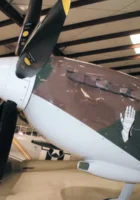
The Supermarine Spitfire is a British single-seat fighter aircraft that was used by the Royal Air Force and many other Allied countries throughout the Second World War. The Spitfire continued to be used as a front line fighter and in secondary roles into the 1950s. It was produced in greater numbers than any other British aircraft and was the only British fighter in continuous production throughout the war. The Spitfire was designed as a short-range, high-performance interceptor aircraft by R. J. Mitchell, chief designer at Supermarine Aviation Works (which operated as a subsidiary of Vickers-Armstrong from 1928). Mitchell continued to refine the design until his death from cancer in 1937, whereupon his colleague Joseph Smith became chief designer. Where speed was seen as essential to carrying out the mission of home defence against enemy bombers, the Spitfire’s thin cross-section elliptical wing allowed it a higher top speed than several contemporary fighters, including the Hawker Hurricane.

Source: Wikipedia

Continue reading

Views : 4207

T-26 Staraya

T-26 Staraya

CountrySoviet Union
Role

Light infantry tank

In service1931–45
Built10300+

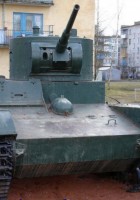
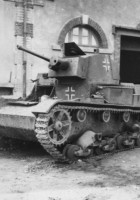
The T-26 tank was a Soviet light infantry tank used during many conflicts of the 1930s and in World War II. It was a development of the British Vickers 6-Ton tank and was one of the most successful tank designs of the 1930s until its light armour became vulnerable to newer anti-tank guns. It was produced in greater numbers than any other tank of the period, with more than 11,000 units manufactured. During the 1930s, the USSR developed 53 variants of the T-26, including flame-throwing tanks, combat engineer vehicles, remotely controlled tanks, self-propelled guns, artillery tractors, and armoured carriers. Twenty-three of these were series-produced, others were experimental models.

Source: T-26 on Wikipedia

Continue reading

Views : 6704

Grumman E-2C Hawkeye

Northrop Grumman E-2 Hawkeye

CountryUSA
TypeAircraft carrier-capable tactical airborne early warning
First flight21 October 1960
Produced1960–present

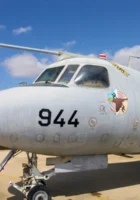
Photo gallery of a Northrop Grumman E-2 Hawkeye, The Grumman E-2 Hawkeye is an American all-weather, aircraft carrier-capable tactical airborne early warning (AEW) aircraft. This twin-turboprop aircraft was designed and developed during the late 1950s and early 1960s by the Grumman Aircraft Company for the United States Navy as a replacement for the earlier E-1 Tracer, which was rapidly becoming obsolete. The aircraft’s performance has been upgraded with the E-2B, and E-2C versions, where most of the changes were made to the radar and radio communications due to advances in electronic integrated circuits and other electronics. The fourth version of the Hawkeye is the E-2D, which first flew in 2007. The E-2 was the first aircraft designed to be a AEW aircraft from the outset, as opposed to a modification of an existing airframe, such as the E-3.

Source: Wikipedia

Continue reading

Views : 13672

GAZ UAZ-69 - WalkAround

GAZ UAZ-69

CountryURSS
Type

Four wheel drive light truck

Description

Album of 151 photos walk-around of a UAZ-69

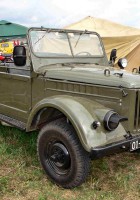
GAZ-69 is a four wheel drive light truck, produced by GAZ between 1953 and 1955. From 1954 until 1972 it was produced by UAZ, as UAZ-69, though they were commonly known as GAZ-69s as well. It was also produced under licence by ARO in Romania, first as IMS-57, then as Muscel M59, later modernized as the Muscel M461. Many GAZ-69 trucks were used in Poland during the Cold War. The basic variant GAZ-69 has a pair of doors only and most often appears with standard canvas top and upper sides. Further variant GAZ-69A (UAZ-69A) has two pair of doors. From the UAZ-69 there were developed off-road van and light truck UAZ-450 and newer jeep UAZ-469.

Source: Wikipedia

Continue reading

Views : 6076

Boeing B-52D Stratofortress

Boeing B-52 Stratofortress

CountryUSA
RoleStrategic bomber
First flight15 April 1952
Built744

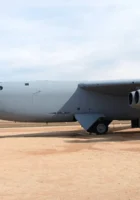
The Boeing B-52 Stratofortress is a long-range, subsonic, jet-powered strategic bomber. The B-52 was designed and built by Boeing, which has continued to provide support and upgrades. It has been operated by the United States Air Force (USAF) since the 1950s. The bomber carries up to 70,000 pounds (32,000 kg) of weapons.

Source: Boeing B-52 Stratofortress on Wikipedia

Continue reading

Views : 5924

Kfir C2

Kfir C2

CountryIsrael
Role

Fighter-bomber

First flightJune 1973
Built220+

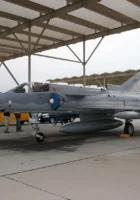
Photo gallery of a Kfir C2, The Israel Aircraft Industries Kfir is an Israeli-built all-weather, multirole combat aircraft based on a modified French Dassault Mirage 5 airframe, with Israeli avionics and an Israeli-made version of the General Electric J79 turbojet engine. Kfir C.2 : An improved C.1 that featured a lot of aerodynamic improvements. Changes included “dogtoothed” leading edges on the wings, small strakes under the nose and a larger sweep angle of the canards.

Source: Kfir on Wikipedia

Continue reading

Views : 8217

Polikarpov R-5

Polikarpov R-5

CountryURSS
Type

Reconnaissance bomber aircraft

First flightAutumn 1928
Built7000+

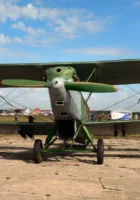
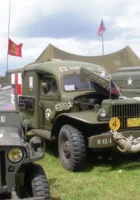
The Polikarpov R-5 was a Soviet reconnaissance bomber aircraft of the 1930s. It was the standard light bomber and reconnaissance aircraft with the Soviet Air Force for much of the 1930s, while also being used heavily as a civilian light transport, in the order of 7,000 being built in total. The R-5 was developed by the design bureau led by Nikolai Nikolaevich Polikarpov as a replacement for the R-1 which served as the standard reconnaissance and light bomber aircraft with the Soviet Air Force. The prototype first flew in autumn 1928, powered by an imported German BMW VI V-12 engine. It was an unequal span single bay biplane of mainly wooden construction. After extensive evaluation, the R-5 entered production in 1930, powered by Mikulin M-17s, a licence built copy of the BMW-VI, as a reconnaissance bomber. Further modified versions were produced to serve as floatplanes, ground attack aircraft and civil transports. The R-5SSS, an improved reconnaissance bomber with improved streamlining, served as the basis for the Polikarpov R-Z, which succeeded the R-5 in production.

Source: Polikarpov R-5 on Wikipedia
Continue reading

Views : 3548

Grumman F8F-2 Bearcat

Grumman F8F Bearcat

CountryUSA
RoleSingle-engine naval fighter aircraft
First flight21 August 1944
Built1265

The Grumman F8F Bearcat is an American single-engine carrier-based fighter aircraft introduced in late World War II. It went on to serve into the mid-20th century in the United States Navy, the United States Marine Corps, and the air forces of other nations. It would be Grumman Aircraft’s final piston engined fighter aircraft. Modified versions have broken speed records for piston-engined aircraft, and are popular among warbird owners.

Source: Grumman F8F Bearcat on Wikipedia

Continue reading

Views : 10412

Polish technics in germans units

Polish Technics in German Units

PeriodSecond World War
Army

German Wehrmacht

Description

Album of 274 photos of Polish Technics in German Units

The Invasion of Poland, also known as the September Campaign or 1939 Defensive War (Polish: Kampania wrześniowa or Wojna obronna 1939 roku) in Poland and the Poland Campaign (German: Polenfeldzug) or Fall Weiss (Case White) in Germany, was an invasion of Poland by Germany, the Soviet Union, and a small Slovak contingent that marked the beginning of World War II in Europe. The German invasion began on 1 September 1939, one week after the signing of the Molotov–Ribbentrop Pact, while the Soviet invasion commenced on 17 September 1939 following the Molotov-Tōgō agreement which terminated the Nomonhan incident on 16 September 1939. The campaign ended on 6 October 1939 with Germany and the Soviet Union dividing and annexing the whole of Poland.

Source: Wikipedia

Continue reading

Views : 3726