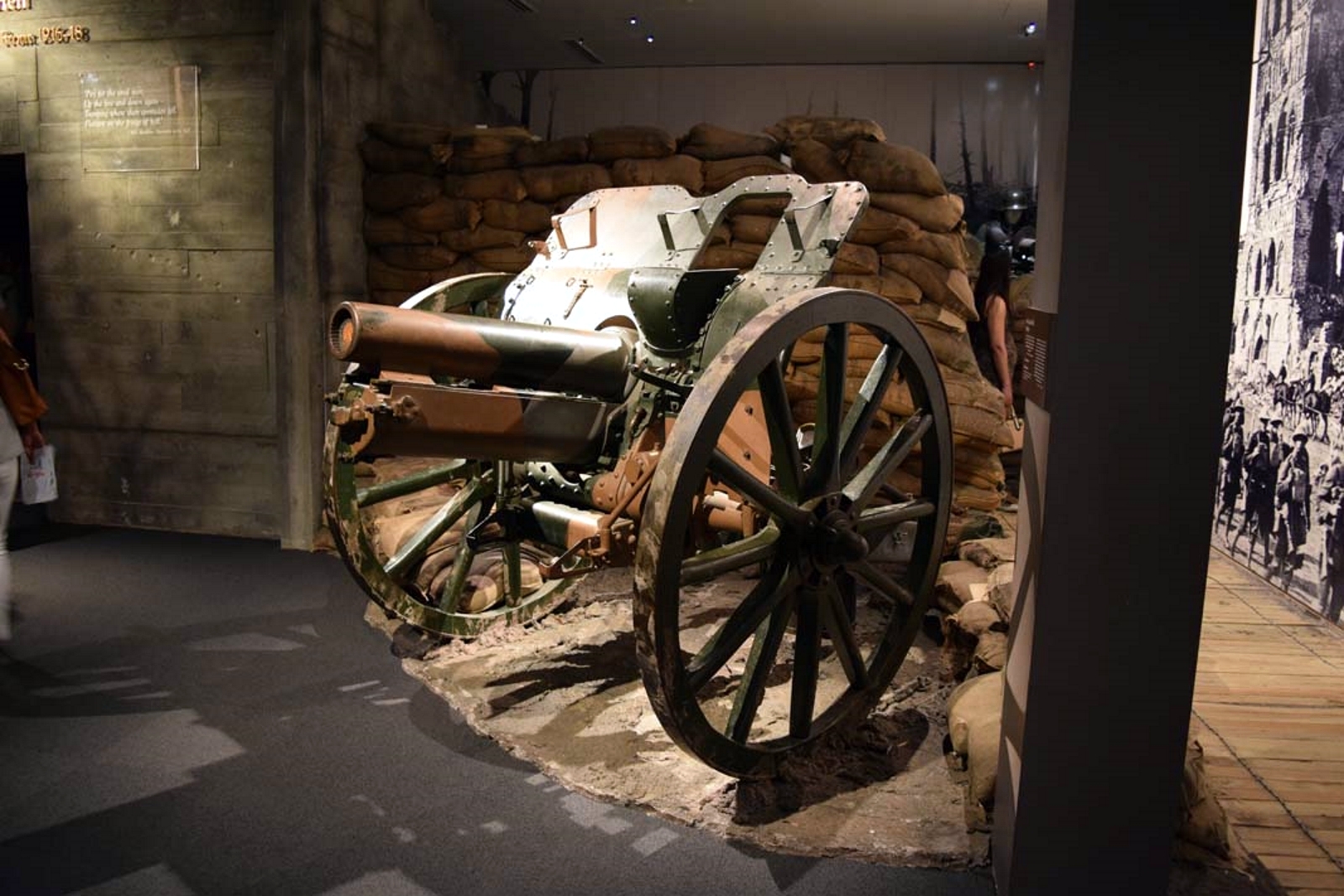
QF 4.5-inch howitzer | |
|---|---|
| Land | Storbritannien |
| Roll | Fält haubits |
| I bruk | 1908–1944 |
| Byggd | 3359 |
Den Ordnance QF 4,5-tums haubits was the standard British Empire field (or ‘light’) howitzer of the First World War era. It replaced the BL 5-inch howitzer and equipped some 25% of the field artillery. It entered service in 1910 and remained in service through the interwar period and was last used in the field by British forces in early 1942. It was generally horse drawn until mechanisation in the 1930s. The QF 4.5-inch howitzer was used by British and Commonwealth forces in most theatres, by Russia and by British troops in Russia in 1919. Its calibre (114 mm) and hence shell weight were greater than those of the equivalent German field howitzer (105 mm); France did not have an equivalent. In the Second World War it equipped some units of the BEF and British, Australian, New Zealand and South African batteries in East Africa and the Middle and Far East.
Källkod: QF 4,5-tums haubits på Wikipedia
| British 4.5″ QF Howitzer Walk Around | |
|---|---|
| Fotografer | Vladimir Yakubov |
| Lokalisering | Auckland War Museum |
| Bilder | 50 |

Se även:


Den QF 4,5-tums haubits was a British field artillery piece used in the First and Second World Wars. It was developed as a response to the need for a lighter and more mobile gun than the 6-inch howitzer, which was cumbersome and slow to move. The QF 4.5-inch howitzer had a quick-firing breech mechanism that allowed a high rate of fire, and a hydro-pneumatic recoil system that reduced the recoil forces on the carriage.
The gun fired a 35-pound high-explosive shell with a range of about 7,200 yards. It was also capable of firing gas, smoke, and shrapnel shells. The QF 4.5-inch howitzer was widely used by the British and Commonwealth forces in various theatres of war, including the Western Front, Gallipoli, Mesopotamia, Palestine, and North Africa. It was also supplied to other Allied countries, such as Belgium, France, Greece, and Poland. The gun remained in service until the end of the Second World War, when it was replaced by the 25-pounder gun-howitzer.
Views : 2480
Du kan också se:
 Howitzer 149-19 – Photos & Video
 220 mm TR mle 1915/1916 – Foton och video
 17 cm Kanone 18 – WalkAround
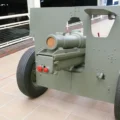 QF 3,7-tums haubits – Foton &; Videor
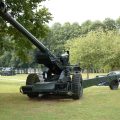 FH70 haubits – Foton &; Video
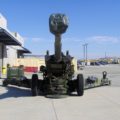 M198 haubits – Foton &; Video
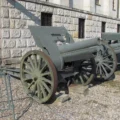 122 mm haubits M1910/30 – Foton &; Video
 76 mm regementskanon M1927 – Foton &; Video
 21cm Morser 18 Haubits – Gå runt
 70mm Typ 92 Haubits - WalkAround