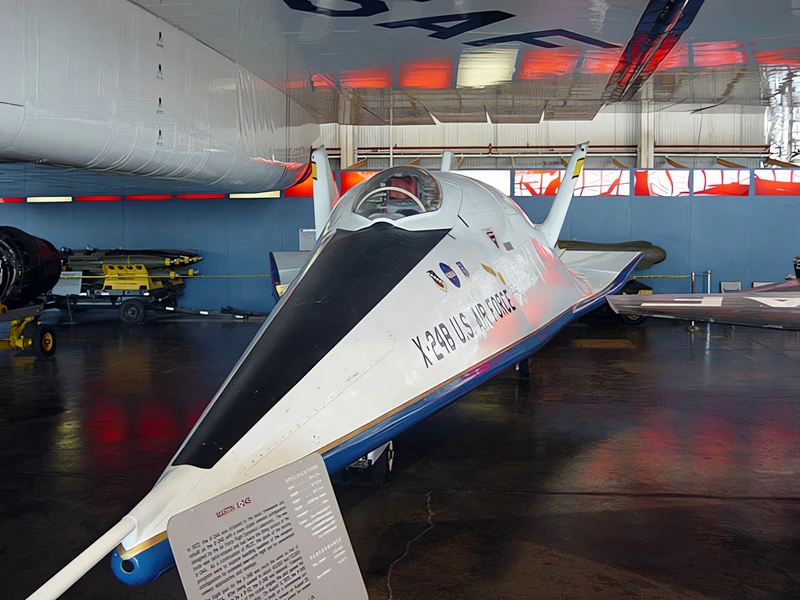
Martin Marietta X-24 | |
|---|---|
| Krajiny | Spojené štáty americké |
| Úlohu | Koncepčné demonštračné lietadlo |
| Prvý let | 24. októbra 2000 |
| Postavený | 2 |
Komisia Martin Marietta X-24 was an American experimental aircraft developed from a joint United States Air Force-NASA program named PILOT (1963–1975). It was designed and built to test lifting body concepts, experimenting with the concept of unpowered reentry and landing, later used by the Space Shuttle. Originally built as the X-24A, the aircraft was later rebuilt as the X-24B. The X-24 was drop launched from a modified B-52 Stratofortress at high altitudes before igniting its rocket engine; after expending its rocket fuel, the pilot would glide the X-24 to an unpowered landing.
Zdrojový: Martin Marietta X-24 na Wikipédii
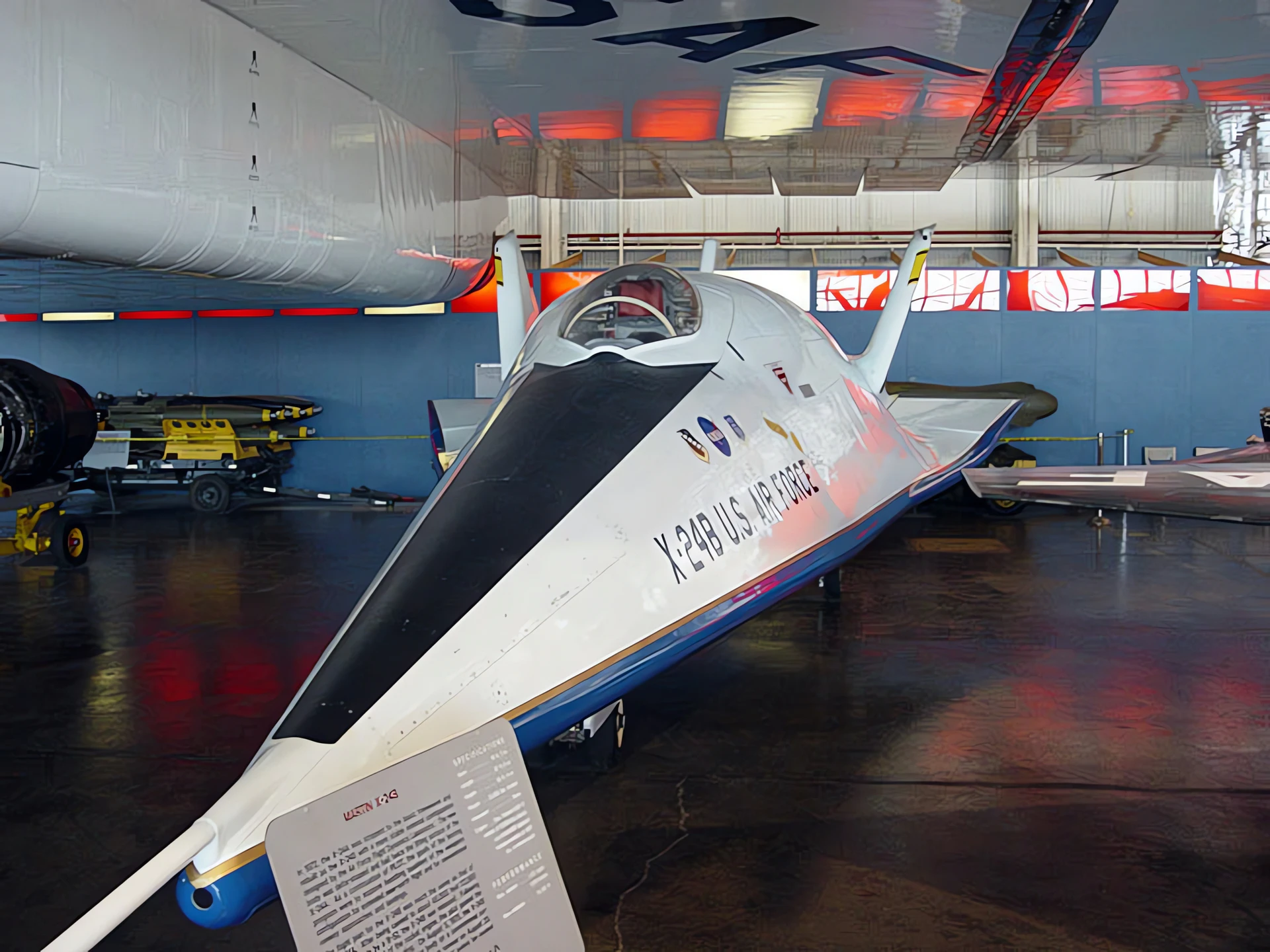
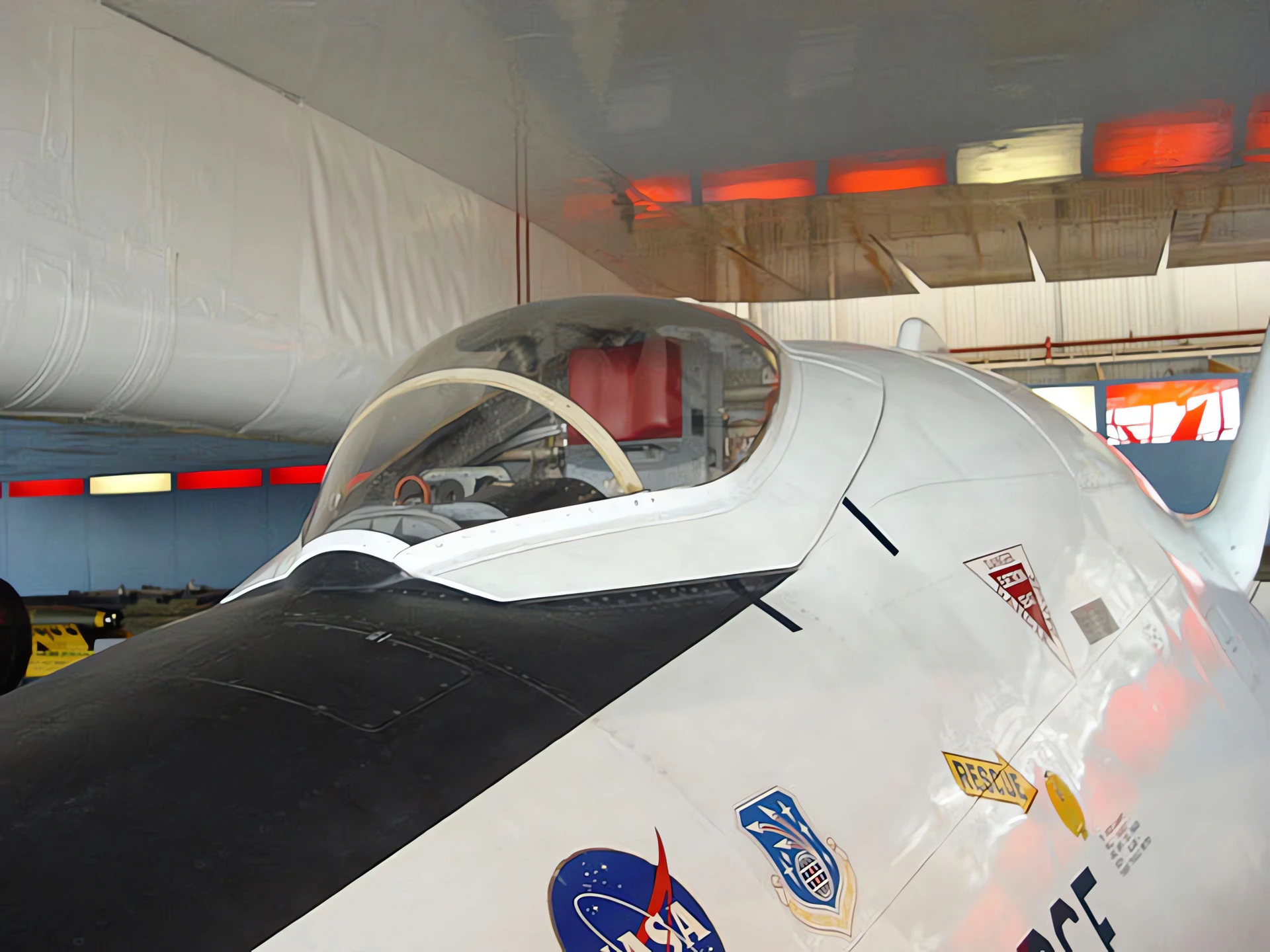
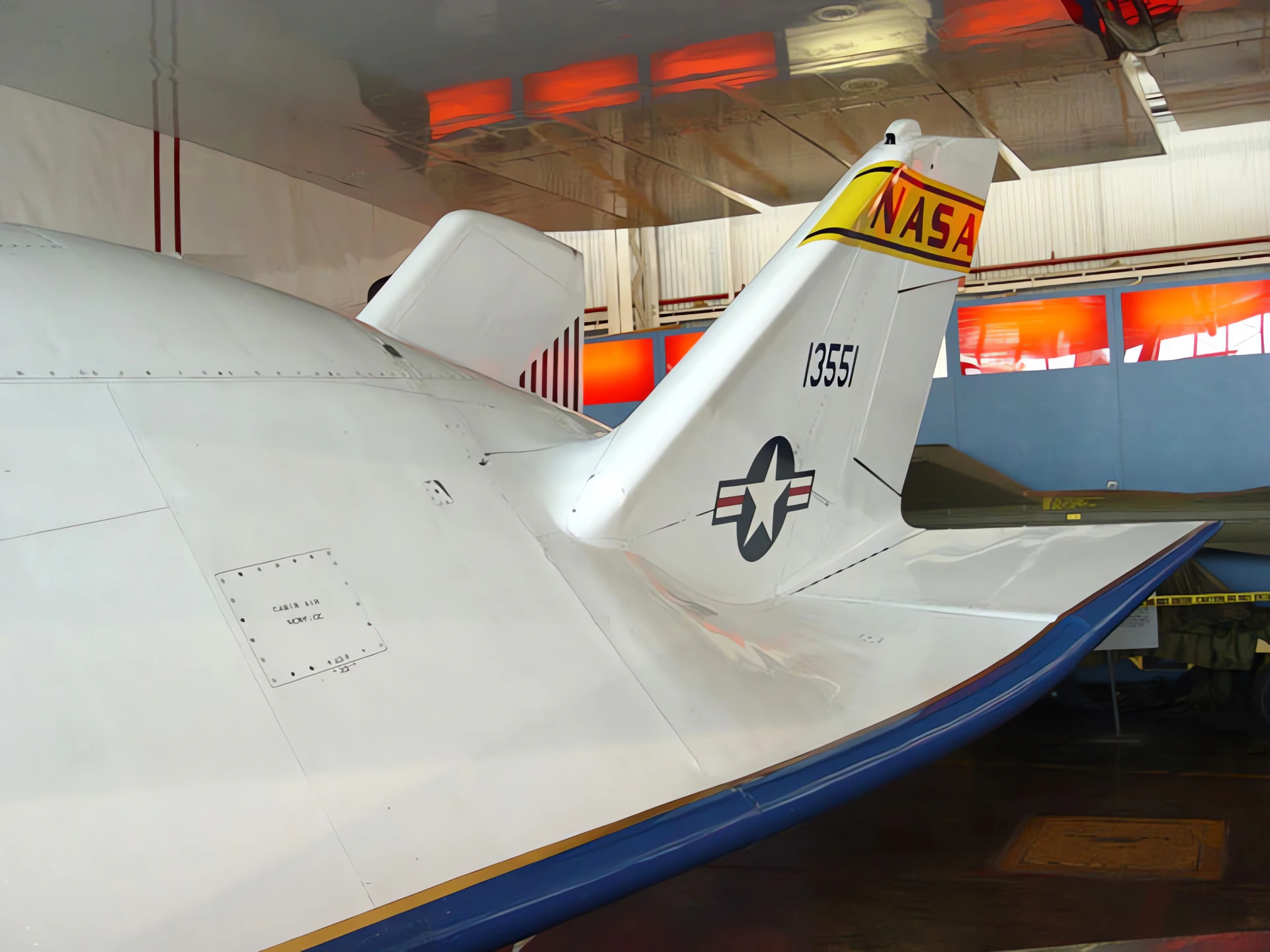
| Martin X-24B Zdvíhacie telo chodiť okolo | |
|---|---|
| Fotografov | John Heck, Randy Ray |
| Lokalizácia | Národné múzeum USAF |
| Fotografie | 36 |
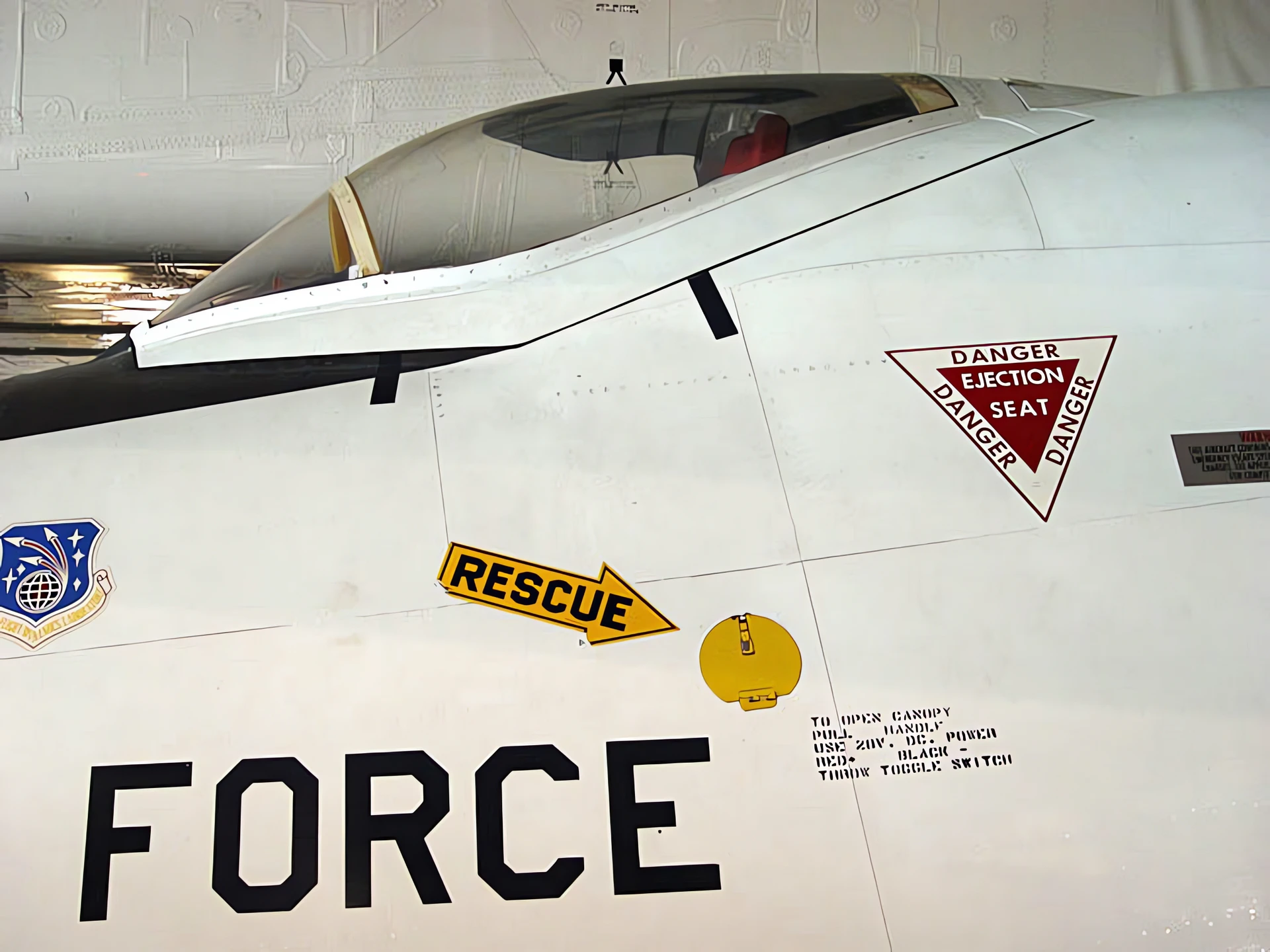
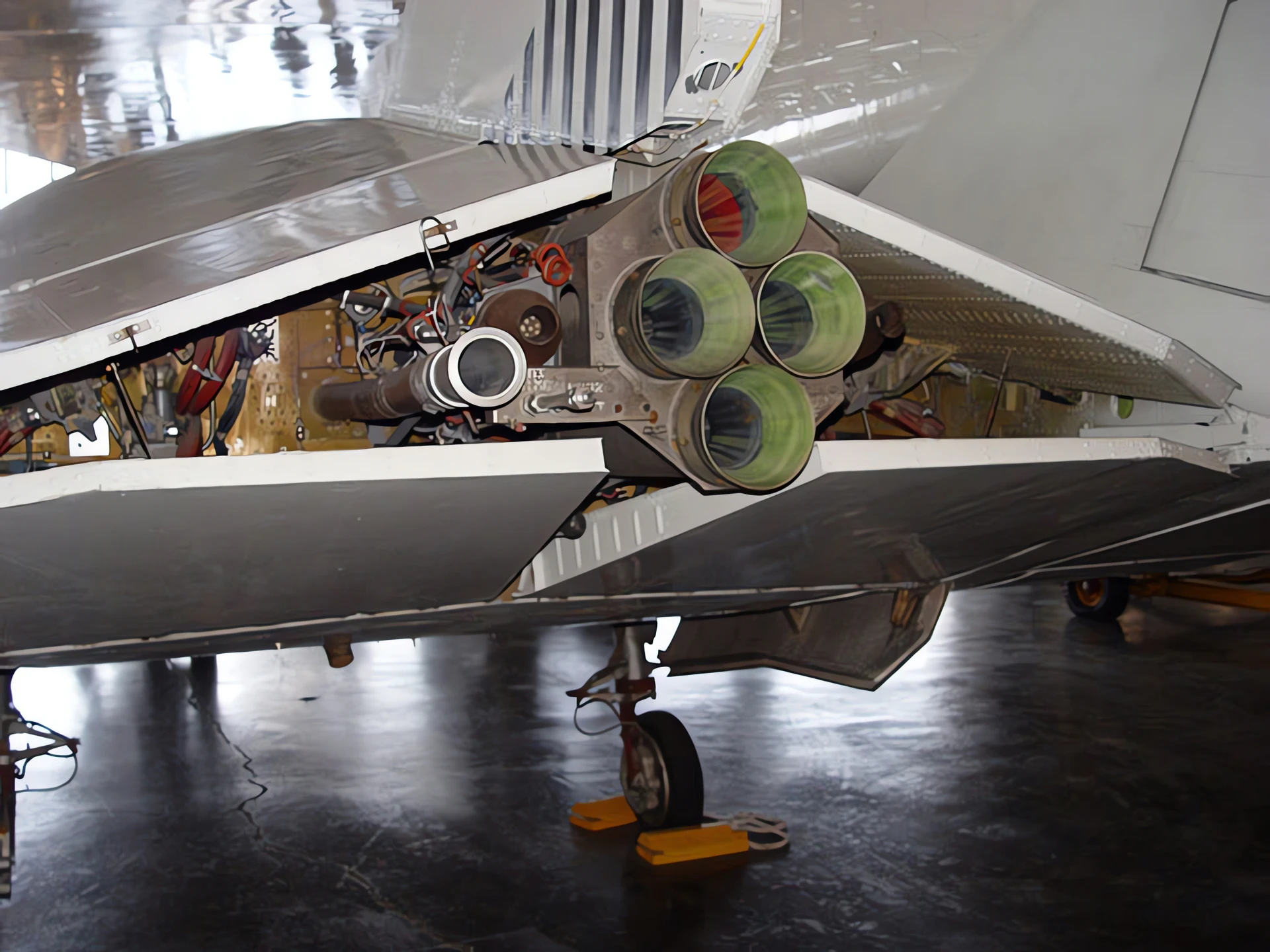
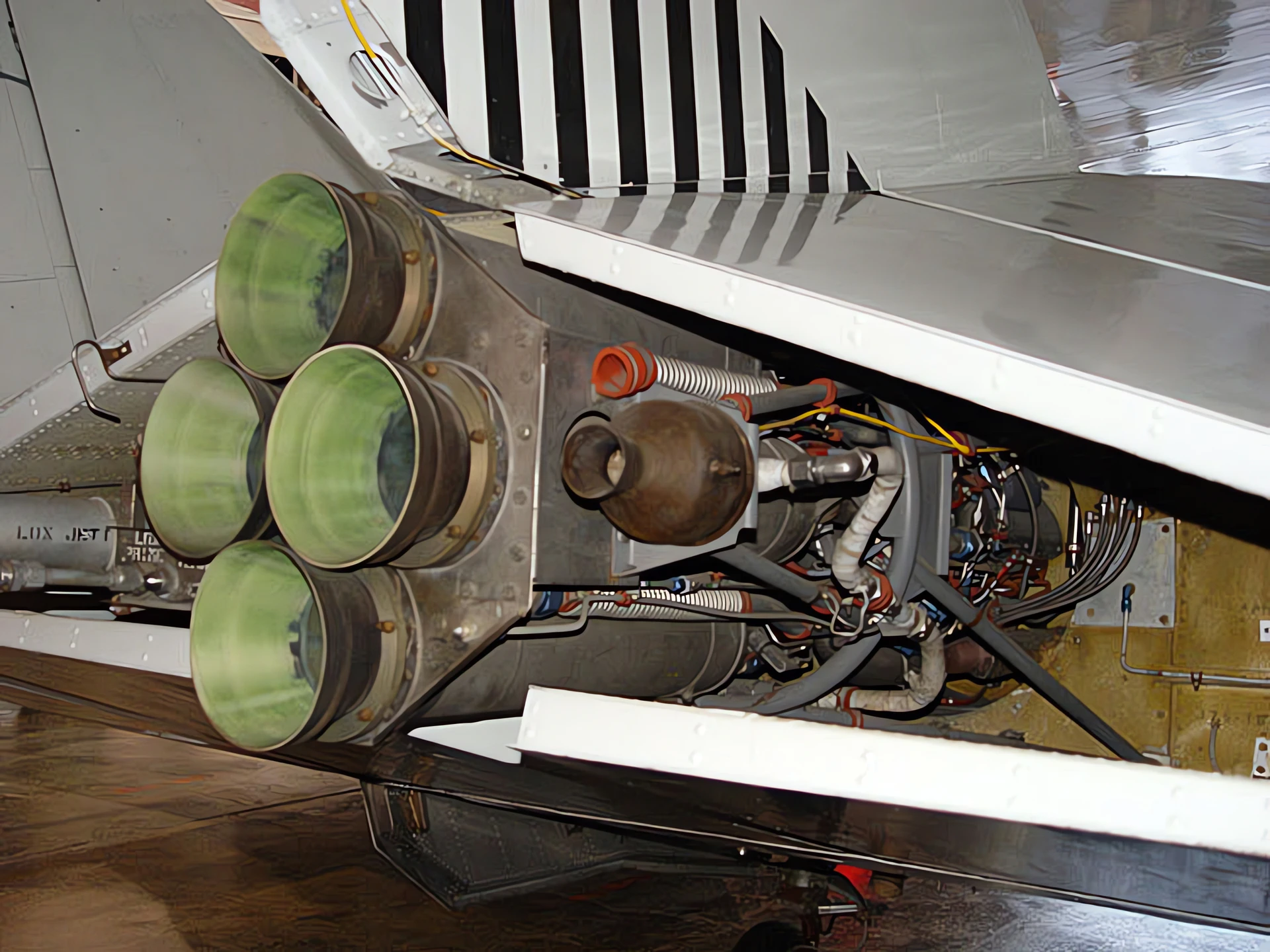
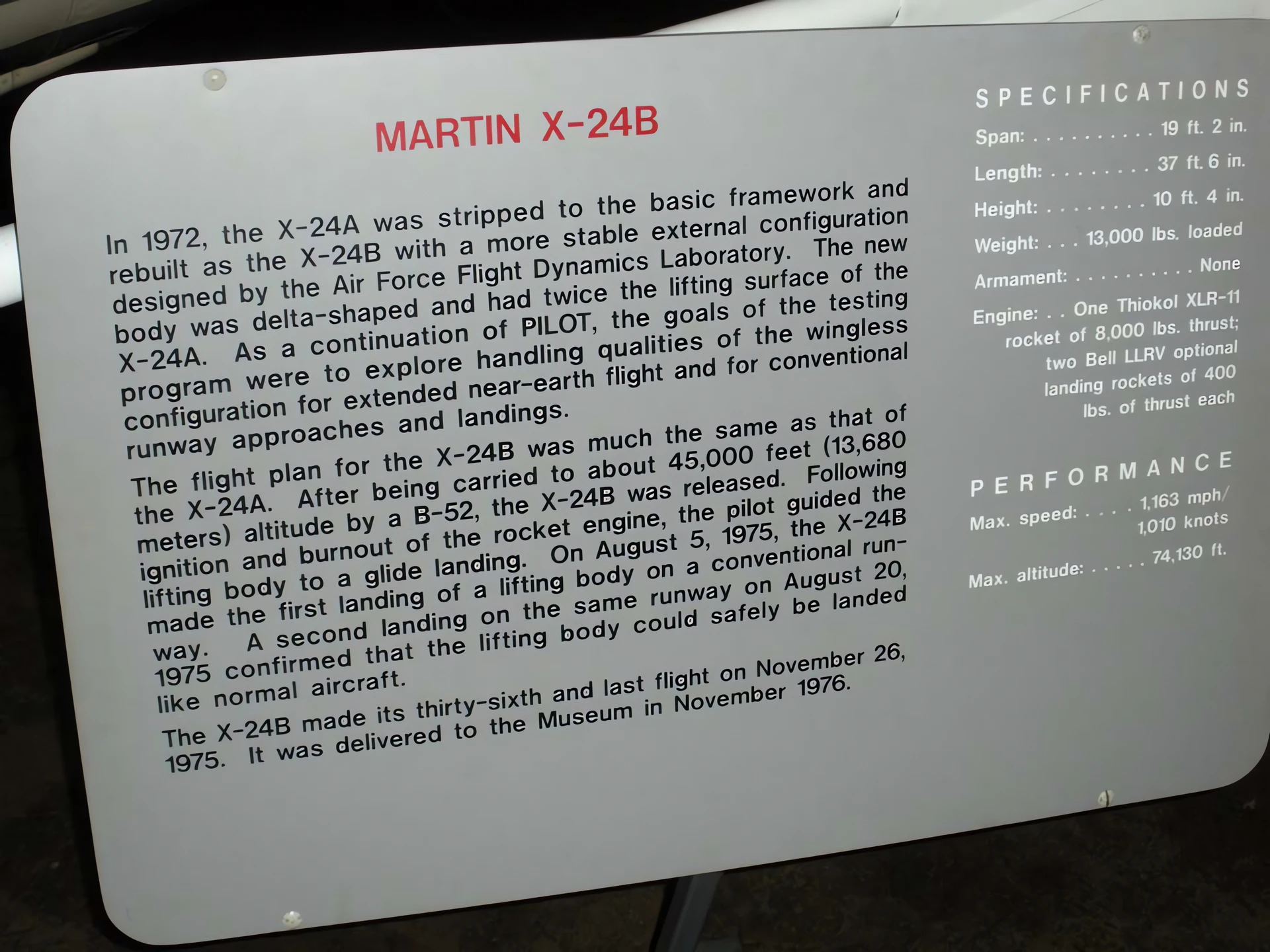
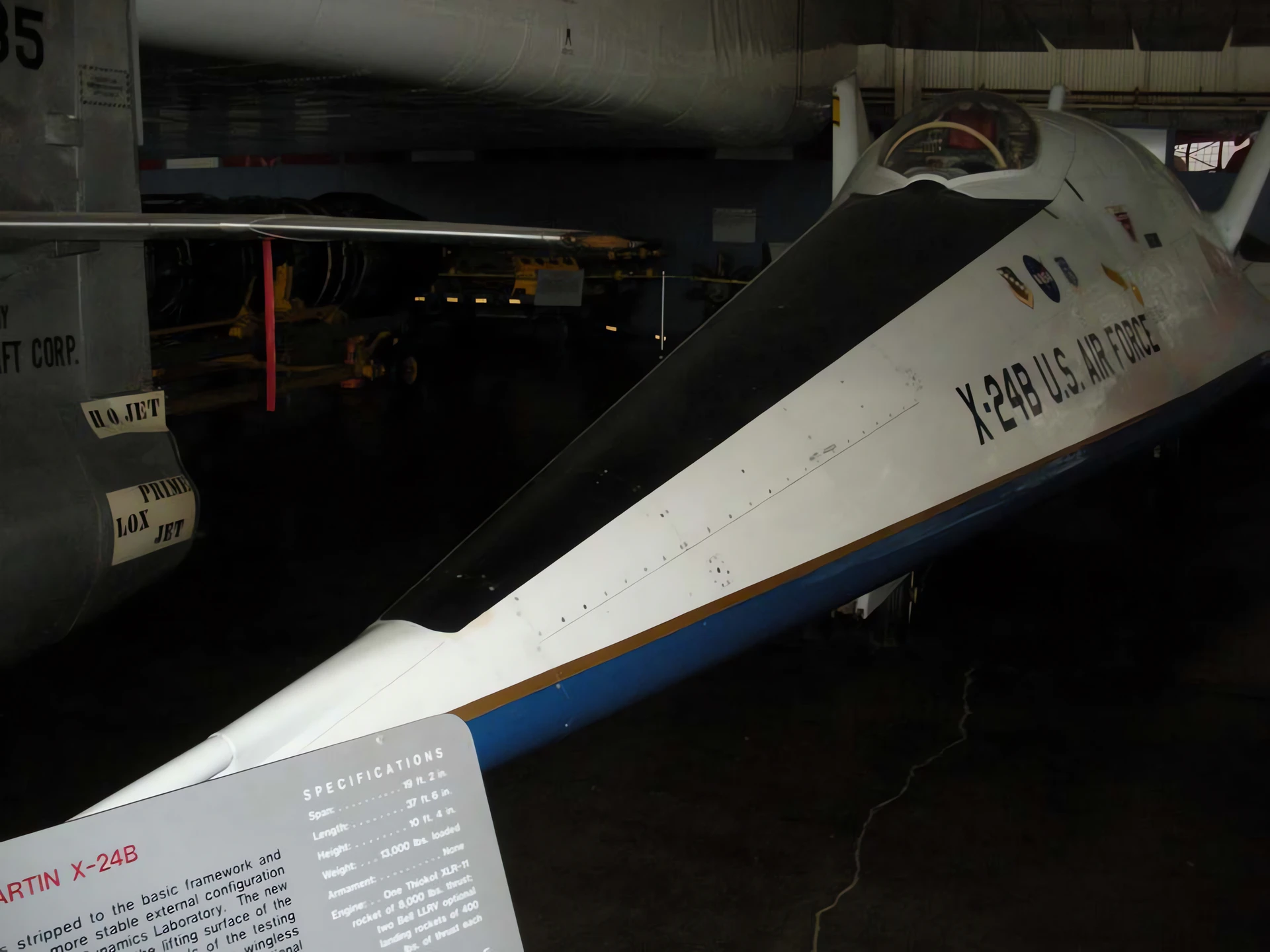
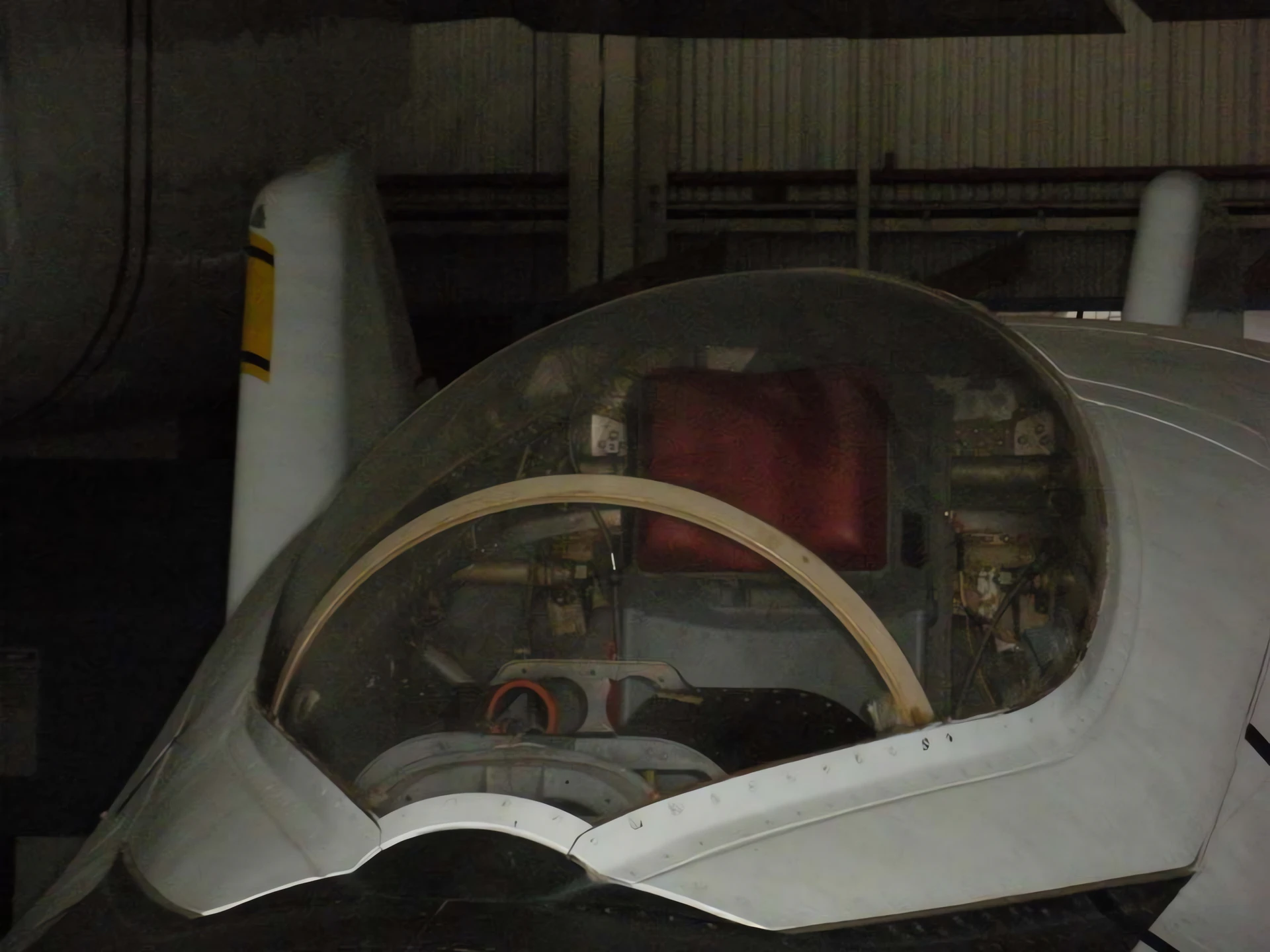

| Martin X-24A zdvíhacie telo chodiť okolo | |
|---|---|
| Fotografov | John Heck, Randy Ray |
| Lokalizácia | Národné múzeum USAF |
| Fotografie | 34 |
Pozri tiež:


General Characteristics and Role
The Martin Marietta X-24B was an experimental aircraft developed from the earlier X-24A under a joint U.S. Air Force–NASA program (PILOT, 1963–1975). Its primary role was to test the concept of a lifting body: a wingless vehicle whose fuselage shape generates the aerodynamic lift necessary for flight. The X-24B was a major redesign of the bulbous X-24A, converting its shape into what was described as a “flying flatiron”—rounded top, flat bottom, and a sharp, double-delta planform. The goal was to prove that future reusable spacecraft could successfully reenter the atmosphere and perform an unpowered, precise gliding landing on a conventional runway, information that was crucial to the design of the Space Shuttle.
| Property | Typical Value (X-24B) |
|---|---|
| Úlohu | Experimental Lifting Body (Reentry/Landing Research) |
| National Origin | Spojené štáty americké |
| Výrobca | Martin Marietta Corporation |
| First Flight (X-24B) | 1 August 1973 (Glide) |
| Posádky | 1 Pilot |
| Dĺžka | 11.43 m (37 ft 6 in) |
| Rozpätie krídel | 5.79 m (19 ft 0 in) |
| Výška | 2.92 m (9 ft 7 in) |
| Maximum Takeoff Weight | 6,260 kg (13,800 lb) |
Powerplant and Performance
- Engine: 1 x Reaction Motors XLR-11-RM-13 4-chamber liquid-fuelled rocket engine.
- Thrust: Approximately 37.7 kN (8,480 lbf).
- Launch Method: The X-24B was air-launched from a modified B-52 Stratofortress at an altitude of approximately 45,000 feet (13,700 m).
- Maximum Speed: Mach 1.76 (1,873 km/h or 1,164 mph).
- Service Ceiling: 22,590 m (74,130 ft).
- Landing System: Unpowered glide landing, using its shape to generate lift and relying on the pilot’s precise maneuvers to reach a predetermined landing spot.
Program Outcome and Legacy
- Key Achievement: The X-24B completed 36 flights. Its most pivotal missions were two precise unpowered landings made on the main concrete runway at Edwards Air Force Base in 1975 (other flights landed on dry lakebeds).
- Space Shuttle Influence: These precision landings were the final, crucial step in the lifting body program, convincing NASA that the Space Shuttle orbiter could safely and routinely perform unpowered landings without needing heavy, expensive jet engines for a second chance at approach.
- Design Evolution: The X-24B’s highly stable “flying flatiron” shape was the final, most efficient configuration tested in the long-running lifting body program.
- Retirement: The program concluded in 1975. The X-24B is now displayed at the National Museum of the United States Air Force in Ohio.
Prezretí: 1419
Môžete tiež vidieť:
 Messerschmitt Me-108 Taifun – fotografie a video
 Ryan Navion – fotografie a video
 Stinson L-5 Sentinel – fotografie a video
 Piper L-4 Grasshopper – fotografie a video
 Lockheed U-2 - fotografie a video
 P-47G Thunderbolt – WalkAround
 Hawker Sea Fury FBII vol2 – Chodiť
 P-51D Mustang vol2 – Chodiť
 B-17G Lietajúca pevnosť – WalkAround
 Messerschmitt Bf 109G-2 – Chodiť