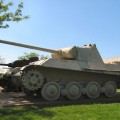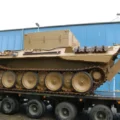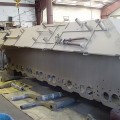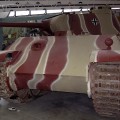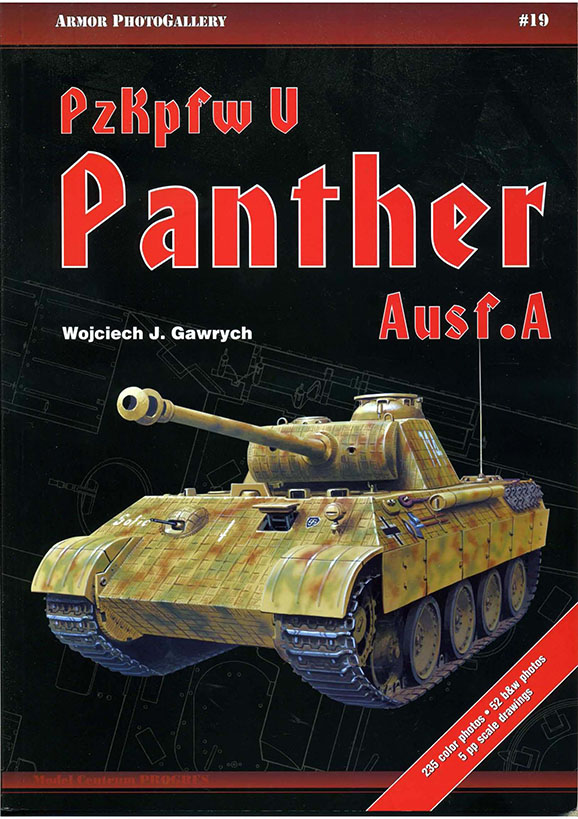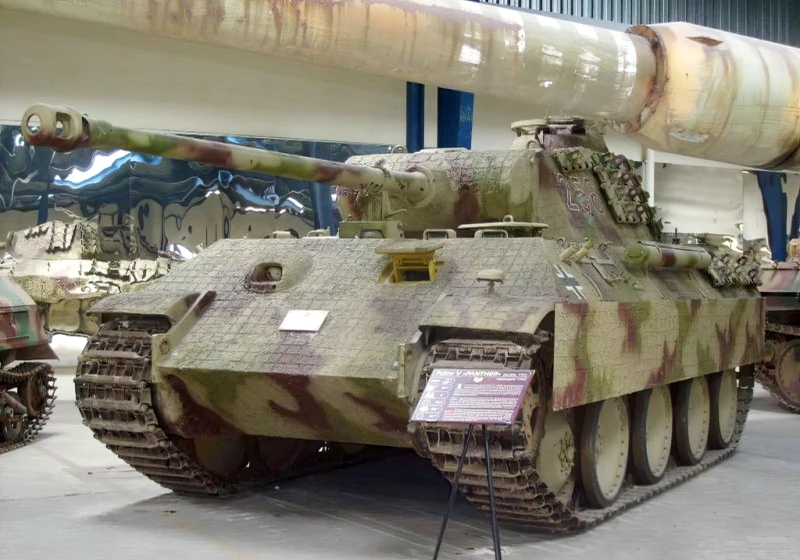
PzKpfw V ausf. A - Panther | |
|---|---|
| Pays | Germany |
| Category | Armoured vehicles |
| Type | Car |
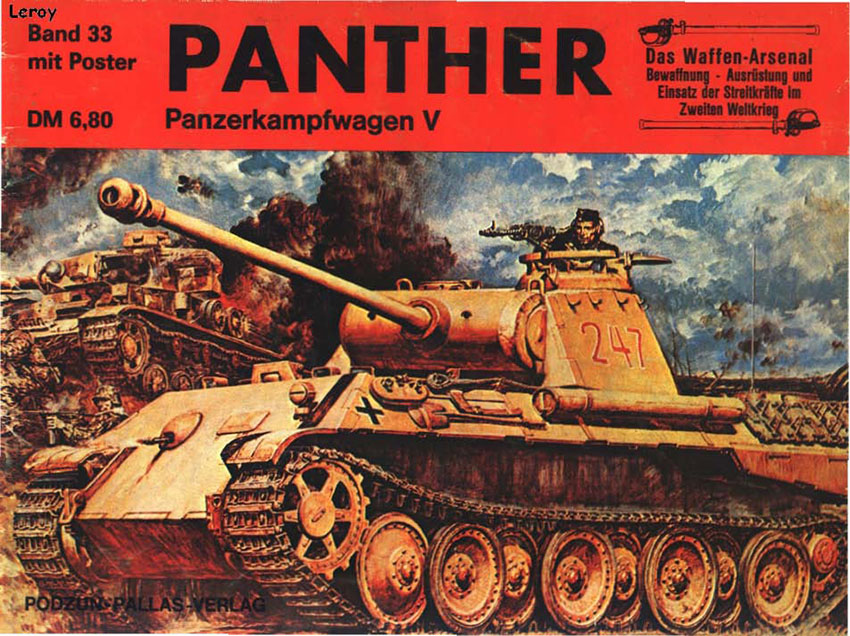
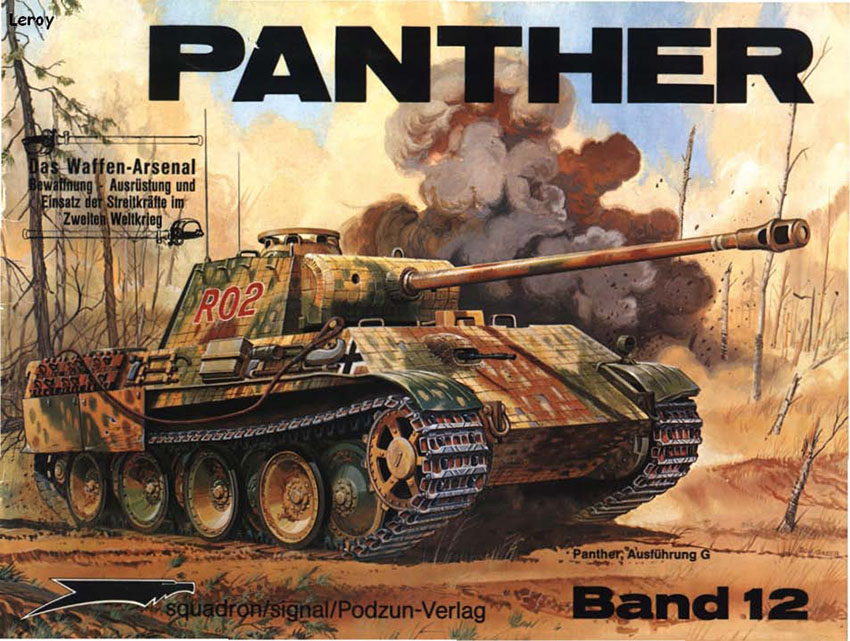
The Panther SdKfz 171 Panzer V was a German tank during the Second World War. His first engagement was at the Battle of Kursk in 1943. Designed to replace the obsolete Panzer III and IV and stand up to the Soviet T-34, it had to be used in addition to its predecessors to compensate for its understaffing.
The main armament of the Panther was a long 75mm Kwk 42 75mm 70 caliber long, the power equivalent of the Tiger I tank. It carried 79 shells and was equipped with a coaxial MG34 machine gun, a second crate machine gun in the front and a third air defence machine on the turret.
Source: PzKpfw V ausf. A on Wikipedia
| PzKpfw V ausf.A | |
|---|---|
| Photographer | Unknow |
| Localisation | Unknow |
| Photos | 54 |
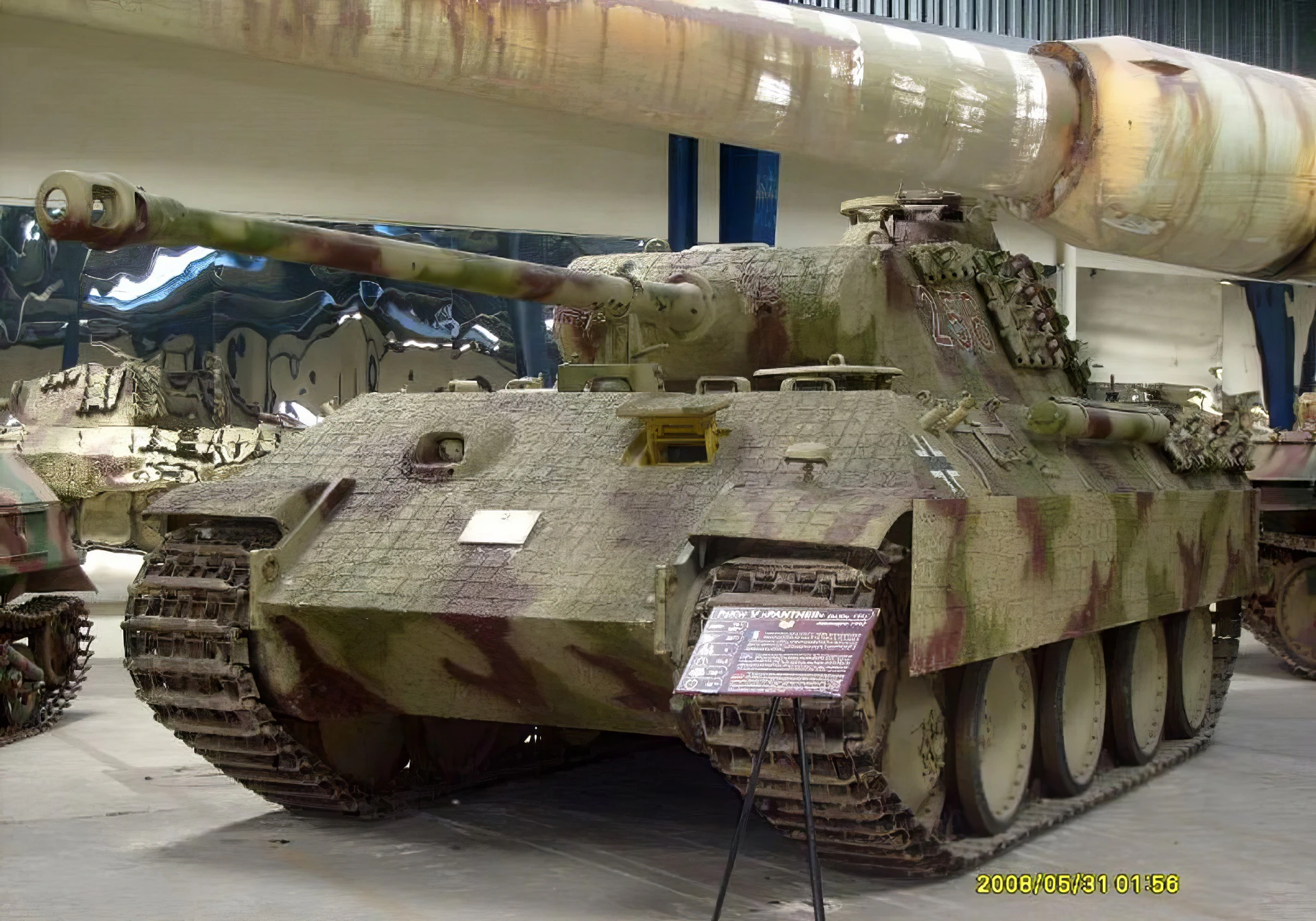
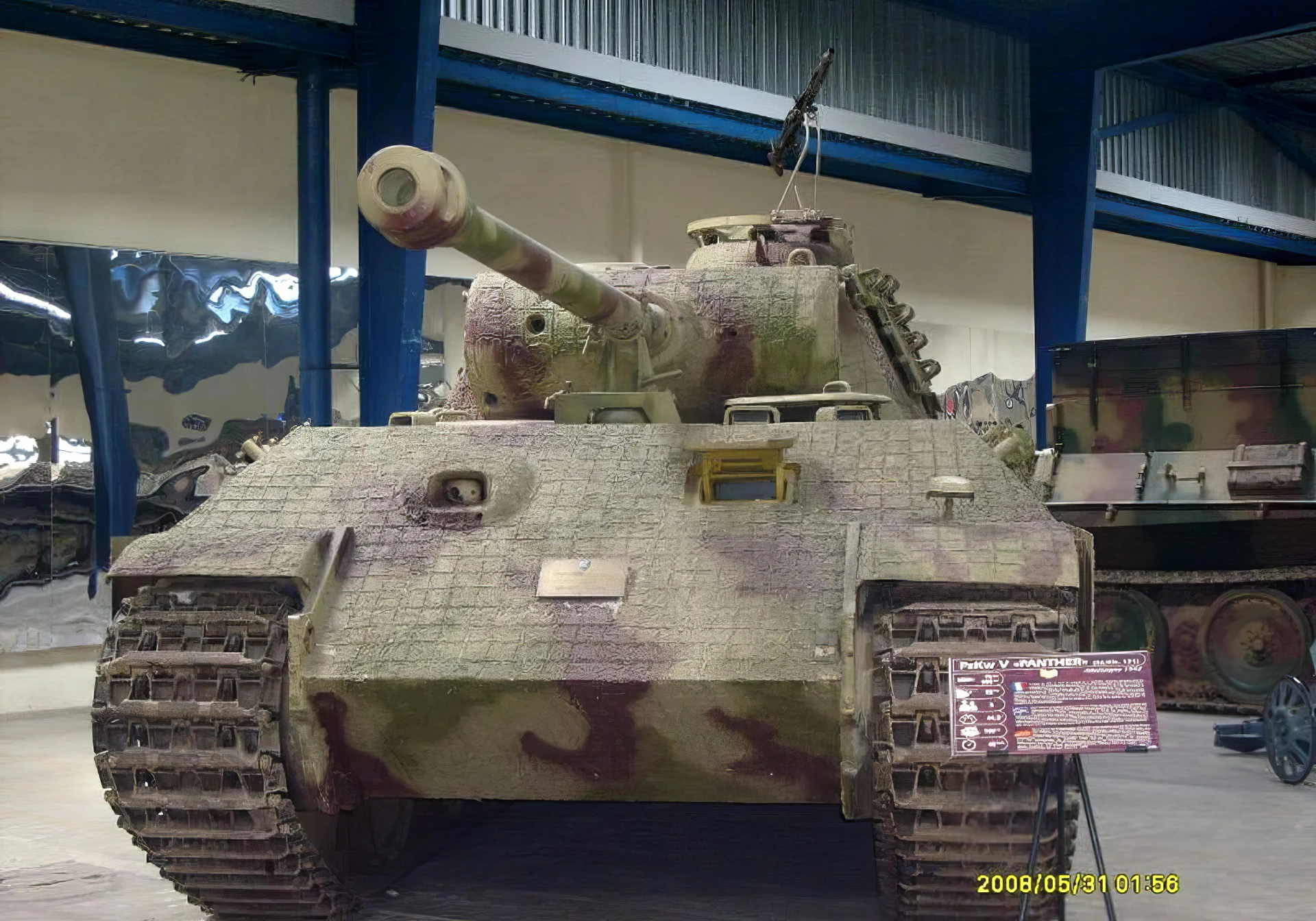
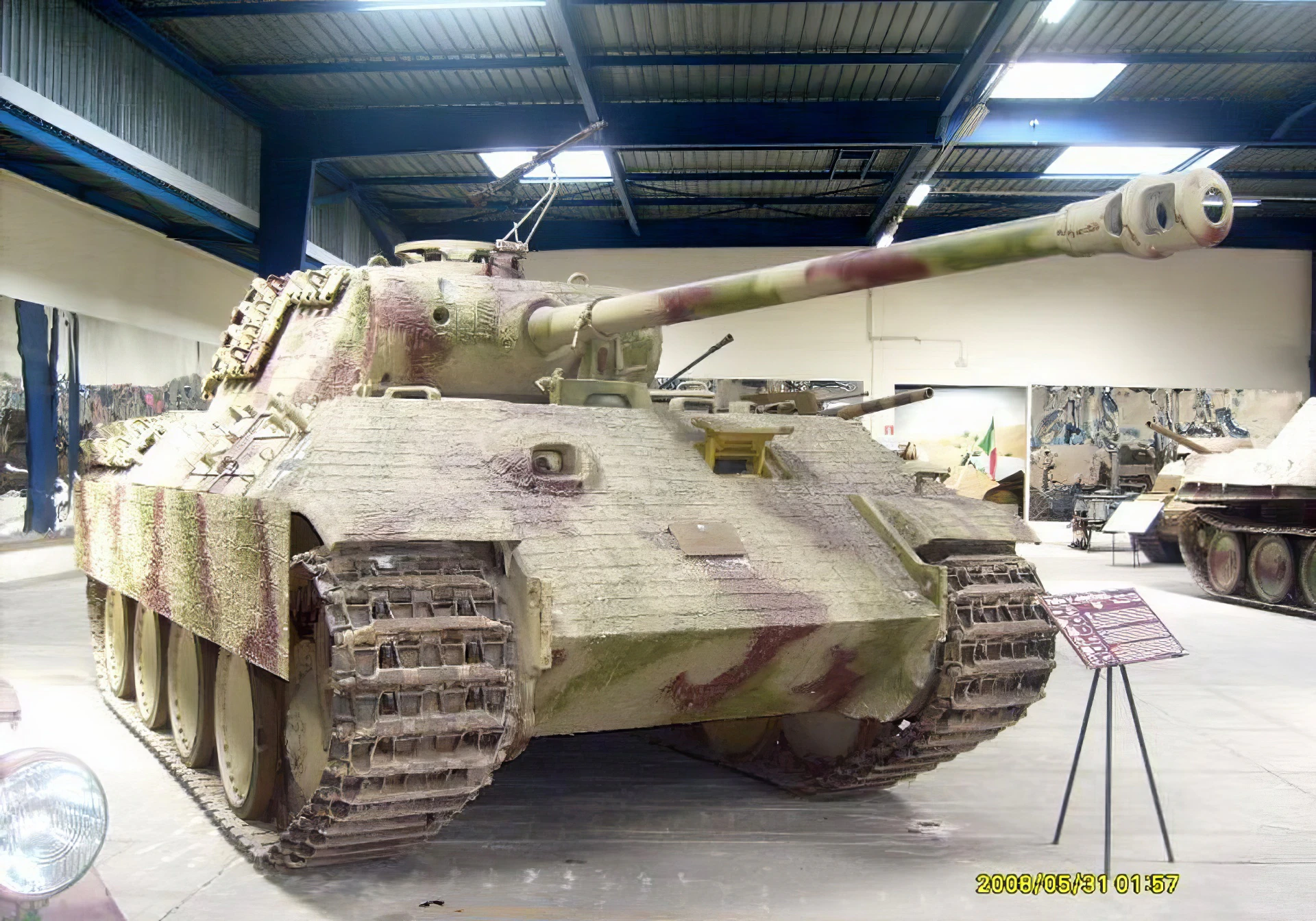
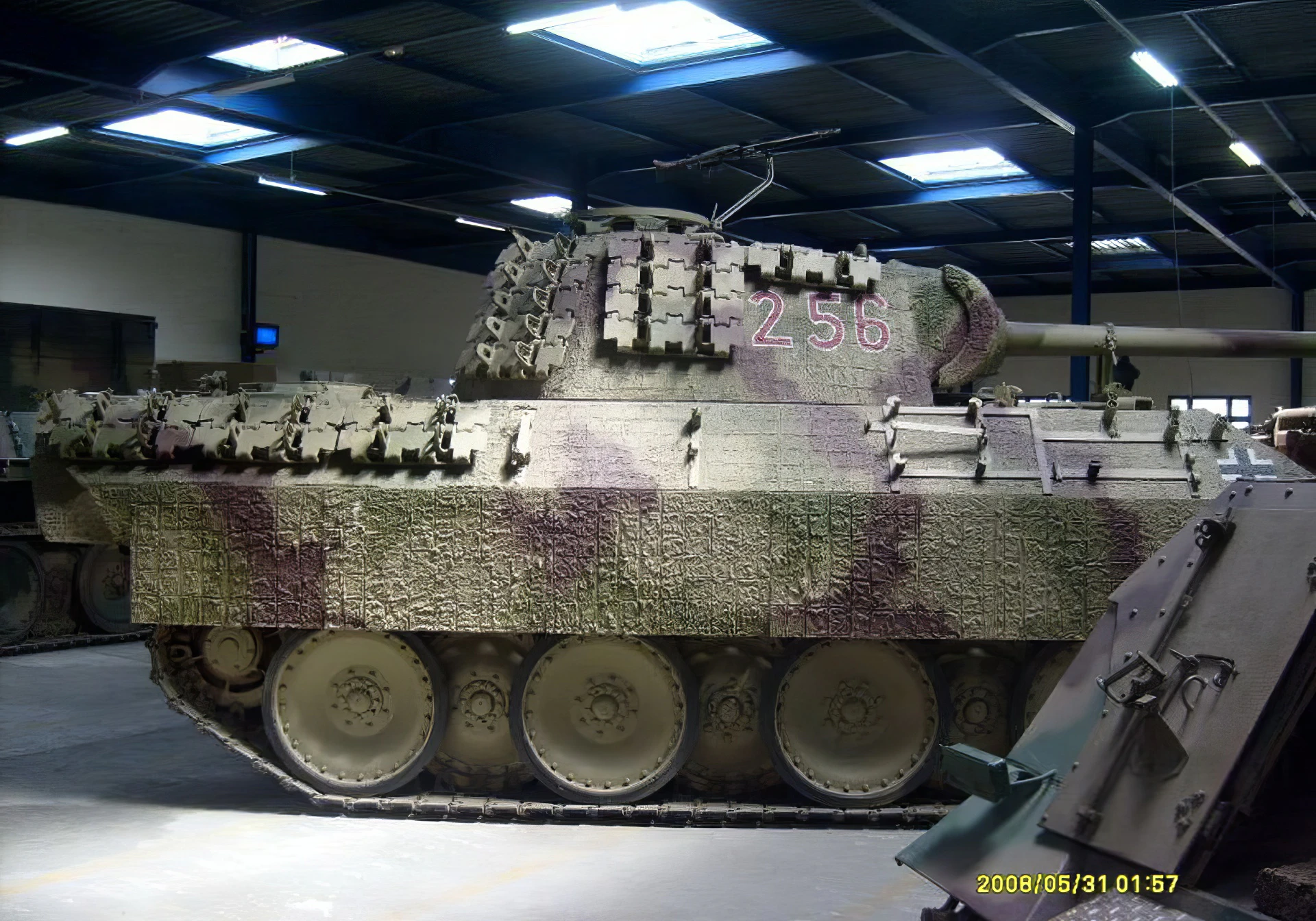
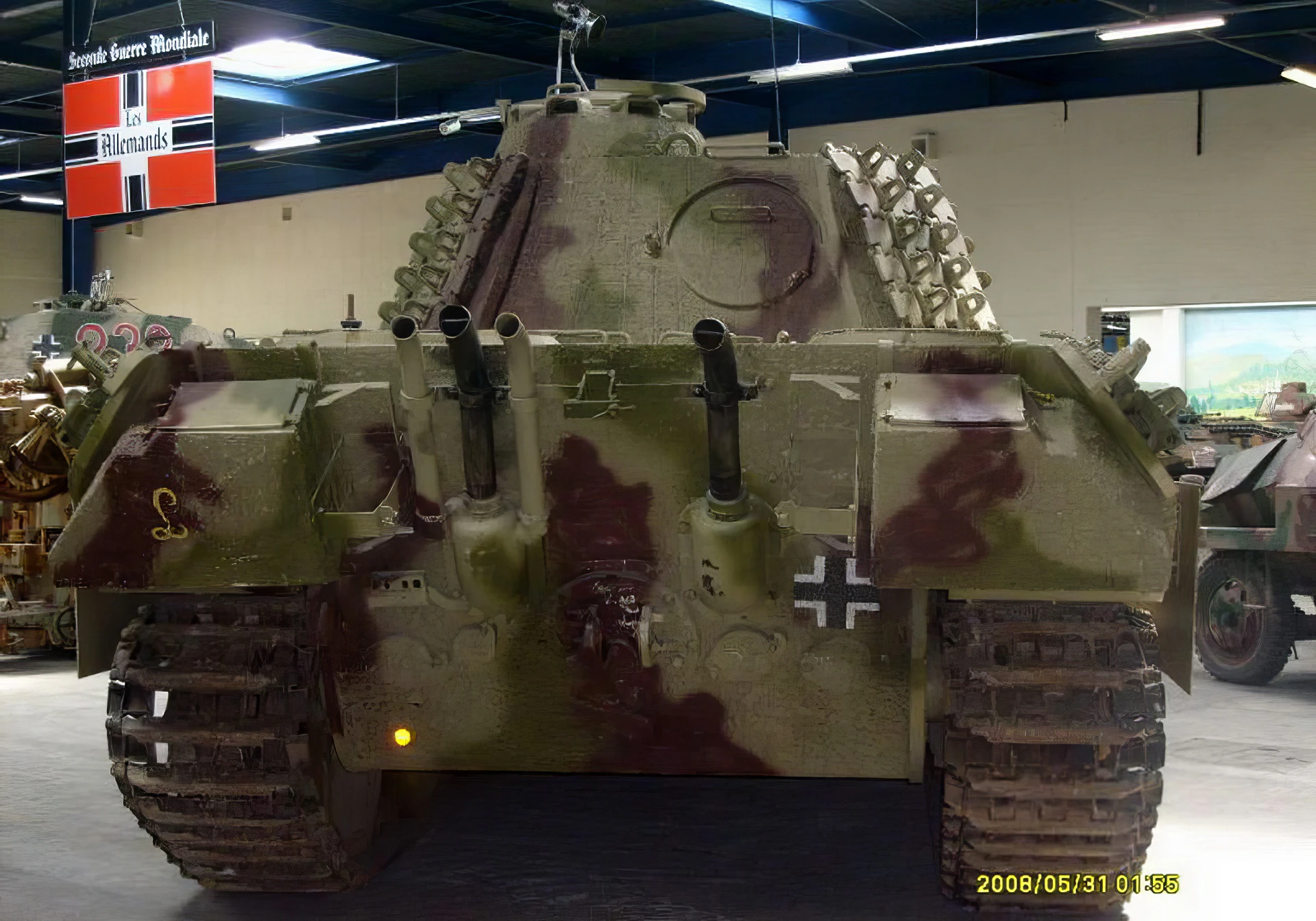
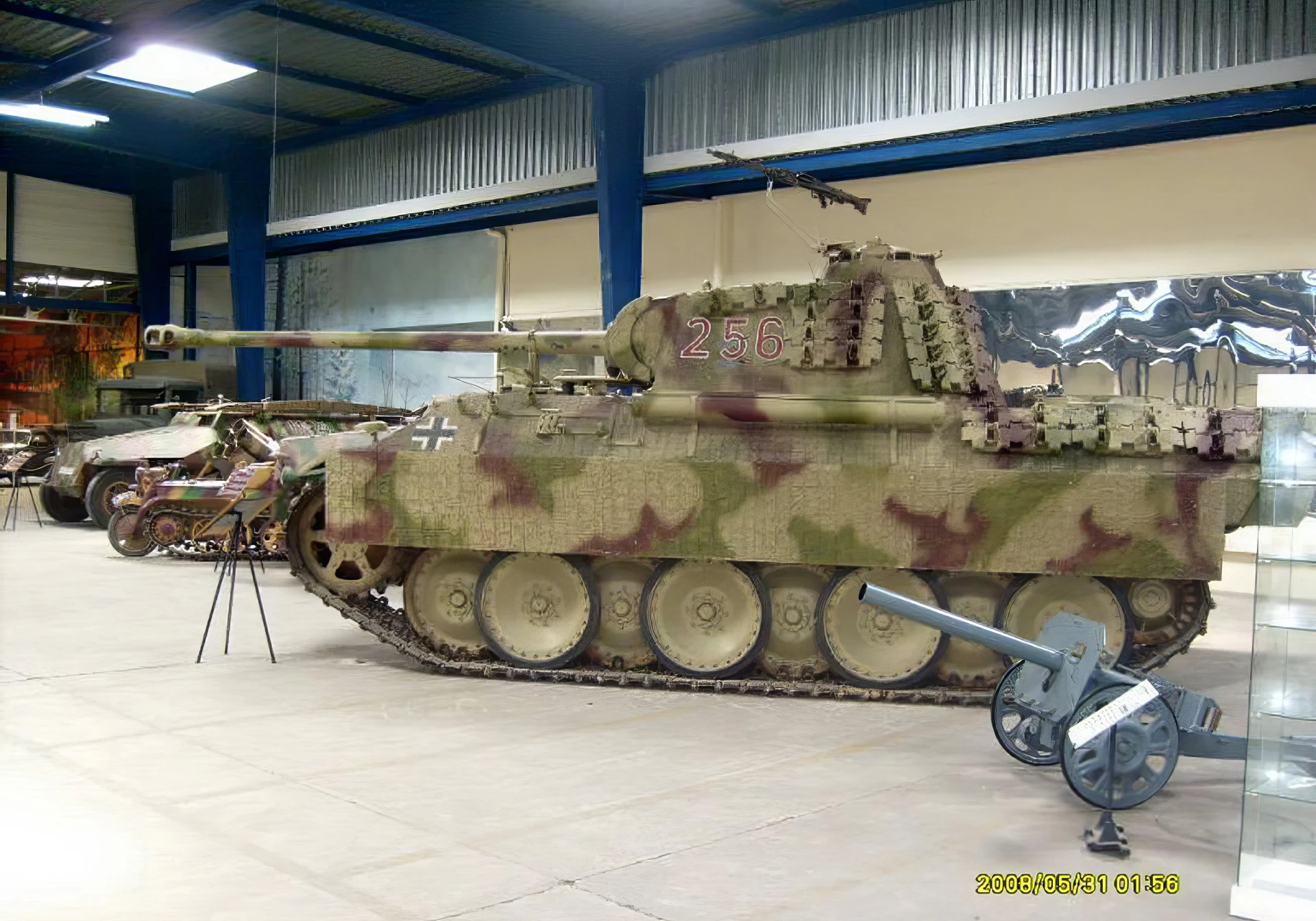
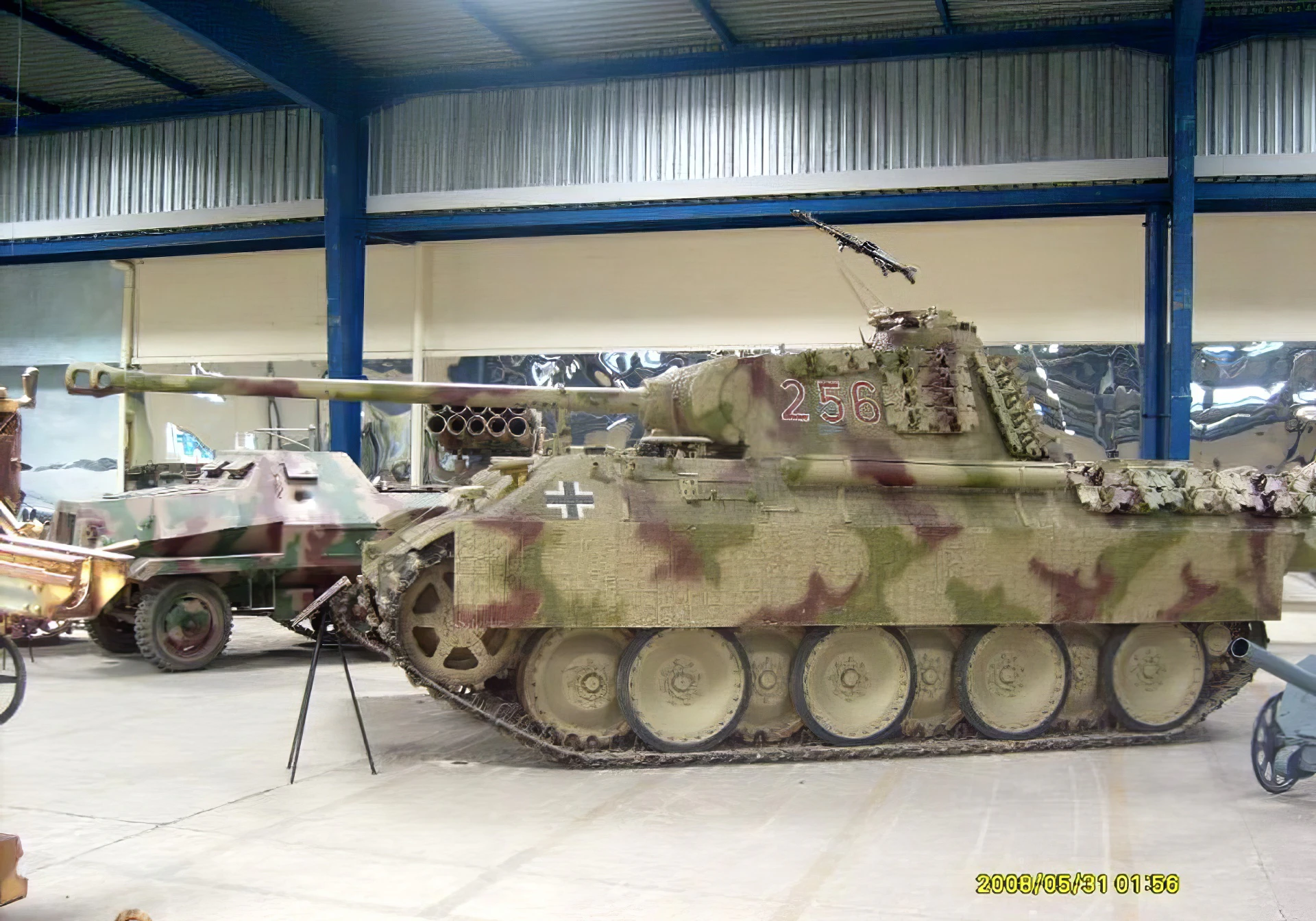
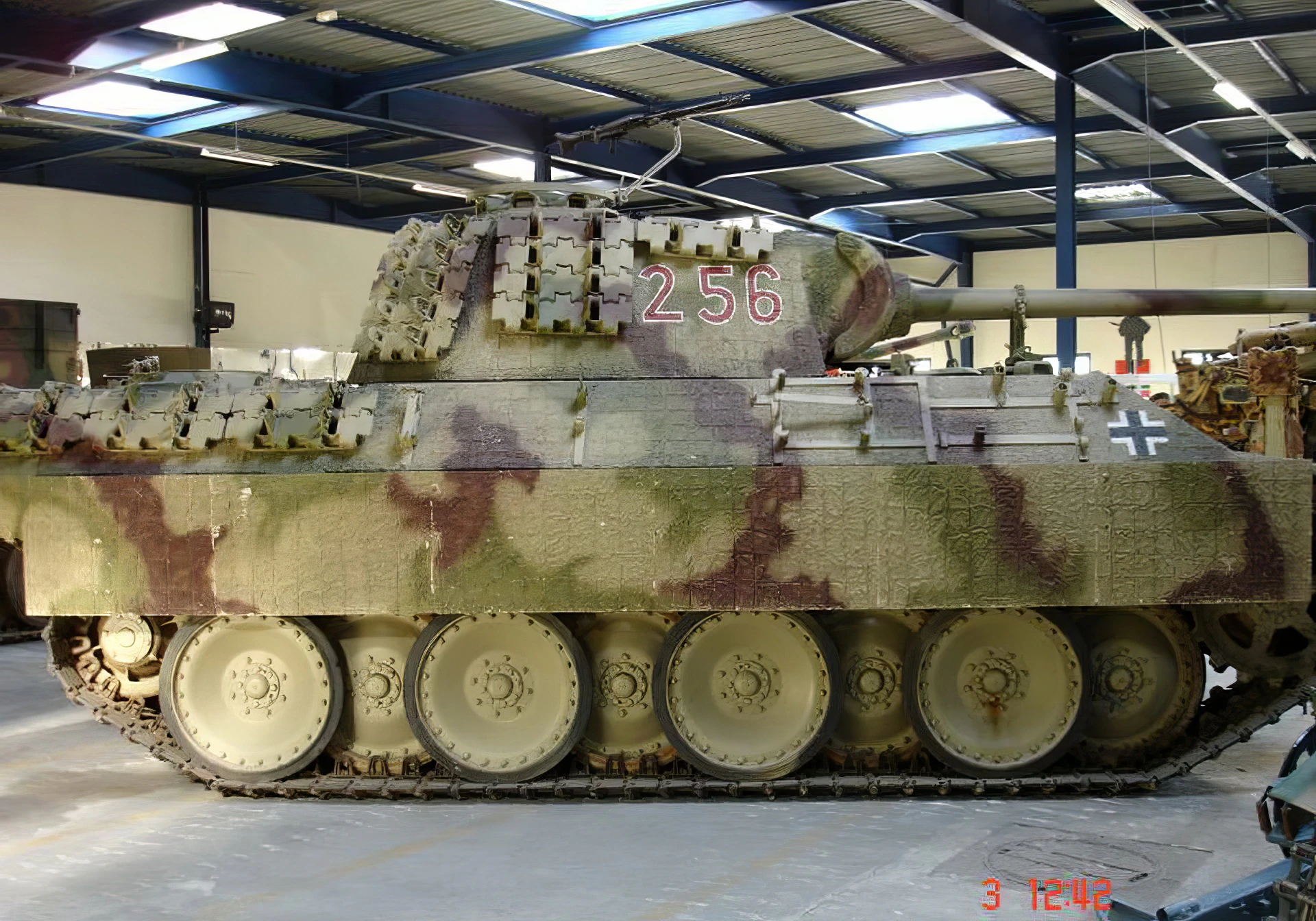
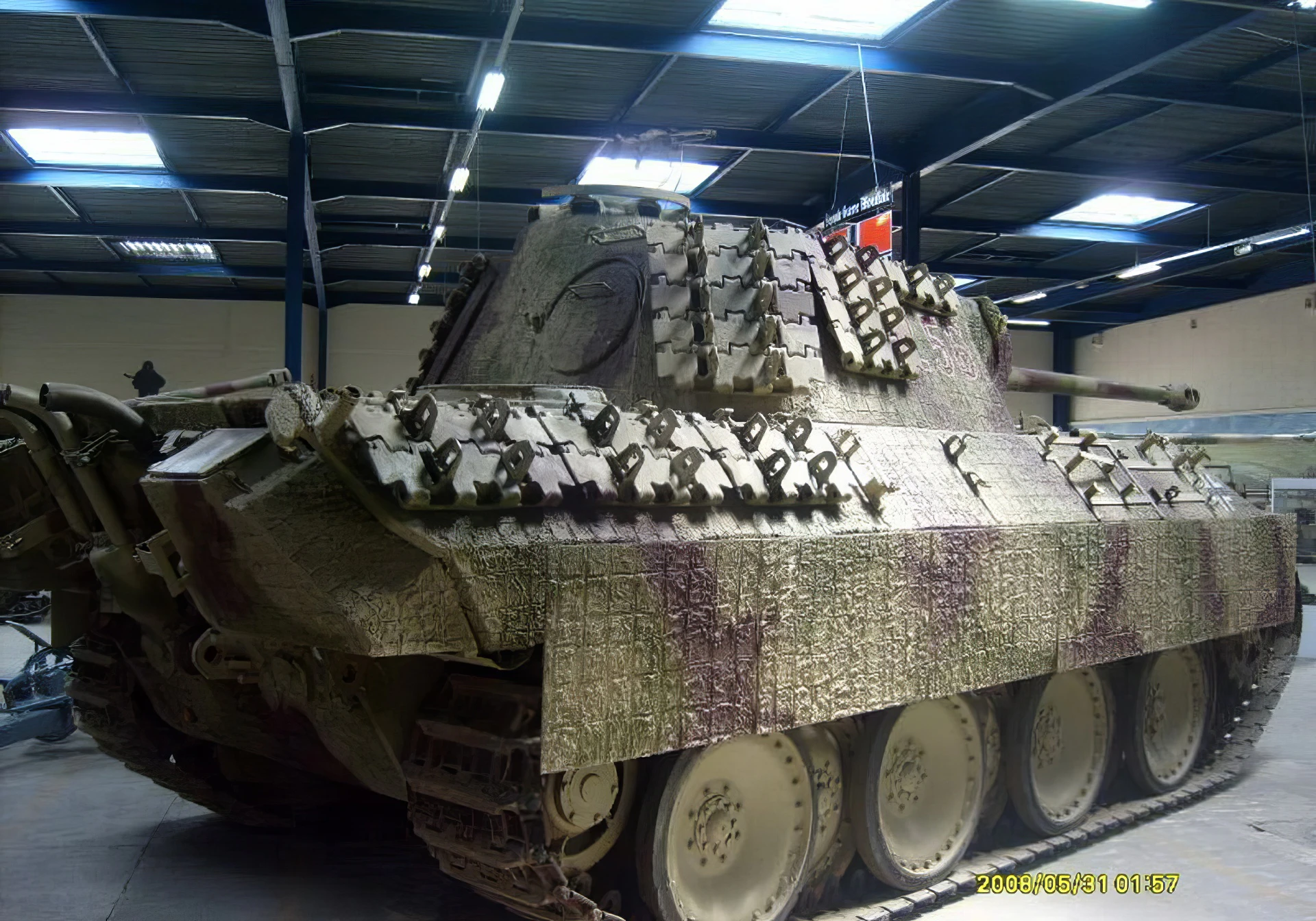

| PzKpfw V Panther Ausf A Walk Around | |
|---|---|
| Photographer | Vladimir Yakubov |
| Localisation | Jacques Littlefield Collection |
| Photos | 87 |
See also:


The **Panzerkampfwagen V Ausführung A (PzKpfw V Ausf. A)**, or **Panther Ausf. A**, was the second production model of the German Panther medium tank. It addressed significant reliability and operational flaws found in the initial Ausf. D variant and is considered one of the most effective and influential tank designs of World War II.
Core Design and Firepower
The Panther Ausf. A retained the revolutionary design features intended to counter the Soviet T-34:
- Sloped Armor: It featured highly **sloped frontal armor** (80 mm at 55 degrees on the glacis plate), which drastically increased the effective thickness and provided excellent protection against most Allied anti-tank fire at long range.
- Main Gun: The tank was armed with the high-velocity **7.5 cm KwK 42 L/70 gun**. This cannon provided superb armor penetration, allowing the Panther to engage and destroy most Allied tanks from distances exceeding 1,500 meters.
- Mobility: Powered by a **Maybach HL230 P30 V-12 gasoline engine** (700 hp), the 45-ton tank was relatively fast, capable of reaching speeds of around 46 km/h (29 mph) on roads, balancing protection with tactical speed.
Key Improvements (Ausf. A over Ausf. D)
The Ausf. A, produced from August 1943 to May 1944, incorporated several crucial modifications for improved combat effectiveness and crew functionality:
- Commander’s Cupola: The troublesome drum-shaped cupola of the Ausf. D was replaced with a **new cast, hemispherical cupola**. This offered the commander much better all-around vision via seven periscopes and greater ballistic protection.
- Hull Machine Gun Mount: The vulnerable “letterbox” flap for the hull machine gun was replaced by a more practical and better-protected **ball mount** (*Kugelblende*) for the 7.92 mm MG 34 machine gun.
- Turret Traverse: A new, **single-speed hydraulic turret traverse system** was installed, significantly improving the gunner’s ability to track and engage targets quickly.
- Anti-Magnetic Coating: Most Ausf. A tanks left the factory coated with **Zimmerit**, an anti-magnetic paste intended to prevent the attachment of magnetic anti-tank mines.
- Reliability: Numerous mechanical and cooling system improvements were implemented to address the severe engine and transmission reliability issues that plagued the initial Panther D production.
Specifications Summary
| Category | Detail |
|---|---|
| Type | Medium Tank |
| Weight | ~45 metric tons |
| Main Armament | 7.5 cm KwK 42 L/70 cannon |
| Frontal Armor (Glacis) | 80 mm @ 55° |
| Engine | Maybach HL230 P30 V-12 (700 hp) |
| Crew | 5 (Commander, Gunner, Loader, Driver, Radio Operator) |
Views : 11843