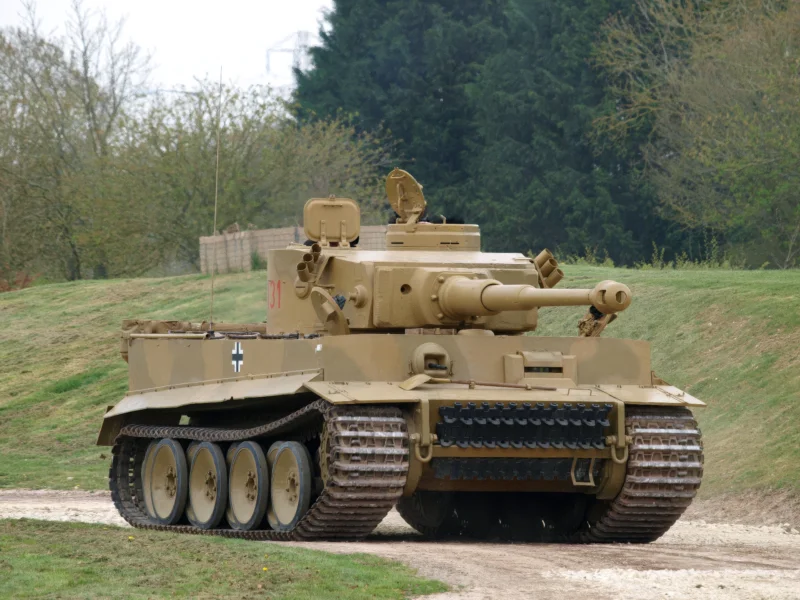
Tiger Tank | |
|---|---|
| Land | Duitsland |
| Type | Zware tank |
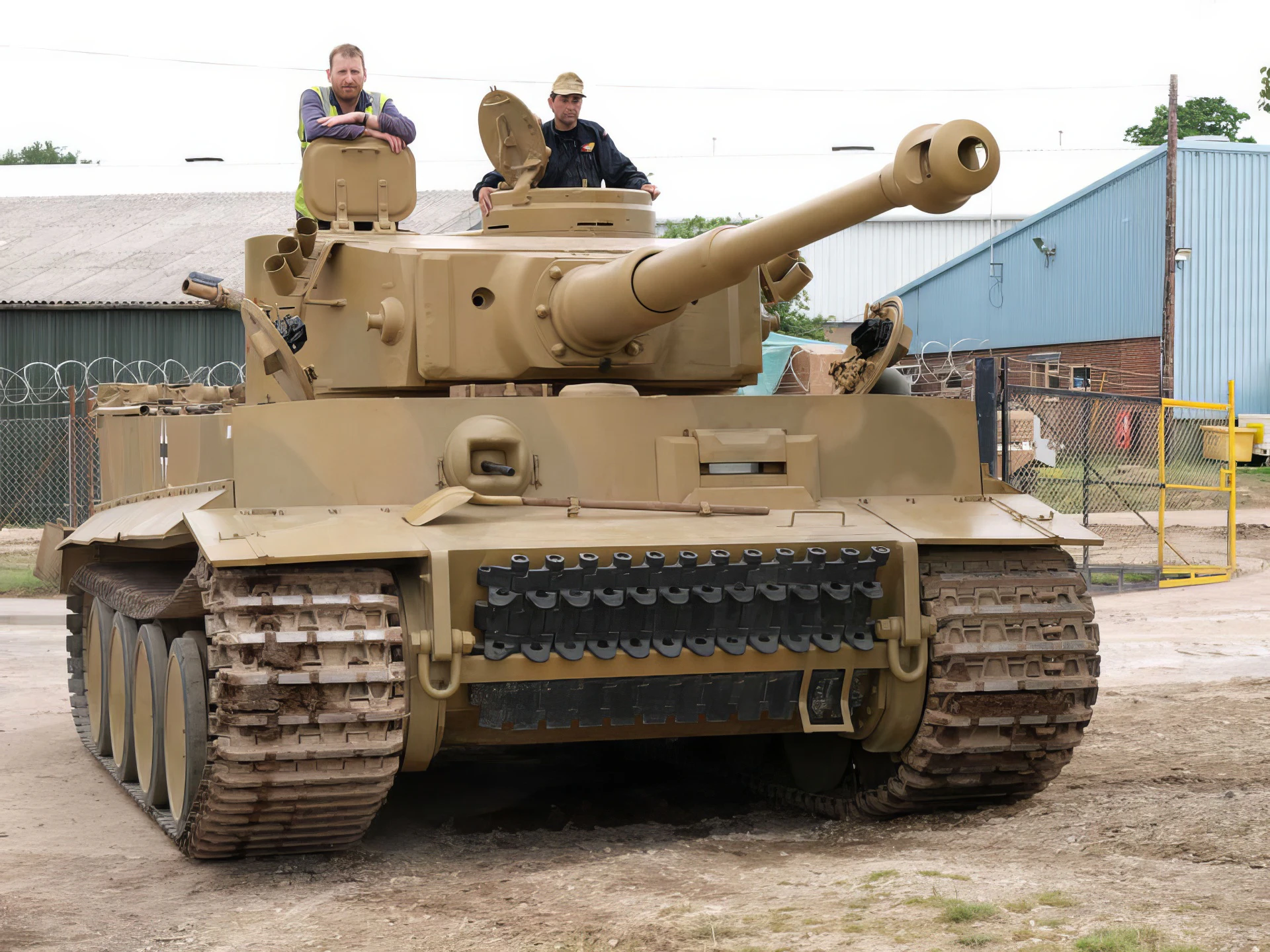
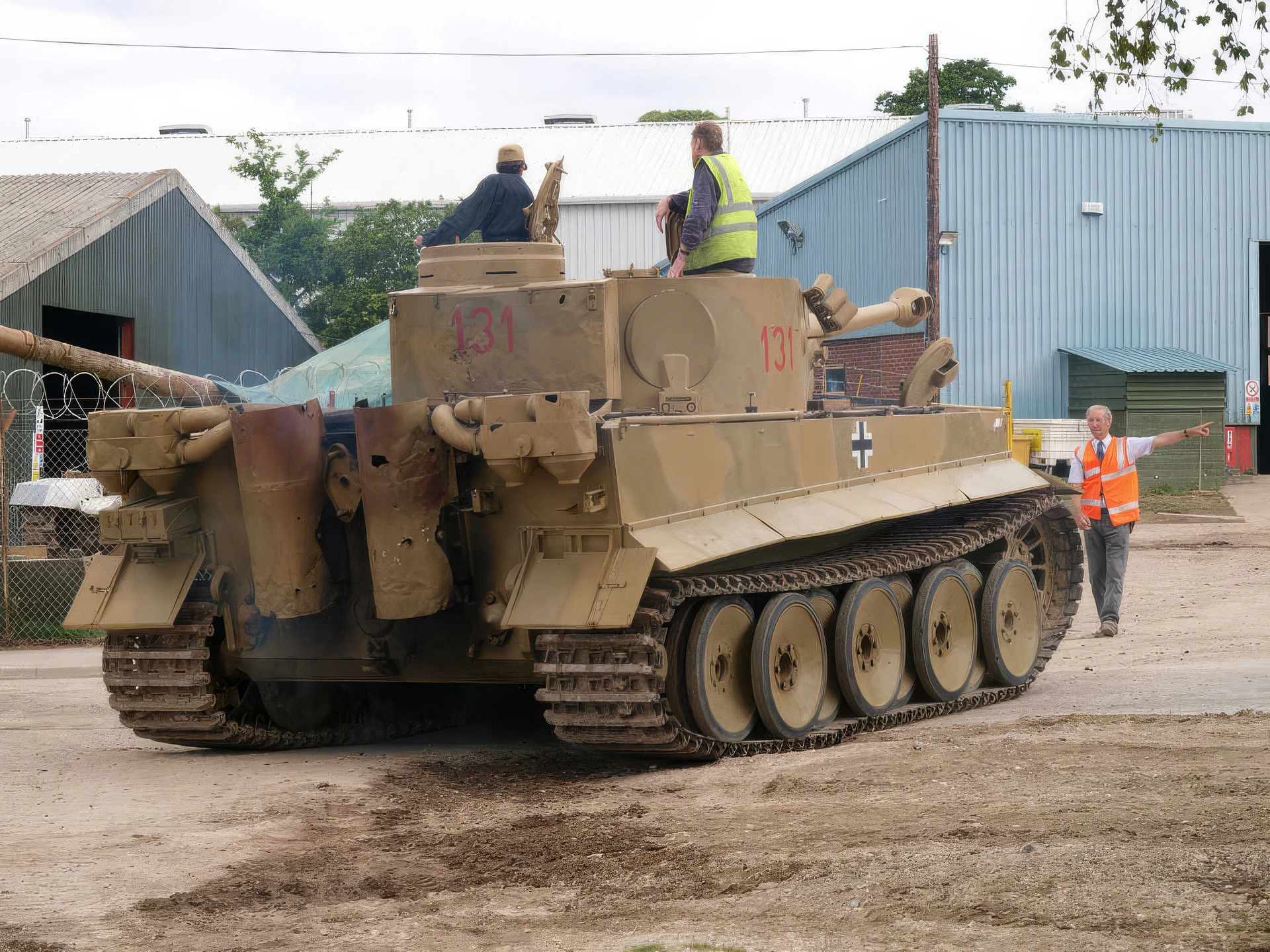
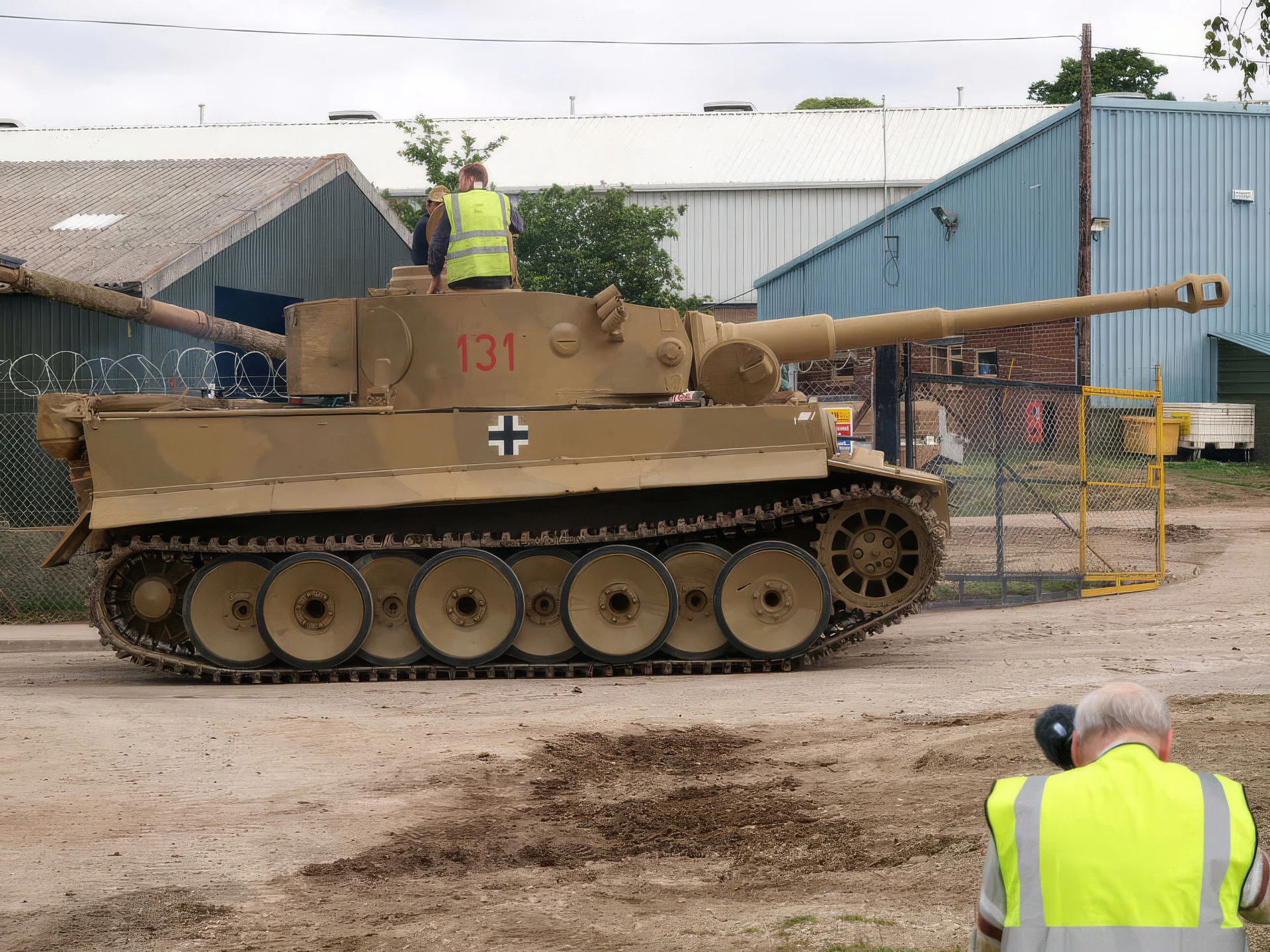
| Beschrijving | Album of 27 photos walk-around of a «Tiger Tank» |
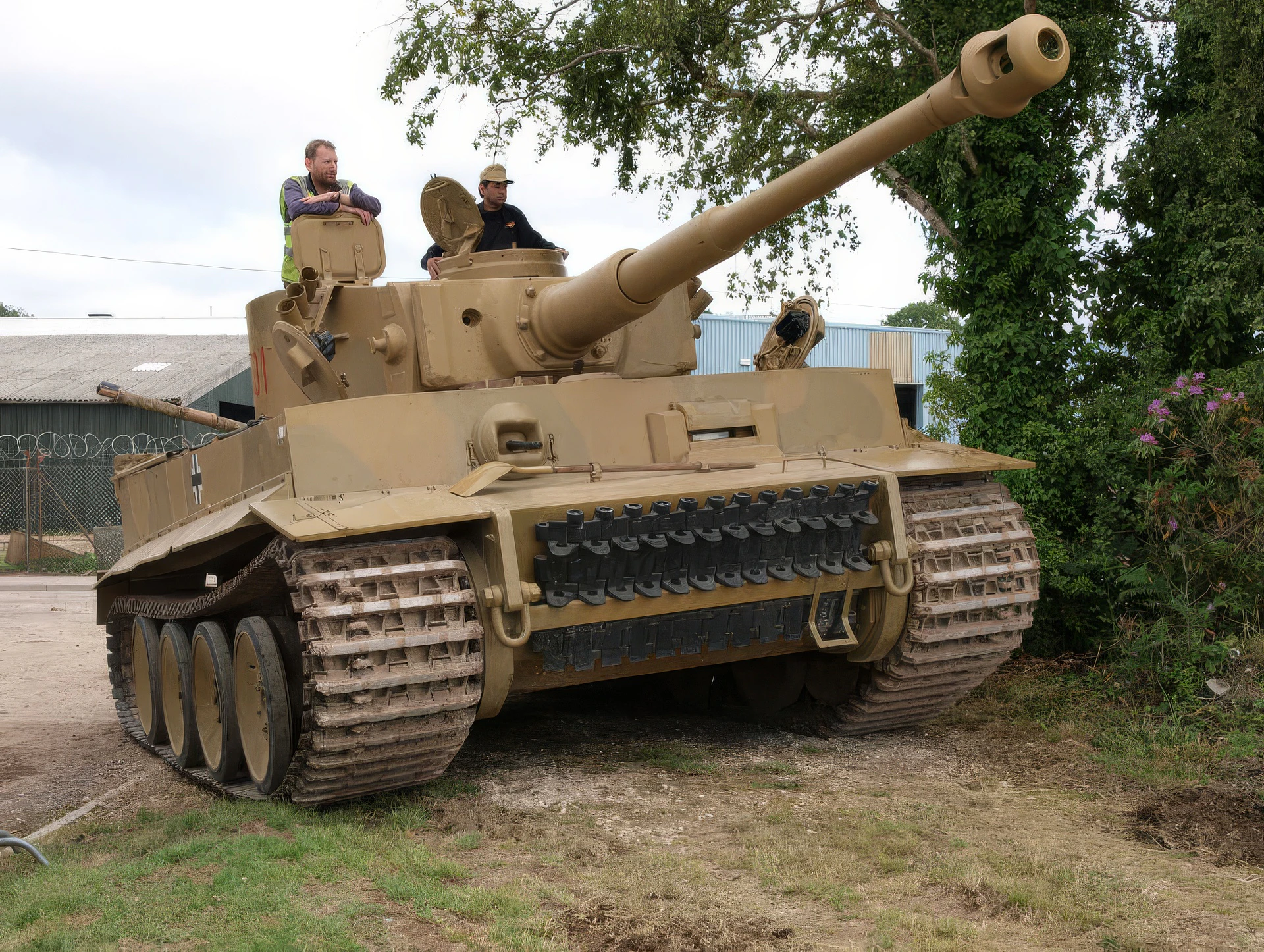
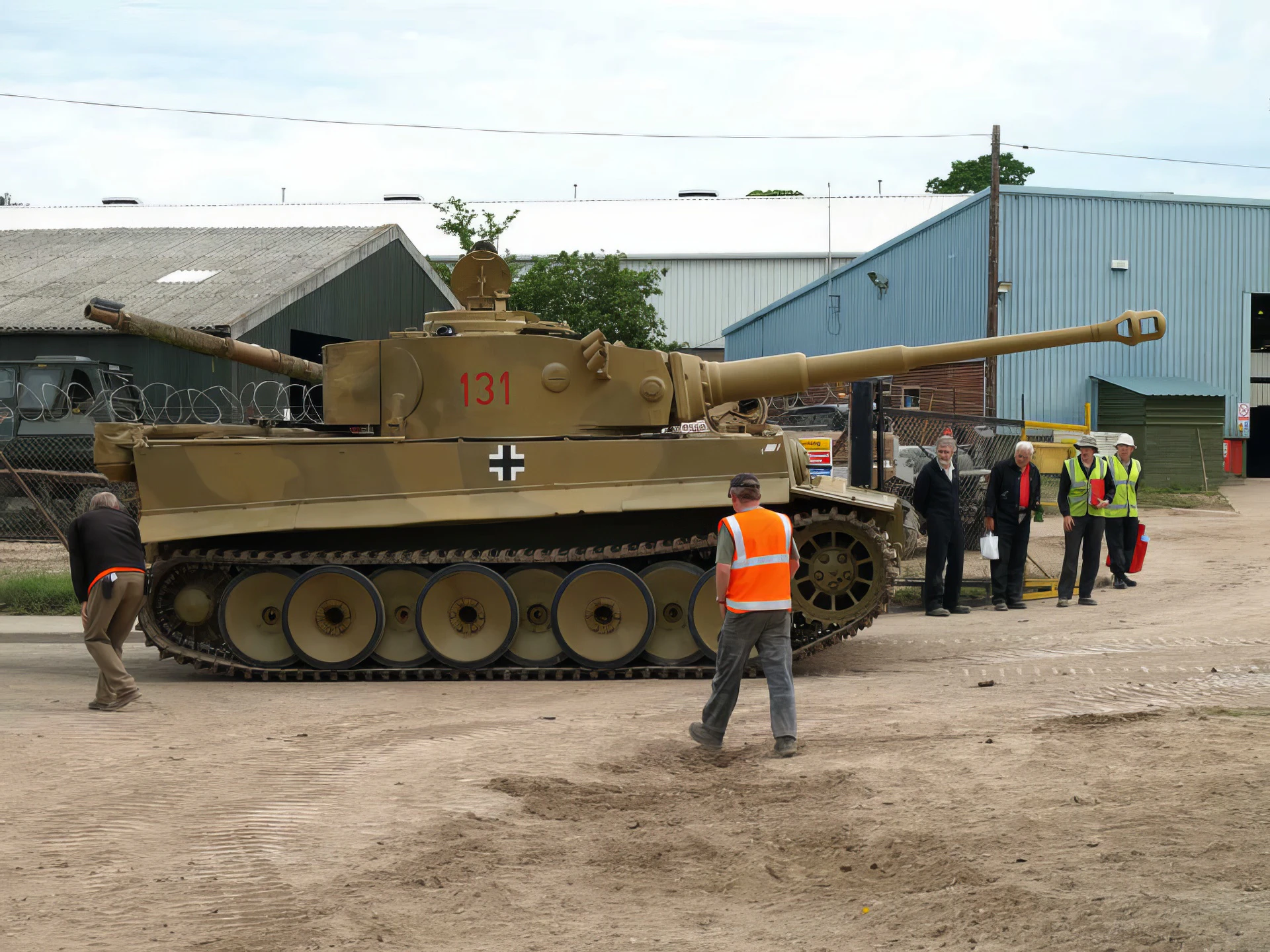
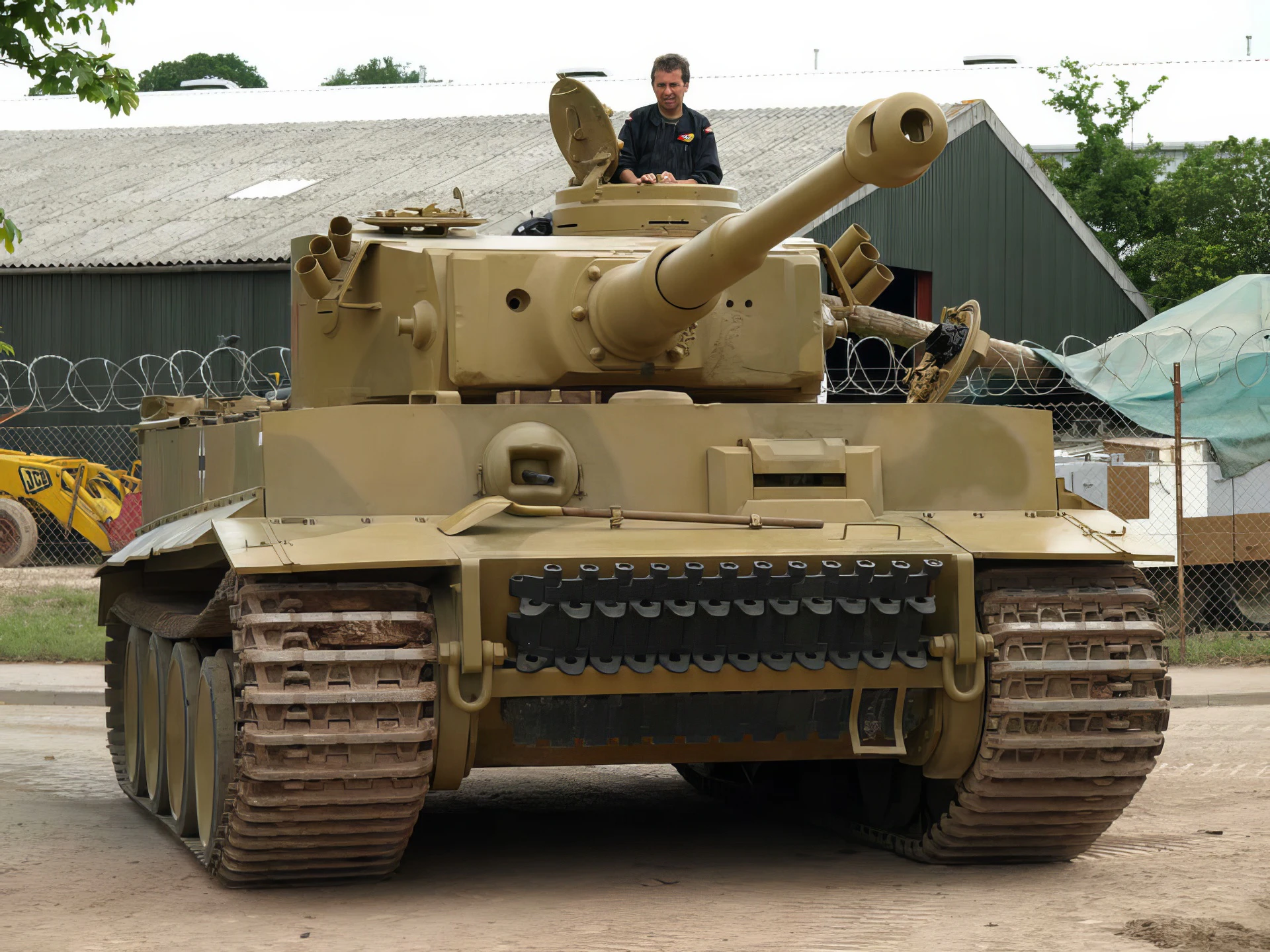
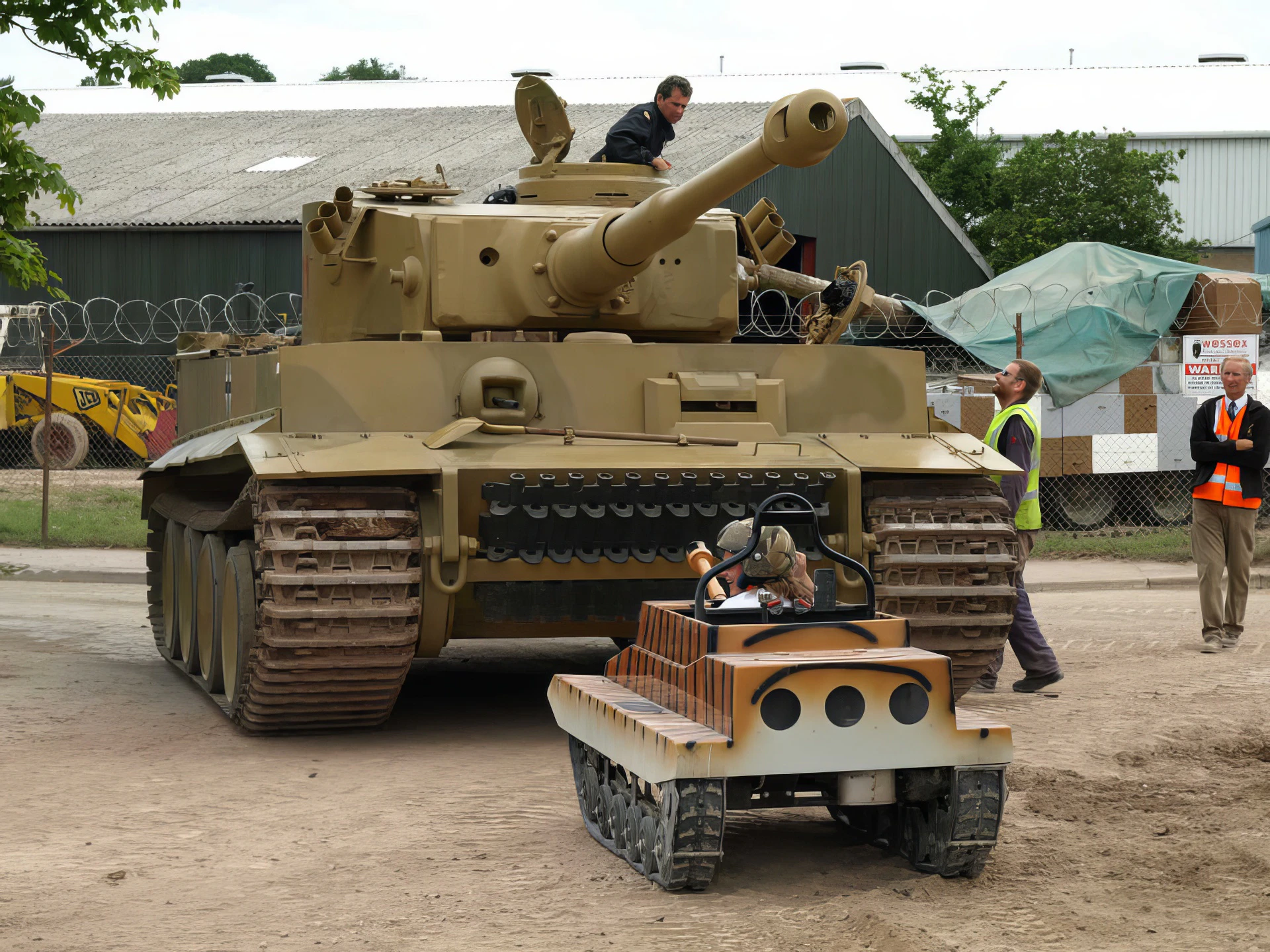
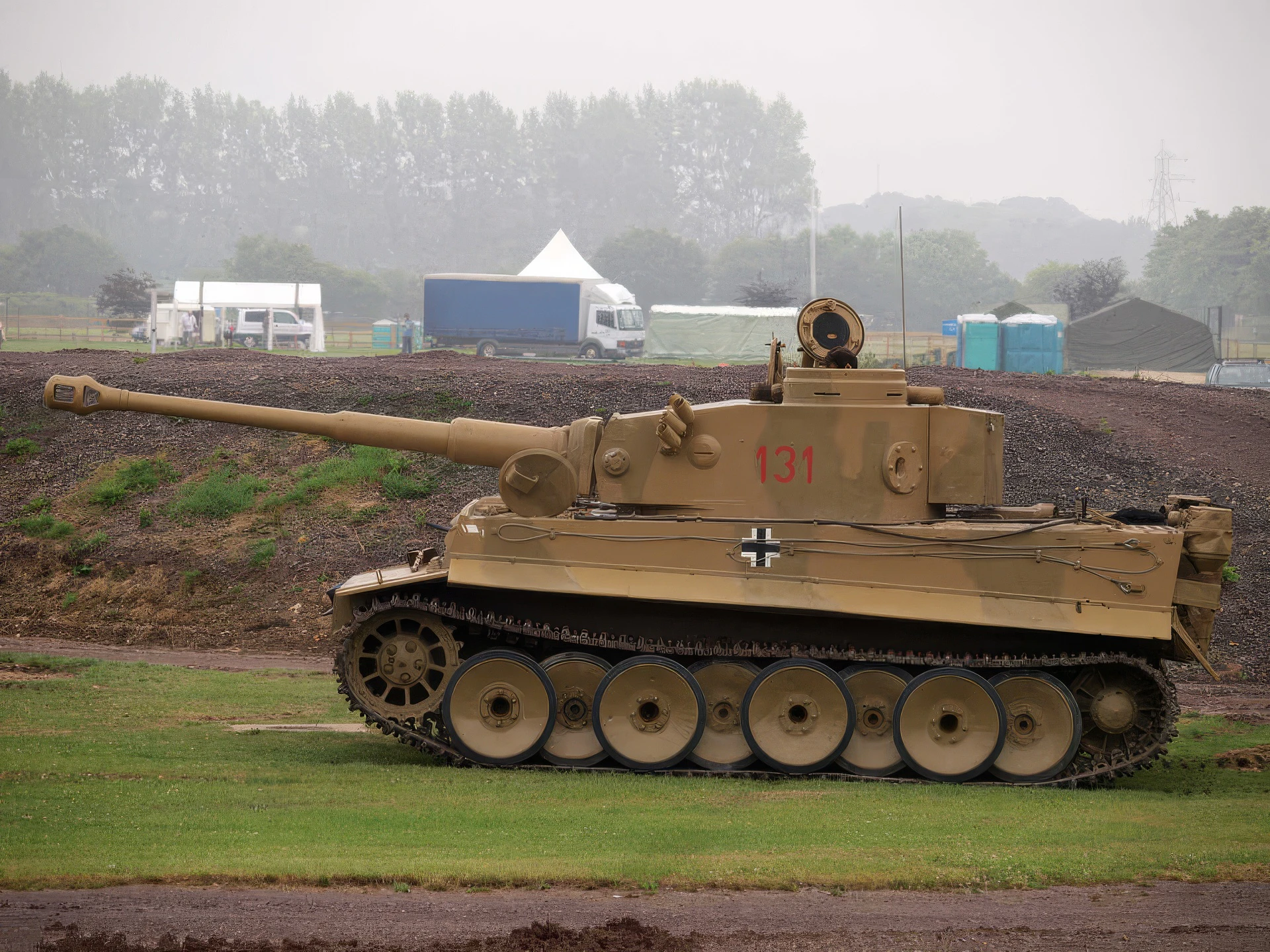
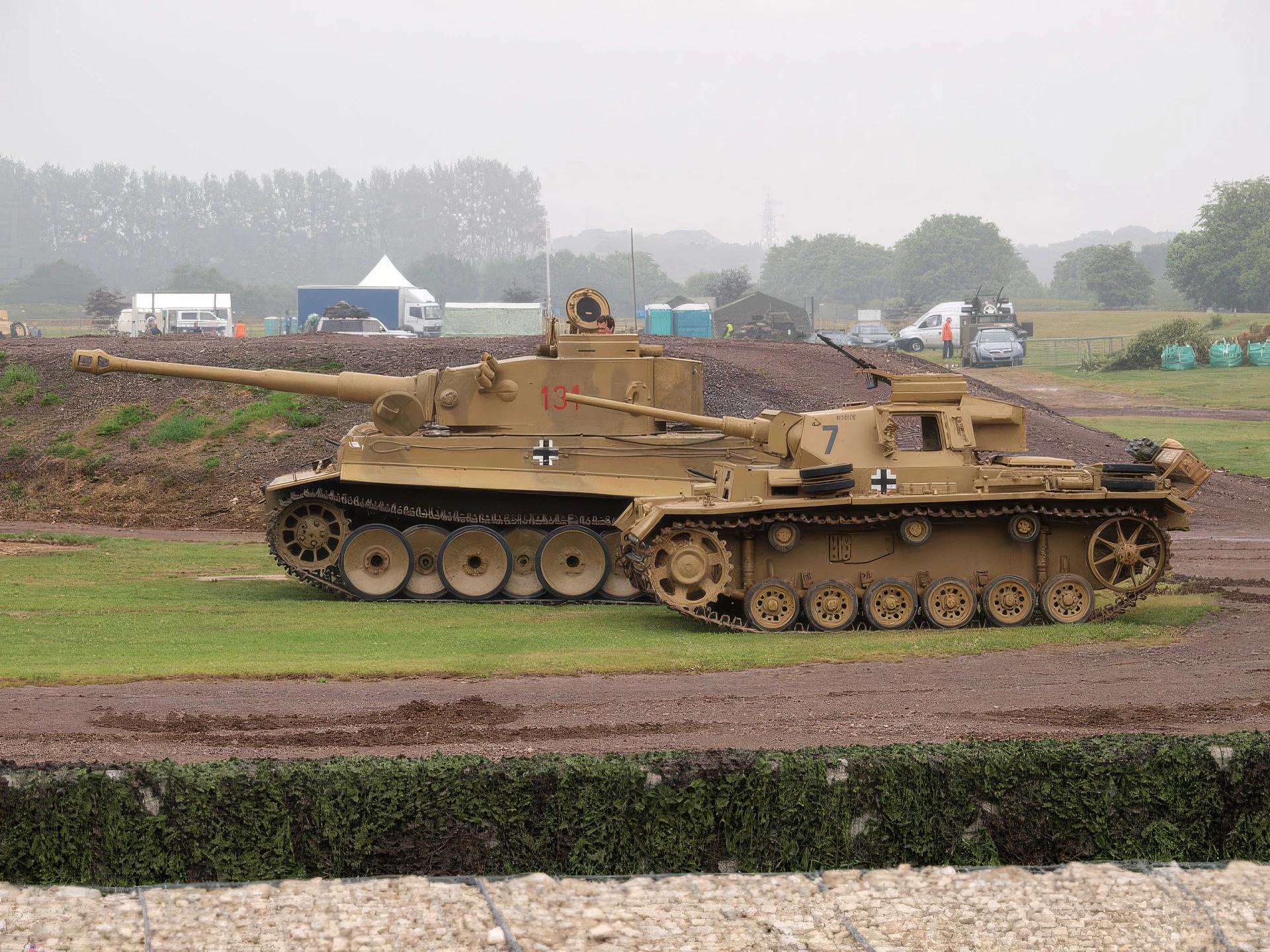
Fotogalerij van een Tiger Tank in actie, De Tijger I is de algemene naam van een Duitse zware tank ontwikkeld in 1942 en gebruikt in de Tweede Wereldoorlog. De laatste officiële Duitse aanduiding was Panzerkampfwagen VI Tiger Ausf.E, vaak afgekort tot Tiger. Het was een antwoord op het onverwacht formidabele Sovjetpantser dat in de eerste maanden van de asmogendheden invasie van de Sovjet-Unie werd aangetroffen, met name de T-34 en de KV-1. Het Tiger I-ontwerp gaf de Wehrmacht zijn eerste tank met het 88 mm-kanon, in zijn eerste gepantserde gevechtsvoertuig-speciale versie, die in zijn Flak-versie eerder zijn effectiviteit had aangetoond tegen zowel lucht- als gronddoelen. In de loop van de oorlog vocht de Tiger I op alle Duitse fronten. Het werd meestal ingezet in onafhankelijke tankbataljons, wat behoorlijk formidabel bleek te zijn.

Zie ook:


De Panzerkampfwagen VI (Pz.Kpfw. VI), commonly known as the Tijger, was a series of German heavy tanks used during World War II. It was a formidable and revolutionary design, primarily known for its incredibly heavy armor and powerful main gun. The series includes two primary models: the Tiger I and the Tiger II.
1. Panzer VI Tiger I (Sd.Kfz. 181)
The original Tiger I was a response to the unexpectedly strong Soviet tanks encountered during the invasion of the USSR. It entered service in 1942 and quickly established a fearsome reputation.
- Rol: Heavy Tank, designed for breakthrough and long-range engagement.
- Hoofdbewapening: The devastating 88 mm KwK 36 L/56 cannon, which could penetrate most Allied tank armor at extreme distances.
- Harnas: Featured very heavy, though largely flat and vertical, armor. Frontal hull armor was typically 100 mm thick, with the gun mantlet up to 200 mm. Its protection relied on sheer thickness.
- Gewicht: Ongeveer 57 tonnes.
- Mobiliteit: Powered by a 700 hp Maybach V-12 engine. Capable of speeds up to 38 to 45 km/h on roads. Its complex interleaved road wheel suspension provided good off-road performance but was mechanically demanding and maintenance-intensive.
- Bemanning: 5 (Commander, Gunner, Loader, Driver, Radio Operator).
2. Panzer VI Tiger II (Königstiger / King Tiger) (Sd.Kfz. 182)
The Tiger II, or “King Tiger,” was the successor to the Tiger I and represented an evolution in German tank design. It entered production in late 1943.
- Rol: Heavy Tank.
- Hoofdbewapening: The superior 88 mm KwK 43 L/71 cannon. This longer-barreled gun significantly increased muzzle velocity and anti-tank performance.
- Harnas: Combined the sheer thickness of the Tiger series with sloped armor. The frontal hull plate was 150 mm thick and angled at 50, making it virtually impervious to most Allied tank guns from the front.
- Gewicht: Bijna 68.5 tonnes, making it the heaviest tank used by Germany during the war.
- Drawbacks: Its extreme weight severely strained its powertrain, leading to significant mechanical reliability issues and placing a massive burden on German logistics and manufacturing.
Views : 9244
U ook zien :
 TOG2 – Foto's &Video's
 P26/40 tank – Foto's &Video's
 T-28 Super Heavy Tank - Foto's &Video
 Chieftain tank – Rond te Lopen
 Pz.Kpfw. VI Tiger I – HOBBY BOSS 82601
 PzKpfw VIH Tiger – Rond Te Lopen
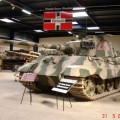 Tiger II – Königstiger vol3 – Rond te Lopen
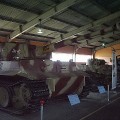 Tiger I – Rond Te Lopen
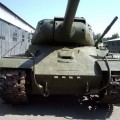 JS2-M – Rond te Lopen
 Panzerkampfwagen VI – TIJGER – Sdkfz.181 – Wydawnictwo Militaria 074