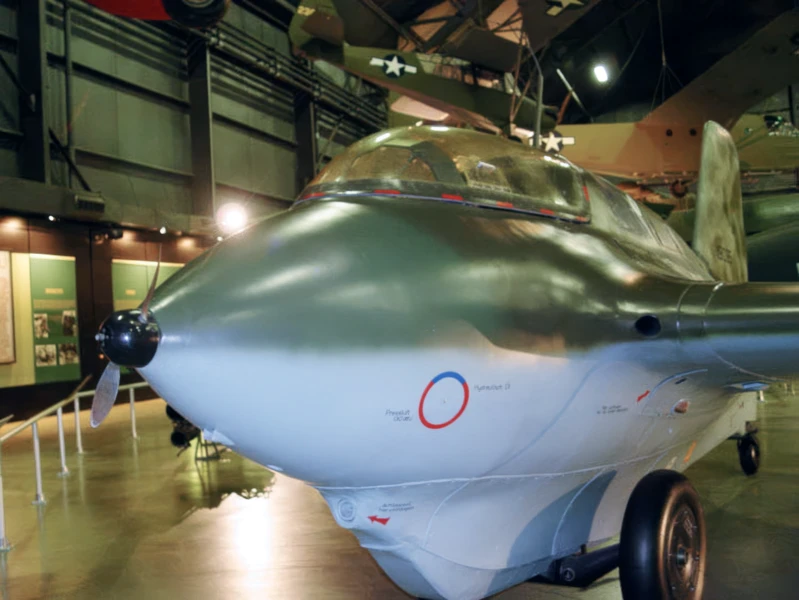
Messerschmitt Me 163B | |
|---|---|
| Land | Duitsland |
| Role | Raketaangedreven gevechtsvliegtuigen |
| Eerste vlucht | 1 september 1941 |
| Gebouwd | 370 |
De Messerschmitt Me 163 Komet was een Duits raketaangedreven jachtvliegtuig. Ontworpen door Alexander Lippisch, het is het enige raketaangedreven gevechtsvliegtuig dat ooit operationeel is geweest en het eerste bestuurde vliegtuig van elk type dat 1000 km / h (621 mph) in niveauvlucht overschrijdt. Het ontwerp was revolutionair en de prestaties ongekend. De Duitse testpiloot Heini Dittmar bereikte begin juli 1944 1.130 km / h (700 mph), een onofficieel vluchtsnelheidsrecord dat bijna een decennium lang ongeëvenaard is door turbojet-aangedreven vliegtuigen. Er werden meer dan 300 vliegtuigen gebouwd, maar de Komet bleek niet effectief in zijn toegewijde rol als onderscheppingsvliegtuig en was verantwoordelijk voor de vernietiging van slechts ongeveer negen tot achttien geallieerde vliegtuigen tegen tien verliezen. Afgezien van gevechtsverliezen werden veel piloten gedood tijdens het testen en trainen
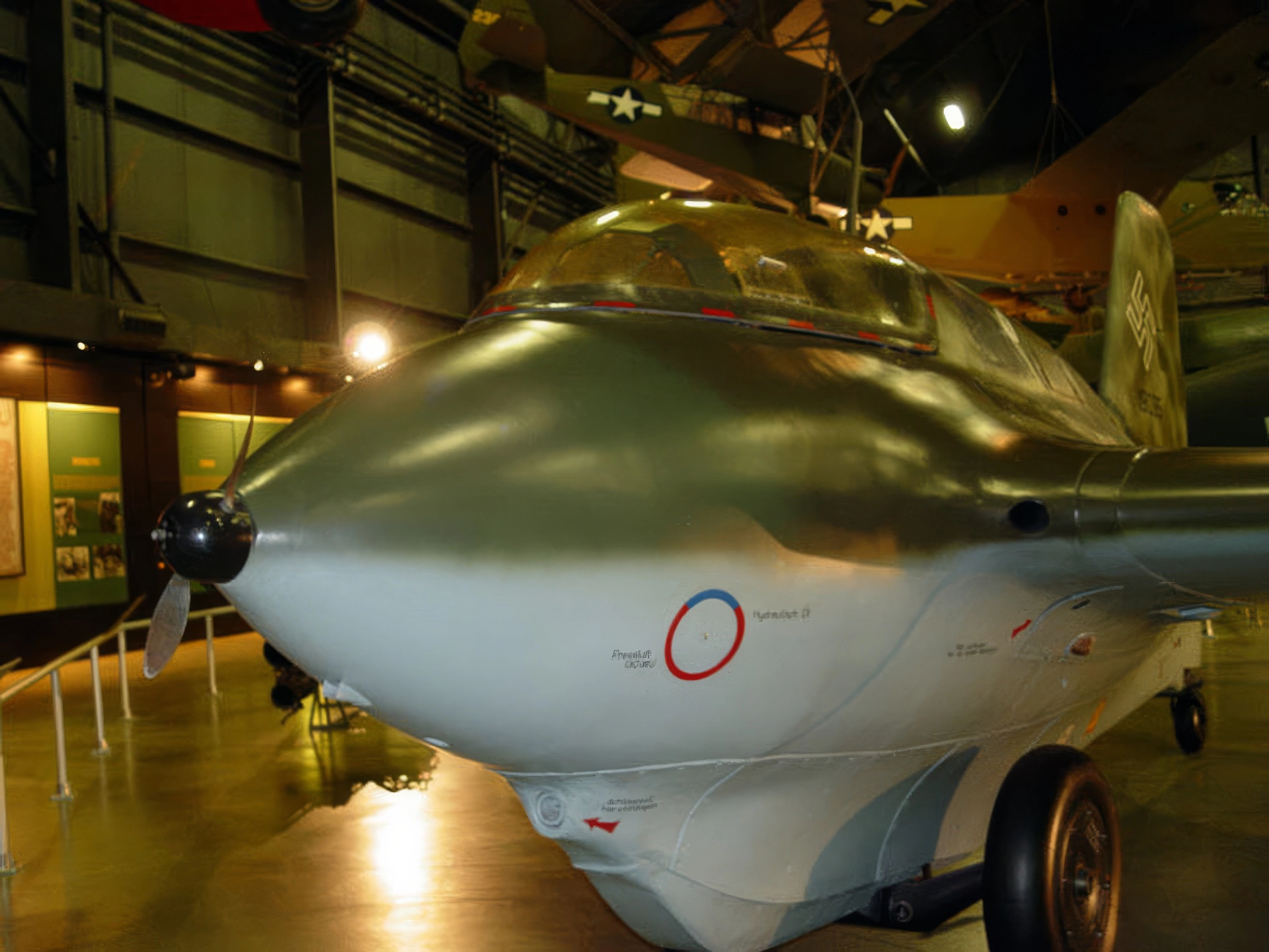
| Messerschmitt Me 163B Komet Rondlopen | |
|---|---|
| Fotograaf | John Heck |
| Lokalisatie | Nationaal Museum van de USAF |
| Foto 's | 23 |






Zie ook:


A Flying Bomb in the Service of the Reich
De Messerschmitt Me 163B Komet was arguably the most radical combat aircraft of World War II. Designed by Alexander Lippisch as a tailless, swept-wing interceptor, it utilized a liquid-fuel rocket motor to reach speeds and climb rates that were decades ahead of its time. However, this performance came at a terrifying cost. The Komet was as dangerous to its pilots and ground crews as it was to the Allied bombers it hunted, earning a reputation as a “suicide machine” due to its highly volatile fuels and treacherous landing characteristics.
| Attribute | Technical Specification (Me 163B-1) |
|---|---|
| Role | Point-Defense Rocket Interceptor |
| Bemanning | 1 (Pilot) |
| Motor | 1 × Walter HWK 109-509A-2 liquid-fuel rocket |
| Maximum Speed | 960 km/h (596 mph) — Mach 0.83 |
| Climb Rate | Initial: 81 m/s (16,000 ft/min) |
| Endurance | 7.5 to 8 minutes of powered flight |
| Bewapening | 2 × 30mm MK 108 cannons (60 rounds per gun) |
| Landing Gear | Jettisonable takeoff dolly / Retractable landing skid |
Design Engineering: Chemistry vs. Aerodynamics
- The Hypergolic Nightmare: The Komet was powered by T-Stoff (hydrogen peroxide) and C-Stoff (hydrazine hydrate and methanol). These two chemicals were hypergolic, meaning they exploded instantly upon contact. A single drop of one in the other’s tank would destroy the aircraft. They were so corrosive that pilots had to wear special non-organic protective suits to prevent being dissolved alive in the event of a leak.
- Tailless Swept Wings: To minimize drag at high subsonic speeds, the Komet lacked a horizontal stabilizer (tail). Its swept wings provided both lift and control, making it exceptionally stable in high-speed dives but notoriously difficult to land because it simply “wanted to keep flying.”
- The Two-Part Landing: To save weight, the Komet took off on a two-wheeled “dolly” that was jettisoned once airborne. After exhausting its fuel, the pilot had to glide back and land on a retractable belly skid. If the skid failed to deploy or the landing was too hard, the impact could slosh remaining fuel together, resulting in a fatal explosion.
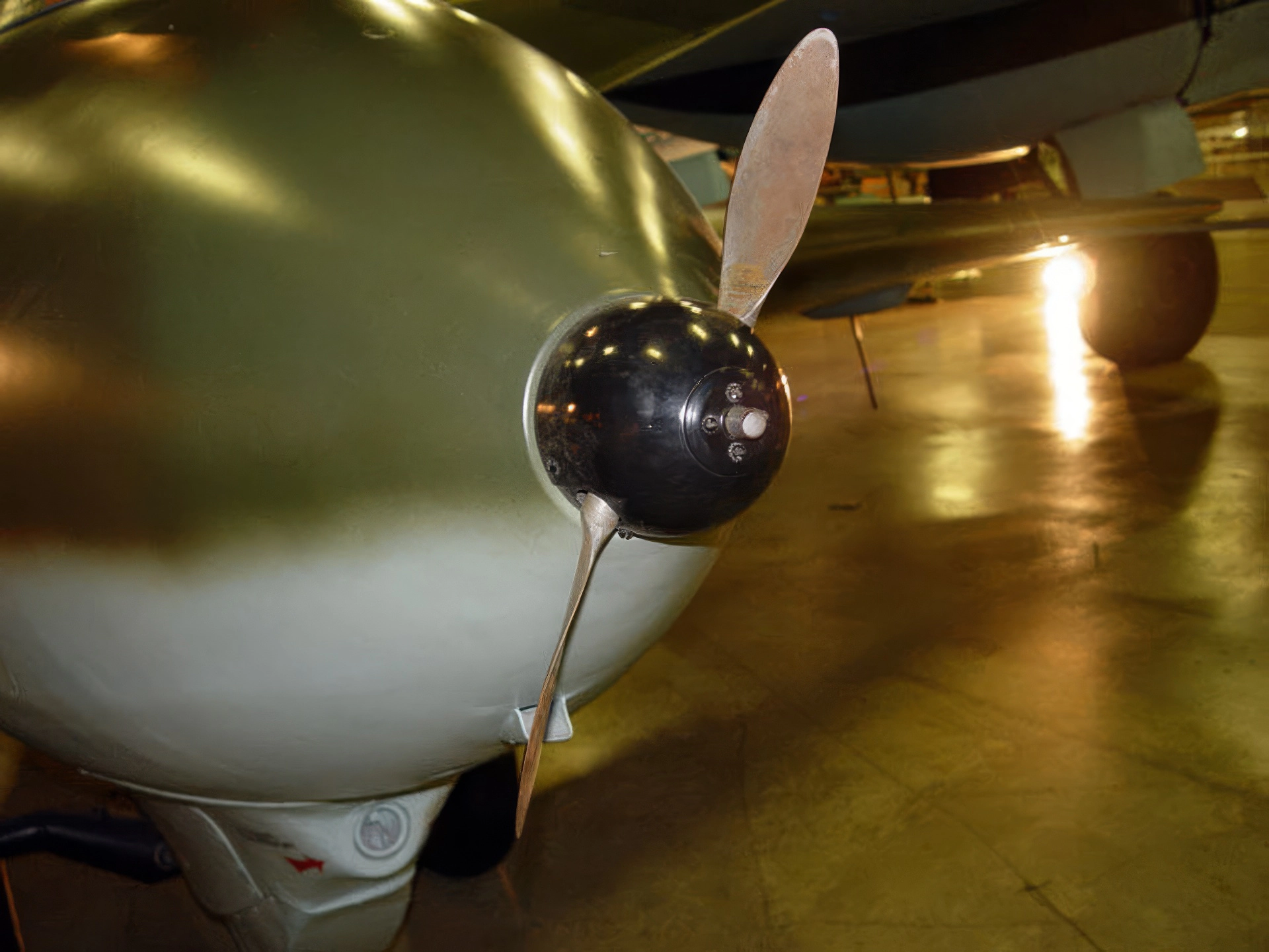
- Nose-Cone Generator: Since the rocket engine produced no electrical power, the Komet featured a tiny wooden propeller on its nose. This “rat” (Ram Air Turbine) spun in the slipstream to power the aircraft’s radio and flight instruments.
Combat History: Seven Minutes of Terror
- The Vertical Intercept: A typical Komet mission lasted less than ten minutes. The pilot would blast off the runway at a 70-degree angle, reaching 30,000 feet in under four minutes. They would then dive through the bomber formation at nearly 600 mph, giving them only a fraction of a second to aim and fire the slow-velocity 30mm cannons.
- The “Gliding Target”: Once the fuel ran out, the Komet became a heavy, unpowered glider. Allied fighter pilots quickly learned to wait for the rocket flame to go out; once the Komet was “silent,” it was a sitting duck as it struggled to reach its home airfield.
- Limited Impact: Despite its psychological terror, the Me 163 was a failure as a weapon system. Fewer than 20 Allied bombers were officially credited to the Komet, while more Komets were lost to landing accidents and engine explosions than to enemy fire.
- Sabotage: Many surviving Komets show evidence of sabotage by the forced laborers who built them, including contaminated glue in the wooden wings and rocks placed between fuel tanks and support straps to cause punctures.
Bekeken: 4194
U ook zien :
 Messerschmitt Me-108 Taifun – Foto's &Video
 Messerschmitt Bf 110 – Foto's & Video
 Messerschmitt Me 262 – Foto's &Video
 Messerschmitt Me208 – Foto's & Video
 HA-1112-M1L Buchon – Rond te Lopen
 Messerschmitt Bf 109G – WalkAround
 Messerschmitt Bf 109G-2 – Rond te Lopen
 Messerschmitt Bf 109G-6 – Rond te Lopen
 Messerschmitt Me-109E – Rond te Lopen
 Messerschmitt Bf 109G-4 Rot 7 – Rond Te Lopen