Geschaalde composieten Model 348

Scaled Composites Model 348

LandUsa
RoleVliegende ruimtevliegtuig Carrier
Eerste vlucht21 december 2008
Gebouwd1

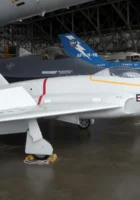
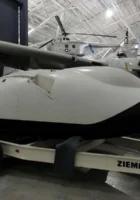
De Geschaalde composieten Model 348 White Knight Two (WK2) is a quadjet cargo aircraft that is used to lift the SpaceShipTwo spacecraft to release altitude. It was developed by Scaled Composites from 2007 to 2010 as the first stage of Tier 1b, a two-stage to suborbital-space manned launch system. WK2 is based on the successful mothership to SpaceShipOne, White Knight, which itself is based on Proteus. With an “open architecture” design and explicit plans for multi-purpose use, the aircraft could also operate as a zero-g aircraft for passenger training or microgravity science flights, handle missions in high-altitude testing more generally, or be used to launch payloads other than SpaceShipTwo. A study of use of the aircraft as a forest fire water bomber has also been mentioned, one that would utilize a large carbon composite water tank that could be quickly replenished to make repeat runs over fires.

Bron: Scaled Composites Model 348 op Wikipedia

Lees verder

Bekeken : 1113

Northrop X-4 Bantam

Northrop X-4 Bantam

LandUsa
RolePrototype van een staartloos vliegtuig
Eerste vlucht15 December 1948
Gebouwd2

De Northrop X-4 Bantam was a prototype small twinjet aircraft manufactured by Northrop Corporation in 1948. It had no horizontal tail surfaces, depending instead on combined elevator and aileron control surfaces (called elevons) for control in pitch and roll attitudes, almost exactly in the manner of the similar-format, rocket-powered Messerschmitt Me 163 of Nazi Germany’s Luftwaffe. Some aerodynamicists had proposed that eliminating the horizontal tail would also do away with stability problems at fast speeds (called shock stall) resulting from the interaction of supersonic shock waves from the wings and the horizontal stabilizers. The idea had merit, but the flight control systems of that time prevented the X-4 from any success.

Bron: Northrop X-4 Bantam op Wikipedia

Lees verder

Views : 1828

Bristol 170 Vrachtschip

Bristol Freighter

LandUk
RoleVrachtvliegtuigen
Eerste vlucht2 december 1945
Gebouwd214

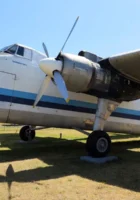
De Bristol Type 170 Vrachtschip was a British twin-engine aircraft designed and built by the Bristol Aeroplane Company as both a freighter and airliner. Its best known use was as an air ferry to carry cars and their passengers over relatively short distances. A passenger-only version was also produced, known as the Wayfarer. The Freighter was developed during the Second World War, having attracted official attention from the British Air Ministry, which sought the development of a rugged vehicle capable of carrying various cargoes, including a 3-ton truck. Various changes to the design were made to accommodate their requirements, but being completed too late to participate in the conflict, the majority of sales of the Freighter were to commercial operators. In response to customer demand, an enlarged version to maximise vehicle-carrying capacity, known as the Bristol Superfreighter, was developed.

Bron: Bristol Freighter op Wikipedia

Lees verder

Bekeken : 2365

Lockheed Electra

Lockheed Electra 12

LandUsa
RoleCiviele en militaire nutsvliegtuigen
Eerste vlucht27 juni 1936
Gebouwd130

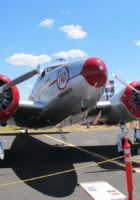
De Lockheed Model 12 Electra Junior, beter bekend als de Lockheed 12 of L-12, is een achtzits, zes-passagiers volledig metalen tweemotorig transportvliegtuig van de late jaren 1930 ontworpen voor gebruik door kleine luchtvaartmaatschappijen, bedrijven en rijke particulieren. Een verkleinde versie van de Lockheed Model 10 Electra, de Lockheed 12 was niet populair als een vliegtuig, maar werd veel gebruikt als een bedrijfs- en overheidsvervoer. Verschillende werden ook gebruikt voor het testen van nieuwe luchtvaarttechnologieën.

Bron: Lockheed Electra 12 op Wikipedia

Lees verder

Views : 2211

Klok X-5

Bell X-5

LandUsa
RoleOnderzoeksvliegtuigen
Eerste vlucht20 juni 1951
Gebouwd2

De Klok X-5 was het eerste vliegtuig dat in staat was om de zwaai van zijn vleugels tijdens de vlucht te veranderen. Het is geïnspireerd op het ongeteste P.1101-ontwerp uit oorlogstijd van de Duitse firma Messerschmitt. In tegenstelling tot het Duitse ontwerp, waarbij de hoek van de vleugel alleen op de grond kon worden aangepast, bedachten de Bell-ingenieurs een systeem van elektromotoren om de sweep tijdens de vlucht aan te passen.

Bron: Bell X-5 op Wikipedia

Lees verder

Bekeken : 1281

Ryan X-13 Vertijet

Ryan X-13 Vertijet

LandUsa
RoleExperimenteel VTOL-straalvliegtuig
Eerste vluchtDecember 10, 1955
Gebouwd2

De Ryan X-13 Vertijet (company designation Model 69) was an experimental vertical take-off and landing (VTOL) jet aircraft flown in the United States in the 1950s. The main objective of the project was to demonstrate the ability of a pure jet to vertically takeoff, hover, transition to horizontal forward flight, and vertically land.

Bron: Ryan X-13 Vertijet op Wikipedia

Ryan X-13 Vertijet Rond Te Lopen
FotografenVladimir Yakubov
LokalisatieNationaal Museum van de USAF
Foto 's96
Lees verder

Aantal keren bekeken: 905

Noord-Amerikaanse X-15A2

North American X-15

LandUsa
RoleDe demonstratievliegtuigen van het concept
Eerste vluchtdinsdag 24 oktober 2000
Gebouwd2

De Noord-Amerikaanse X-15 Was een hypersonisch raketaangedreven vliegtuig van de Amerikaanse luchtmacht en de National Aeronautics and Space Administration als onderdeel van de X-plane serie experimentele vliegtuigen. De X-15 vestigde snelheids- en hoogterecords in de jaren 1960, bereikte de rand van de ruimte en keerde terug met waardevolle gegevens die werden gebruikt in het ontwerp van vliegtuigen en ruimtevaartuigen. Het officiële wereldrecord van de X-15 voor de hoogste snelheid ooit geregistreerd door een bemand, aangedreven vliegtuig, dat zich afspeelt in oktober 1967 toen William J. Knight Mach 6.72 vloog op 102.100 voet (31.120 m), een snelheid van 4.520 mijl per uur (7.274 km / h; 2.021 m / s), is ongebroken gebleven.

Bron: Noord-Amerikaanse X-15 op Wikipedia

Lees verder

Views : 2170

Martin Marietta X-24

Martin Marietta X-24

LandUsa
RoleDe demonstratievliegtuigen van het concept
Eerste vluchtdinsdag 24 oktober 2000
Gebouwd2

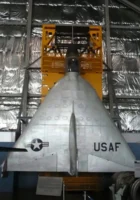
De Martin Marietta X-24 was an American experimental aircraft developed from a joint United States Air Force-NASA program named PILOT (1963–1975). It was designed and built to test lifting body concepts, experimenting with the concept of unpowered reentry and landing, later used by the Space Shuttle. Originally built as the X-24A, the aircraft was later rebuilt as the X-24B. The X-24 was drop launched from a modified B-52 Stratofortress at high altitudes before igniting its rocket engine; after expending its rocket fuel, the pilot would glide the X-24 to an unpowered landing.

Bron: Martin Marietta X-24 op Wikipedia

Lees verder

Bekeken: 1282

Lockheed Martin X-35B

Lockheed Martin X-35

LandUsa
RoleDe demonstratievliegtuigen van het concept
Eerste vluchtdinsdag 24 oktober 2000
Gebouwd2

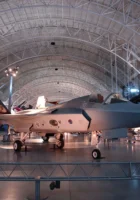
De Lockheed Martin x-35 was een concept demonstratievliegtuig (CDA) ontwikkeld door Lockheed Martin voor het Joint Strike Fighter programma. De X-35 werd uitgeroepen tot winnaar van de concurrerende Boeing X-32 en een ontwikkelde, bewapende versie ging in het begin van de 21e eeuw in productie als de F-35 Lightning II.

Bron: Lockheed Martin X-35 op Wikipedia

Lees verder

Bekeken : 1729

NASA X-38

NASA X-38

LandUsa
RoleVoertuig inleveren
Programma1995–2002
GebouwdOnbewust

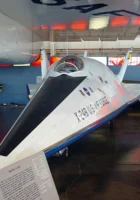
De X-38 was an experimental re-entry vehicle designed by NASA to research a possible emergency crew return vehicle (CRV) for the International Space Station (ISS). The 1995–2002 program also developed concepts for a crew return vehicle design that could be modified for other uses, such as a possible joint U.S. and international human spacecraft that could be launched on the French Ariane 5 booster. The program would eventually develop a total of three test prototype flight demonstrators for the proposed Crew Return Vehicle, each having incremental improvements on its predecessor. All three were wingless lifting body vehicles used in drop tests. The X-38 program was cancelled in 2002 due to budget cuts.

Bron: NASA X-38 op Wikipedia

Lees verder

Bekeken : 997