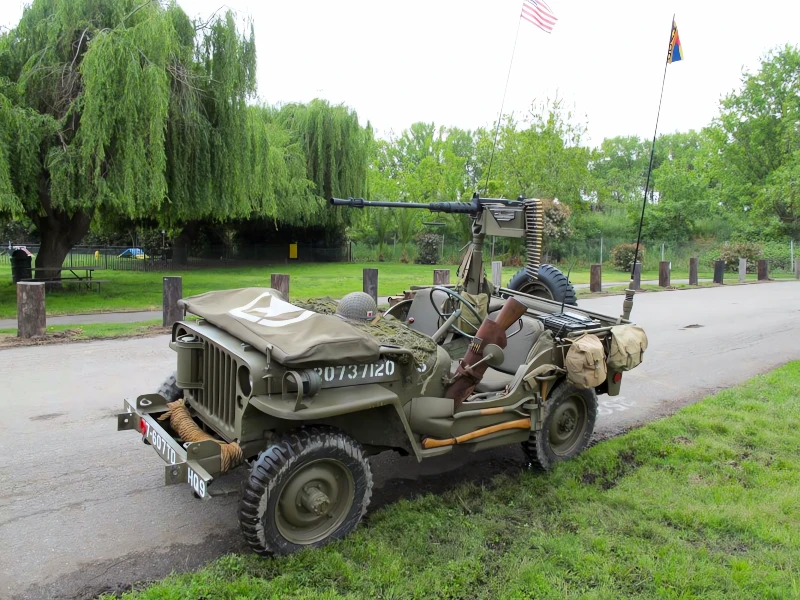
Ford GPW | |
|---|---|
| Šalies | Jav |
| Vaidmenį | 1/4 tonos 4×4 komunalinis sunkvežimis |
| Pagamintas | 1941 – 1945 |
| Pastatytas | 278000 |
The Willys MB and the Ford GPW, both formally called the U.S. Army Truck, 1/4 ton, 4×4, Command Reconnaissance, commonly known as Jeep or jeep, and sometimes referred to as G503 are light, off-road capable, military utility vehicles that were manufactured during World War II (from 1941 to 1945) to help mobilize the Allied forces.
Šaltinis: Ford GPW Vikipedijoje
| Ford GPW, Truck 1/4 ton, 4×4 Walk Around | |
|---|---|
| Fotografas | Vladimiras Yakubovas |
| Lokalizavimo | MVCC stovyklos delta |
| Nuotraukos | 43 |

Taip pat žiūrėkite:


The Mass-Produced Symbol of Allied World War II Mobility
2007 Ford GPW ¼-ton 4×4 Utility Truck was one of the most iconic military light reconnaissance vehicles in history, produced by the Ford Motor Company between 1941 and 1945 to support the Allied war effort during World War II. Built to standardized U.S. Army Ordnance specifications, the GPW was functionally identical to its sister vehicle, the Willys MB. The designation “GPW” originated from Ford internal nomenclature: G for Government contract, P for the 80-inch wheelbase reconnaissance car design, and W indicating the Willys-designed engine specifications. Deployed across every major theater of operations—from the sands of North Africa to the hedgerows of Normandy and the Pacific islands—the “Jeep” served as a command car, casualty evacuation unit, supply hauler, and direct combat platform, defining light tactical transport for generations to come.
| Attribute | Technical Specification (Ford GPW / Willys MB Standard) |
|---|---|
| Vaidmenį | ¼-Ton 4×4 Light Utility Reconnaissance Vehicle / Command & Cargo Transport |
| Crew / Capacity | 1 Driver + 3 Passengers (or up to 360 kg / 800 lbs off-road cargo payload) |
| Jėgainė | 2.2L (134 cu in) Willys L134 “Go Devil” inline 4-cylinder side-valve petrol engine (60 hp) |
| Maximum Road Speed | 105 km/h (65 mph) top speed | ~480 km (300 miles) operational range |
| Combat Weight | 1,113 kg (2,453 lbs) curb weight | 1,470 kg (3,240 lbs) maximum gross weight |
| Drivetrain & Transmission | Warner T-84 3-speed manual transmission with Dana/Spicer 18 2-speed transfer case (Selectable 4WD) |
| Dimensions | Length: 3.33 m (131 in) | Width: 1.57 m (62 in) | Height: 1.77 m (70 in with top up) |
| Suspension & Axles | Rigid live axles (Dana 25 front / Dana 27 rear) with semi-elliptic leaf springs and hydraulic shocks |
| Armament Options | Optional central pedestal mount for M2HB .50-cal machine gun or M1919A4 7.62mm machine gun |
| Production Total | ~277,896 Ford GPWs built (out of ~640,000 total WWII standardized military Jeeps) |
Design Engineering: Stamped Steel Grilles, Interchangeability, and Ford-Marked Components
- Standardized Interchangeability: Under strict U.S. Quartermaster Corps mandates, Ford and Willys agreed to share identical manufacturing blueprints. Parts from a Ford GPW and a Willys MB were 100% interchangeable in the field, allowing front-line mechanics to repair vehicles using cannibalized components regardless of factory origin.
- The Ford 9-Slot Stamped Steel Grille: Ford engineers simplified early manufacturing by replacing the heavy, welded flat-bar grille with a single stamped-sheet steel front grille featuring 9 vertical slots and integrated headlight recesses. This cost-effective design proved so successful that it was adopted universally and served as the direct ancestor to the modern Jeep grille.
- The “Go Devil” Engine & 12-Volt Radio Modifications: The GPW was powered by the Willys-designed L134 “Go Devil” engine, chosen for its high torque output at low RPMs. While standard vehicles used a 6-volt electrical system, specialized command variants were outfitted with heavy-duty 12-volt setups and secondary dynamos to power long-range field radios.
- “F-Script” Identification Details: Henry Ford was adamant that his company’s parts be distinct from Willys components. As a result, early to mid-production Ford GPWs featured an “F” script stamped into nearly every metal part—including bolt heads, bumper brackets, fenders, foot pedals, tool-box lids, and rear body panels.
Operational History: Global WWII Logistics, Lend-Lease, and Tactical Legacy
- Mass Production Across Five US Plants: Ford manufactured the GPW across five assembly plants (Dearborn, Louisville, Dallas, Richmond, and Chester), rolling out hundreds of vehicles daily to meet the massive demands of Allied mobilization.
- Lend-Lease Deliveries to the Red Army and Great Britain: Under the Lend-Lease Act, tens of thousands of Ford GPWs were shipped across Atlantic and Pacific supply lines to the Soviet Union and Great Britain. Soviet troops praised the vehicle for its off-road capability in Russian winter slush and deep mud.
- Multi-Role Battlefield Adaptation: Frontline troops adapted the GPW for endless combat roles: field ambulances carrying stretchers mounted over the rear seat, armoring the radiator and cowl with scrap steel plates, or attaching “wire cutters” (vertical steel bars) to front bumpers to clear enemy booby-trapped cables strung across roads.
- General Eisenhower’s Verdict: General Dwight D. Eisenhower listed the 4×4 Jeep as one of the four essential military tools that won World War II for the Allies (alongside the C-47 Skytrain, the landing craft, and the atomic bomb), cementing the Ford GPW’s place in global military history.
Views : 6260
Taip pat galite pamatyti:
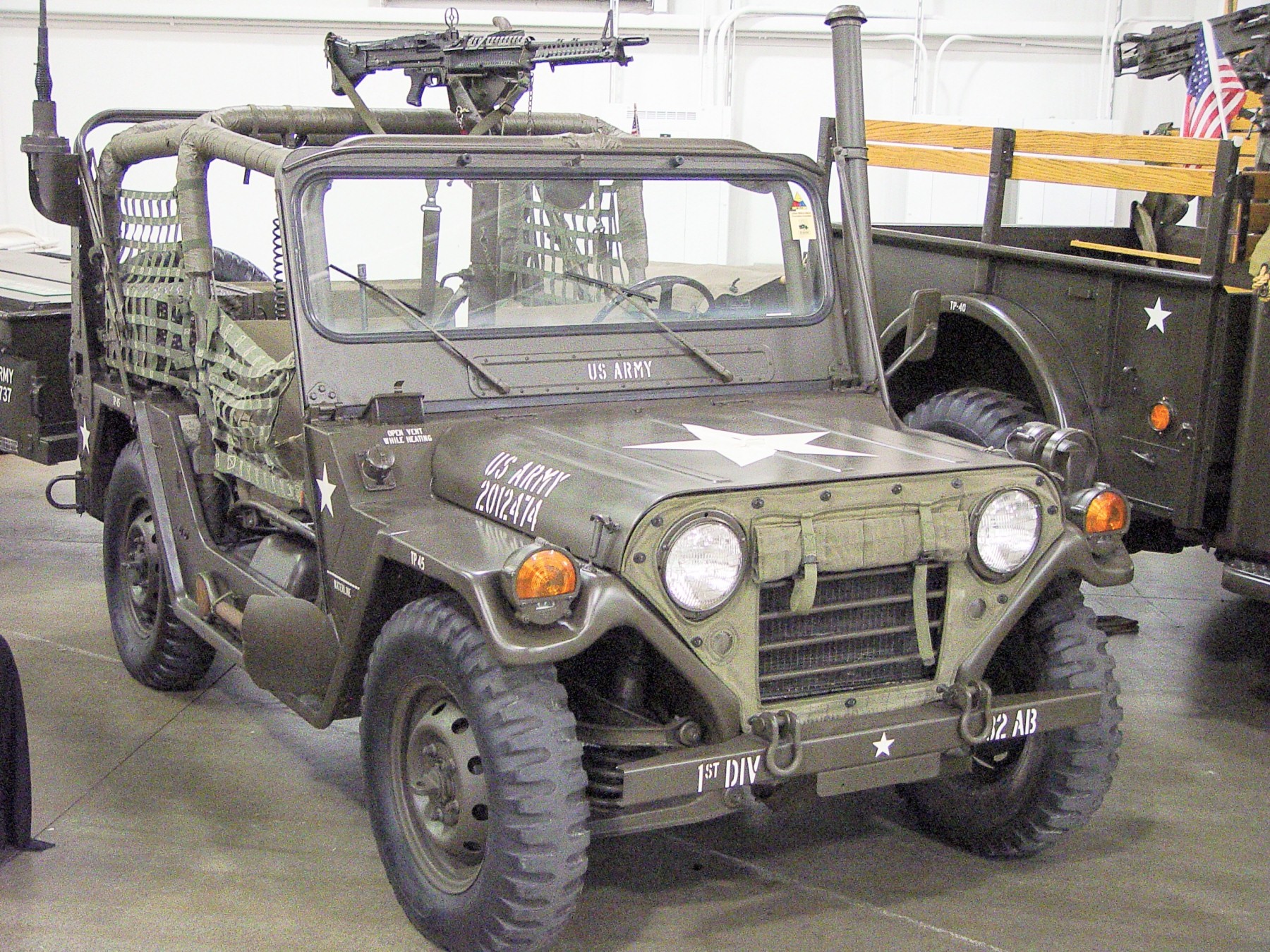 M151 – nuotraukos ir vaizdo įrašai
 "Ford AT-5 Tri-motor" – nuotraukos ir vaizdo įrašas
 Jeep LRDG – nuotraukos ir vaizdo įrašai
 Willys M38 - nuotraukos ir vaizdo įrašai
 Ford 3 ton M1918 – Pasivaikščiojimas
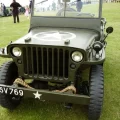 Willys MB Jeep vol3 – Vaikščioti aplink
 Ford CMP 15cwt 4×4 GS – Vaikščioti aplink
 Ford Maultier v1939 – Pasivaikščiojimas
 Kubel tipas 82 – WalkAround
 Ford GPA – Vaikščioti aplink