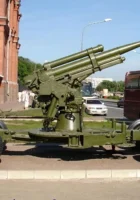
52-K 85mm

Cannone di difesa aerea da 85 mm M1939 (52-K)

PaeseURSS
PeriodoSeconda guerra mondiale
digitarePistola per la difesa aerea
Equipaggio7

Le Cannone di difesa aerea da 85 mm M1939 (52-K) was an 85-mm Soviet air defense gun, developed under guidance of leading Soviet designers M. N. Loginov and G. D. Dorokhin. This gun was successfully used throughout the German-Soviet War against level bombers and other high- and medium-altitude targets. In emergencies they were utilized as powerful anti-tank weapons. The barrel of 52-K was the base for the family of 85-mm Soviet tank guns. Crews of 85-mm AD guns shot down 4,047 Axis aircraft. The mean quantity of 85-mm ammunition required to shoot down one enemy plane was 598 rounds. After the war some 52-Ks were refitted for peaceful purposes as anti-avalanche guns in a mountainous terrain. Virtually every country behind the Iron Curtain received this gun after World War II for their air defense. In the Soviet Union itself, these guns were largely superseded by the 100 and 130 mm guns./p>

fonte:52-K su Wikipedia

Continua a leggere

Visualizzazioni : 7440

Churchill Mk1

Churchill Mk1

PaeseRegno unito
ArgomentoCarri armati della seconda guerra mondiale
digitareFanteriaCarro armato
Descrizione

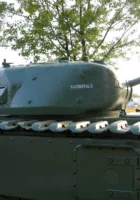
Album di 38 foto walk-around di un carro armato «Churchill Mk1»

Galleria fotografica di un carro armato Churchill Mk1, il Churchill Mk1 era un carro armato pesante di fanteria britannico utilizzato nella seconda guerra mondiale

Continua a leggere

Views : 3744

P-51D Mustang

P-51D Mustang

PaeseUsa
Ruolo

Caccia monoposto

Primo voloIl 26 ottobre 1940
Costruito15000+0

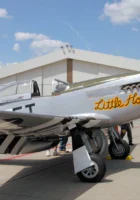
L'aviazione nordamericana P-51 Mustang was an American long-range, single-seat fighter and fighter-bomber used during World War II, the Korean War and other conflicts. The Mustang was conceived, designed and built by North American Aviation (NAA) in response to a specification issued directly to NAA by the British Purchasing Commission. The prototype NA-73X airframe was rolled out on 9 September 1940, 102 days after the contract was signed and, with an engine installed, first flew on 26 October. The Mustang was originally designed to use the Allison V-1710 engine, which had limited high-altitude performance. It was first flown operationally by the Royal Air Force (RAF) as a tactical-reconnaissance aircraft and fighter-bomber. The addition of the Rolls-Royce Merlin to the P-51B/C model transformed the Mustang’s performance at altitudes above 15,000 ft, giving it a performance that matched or bettered the majority of the Luftwaffe’s fighters at altitude. The definitive version, the P-51D, was powered by the Packard V-1650-7, a license-built version of the Rolls-Royce Merlin 60 series two-stage two-speed supercharged engine, and armed with six .50 caliber (12.7 mm) M2 Browning machine guns.

fonte:P-51D Mustang su Wikipedia

Continua a leggere

Visualizzazioni : 5690

SdKfz 02 - Kettenkrad - Passeggiata

SdKfz 02 – Kettenkrad

CountryGermany
TypeLight half-track gun tractor
In service1941–1945

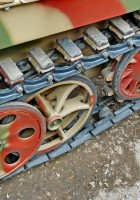
Le SdKfz 2, meglio conosciuto come Kleines Kettenkraftrad HK 101 o Kettenkrad in breve (dove Ketten significa "catena" o "tracce" e krad è l'abbreviazione militare della parola tedesca Kraftrad, il termine amministrativo tedesco per moto), ha iniziato la sua vita come trattore leggero per le truppe aviotrasportate. Il veicolo è stato progettato per essere consegnato da aerei Junkers Ju 52, anche se non con paracadute. Il veicolo aveva il vantaggio di essere l'unico trattore a pistola abbastanza piccolo da stare all'interno della stiva dello Ju 52, ed era il più leggero veicolo militare tedesco prodotto in serie ad utilizzare il complesso Schachtellaufwerk sovrapposto e interfogliato ruote stradali utilizzate su quasi tutti i veicoli militari tedeschi a metà pista della seconda guerra mondiale.

fonte: Kettenkrad su Wikipedia

Continua a leggere

Views : 14136

SdKfz 162 - Jagdpanzer IV

Jagdpanzer IV – Sdkfz.162

PaeseGermania
digitareCacciacarri
ProdottoDicembre 1943 – Aprile 1945
Costruito2000+

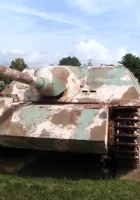
Le Jagdpanzer IV, Sd.Kfz. 162, era un cacciacarri tedesco basato sul telaio Panzer IV e costruito in tre varianti principali. Come uno dei progetti Jagdpanzer senza torretta in stile casematta (cacciacarri, letteralmente "carro armato da caccia"), fu sviluppato contro la volontà di Heinz Guderian, l'ispettore generale delle Panzertruppen, in sostituzione dello Sturmgeschütz III (StuG III). Guderian si oppose all'inutile, ai suoi occhi, deviazione di risorse dalla produzione di carri armati Panzer IV, poiché lo Sturmgeschütz III era ancora più che adeguato al suo ruolo.

fonte: Wikipedia

Continua a leggere

Visualizzazioni : 3871

Cacciatorpediniere tedesco Z-7 1942 - Trombettista 05793

Trumpeter

Ref 05793
digitareKit modello
Scala1/700
Argomento

German Destroyer Z-7 1942

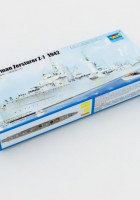
Un modello del marchio Trumpeter il kit: GGerman Destroyer Z-7 1942 – Trumpeter 05793.

Features : Hull -slide-molded upper hull and lower hull -Deck w/fine detail -Either waterline or full-hull version can be assembled -Phote Etched parts for mast, stand etc.

Il cacciatorpediniere Z-7 appartiene al tipo 1934A, noto anche come Z5 calss, lanciato il 16 luglio 1936.Entrato in servizio il 9 settembre 1937.Il cacciatorpediniere della lezione di progettazione del tipo del 1934 modificò il design dell'ospite della nave e migliorò la manutenzione del mare, la costruzione accelerata del design semplificato migliorò, così alcune navi e persino il servizio di sincronismo del 1934, ma utilizzato solo per sparare in mare vecchio cannone, nella prestazione totale non può essere paragonato e il cacciatorpediniere britannico. Combattimenti usati principalmente come uso di minatori. La nave infine il 2 maggio 1942 dalla HMS Edinburgh affondata.

Source: Trumpeter

Continua a leggere

Visualizzazioni : 1692

MK.23 MTVR Cargo Truck - Trombettista 01011

Trumpeter

Ref 01011
digitareKit modello
Scala1/35
Argomento

MK.23 MTVR Cargo Truck

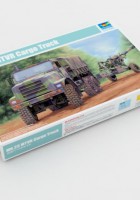
Un modello del marchio Trumpeter il kit: MK.23 MTVR Cargo Truck – Trumpeter 01011.

Features : Detailed multi-directional slide-molded cab. > Full drive train assembly complete with engine transmission, differential housing and suspension units. > The main tires are hollow rubber with very good tread pattern included as well as sidewall details consisting of raised section ribs. > Wheel hubs are in great details > The windshield and side windows are made of clear parts. > Photo-etched parts included

Medium Tactical Vehicle Replacement (MTVR) is a six-wheel drive all-terrain vehicle used by the USMC and US Navy. It is designed to replace the old M939 tactical trucks, and was first fielded in 1998, after the contract was awarded to Oshkosh Truck Corporation. The MTVR comes in several variants, for a wide spectrum of tasks. It offers a major improvement in off-road capability. The MTVR is often referred to as a 7-Ton as this denotes the vehicle’s off-road cargo capacity. The MTVR’s maximum payload on paved surfaces is 15 tons. The MTVR is the Marine Corps prime mover for the M777 howitzer, fuel and water assets, troops and a wide variety of equipment. Its wide versatility and off-road capability make the MTVR an integral part of the Marine Corps logistical backbone.

Source: Trumpeter

Continua a leggere

Visualizzazioni : 2138

Douglas C-47

Douglas C-47 Skytrain

PaeseUsa
digitareAerei da trasporto militare
Primo voloIl 23 dicembre 1941
Costruito10174

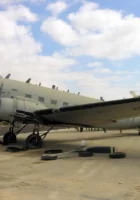
Galleria fotografica di un Douglas C-47 Dakota, The Douglas C-47 Skytrain or Dakota (RAF designation) is a military transport aircraft that was developed from the Douglas DC-3 airliner. It was used extensively by the Allies during World War II and remained in front line service with various military operators through the 1950s. The C-47 differed from the civilian DC-3 in numerous modifications that included being fitted with a cargo door and a strengthened floor. During World War II, the armed forces of many countries used the C-47 and modified DC-3s for the transport of troops, cargo, and wounded. The U.S. Naval designation was R4D. More than 10,000 aircraft were produced in Long Beach and Santa Monica, California and Oklahoma City, Oklahoma. The Oklahoma City plant produced 5,354 C-47s from March 1943 until August 1945.

fonte: Wikipedia

Continua a leggere

Views : 8008