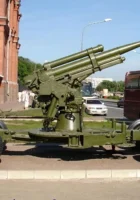
52-K 85mm

Pistola de defesa aérea M1939 de 85 mm (52-K)

PaísURSS
PeríodoSegunda Guerra Mundial
TipoArma de defesa aérea
tripulação7

O Pistola de defesa aérea M1939 de 85 mm (52-K) was an 85-mm Soviet air defense gun, developed under guidance of leading Soviet designers M. N. Loginov and G. D. Dorokhin. This gun was successfully used throughout the German-Soviet War against level bombers and other high- and medium-altitude targets. In emergencies they were utilized as powerful anti-tank weapons. The barrel of 52-K was the base for the family of 85-mm Soviet tank guns. Crews of 85-mm AD guns shot down 4,047 Axis aircraft. The mean quantity of 85-mm ammunition required to shoot down one enemy plane was 598 rounds. After the war some 52-Ks were refitted for peaceful purposes as anti-avalanche guns in a mountainous terrain. Virtually every country behind the Iron Curtain received this gun after World War II for their air defense. In the Soviet Union itself, these guns were largely superseded by the 100 and 130 mm guns./p>

Fonte:52-K na Wikipédia

Continue lendo

Views : 7440

P-51D Mustang

P-51D Mustang

PaísEua
Papel

Lutador de assento único

Primeiro voo26 de outubro de 1940
Construído15000+0

A Aviação Norte-Americana P-51 Mustang was an American long-range, single-seat fighter and fighter-bomber used during World War II, the Korean War and other conflicts. The Mustang was conceived, designed and built by North American Aviation (NAA) in response to a specification issued directly to NAA by the British Purchasing Commission. The prototype NA-73X airframe was rolled out on 9 September 1940, 102 days after the contract was signed and, with an engine installed, first flew on 26 October. The Mustang was originally designed to use the Allison V-1710 engine, which had limited high-altitude performance. It was first flown operationally by the Royal Air Force (RAF) as a tactical-reconnaissance aircraft and fighter-bomber. The addition of the Rolls-Royce Merlin to the P-51B/C model transformed the Mustang’s performance at altitudes above 15,000 ft, giving it a performance that matched or bettered the majority of the Luftwaffe’s fighters at altitude. The definitive version, the P-51D, was powered by the Packard V-1650-7, a license-built version of the Rolls-Royce Merlin 60 series two-stage two-speed supercharged engine, and armed with six .50 caliber (12.7 mm) M2 Browning machine guns.

Fonte:Mustang P-51D na Wikipédia

Continue lendo

Views : 5690

SdKfz 02 - Kettenkrad - Ande por aí

SdKfz 02 – Kettenkrad

CountryGermany
TypeLight half-track gun tractor
In service1941–1945

O SdKfz 2, mais conhecido como o Kleines Kettenkraftrad HK 101 ou Kettenkrad para abreviar (onde Ketten significa "cadeia" ou "trilhas" e krad é a abreviação militar da palavra alemã Kraftrad, o termo administrativo alemão para motocicleta), começou sua vida como um trator leve para tropas aéreas. O veículo foi projetado para ser entregue por aeronaves Junkers Ju 52, embora não por paraquedas. O veículo tinha a vantagem de ser o único trator de armas pequeno o suficiente para caber dentro do porão do Ju 52, e era o veículo militar alemão mais leve produzido em massa para usar o complexo Schachtellaufwerk sobreposto e intercalado rodas de estrada usadas em quase todos os veículos militares alemães de meia pista da Segunda Guerra Mundial.

Fonte: Kettenkrad na Wikipédia

Continue lendo

Views : 14136

SdKfz 162 - Jagdpanzer IV

Jagdpanzer IV - Sdkfz.162

PaísAlemanha
TipoDestruidor de Tanques
ProduzidoDezembro de 1943 - Abril de 1945
Construído2000+

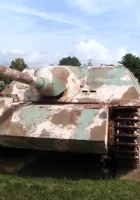
O Jagdpanzer IV, Sd.Kfz. 162, was a German tank destroyer based on the Panzer IV chassis and built in three main variants. As one of the casemate-style turretless Jagdpanzer (tank destroyer, literally “hunting tank”) designs, it was developed against the wishes of Heinz Guderian, the inspector general of the Panzertruppen, as a replacement for the Sturmgeschütz III (StuG III). Guderian objected against the needless, in his eyes, diversion of resources from Panzer IV tank production, as the Sturmgeschütz III was still more than adequate for its role.

Fonte: Wikipédia

Continue lendo

Visualizações: 3871

Destruidor Alemão Z-7 1942 - Trompetista 05793

Trumpeter

Ref 05793
TipoKit modelo
Escala1/700
Tópico

German Destroyer Z-7 1942

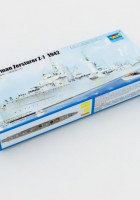
Um modelo da marca Trumpeter o kit: GGerman Destroyer Z-7 1942 – Trumpeter 05793.

Features : Hull -slide-molded upper hull and lower hull -Deck w/fine detail -Either waterline or full-hull version can be assembled -Phote Etched parts for mast, stand etc.

O destruidor Z-7 pertence ao tipo 1934A, também conhecido como o Z5 calss, lançado em 16 de julho de 1936.Entrou em serviço em 9 de setembro de 1937.O destruidor de 1934 tipo de projeto de projeto de navio projeto modificado design de host e melhorar a manutenção do mar, a construção acelerada de design simplificado melhorou, então alguns navios e até mesmo o serviço de sincronização de 1934, mas usado apenas para o mar disparando arma velha, no desempenho total não pode ser comparado e o destruidor britânico. Lutando principalmente usado como uso de mina. O navio finalmente em 2 de maio de 1942 pelo HMS Edimburgo afundou.

Source: Trumpeter

Continue lendo

Visualizações: 1692

MK.23 MTVR Caminhão de Carga - Trompetista 01011

Trumpeter

Ref 01011
TipoKit modelo
Escala1/35
Tópico

MK.23 MTVR Cargo Truck

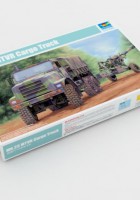
Um modelo da marca Trumpeter o kit: MK.23 MTVR Cargo Truck – Trumpeter 01011.

Features : Detailed multi-directional slide-molded cab. > Full drive train assembly complete with engine transmission, differential housing and suspension units. > The main tires are hollow rubber with very good tread pattern included as well as sidewall details consisting of raised section ribs. > Wheel hubs are in great details > The windshield and side windows are made of clear parts. > Photo-etched parts included

Medium Tactical Vehicle Replacement (MTVR) is a six-wheel drive all-terrain vehicle used by the USMC and US Navy. It is designed to replace the old M939 tactical trucks, and was first fielded in 1998, after the contract was awarded to Oshkosh Truck Corporation. The MTVR comes in several variants, for a wide spectrum of tasks. It offers a major improvement in off-road capability. The MTVR is often referred to as a 7-Ton as this denotes the vehicle’s off-road cargo capacity. The MTVR’s maximum payload on paved surfaces is 15 tons. The MTVR is the Marine Corps prime mover for the M777 howitzer, fuel and water assets, troops and a wide variety of equipment. Its wide versatility and off-road capability make the MTVR an integral part of the Marine Corps logistical backbone.

Source: Trumpeter

Continue lendo

Visualizações : 2138

Douglas C-47

Douglas C-47 Skytrain

PaísEua
TipoAeronaves de transporte militar
Primeiro voo23 de dezembro de 1941
Construído10174

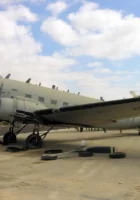
Galeria de fotos de um Douglas C-47 Dakota, The Douglas C-47 Skytrain or Dakota (RAF designation) is a military transport aircraft that was developed from the Douglas DC-3 airliner. It was used extensively by the Allies during World War II and remained in front line service with various military operators through the 1950s. The C-47 differed from the civilian DC-3 in numerous modifications that included being fitted with a cargo door and a strengthened floor. During World War II, the armed forces of many countries used the C-47 and modified DC-3s for the transport of troops, cargo, and wounded. The U.S. Naval designation was R4D. More than 10,000 aircraft were produced in Long Beach and Santa Monica, California and Oklahoma City, Oklahoma. The Oklahoma City plant produced 5,354 C-47s from March 1943 until August 1945.

Fonte: Wikipédia

Continue lendo

Views : 8008