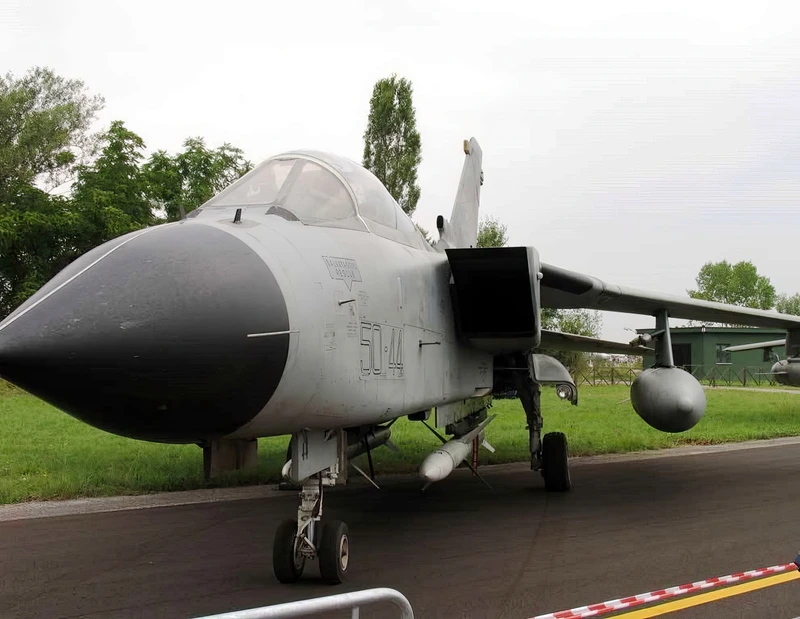
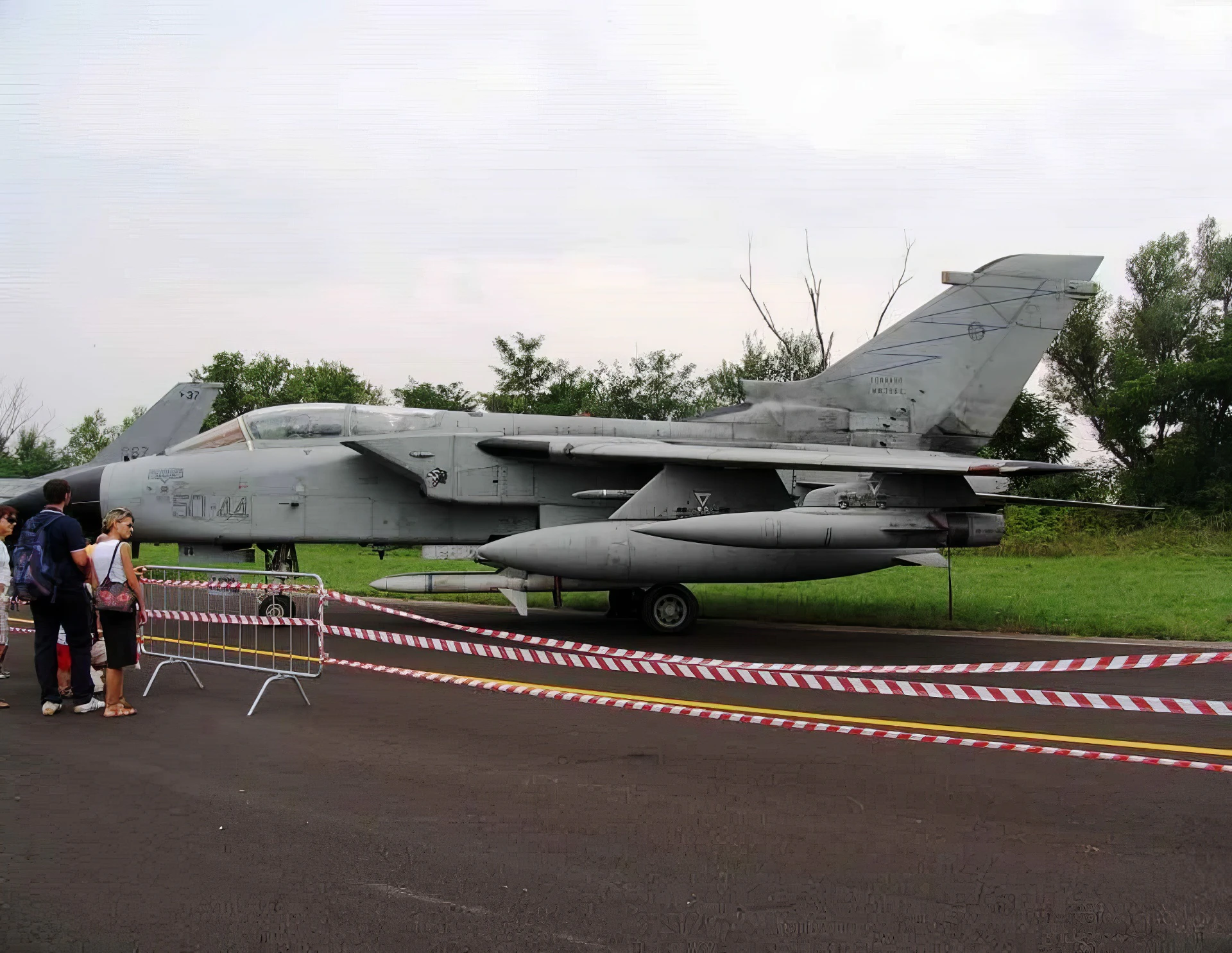
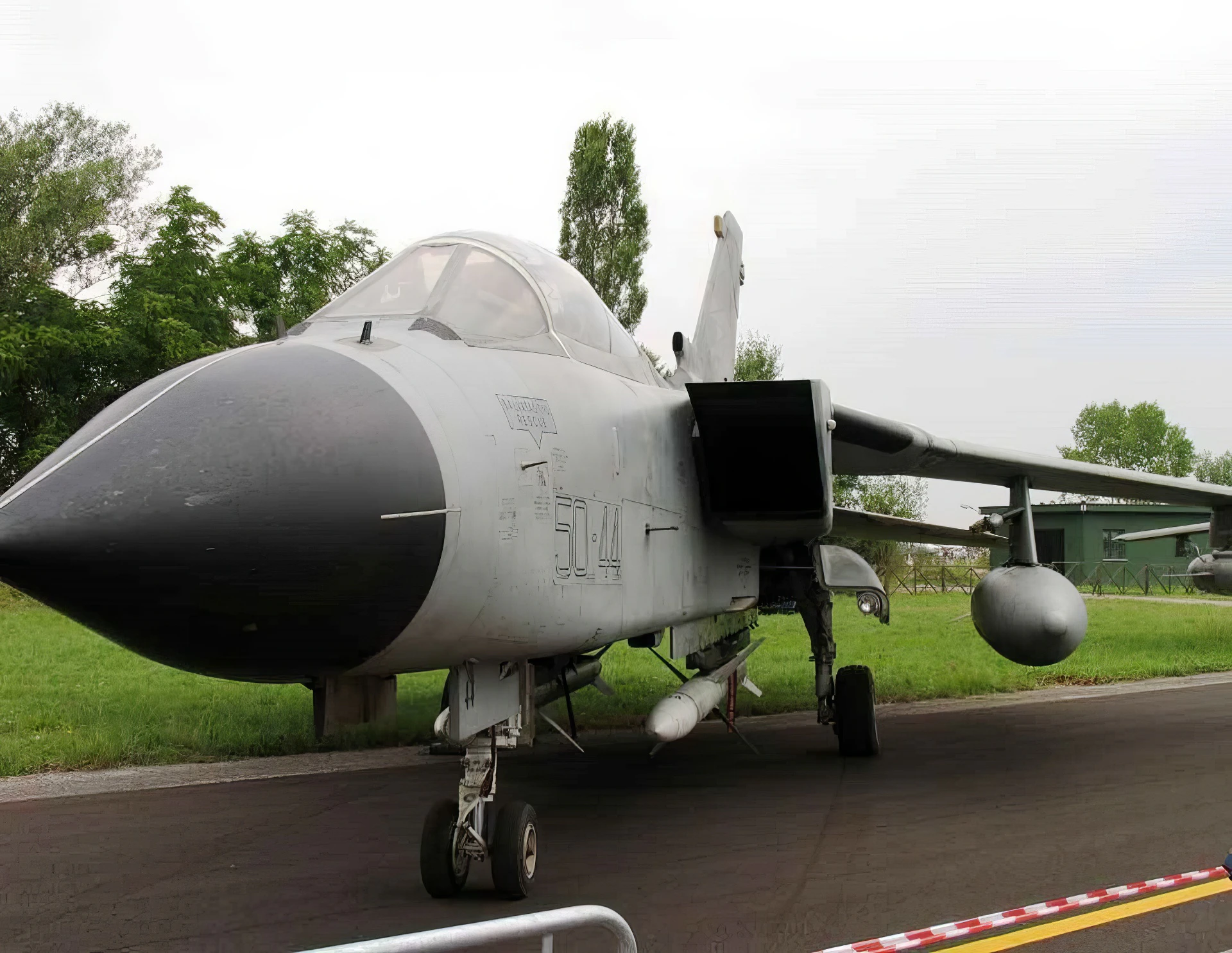
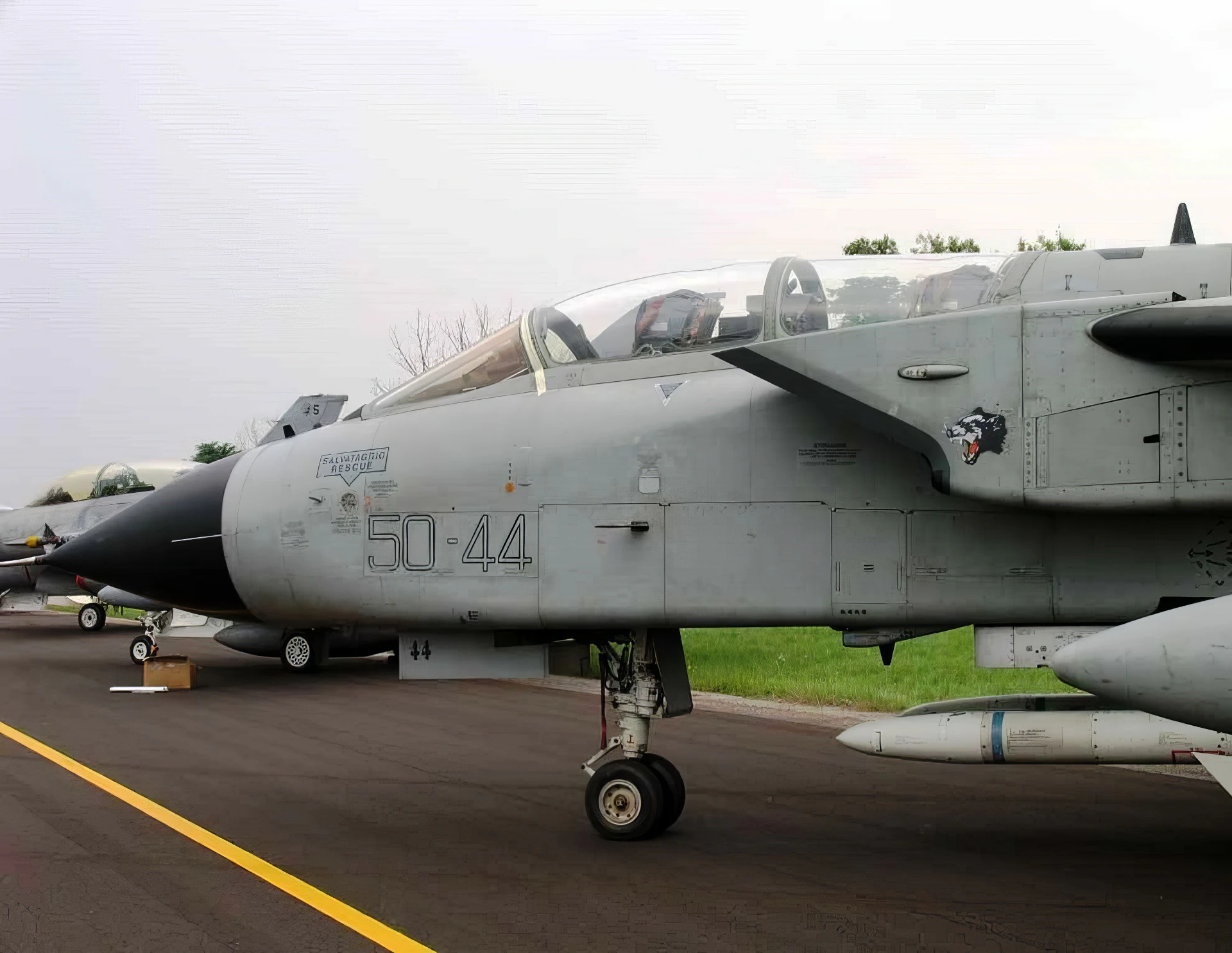
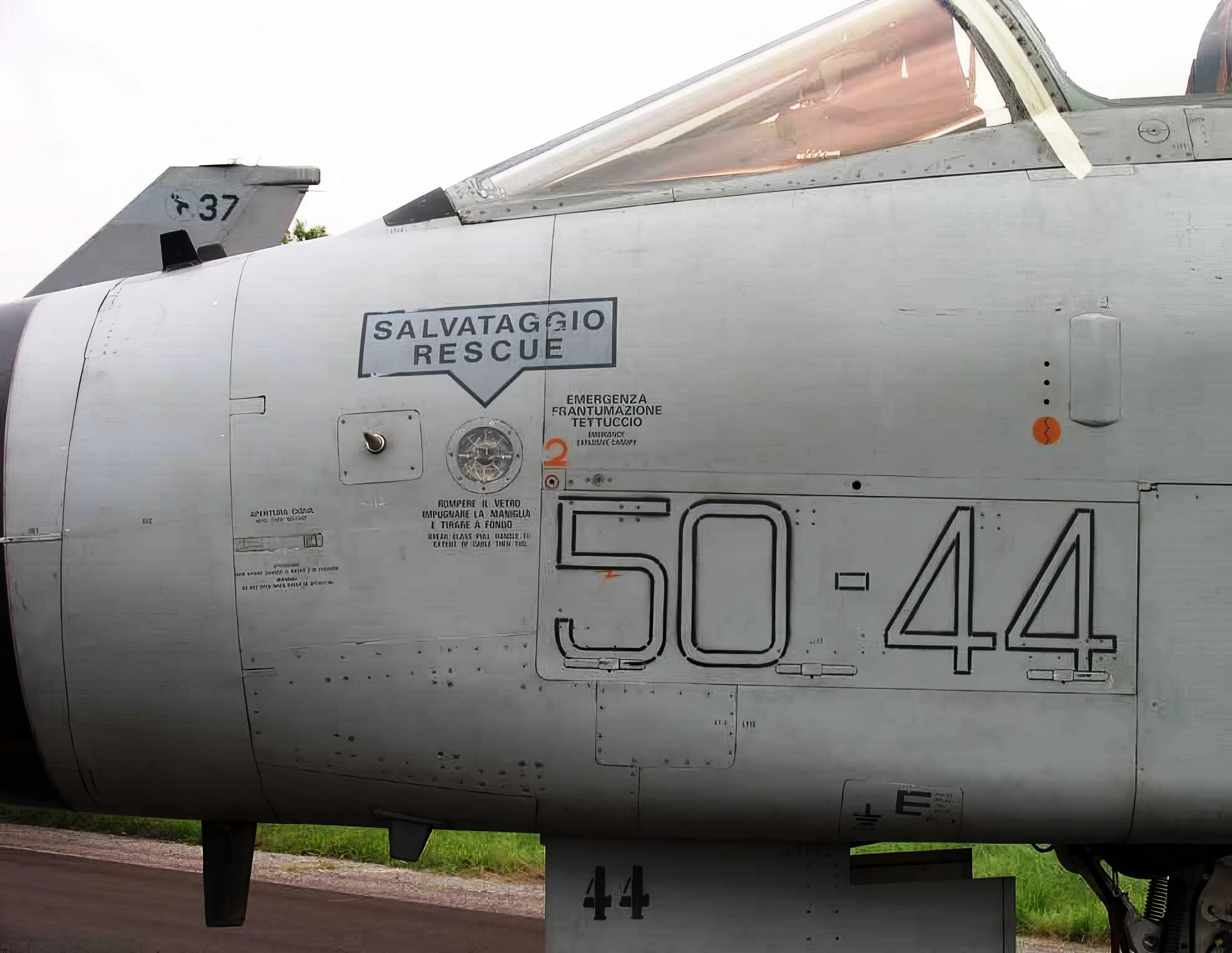
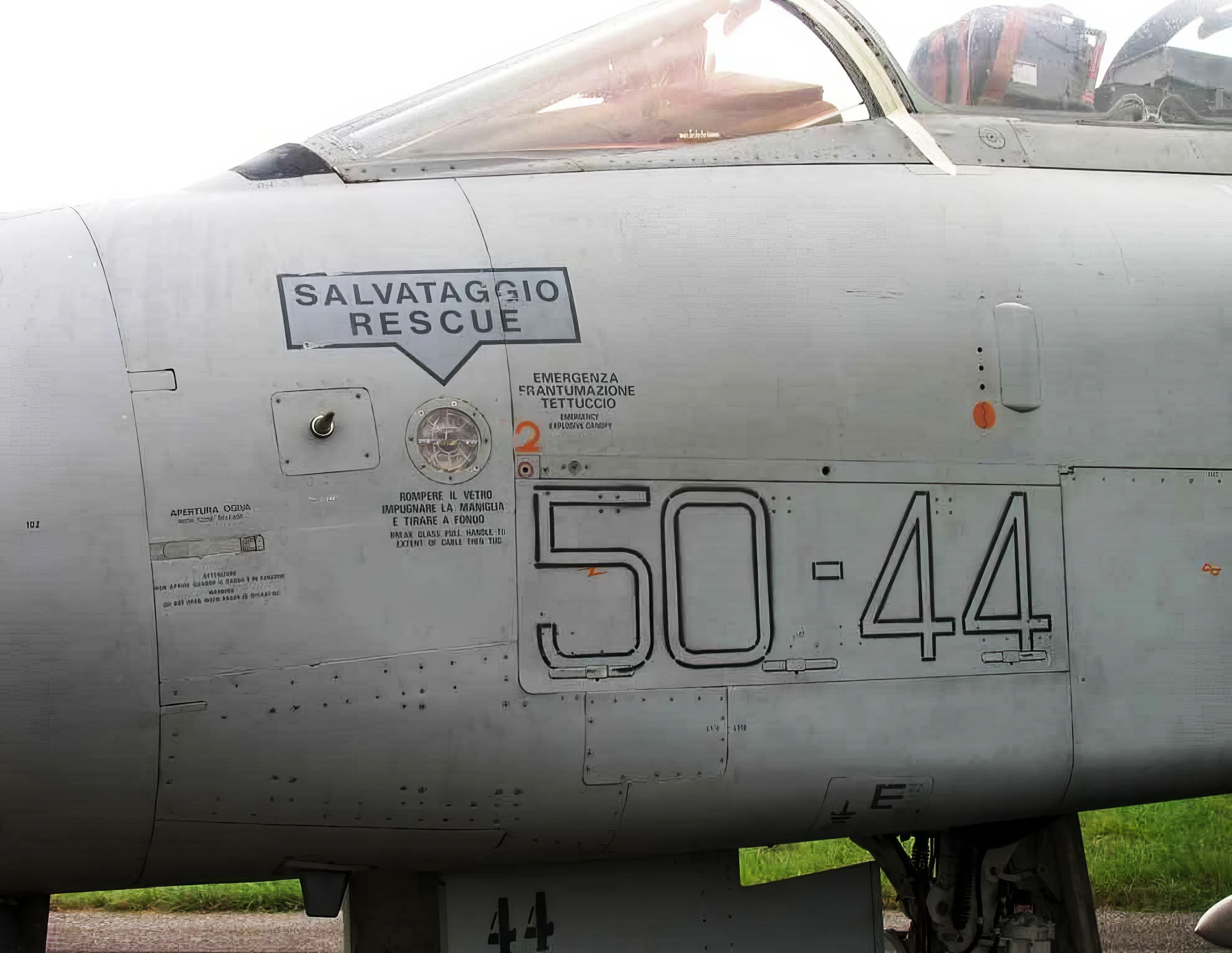
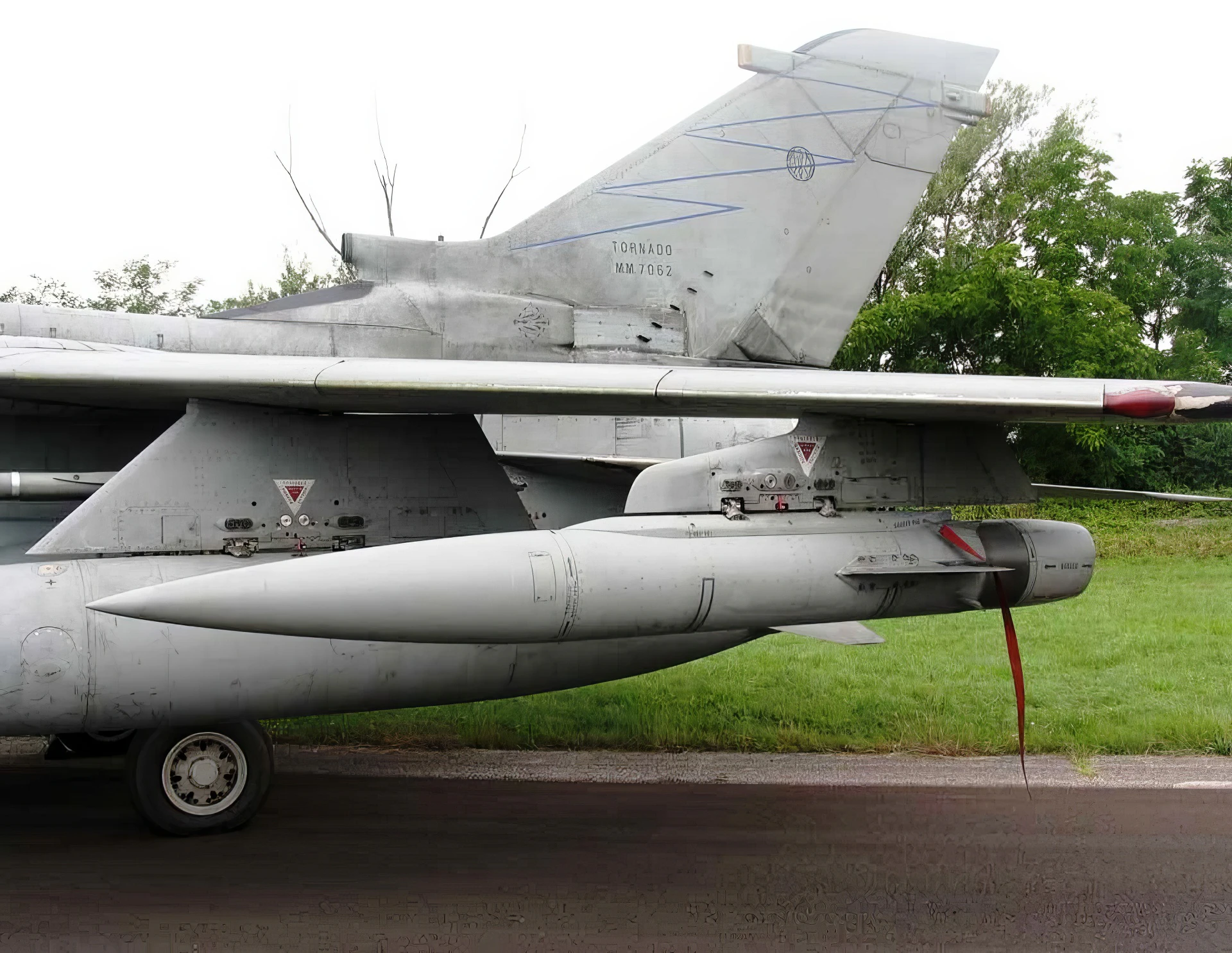
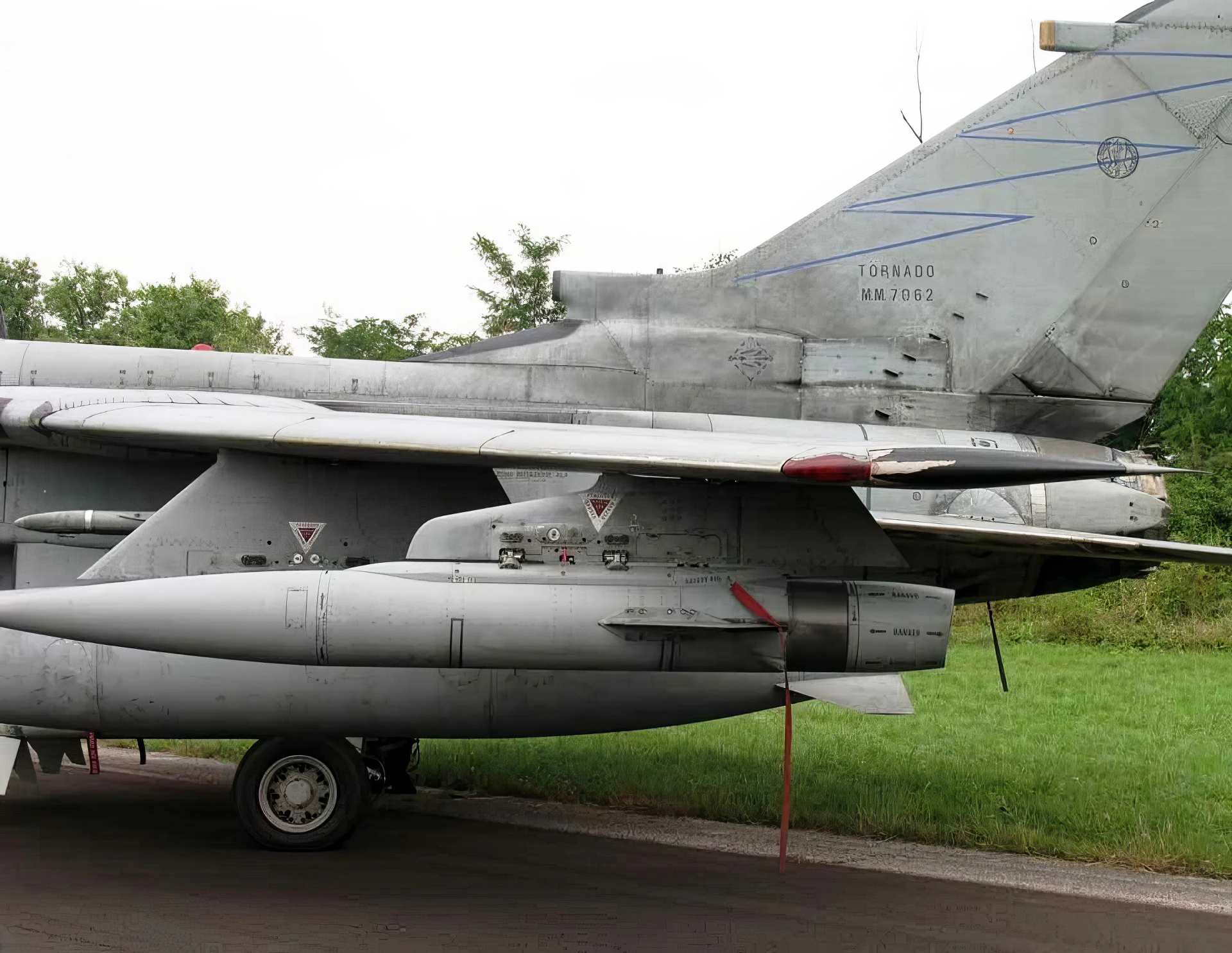
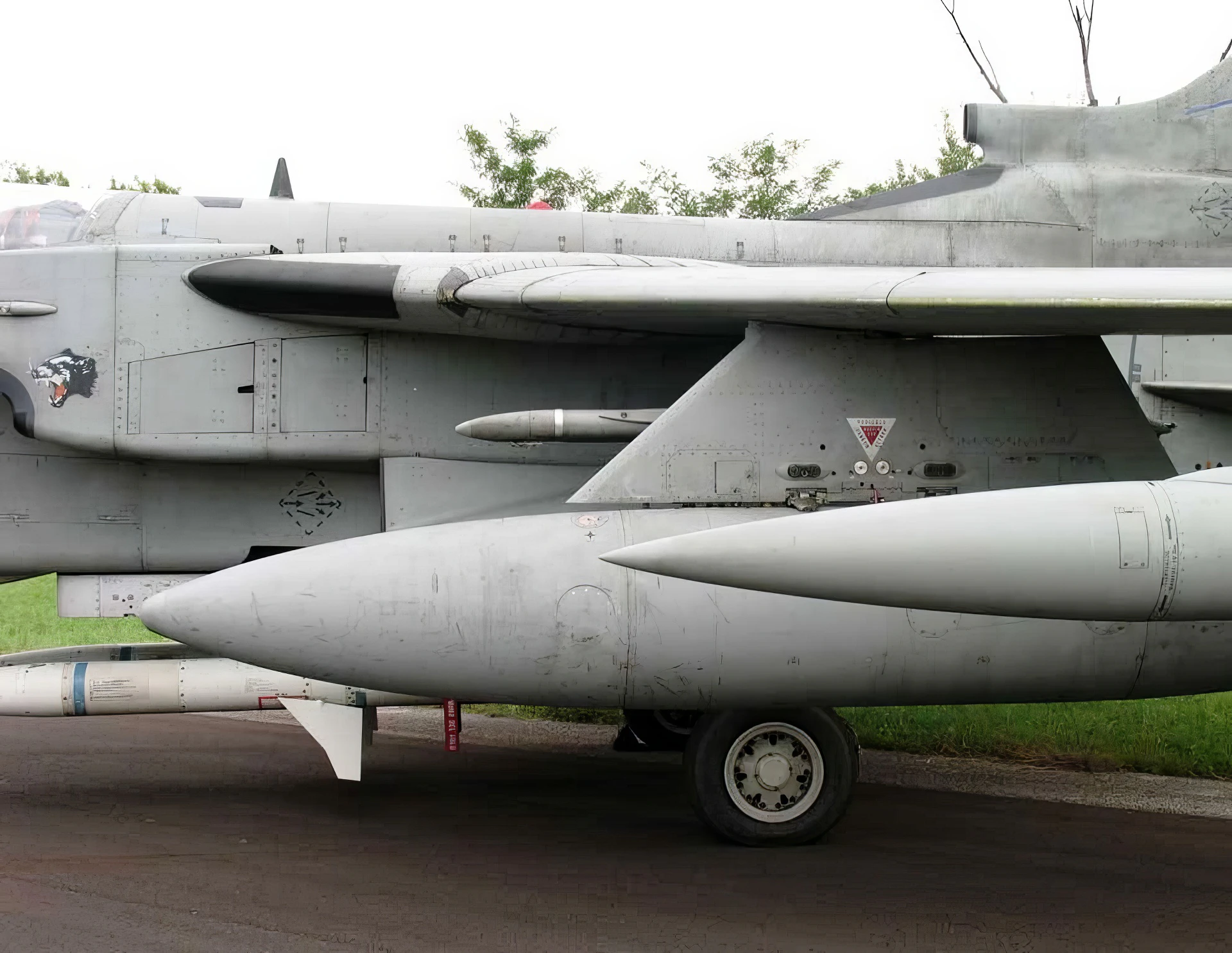
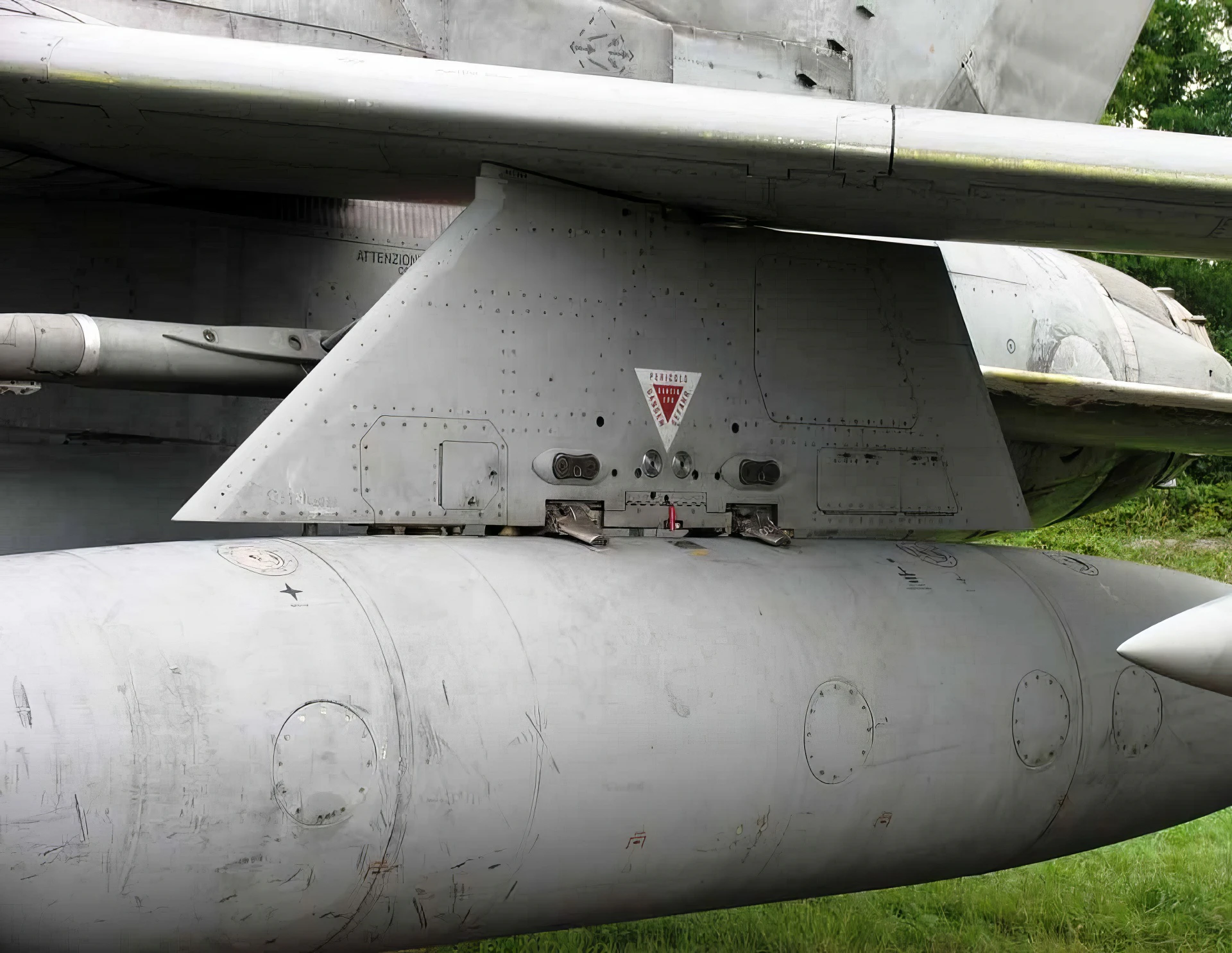
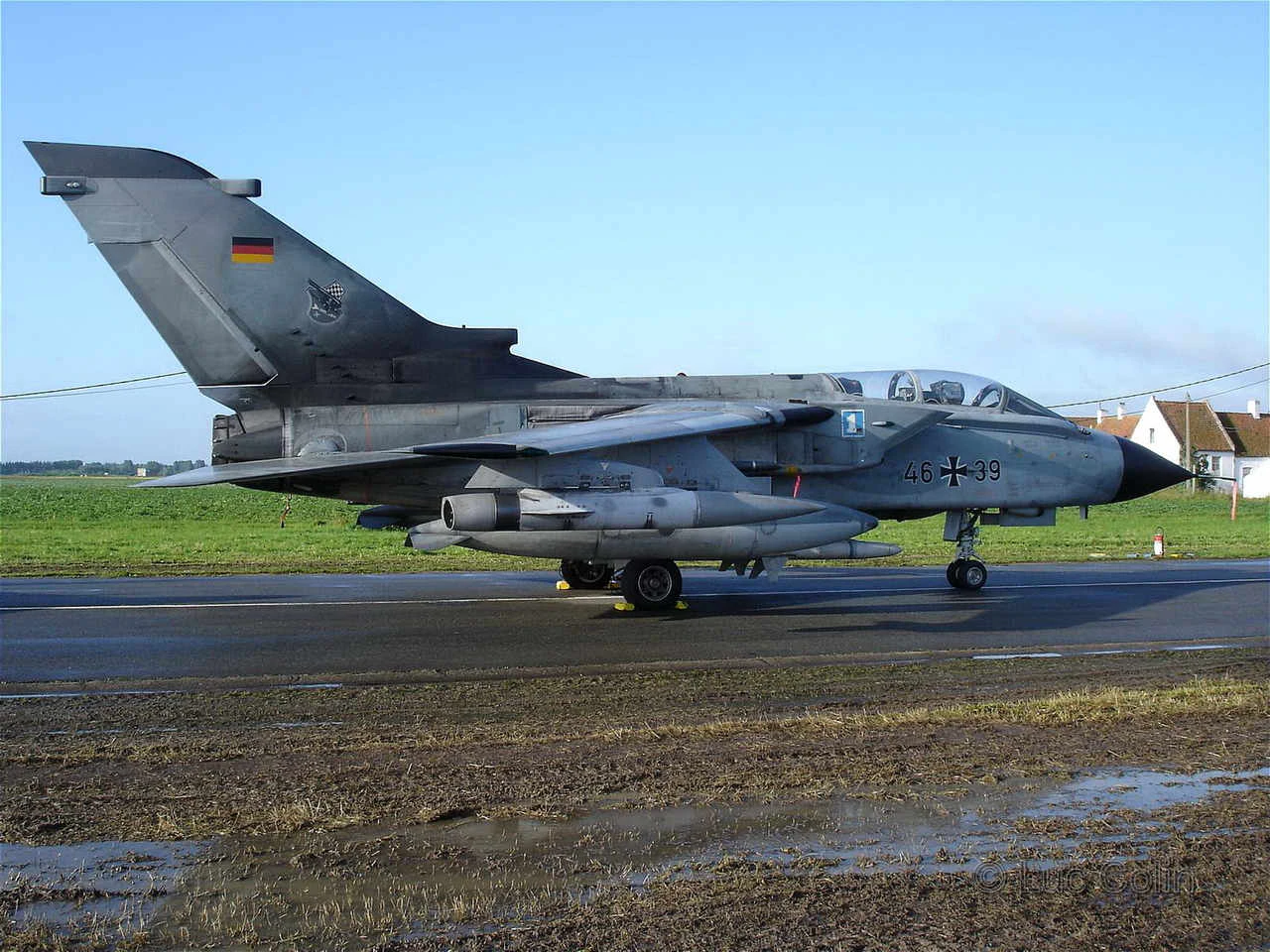
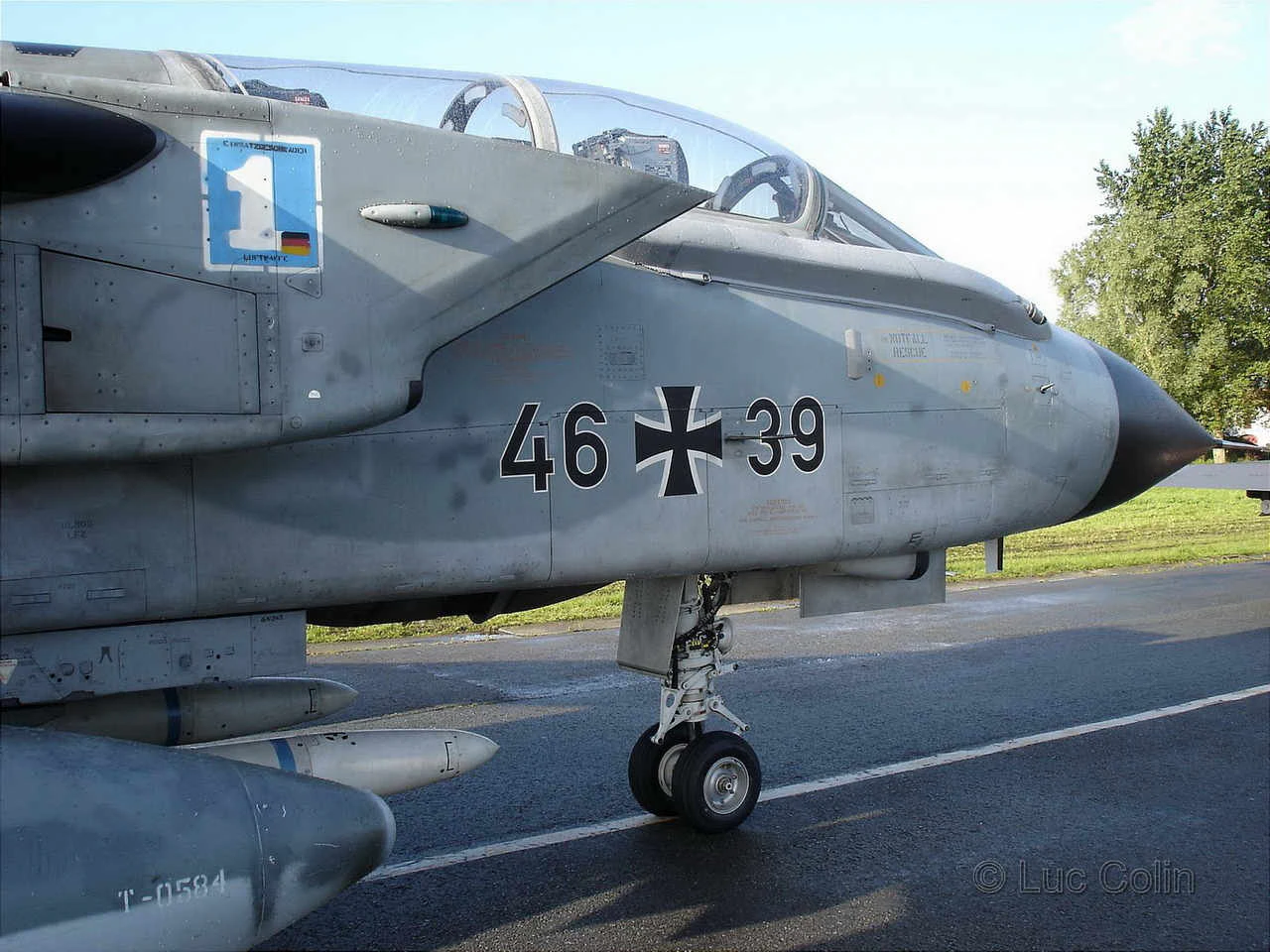
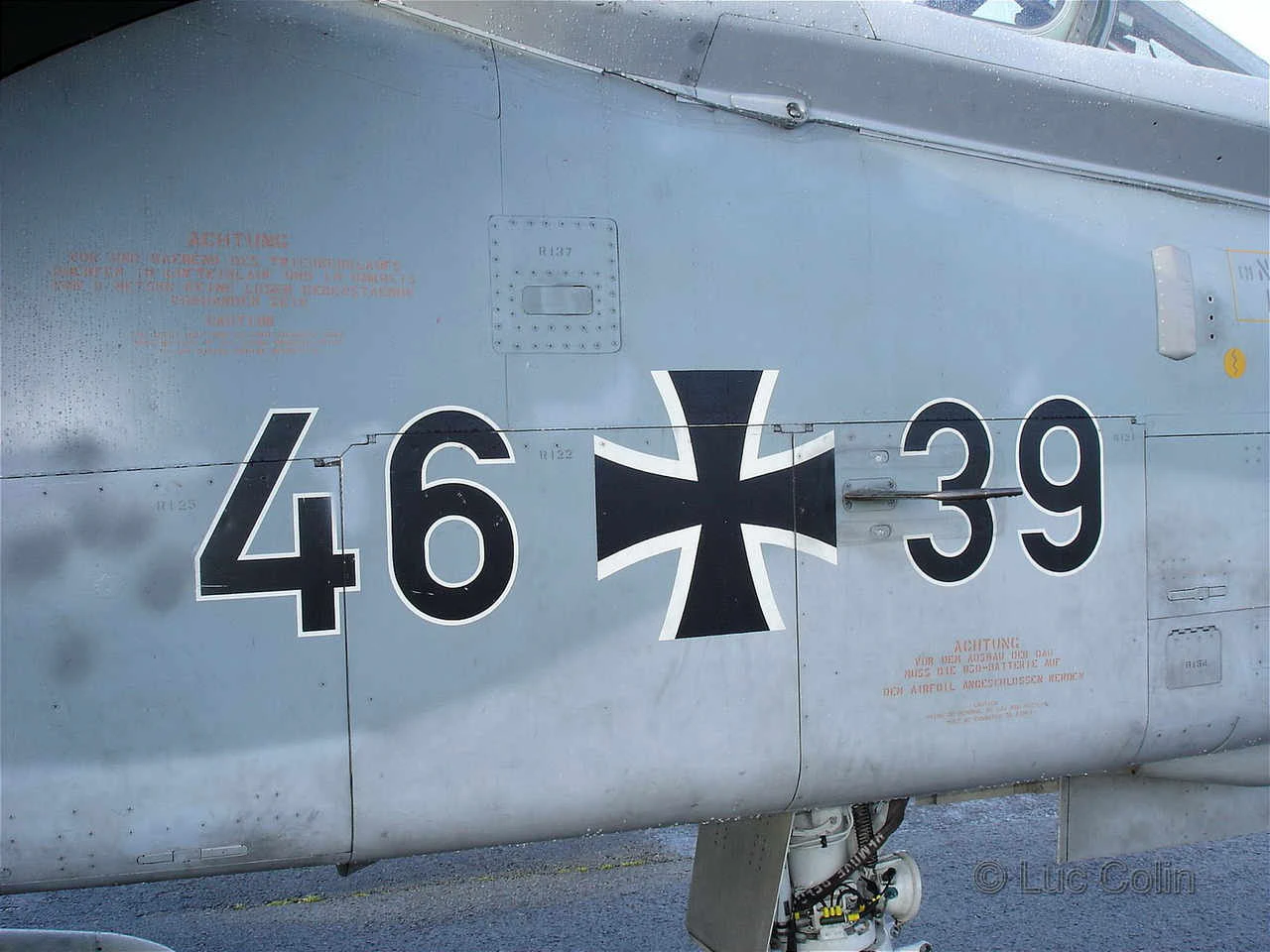
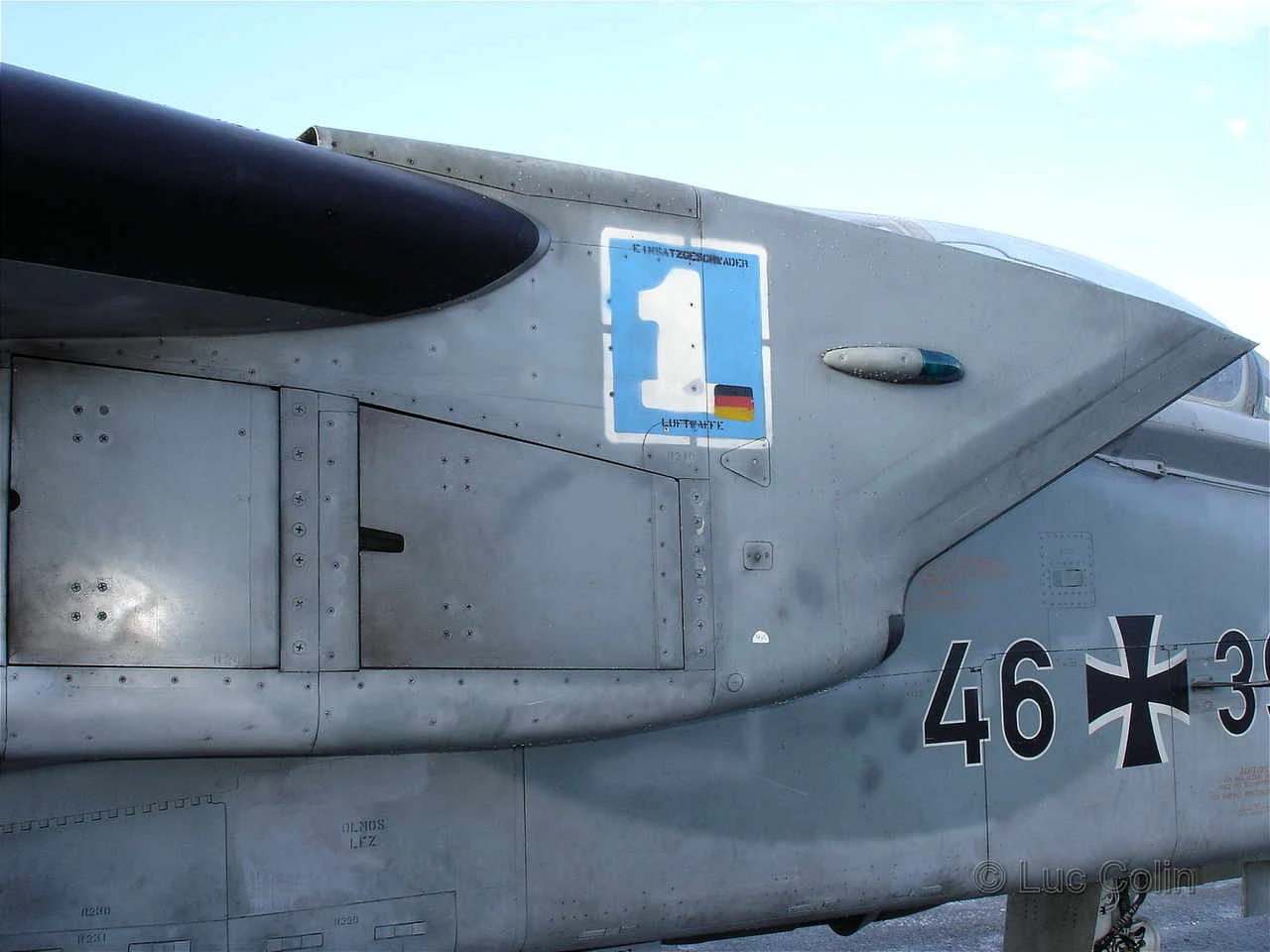
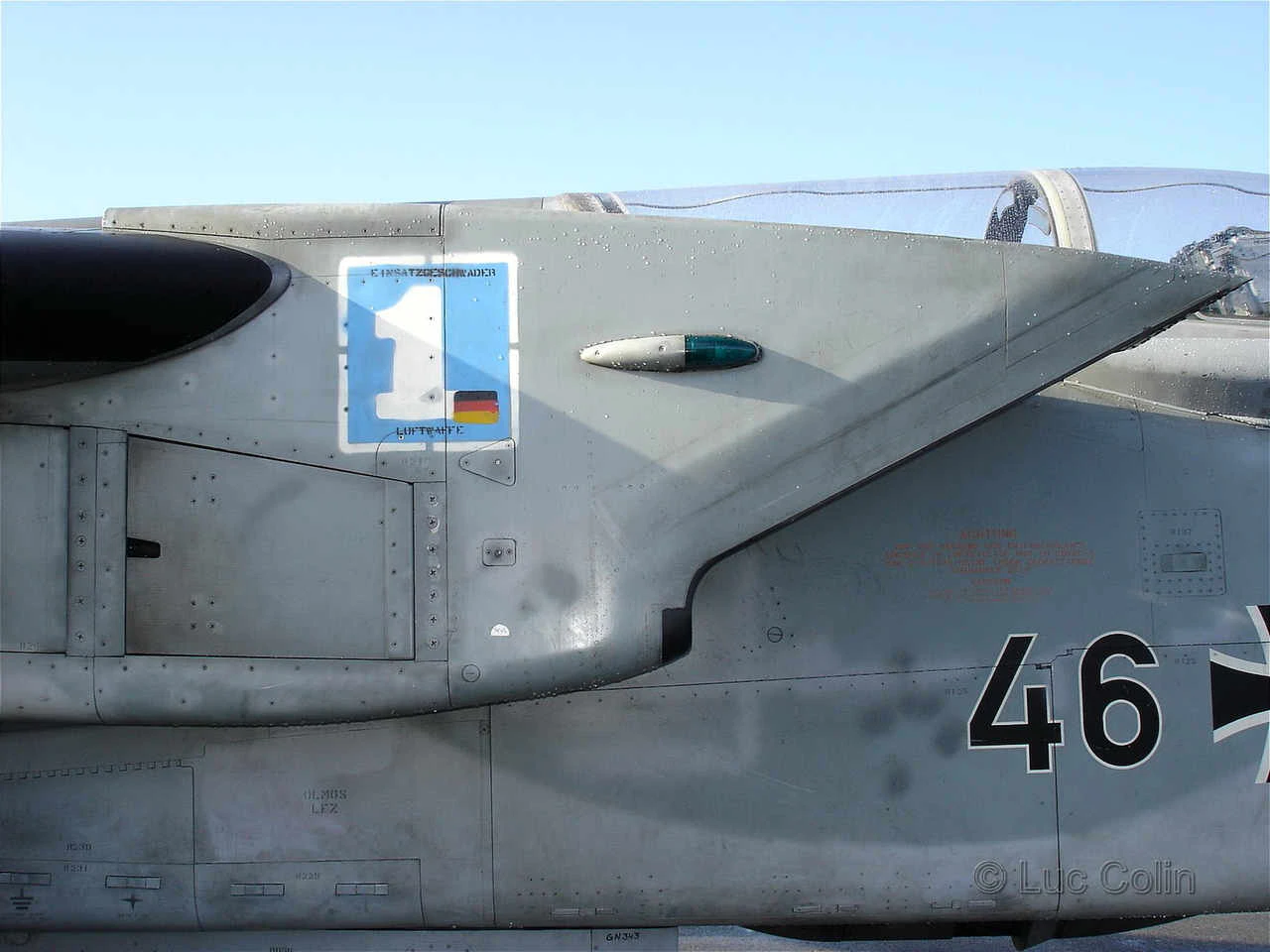
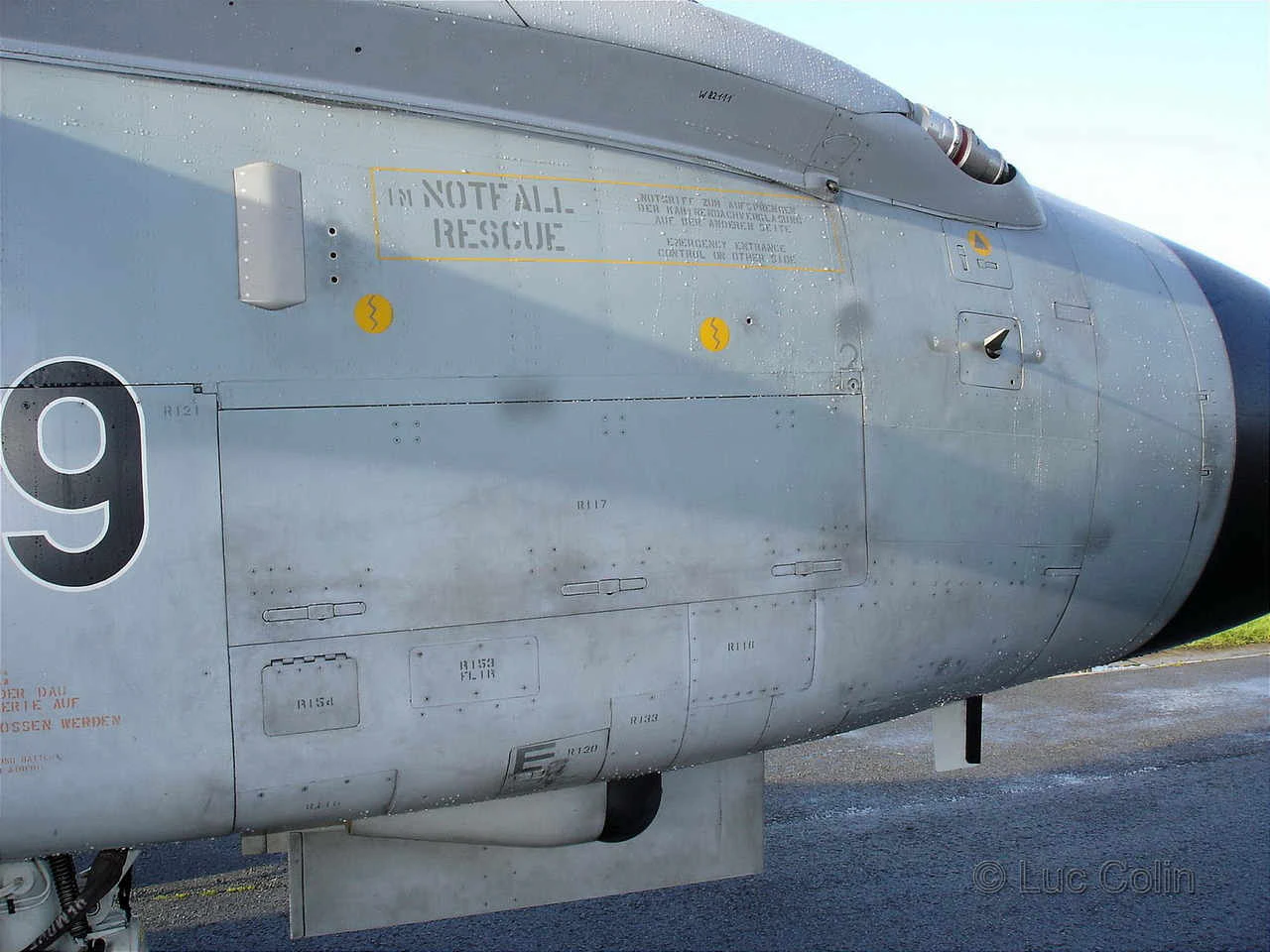
La tornade panaviais a family of twin-engine, variable-sweep wing combat aircraft, which was jointly developed and manufactured by the United Kingdom, West Germany and Italy. There are three primary variants of the Tornado; the Tornado IDS (interdictor/strike) fighter-bomber, the suppression of enemy air defences Tornado ECR (electronic combat/reconnaissance) and the Tornado ADV (air defence variant) interceptor.
The Tornado was developed and built by Panavia Aircraft GmbH, a tri-national consortium consisting of British Aerospace (previously British Aircraft Corporation), MBB of West Germany, and Aeritalia of Italy. It first flew on 14 August 1974 and was introduced into service in 1979–1980. Due to its multirole nature, it was able to replace several different fleets of aircraft in the adopting air forces. The Royal Saudi Air Force (RSAF) became an export operator of the Tornado in addition to the three original partner nations. A tri-nation training and evaluation unit operating from RAF Cottesmore, the Tri-National Tornado Training Establishment, maintained a level of international cooperation beyond the production stage.
Attendez, la recherche tornado ECR photos pour vous ...
Panavia Tornado IDS Se promener
Photographe
Martin Zahalka
Localisation
Inconnu
Photos
44
Voir aussi :
Panavia Tornado IDS Se promener
Photographe
Ulrich Wrede
Localisation
Inconnu
Photos
73
Tornado GR4 Walk Around
Photographe
Cees Hendriks
Localisation
Inconnu
Photos
100
Panavia 200 Tornado IDS
Photographe
Ulrich Wrede
Localisation
Inconnu
Photos
44
The Tri-National Terrain-Hugging Terror
Lla Tornade panaviawas a revolutionary collaborative project between the UK, West Germany, and Italy. Designed during the Cold War, its primary mission was to fly at transonic speeds just 200 feet above the ground, slipping under Soviet radar to strike high-value targets. Whether in its GR (Interdictor/Strike), ECR (Electronic Combat), or ADV (Air Defence Variant) forms, the Tornado’s defining feature was its ability to automate dangerous low-level flight, allowing the crew to focus entirely on the mission while the aircraft « followed the contours of the earth. »
Swing-Wing Versatility:Like the F-14, the Tornado uses variable-sweep wings. At 25°, it can take off from short, rugged runways; at 67°, it becomes a sleek « dart » optimized for high-speed, low-level penetration.
Terrain-Following Radar (TFR):This was the Tornado’s « secret sauce. » The TFR was linked directly to the autopilot, allowing the aircraft to maintain a constant, terrifyingly low altitude above the ground automatically, even in zero visibility or at night.
Thrust Reversers:Unusually for a fighter jet, the Tornado is equipped with large bucket-style thrust reversers on its engines. This allows it to land on extremely short or icy runways, which was essential for the « dispersed operations » strategy of the Cold War.
Lla « Fin »:The massive vertical stabilizer (the tail) gives the Tornado its nickname. It provides immense stability during high-speed low-level flight, ensuring the aircraft doesn’T « buffet » when hitting the dense air found near the deck.
Operational History: Desert Storm and the End of an Era
Operation Granby (Gulf War):British Tornados flew some of the most dangerous missions of the war, using JP233 submunitions to « crater » Iraqi runways at ultra-low altitudes. While effective, the low-level profile made them vulnerable to AAA and MANPADS, leading to a shift toward medium-altitude laser-guided bombing.
The ADV Interceptor:The UK developed the F3 (Air Defence Variant) specifically to intercept Soviet bombers over the North Sea. It featured a stretched fuselage for more fuel and the Foxhunter radar, though it was less maneuverable than the strike versions.
ALARM & Storm Shadow:The Tornado became the premier platform for the ALARM anti-radiation missile (to kill enemy radars) and the Storm Shadow cruise missile, allowing it to strike targets from hundreds of miles away with surgical precision.
Retirement:The RAF retired the Tornado in 2019, replaced by the Eurofighter Typhoon and F-35 Lightning II. However, the German Luftwaffe and Italian Air Force continue to operate the « Tonka » in specialized ECR roles today.


 Yokosuka MXY-7 Ohka – Photos & Vidéo
 Messerschmitt Bf 110 – Photos & Vidéo
 Ansaldo SVA – Photos & Vidéo
 PZL TS-11 Iskra – Photos & Vidéo
 Hawker Tempest V – Photos & Vidéo
 Grumman S-2 Tracker - Photos et vidéo
 de Havilland DH112 Venom – Photos & Vidéo
 Ryan PT-22 Recruit – Photos et vidéo
 Avro 643 Mk.II Cadet – Photos & Vidéo
 English Electric Canberra – Photos & Vidéo