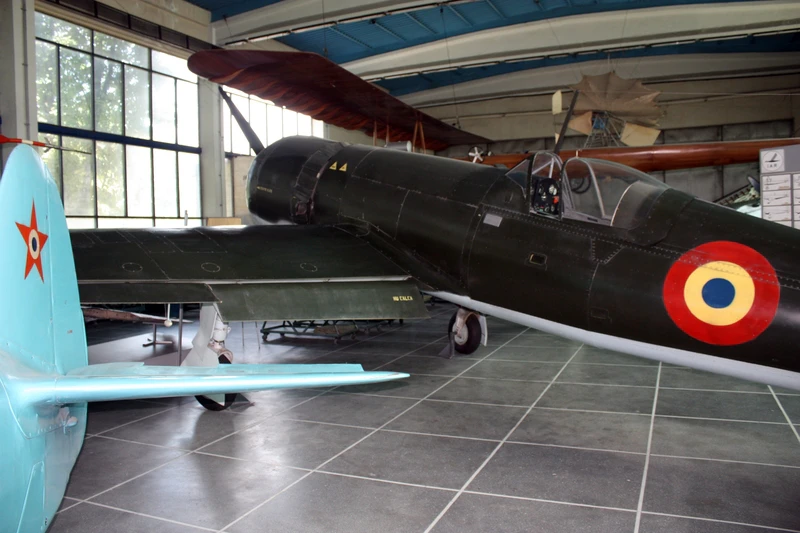
IAR 80 | |
|---|---|
| Pays | Roumanie |
| Rôle | Chasseur |
| Premier vol | Le 12 avril 1939 |
| Construit | 448 |
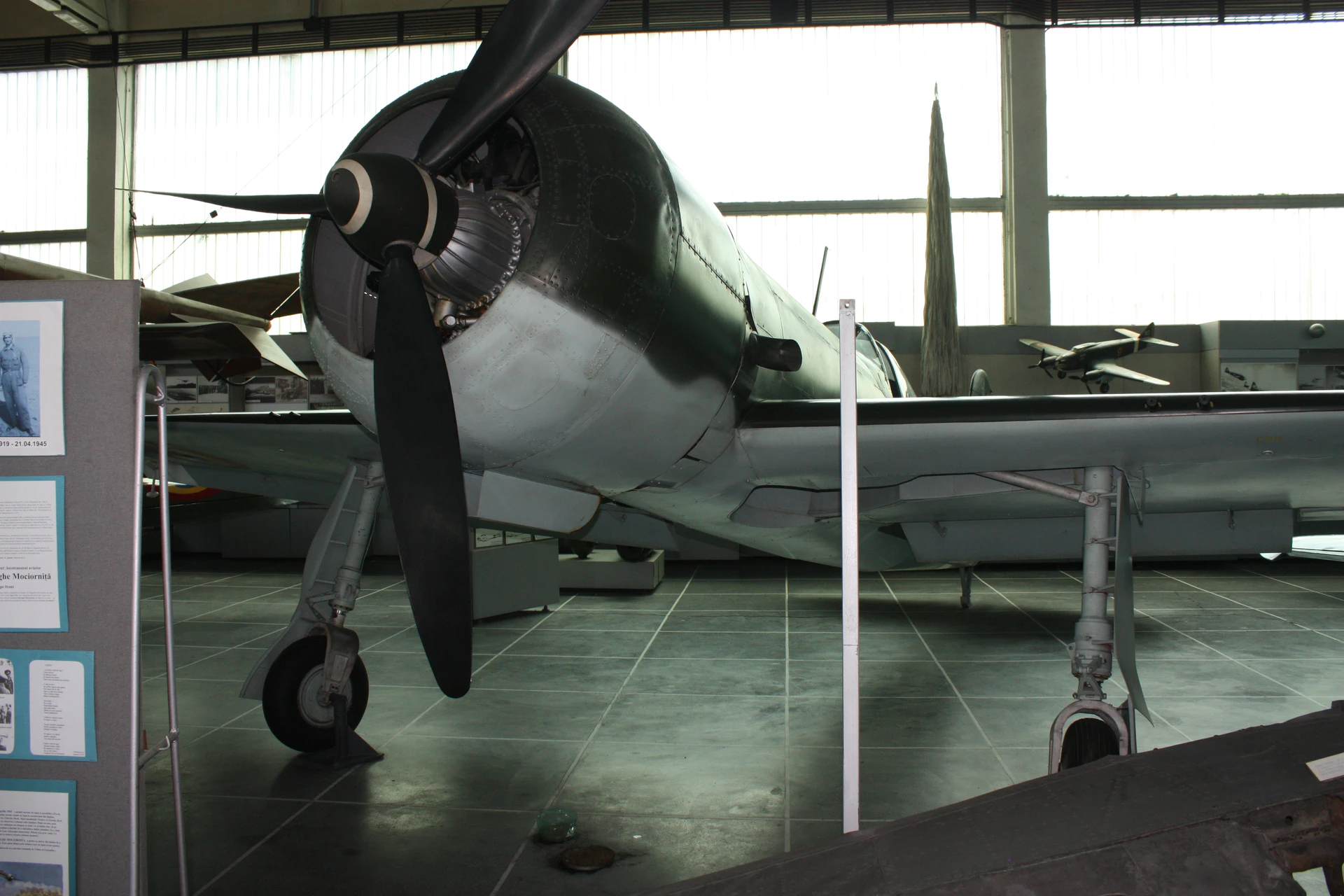
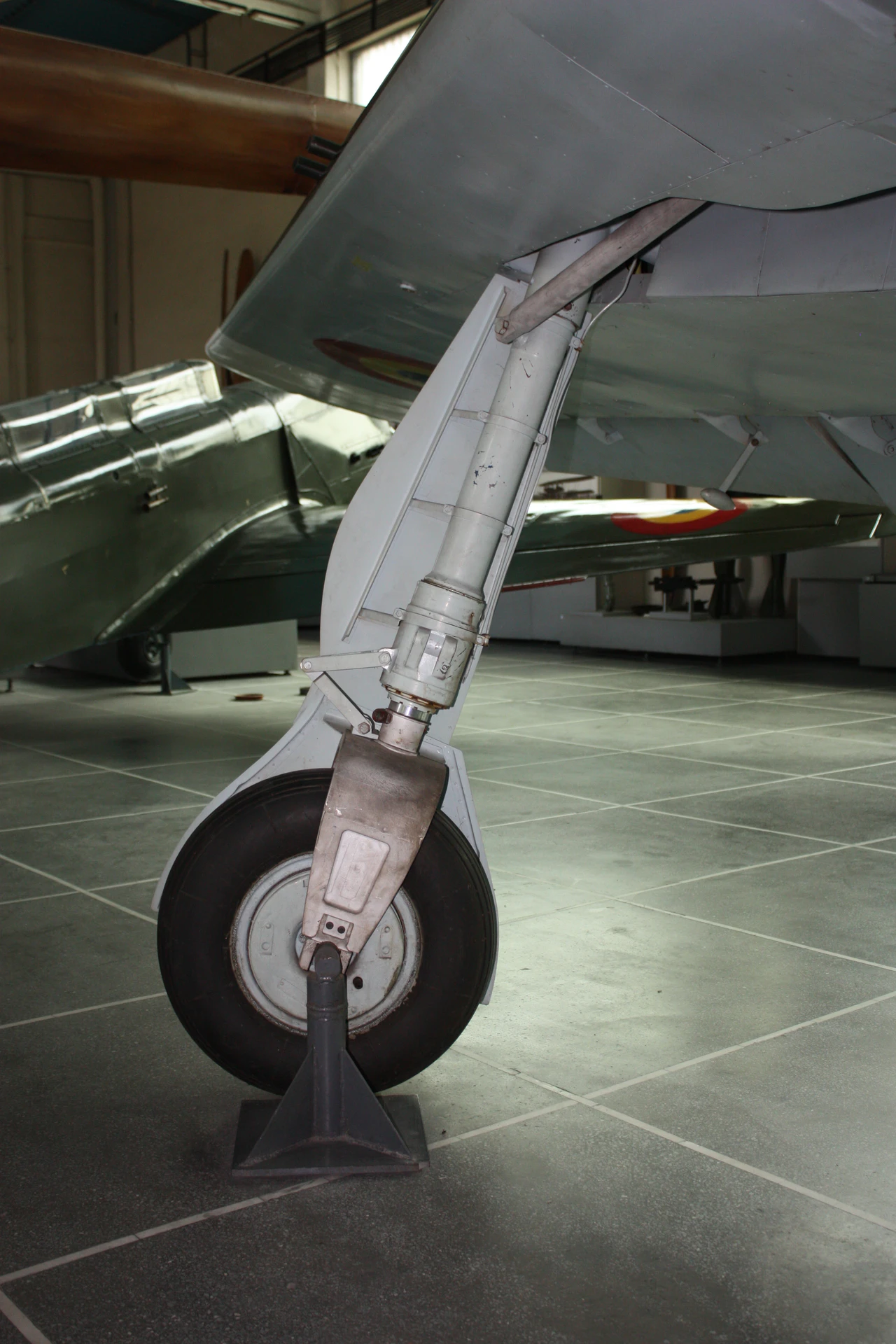
Lla IAR 80 était un monoplan à voilure basse de la Seconde Guerre mondiale roumain, un chasseur monocoque tout métal et un avion d’attaque au sol. Lorsqu’il a volé pour la première fois, en 1939, il était comparable aux conceptions contemporaines déployées par les forces aériennes des puissances militaires les plus avancées telles que l’ouragan Hawker et le Bf 109E. Les problèmes de production et le manque d’armement disponible ont retardé l’entrée en service de l’IAR 80 jusqu’en 1941. Il est resté en première ligne jusqu’en mai 1945.
Source: IAR 80 sur Wiki
| IAR 80 Walk Around | |
|---|---|
| Photographe | Unknow |
| Localisation | Inconnu |
| Photos | 30 |




Voir aussi :


General Characteristics
The IAR 80 was a Romanian low-wing monoplane fighter designed and built by Industria Aeronautică Română (IAR) in the late 1930s. Developed to fulfill a national need for a modern indigenous fighter, it was comparable to early versions of contemporary aircraft like the Hawker Hurricane and Bf 109E upon its first flight in 1939. Its design evolved throughout its production life to address issues like initial light armament and poor rearward pilot visibility, leading to variants with heavier weapons and reinforced structures. It was used extensively by the Royal Romanian Air Force (ARR) on the Eastern Front and later for the defense of the Ploiești oilfields.
| Property | Typical Value (IAR 80 / Early Variants) |
|---|---|
| Rôle | Single-Seat Fighter / Fighter-Bomber (IAR 81) |
| National Origin | Roumanie |
| Fabricant | Industria Aeronautică Română (IAR) |
| First Flight | April 1939 |
| In Service (ARR) | 1941–1949 (Trainer use until 1952) |
| No. Built (Total) | ~450 (including IAR 81 variants) |
| Crew | 1 (Pilot) |
| Length | 8.97 m (29 ft 5 in) |
| Envergure | 10.5–11.0 m (34 ft 5 in – 36 ft 1 in) (Varies by variant) |
| Max Takeoff Weight | ~2,700–3,070 kg (5,950–6,770 lb) (Varies by variant) |
Powerplant and Performance
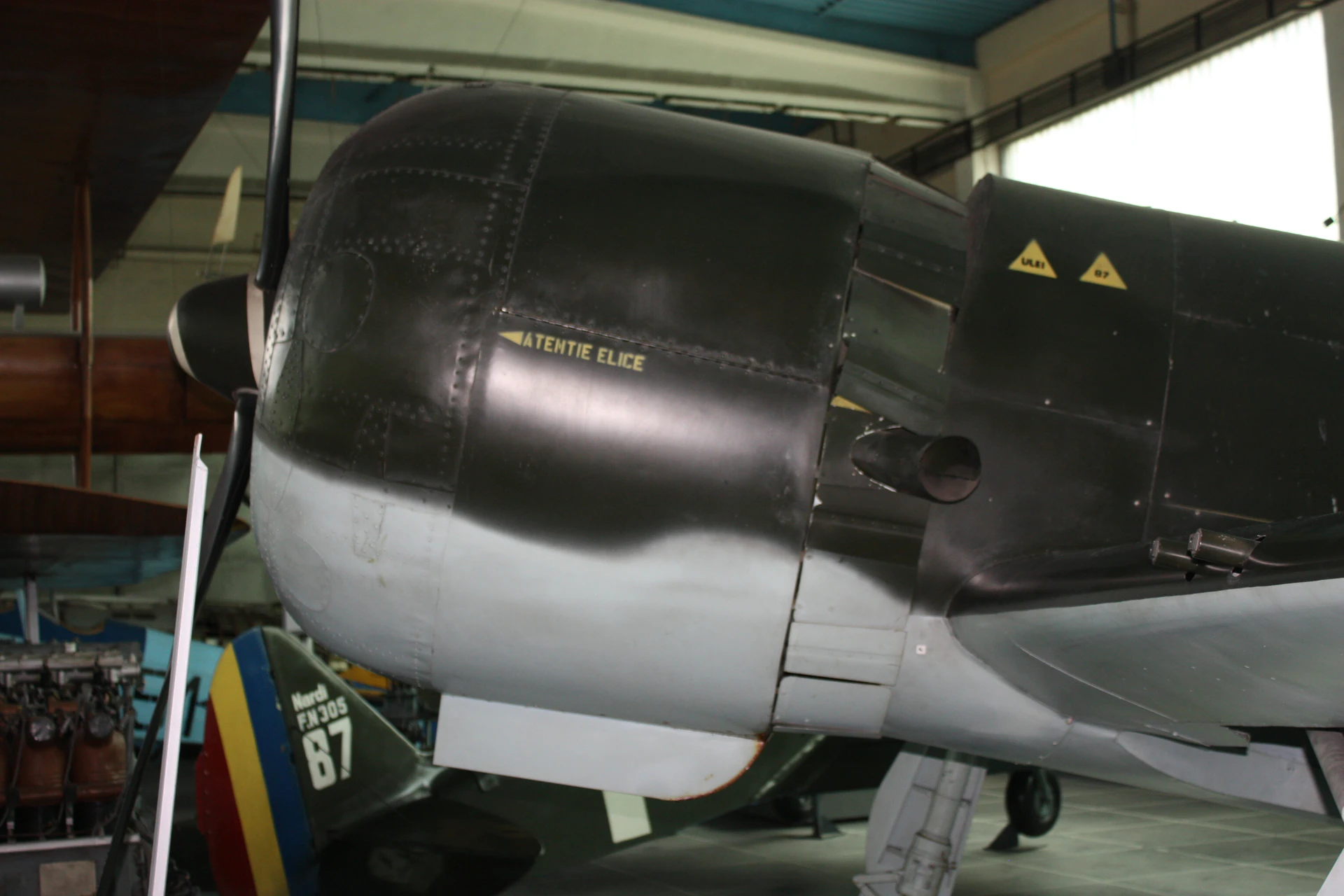
- Engine: 1 x IAR K14-III / K14-1000A 14-cylinder air-cooled radial engine (licensed version of the French Gnome-Rhône 14K Mistral Major).
- Power Output: Ranging from 650 kW (870 hp) in prototypes up to 764 kW (1,025 hp) in later production models.
- Maximum Speed: 500–510 km/h (310–317 mph) at 4,000 m.
- Climb Rate: Approximately 5,000 m (16,400 ft) in 5 minutes 50 seconds to 6 minutes.
- Construction: All-metal monocoque fuselage and wing construction, noted for its strong structure.
- Limitations: Lacked an automated propeller pitch regulator and higher-altitude performance began to lag behind newer enemy designs as the war progressed.
Armament and Roles
- Armament (IAR 80 base): 4 x 7.92 mm FN-Browning machine guns (wing-mounted).
- Armament (IAR 80A/B/C): Armament was progressively increased and strengthened:
- IAR 80A: 6 x 7.92 mm machine guns.
- IAR 81B: 4 x 7.92 mm machine guns and 2 x 20 mm Ikaria (Oerlikon license) cannons.
- IAR 81C: 2 x 20 mm Mauser MG 151 cannons and 4 x 7.92 mm machine guns.
- Dive Bomber Role (IAR 81): Variants were equipped with a centerline **bomb displacement trapeze** for a 250 kg (550 lb) bomb, plus two 50 kg (110 lb) underwing bombs.
- Operational History: Used extensively on the Eastern Front against the Soviet Air Force. Later, it became critical for home defense against high-altitude American bomber raids (B-24 Liberators) targeting the Ploiești oilfields, where it achieved notable successes against unescorted formations, often excelling in low-altitude dogfights.
Vues : 2066
Vous pouvez voir aussi :
 Sikorsky S-39 – Photos et vidéos
 North American NA-64 Yale – Photos et vidéos
 Sud-Ouest Triton – Photos & Vidéo
 Culver PQ-14 Cadet – Photos et vidéo
 Northrop F-20 Tigershark – Photos et vidéo
 Aeronca L-3 – Photos & Vidéo
 McDonnell F2H Banshee – Photos & Vidéo
 Macchi MC-202 – WalkAround
 Bataille juste - WalkAround
 Hawker Sea Fury – Walk Around