Focke-Achgelis Fa 330 | |
|---|---|
| Pays | Allemagne nazie |
| Rôle | Cerf-volant autogyre |
| Premier vol | Inconnu |
| Construit | 200 |
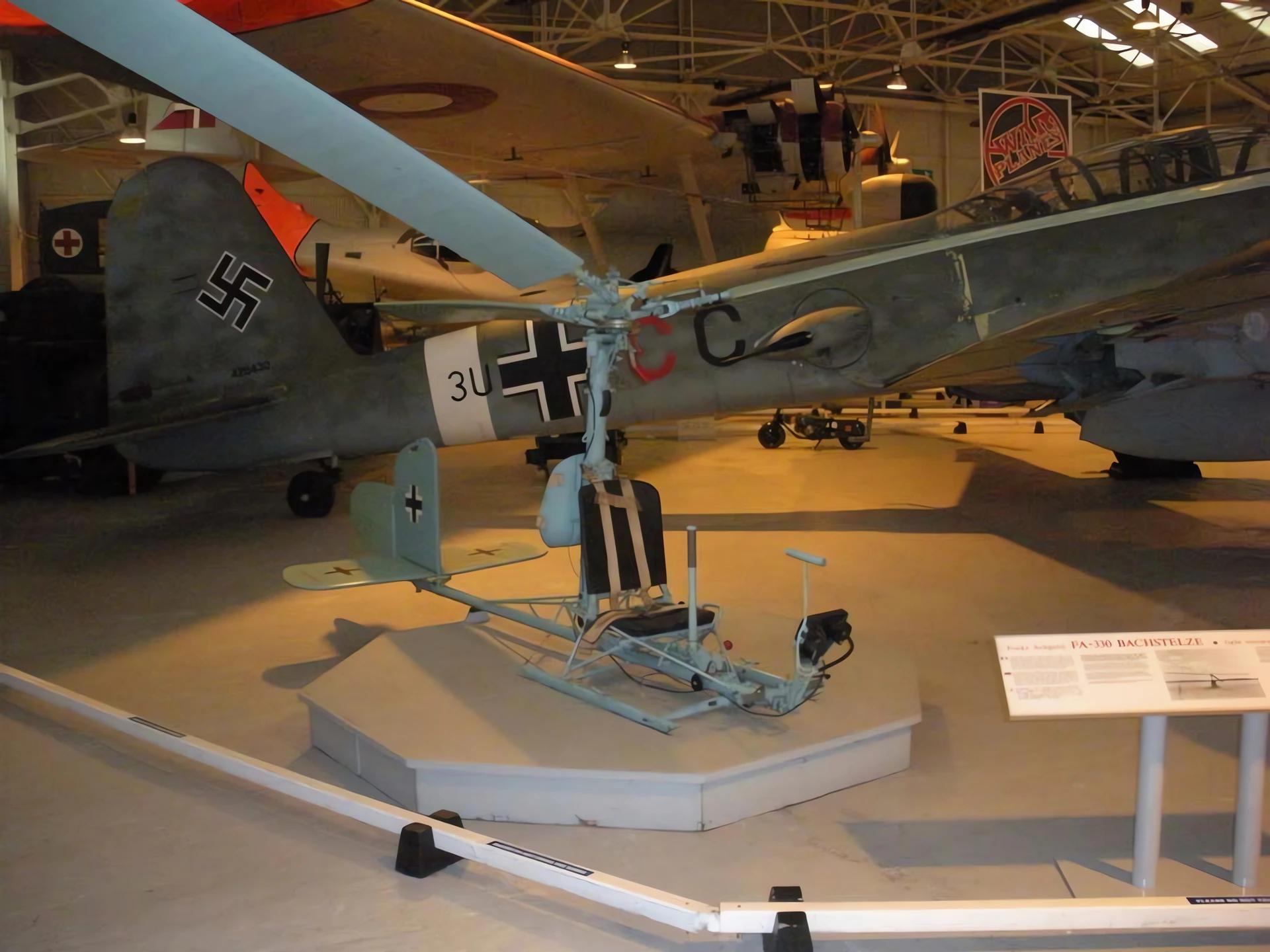
Lla Focke-Achgelis Fa 330 Bachstelze (anglais: Wagtail) était un type de cerf-volant à voilure tournante, connu sous le nom de gyroglider ou cerf-volant à rotor. Ils ont été remorqués derrière des sous-marins allemands pendant la Seconde Guerre mondiale pour permettre à un belvédère de voir plus loin.
| Focke-Achgelis FA 330 Bachstelze Walk Around | |
|---|---|
| Photographes | Vladimir Yakubov, Randy Ray |
| Localisation | Inconnu |
| Photos | 44 |
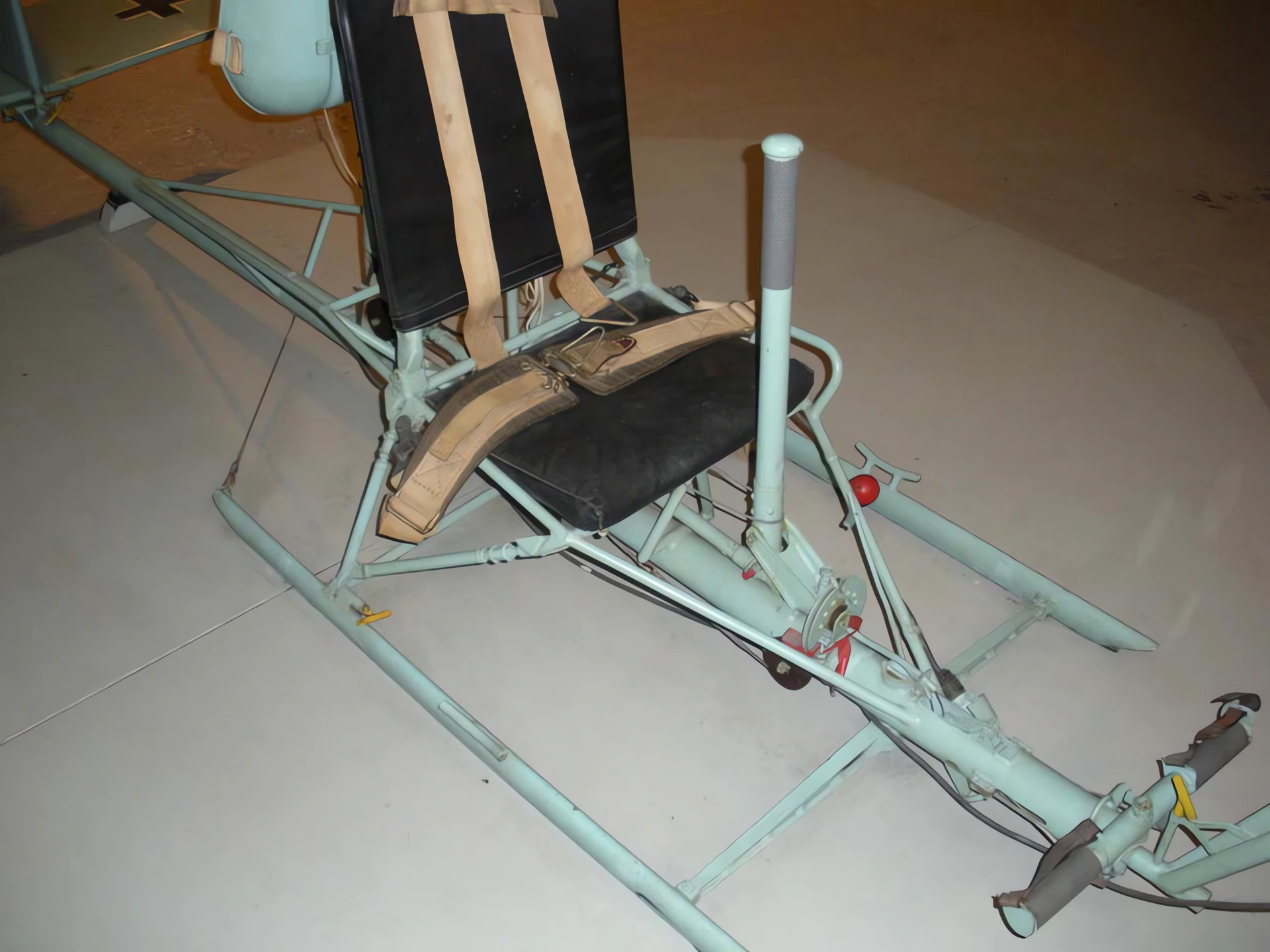
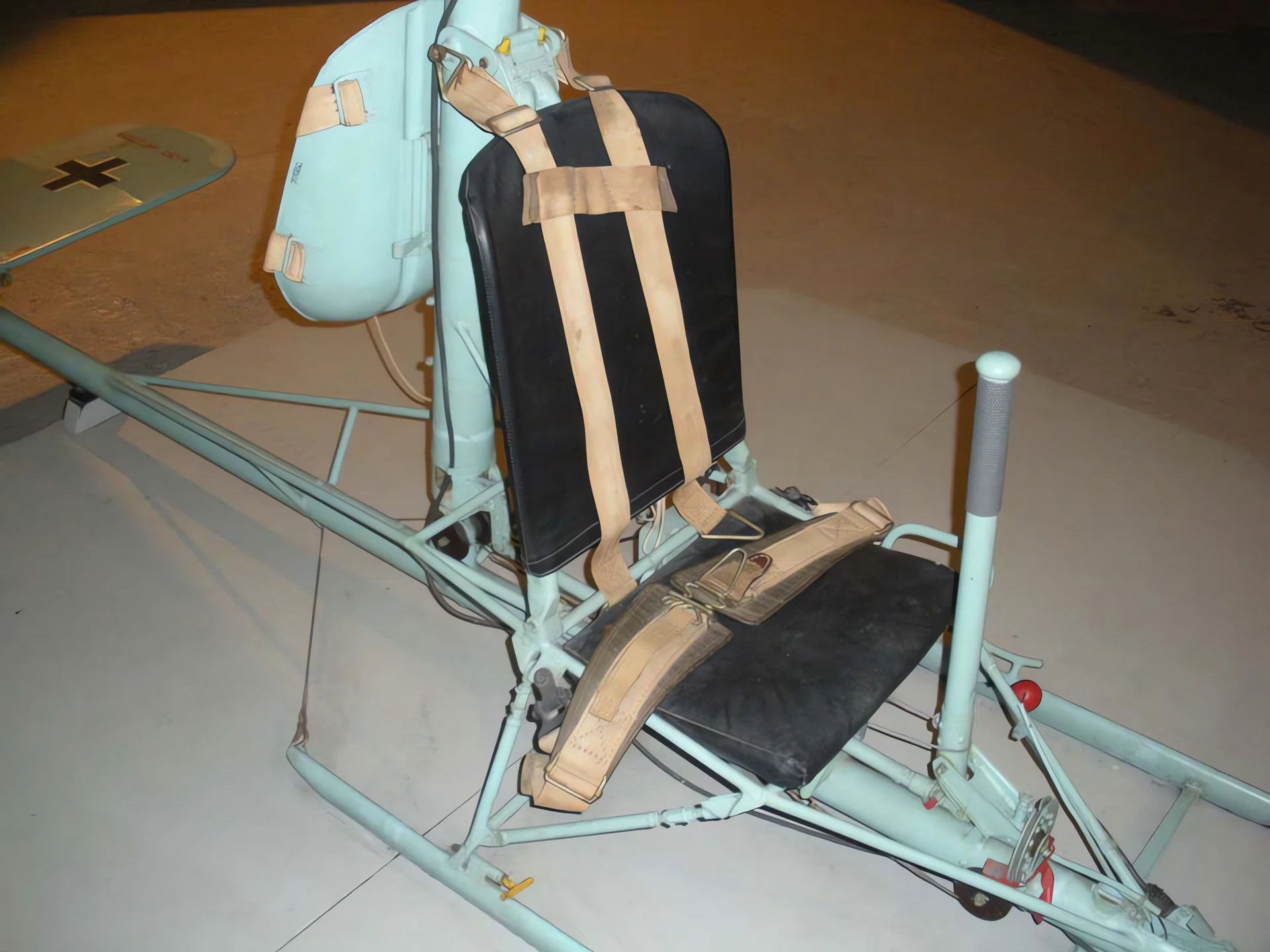
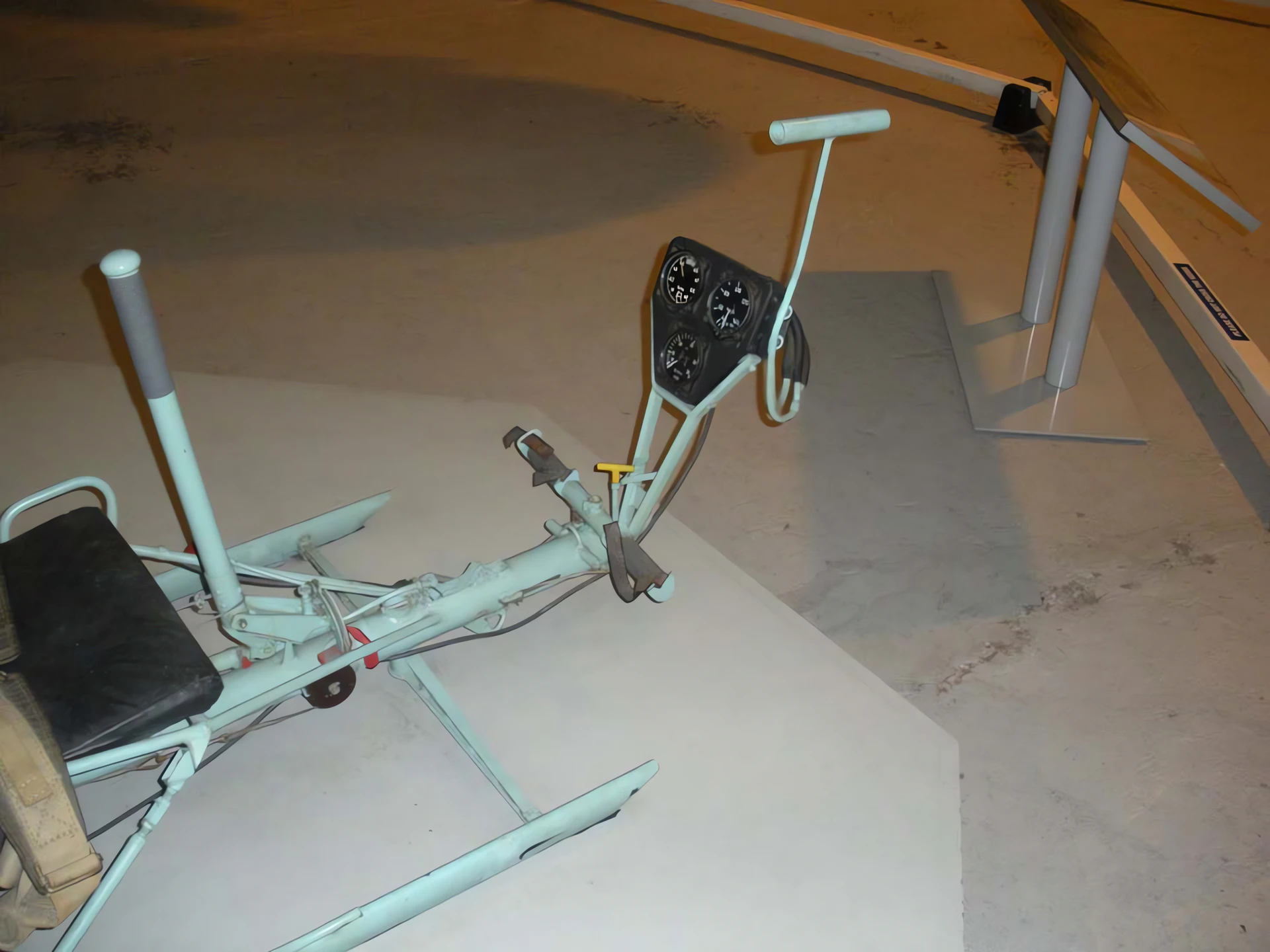
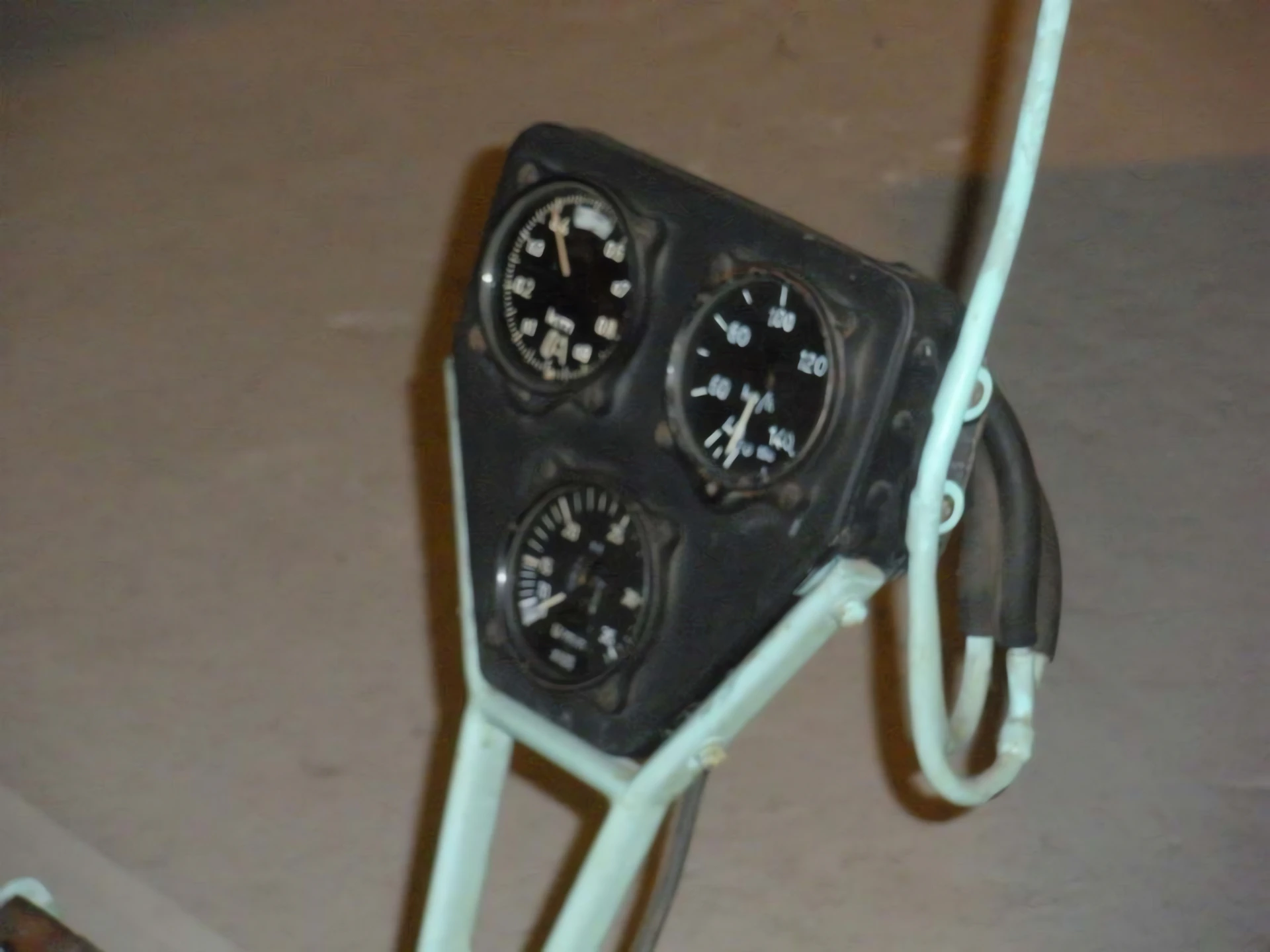
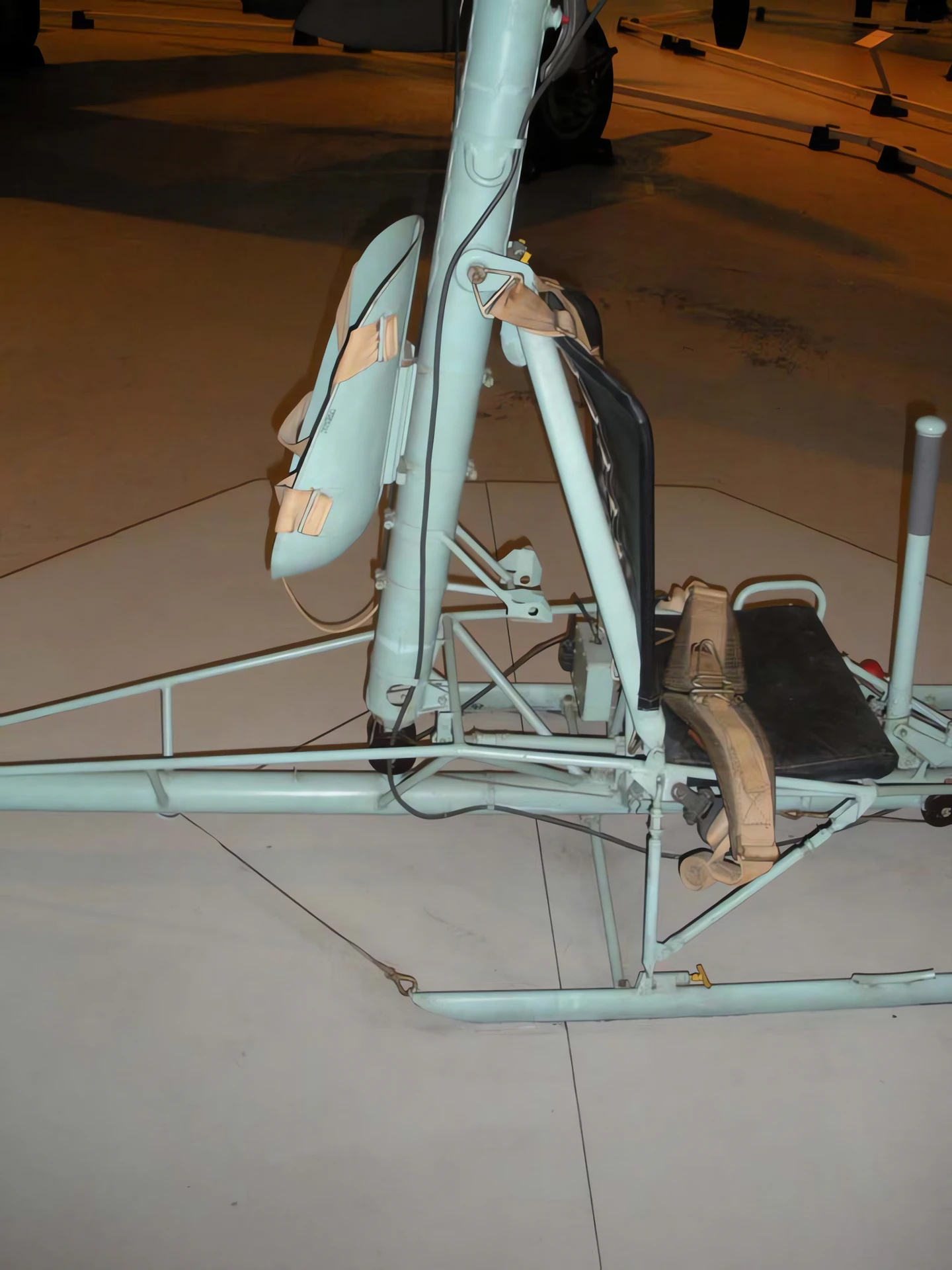
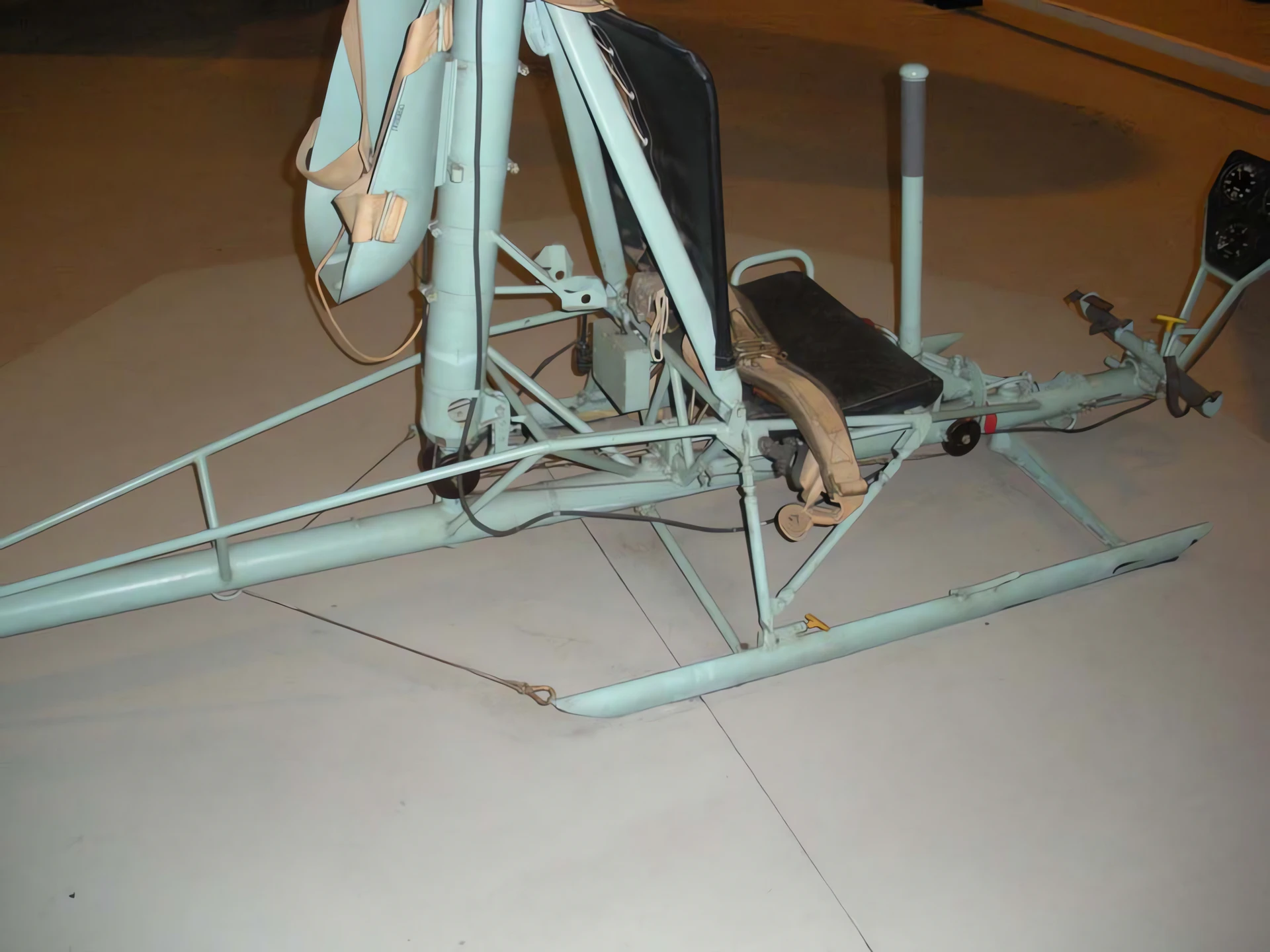

Voir aussi :


The Kite with Rotors
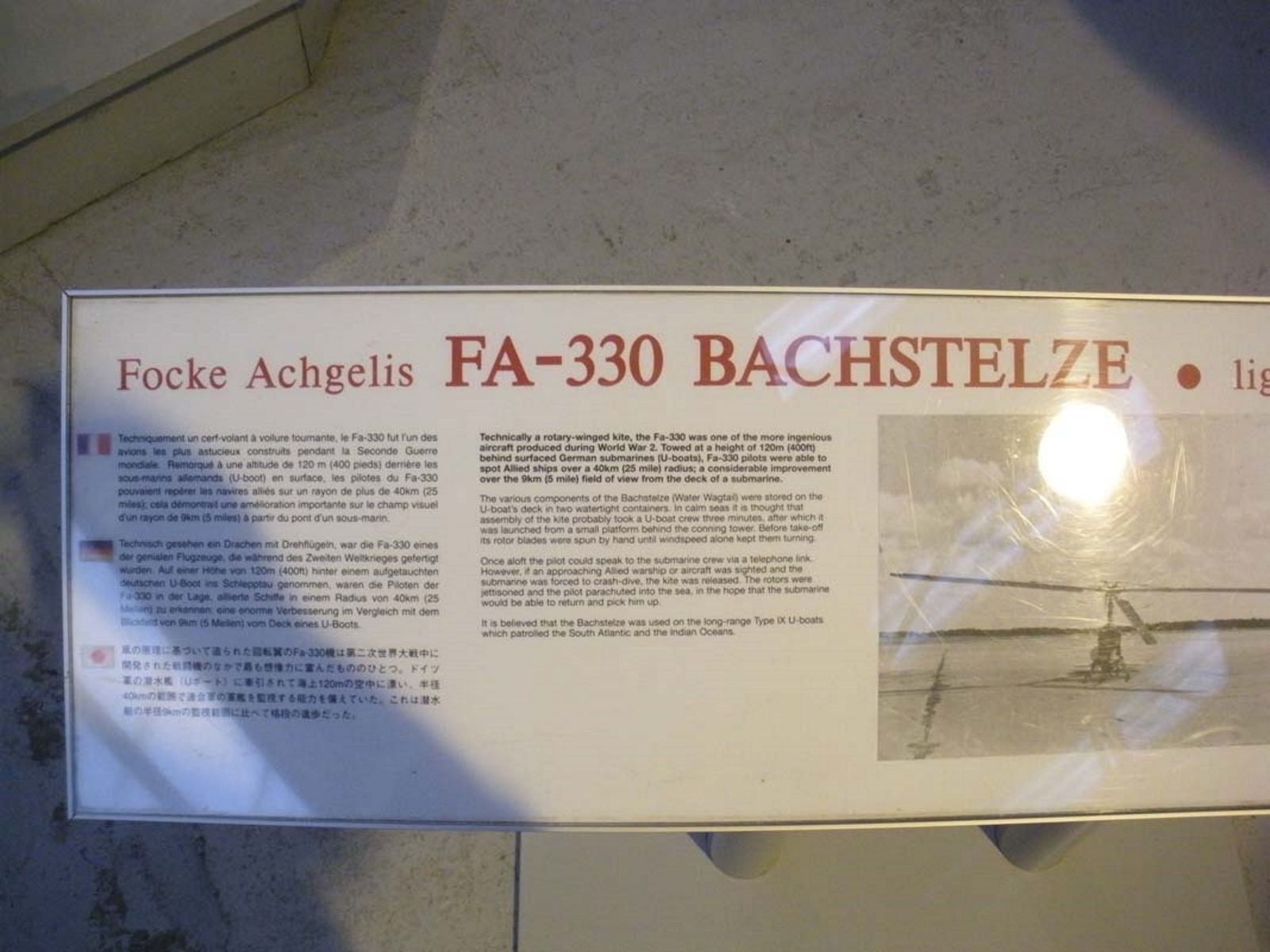
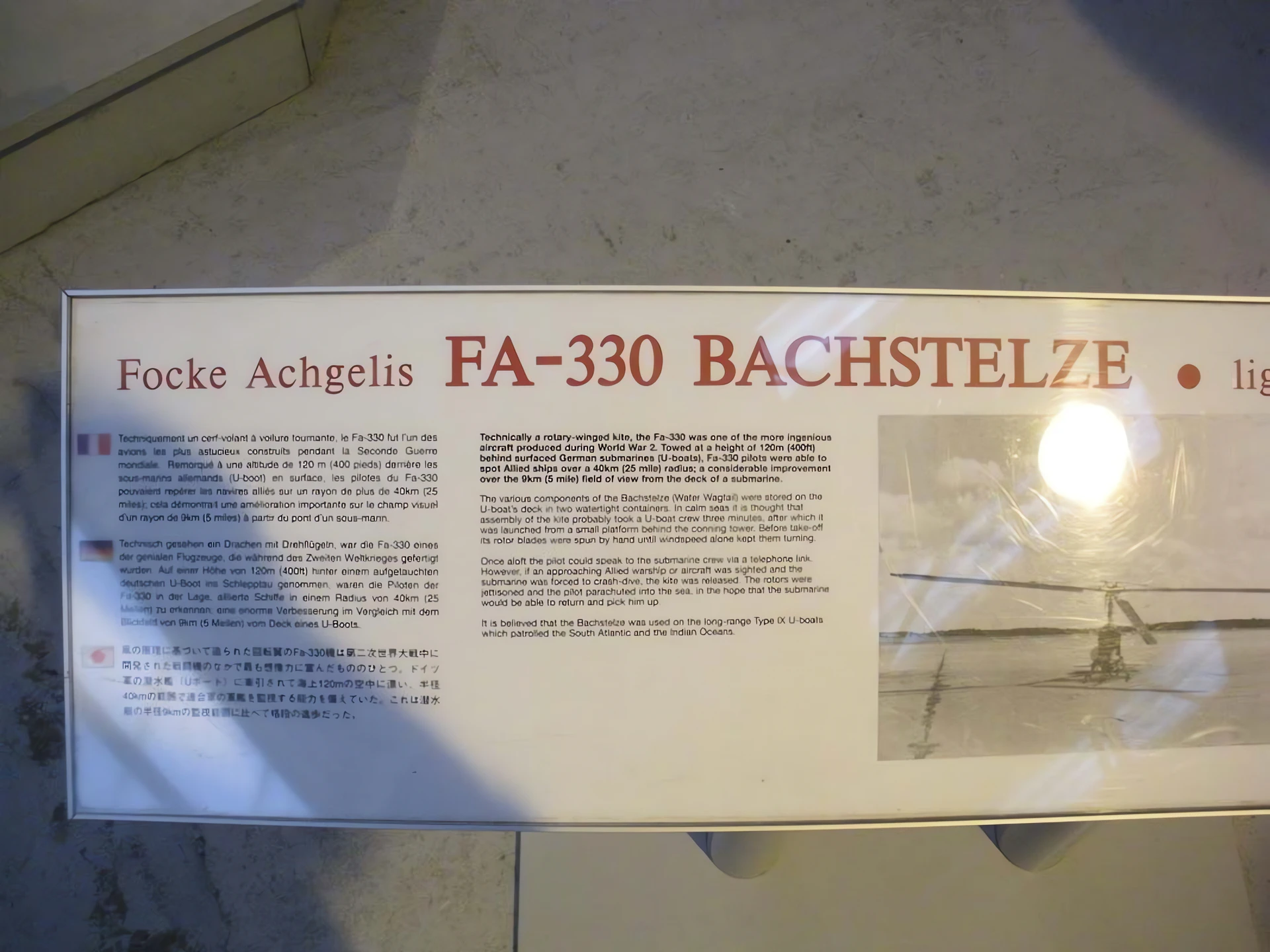
Lla Focke-Achgelis Fa 330 was a unique, unpowered autogyro kite used by German U-boats during World War II. Because a submarine’s low profile limited its horizon to about 5 miles, the Fa 330 was developed to lift a lookout 400 feet into the air, extending their view to 25 miles. It had no engine; instead, it relied on the movement of the submarine and the wind to spin its rotors and provide lift. It was simple, foldable, and arguably one of the most dangerous assignments a sailor could receive.
| Attribute | Technical Specification (Fa 330) |
|---|---|
| Rôle | Ship-borne Observation Autogyro Kite |
| Crew | 1 (Pilot/Observer) |
| First Flight | 1942 |
| Groupe motopropulseur | None (Tethered / Wind-driven) |
| Launch Method | Tethered cable and winch |
| Maximum Tow Speed | 25 mph (on surface) |
| Rotor Diameter | 24 ft (7.3 m) |
| Operational Altitude | Approx. 400 feet (120 m) |
Engineering Simplicity and Autorotation
- Autorotation Principle: Unlike a helicopter, the Fa 330’s rotors were not driven by an engine. The wind caused by the submarine’s forward motion blew upward through the blades, causing them to spin and create lift.
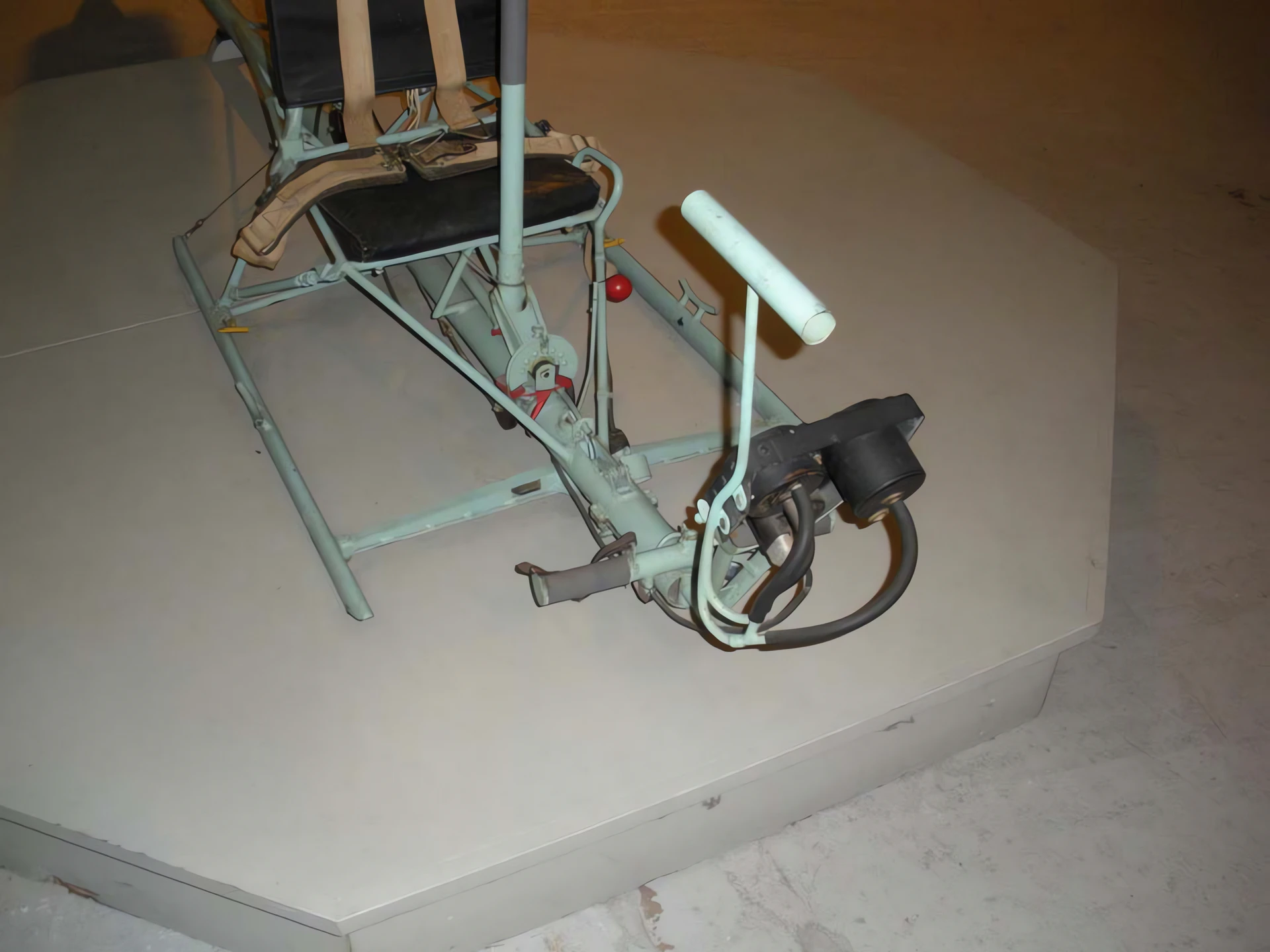
- Minimalist Airframe: The craft consisted of little more than a steel tube frame, a pilot’s seat, a small instrument panel, and a rudder. There was no fuselage to speak of, leaving the pilot completely exposed to the elements.
- Folding Design: To be stored in the limited space of a Type IX U-boat, the entire craft could be dismantled and packed into two vertical pressure-tight canisters on the deck in just a few minutes.
- Emergency Release: If the submarine had to perform an emergency dive (Alarm!), the pilot could pull a lever to jettison the rotor. A parachute would then deploy from the hub to bring the pilot (and the seat) back to the water.
The Danger of the « Wagtail »
- U-boat Vulnerability: While the Fa 330 helped find targets, it also made the submarine easier to spot from a distance. Furthermore, the time required to winch the pilot back down and stow the kite prevented the U-boat from diving instantly if attacked by Allied aircraft.
- Deployment Areas: They were mostly used in the Indian Ocean and South Atlantic, away from heavy Allied air cover where the risk of being caught on the surface was lower.
- Communications: The pilot communicated with the U-boat captain via a telephone wire integrated into the steel tethering cable.
- Survival: About 200 were built, and many survive today in museums—including the Musée de la RAF et le Smithsonian—because they were often captured intact when U-boats surrendered.
Vues : 2033
Vous pouvez voir aussi :
 Agusta-Bell AB.212 – Photos et vidéos
 Denel Rooivalk – Photos & Vidéos
 Eurocopter EC135 – Photos & Vidéos
 TAI/AgustaWestland T129 ATAK – Photos & Vidéos
 Harbin Z-6 – Photos et vidéos
 Sikorsky H-5 – Photos & Vidéo
 Sikorsky S-61R – Photos & Vidéo
 Mi-8T HIP - WalkAround
 Bell V-22 Osprey - WalkAround
 Mi-24 Hind - WalkAround