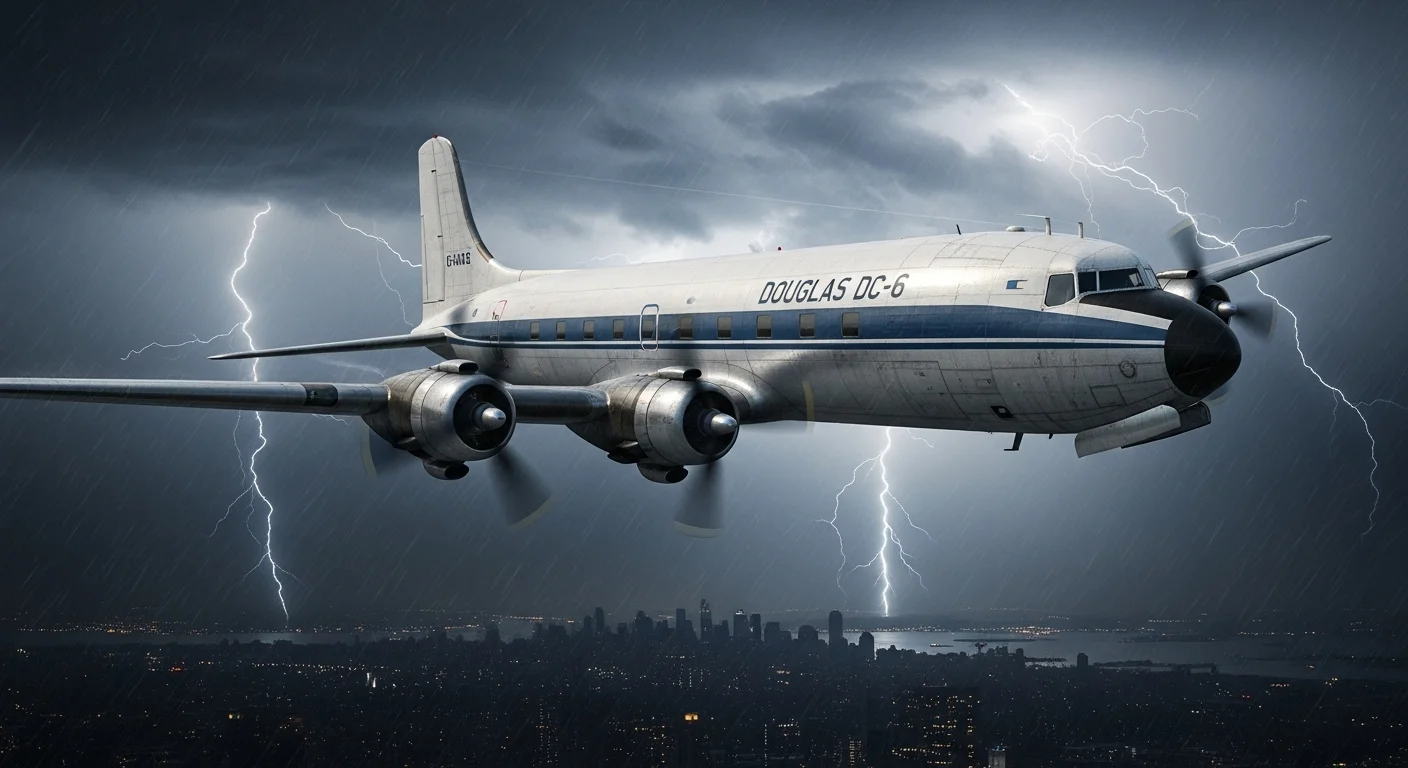
Douglas DC-6 | |
|---|---|
| Pays | Usa |
| Rôle | Avions de ligne/de transport |
| Premier vol | 15 février 1946 |
| Construit | 704 |
Le Douglas DC-6 est un avion de ligne et cargo à pistons construit par la Douglas Aircraft Company de 1946 à 1958. Conçu à l’origine comme transport militaire vers la fin de la Seconde Guerre mondiale, Douglas l’a retravaillé après la guerre pour concurrencer le Lockheed Constellation sur le marché du transport commercial à longue portée. Douglas en a construit plus de 700, et beaucoup volent encore dans des rôles de fret, militaires et de contrôle des incendies de forêt.
Source: Douglas DC-6 sur Wiki
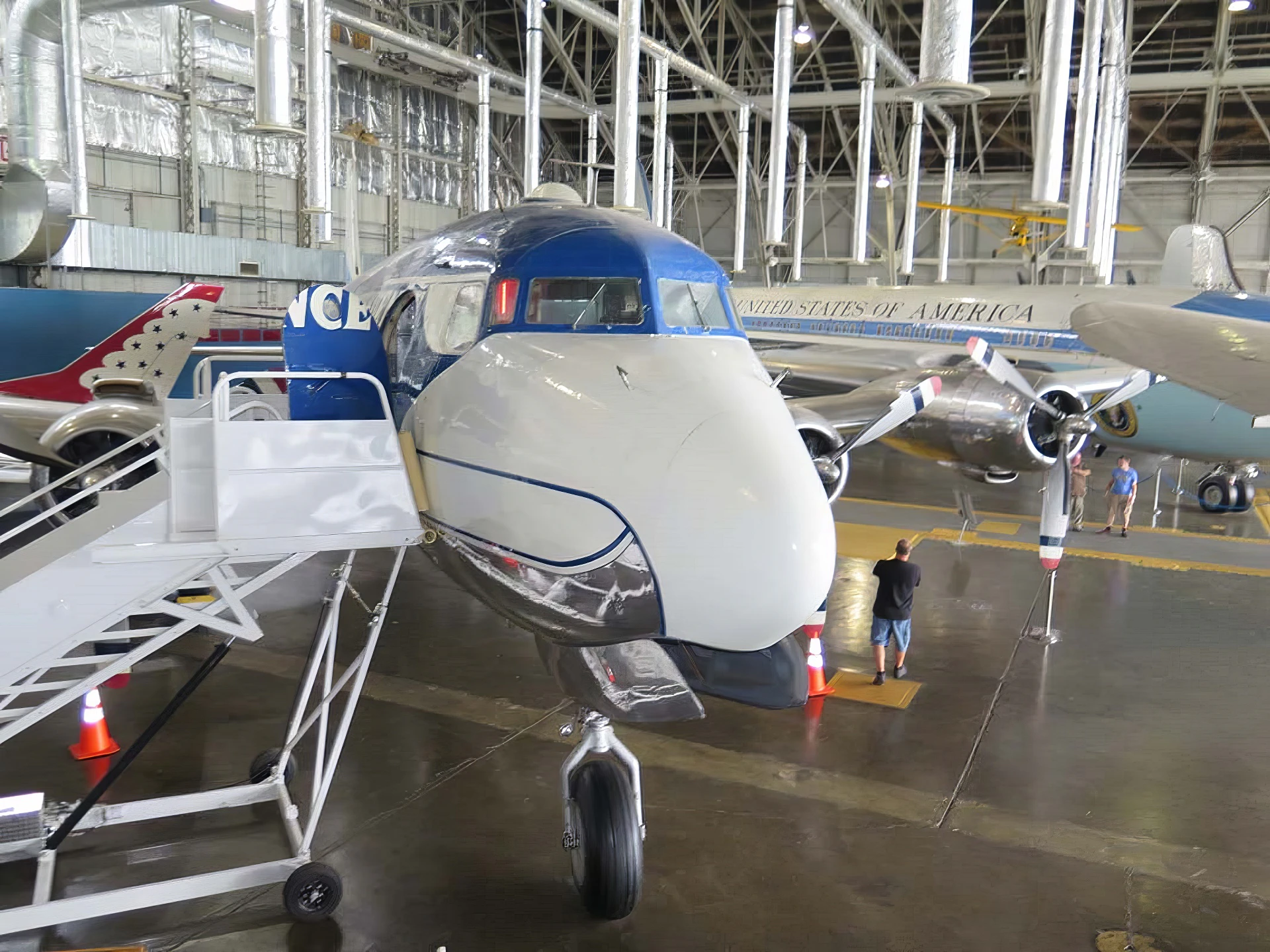
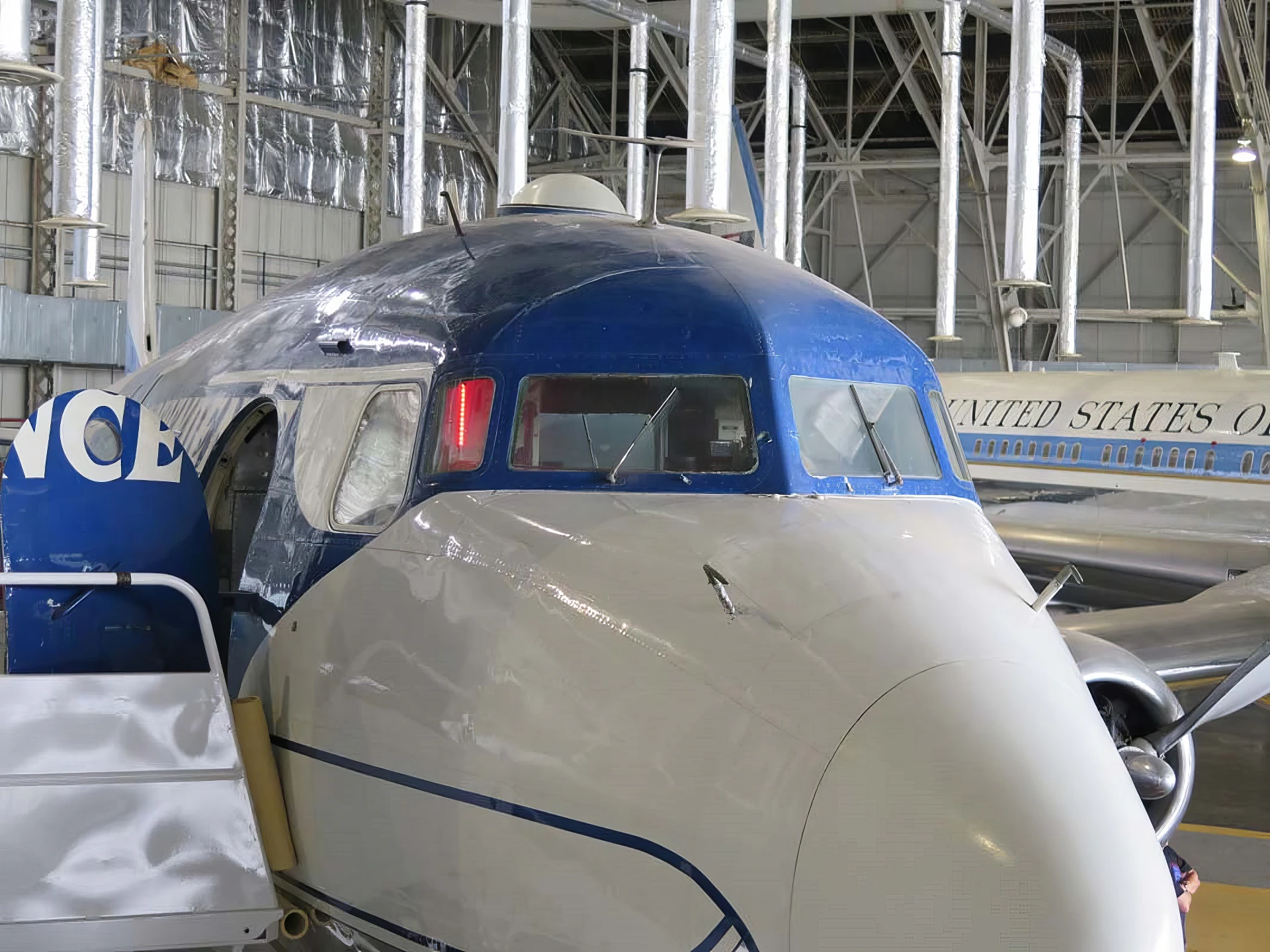
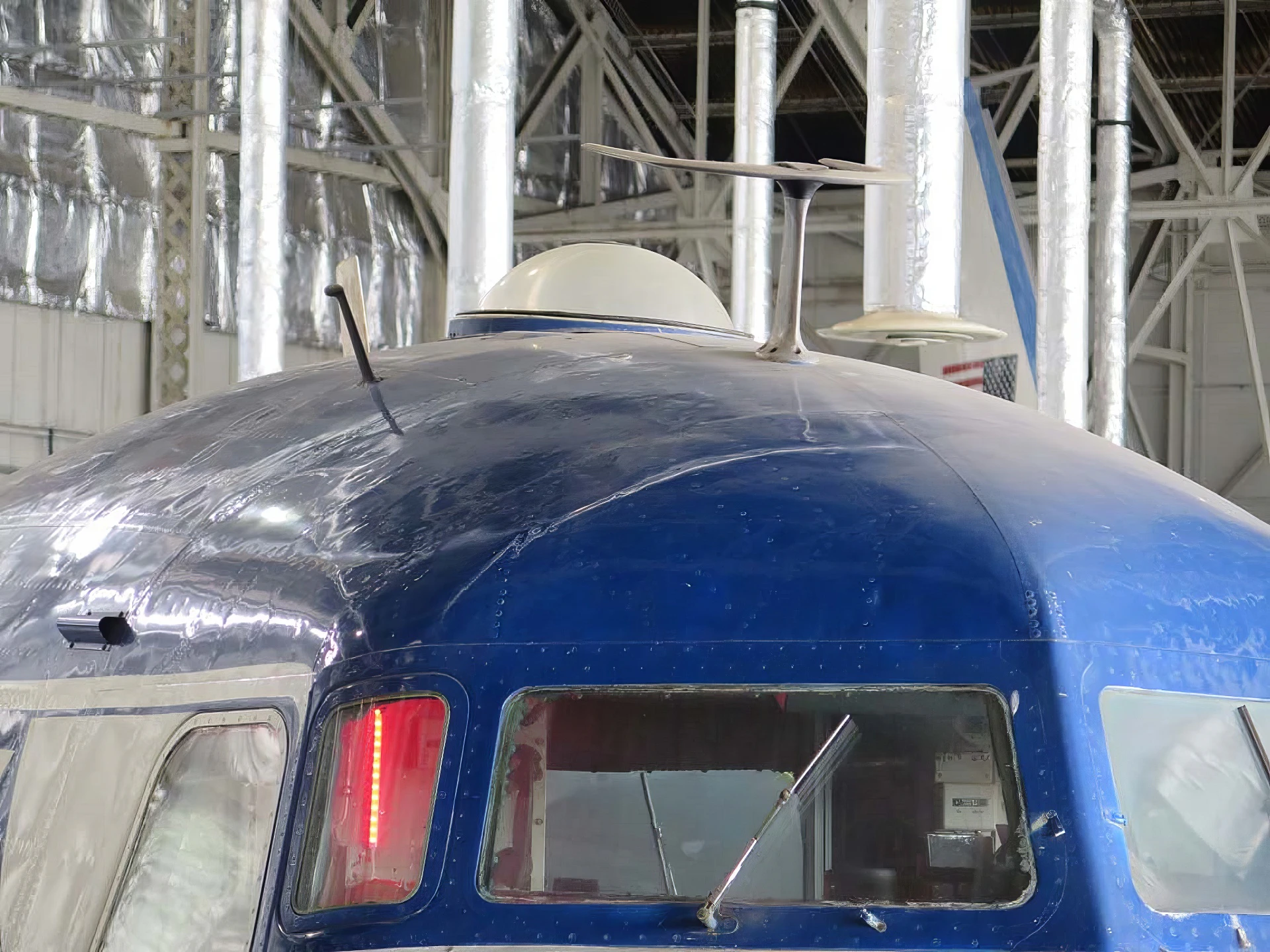
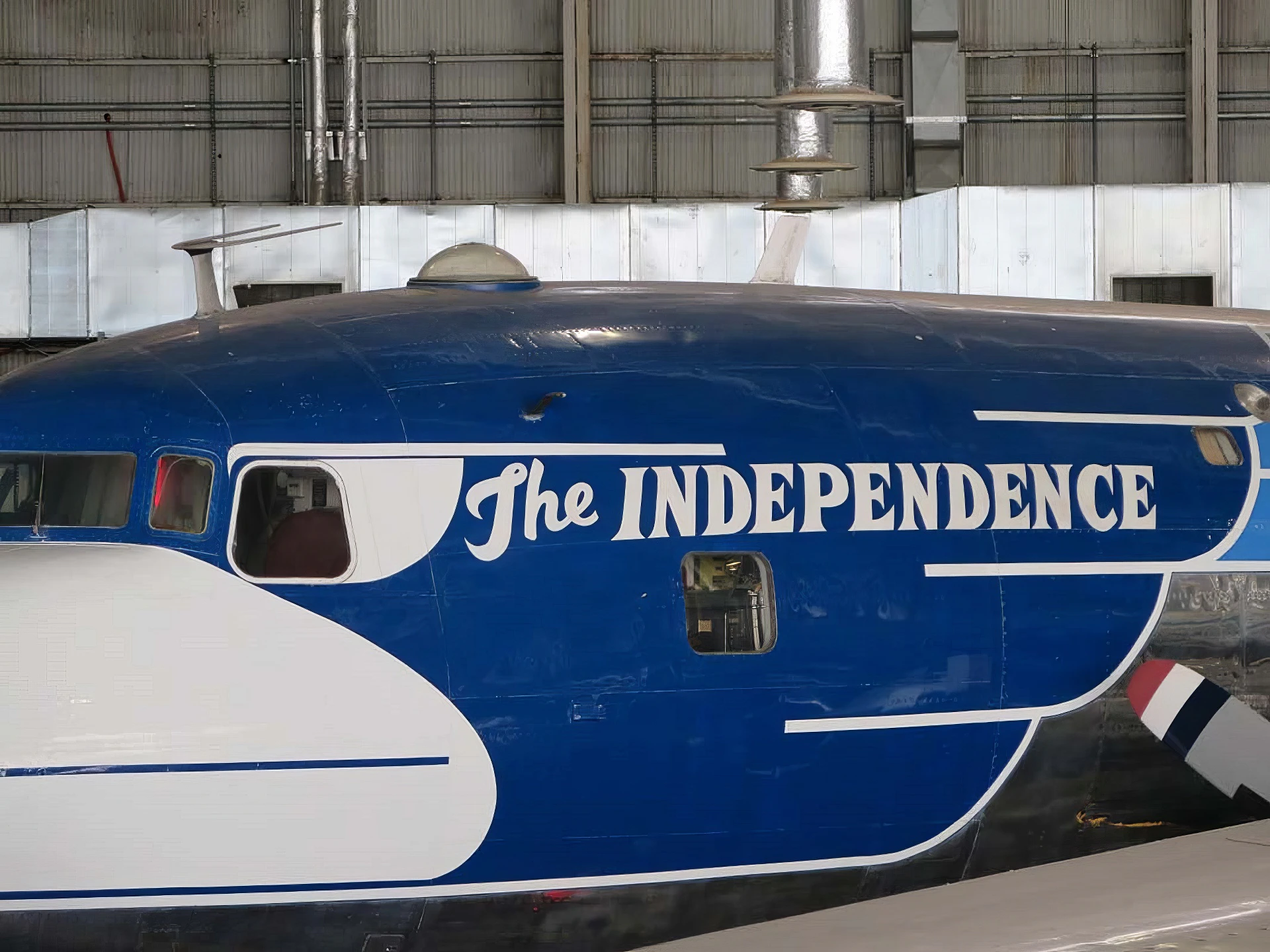
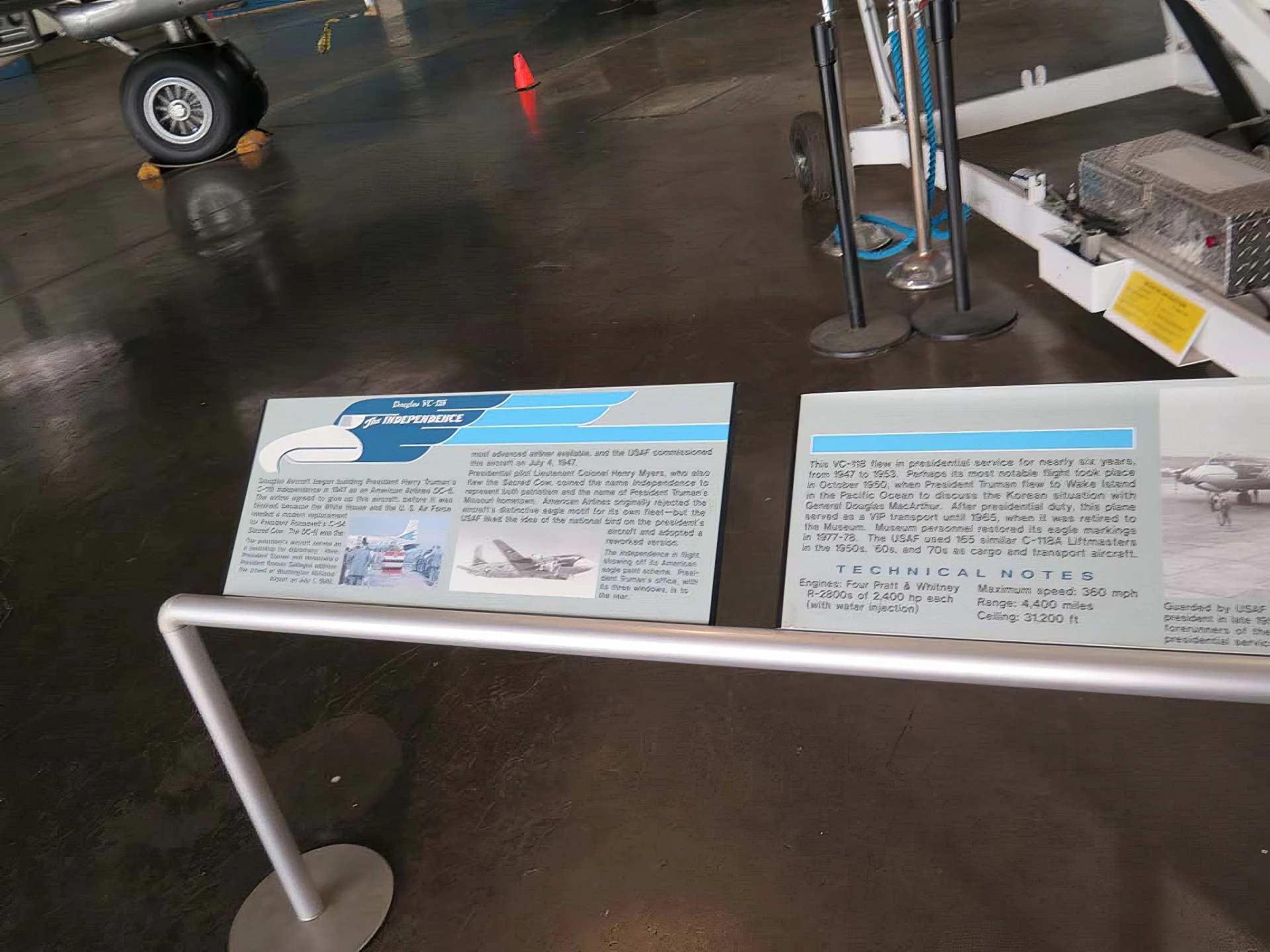
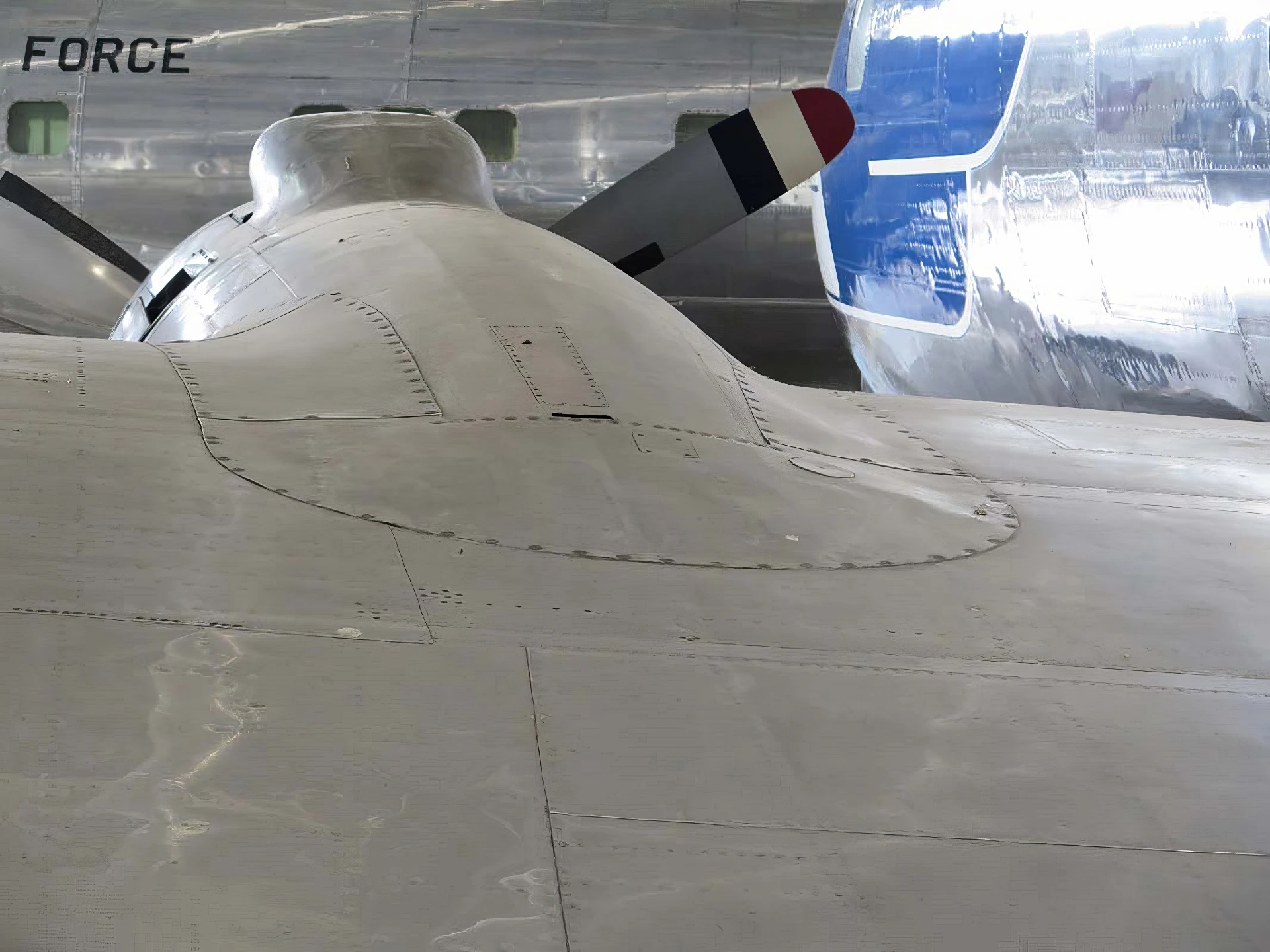
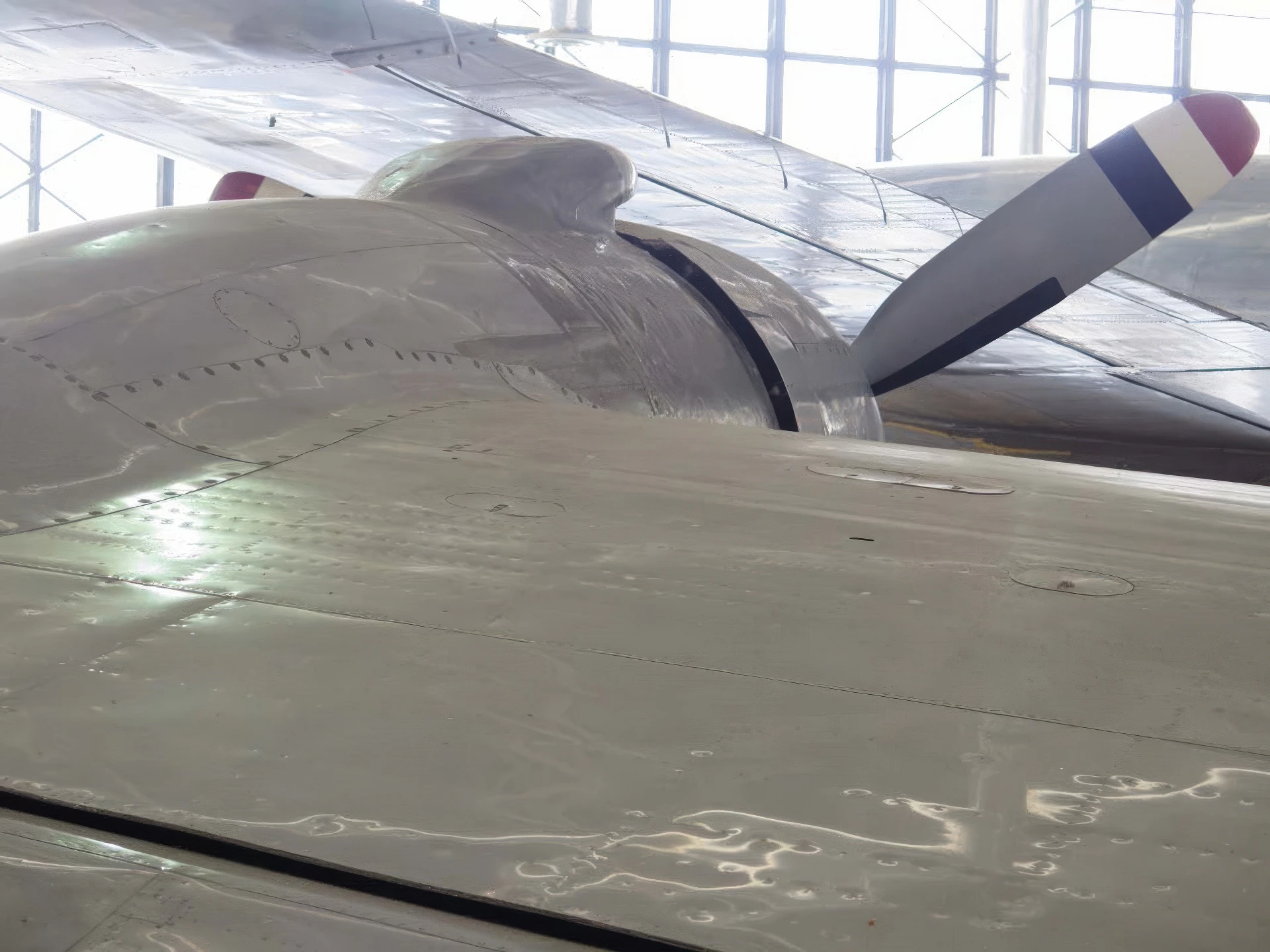
| Douglas VC-118 Independence Walk Around | |
|---|---|
| Photographes | Vladimir Yakubov |
| Localisation | Musée national de l’USAF, Dayton, OH |
| Photos | 160 |



 Achetez-moi un café

Voir aussi :


The Evolution of a Legend
Lla Douglas DC-6 was originally designed during World War II as the XC-112, a military transport aimed at improving upon the DC-4 (C-54). When the war ended, Douglas re-engineered it into a long-range civilian airliner to compete with the Lockheed Constellation. Its greatest advantage was a fully pressurized cabin, allowing it to fly above the weather for greater passenger comfort. The DC-6 became the backbone of the great post-war airline expansion, famously used by Pan Am, United, and American Airlines for transcontinental and transoceanic flights.
| Attribute | Standard Specification (Douglas DC-6B) |
|---|---|
| Rôle | Long-range Airliner / Military Transport (C-118) |
| Crew | 3 or 4 (Pilot, Co-pilot, Flight Engineer, Navigator) |
| Capacité | 54 to 102 passengers (depending on configuration) |
| Groupe motopropulseur | 4 x Pratt & Whitney R-2800 Double Wasp radials |
| Horsepower | 2,400 hp to 2,500 hp per engine |
| Cruising Speed | 507 km/h (315 mph / 274 knots) |
| Maximum Range | approx. 7,600 km (4,100 nmi) |
| Service Ceiling | 7,600 meters (25,000 ft) |
Technological Advancements
- The R-2800 « Double Wasp »: The DC-6 utilized the 18-cylinder R-2800 engine, widely considered one of the finest radial engines ever built. It was the same engine that powered legendary warbirds like the P-47 Thunderbolt and F4U Corsair.
- Reversible Pitch Propellers: The DC-6 was one of the first airliners to feature « reverse thrust » by changing the pitch of its propellers. This allowed the aircraft to land on shorter, wet runways and even back up on the ground under its own power.
- Environmental Control: Sophisticated cabin pressurization and air conditioning systems meant that for the first time, « flying through a storm » could be avoided by simply flying over it at 20,000 feet.
- DC-6A & B Variants: Lla DC-6A « Liftmaster » was a dedicated freighter with large cargo doors, while the DC-6B was the ultimate passenger version, elongated and refined for maximum efficiency.
Military and Presidential Service
- The C-118 Liftmaster: The US Air Force and Navy operated large fleets of DC-6s for logistics and medical evacuations. It proved to be an incredibly reliable workhorse through the Korean War and the early Cold War.
- Independence: A specialized VC-118, named The Independence, served as the presidential aircraft for Harry S. Truman. It featured a distinctive eagle-themed paint job.
- Air Force One: While the « Air Force One » callsign was officially established later, the DC-6 was a primary transport for several US presidents and high-ranking diplomats.
Historical Impact & Modern Day
- The Jet Age Transition: The DC-6 was so efficient and reliable that it continued to serve many airlines well into the 1960s, long after the first jets like the Boeing 707 arrived.
- Firefighters and Freighters: Today, the DC-6 enjoys a legendary second career. Its high payload and low-speed stability make it an excellent aerial firefighter (water bomber) and a rugged cargo hauler for remote areas like Alaska.
Vues : 1176
Vous pouvez voir aussi :
 ST Aerospace A-4SU Super Skyhawk – Photos & Vidéos
 Douglas B-18 Bolo – Photos & Vidéos
 Douglas X-3 Stiletto – Photos & Vidéos
 Douglas B-23 Dragon – Photos et vidéos
 Douglas O-38 – Photos et vidéo
 McDonnell Douglas F/A-18 Hornet – Photos & Vidéo
 Douglas A-4 Skyhawk – Photos et vidéo
 Douglas WB-66 Destroyer – Photos & Vidéo
 A-7B Corsair II - WalkAround
 Douglas EA-1F Skyraider – WalkAround