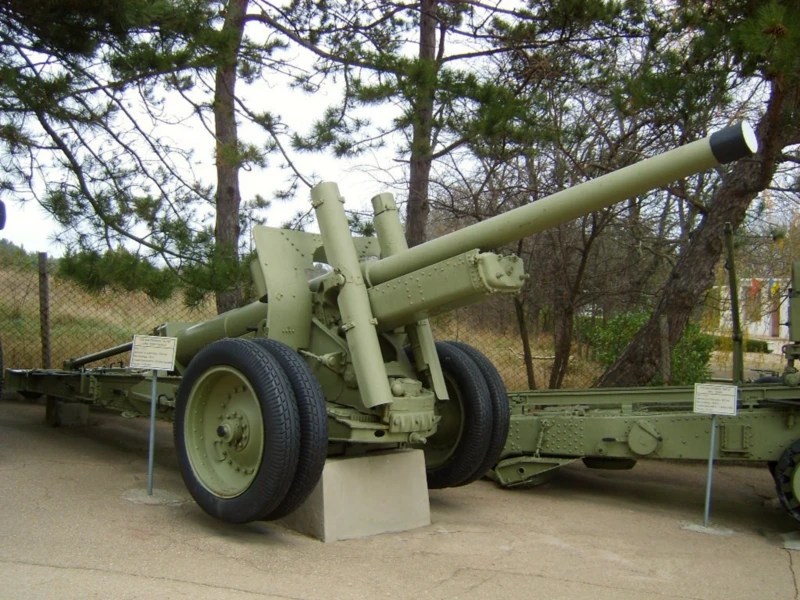
Canon 122mm A-19 | |
|---|---|
| Pays | Union soviétique |
| Type | Canon de champ soviétique |
| Photographe | Inconnu |
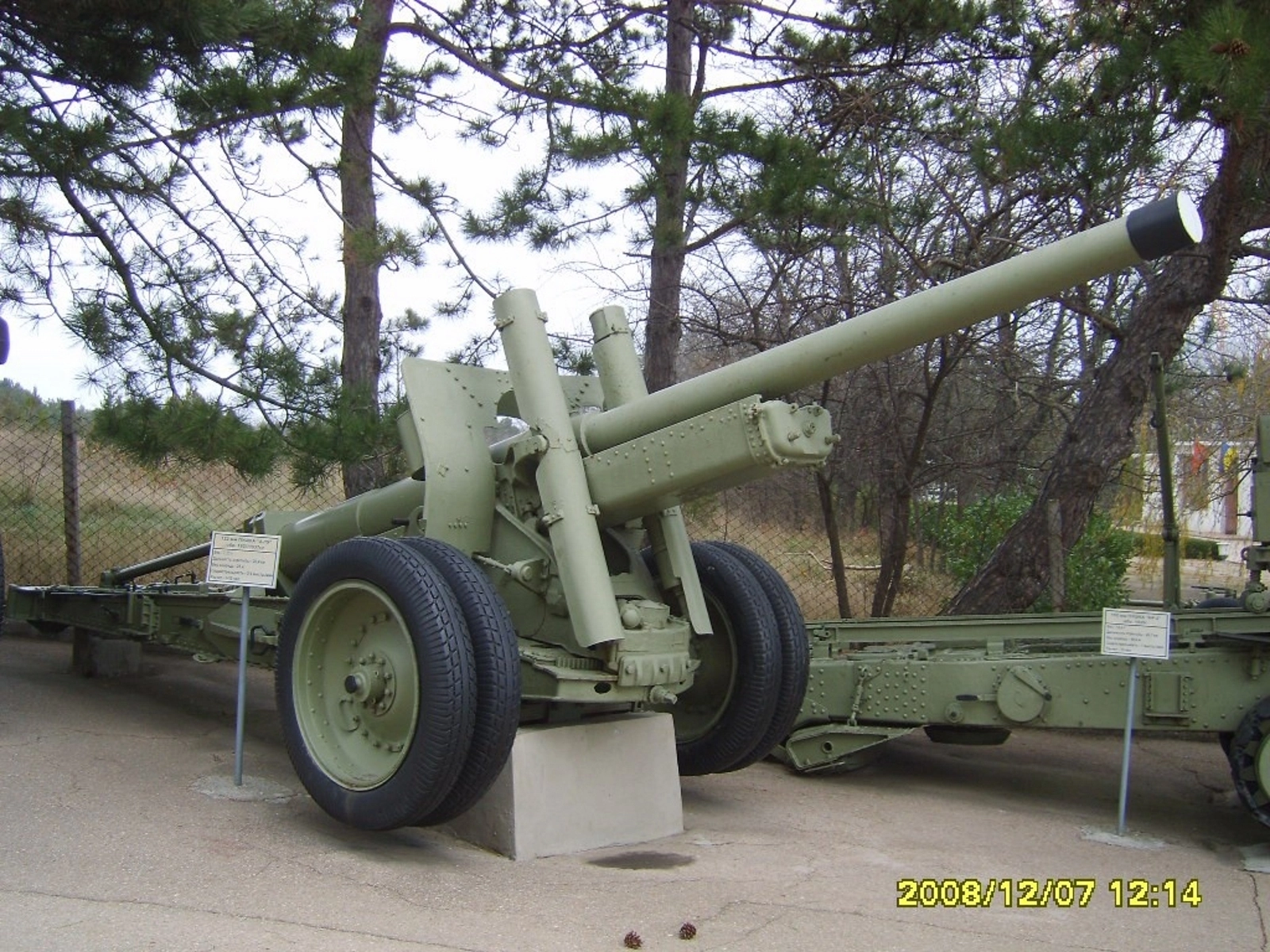
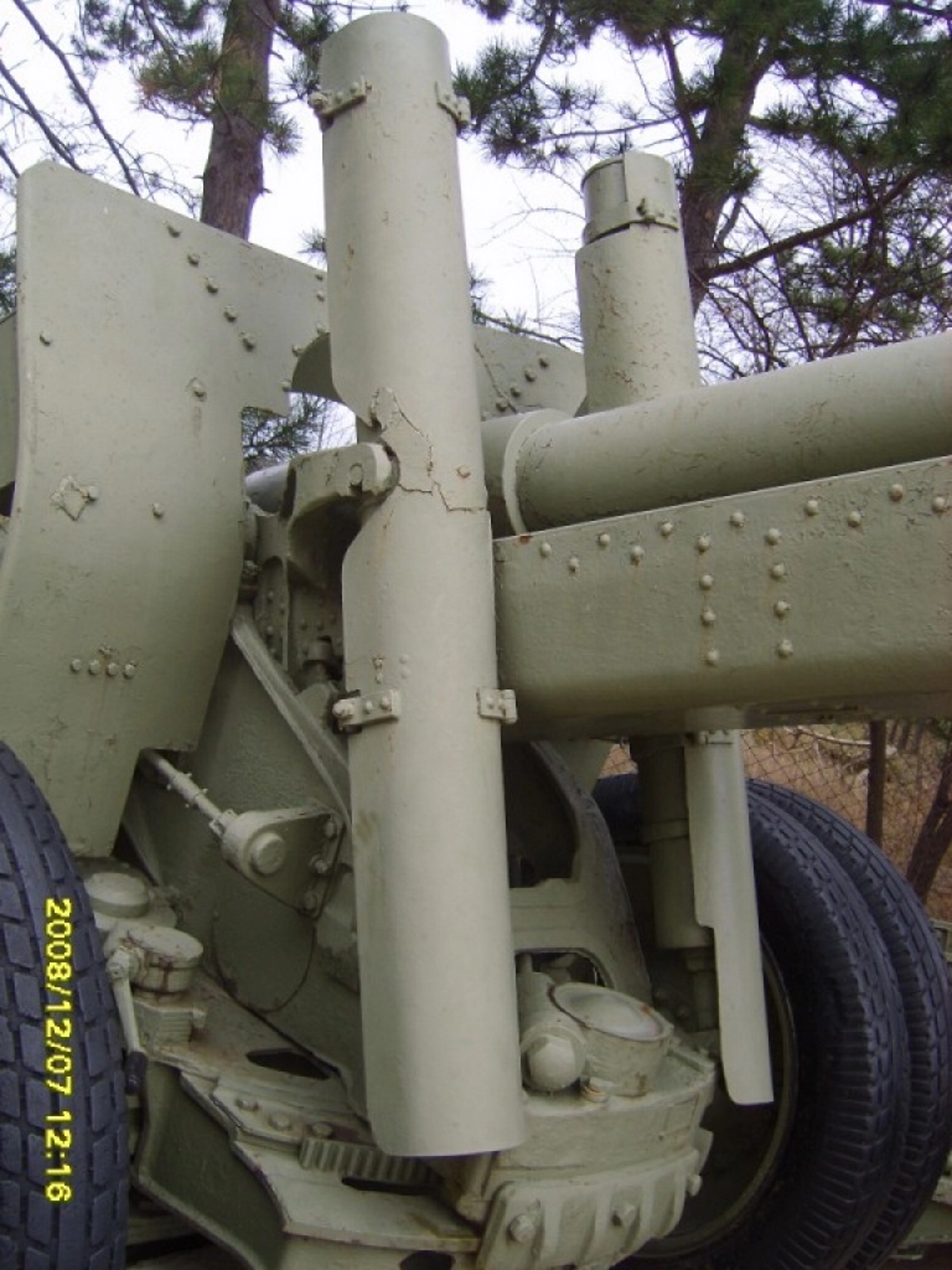
| Description | Album de 15 photos walk-around d’un « 122mm Gun A-19 » |
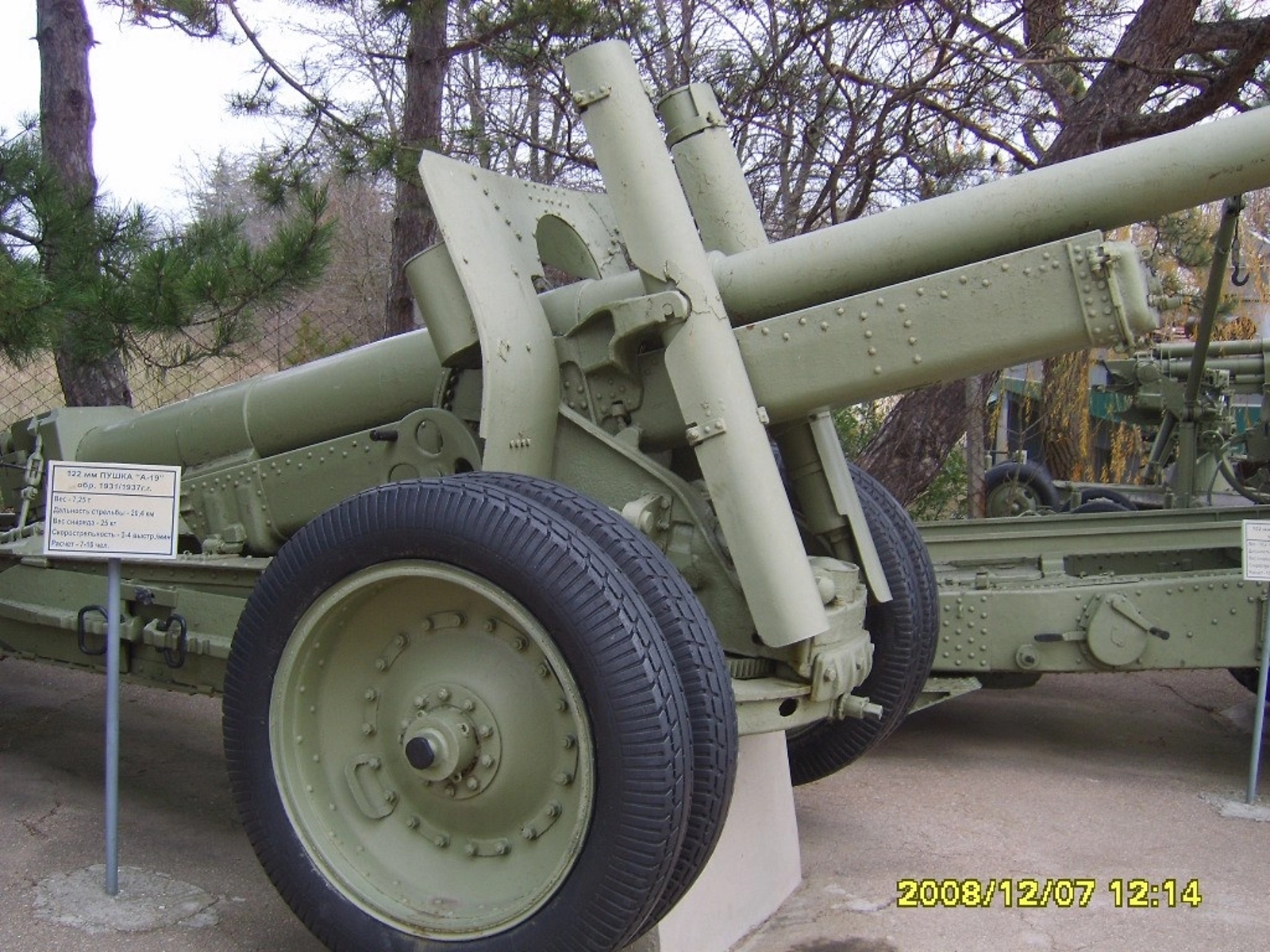
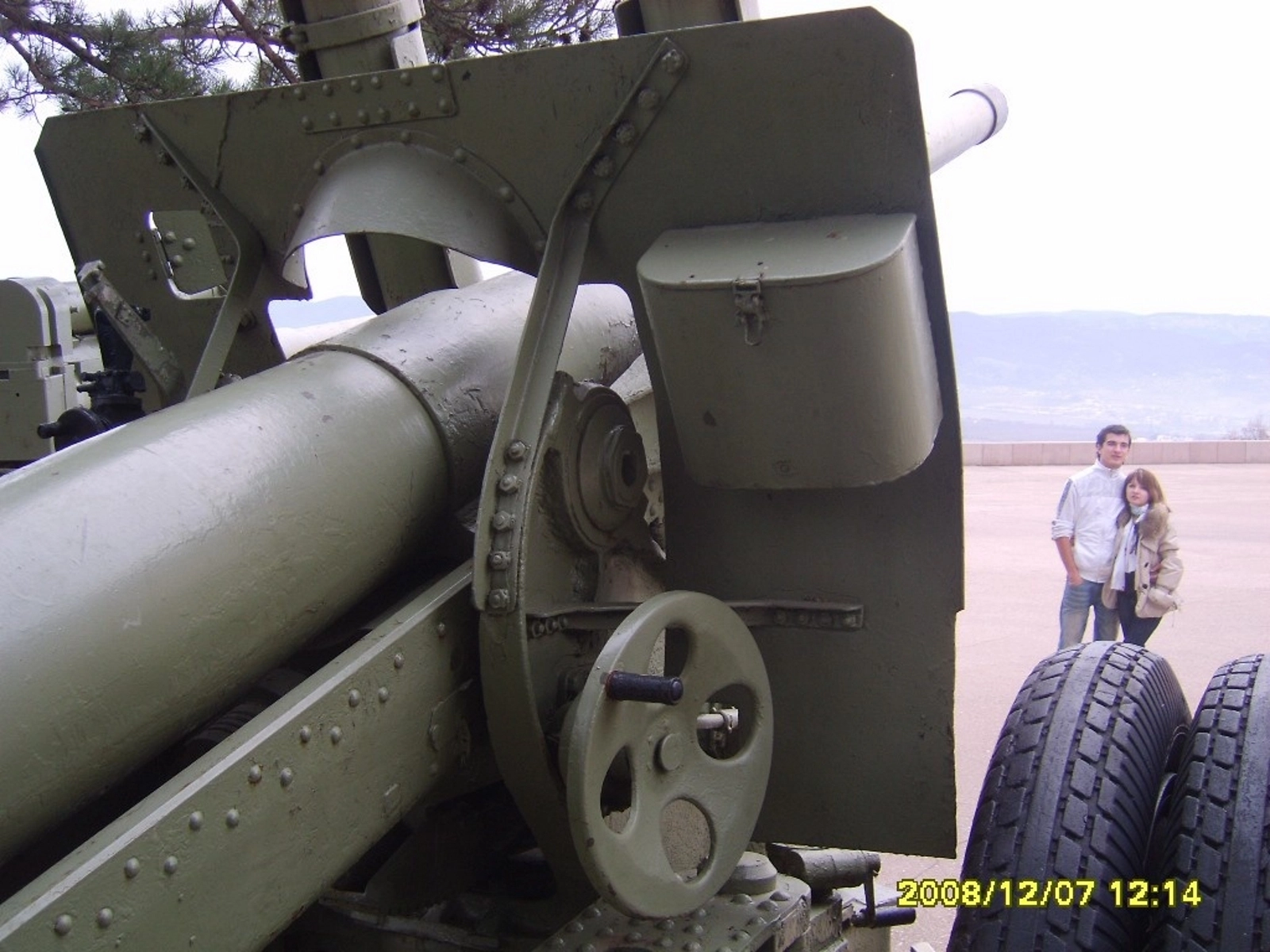
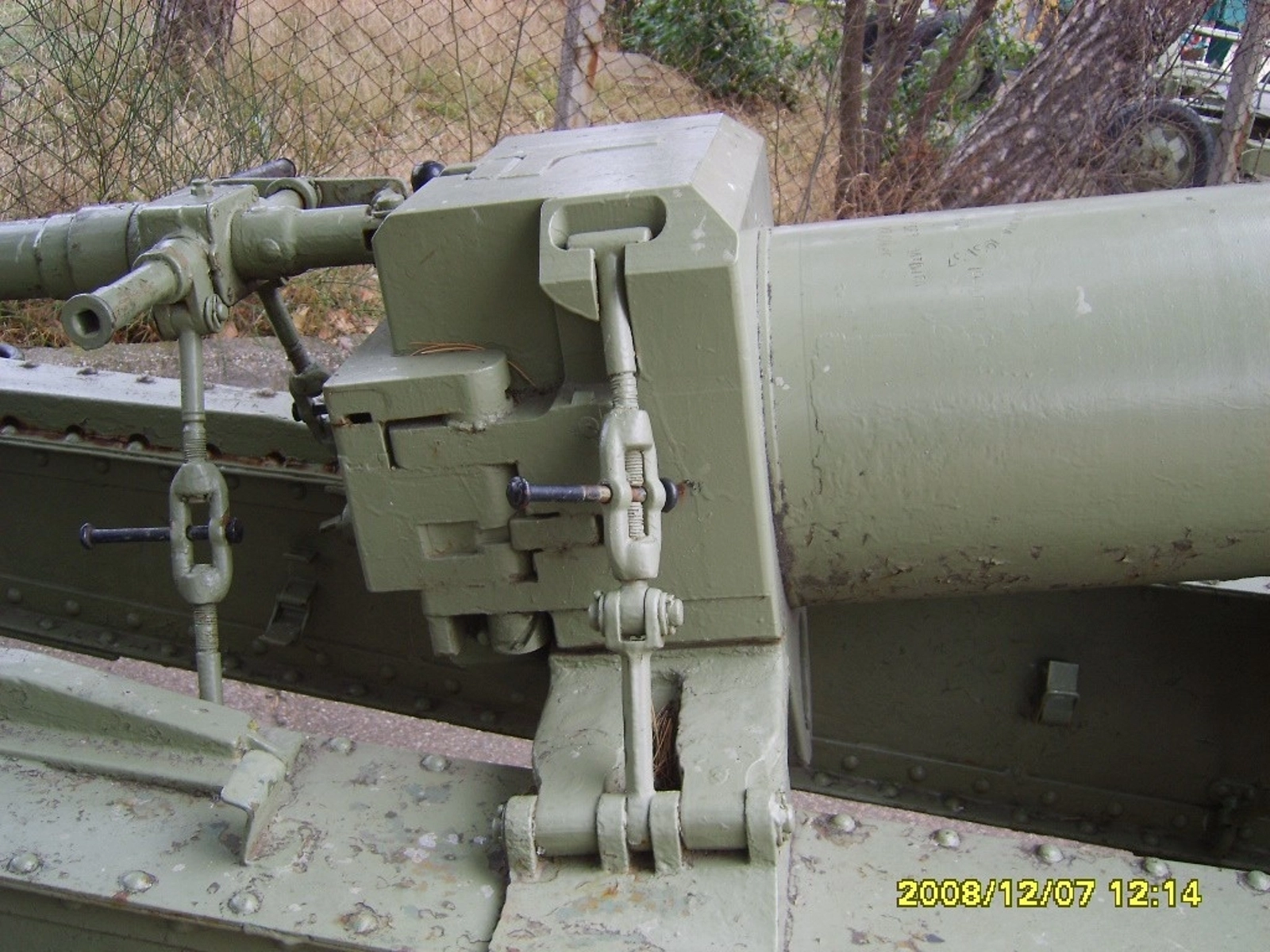
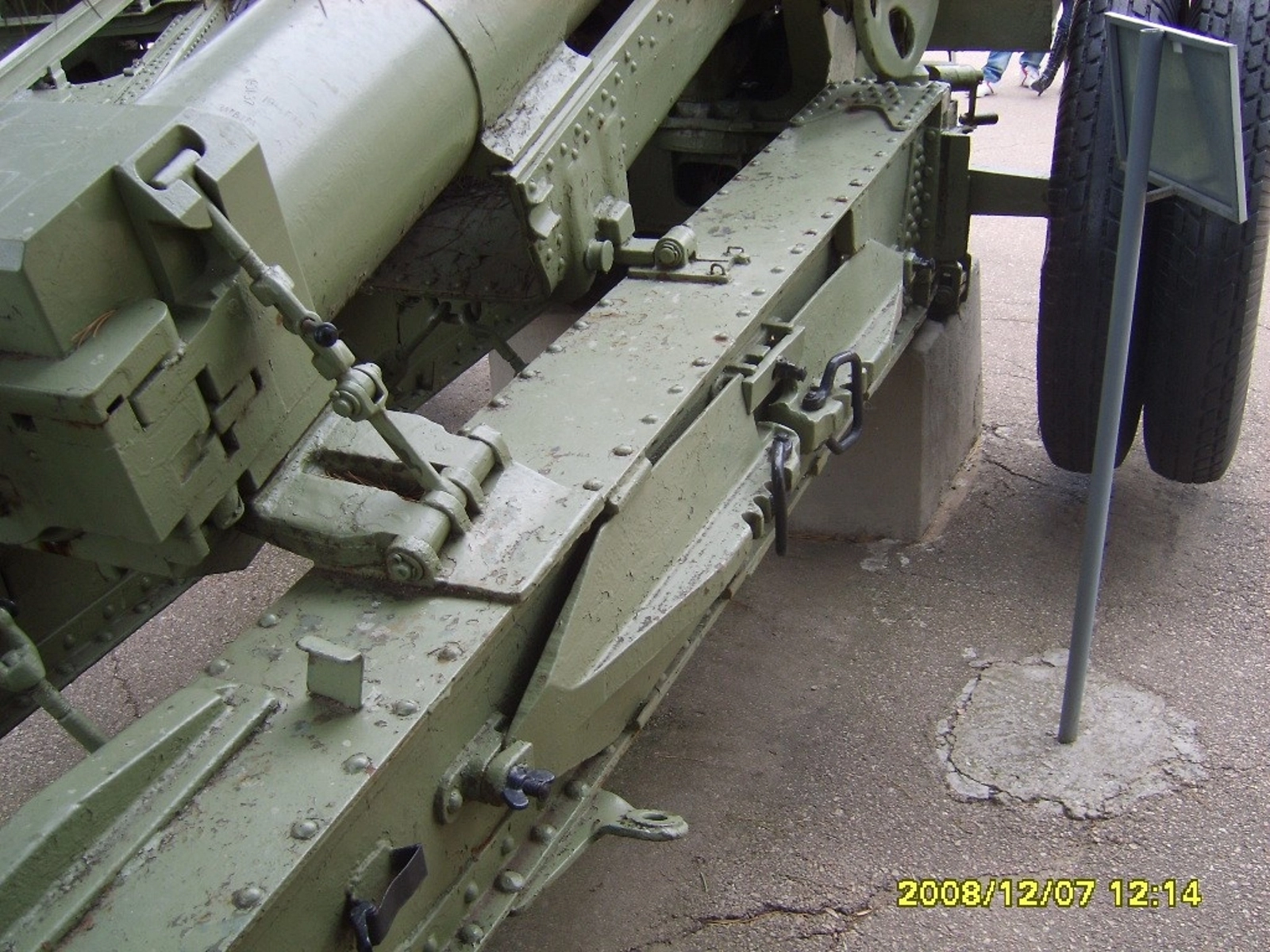
Galerie de photos d’un Canon 122mm A-19, 122 mm corps gun M1931 (A-19) (Russian: 122-мм корпусная пушка обр. 1931 г. (А-19)) was a Soviet field gun, developed in the late 1920s and early 1930s. In 1939 the gun was replaced in production by an improved variant, M1931/37. The piece saw action in World War II with the Red Army. Captured guns were employed by Wehrmacht and the Finnish Army.
Source: 122mm A-19 sur Wiki
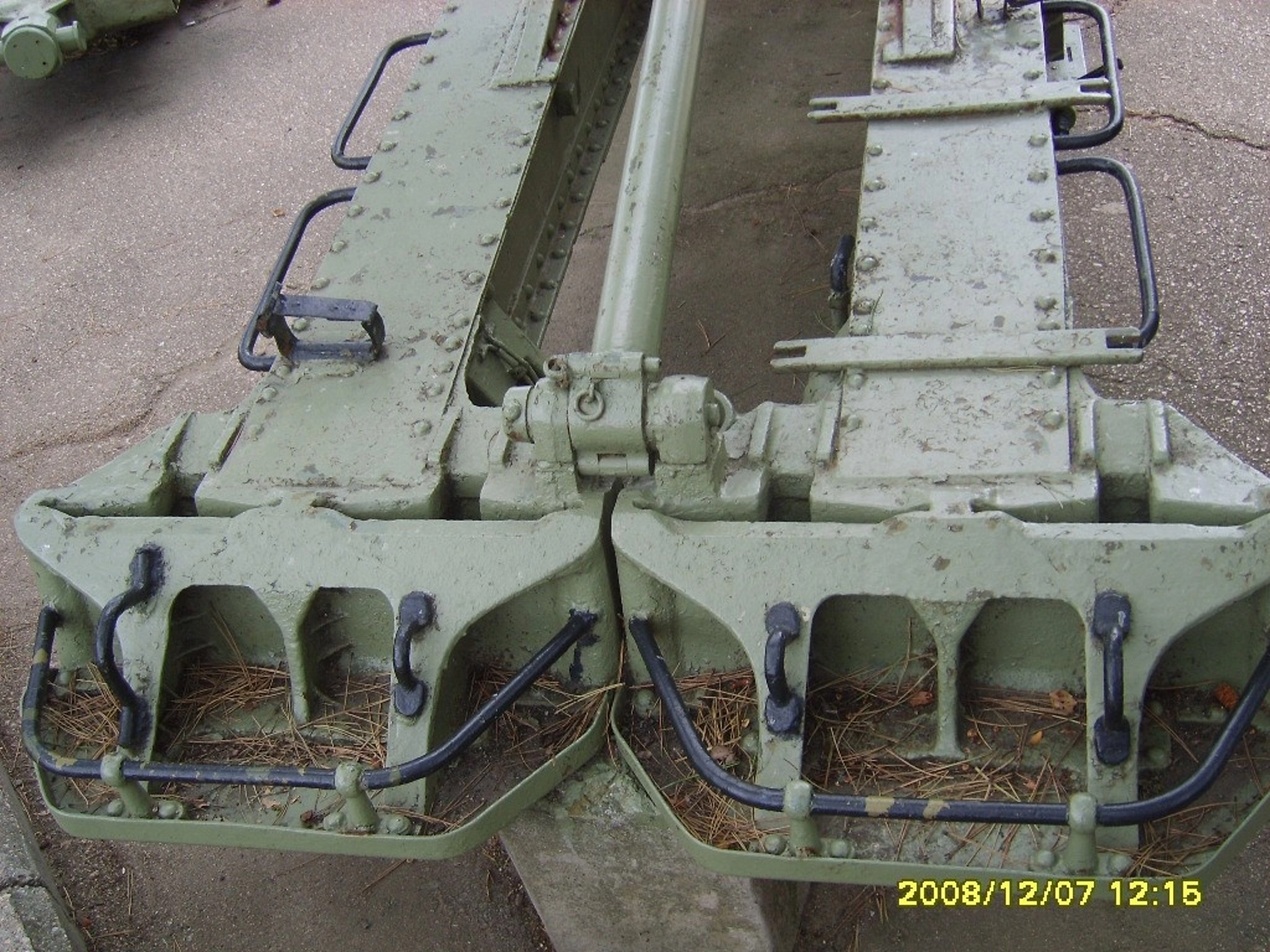
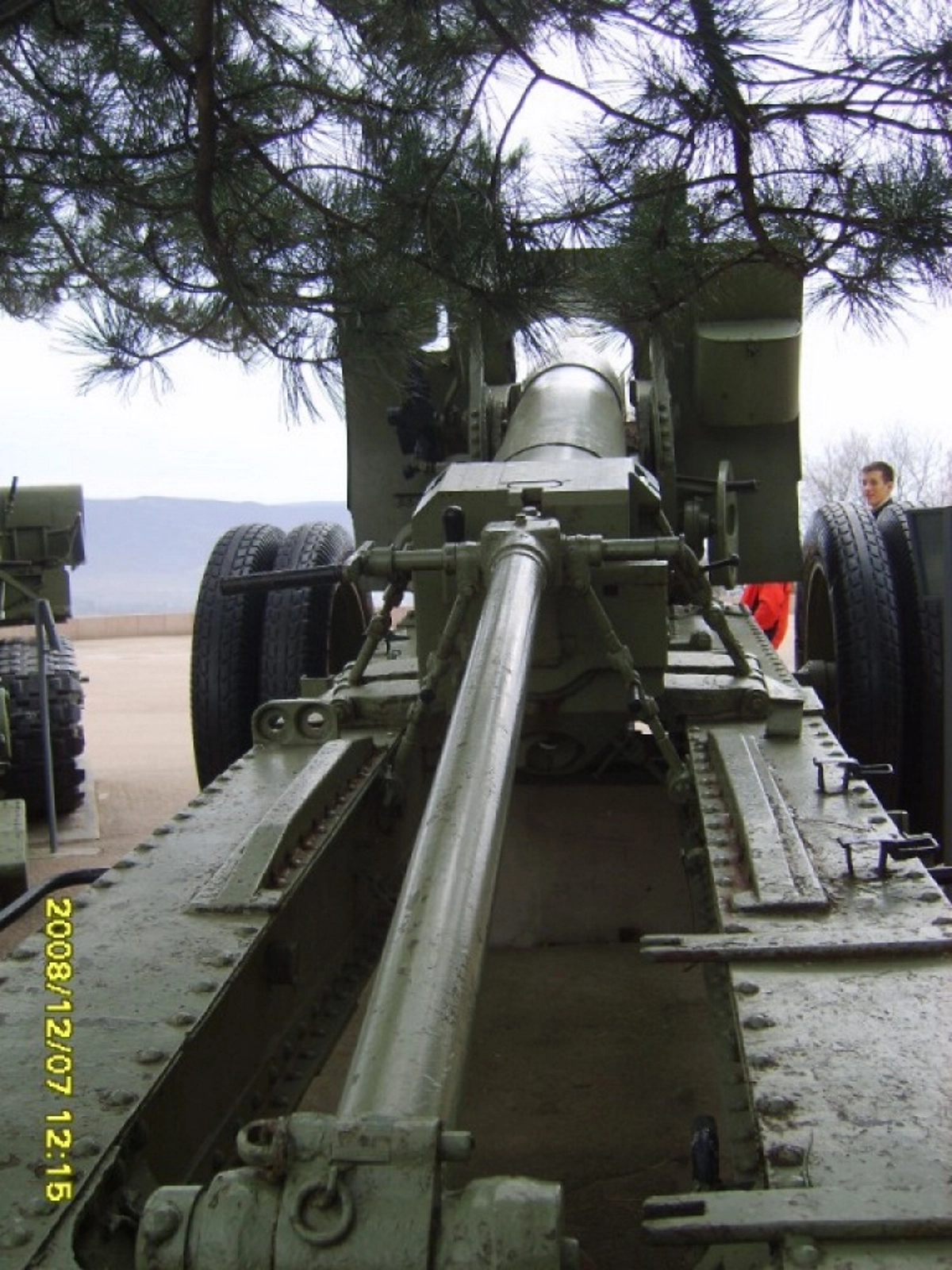

Voir aussi :


The Long Arm of the Red Army
Lla 122mm Gun M1931/37 (A-19) was one of the most powerful and important artillery pieces in the Soviet arsenal during World War II. It was designed to provide long-range counter-battery fire, smashing German artillery positions and fortifications from miles behind the front lines. While it was a heavy towed gun, its ballistic performance was so impressive that it became the foundation for the main armament of the IS-2 heavy tank et le ISU-122 self-propelled gun. It was an A-19 that reportedly fired the first Soviet shell into Berlin in 1945.
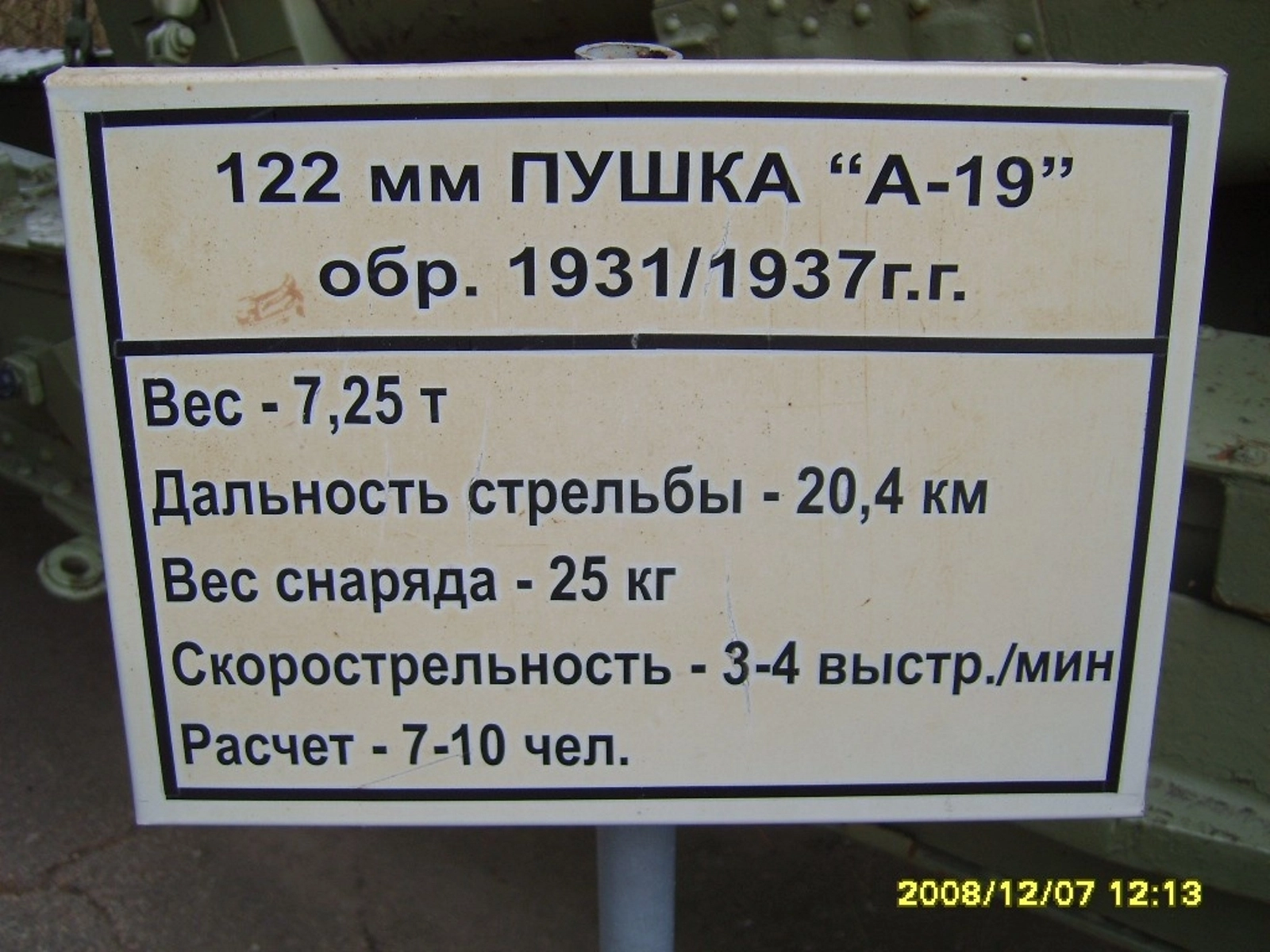
| Attribute | Technical Specification (A-19) |
|---|---|
| Type | Corps Field Gun |
| Crew | 9 men |
| Calibre | 121.92 mm |
| Barrel Length | 46.3 calibers |
| Rate of Fire | 3–4 rounds per minute |
| Muzzle Velocity | 800 m/s (2,625 ft/s) |
| Maximum Range | 20,400 m (22,310 yards) |
| Projectile Weight | 25 kg (55 lbs) – HE Shell |
Engineering: Power and Recoil
- The Split-Trail Carriage: The M1937 variant used the same versatile carriage as the 152mm ML-20. The split-trail design allowed for a wide horizontal traverse (58 degrees), making it much easier to track moving targets or shift fire without moving the entire gun.
- Screw Breech Mechanism: Unlike the sliding blocks of smaller guns, the A-19 utilized an interrupted screw breech. This provided a superior gas seal for the massive propellant charges needed to reach its 20-kilometer range.
- Recoil System: To manage the violent energy of firing, the A-19 featured a hydraulic recoil buffer and a pneumatic recuperator located above the barrel.
- Limber and Transport: Despite its power, the A-19 was massive and heavy (over 7 tons). It required heavy tracked tractors, like the Voroshilovets Ou Stalinets, to move across the muddy Russian terrain.
A Tank-Killer by Accident
- Lla « Tiger » Hunter: During the Battle of Kursk, Soviet commanders discovered that the A-19’s high muzzle velocity made it capable of punching through the thick armor of German Tiger and Panther tanks at ranges where other guns failed. Even a non-penetrating hit from a 25kg shell could shear the turret off a tank through sheer kinetic energy.
- Evolution into the D-25T: The A-19 was so successful that it was modified into a tank gun, the D-25T. This became the legendary armament of the IS-2 « Joseph Stalin » tank, allowing Soviet tankers to engage German heavy armor from safe distances.
- Cold War Longevity: After WWII, the A-19 remained in service for decades and was exported to dozens of Soviet-aligned nations. It saw extensive combat in the Arab-Israeli wars and various conflicts across Africa and Asia.
- First Shot into Berlin: Tradition holds that on April 20, 1945, an A-19 battery from the 30th Guards Gun Artillery Brigade fired the opening salvo on the German capital, signaling the final phase of the war in Europe.
Vues : 2269
Vous pouvez voir aussi :
 Howitzer 149-19 – Photos & Video
 220 mm TR mle 1915/1916 – Photos & Vidéo
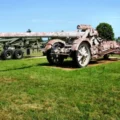 17 cm Kanone 18 – WalkAround
 Système de fusée à lancement multiple M270 - Photos et vidéos
 2S3 Akatsiya – Photos & Vidéos
 7.5 cm Gebirgsgeschütz 36 – Photos & Vidéo
 Canon divisionnaire de 85 mm D-44 – Photos et vidéos
 Canon régimentaire de 76 mm M1927 – Photos & Vidéo
 Canon allemand 28cm K5(E) Leopold Rail-Road
 21cm Morser 18 Obusier - Walk Around