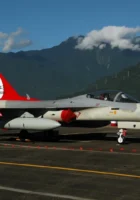
F-CK-1 Ching Kuo

AIDC F-CK-1 Ching-kuo

PaísTaiwán
PapelAviones de combate
Primer vuelo28 de mayo de 1989
Construido131

El AIDC F-CK-1 Ching-Kuo (Chino: 經國號戰機; pinyin: Jīngguó Hào Zhànjī), comúnmente conocido como el Combatiente de Defensa Indígena (FDI), es un avión de combate multiredad que lleva el nombre de Chiang Ching-kuo, el difunto Presidente de la República de China. El avión realizó su primer vuelo en 1989. Fue entregado a la Fuerza Aérea de la República de China en enero de 1994 y entró en servicio en 1997. Los 130 aviones de producción habían sido fabricados en 1999.

Fuente: AIDC F-CK-1 Ching-kuo en Wikipedia

Continuar leyendo

Vistas : 1899

Sabueso de Bristol

Sabueso de Bristol

PaísUk
PapelMisil tierra-aire
En servicio1958 – 1991
Construido783

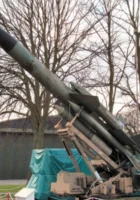
el Sabueso de Bristol is a British ramjet powered surface-to-air missile developed during the 1950s. It served as the UK’s main air defence weapon into the 1990s and was in large-scale service with the Royal Air Force (RAF) and the forces of four other countries. Part of sweeping changes to the UK’s defence posture, the Bloodhound was intended to protect the RAF’s V bomber bases to preserve the deterrent force, attacking bombers that made it past the Lightning interceptor force. Bloodhound Mk. I entered service in December 1958, the first British guided weapon to enter full operational service. This was part of Stage 1 upgrades to the defensive systems, in the later Stage 2, both Bloodhound and the fighters would be replaced by a longer-range missile code named Blue Envoy. When this was ultimately cancelled in 1957, parts of its design were worked into Bloodhound Mk. II, roughly doubling the range of the missile. The Mk. I began to be replaced by the Mk. II starting in 1964.

Fuente: Bristol Bloodhound en Wikipedia

Continuar leyendo

Vistas : 1660

Jagdpanzer Hummel

Hummel

PaísAlemania nazi
PapelArtillería autopropulsada
En servicio1943–1945
Construido714

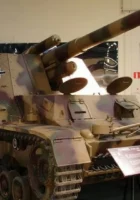
Hummel (German: “bumblebee”) was a self-propelled gun based on the Geschützwagen III/IV chassis and armed with a 15 cm howitzer. It was used by the German Wehrmacht during the Second World War from early 1943 until the end of the war. The full name was Panzerfeldhaubitze 18M auf Geschützwagen III/IV (Sf) Hummel, Sd.Kfz. 165. On February 27, 1944, Hitler ordered the name Hummel to be dropped as it was deemed inappropriate for a fighting vehicle.

Fuente: Hummel en Wikipedia

Continuar leyendo

Vistas : 2503

Northrop YC-125B Raider

Northrop YC-125 Raider

PaísE.e.u.u
PapelAviones de transporte
Primer vuelo1 de agosto de 1949
Construido23

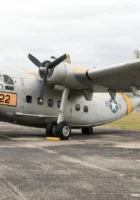
el Northrop YC-125 Raider was a 1940s American three-engined STOL utility transport built by Northrop Corporation, Hawthorne, California. Deliveries of the YC-125 to the USAF began in 1950. These aircraft did not serve long as they were underpowered and they were soon sent to Sheppard Air Force Base, Texas and relegated to be ground instructional trainers until retired in 1955 and declared surplus. Most of the surplus aircraft were purchased by Frank Ambrose and sold to bush operators in South and Central America.

Fuente: Northrop YC-125 Raider en Wikipedia

Continuar leyendo

Vistas : 1314

USS Preble

USS Preble (DDG-88)

PaísE.e.u.u
Clase y tipoDestructor clase Arleigh Burke
Lanzado1° de junio de 2001
Puerto baseBase Conjunta Pearl Harbor Hickam

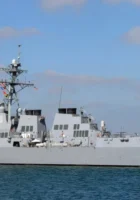
USS Preble (DDG-88) is an Arleigh Burke-class destroyer in the United States Navy. She is the sixth U.S. Navy ship named in honor of Commodore Edward Preble, who served in the American Revolutionary War and was one of the early leaders of the Navy. USS Preble is the 38th destroyer of her class. She was the 17th ship of this class to be built at Ingalls Shipbuilding in Pascagoula, Mississippi, and construction began on 22 June 2000. She was launched on 1 June 2001 and was christened on 9 June 2001. On 9 November 2002, she was commissioned during a ceremony at the Commonwealth Pier/World Trade Center in Boston, Massachusetts. At her commissioning ceremony USS Preble was docked bow to bow with USS Constitution, the command of her namesake. The ceremony included a symbolic welcoming aboard of the spirit of Commodore Preble signaled by the ringing of chimes. Among the speakers at the commissioning were U.S. Senator Edward Kennedy, U.S. Representative Stephen Lynch, then Chief of Naval Operations Admiral Vernon E. Clark USN (Ret.) and journalist and sailor Walter Cronkite.

Fuente: USS Preble en Wikipedia
Continuar leyendo

Vistas : 1107

Sd.Kfz.11 3-Ton Medio Camino

Sd.Kfz. 11

PaísAlemania nazi
PapelMedia pista ligera
Producido1938–45
Construido9000+

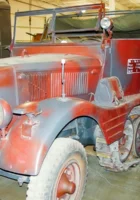
el Sd.Kfz. 11 (Sonderkraftfahrzeug – special motorized vehicle) was a German half-track that saw widespread use in World War II. Its main role was as a prime mover for medium towed guns ranging from the 3.7 cm FlaK 43 anti-aircraft gun up to the 10.5 cm leFH 18 field howitzer. It could carry eight troops in addition to towing a gun or trailer. The basic engineering for all the German half-tracks was developed during the Weimar-era by the Reichswehr’s Military Automotive Department, but final design and testing was farmed out to commercial firms with the understanding that production would be shared with multiple companies. Borgward was chosen to develop the second smallest of the German half-tracks and built a series of prototypes between 1934 and 1937. However development was taken over in 1938 by Hanomag who designed the main production version, H kl 6.

Fuente: Sd.Kfz. 11 en Wikipedia
Continuar leyendo

Vistas : 2495

Sd.Kfz.8

Sd.Kfz. 8

PaísAlemania nazi
PapelMedia oruga pesada
Producido1937–45
Construido4000

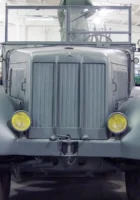
el Sonderkraftfahrzeug 8 ("vehículo motorizado especial 8") fue un semioruga alemán que vio un uso generalizado en la Segunda Guerra Mundial. Sus funciones principales fueron como motor principal para cañones pesados remolcados como el Mörser 18 de 21 cm, el Kanone 18 de 15 cm y el FlaK 38 de 10,5 cm, sin embargo, también era capaz de servir como transporte de infantería. Aproximadamente 4.000 fueron producidos entre 1938 y 1945. Fue utilizado en todas las campañas libradas por los alemanes en la Segunda Guerra Mundial, en particular la Invasión de Polonia, la Batalla de Francia, la Campaña de los Balcanes, el Frente Oriental, la Campaña del Norte de África, la Batalla de Normandía y la Campaña italiana.

Fuente: Sd.Kfz. 8 en Wikipedia
Continuar leyendo

Vistas : 1592

Bushmaster 2000

Stout Bushmaster 2000

PaísE.e.u.u
PapelAvión
Primer vuelo1964
Buily2

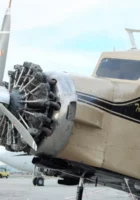
el Bushmaster 2000 fue un pequeño avión de pasajeros construido en los Estados Unidos en un intento de revivir el diseño del Ford Trimotor. El trabajo comenzó en 1953 probando un Trimotor vintage y en 1954 Bill Stout compró los derechos de diseño del Trimotor original. Debido a problemas de licencia de "Ford Tri-Motor", el Ford 15-AT-D recibió el nombre de Bushmaster 2000. El 15 de enero de 1955, Stout y su socio Robert Hayden de Hayden Aircraft Corporation anunciaron que planeaban construir 1.000 nuevos Bushmasters, pero pasarían once años antes de que volara el primer prototipo del nuevo diseño.

Fuente: Stout Bushmaster 2000 en Wikipedia
Continuar leyendo

Vistas : 738

BFC-2

Curtiss F11C Goshawk

PaísE.e.u.u
PapelCaza y cazabombardero transportado por portaaviones
Primer vueloSeptiembre de 1932
Buily30

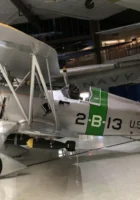
el Curtiss F11C Goshawk fue un avión de combate biplano naval de los Estados Unidos de la década de 1930 que tuvo un éxito limitado, pero fue parte de una larga línea de aviones Curtiss Hawk construidos por la Curtiss Aeroplane and Motor Company para el ejército estadounidense.

Fuente: RCurtiss F11C Goshawk en Wikipedia
Continuar leyendo

Vistas : 1666

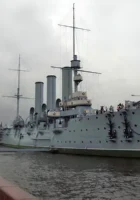
Crucero Avrora

Russian cruiser Aurora

PaísUnión Soviética
Clase y tipoCrucero protegido de la clase Pallada
Lanzado11 de mayo de 1900

Aurora (Russian: Авро́ра, tr. Avrora, IPA: [ɐˈvrorə]) is a 1900 Russian protected cruiser, currently preserved as a museum ship in Saint Petersburg. Aurora was one of three Pallada-class cruisers, built in Saint Petersburg for service in the Pacific. All three ships of this class served during the Russo-Japanese War. Aurora survived the Battle of Tsushima and was interned under US protection in the Philippines, and eventually returned to the Baltic Fleet. The second ship, Pallada, was sunk by the Japanese at Port Arthur in 1904. The third ship, Diana, was interned in Saigon after the Battle of the Yellow Sea. One of the first incidents of the October Revolution in Russia took place on the cruiser Aurora, which reportedly fired the first shot, signalling the beginning of the attack on the Winter Palace.

Fuente: Crucero ruso Aurora en Wikipedia
Continuar leyendo

Vistas : 1628