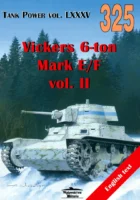
Wydawnictwo Militaria 325 Vickers 6-ton Mark E-F

Wydawnictwo Militaria

EditorWydawnictwo Militaria
SeriePotencia del tanque
Asunto

Vickers 6-Ton Mark E

Ref325

Documentación firmada Wydawnictwo Militaria el libro "Vickers 6-Ton Mark E - Wydawnictwo 325" .

el Vickers 6-Ton Tank o Vickers Mark E fue un tanque británico desarrollado por Vickers por su propio origen (no el resultado de una licitación nacional). No fue utilizado por el ejército británico, sino exportado o producido bajo licencia, en un número muy grande. El T-26 soviético es una mejora de los 6-Ton con licencia. Fue el predecesor del 7TP en el ejército polaco. Al comienzo de la Segunda Guerra Mundial, fue el segundo tanque más extendido del mundo después del tanque francés Renault FT-17.

Fuente: Vickers 6-Ton sur Wikipedia

Continuar leyendo

Vistas : 1207

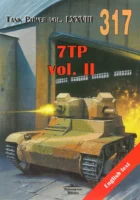
Wydawnictwo Militaria 317 7 TP (2)

Wydawnictwo Militaria

SeriePotencia del tanque
Asunto

7TP

Ref317

Documentación firmada Wydawnictwo Militaria le livre «Char 7TP – Editorial 317» .

Le 7TP est un char d’assaut polonais de la Seconde Guerre mondiale. Le char 7TP est une copie du char Vickers-Armstrong britannique de 1934, les Polonais s’étant contentés de l’équiper d’un canon antichar de 37 mm et d’un moteur diesel de 110 cv (ce fut alors le premier char diesel au monde) qui pouvait l’amener à une vitesse de 37 km/h. Il avait également un blindage de 17 mm. Il était parfaitement apte à s’attaquer aux Panzers I et II mais comme les Polonais ne disposaient que de 137 7TP lors de l’invasion allemande, ils furent alors totalement submergés. En Pologne occupée, les Allemands se servirent alors des 7TP restants comme tracteurs ou pour les missions de police.

Fuente: Wikipedia

Continuar leyendo

Vistas : 727

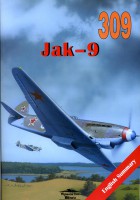
Yakovlev Yak-9 - Wydawnictwo 309

Wydawnictwo Militaria

SerieAvión
Asunto

Yakovlev Yak-9

Ref309

Documentación firmada Wydawnictwo Militaria el libro "Yakovlev Yak-9 - Wydawnictwo 309" .

el Yakovlev Yak-9 est un avion de chasse soviétique de la Seconde Guerre mondiale. Les premiers Yak-9 llegó en unidades de combate para participar en la contraofensiva soviética después de la Batalla de Stalingrado en el invierno de 1943. Rápidamente se convirtió en un gran luchador de VVS, junto con el Lavotchkine La-5. A diferencia de sus predecesores, era relativamente equivalente a los Bf-109G y Fw-190A. Aunque generalmente más lento, era más maniobrable. Contrariamente a lo que afirman muchas fuentes occidentales, el Yak-9T se utilizó muy poco para el ataque terrestre, con los soviéticos prefiriendo el Ilyushin Il-2 Sturmovik, mucho mejor protegido para estas misiones. En su lugar, lo utilizaron para el combate aéreo y en particular para la destrucción de bombarderos alemanes, ya que los proyectiles de 37 mm tuvieron un efecto devastador.

Fuente: Wikipedia

Continuar leyendo

Vistas : 924

M4 Sherman - Editorial 308M4 Sherman - Editorial 308

Wydawnictwo Militaria

SerieMilitar
Asunto

M4 Sherman

Ref308

Documentación firmada Wydawnictwo Militaria le livre «M4 Sherman – Wydawnictwo 308» .

Le Medium Tank M4 est le char américain moyen produit en plus grande quantité pendant la Seconde Guerre mondiale. Près de cinquante mille exemplaires (toutes versions confondues) furent produits. Son surnom de « Sherman », lui est attribué par les Britanniques, quand ils reçoivent leurs premiers exemplaires dans le cadre de la loi de prêt-bail, continuant leur tradition de nommer les chars d’origine américaine d’après le nom d’un général nordiste de la guerre de Sécession célèbre de ce pays. L’US Army adopte par la suite ce surnom, et le Medium Tank M4 est dès lors appelé « M4 Sherman ». Les Soviétiques surnomment les leurs « Emcha ».

Fuente: Wikipedia

Continuar leyendo

Vistas : 987

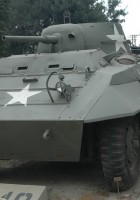
M8 Galgo

PaísE.e.u.u
TipoCoche blindado ligero
Palabras clave

Álbum 78 fotos del "M8 Greyhound Light Armored Car"

Galería de fotos en un M8 Greyhound Light Armored Car, The M8 Coche blindado ligero (AM-M8 o AMM8 en Francia) fue un vehículo blindado con ruedas producido por la Ford Motor Company y utilizado por los aliados durante la Segunda Guerra Mundial. el M8 todavía se veía en combate hasta 2006 en los ejércitos de los países en desarrollo. Los británicos lo apodaron galgo (galgo).

Fuente: M8 Greyhound en Wikipedia

Continuar leyendo

Vistas : 6494

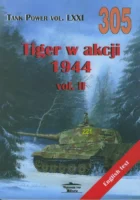
Wydawnictwo Militaria 305 Tiger w akcji 1944 vol_1

Wydawnictwo Militaria

SeriePotencia del tanque
Asunto

Tiger en acción

Ref305<

Documentación firmada Wydawnictwo Militaria le livre «Automitrailleuse BA-64 – Wydawnictwo 303» .

el Tigre I (Tigre), char d’assaut lourd allemand, en service de 1942 à 1945, est l’un des chars les plus connus de la Seconde Guerre mondiale, bien qu’il n’ait été que peu produit par rapport au T-34 soviétique ou au Sherman américain. Ce sont ses dimensions, ses lignes très carrées, sa résistance au combat, sa puissance ainsi que les équipages expérimentés l’ayant mené au feu qui ont marqué les esprits, notamment du fait de la propagande allemande. Son développement a commencé en 1937 et, quand il apparaît pour la première fois sur le front, le 29 août 1942, près de Léningrad, le Tigre I est le char techniquement le plus avancé, le mieux protégé et le plus puissant aligné par l’Axe, affichant une mobilité limitée mais exceptionnelle pour un engin qui fait plus de deux fois le poids de ses prédécesseurs et de la majorité de ses adversaires chenillés. Mais le char lourd, outre de sa production faible, a pâti tout au long de sa carrière de sa mécanique très fragile réduisant considérablement sa disponibilité au feu, de sa mise en œuvre opérationnelle rendue difficile par sa faible autonomie, souffrant également de son poids excessif. Construit à seulement 1 350 exemplaires, il n’a été que rarement endivisionné mais plutôt engagé dans des unités indépendantes.

Fuente: Wikipedia

Continuar leyendo

Vistas : 864

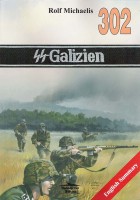
Wydawnictwo Militaria 302 - SS Galizien

Wydawnictwo Militaria

SerieMilitares generales
PeríodoSegunda Guerra Mundial
Ref302
Asunto

SS-Galicie

Documentación firmada Wydawnictwo Militaria le livre «SS-Galicie – Wydawnictwo 302» .

La 14. Waffen-Grenadier-Division der SS Galizien, abrégé en français par « Division SS Galicie » (en ukrainien : 14-А Гренадерська Дивiзiя СС “Галичина”), était une unité de la Waffen-SS.

Fuente: Wikipedia

Continuar leyendo

Vistas : 1059

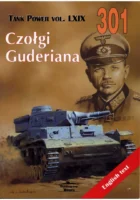
Wydawnictwo Militaria 301 Czolgi Guderiana

Guderian

EditorWydawnictwo Militaria
SerieMilitares generales
PeríodoSegunda Guerra Mundial
Ref301

Documentación firmada Wydawnictwo Militaria el libro "Guderian – Wydawnictwo 301".

Heinz Guderian (né le 17 juin 1888 à Kulm, de nos jours Chełmno1 en Pologne – décédé à Schwangau en Bavière le 14 mai 1954) fut un officier général allemand. Il est connu comme un des créateurs des Panzer de l’Allemagne nazie pendant la Seconde Guerre mondiale, appliquant la doctrine de la guerre éclair (Blitzkrieg) pour les chars d’assaut lors des campagnes de France et d’URSS. Il était l’une des rares personnes qui osaient discuter les décisions et défendre son point de vue sur des sujets stratégiques avec Hitler.

Fuente: Wikipedia

Continuar leyendo

Vistas : 463

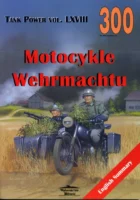
Wydawnictwo Militaria 300 Motocykle Wehrmachtu

Wydawnictwo Militaria

SeriePotencia del tanque
Asunto

Motocicletas Wehrmacht

Ref300

Documentación firmada Wydawnictwo Militaria el libro "La motocicleta en la Wehrmacht – Wydawnictwo 300".

Wehrmacht (en francés "Fuerza de Defensa") es el nombre dado al ejército alemán de 1935 a 1945, como parte del régimen nazi y su cuestionamiento de las cláusulas del Tratado de Versalles (1919) que limitaron drásticamente el tamaño y el poder del entonces ejército, resultante del Tratado de Versalles, el Reichswehr. Durante algunos años, la Wehrmacht fue el ejército con la tecnología militar más avanzada del mundo.

Fuente: Motocicletas de la Wehrmacht en Wikipedia

Continuar leyendo

Vistas : 1442

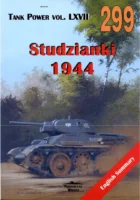
Wydawnictwo Militaria 299 Studzianki 1944

Wydawnictwo Militaria

SeriePotencia del tanque
Asunto

La bataille de Studzianki

Ref29

Un libro de Wydawnictwo Militaria «Batalla de Studzianki 1944 – Wydawnictwo 299» .

The Battle of Studzianki, was a tactical engagement between the elements of the Red Army’s 2nd Tank Army employed as the Cavalry mechanized group of the 1st Belorussian Front and elements of the German 9th Army of Army Group North Ukraine defending south of Warsaw. The battle was part of the Soviet Lublin-Brest Offensive Operation. The 2nd Tank Army was launched through the breach in the German 4th Panzer Army’s front between Parczew and Chełm, and bypassing Lublin attempted to find a crossing over the Visla.

In this it was supported by the Polish First Army, including the Polish 1st Armoured Brigade. In a hasty encounter battle during which the Polish 1st Armoured Brigade was located in the first echelon of the 2nd Tank Army. At the point where the Army was able to occupy the Magnuszew brideghead, the Polish brigade engaged advance elements of the counter-attacking German Fallschirm-Panzer Division 1 Hermann Göring with the express orders to deny Vistula crossings to the Red Army. The German counter-attack tried to dislodge the Soviet engineers, and the Polish troops providing support for them, behind Vistula off the bridgehead. The Soviet and Polish forces held the bridgehead, and German forces suffered heavy casualties before withdrawing. To commemorate the battle, in 1969 the name of the village Studzianki was changed to include the word Pancerne, meaning Armoured in Polish language. The episodes 3-5 of Polish TV series Czterej pancerni i pies (Four Tankmen and the Dog) depict the crew of Polish tank during the battle of Studzianki.

Fuente: Wikipedia

Continuar leyendo

Vistas : 1201