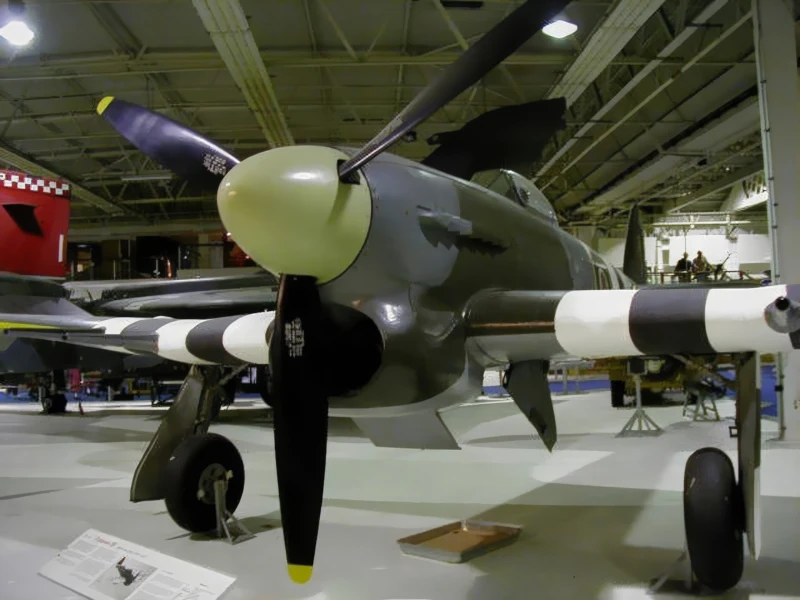
Hawker Typhoon | |
|---|---|
| Land | Uk |
| periode | Anden Verdenskrig |
| Type | jæger |
| Beskrivelse | Album 56 walk-around fotos af "Hawker Typhoon"-jageren |
Fotogalleri om en Hawker Typhoon , The Hawker Typhoon var et ensædet britisk jagerfly produceret af Hawker Aircraft Company fra 1941. Beregnet til at erstatte Hawker Hurricane i sin rolle som interceptor, led den først af præstationsproblemer og blev forbedret til at blive en af de bedste jagerbombere i Anden Verdenskrig.
Kilde: Hawker Typhoon på Wikipedia
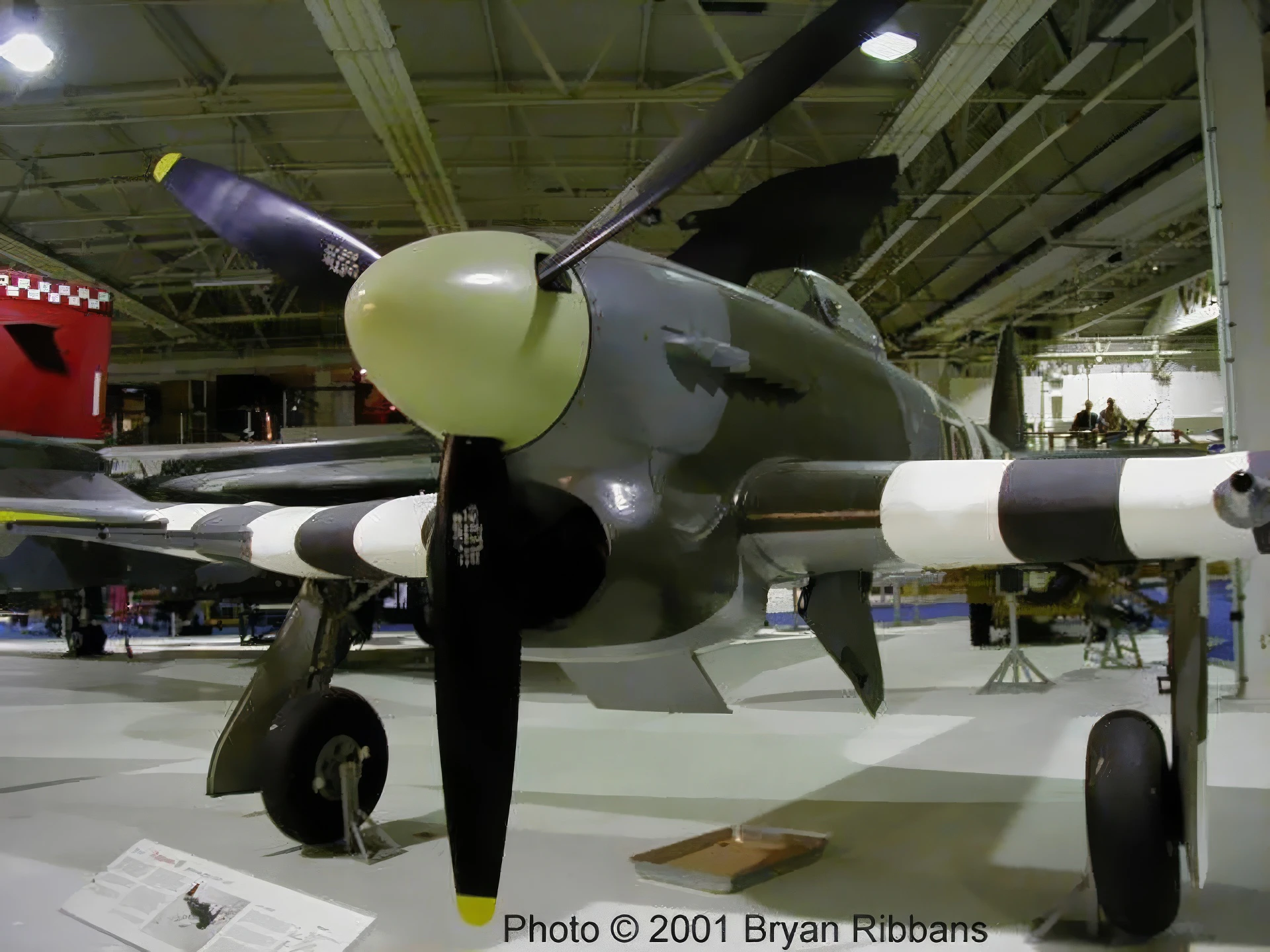
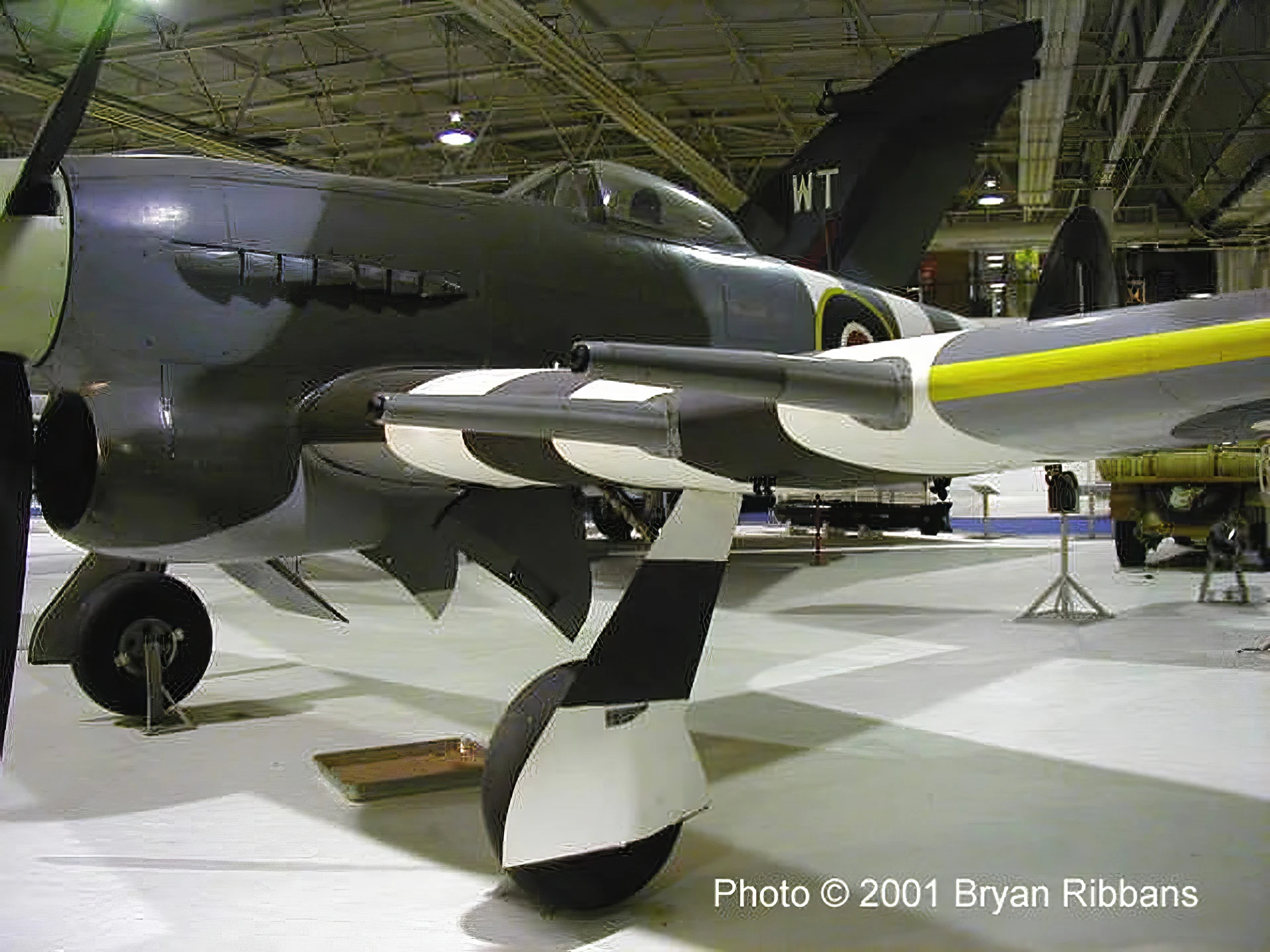
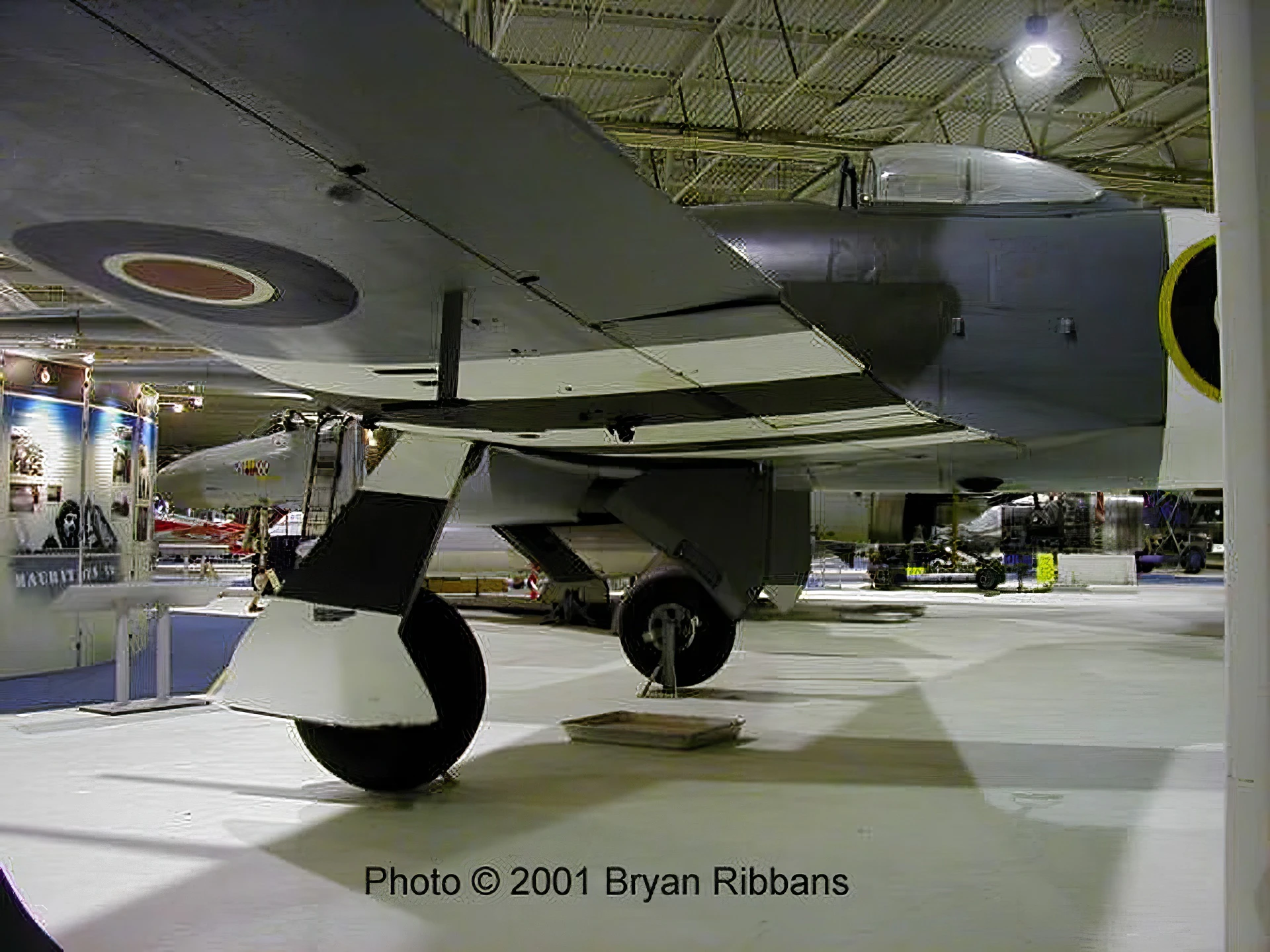
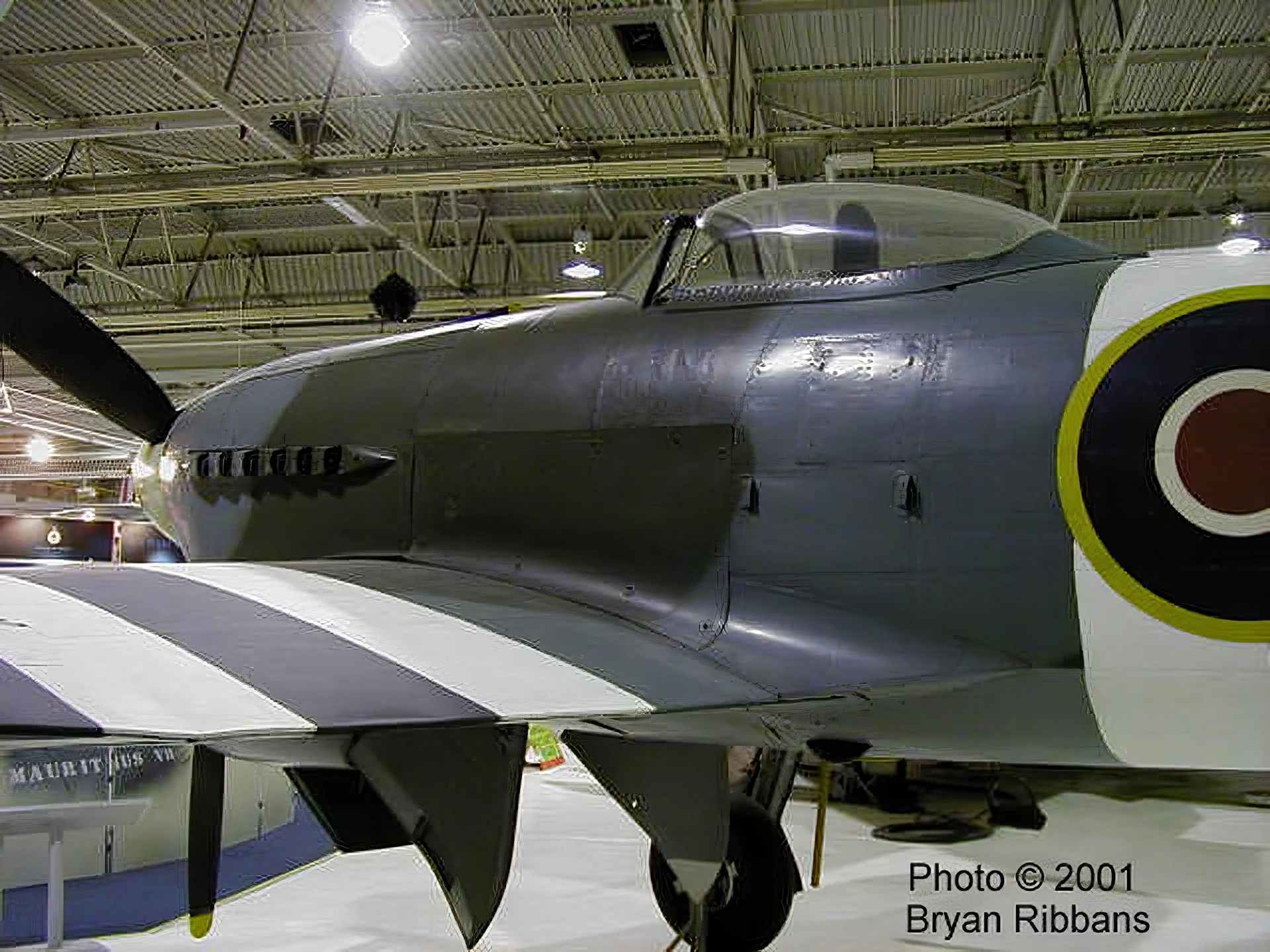
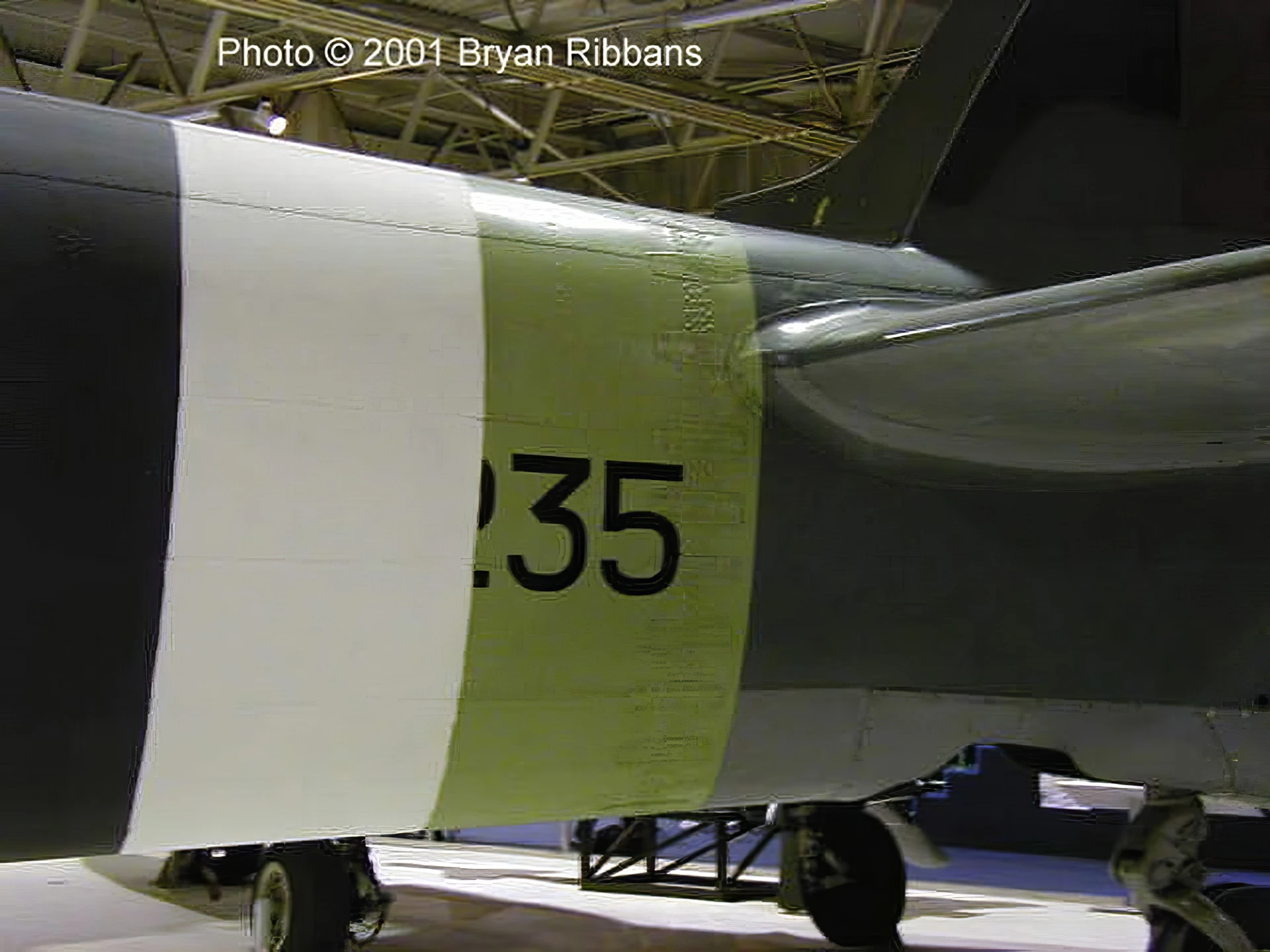
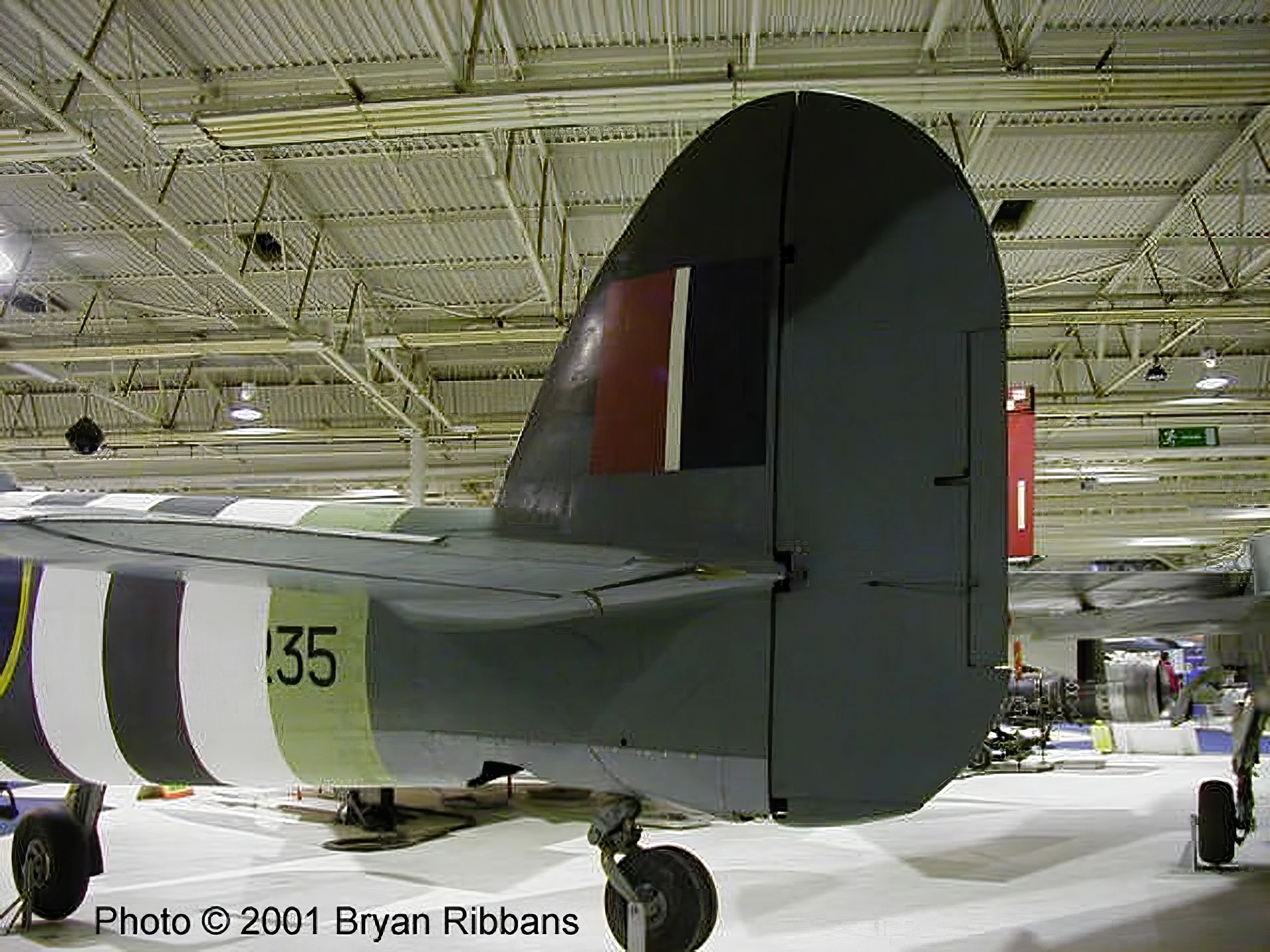
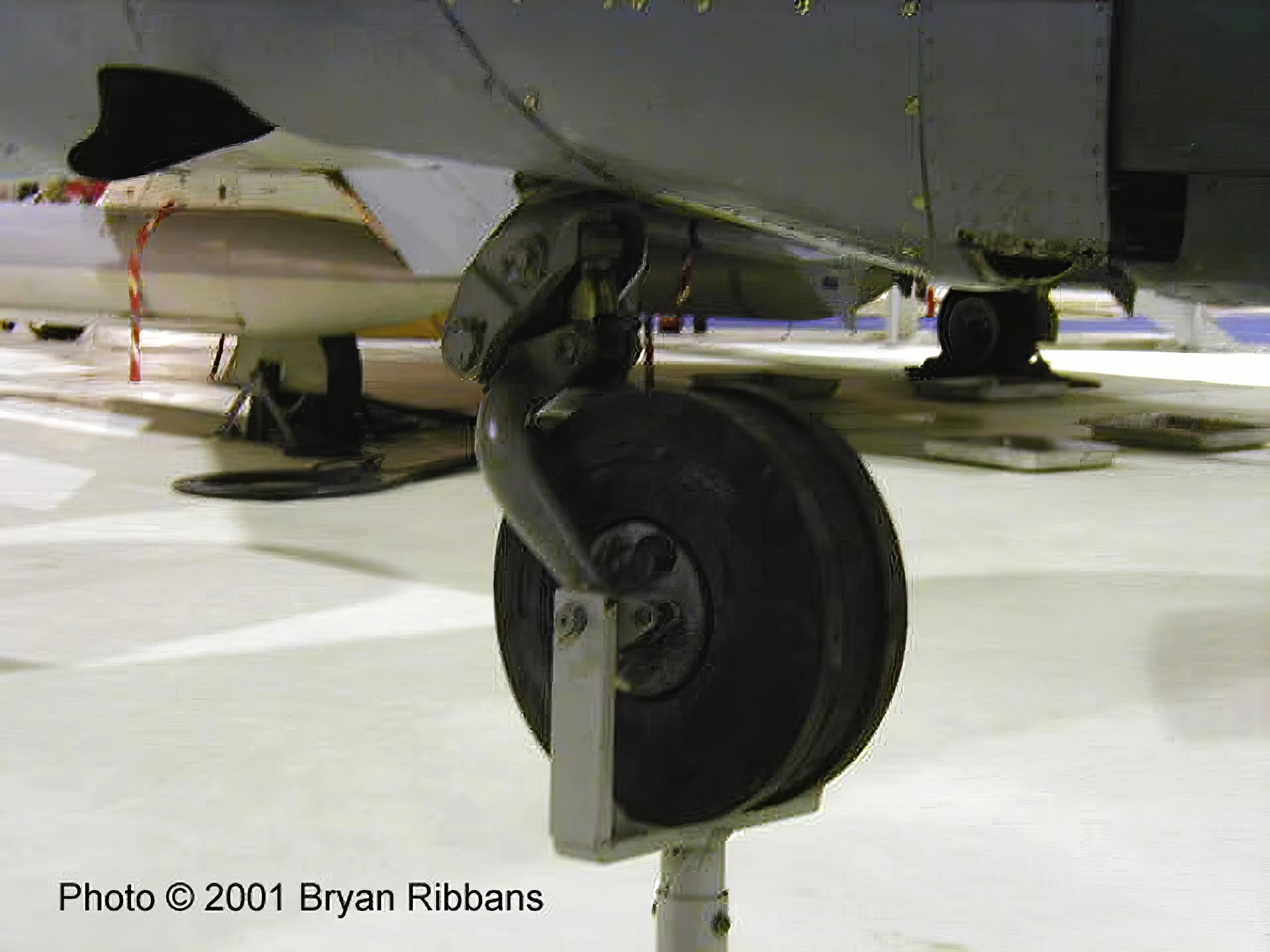
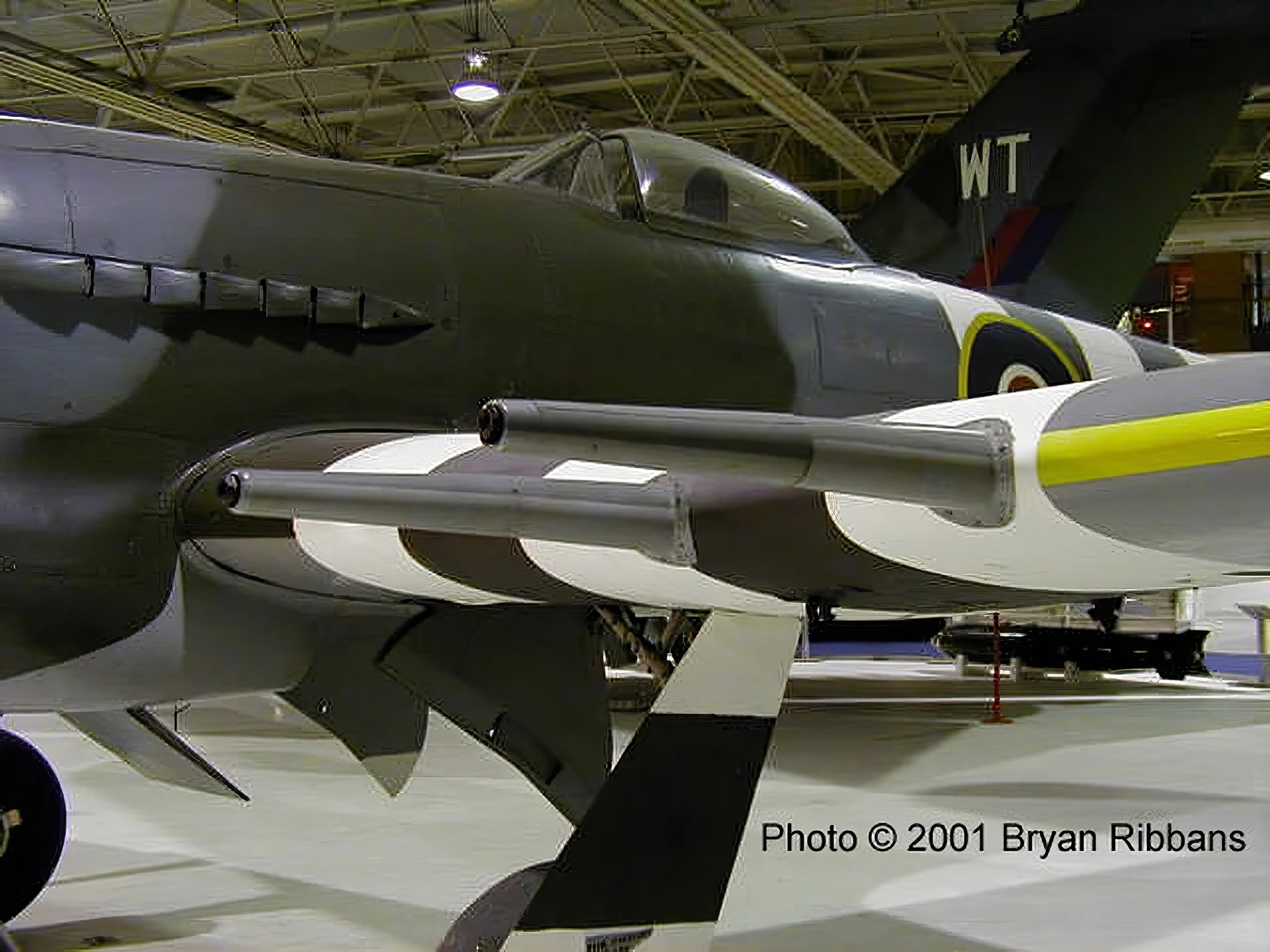
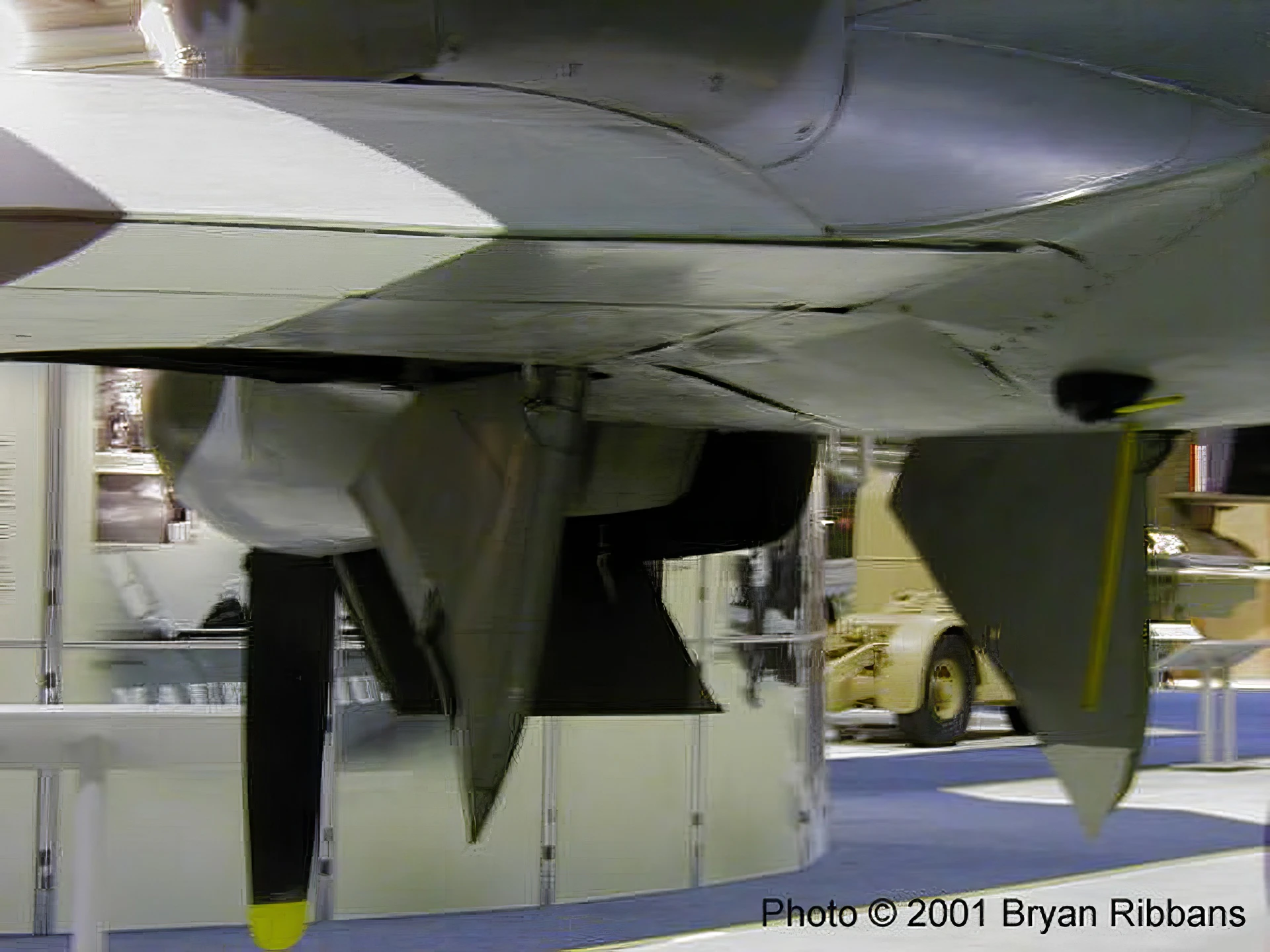

| Hawker Typhoon Walk Around | |
|---|---|
| Fotograf | Alain Gadbois |
| Lokalisering | Unknow |
| Billeder | 56 |
Se også:


Den Hawker Typhoon was a British single-seat fighter-bomber developed by Hawker Aircraft. Initially intended as a replacement for the Hawker Hurricane, its design shortcomings at high altitude led it to excel as a low-level interceptor and one of the most successful jordangrebsfly of World War II.
It was famously used in the Second Tactical Air Force for close air support during and after the 1944 Normandy landings, earning a reputation as a formidable destroyer of tanks and motorized transport.
Key Specifications (Typhoon Mk IB)
| Funktion | Specification |
|---|---|
| Rolle | Fighter-Bomber / Low-Altitude Interceptor |
| Besætning | 1 (Pilot) |
| Længde | 9.73 m (31 ft 11 in) |
| Vingefang | 12,67 m (41 fod 7 tommer) |
| Motor | Napier Sabre IIA/B/C (Liquid-cooled H-24 piston engine) |
| Engine Power | 2,180 – 2,260 hp |
| Maximum Speed | Approx. 667 km/h (415 mph) at low/medium altitude |
| Service Ceiling | Approx. 10,700 m (35,200 ft) |
| Standard Armament | 4 x 20 mm Hispano Mk II cannon |
| Ground Attack Ordnance | 8 x RP-3 unguided rockets OR 2 x 500 lb (230 kg) or 2 x 1,000 lb (450 kg) bombs |
Development and Service History
- Initial Role: The Typhoon was designed to be a fast, high-altitude interceptor, but its thick wings caused compressibility problems that restricted its performance at high altitudes.
- Engine Issues: The powerful Napier Sabre engine was initially plagued with reliability issues, including carbon monoxide seepage into the cockpit and structural failures at the tail, which required extensive redesigns and reinforcements.
- New Role: After the appearance of the German Focke-Wulf Fw 190, the Typhoon’s high speed at low altitude made it the only RAF fighter capable of catching the Fw 190 in “tip-and-run” coastal raids, securing its place as a low-level interceptor.
- The “Tiffie” as a ‘Tank Buster’: From late 1943, when equipped with RP-3 rockets, the Typhoon became a devastatingly effective ground-attack platform, specializing in “Cab Rank” close air support missions over Europe.
- Variant (IA vs IB): The early Typhoon Mk IA was armed with twelve 0.303 in machine guns, but the most common production model, the Typhoon Mk IB, standardized on four powerful 20 mm Hispano cannons.
Arv
While the Typhoon’s initial role was a failure, its eventual success as a potent jagerbomber made it indispensable to the Allied ground forces in the European theater. The design groundwork for the Typhoon was later refined into the superior high-altitude fighter, the Hawker Tempest.
Views : 7116
it suffered performance problems at the beginning and was improved to become one of the best fighter-bomber of the Second world War.
Source: Hawker Typhoon Wikipedia
you need to check your sources! this plane was a death trap! as recorded by the Operational Record books of the various Squadrons!
A good book would be “Typhoon and Tempest, the Canadian story”