M4 Sherman - Wydawnictwo 308M4 Sherman - Wydawnictwo 308

Wydawnictwo Militaria

SerieMilitær
Emne

M4 Sherman

Ref308

Signeret dokumentation Wydawnictwo Militaria le livre «M4 Sherman – Wydawnictwo 308» .

Le Medium Tank M4 est le char américain moyen produit en plus grande quantité pendant la Seconde Guerre mondiale. Près de cinquante mille exemplaires (toutes versions confondues) furent produits. Son surnom de « Sherman », lui est attribué par les Britanniques, quand ils reçoivent leurs premiers exemplaires dans le cadre de la loi de prêt-bail, continuant leur tradition de nommer les chars d’origine américaine d’après le nom d’un général nordiste de la guerre de Sécession célèbre de ce pays. L’US Army adopte par la suite ce surnom, et le Medium Tank M4 est dès lors appelé « M4 Sherman ». Les Soviétiques surnomment les leurs « Emcha ».

Kilde: Wikipedia

Fortsæt med at læse

Visninger : 905

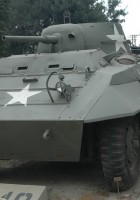
M8 Greyhound

LandUsa
TypeLet pansret bil
Søgeord

Album 78 fotos af «M8 Greyhound Light Armored Car»

Fotogalleri på en M8 Greyhound Light Armored Car, La M8 Let pansret bil (AM-M8 eller AMM8 i Frankrig) var et pansret køretøj på hjul produceret af Ford Motor Company og brugt af de allierede under Anden Verdenskrig. Den M8 blev stadig set i kamp indtil 2006 i udviklingslandenes hære. Briterne kaldte ham Greyhound (greyhound).

Kilde: M8 Greyhound på Wikipedia

Fortsæt med at læse

Views : 5996

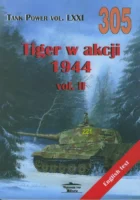
Wydawnictwo Militaria 305 Tiger w akcji 1944 vol_1

Wydawnictwo Militaria

SerieTankkraft
Emne

Tiger i aktion

Ref305<

Signeret dokumentation Wydawnictwo Militaria bogen "Panservogn BA-64 – Wydawnictwo 303".

Den Tiger I (Tigre), char d’assaut lourd allemand, en service de 1942 à 1945, est l’un des chars les plus connus de la Seconde Guerre mondiale, bien qu’il n’ait été que peu produit par rapport au T-34 soviétique ou au Sherman américain. Ce sont ses dimensions, ses lignes très carrées, sa résistance au combat, sa puissance ainsi que les équipages expérimentés l’ayant mené au feu qui ont marqué les esprits, notamment du fait de la propagande allemande. Son développement a commencé en 1937 et, quand il apparaît pour la première fois sur le front, le 29 août 1942, près de Léningrad, le Tigre I est le char techniquement le plus avancé, le mieux protégé et le plus puissant aligné par l’Axe, affichant une mobilité limitée mais exceptionnelle pour un engin qui fait plus de deux fois le poids de ses prédécesseurs et de la majorité de ses adversaires chenillés. Mais le char lourd, outre de sa production faible, a pâti tout au long de sa carrière de sa mécanique très fragile réduisant considérablement sa disponibilité au feu, de sa mise en œuvre opérationnelle rendue difficile par sa faible autonomie, souffrant également de son poids excessif. Construit à seulement 1 350 exemplaires, il n’a été que rarement endivisionné mais plutôt engagé dans des unités indépendantes.

Kilde: Wikipedia

Fortsæt med at læse

Udsigter : 779

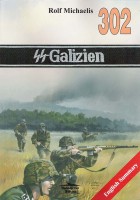
Wydawnictwo Militaria 302 - SS Galizien

Wydawnictwo Militaria

SerieGeneral Militær
periodeAnden Verdenskrig
Ref302
Emne

SS-Galicien

Signeret dokumentation Wydawnictwo Militaria bogen "SS-Galicia – Wydawnictwo 302".

Den 14. Waffen-Grenadier-Division der SS Galizien (ukrainsk: 14-А Гренадерська Дивiзiя СС "Галичина"), var en enhed i Waffen-SS.

Kilde: Wikipedia

Fortsæt med at læse

Visninger : 977

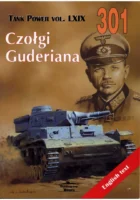
Wydawnictwo Militaria 301 Czolgi Guderiana

Guderian

forlæggerWydawnictwo Militaria
SerieGeneral Militær
periodeAnden Verdenskrig
Ref301

Signeret dokumentation Wydawnictwo Militaria bogen "Guderian – Wydawnictwo 301".

Heinz Guderian (né le 17 juin 1888 à Kulm, de nos jours Chełmno1 en Pologne – décédé à Schwangau en Bavière le 14 mai 1954) fut un officier général allemand. Il est connu comme un des créateurs des Panzer de l’Allemagne nazie pendant la Seconde Guerre mondiale, appliquant la doctrine de la guerre éclair (Blitzkrieg) pour les chars d’assaut lors des campagnes de France et d’URSS. Il était l’une des rares personnes qui osaient discuter les décisions et défendre son point de vue sur des sujets stratégiques avec Hitler.

Kilde: Wikipedia

Fortsæt med at læse

Views : 382

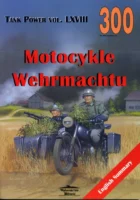
Wydawnictwo Militaria 300 Motocykle Wehrmachtu

Wydawnictwo Militaria

SerieTankkraft
Emne

Wehrmacht motorcykler

Ref300

Signeret dokumentation Wydawnictwo Militaria bogen "Motorcyklen i Wehrmacht – Wydawnictwo 300".

Wehrmacht (på dansk "Forsvarsstyrken") er navnet på den tyske hær fra 1935 til 1945, som en del af det nazistiske regime og dets anfægtelse af klausulerne i Versailles-traktaten (1919), som drastisk begrænsede den daværende hærs størrelse og magt, som følge af Versailles-traktaten, Reichswehr. I nogle få år var Wehrmacht den hær med den mest avancerede militære teknologi i verden.

Kilde: Wehrmacht-motorcykler på Wikipedia

Fortsæt med at læse

Visninger : 1297

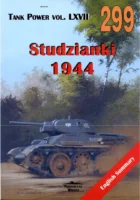
Wydawnictwo Militaria 299 Studzianki 1944

Wydawnictwo Militaria

SerieTankkraft
Emne

Slaget ved Studzianki

Ref29

En bog fra Wydawnictwo Militaria "Studzianki slaget 1944 – Wydawnictwo 299".

The Battle of Studzianki, was a tactical engagement between the elements of the Red Army’s 2nd Tank Army employed as the Cavalry mechanized group of the 1st Belorussian Front and elements of the German 9th Army of Army Group North Ukraine defending south of Warsaw. The battle was part of the Soviet Lublin-Brest Offensive Operation. The 2nd Tank Army was launched through the breach in the German 4th Panzer Army’s front between Parczew and Chełm, and bypassing Lublin attempted to find a crossing over the Visla.

In this it was supported by the Polish First Army, including the Polish 1st Armoured Brigade. In a hasty encounter battle during which the Polish 1st Armoured Brigade was located in the first echelon of the 2nd Tank Army. At the point where the Army was able to occupy the Magnuszew brideghead, the Polish brigade engaged advance elements of the counter-attacking German Fallschirm-Panzer Division 1 Hermann Göring with the express orders to deny Vistula crossings to the Red Army. The German counter-attack tried to dislodge the Soviet engineers, and the Polish troops providing support for them, behind Vistula off the bridgehead. The Soviet and Polish forces held the bridgehead, and German forces suffered heavy casualties before withdrawing. To commemorate the battle, in 1969 the name of the village Studzianki was changed to include the word Pancerne, meaning Armoured in Polish language. The episodes 3-5 of Polish TV series Czterej pancerni i pies (Four Tankmen and the Dog) depict the crew of Polish tank during the battle of Studzianki.

Kilde: Wikipedia

Fortsæt med at læse

Visninger : 968

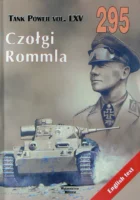
Wydawnictwo Militaria 295 Rommel's Tanks

Wydawnictwo Militaria

SerieTankkraft
Emne

The Tanks of Rommel

Ref295

The book “Wydawnictwo Militaria 295: The Tanks of Rommel” focuses on the tanks used by the Deutsches Afrikakorps (DAK) under General Erwin Rommel’s command during World War II. It provides detailed documentation on the various armored units and their operations in the deserts of Libya, western Egypt, and Tunisia. The author, Janusz Ledwoch, presents information on military tactics, equipment, and the engagements of these tank divisions in the context of the North African campaigns. The book is rich in illustrations and photographs, making it a valuable resource for military history enthusiasts and modelers.

Kilde: Wikipedia

Fortsæt med at læse

Set antal gange : 630

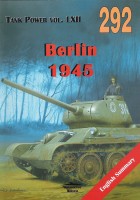
Wydawnictwo Militaria 292 - Berlin 1945

Wydawnictwo Militaria

SerieTankkraft
Emne

Slaget om Berlin 1945

Ref292

Signeret dokumentation Wydawnictwo Militaria bogen "Slaget om Berlin 1945 – Wydawnictwo 292".

Den Slaget ved Berlin fandt sted fra slutningen af april 1945 til 2. maj 1945. Det satte det, der var tilbage af Det Tredje Riges styrker, op mod den Røde Hær. Stalin gav symbolsk betydning til dette sidste slag mod naziregimet efter de store tab, som Sovjetunionen led for at vende invasionens strøm.

Kilde: Wikipedia

Fortsæt med at læse

Set antal gange : 924

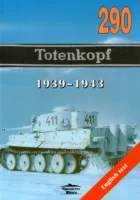
Wydawnictwo Militaria 290 Totenkopf 1939-1943

Wydawnictwo Militaria

SerieTankkraft
Emne

3. panserdivision – SS-Totenkopf

Ref290

Signeret dokumentation Wydawnictwo Militaria bogen "3rd SS Panzer Division Totenkopf – Wydawnictwo 290".

3. SS panserdivision Totenkopf était l’une des 38 divisions de Waffen-SS durant la Seconde Guerre mondiale. La division Totenkopf avait pour origine les unités de garde des camps de concentrations, les SS-Totenkopfverbände (« unités SS à tête de mort »). Celles-ci étaient dirigées par Theodor Eicke à partir du 4 juillet 1934, lors de sa nomination comme inspecteur des camps de concentration. Rejoignant la Leibstandarte Adolf Hitler (« régiment de garde d’Adolf Hitler ») et la SS-Verfügunsgstruppe (littéralement « troupe SS à disposition »), les unités Totenkopf constituent l’un des trois piliers de la future Waffen SS. Après la réorganisation de la dénomination et de la numérotation des divisions SS en 1943, elle reçoit la dénomination officielle de 3. SS Panzer Division Totenkopf, aux côtés, entre autres, de la 1re division SS Leibstandarte Adolf Hitler et de la 2e panzerdivision SS Das Reich, issue de la Verfügunsgstruppe. Le 16 octobre 1939, Adolf Hitler autorise le regroupement des régiments Totenkopf pour former une division Waffen-SS. Cette division est intégrée à la 2e Armée pendant les opérations de la campagne de France en mai 1940.

Kilde: 3rd SS Panzer Division Totenkopf på Wikipedia

Fortsæt med at læse

Set antal gange : 1222