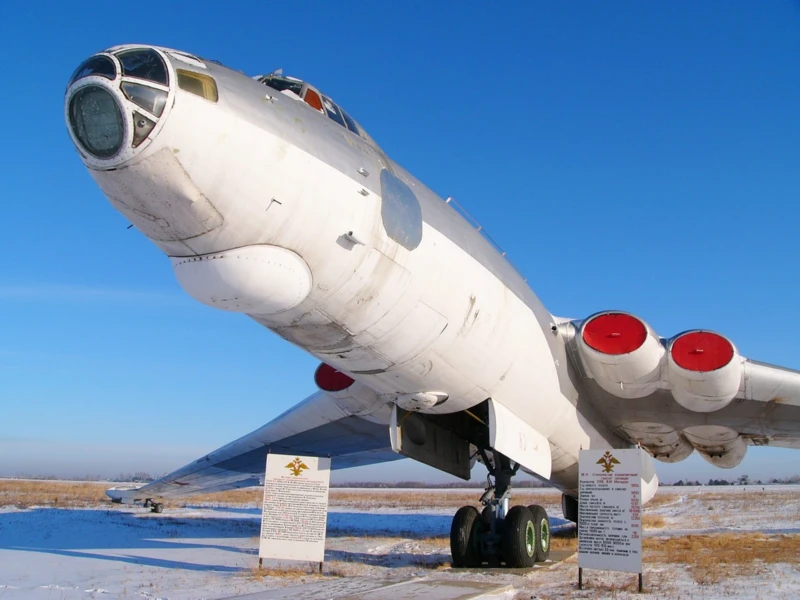
Myasiščev M-4 Bizon | |
|---|---|
| Země | Sovětský svaz |
| Typ | Strategický bombardér |
| První let | 20. ledna 1953 |
| Postaven | 91+2 |
Fotogalerie M-4 Bizoni, The Myasishchev M-4 Molot (Russian: Молот (Hammer), USAF/DoD reporting name “Type 37”, NATO reporting name Bison) is a four-engined strategic bomber designed by Vladimir Myasishchev and manufactured by the Soviet Union in the 1950s to provide a Long Range Aviation bomber capable of attacking targets in North America. The Myasishchev design bureau was formed to build such a bomber.
Zdroj: M-4 Bizon na Wiki
| Myasishchev M-4 Bison | |
|---|---|
| Fotograf | Unknow |
| Lokalizace | Boris Vasiljev |
| Fotografie | 13 |
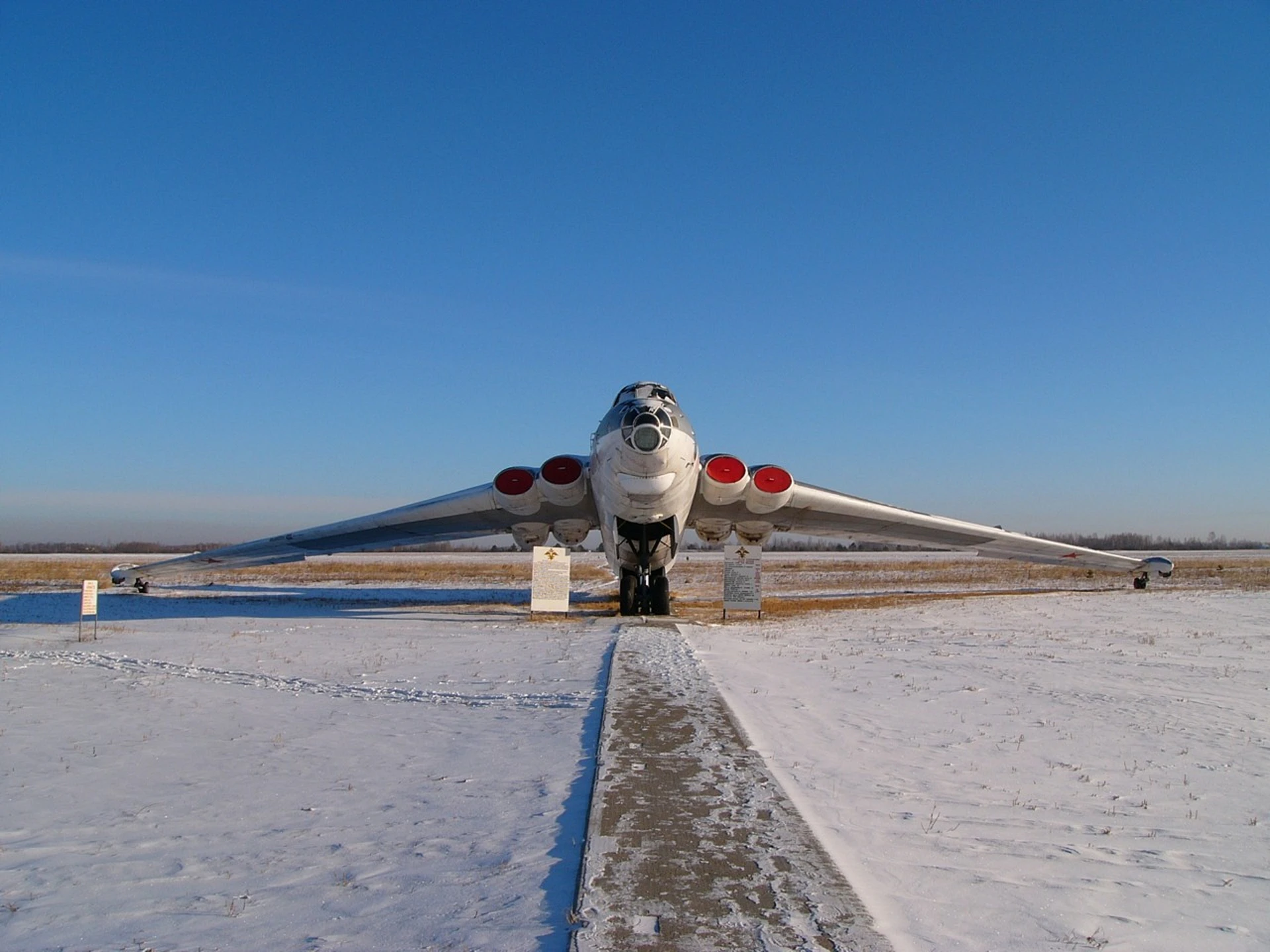
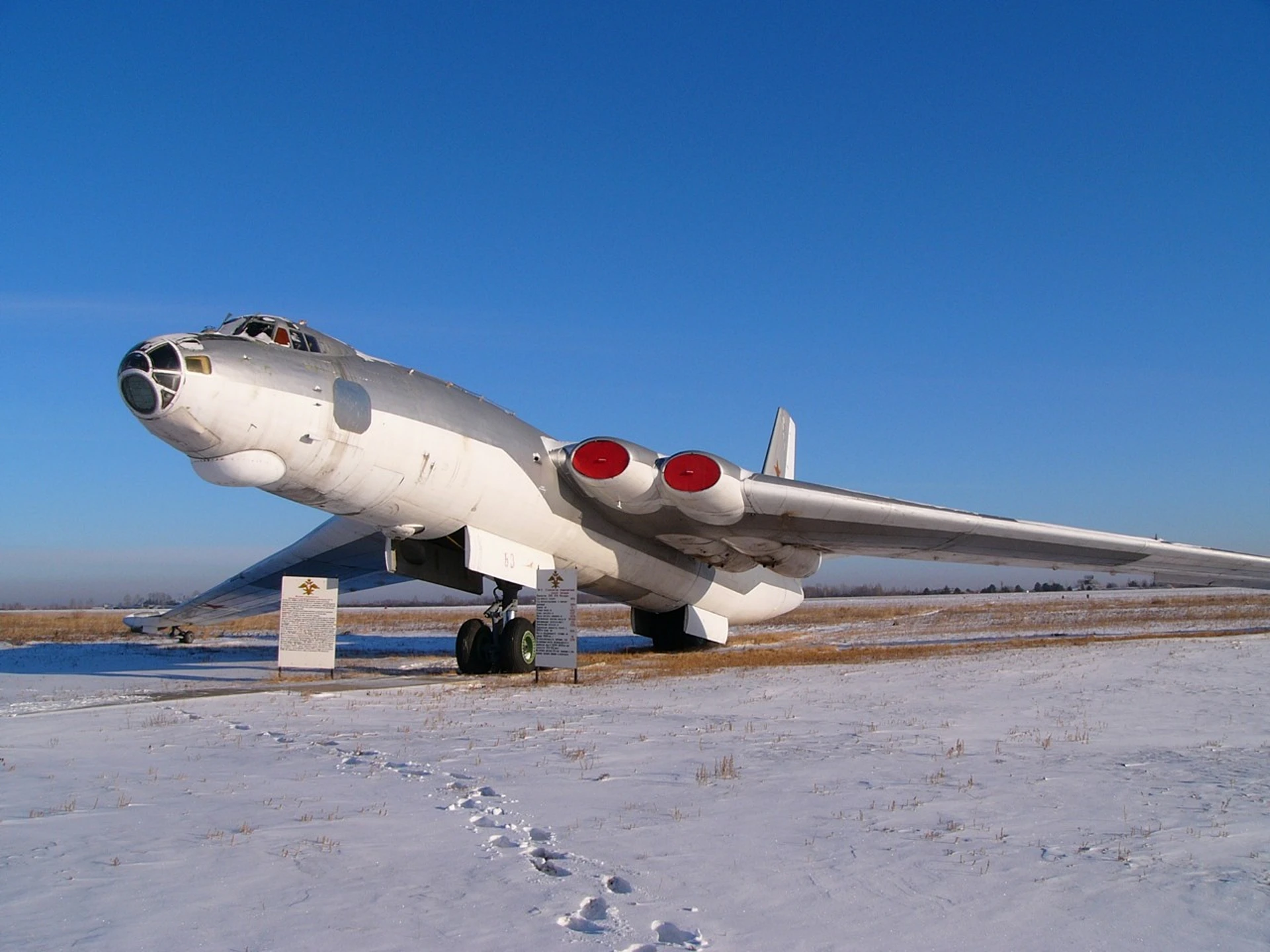
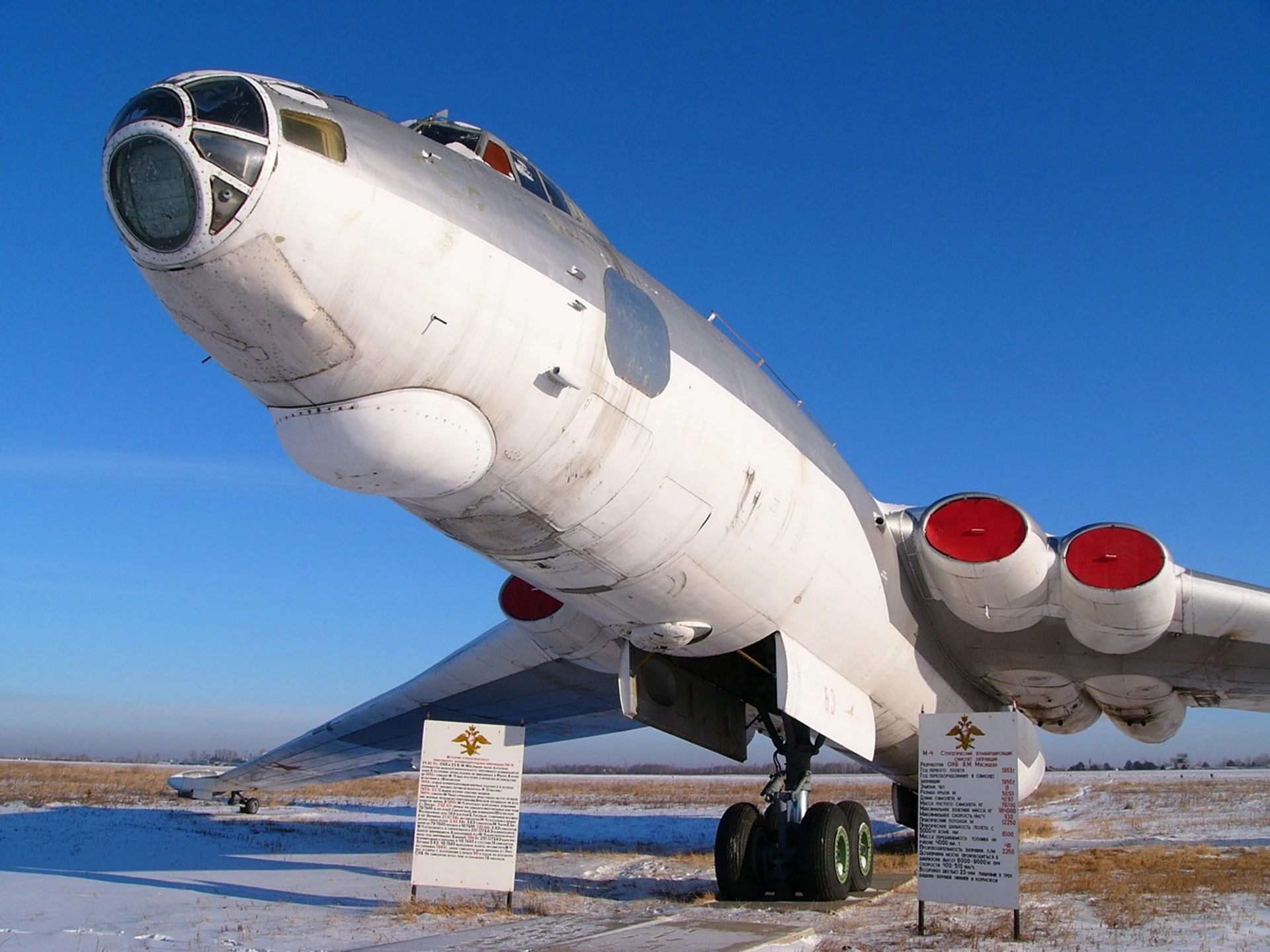
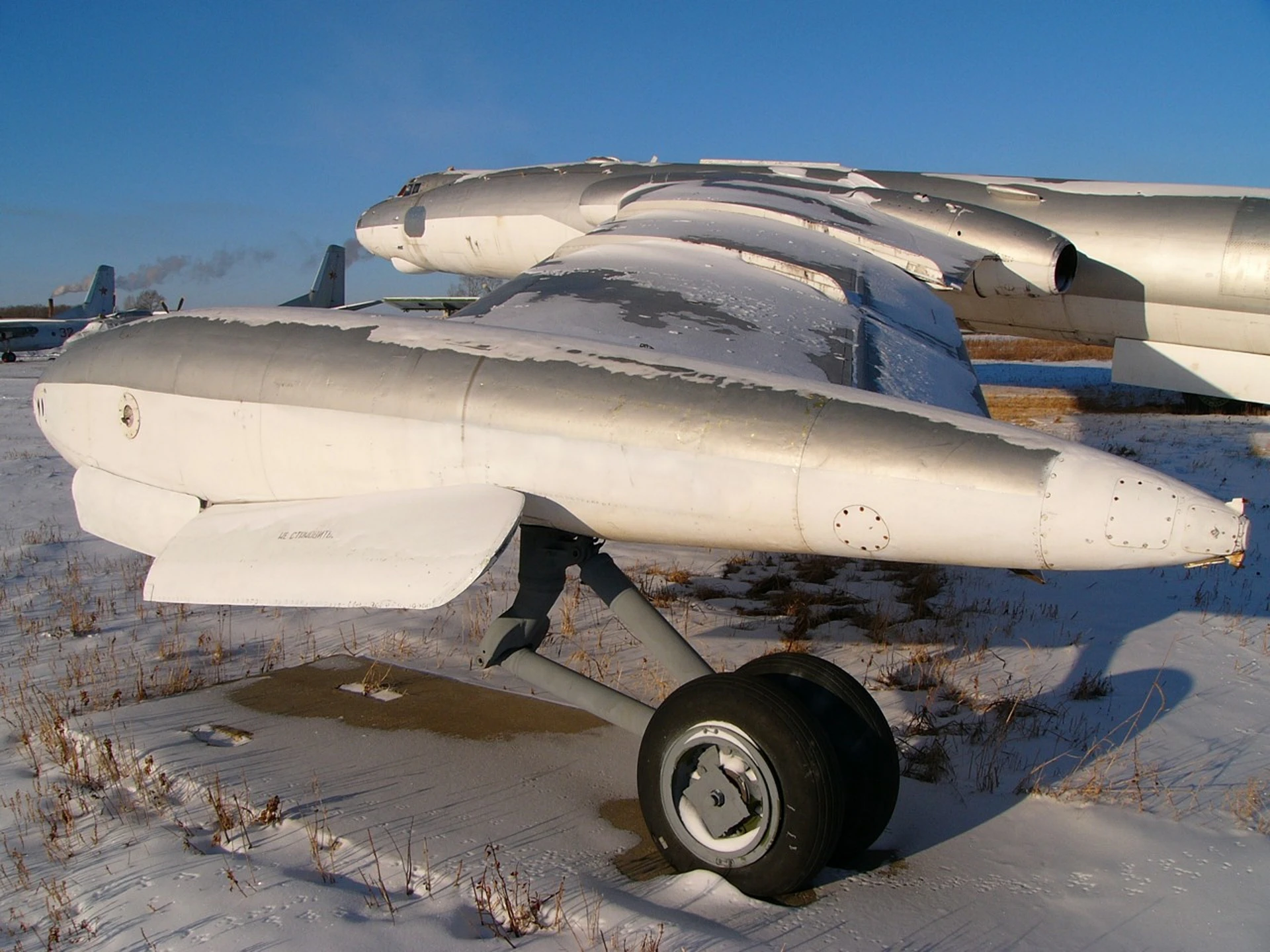

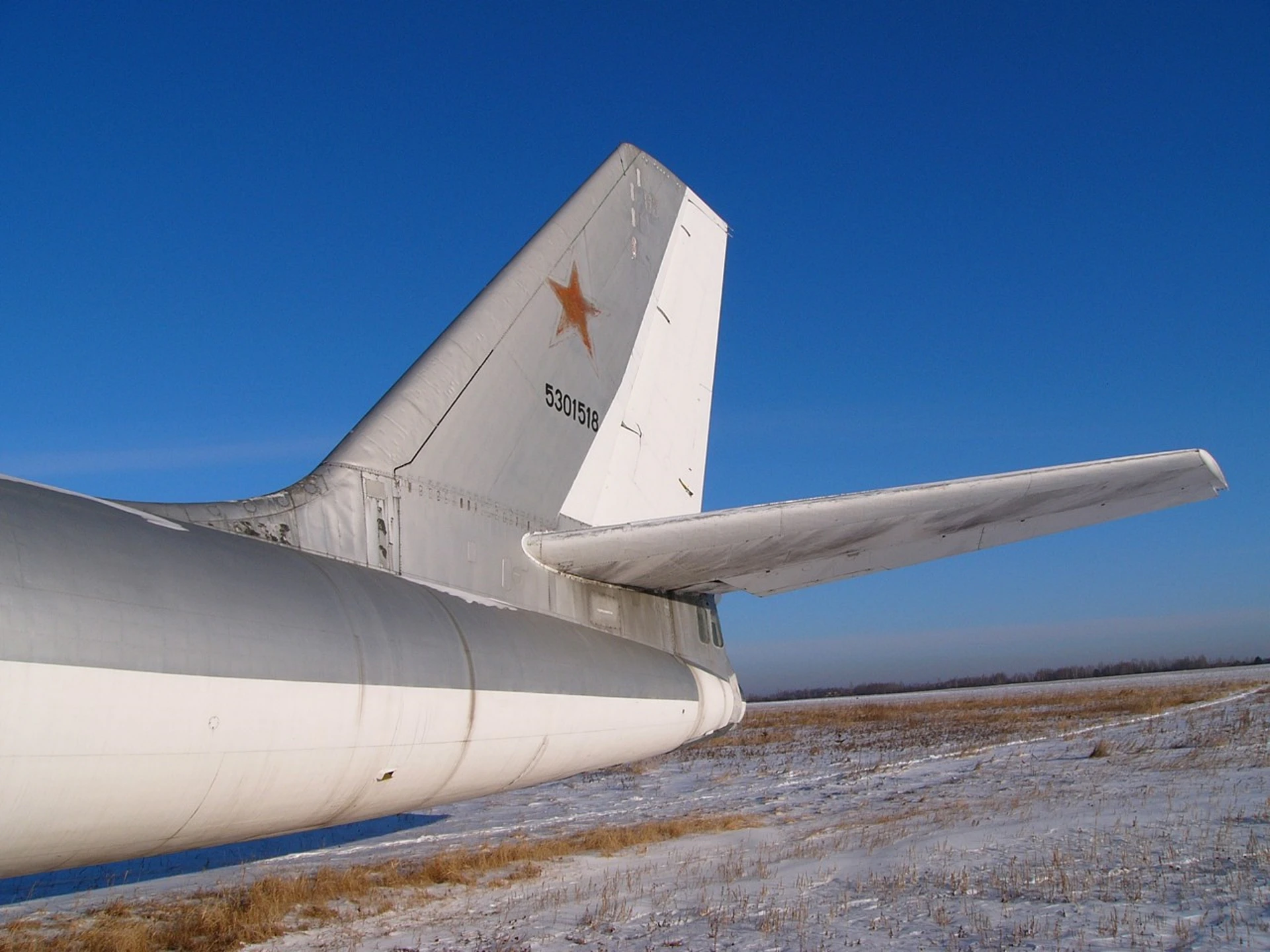
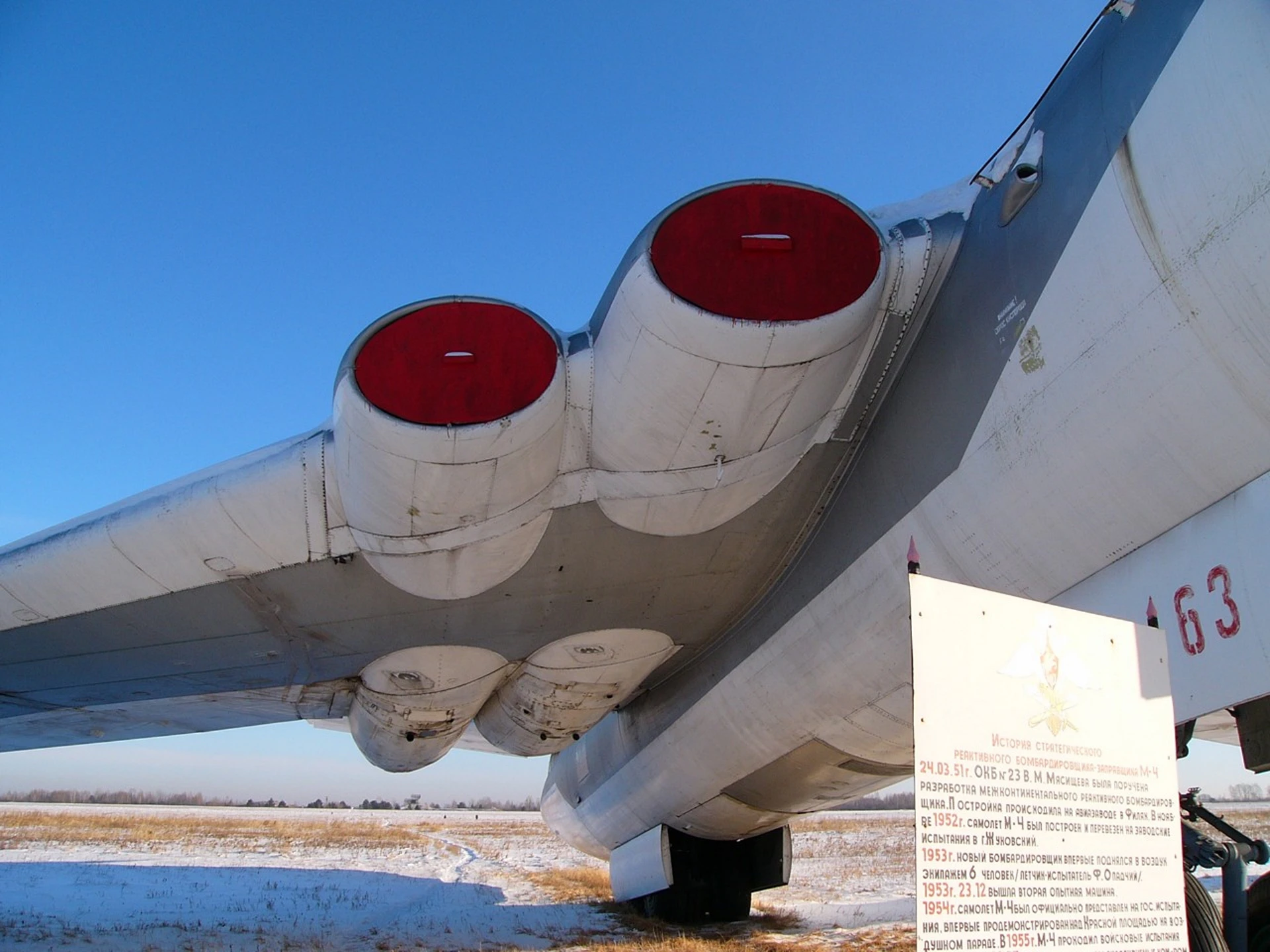
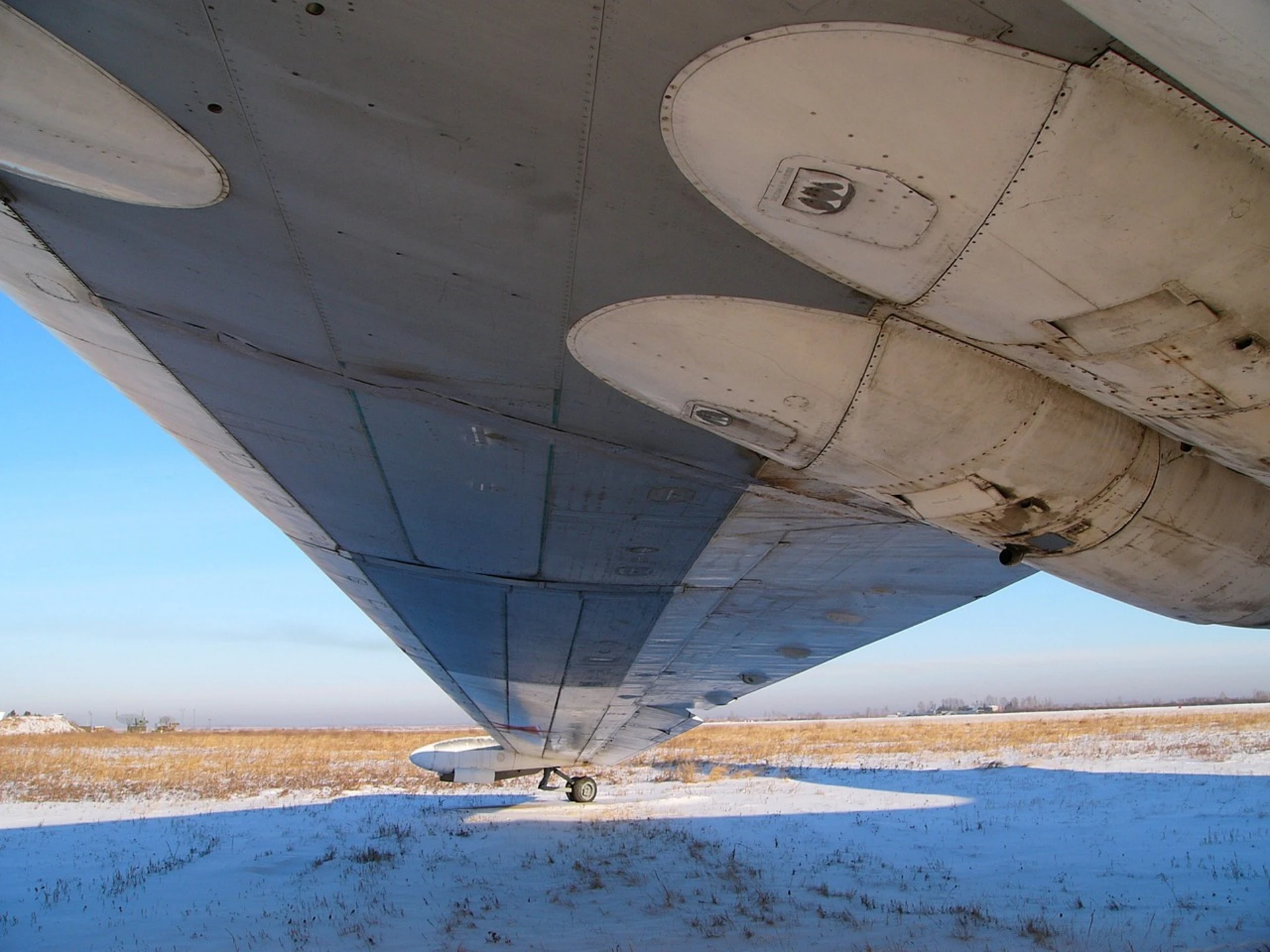
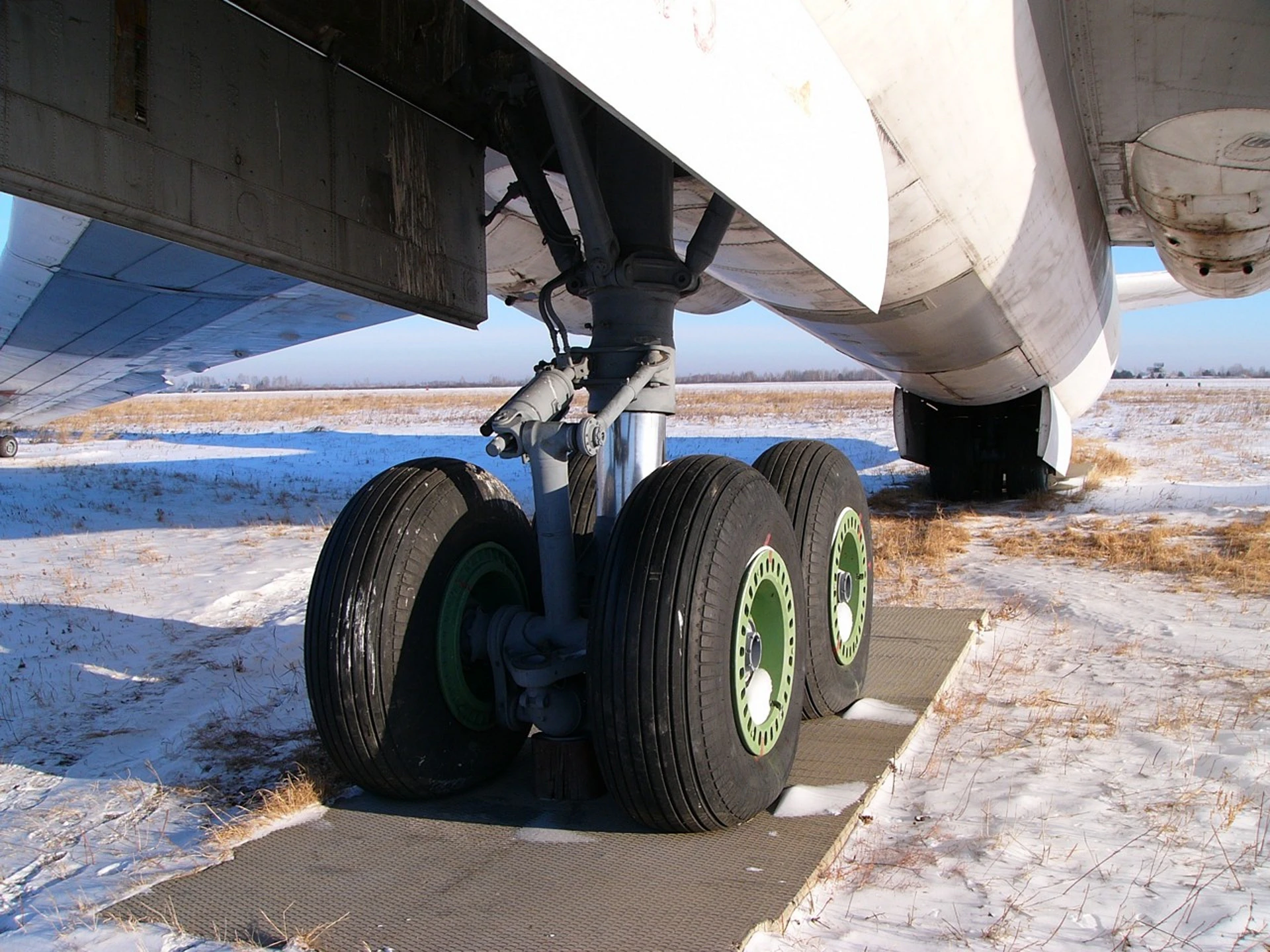

| M-4 Bizon procházka kolem | |
|---|---|
| Fotograf | Sergej Tsvetkov |
| Lokalizace | Letecká základna Dyagilevo, Rjazaň, Rusko |
| Fotografie | 29 |
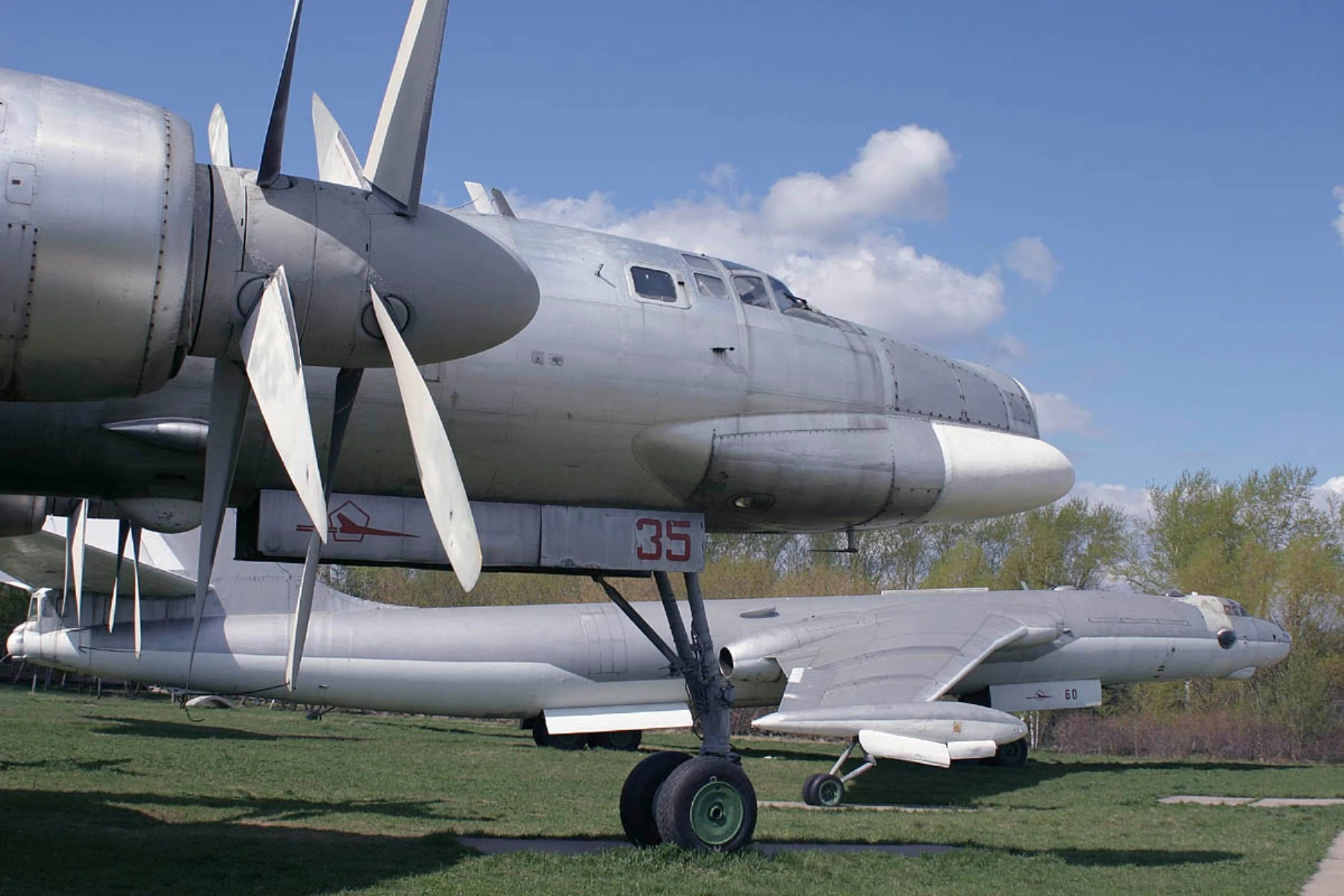


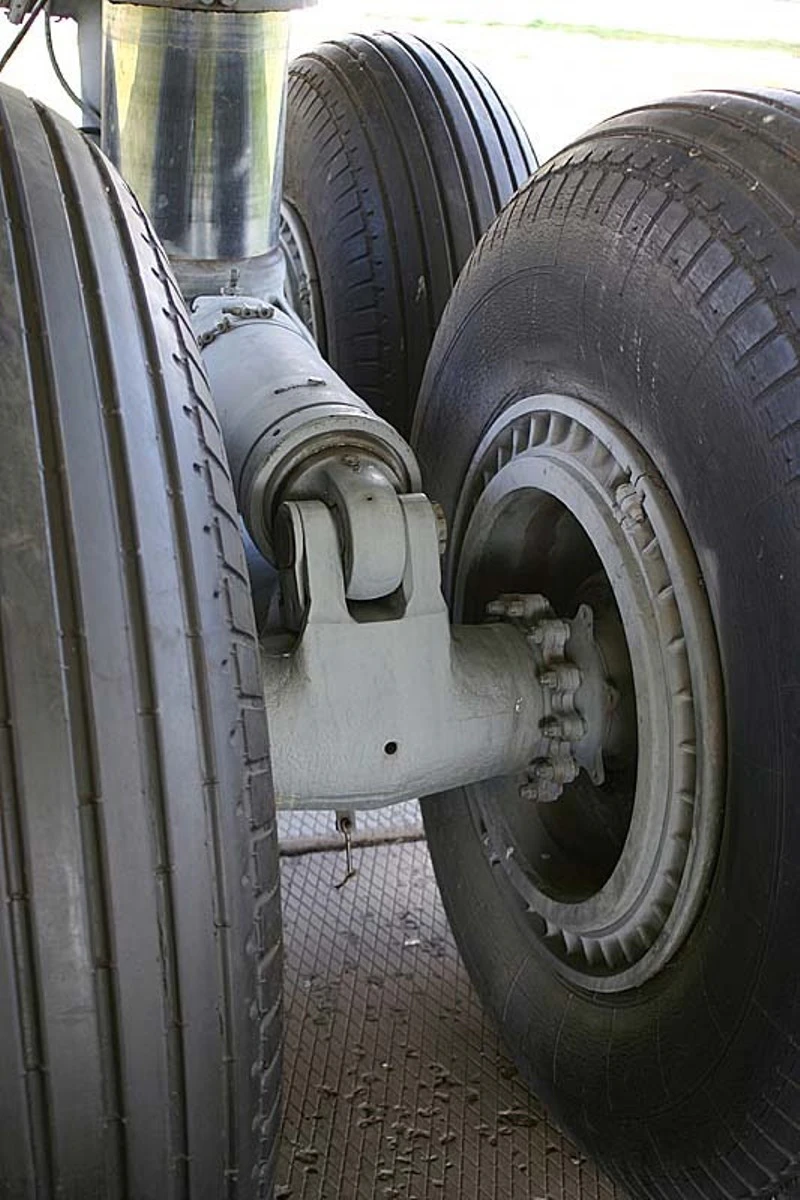


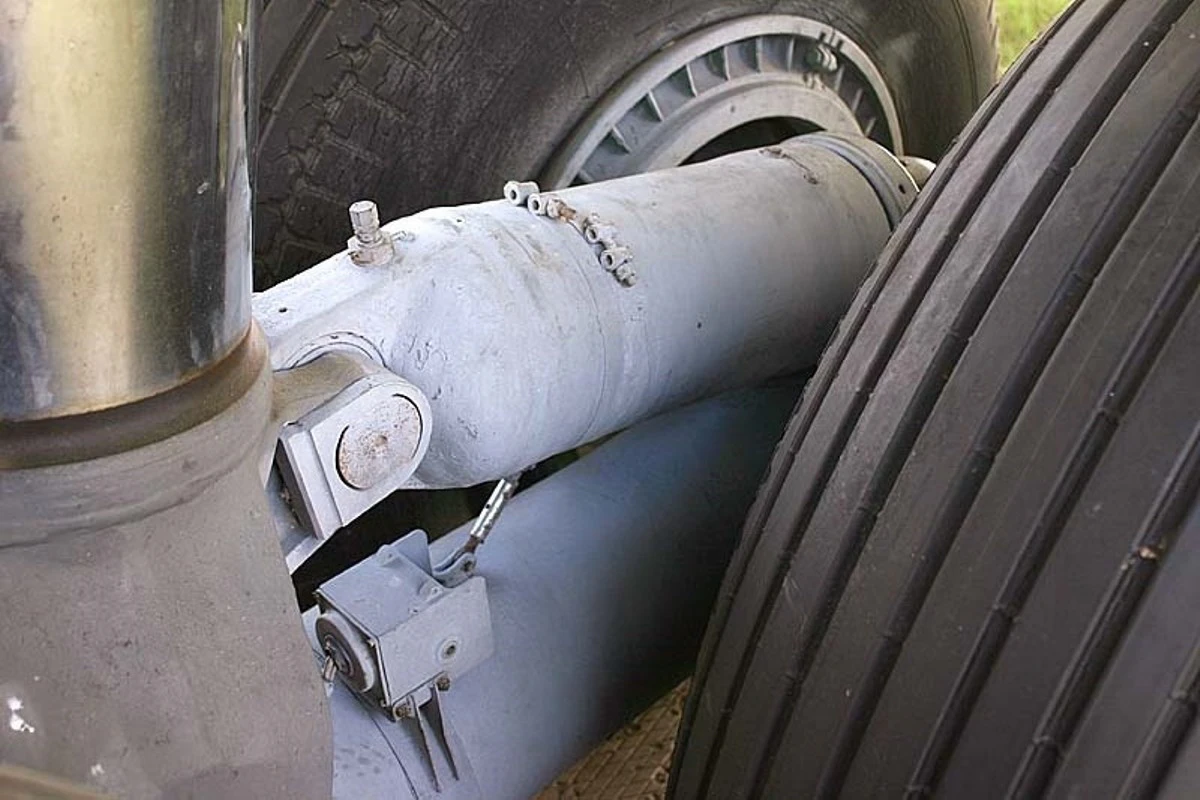

 Kupte mi kávu
| Myasischev M-4 Walk Around | |
|---|---|
| Fotograf | Unknow |
| Lokalizace | Jevgenij Malinovskij |
| Fotografie | 31 |
Viz také:


The “Bomber Gap” Provocateur
Tá Myasishchev M-4 was a massive, four-engined jet bomber that sent shockwaves through the Pentagon when it debuted over Moscow’s Red Square in 1954. It was the Soviet response to the American B-52, designed to carry nuclear payloads across the North Pole. While its elegant swept-wing design and buried engines gave it high performance, its initial range fell short of reaching the United States and returning. However, its psychological impact was immense: by flying the same 10 aircraft in circles over a military parade, the Soviets fooled Western observers into believing they had hundreds, sparking the infamous “Bomber Gap” arms race.
| Attribute | Technical Specification (M-4 Bison-A) |
|---|---|
| Roli | Strategic Bomber / Tanker |
| Posádky | 8 (Pilots, Navigators, Gunner/Engineers) |
| First Flight | January 20, 1953 |
| Pohonná jednotka | 4 × Mikulin AM-3A turbojets |
| Thrust | 19,290 lbf (85.8 kN) each |
| Maximum Speed | 947 km/h (588 mph) |
| Datová část | Up to 24,000 kg (52,910 lbs) of internal bombs |
| Defensive Armament | 6–10 × 23 mm AM-23 cannons in 3–5 turrets |
Design Engineering: The Bicycle Gear and Buried Engines
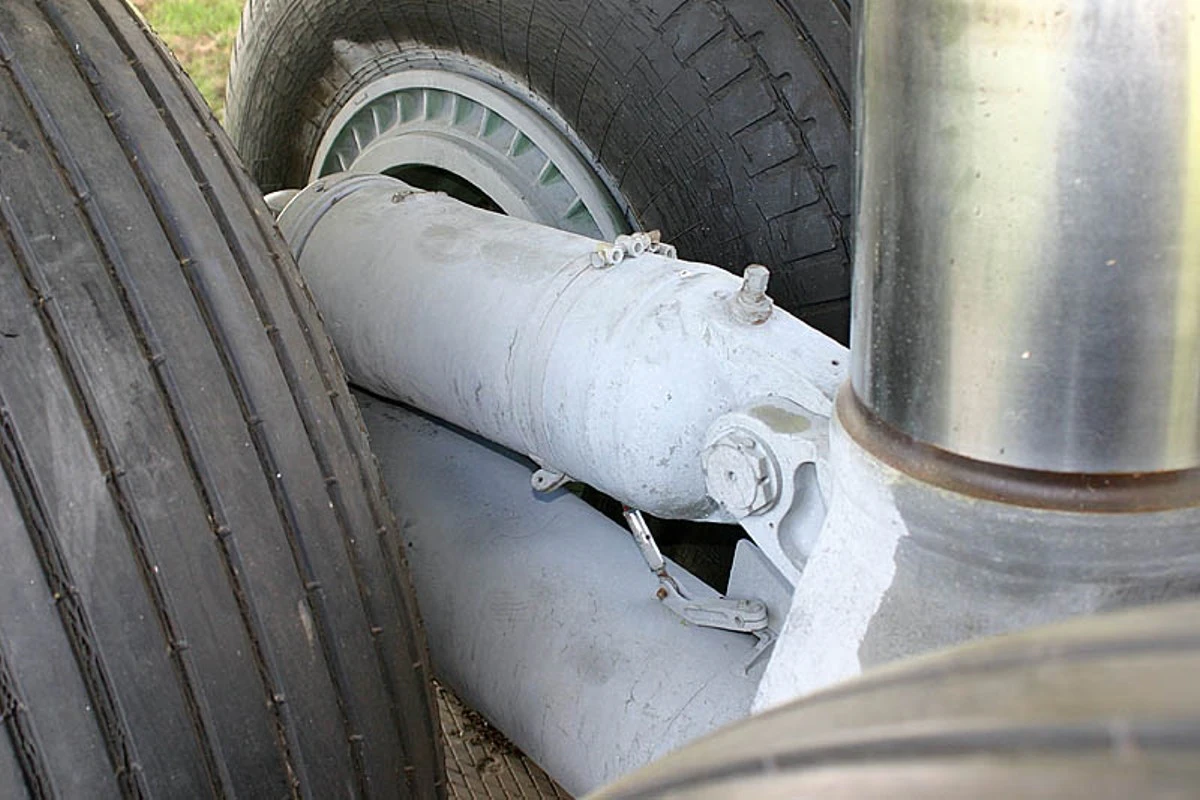
- Bicycle Landing Gear: Like the American B-47, the M-4 used a “tandem” or bicycle gear—two massive bogies under the fuselage. To keep the long, flexible wings from scraping the ground during takeoff, it featured small outrigger wheels at the wingtips.
- The “Kneeling” Takeoff: To help the heavy bomber lift its nose during takeoff, the nose landing gear was designed to “extend” or jack up the front of the plane while on the runway, increasing the wing’s angle of attack.
- Buried Engines: Unlike the B-52, which used engines on underwing pylons, the M-4 buried its four massive turbojets deep inside the wing roots. While this made for a very clean, low-drag aerodynamic profile, it made maintenance difficult and posed a fire risk to the wing structure.
- Glass “Greenhouse” Nose: Early variants featured a large glazed nose for the navigator/bombardier, a hallmark of WWII-era design that was eventually replaced in later 3M models by a solid radar nose and an aerial refueling probe.
Legacy: The Tanker of the Skies
- The 3M Evolution: The range issues of the original M-4 were addressed in the 3M (Bison-B) variant, which featured much more fuel-efficient VD-7 engines and a lighter airframe, finally achieving true intercontinental capability.
- The Atlantic “Wolf”: Because it was faster than the turboprop Tu-95, the Bison was often used for long-range maritime reconnaissance, tracking NATO carrier groups across the Atlantic.
- The VM-T “Atlant”: Three Bisons were radically modified into the VM-T heavy lifter. These aircraft featured a massive “piggyback” structure to carry the Buran space shuttle A Energia rocket components on their backs.
- Longevity as a Tanker: Although replaced as a bomber by the Tu-95 and Tu-160, the Bison lived on as the Soviet Union’s primary heavy aerial tanker (M-4-2 and 3MS-2) until the early 1990s, fueling the very bombers that had outlasted it.
Pohledy : 2489
Můžete také vidět:
 Miles Magister – Fotografie & Videa
 Avro Canada VZ-9 Avrocar – Fotografie & Videa
 Lisunov Li-2 – Procházka
 P-38L Marge – Procházka
 B-47 Stratojet – Procházka Kolem
 Casa C.2111 vol2 – WalkAround
 B-26 Marauder – Procházka
 Konsolidovaný osvoboditel B-24M – WalkAround
 Avro Lancaster – Procházka
 A-20 Havoc – WalkAround