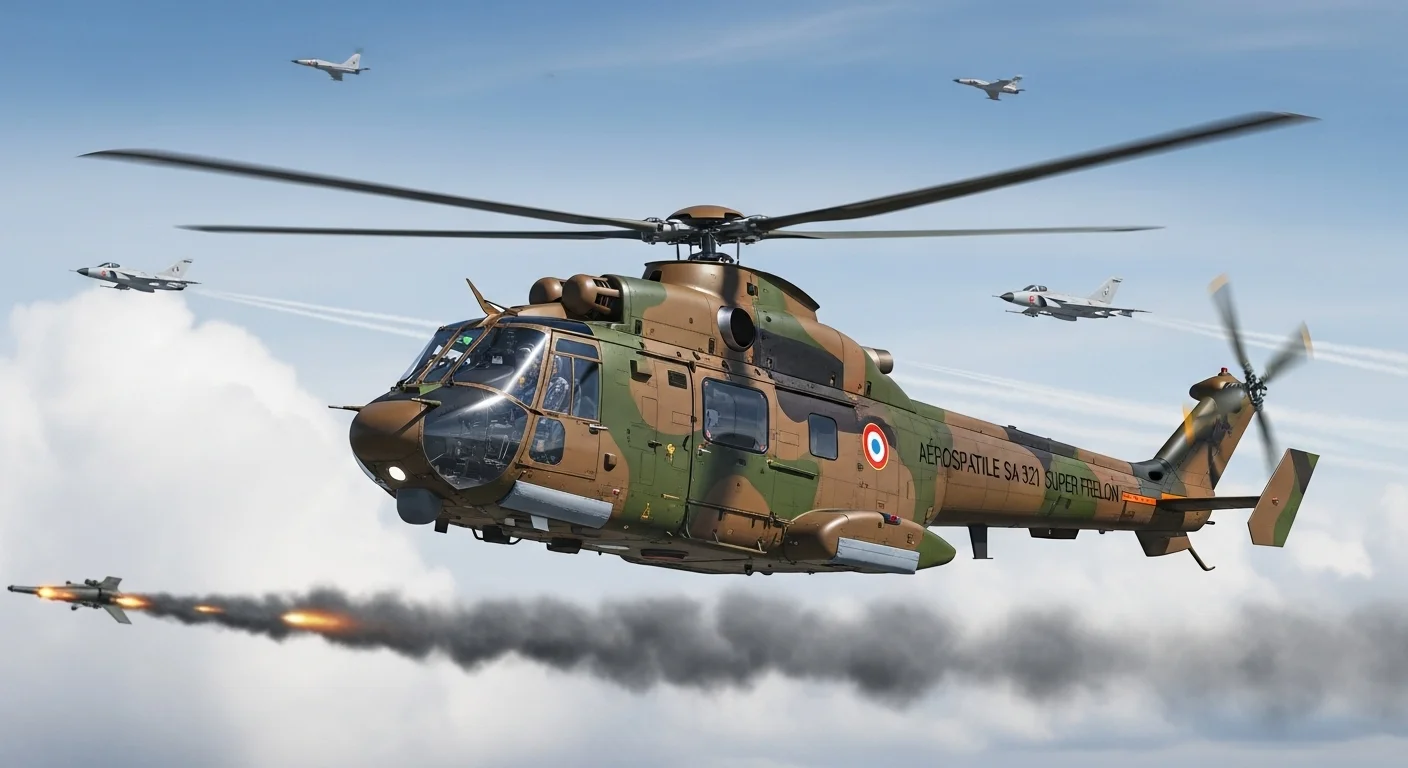
Aérospatiale SA 321 Super Frelon | |
|---|---|
| Země | Francie |
| Roli | Transportní vrtulník |
| Vyrobené | 1962–1981 |
| Postaven | 110 |
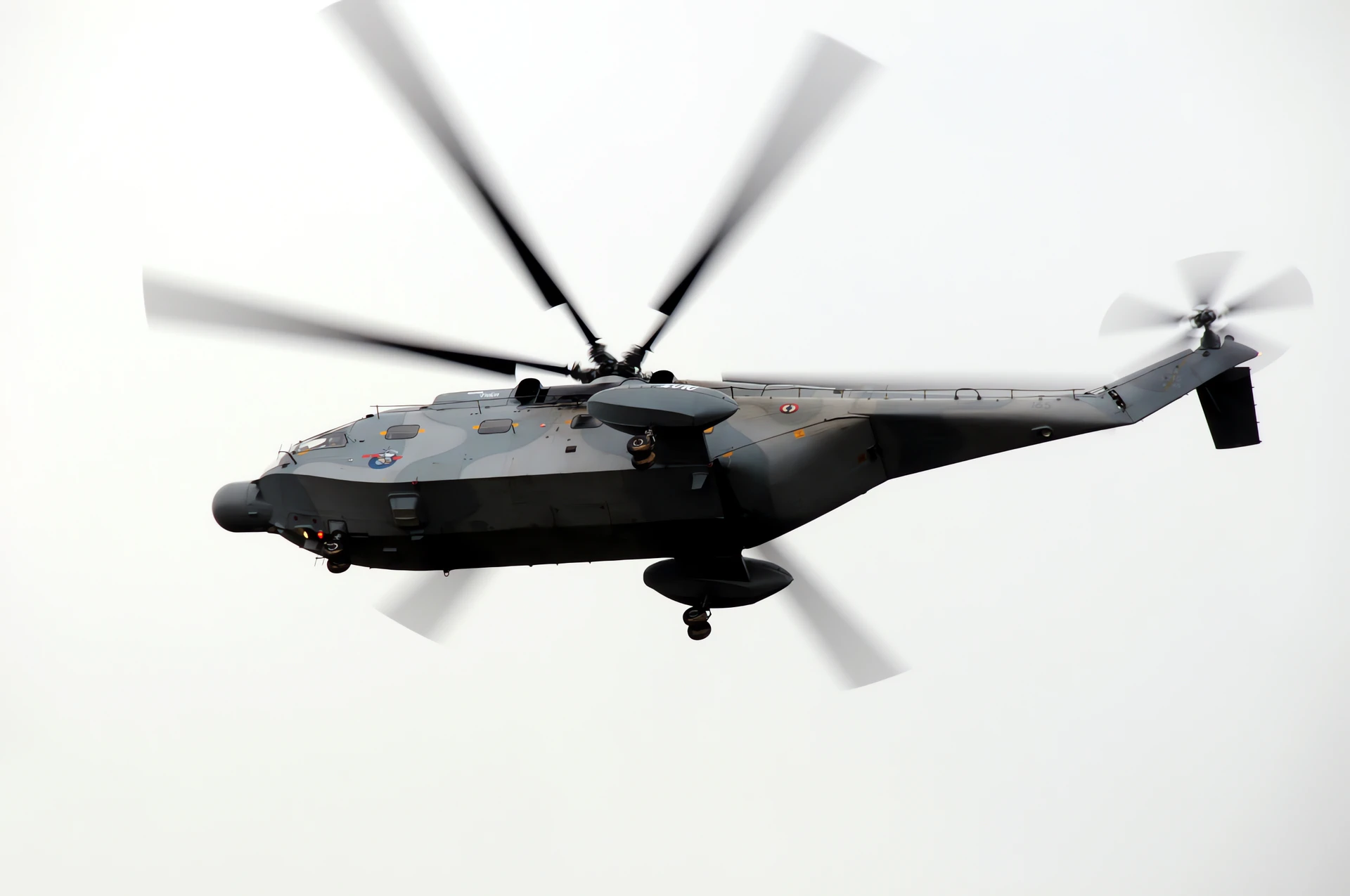
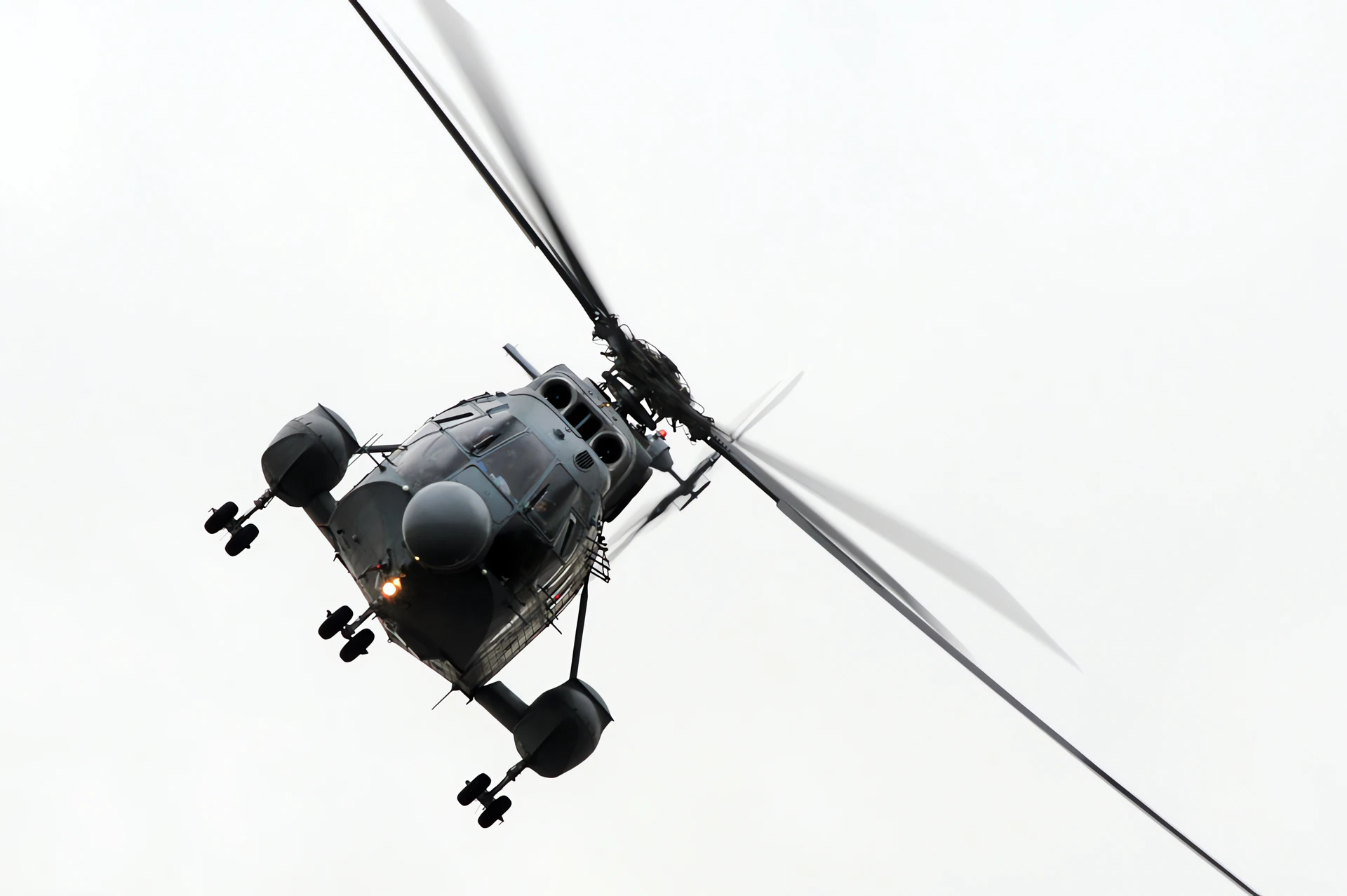
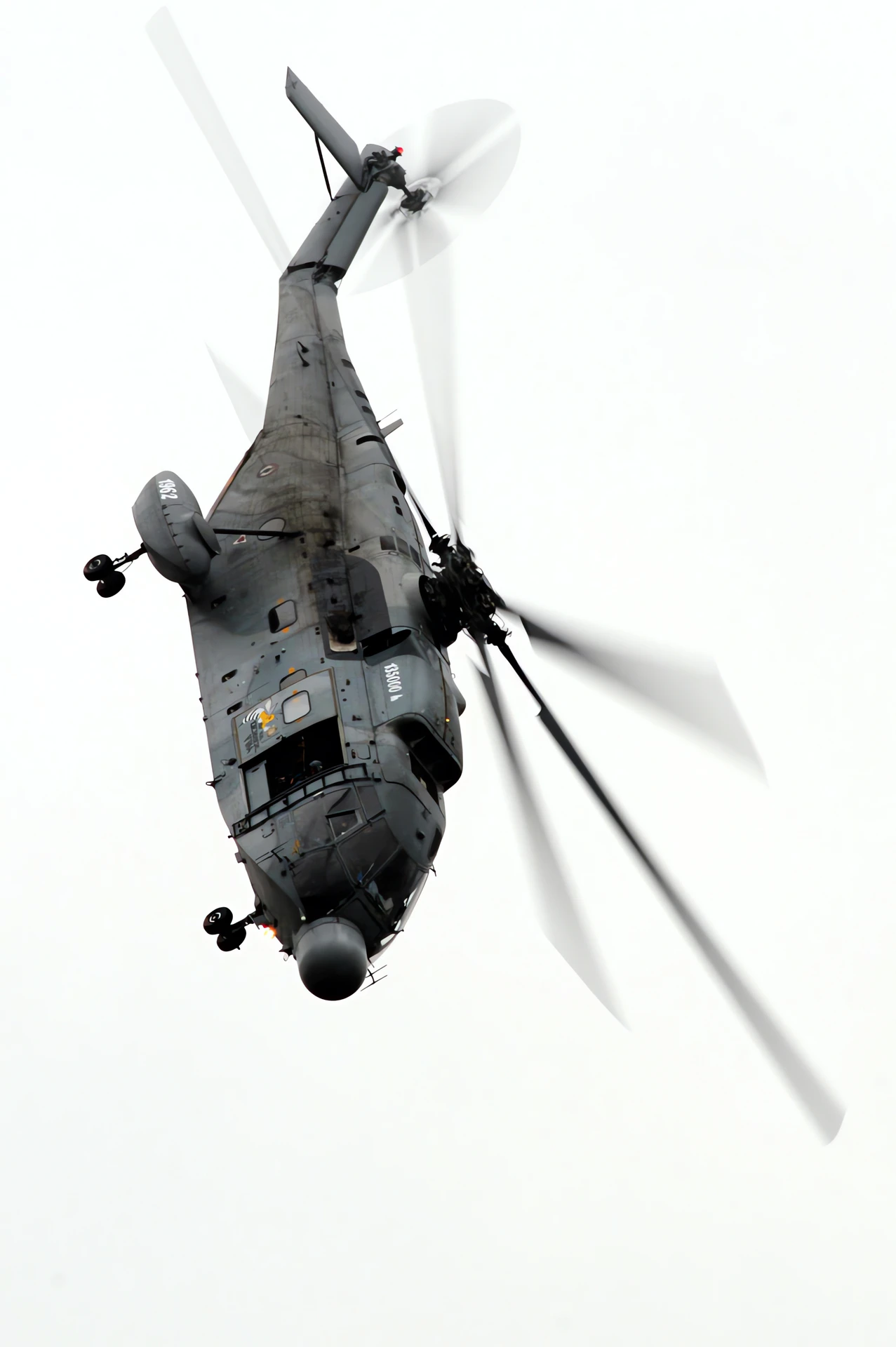
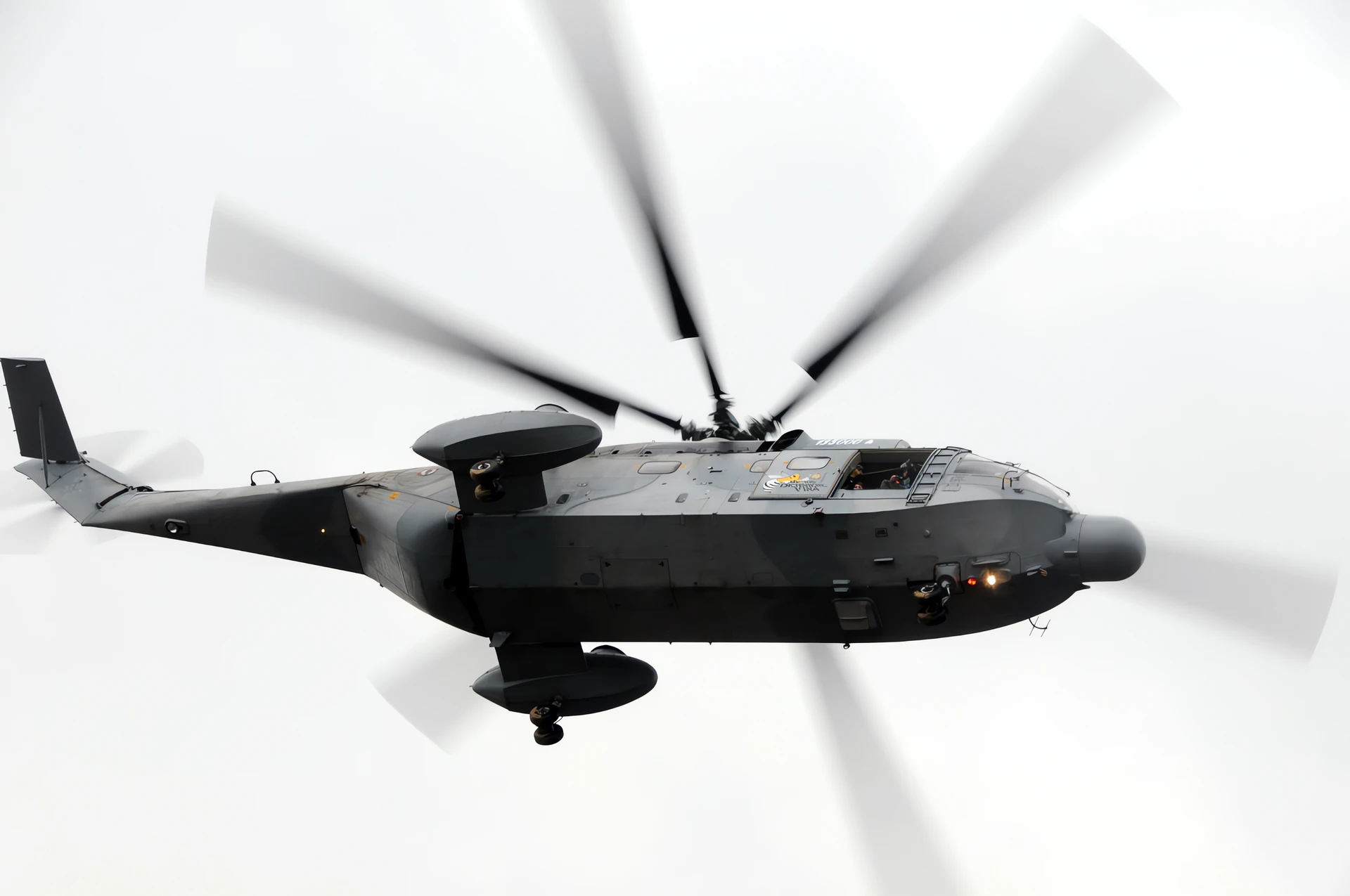
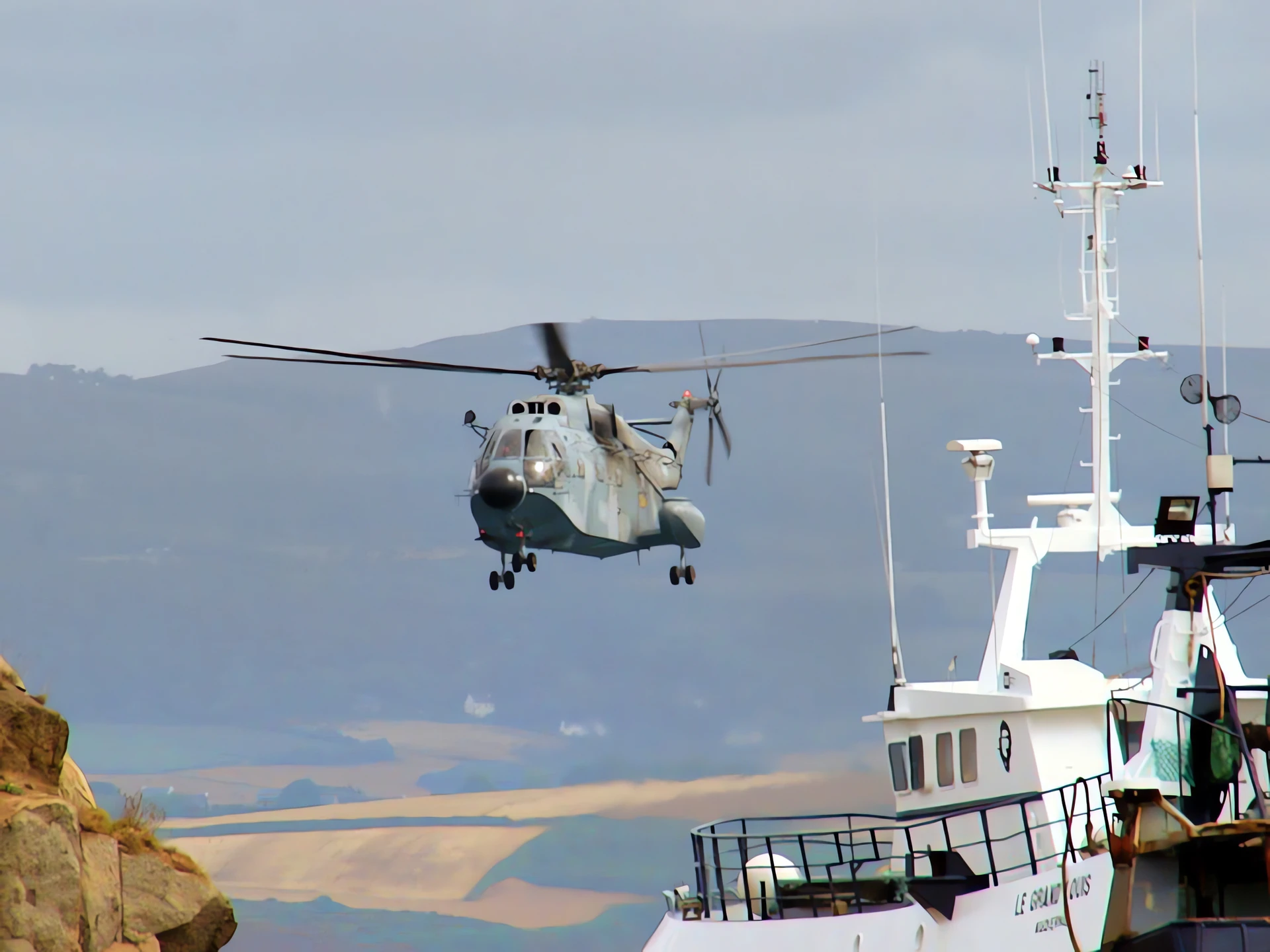
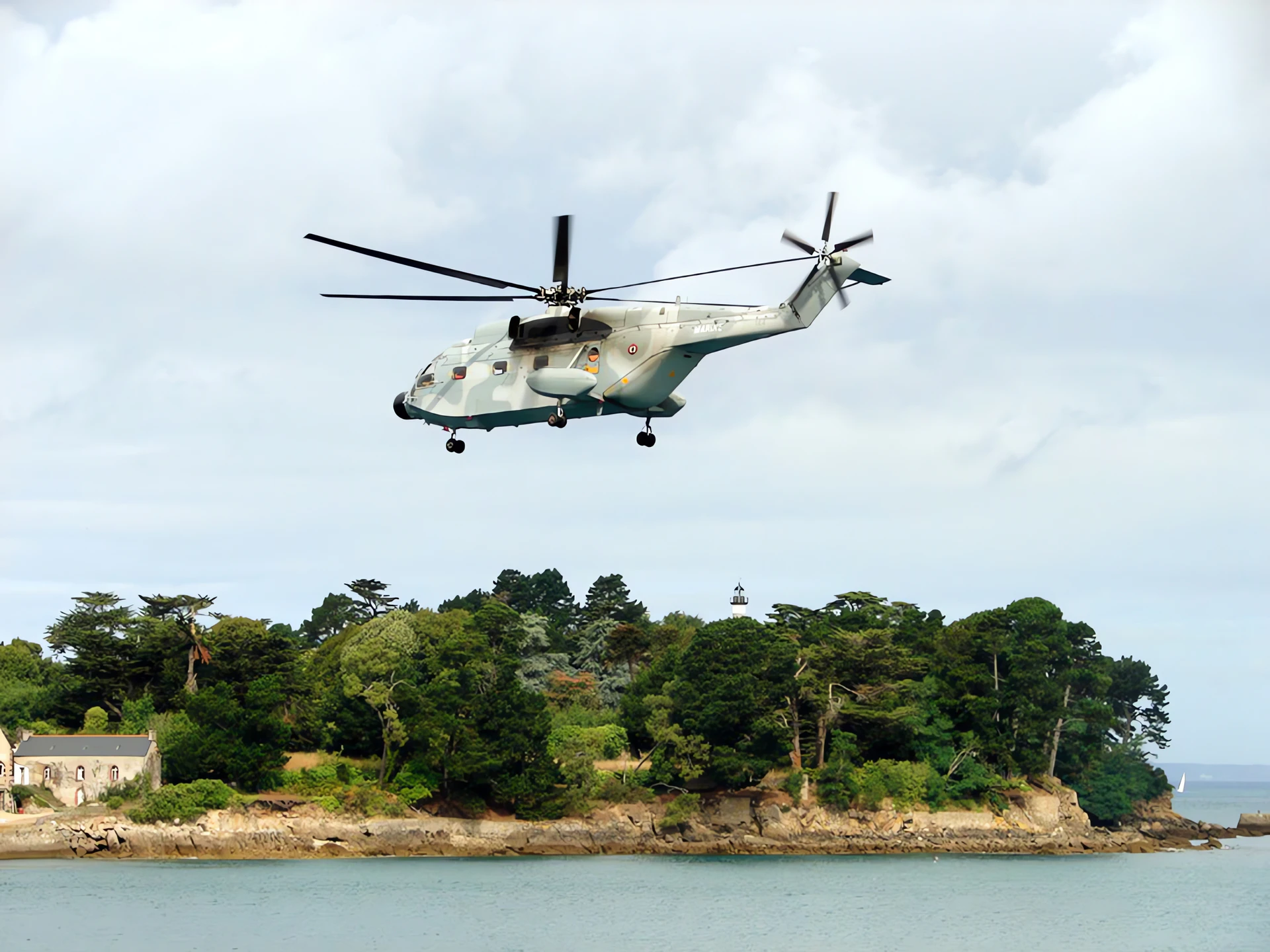
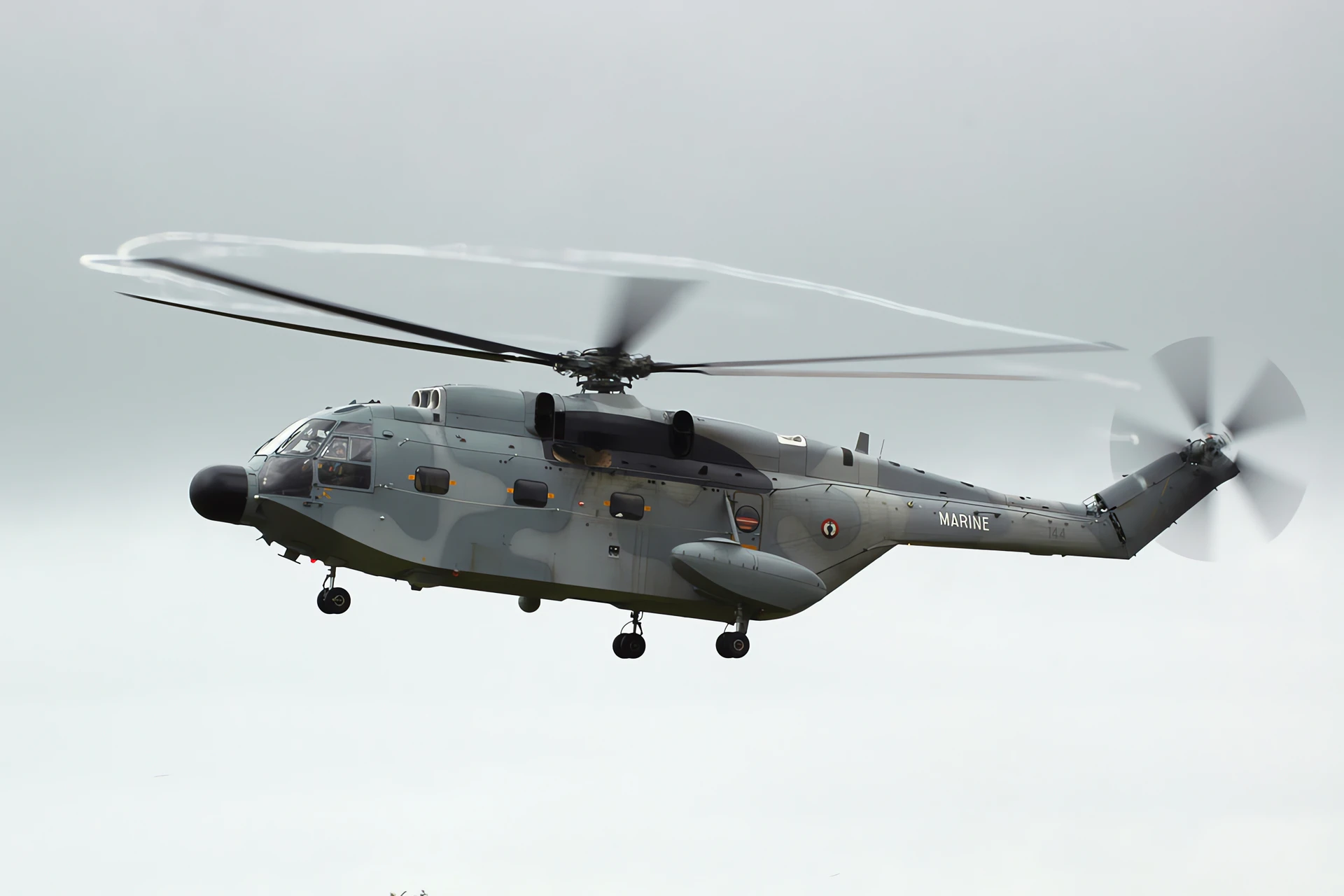
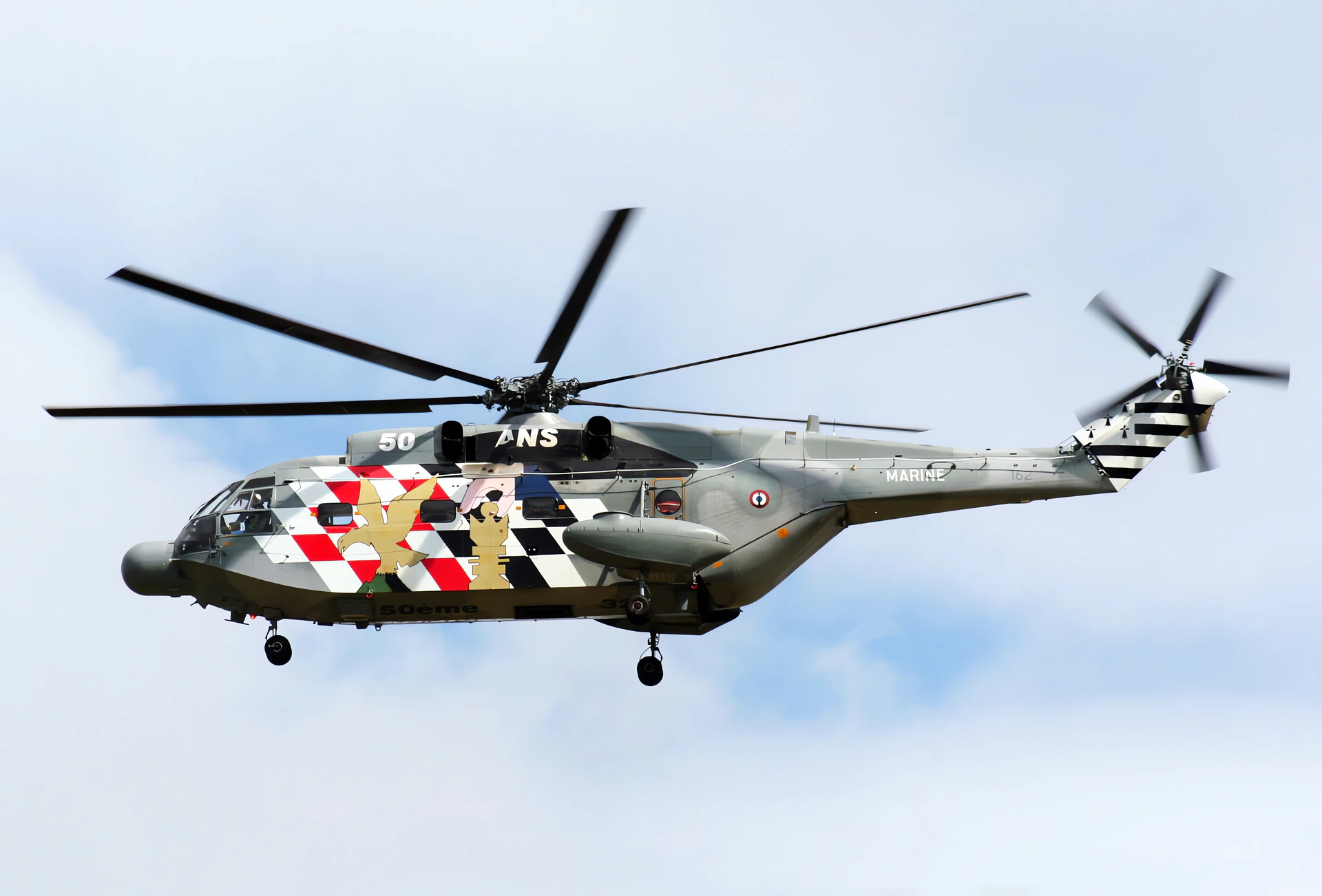
Aérospatiale (dříve Sud Aviation) SA 321 Super Frelon ("Super Hornet") je třímotorový těžký transportní vrtulník vyráběný francouzským výrobcem leteckého průmyslu Sud Aviation. V jednu chvíli se stal nejvýkonnějším vrtulníkem, který byl v Evropě vyroben, a zároveň nejrychlejším vrtulníkem na světě.
| SA.321 Super Frelon | |
|---|---|
| Fotografů | Neznámé |
| Lokalizace | Neznámé |
| Fotografie | 100 |

 Kupte mi kávu

Viz také:


The Giant of French Aviation
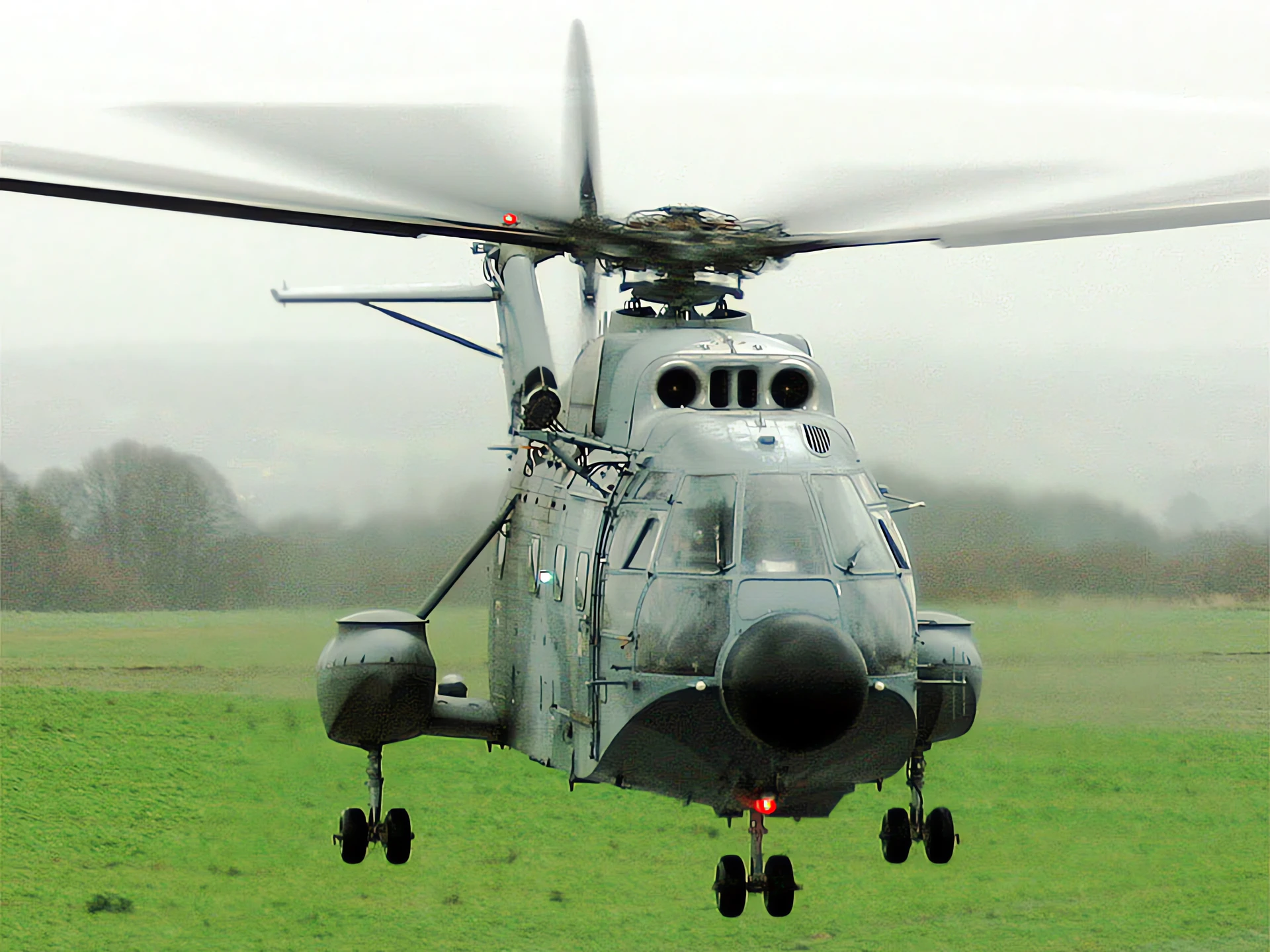
Tá SA 321 Super Frelon was the largest and most powerful helicopter ever developed in France. Emerging in the 1960s, it was a major leap forward from the original SA 3200 Frelon, utilizing a three-engine configuration and a boat-hull fuselage for amphibious operations. It was designed to satisfy a wide range of requirements: from the French Navy’s need for an anti-submarine (ASW) platform to the Air Force’s demand for a heavy-lift troop transport.
| Attribute | Standard Specification (SA 321G Super Frelon) |
|---|---|
| Roli | Heavy Transport / Anti-Submarine Warfare (ASW) |
| Posádky | 2 Pilots + 3 to 5 Mission Crew |
| Kapacita | 27 to 37 Troops or 15 Stretchers |
| Pohonná jednotka | 3 × Turbomeca Turmo IIIC turboshafts |
| Horsepower | 1,550 shp (1,160 kW) per engine |
| Maximum Speed | 249 km/h (155 mph / 134 knots) |
| Rotor System | 6-blade main rotor; 5-blade tail rotor |
| Operational Range | 1,020 km (approx. 634 miles) |
Design Highlights and Marine Capabilities
- Three-Engine Safety: The use of three engines provided a massive safety margin for over-water operations. Even with one engine failed, the Super Frelon could maintain a hover or continue its mission with a full load.
- Amphibious Hull: The fuselage was designed with a watertight boat-hull and stabilizing floats (sponsons) on the landing gear, allowing it to land and remain stable on the open sea for SAR or ASW missions.
- Anti-Submarine Kit: The naval “G” variant was equipped with an ORB-31 radar in the nose, a dipping sonar, and the ability to carry four homing torpedoes or two Exocet anti-ship missiles.
- Heavy Internal Cargo: The cabin was large enough to carry a small vehicle, loaded through a rear hydraulic ramp similar to modern transport planes.
Global Service and the “Z-8” Legacy
- French Naval Service: For decades, the Super Frelon was the primary heavy lift and ASW asset for the French Navy, serving on the carriers Clemenceau A Foch.
- Israeli Service: Known as the “Tsira” (Wasp), the Israeli Air Force used them for daring commando insertions during the War of Attrition and the Yom Kippur War, proving their ruggedness in desert heat.
- The Chinese Connection: China was a major export customer and eventually developed a reverse-engineered version known as the Changhe Z-8. This design continues to evolve today as the AC313, meaning the Super Frelon’s DNA is still flying in the 21st century.
Record Breaker
In July 1963, a modified Super Frelon piloted by Jean Boulet set several world speed records for helicopters, including reaching 350.47 km/h (217.77 mph) over a 3 km course, proving the aerodynamic efficiency of its sleek, pod-and-boom design.
Počet zobrazení: 647
Můžete také vidět:
 Eurocopter AS350 Écureuil – Fotografie & Videa
 Sikorsky HH-60 Pave Hawk – Fotografie & videa
 Saunders-Roe Skeeter – Fotografie & videa
 Sikorsky S-64 Skycrane – Fotografie & Video
 Kaman HH-43 Huskie - Fotografie & Video
 Alouette III – Fotografie & Video
 Aerospatiale SA330B Puma – Fotografie & Video
 Aerospatiale AS555UN – Fotografie & Video
 Kamov Ka-50 Hokum – Fotografie & Video
 SA.318C Alouette II – Fotografie & Video