Wydawnictwo Militaria | |
|---|---|
| Series | Tank Power |
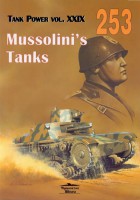
| Sujet | Mussolini's Tanks |
| Réf | 253 |
Signed documentation Wydawnictwo Militaria the book "Mussolini's Tanks – Wydawnictwo 253".
List of Italian tanks during World War II:
Source: Wikipedia
Views : 631
Wydawnictwo Militaria | |
|---|---|
| Series | Tank Power |
| Sujet | Mussolini's Tanks |
| Réf | 253 |
Signed documentation Wydawnictwo Militaria the book "Mussolini's Tanks – Wydawnictwo 253".
List of Italian tanks during World War II:
Source: Wikipedia
Views : 631
Wydawnictwo Militaria | |
|---|---|
| Série | Tank Power |
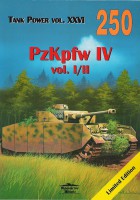
| Sujet | Panzer IV |
| Réf | 250 |
Une documentation signée Wydawnictwo Militaria le livre «Panzer IV – Wydawnictwo 250» .
Le Panzerkampfwagen IV (PzKpfW IV), souvent appelé Panzer IV était un char d’assaut utilisé par l’Allemagne nazie durant la Seconde Guerre mondiale. Conçu initialement comme char d’appui-feu, avec un canon de 75 mm court, pour le Panzerkampfwagen III, il finit par remplacer ce dernier quand les chars alliés devinrent trop protégés pour celui-ci. Rééquipé avec un canon long antichar, le PzKpfW IV fut le principal char allemand pendant la seconde partie de la guerre avec plus de 9000 exemplaires produits et donna naissance à de nombreuses versions.
Source: Wikipedia
Views : 773
Wydawnictwo Militaria | |
|---|---|
| Series | Wydawnictwo Militaria |
| Period | World War II |
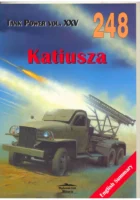
| Sujet | Katyusha - Katyusha - Stalin's Organ |
| Réf | 248 |
Signed documentation Wydawnictwo Militaria the book "Katyusha - Wydawnictwo 248" .
The Katyusha (en russe Катюша), diminutif russe de Catherine, est le surnom donné par les Soviétiques à un lance-roquettes en rafales de la Seconde Guerre mondiale. Ce nom vient de la chanson traditionnelle Katioucha. Surnommé par les Allemands « orgue de Staline » (Stalinorgel) à cause de ses caractéristiques, elle consistait en un camion tirant des roquettes en rafales. Plusieurs batteries de Katiouchas étaient généralement alignées, dans le but de créer un tir de barrage et de destruction très important. Leur formidable puissance de feu était néanmoins altérée par une forte imprécision du tir. Il existe deux versions de ce lance-roquettes en rafale, le BM-8 de 82 mm et le BM-13 132 mm (BM for Boïevaïa Machina, "combat vehicle"). Each truck had between 14 and 48 launchers.
Source: Wikipedia
Views : 808
Wydawnictwo Militaria | |
|---|---|
| Series | Wydawnictwo Militaria |
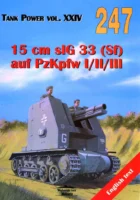
| Sujet | SIG 33 on Panzer I/II/II |
| Réf | 247 |
Signed documentation Wydawnictwo Militaria the book "SIG 33 - Wydawnictwo 247" .
The GIS 33 est un canon mis au point en Allemagne dans les années 1920, 1930 et 1940. Il fut mis en service à partir de 1933 et délaissé après la Seconde Guerre mondiale. N’ayant pas réussi à le rendre plus léger, les techniciens essayèrent de le rendre plus maniable en l’installant sur des châssis chenillés déclassés, avec plus ou moins de succès. D’abord installé sur le Panzer I, il s’avéra rapidement que le moteur de celui-ci était trop faible pour propulser le SIG 33. Des conversions sur châssis de PzKpfw II, 38 (t) surnommé Buffalo, Lorraine and PzKpfw III were more effective. Another evolution was the adoption of rims equipped with rubber bandages allowing traction by trucks or semi-tracked vehicles. Some of the rims were equipped with wooden spokes, somewhat lightening the lookout. He was placed in the infantry battalion's howitzer company (13th company) and assigned to the 4th Platoon, whose staff was one officer, five non-commissioned officers and thirty-three gunners, responsible for the implementation and relocation of the 2 GIS. Each howitzer was towed by a six-horse team led by three soldiers. The other part of the crew was transported to the forearm of the room. The other personnel were tasked with protecting, transmitting requests for support, receiving orders and adjusting fire, as well as administrative and support missions. The quality of the training often allowed the infantry unit to manage the information and transmit it effectively to the next level. In the summer of 1941, the Wehrmacht was equipped with a fleet of 867 SIG 33 heavy infantry guns.
Source: Wikipedia
Views: 722

Wydawnictwo Militaria | |
|---|---|
| Series | Wydawnictwo Militaria |
| Sujet | Lake Balaton Offensive - Operation Frehlingserwachen |
| Réf | 246 |
Signed documentation Wydawnictwo Militaria the book "Balaton Lake Offensive - Wydawnictwo 246" .
L'opération Frhlingserwachen (opération Réveil du printemps) du 6 au 16 mars 1945 fut la dernière grande offensive allemande de la Seconde Guerre mondiale. L’offensive fut lancée en Hongrie dans la région du lac Balaton, d’où le nom aussi donné d’offensive du lac Balaton. Lancée en grand secret le 6 mars 1945, l’attaque allemande fut centrée sur la région du lac Balaton, cette région présentant les dernières réserves de pétrole encore disponibles pour les Allemands. Elle incluait plusieurs unités allemandes retirées du front de l’Ouest après l’échec de l’offensive des Ardennes dont la 6e armée Panzer SS. Malgré quelques gains initiaux, cette offensive fut un échec. Elle démontra le manque de jugement militaire d’Hitler vers la fin de la guerre. Il avait décidé seul de cette opération, trop ambitieuse (Hitler espérait repousser les Soviétiques au delà du Danube) sans support aérien et avec du carburant limité. Stratégiquement, l’opération n’eut pas d’impact sur le déroulement de la fin du conflit. Si elle démontra que l’armée allemande conservait des qualités guerrières, 24 heures de contre-offensive soviétique rétablirent le front tel qu’il était avant le lancement de l’opération allemande.
Source: Wikipedia
Views : 836

Wydawnictwo Militaria | |
|---|---|
| Series | Wydawnictwo Militaria |
| Sujet | PanzerDivision SS-Frundsberg |
| Réf | 245 |
Signed documentation Wydawnictwo Militaria the book "PanzerDivision SS-Frundsberg - Wydawnictwo 245" .
La 10e Panzerdivision SS Frundsberg est une division de Waffen-SS levée en janvier 1943. Son nom de Frundsberg fait référence au reitre allemand du XVIe siècle Georg von Frundsberg.
Source: Wikipedia
Views : 749
Wydawnictwo Militaria | |
|---|---|
| Série | Wydawnictwo Militaria |
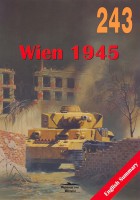
| Sujet | Vienne 1945 |
| Réf | 243 |
Une documentation signée Wydawnictwo Militaria le livre «Libération de Vienne 1945 – Wydawnictwo 243» .
Après une nouvelle contre-attaque manquée, l’Armée Rouge entre en Autriche le 30 mars et prend Vienne le 13 avril. En tout, l’OKW rapporte la perte de 600 000 hommes, morts, blessés ou faits prisonniers entre janvier et février 1945. Le 9 avril, la garnison de Königsberg se rend mais des débris du Groupe d’Armées Nord restent encerclés dans des poches le long de la mer Baltique.
Source: Wikipedia
Views : 780
Wydawnictwo Militaria | |
|---|---|
| Publisher | Wydawnictwo Militaria |
| Series | Wydawnictwo Militaria |
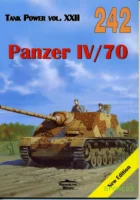
| Sujet | Panzer IV/70 - Sdkfz.162/1 |
| Réf | 242 |
Signed documentation Wydawnictwo Militaria the book "Panzer IV/70 - Jagdpanzer IV - Wydawnictwo 242" .
The Jagdpanzer IV, SdKfz 162, was a German tank destroyer based on the chassis of the Panzerkampfwagen IV which was built in three main versions during World War II. It was developed despite the opposition of Heinz Guderian, Inspector General of the Panzertruppen, to replace the StuG III. Guderian felt it unnecessary to distract from the resources of the Panzer IV production because, in his view, the StuG III and StuG IV were still fully playing their part.
Source: Wikipedia
Views: 1239
Half-Track | |
|---|---|
| Pays | USA |
| Model | M5 |
| Period | World War II |
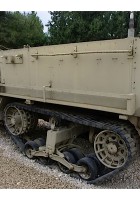
| Description | Album de 64 photos of the M5 HalfTrack |
Photo gallery on an M5 HalfTrack, The self-guide Armoured Halftrack in English - was the first U.S. Army troop transport vehicle to be operationally employed. It was built and used extensively during the Second World War and continued its career well beyond the Middle East, notably where it was used in many versions in Israel or Lebanon (ALS). Some versions are still used today like the Tsefa. Its anti-aircraft version, the M 16, ended its operational career in the mid-1980s. Seventy variants representing 41,000 vehicles came out of Diamond T, White and Autocar factories.
Source: M5 HalfTrack on Wikipedia
Views: 4887
Wydawnictwo Militaria | |
|---|---|
| Series | Wydawnictwo Militaria |
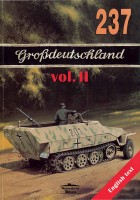
| Sujet | Grossdeutschland |
| Réf | 237 |
Signed documentation Wydawnictwo Militaria the book "Grossdeutschland – Wydawnictwo 237".
The Panzergrenadier Division Grossdeutschland (Division Großdeutschland) was an elite motorized infantry division of the German Army (Wehrmacht) during World War II.
Source: Wikipedia
Views : 700