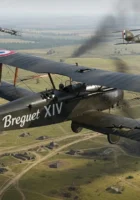
Breguet XIV war

Breguet XIV

CountryFrance
RoleBomber
First flight21 November 1916
Built8000+

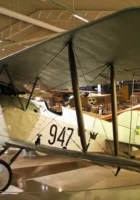
The Bréguet 14 was a French biplane bomber and reconnaissance aircraft of World War I. It was built in very large numbers and production continued for many years after the end of the war. Apart from its widespread usage, the Bréguet 14 is known for being among the first mass-produced aircraft to use large amounts of metal, rather than wood, in its structure. This allowed the airframe to be lighter than a wooden airframe of the same strength, in turn making the aircraft relatively fast and agile for its size; in combat it was able to outrun many contemporary fighters. The Bréguet 14’s strong construction allowed it to sustain considerable damage, in addition to being easy to handle and possessing favourable performance. The type has often been considered to have been one of the best aircraft of the war.

Source: Breguet XIV on Wiki

Continue reading

Views : 1557

Breguet Aviation Br.1050 Alize

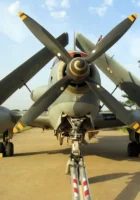
Bréguet 1050 Alizé

CountryFrance
RoleAnti-submarine aircraft
First flight6 October 1956
Built89

The Bréguet Br.1050 Alizé (French: “Tradewind”) was a French carrier-based anti-submarine warfare aircraft. It was developed in the 1950s, based loosely on the second prototype Bréguet Vultur attack aircraft which had been modified into the Bréguet Br.965 Épaulard anti-submarine warfare aircraft.

Source: Bréguet 1050 Alizé on Wiki

Continue reading

Views : 2228

Sturer Emil 12.8cm Kanone L61

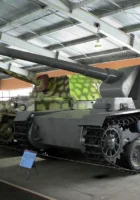
Sturer Emil

CountryNazi Germany
RoleHeavy tank destroyer
In service1942-1943
Built2

The 12.8 cm Selbstfahrlafette auf VK 30.01(H) “Sturer Emil” (German for “Stubborn Emil”) was an experimental World War II German self-propelled anti-tank gun. It was based on the Henschel VK30.01 chassis and armed with a Rheinmetall 12.8 cm K40 L/61 gun (based on the 12.8 cm FlaK 40). This gun could traverse 7° to each side, elevate 10° and depress -15°. It carried 15 rounds for the main gun.

Source: Sturer Emil on Wikipedia

Continue reading

Views : 2465

Junkers Ju 86 war

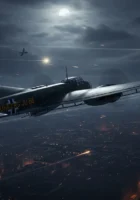
Junkers Ju 86

CountryNazi Germany
RoleBomber, airliner, reconnaissance aircraft
First flight4 November 1934
Built900

The Junkers Ju 86 was a German monoplane bomber and civilian airliner designed in the early 1930s, and employed by various air forces on both sides during World War II. The civilian model Ju 86B could carry ten passengers. Two were delivered to Swissair and five to Deutsche Luft Hansa. In addition a single civilian Ju 86Z was delivered to Sweden’s AB Aerotransport.

Source: Junkers Ju 86 on Wikipedia

Continue reading

Views : 1980

2S4 Tyulpan

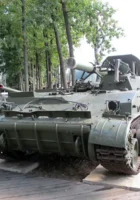
2S4 Tyulpan

CountrySoviet Union
RoleSelf-propelled mortar
Produced1969–1988
Built588

The 2S4 Tyulpan (often spelled Tulpan, Russian: 2С4 «Тюльпан»; English: tulip) is a Soviet 240 mm self-propelled heavy mortar. “2S4” is its GRAU designation. The Tyulpan is the largest mortar system in use today.

Source: 2S4 Tyulpan on Wikipedia

Continue reading

Views : 1521

JH 7A Flying Leopard

Xi’an JH-7

CountryPeople’s Republic of China
RoleFighter-bomber
First flight14 December 1988
Built270+

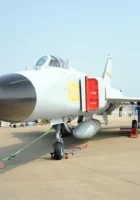
The Xi’an JH-7 (Jianjiji Hongzhaji – fighter-bomber; NATO reporting name Flounder), also known as the FBC-1 (Fighter/Bomber China-1) Flying Leopard, is a tandem two-seat, twin-engine fighter-bomber in service with the People’s Liberation Army Naval Air Force (PLANAF), and the People’s Liberation Army Air Force (PLAAF). The main contractors are Xi’an Aircraft Industrial Corporation (XAC) and the 603rd Aircraft Design Institute (later named the First Aircraft Institute of AVIC-I).

Source: Xi’an JH-7 on Wikipedia

Continue reading

Views : 904

Nachang A-5 Fantan

Nanchang Q-5

CountryPeople’s Republic of China
RoleGround-attack aircraft
First flight10 June 1965
Built1300+

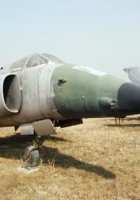
The Nanchang Q-5 (Chinese: 强-5; pinyin: Qiang-5; NATO reporting name: Fantan), also known as the A-5 in its export versions, is a Chinese-built single seat, twin jet engine ground-attack aircraft based on the Soviet MiG-19. However, the aircraft is primarily used for close air support.

Source: Nanchang Q-5 on Wikipedia

Continue reading

Views : 1282

Junker J9 D1

Junkers D.I

CountryGermany
RoleFighter
First flight17 September 1917
Built41

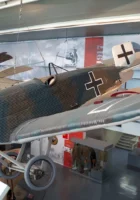
The Junkers D.I (factory designation J 9) was a monoplane fighter aircraft produced in Germany late in World War I, significant for becoming the first all-metal fighter to enter service. The prototype, a private venture by Junkers named the J 7, first flew on 17 September 1917, going through nearly a half-dozen detail changes in its design during its tests. When it was demonstrated to the Idflieg early the following year it proved impressive enough to result in an order for three additional aircraft for trials. The changes made by Junkers were significant enough for the firm to rename the next example the J 9, which was supplied to the Idflieg instead of the three J 7s ordered.

Source: Junkers D.I on Wikipedia

Continue reading

Views : 1541