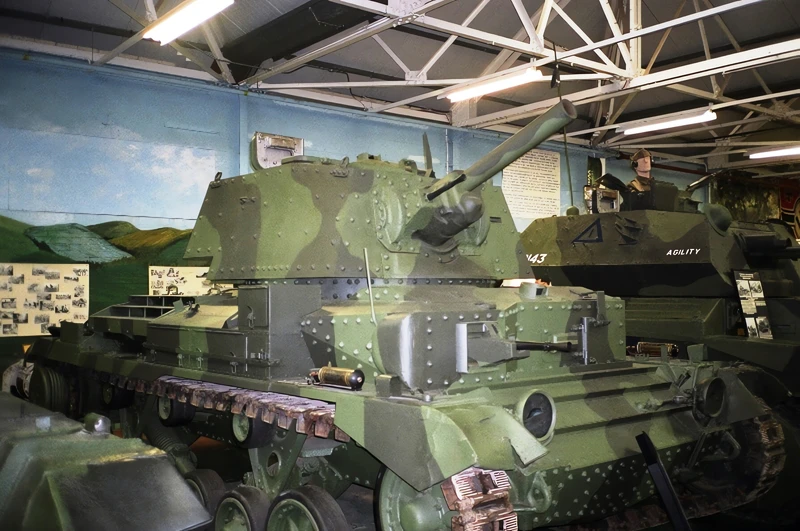
Kryssare Mk II | |
| Land | Storbritannien |
| Typ | Kryssartank |
| Produceras | 1938–1940 |
| Byggd | 175 |
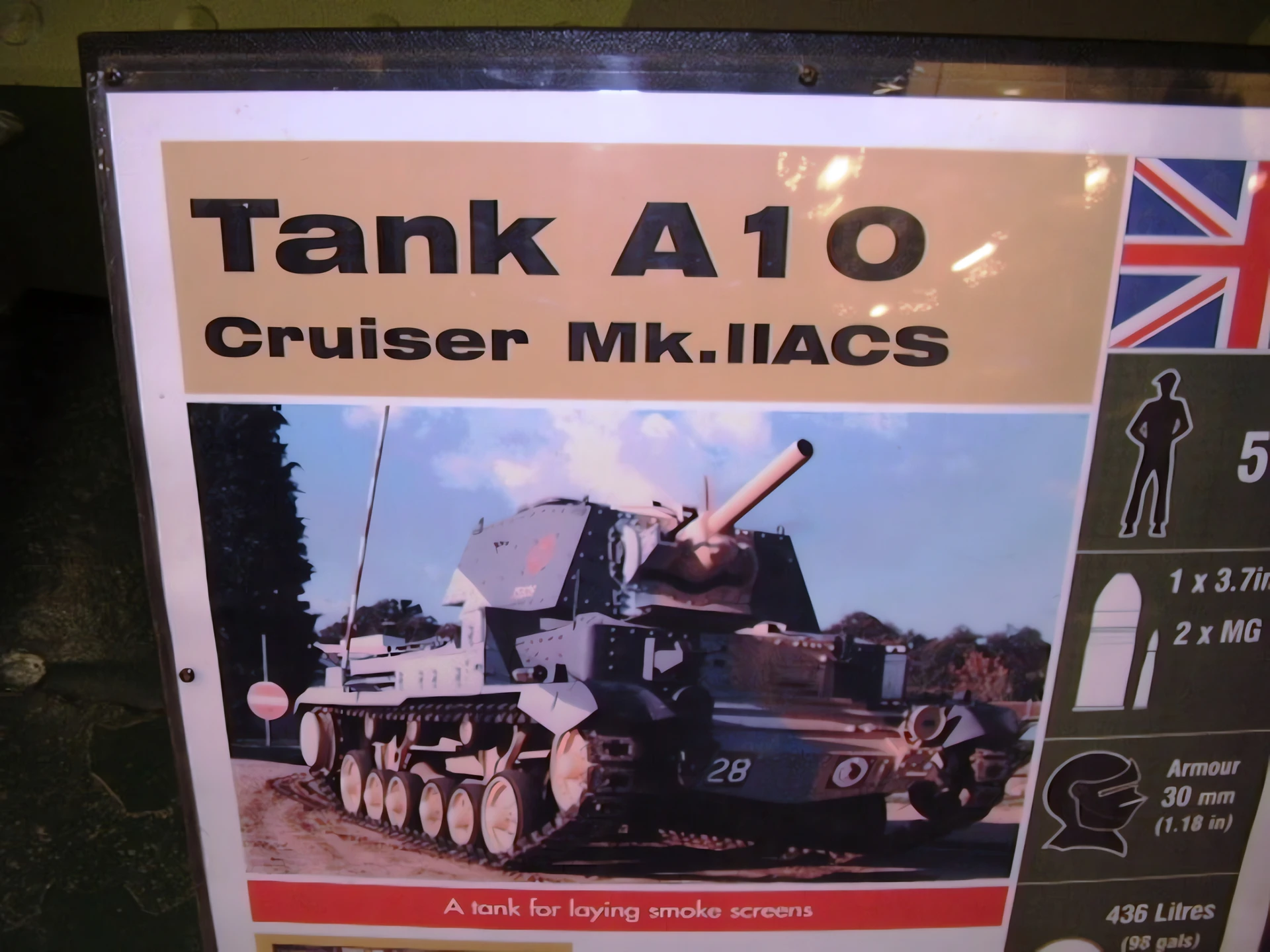
Tank, Cruiser, Mk II (A10), var en kryssartank utvecklad tillsammans med A9 cruiser tank, och var avsedd att vara en tyngre, infanteri tank version av den typen. I praktiken ansågs den inte lämplig för infanteristridsvagnsrollen och klassificerades som en "tung kryssare".
Källkod: Cruiser Mk II på Wikipedia
| A10 Cruiser Mk.IIACS Walk Around | |
|---|---|
| Fotograf | Alan McNeilly |
| Lokalisering | Unknow |
| Bilder | 20 |
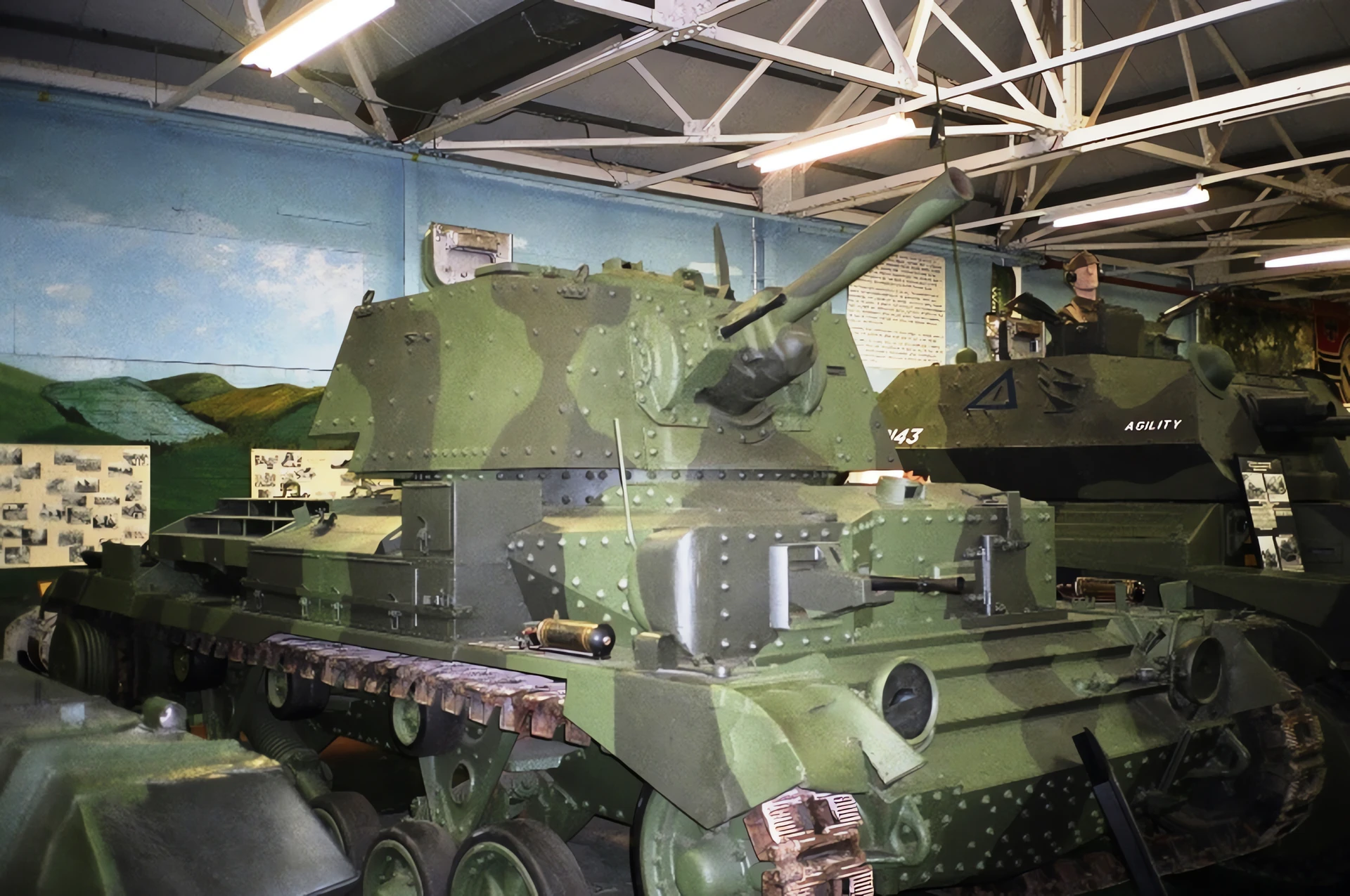
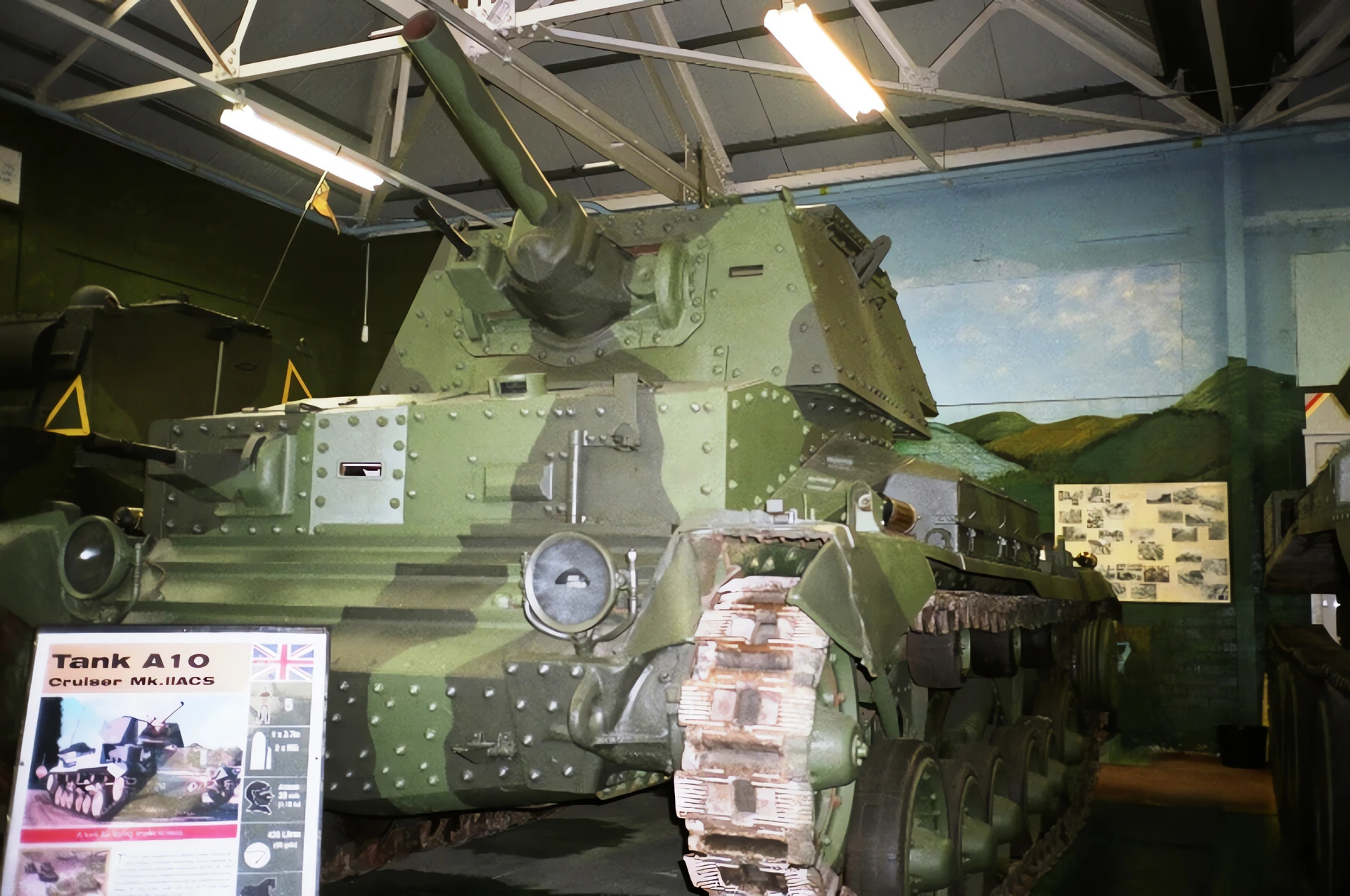
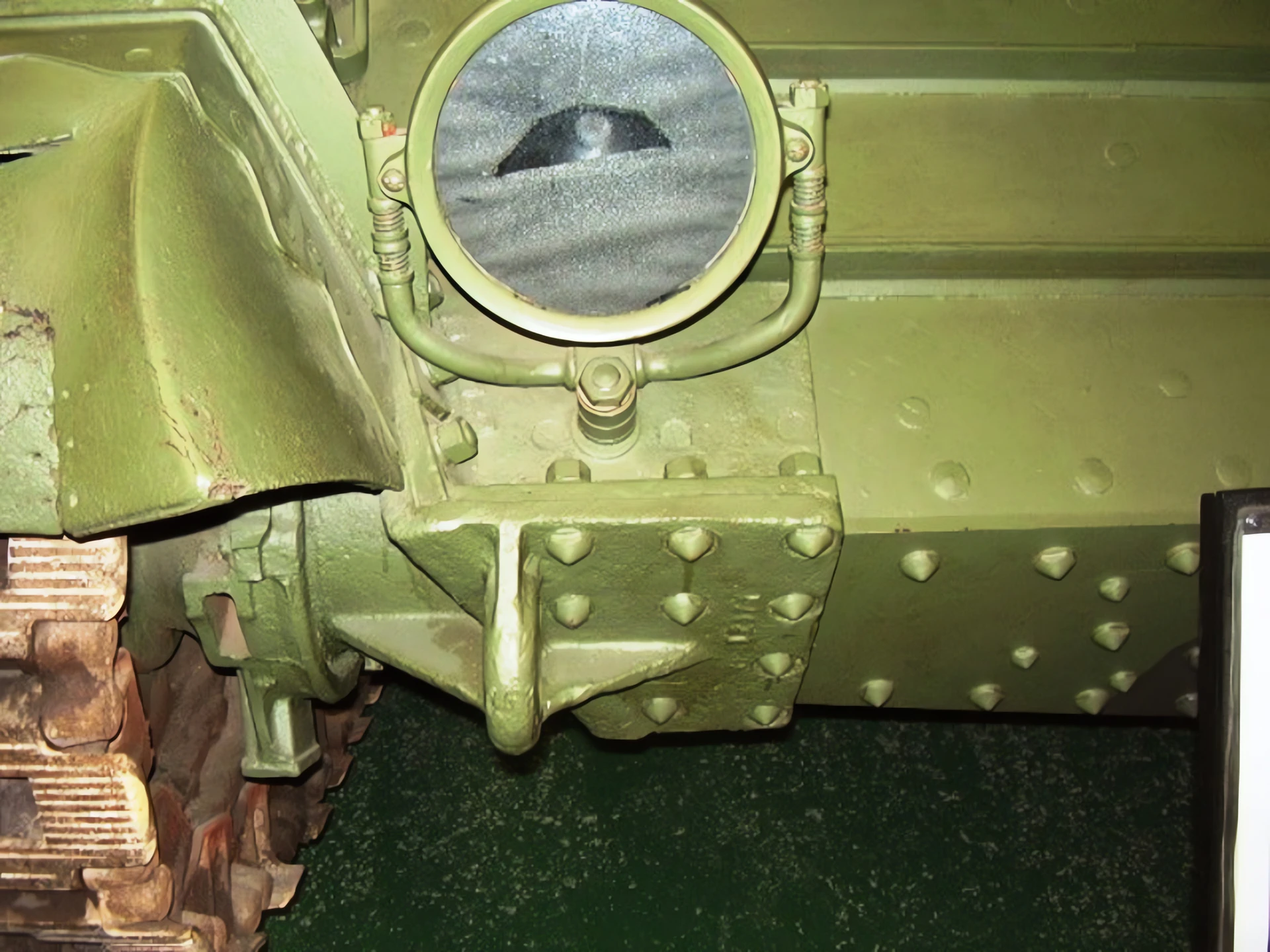
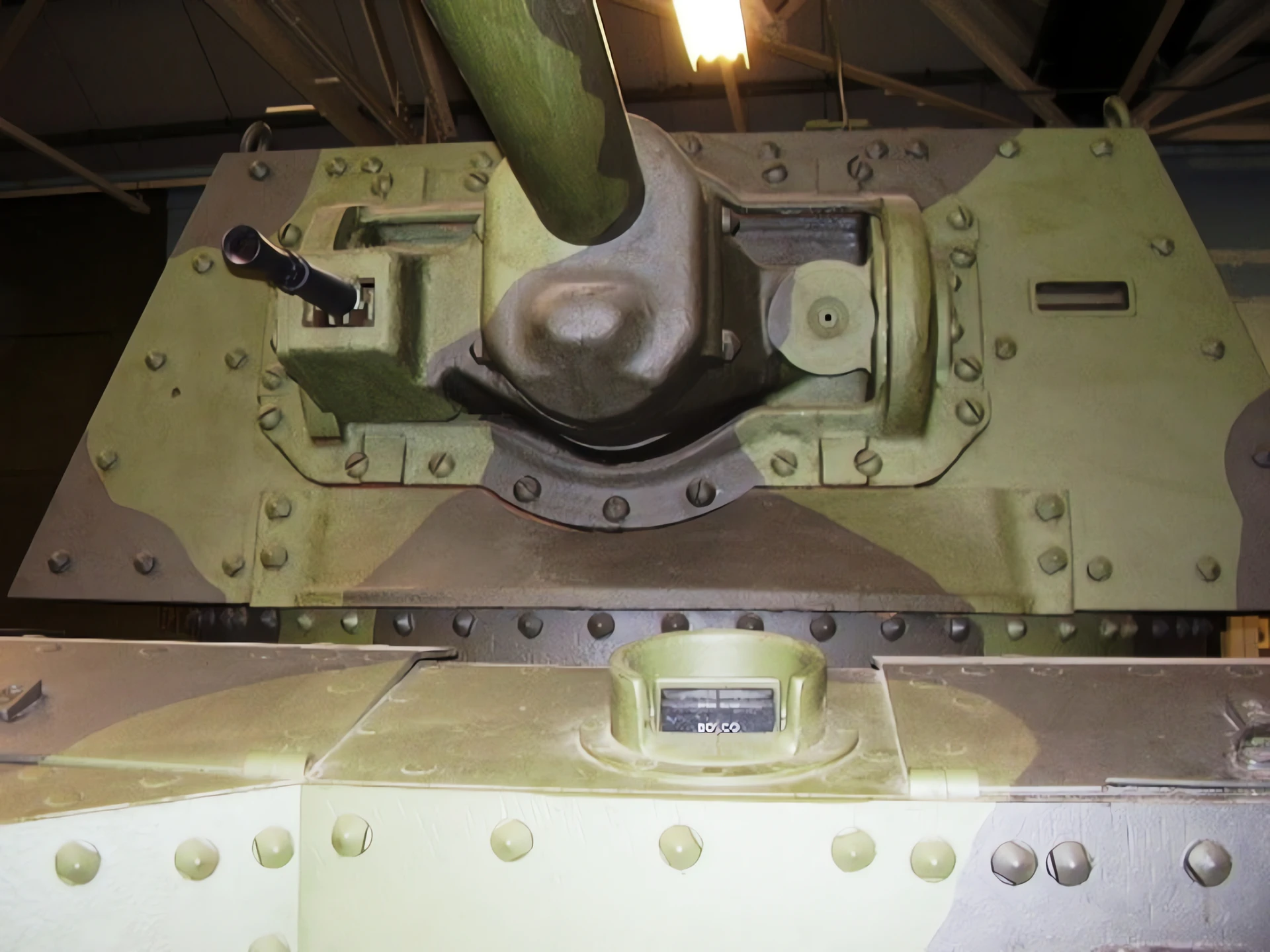
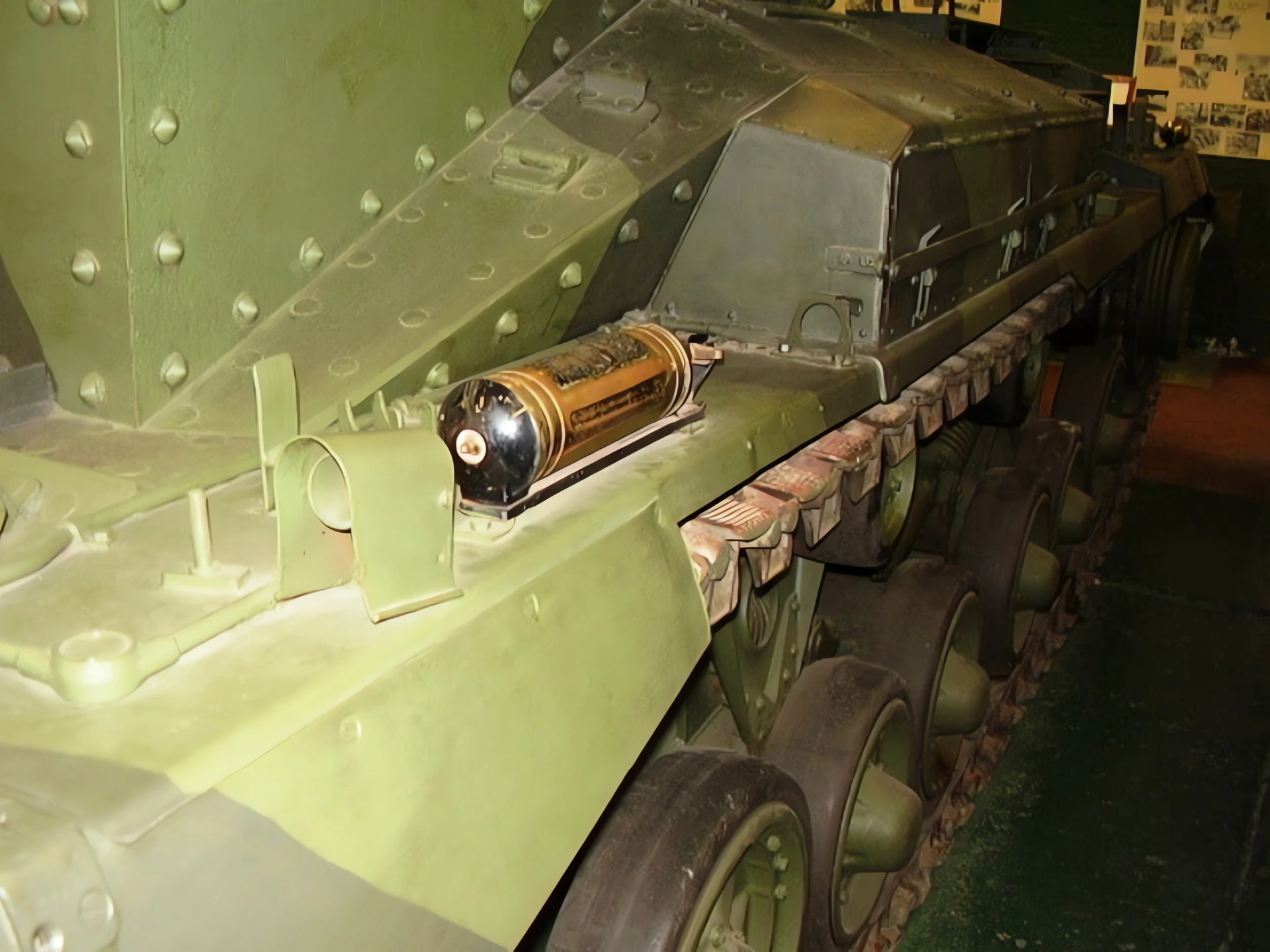


General Characteristics
The Cruiser Tank Mark II, officially designated A10, was a British tank developed in the late 1930s. Although classified as a Cruiser tank, it was originally intended to be an “Infantry Tank” to accompany the slower Infantry Tank Mk I (A11). It was a mechanically simple design with relatively heavy armor for a Cruiser of its time, though still considered insufficiently protected against modern anti-tank weapons when it saw combat early in World War II.
| Property | Typical Value (A10 Mk IIA) |
|---|---|
| Roll | Cruiser Tank / Infantry Support |
| Tillverkare | Birmingham Railway Carriage and Wagon Company |
| Produceras | 1938–1940 |
| No. Built | 175 |
| besättning | 5 (Commander, Gunner, Loader, Driver, Hull Machine Gunner) |
| Mass (Weight) | 14.4 tonnes (15.9 short tons) |
| längd | 5.51 m (18 ft 1 in) |
Powerplant and Mobility
- Engine: AEC Type 179 six-cylinder, water-cooled petrol engine.
- Engine Power: 110 kW (150 hp) at 2,400 rpm.
- Power/Weight Ratio: Approximately 10.4 hp/tonne.
- Maximum Speed (Road): 26 km/h (16 mph). Its speed made it too slow for typical Cruiser tank doctrine, hence its role as an infantry support tank.
- Operational Range (Road): 160 km (100 mi).
- Suspension: Horstmann coil spring suspension (similar to earlier Vickers designs), known for its simplicity and robustness.
Armament and Armor
- Main Armament: One Ordnance QF 2-pounder (40 mm) gun.
- Ammunition: The 2-pounder was effective against contemporary German tanks but only fired solid shot (AP), lacking a High Explosive (HE) round, which severely limited its infantry support capability.
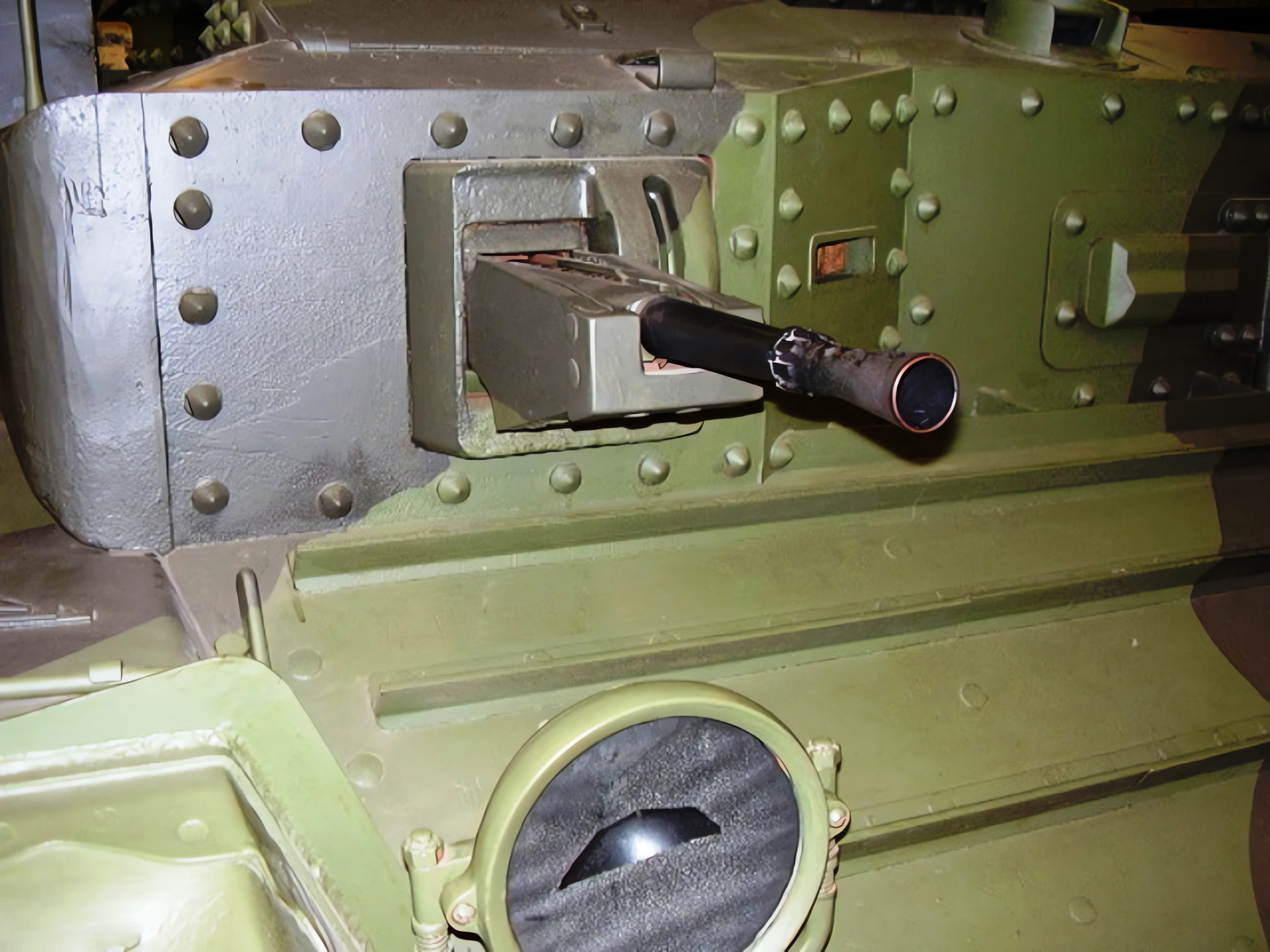
- Secondary Armament: One coaxial 7.92 mm Besa machine gun and, uniquely, a separate 7.92 mm Besa machine gun mounted in a small turret on the front left of the hull.
- Maximum Armor Thickness: 30 mm (1.2 in) (Front of Turret and Hull).
- Minimum Armor Thickness: 6 mm (0.24 in) (Top/Bottom).
- Armor Performance: The 30 mm frontal armor was a notable improvement over the 14 mm on the Cruiser Mk I (A9), but still insufficient against the 37 mm anti-tank gun and 50 mm guns encountered later in the war.
- Service History: Saw combat during the Battle of France (1940) and in North Africa (1940–1941), primarily with the 3rd Royal Tank Regiment.
Visningar : 706