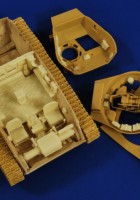
M24 Chaffee Interior ( Bronco ) - Verlinden 2735

Verlinden

Ref2735
TipagemAcessórios
Escala1/35
Tópico

M24 Chaffee Interior ( Bronco )

Um produto da marca Verlinden o kit: M24 Chaffee Interior ( Bronco ) – Verlinden 2735.

O Tanque Leve M24 foi um tanque leve americano usado durante a Segunda Guerra Mundial e em conflitos do pós-guerra, incluindo a Guerra da Coreia.

Fonte: Verlinden

Continue lendo

Visualizações : 2665

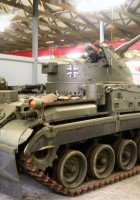
M42 Duster - WalkAround

M42 Duster

PapelArma antiaérea autopropulsada
PaísEua
Construído3200

O M42 40 mm Self-Propelled Anti-Aircraft Gun, or “Duster,” is an armored light air-defense gun built for the U.S. Army from 1952 until December 1959. Production of this vehicle was performed by the tank division of the General Motors Corporation. It used components from the M41 light tank and was constructed of all welded steel. A total of 3,700 M42s were built. The vehicle has a crew of six and weighs 22,500 kg (49,500 lb) fully loaded. Maximum speed is 45 mph with a range of 100 miles. Armament consists of fully automatic twin 40 mm M2A1 Bofors, with a rate of fire of 2×120 rounds per minute (rpm) and either a .30 caliber Browning M1919A4 or 7.62mm M60 machine gun. The 500 hp, six-cylinder, air-cooled, gasoline engine is located in the rear of the vehicle. Although the M42 Duster was initially designed for an anti-aircraft role, it proved highly successful when used in the Vietnam War against unarmored ground forces.

Fonte: M42 Duster na Wiki

Continue lendo

Views : 4762

Russian Navy Alfa Class SSN - HOBBY BOSS 83528

Chefe hobby

Assunto

Russian Navy Alfa Class SSN

Escala1/350
Ref83528

Um modelo da marca HobbyBoss o kit : Russian Navy Alfa Class SSN – HOBBY BOSS 83528

Características : The kit consists of over 30 parts , includes over 10 Photo etched parts – Photo Etched parts for nameplate and propeller etc. – contains display stand

The Soviet Union/Russian Navy Project 705 (Лира/Lira, “Lyre”) was a submarine class of hunter/killer nuclear powered vessels (abbreviated PLA: Podvodnaya lodka atomnaya, nuclear submarine). The class is also known by the NATO reporting name of Alfa. They were the fastest and deepest diving class of military submarines built, with only the prototype K-278 Komsomolets (NATO “Mike” class) exceeding in crush depth and the prototype K-222 (NATO “Papa” class) exceeding in submerged speed.

Fonte: SSN da classe Alfa da Marinha Russa no Hobby Boss

Continue lendo

Visualizações : 1635

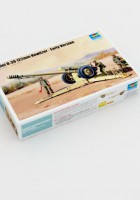
Obuseiro soviético D-30 122mm - Versão Inicial - Trompetista 02328

Trompetista

Ref 02328
TipoModelos
Escala1/35
Tópico

Obuseiro soviético D-30 122mm – Versão Inicial

Um modelo da marca Trumpeter o kit: Soviet D-30 122mm Howitzer – Early Version – Trumpeter 02328.

Features : The kit consists of 150+ parts ,1 pieces of Photo Etched parts – Details finely represented by newly tooled parts – Rubber tires

The D-30, or 122-mm howitzer D-30 (GRAU index 2A18), is a Soviet howitzer that first entered service in the 1960s. It is a relatively light and handy weapon despite being heavy enough for sustained long range fire in the field. The D-30 has a maximum range of 15.4 kilometers, or over 21 km using RAP ammunition. With its striking three-leg stabilising system the D-30 can be rapidly traversed through 360 degrees. Although no longer manufactured in FSU nations the D-30 is still manufactured internationally and is in service in more than 60 countries’ armed forces. The 2A18 gun is the primary weapon of the 2S1 self-propelled howitzer. There are also Egyptian, Chinese, and Syrian Self-propelled variants and conversions. The Syrian conversion utilizes the hull of a T-34 tank.

Fonte: Soviético D-30 122mm Howitze por Trumpeter

Continue lendo

Visualizações : 1227

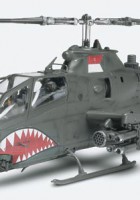
AH-1F Cobra Gunship Plastic Model Kit - Revell 85-5321

Revell

Ref 85-5321
Tipohelicóptero
Escala1/48
Tópico

AH-1F Cobra Gunship

Um modelo da marca Revell o kit: AH-1F Cobra Gunship – Revell 85-5321.

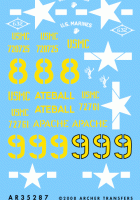
Favorecido pelo Exército dos EUA, o AH-1F Cobra é um heli de ataque construído propositadamente com extremo poder de fogo. Seu canhão Gatling de 20 mm montado no nariz oferece destruição devastadora com extrema precisão. O kit apresenta uma arma Gatling móvel montada no nariz, mini-armas montadas lateralmente, cápsulas de foguete montadas lateralmente, figuras de oficial de armas e piloto, além de decalques para 1. AH-1F Cobra, 67-15771, Primeiro Calvário Aéreo, Tropa C "Mandíbulas da Morte"; 2. AH-1F, 67-15883 "Excelente Aventura de Trigger e Boomer, Operação Tempestade no Deserto e 3. AH-1F, 67-15843, N Troop, 4º Esquadrão, 2º Regimento de Cavalaria Blindado, Exército dos EUA, Iraque, 1991.

Fonte: AH-1F Cobra Gunship em Revell
Continue lendo

Visualizações : 1376

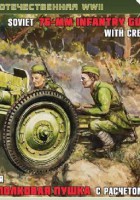
Canhão soviético de 76 mm - Zvezda 6145

Zvezda

Ref6145
TópicoModelo
Escala1/72
Descrição

«Soviet 76-mm Gun»

Um modelo da marca Zvezda o kit: Soviet 76-mm Gun – Zvezda 6145.

The 76-mm divisional gun M1936 (F-22) was a Soviet divisional semi-universal gun, adopted for Red Army service in 1936. This gun was used in conflicts between the USSR and Japan on the Far East, in the Winter War and in World War II. Many F-22s were captured by Wehrmacht, modernized by the Germans and used against Soviet forces.

Fonte: Zvezda

Continue lendo

Visualizações : 723

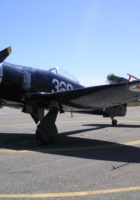
Fúria do Mar do Vendedor Ambulante FB.11

Fúria do Mar de Hawker

PaísReino unido
PapelAviões
Primeiro voo21 February 1945
Construído864

O Fúria do Mar de Hawker is a British fighter aircraft designed and manufactured by Hawker. It was the last propeller-driven fighter to serve with the Royal Navy, and one of the fastest production single piston-engined aircraft ever built. Developed during the Second World War, the Sea Fury entered service two years after the war ended. The Sea Fury proved to be a popular aircraft with a number of overseas militaries, and was used during the Korean War in the early 1950s, as well as against the 1961 Bay of Pigs Invasion of Cuba.

Fonte: Fúria do Mar de Hawker na Wikipédia

Continue lendo

Views : 3430

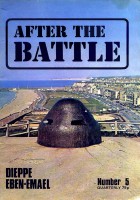
Débarquement de Dieppe - Após a Batalha 005

Depois da Batalha

SérieDepois da Batalha
Ref005
PeríodoSegunda Guerra Mundial

Um livro assinado Depois da Batalha o livro "D-Day Landing at Dieppe – After The Battle 005".

O pouso de Dieppe ou operação Jubileu fut une tentative ratée de débarquement des Alliés en France occupée, menée le 19 août 1942 sur le port de Dieppe. Cette opération laisse un goût amer aux Canadiens car les troupes engagées furent décimées alors que la tournure des opérations aurait dû faire annuler l’opération rapidement et que l’on parle encore d’un second front en Europe, qui est totalement absurde à cette date. Dans l’aube brumeuse d’un jour d’août 1942, une armada de 250 navires de toutes tailles se dirige vers les côtes françaises de la Manche. Elle mobilise près de 8 000 hommes dont plus de 2 000 y laisseront leur vie, pour ce qui sera le plus grand raid de la Seconde Guerre mondiale. 74 escadrilles de chasseurs et de bombardiers en assureront la couverture aérienne. Pour la première fois dans la Seconde Guerre mondiale, des hommes vont se ruer à l’assaut de ce que les Nazis appellent Festung Europa, la « Forteresse Europe. »

Fonte: Débarquement de Dieppe sur Wikipedia

Continue lendo

Visualizações : 1098

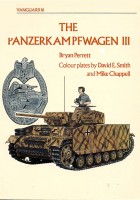
Panzerkampfwagen III - VANGUARD 16

Vanguarda

autorBryan Perrett
Ref16
Sujet

Panzerkampfwagen III

Um livro assinado Editora Osprey le livre «Panzerkampfwagen III – VANGUARD 16».

O SdKfz 141 Panzerkampfwagen III (PzKpfw III), ou Panzer III é um tanque alemão, projetado no final da década de 1930 e usado extensivamente durante a primeira fase da Segunda Guerra Mundial. Foi desenvolvido para enfrentar tanques inimigos (primeiro com um canhão antitanque KwK 36 L/45 de 3,7 cm, depois a partir de outubro de 1940 com um KwK 38 L/42 de 5 cm, depois um L/60 de 5 cm em junho de 1942), enquanto o Panzer IV, que era contemporâneo, tinha a intenção de fornecer fogo de apoio às tropas de infantaria com um KwK 37 L/24 de 7,5 cm. No entanto, com o aparecimento de tanques aliados cada vez mais bem protegidos, apenas o Panzer IV foi capaz de transportar armas capazes de destruí-los (com um canhão KwK 40 L / 43 de 7,5 cm de março de 1942), e suplantou o Panzer III como o principal tanque da Wehrmacht. Mas, apesar do fato de que o Panzer III estava totalmente desatualizado desde o início de 1942, ele ainda pode ser encontrado engajado em massa durante a Batalha de Kursk em julho de 1943.

Fonte: Wikipédia

Continue lendo

Views : 778