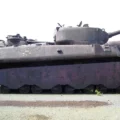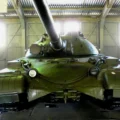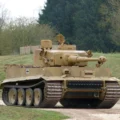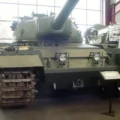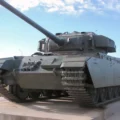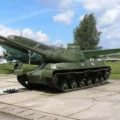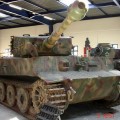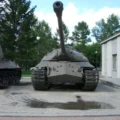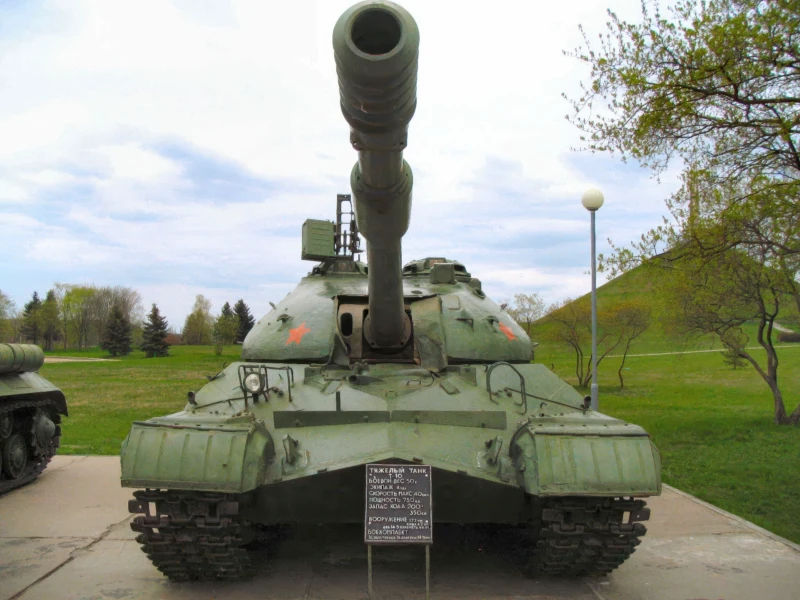
T-10 Heavy Tank | |
|---|---|
| Kraju | Radzieckiego |
| Roli | Czołg ciężki |
| W eksploatacji | 1953–1996 |
| Zbudowany | Niewiedzy |
Tthe T-10 (znany również jako Object 730 lub IS-8) był radzieckim czołgiem ciężkim z czasów zimnej wojny, ostatnim rozwinięciem serii czołgów IS. Podczas prac rozwojowych nazwano go IS-8 i IS-9. Został przyjęty do produkcji w 1952 roku jako IS-10 (Iosif Stalin, rosyjska forma Józefa Stalina), ale ze względu na klimat polityczny po śmierci Stalina w 1953 roku, został przemianowany na T-10.
Źródła: T-10 na Wikipedii
| T-10 Heavy Tank | |
|---|---|
| Fotograf | Niewiedzy |
| Lokalizacja | Niewiedzy |
| Zdjęcia | 141 |
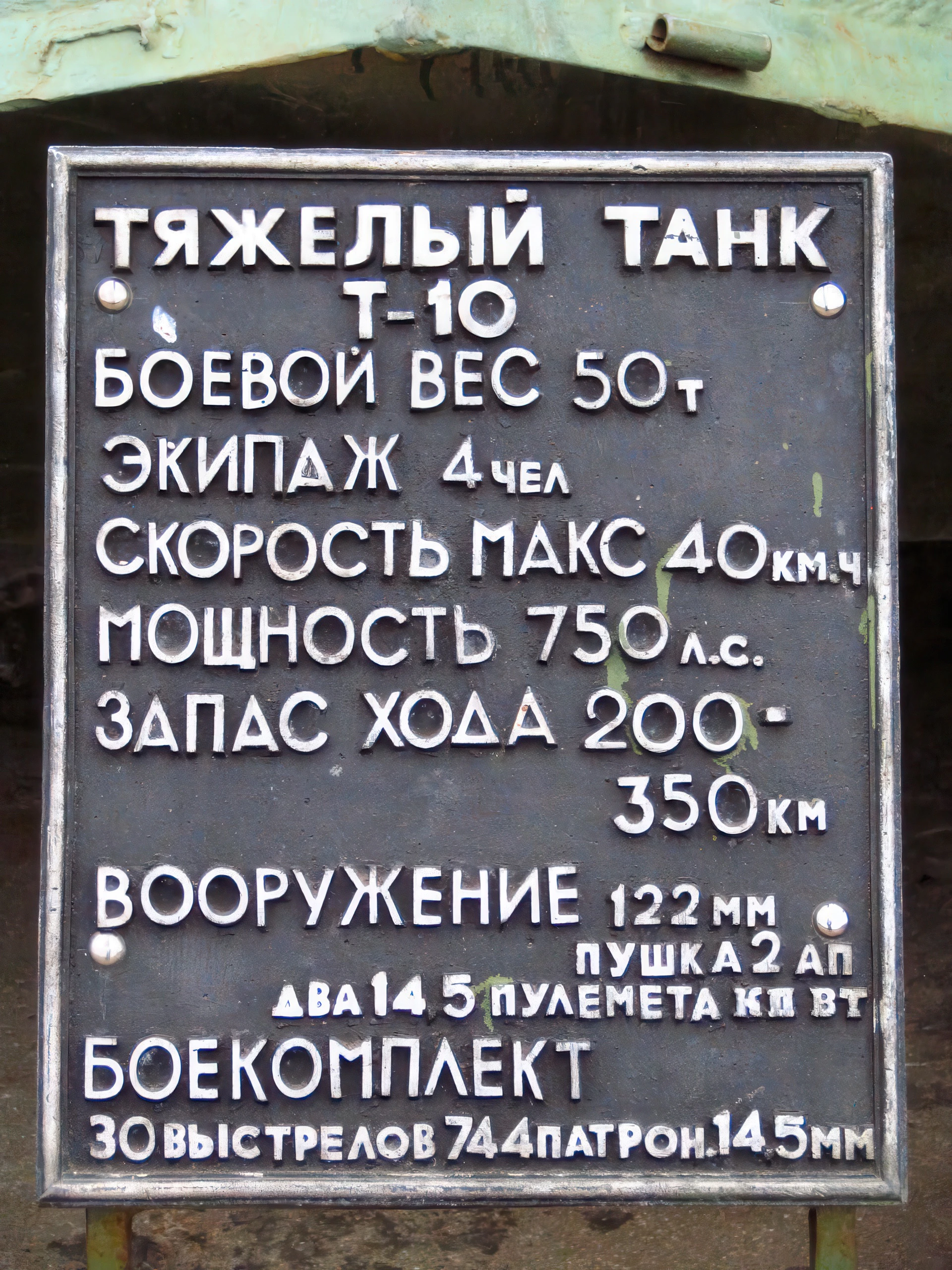
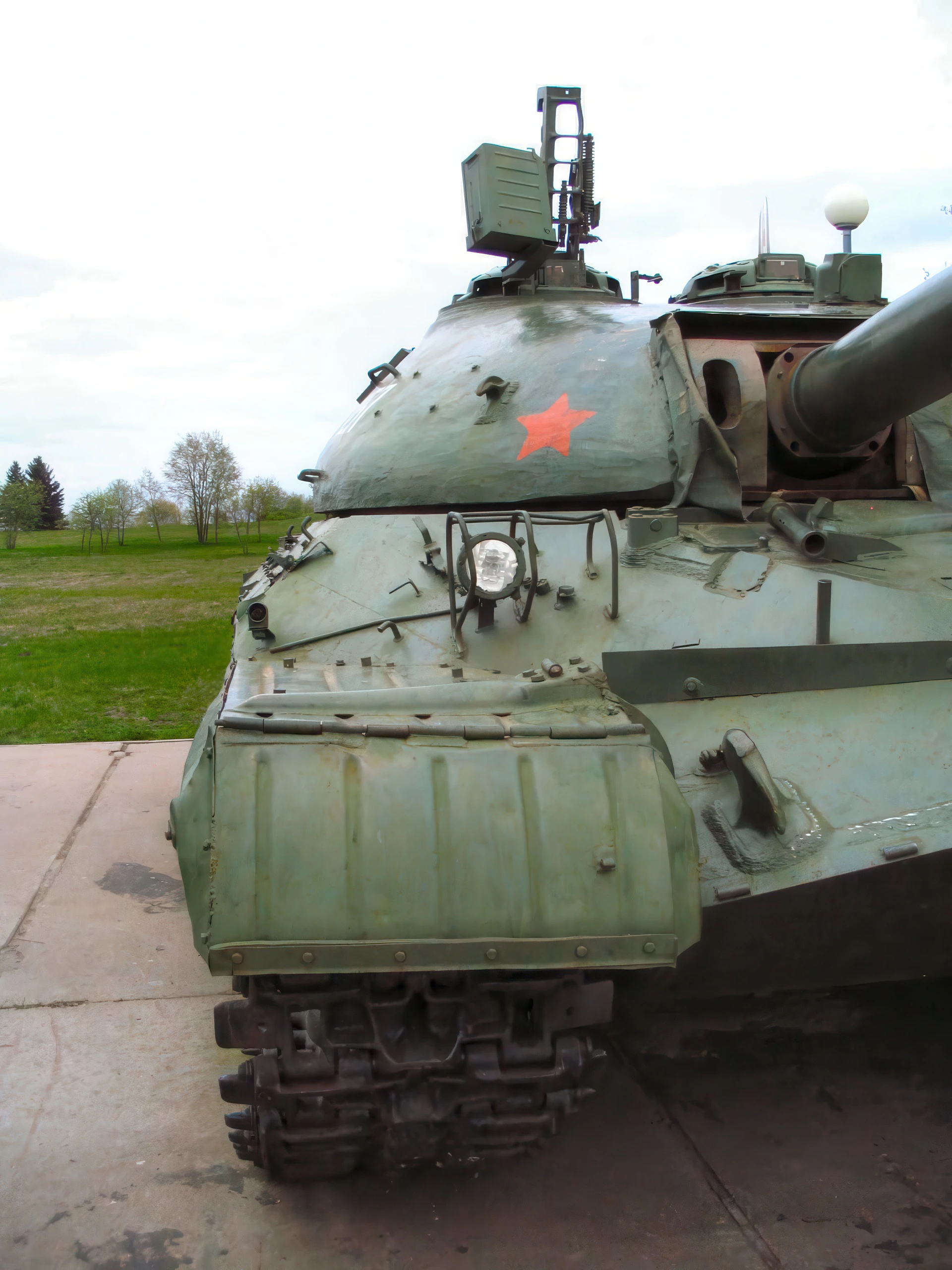
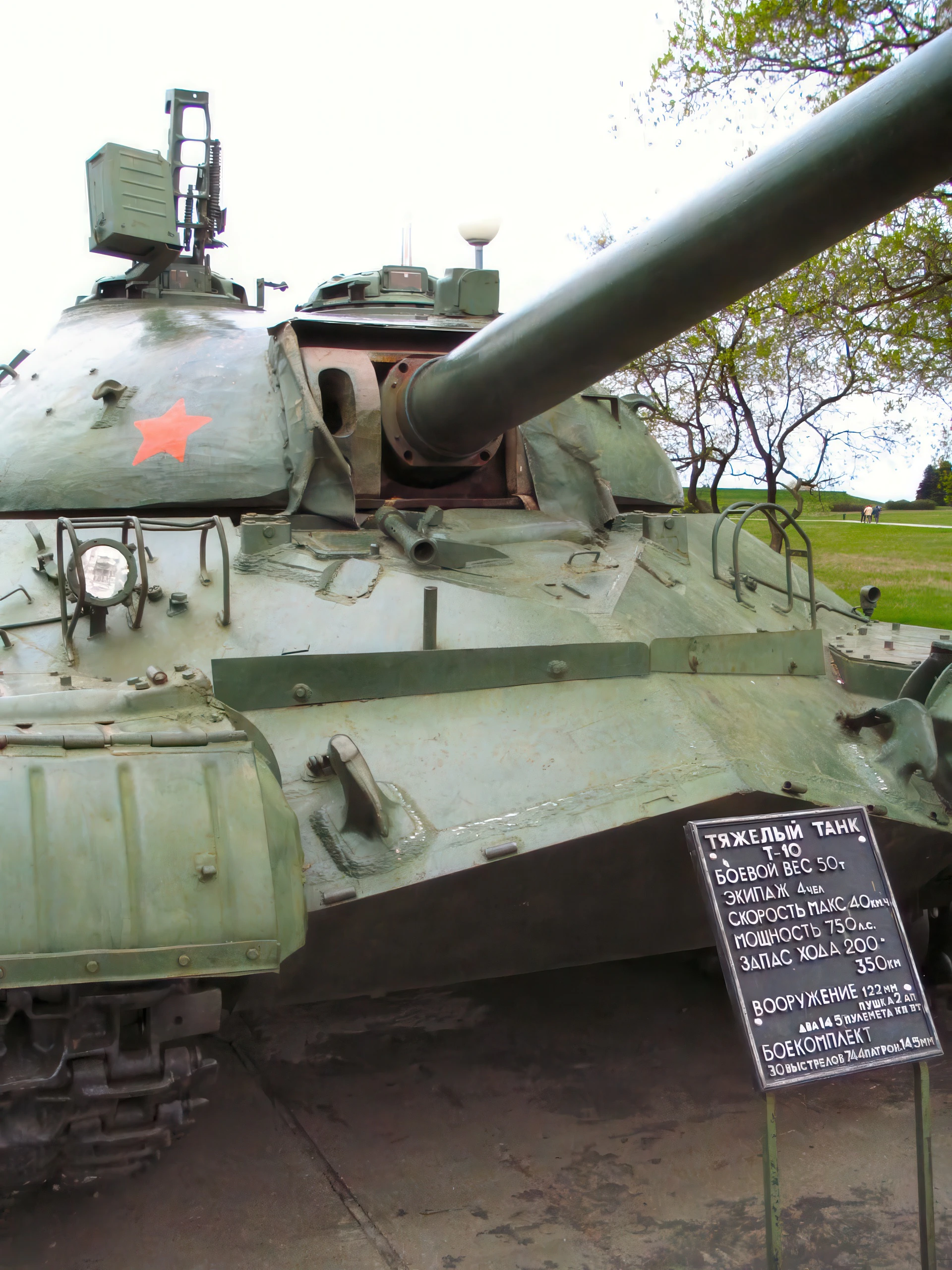
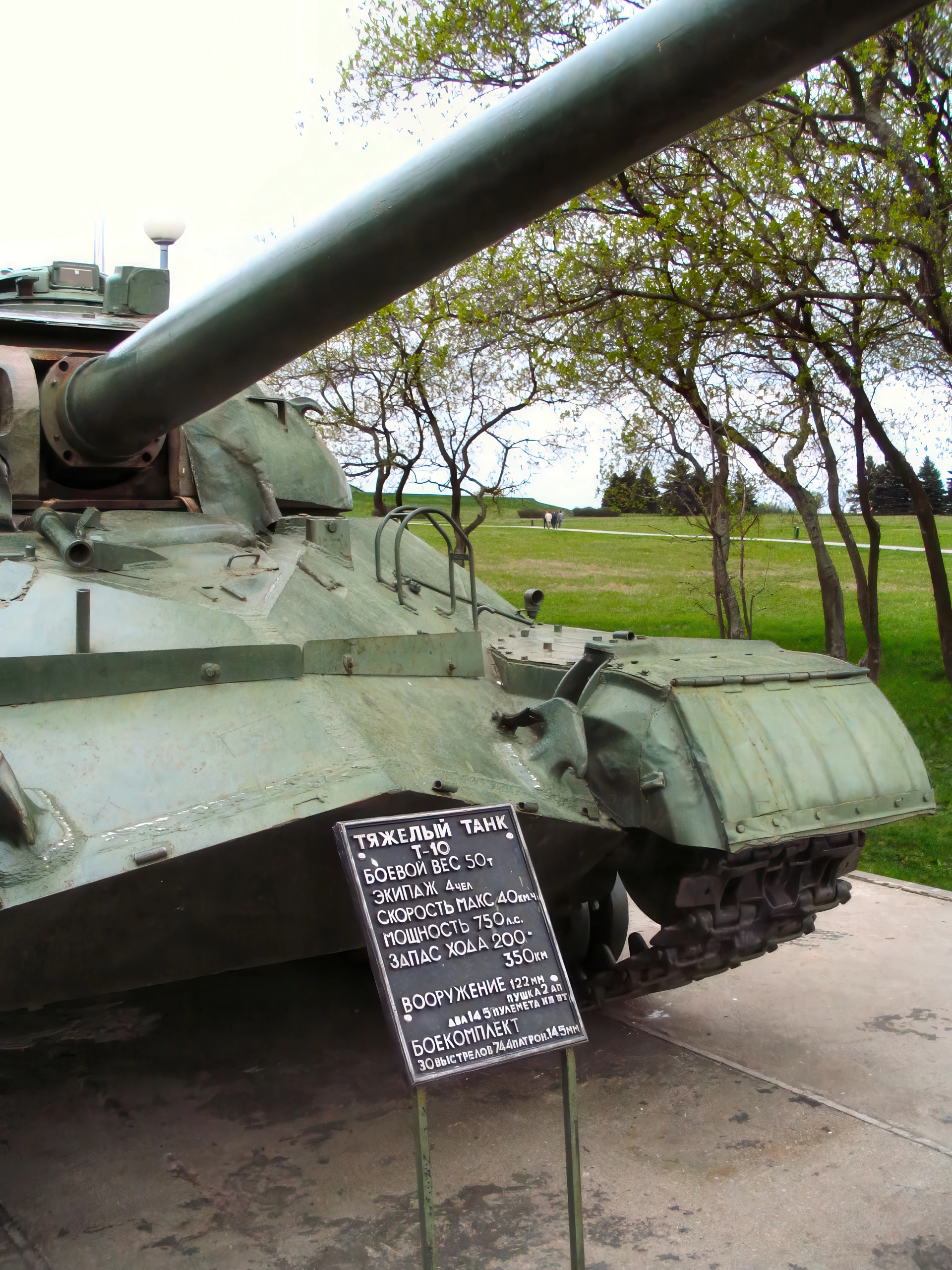
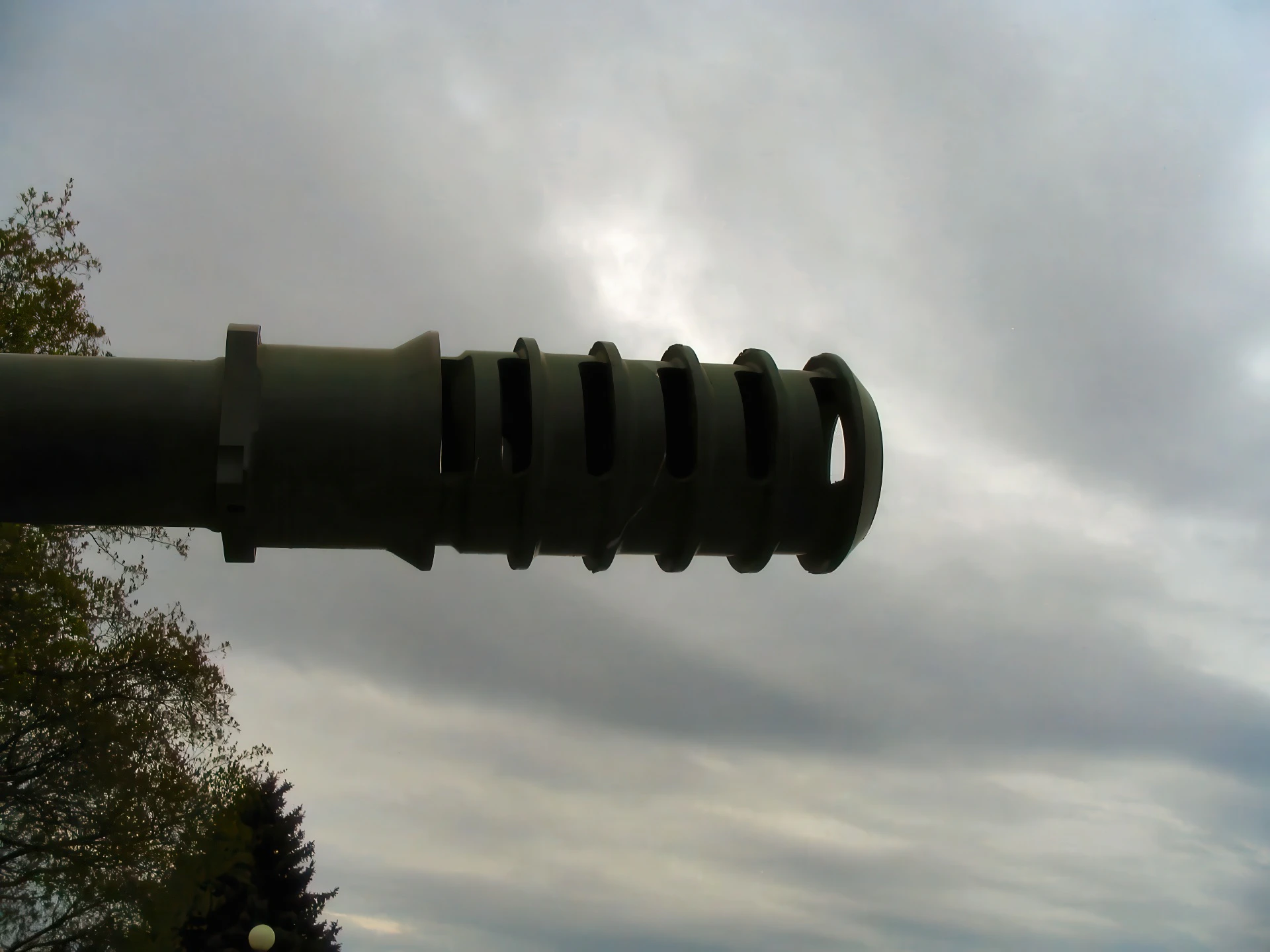
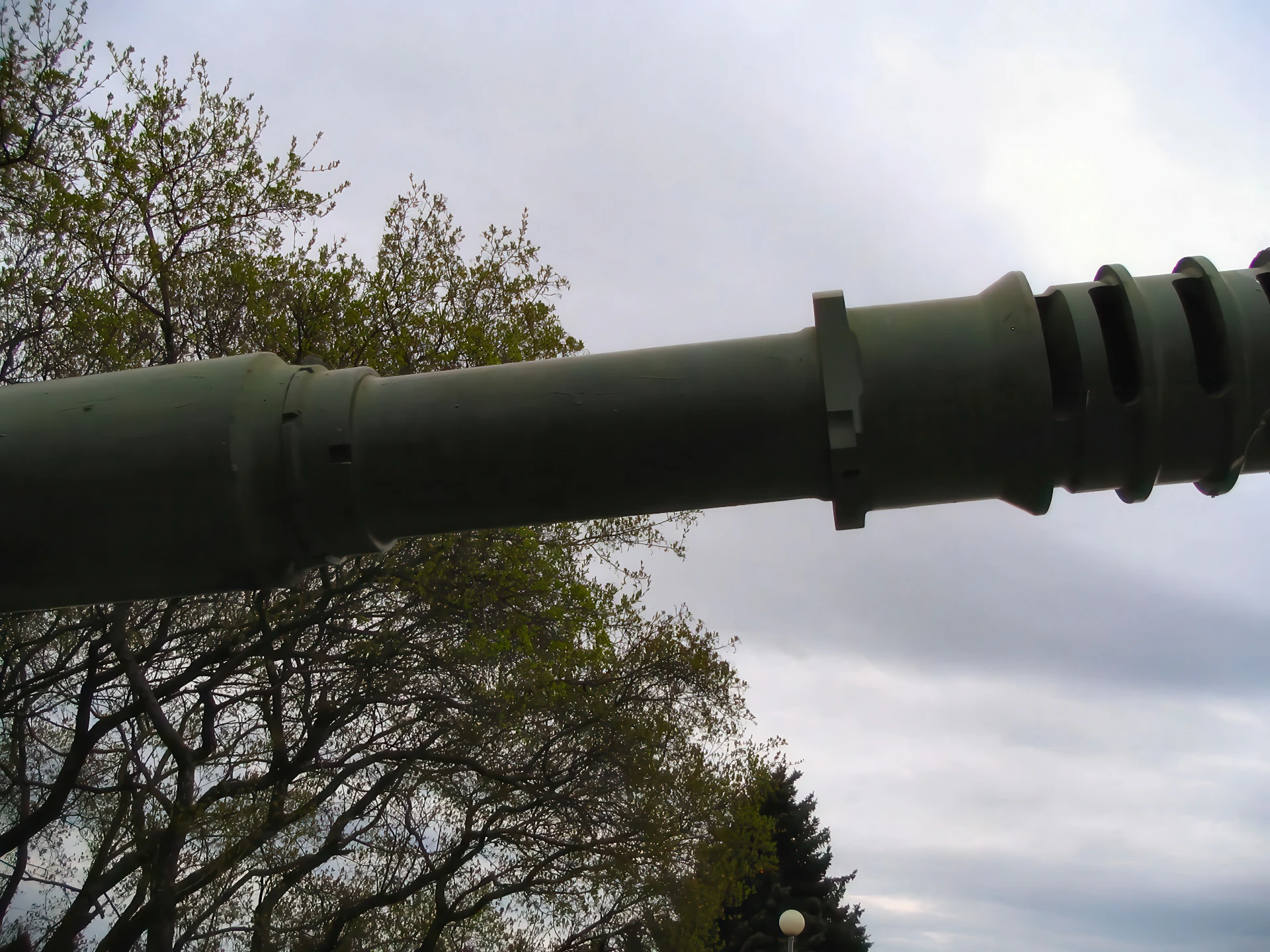
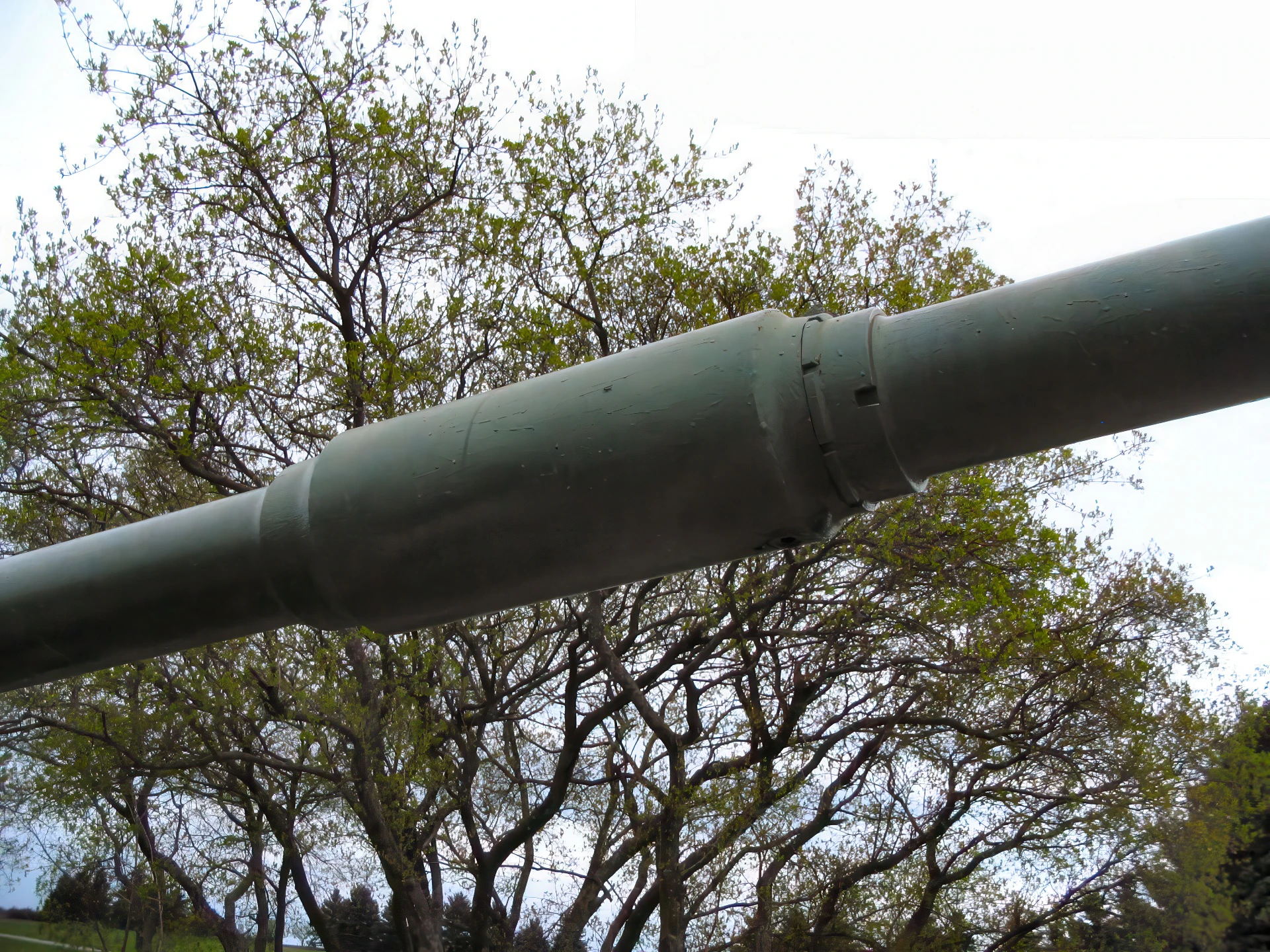
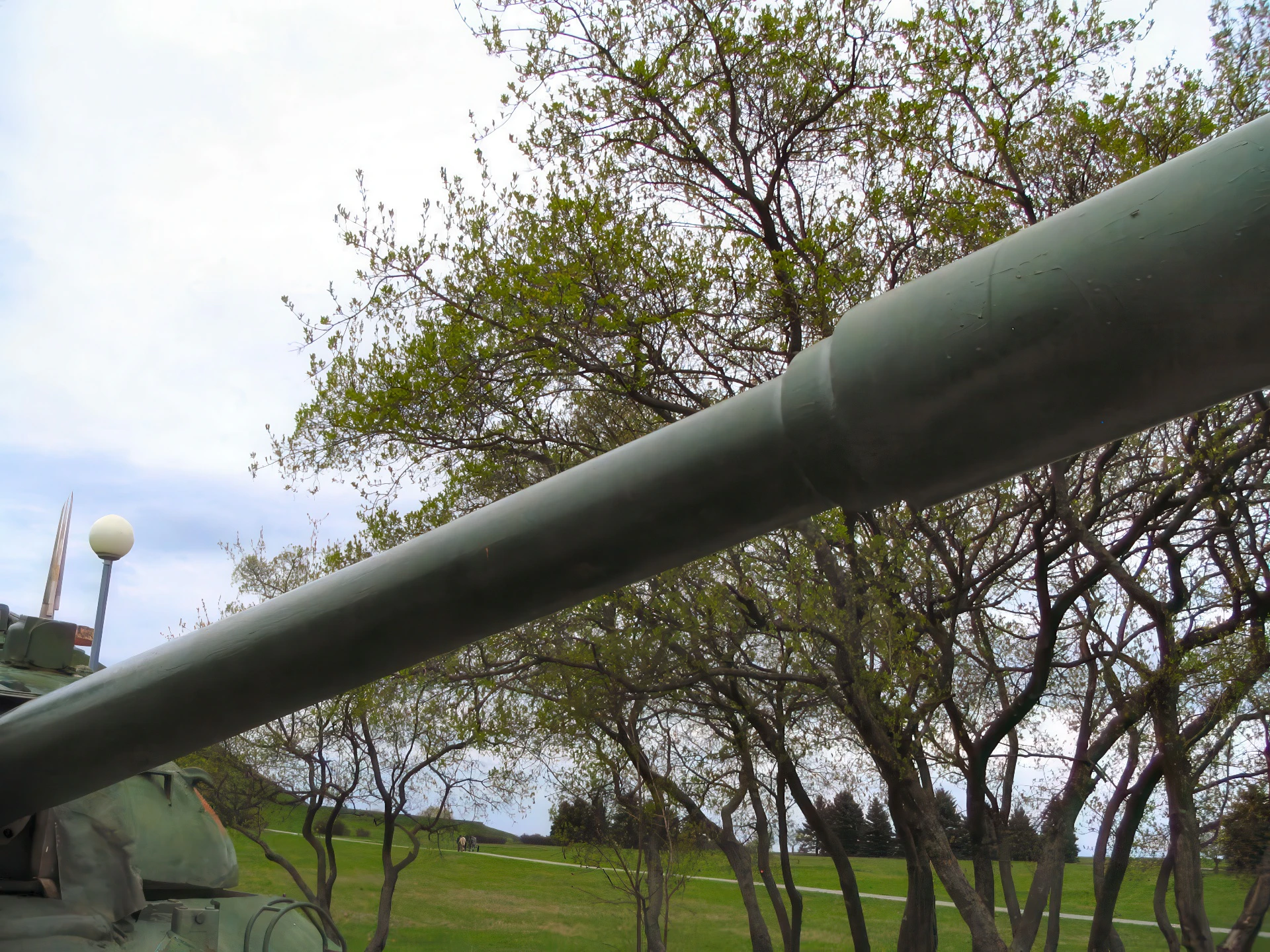
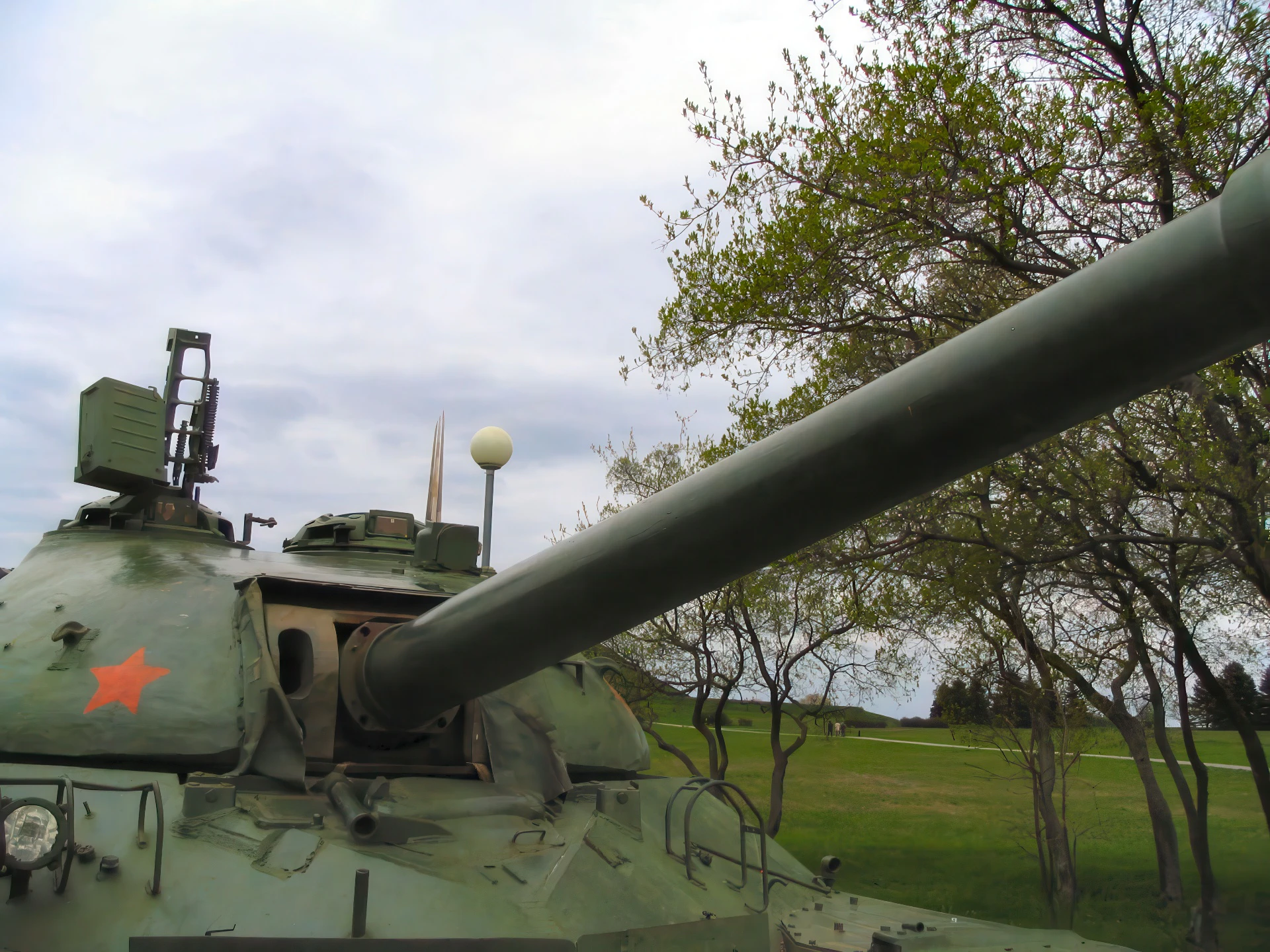

| T-10M Spacer dookoła | |
|---|---|
| Fotograf | Timur |
| Zdjęcia | 53 |
| Т-10М Walk Around | |
|---|---|
| Fotograf | Niewiedzy |
| Lokalizacja | |
| Zdjęcia | 18 |
Zobacz też:


| Т-10М Walk Around | |
|---|---|
| Fotograf | Władimir Yakubov |
| Lokalizacja | Niewiedzy |
| Zdjęcia | 141 |
Role and History
The T-10 (originally designated the IS-8 and briefly the IS-9) was the final heavy tank in the line of Soviet IS (“Iosif Stalin”) tanks. It entered service in 1953 and was later renamed T-10 after Stalin’s death in the de-Stalinization period.
It was designed as a heavy breakthrough tank intended to punch through enemy defensive lines, operating in specialized heavy tank regiments. Although superseded by the development of the Main Battle Tank (MBT) concept (like the T-62 and T-64) in the 1960s, the T-10 series remained in Soviet service for decades, only being officially withdrawn from Russian reserves in 1997.
Key Design Features
The T-10 inherited several core design elements from its IS-series predecessors but featured notable improvements in size, armor, and power:
- Hull Shape: It retained the distinctive steeply sloped “pike nose” frontal armor configuration from the IS-3, which provided excellent ballistic protection against contemporary anti-tank weapons.
- Suspension and Mobility: The hull was lengthened, resulting in a seventh pair of road wheels (unlike the six on the IS-3), which improved weight distribution. It used a torsion-bar suspension.
- Powerplant: It was powered by a supercharged V12 diesel engine (initially 700 hp, later 750 hp in the T-10M), giving it a combat weight of around 50 tonnes and a maximum road speed of 42–50 km/h.
- Załoga: The tank was operated by a crew of four (Commander, Gunner, Loader, Driver).
Armament and Variants
The T-10’s formidable firepower came from its large-caliber main gun, a hallmark of Soviet heavy tank design.
| Wariant | Main Gun | Key Fire Control / Armament Feature |
|---|---|---|
| T-10 (Original) | 122 mm D-25TA rifled gun | Equipped with an electromechanical loading rammer. |
| T-10A | 122 mm D-25TS gun | Added a vertical-plane stabilizer (“Uragan”). |
| T-10M (Final) | Longer 122 mm M-62-T2S gun | Two-plane stabilization, 14.5 mm KPVT heavy machine guns (replacing 12.7 mm DShK), and infrared night vision. |
A persistent limitation of the 122 mm main gun was its use of separate loading ammunition (shell and charge), which restricted the rate of fire to around 2–4 rounds per minute, a common trade-off for such massive firepower.
Views : 6508