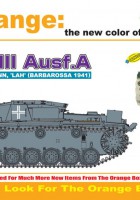
StuG.III Ausf.A, Michael Wittmann, 'LAH' (Barbarossa 1941) - Cyber-Hobby 9143

Cyber-Hobby

Ref 9143
TypuZestaw modeli
Skali1/35
Temat

StuG.III Ausf.A, Michael Wittmann, "LAH" (Barbarossa 1941)

Model marki Cyber-Hobby zestaw: StuG.III Ausf.A, Michael Wittmann, ‘LAH’ (Barbarossa 1941) – Cyber-Hobby 9143.

Źródła: Cybber-Hobby

Armata szturmowa Sturmgeschütz III (StuG III) była najczęściej produkowanym opancerzonym wozem bojowym w Niemczech podczas II wojny światowej. Został zbudowany na podwoziu sprawdzonego czołgu Panzer III. Początkowo przeznaczony jako mobilne, opancerzone lekkie działo do wsparcia piechoty, StuG był stale modyfikowany i był szeroko stosowany jako niszczyciel czołgów.

Źródła: Wikipedia

Czytaj dalej

Liczba wyświetleń : 1591

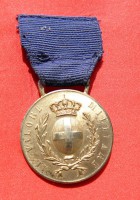
Medal "Gold Medal of Military Valor"

Italy

TypeMilitary decoration
EligibilityJunior officers and soldiers
Awarded forDeeds of outstanding gallantry in war
Established21 May 1793
Total awardednc

The Gold Medal of Military Valor is an Italian medal established on 21 May 1793 by King Victor Amadeus III of Sardinia “….per bassi ufficiali e soldati che avevano fatto azioni di segnalato valore in guerra” (for deeds of outstanding gallantry in war by junior officers and soldiers). The face of the medal displayed the profile of the king, and on its reverse was a flag decoration and the words “al valore” (for valor). On 14 August 1815, Victor Emmanuel I of Sardinia replaced it with the Military Order of Savoy (“l’Ordine militare di Savoia”), now known as the Military Order of Italy. Charles Albert of Sardinia revived it on March 26, 1833, and added to it the Silver and Bronze medals. These had, on their faces, the coat of arms of Savoy with laurel branches, the royal crown, and the words “al valor militare” (for military valor). On the reverse were two laurel branches enclosing the name of the decorated soldier, and the place and date of the action. With the proclamation of the Republic on June 2, 1946, the coat of arms of Savoy was replaced with the emblem of the Italian Republic

Źródła: Wikipedia

Czytaj dalej

Liczba wyświetleń : 1604

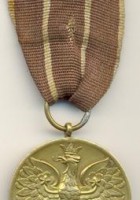
Medal "Army Medal for War 1939-45"

Polska

Typu Medal kampanii
WybieralnośćWszyscy członkowie Polskich Wojsk Lądowych
Nagrodzony za6 miesięcy zasłużonej służby
Ustanowione 3 lipca 1945
Suma przyznanychNc

Medal Wojska za Wojnę 1939-45 został ustanowiony w 1945 roku przez polski rząd na uchodźstwie (w Londynie) w celu nagradzania członków polskich sił lądowych za służbę podczas II wojny światowej. Kryteria kwalifikacyjne były następujące: sześć miesięcy służby operacyjnej podczas II wojny światowej lub 12 miesięcy w roli nieoperacyjnej. Medal mógł być przyznawany nawet czterokrotnie, chociaż w przypadku późniejszego przyznania okres służby był podwajany.

Źródła: Wikipedia

Czytaj dalej

Liczba wyświetleń : 1127

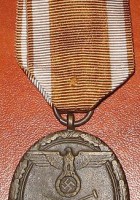
Medal "West Wall Medal"

Nazistowskie Niemcy

Typu Medal
WybieralnośćPersonel wojskowy
Nagrodzony zapersonelu, który zbudował fortyfikacje na zachodnich granicach Niemiec
Ustanowione 2 sierpnia 1939
Suma przyznanych622,064

Tthe Medal Ściany Zachodniej – odznaczenie wojskowe nazistowskich Niemiec. Został ustanowiony 2 sierpnia 1939 r. i został przekazany tym, którzy zaprojektowali i zbudowali fortyfikacje na zachodnich granicach Niemiec, znane jako Ściana Zachodnia lub, w języku angielskim, Linia Zygfryda, oraz żołnierzom, którzy służyli tam przed majem 1940 r. W 1944 roku, gdy Niemcy spodziewały się nadejścia inwazji aliantów, ponownie przyznano ją tym, którzy brali udział w fortyfikacji zachodnich granic. W sumie do końca wojny przyznano 622 064 medale.

Źródła: Wikipedia

Czytaj dalej

Liczba wyświetleń : 1479

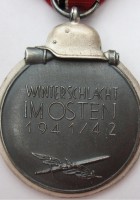
Medal Frontu Wschodniego

Nazistowskie Niemcy

TypuKolejność skrzyń
WybieralnośćPersonel wojskowy
Nagrodzony zapersonel, który uczestniczył w pierwszej zimie operacji Barbarossa
Ustanowione26 maja 1942
Suma przyznanychponad 3 000 000

Medal Frontu Wschodniego (Winterschlacht Im Osten), bardziej znany jako Ostmedaille, został ustanowiony 26 maja 1942 roku w celu oznaczenia służby na niemieckim froncie wschodnim (II wojna światowa) w okresie od 15 listopada 1941 roku do 15 kwietnia 1942 roku. Zlecono mu rozpoznanie trudności znoszonych przez personel niemiecki i państw Osi, kombatantów lub niewalczujących, podczas szczególnie gorzkiej rosyjskiej zimy '41/'42. Został on złośliwie nazwany "Gefrierfleischorden" (Medal Mrożonego Mięsa) przez personel Heer, Luftwaffe i Waffen-SS, którym został przyznany.

Źródła: Wikipedia

Czytaj dalej

Liczba wyświetleń : 1886

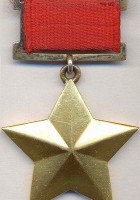
Bohater Związku Radzieckiego (recto)

Radzieckiego

TypuHonorary title
WybieralnośćCitizens of the Soviet Union
Nagrodzony zaheroic feats in service to the Soviet state and society
UstanowioneApril 16, 1934
Suma przyznanych12,775

The title Hero of the Soviet Union was the highest distinction in the Soviet Union, awarded personally or collectively for heroic feats in service to the Soviet state and society. The award was established on May 5, 1934, by the Central Executive Committee of the Soviet Union. The first recipients of the title originally received only the Order of Lenin, the highest Soviet award, along with certificate (грамота, gramota) describing the heroic deed from the Presidium of the Supreme Soviet of the USSR. Because the Order of Lenin could be awarded for deeds not qualifying for the title of hero, and to distinguish heroes from other Order of Lenin holders, the Gold Star medal was introduced on August 1, 1939. Earlier heroes were retroactively eligible for these items. The title was also given posthumously, though often without the actual Gold Star medal given. The title could be revoked only by the Presidium of the Supreme Soviet.

Źródła: Wikipedia

Czytaj dalej

Wyświetlenia : 2041

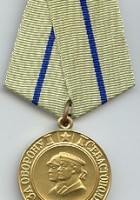
Medal Obrony Sewastopola (recto)

Radzieckiego

TypuMedal kampanii
WybieralnośćCitizens of the Soviet Union
Nagrodzony zaParticipation in the defence of Sevastopol
UstanowioneDecember 22, 1942
Suma przyznanych52,540

The Medal “For the Defence of Sevastopol” was a World War 2 campaign medal of the Soviet Union established on December 22, 1942 by decree of the Presidium of the Supreme Soviet of the USSR to reward the participants of the defence of the port city of Odessa against the armed forces of NAZI Germany.

Źródła:

Czytaj dalej

Liczba wyświetleń : 1081

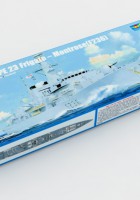
Fregata HMS TYPE 23 – Montrose(F236) - Trumpeter 04545

Trumpeter

Ref 04545
TypuZestaw modeli
Skali1/350
Temat

HMS TYPE 23 Frigate – Montrose(F236)

Model marki Trumpeter zestaw: HMS TYPE 23 Frigate – Montrose(F236) – Trumpeter 04545.

Features : The kit consists of over 400 parts – Detailed hull w/accurate design – 1 HAS-3 helicopters with fine details included. – photo-etched frets for antenna etc.

The Type 23 frigate is a class of frigate serving with the Royal Navy of the United Kingdom. All the ships are named after British Dukes, thus the class is also known as the Duke class. The first Type 23 was commissioned in 1989, and the sixteenth, HMS St Albans was launched in May 2000 and commissioned in June 2002. The combination of Merlin helicopters with their advanced anti submarine equipment, and Sonar 2087, has according to the Royal Navy, re-affirmed its reputation as a leader in anti-submarine warfare. HMS Montrose is commissioned in June 1994 at Devonport Dockyard.HMS Montrose is attached to the Devonport Flotilla, based in Plymouth.

Źródła: Trębacz

Czytaj dalej

Liczba wyświetleń : 1780

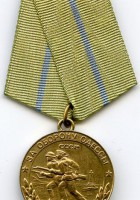
Medal "For the Defence of Odessa"

Radzieckiego

TypuMedal kampanii
WybieralnośćCitizens of the Soviet Union
Nagrodzony zaParticipation in the defence of Odessa
UstanowioneDecember 22, 1942
Suma przyznanych38,000

The Medal “For the Defence of Odessa” was a World War 2 campaign medal of the Soviet Union established on December 22, 1942 by decree of the Presidium of the Supreme Soviet of the USSR to reward the participants of the defence of the port city of Odessa from the armed forces of NAZI Germany.

Źródła: Wikipedia

Czytaj dalej

Liczba wyświetleń : 1295

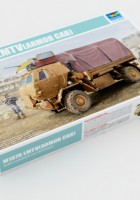
M1078 LMTV (ARMOR CAB) - Trębacz 01009

Trumpeter

Ref01009
TypuZestaw modeli
Skali1/35
Temat

M1078 LMTV(ARMOR CAB)

Model marki Trumpeter zestaw: M1078 LMTV(ARMOR CAB) – Trumpeter 01009.

Features : Detailed multi-directional slide-molded cab. – Full drive train assembly complete with engine transmission, differential housing and suspension units. – The main tires are hollow rubber with very good tread pattern included as well as sidewall details consisting of raised section ribs. – Wheel hubs are in great details with separate hub rings. – The windshield and side windows are made of clear parts. – Photo-etched parts included

Standardowy samochód ciężarowy M1078 jest przeznaczony do transportu ładunków i żołnierzy. M1078 ma ładowność 5000 funtów i aby ułatwić załadunek / rozładunek, boczne poręcze łóżka są zamontowane na zawiasach i można je obniżyć. Skrzynia ładunkowa może być wyposażona w opcjonalny zestaw kanapy do transportu żołnierzy. Kanapy są wykonane z materiału niedrzewnego i mocowane do bocznych relingów skrzyni ładunkowej. Siedzenia można składać i chować, gdy nie są używane. Żołnierze otrzymują pomoc we wchodzeniu i wychodzeniu z obszaru skrzyni ładunkowej za pomocą drabiny umieszczonej na pojeździe, gdy nie jest używany. Dostępny jest zestaw płótna i łuków, aby chronić żołnierzy i ładunek przed żywiołami. M1078 może być wyposażony w opcjonalny zestaw samoodzyskiwania zdolny do operacji odzyskiwania pojazdu z przodu i z tyłu. Wciągarka ma 308 stóp pojemności linii i 10 000 funtów gołych.

Źródła: Trębacz

Czytaj dalej

Liczba wyświetleń : 1284