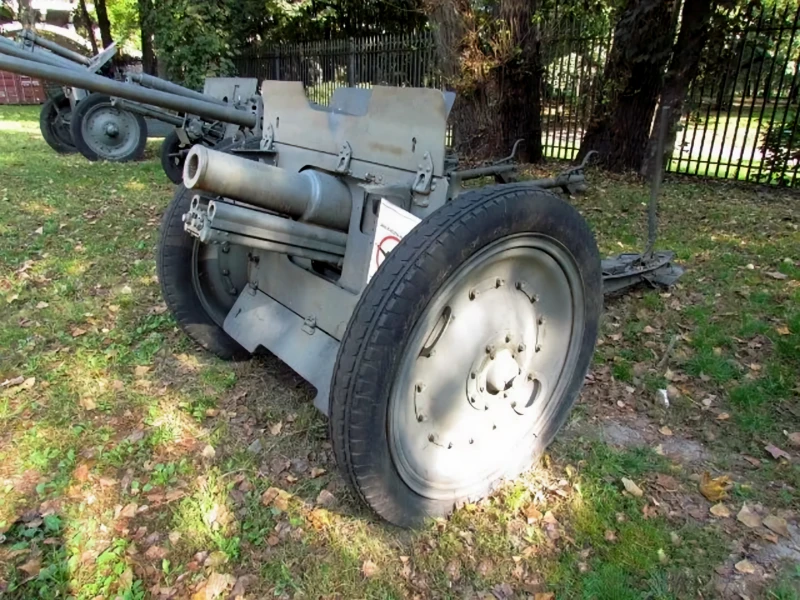
76 mm regimentskanon M1927 | |
|---|---|
| Land | Sovjetunionen |
| Type | Infanteri støttekanon |
| Sted | Museum for den polske hæren (Warszawa, Polen) |
| Emnet | Album av 44 bilder av en 76 mm regimentskanon M1927 |
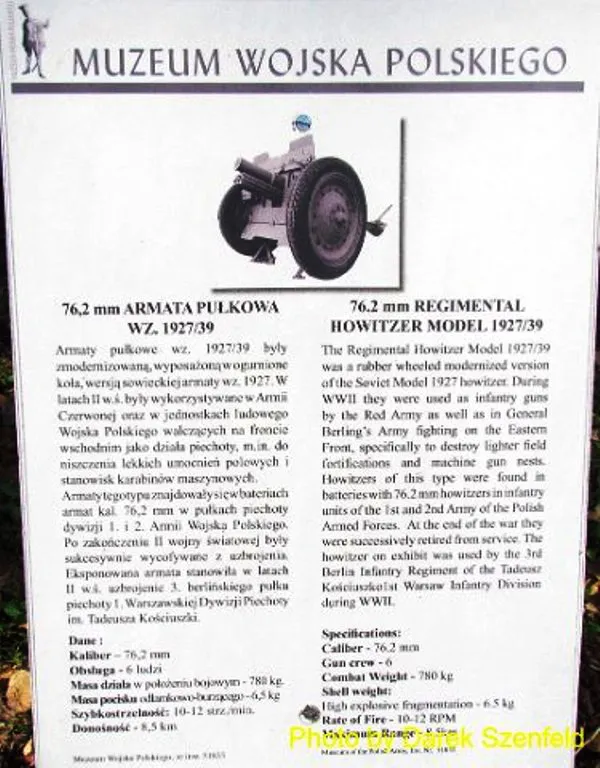
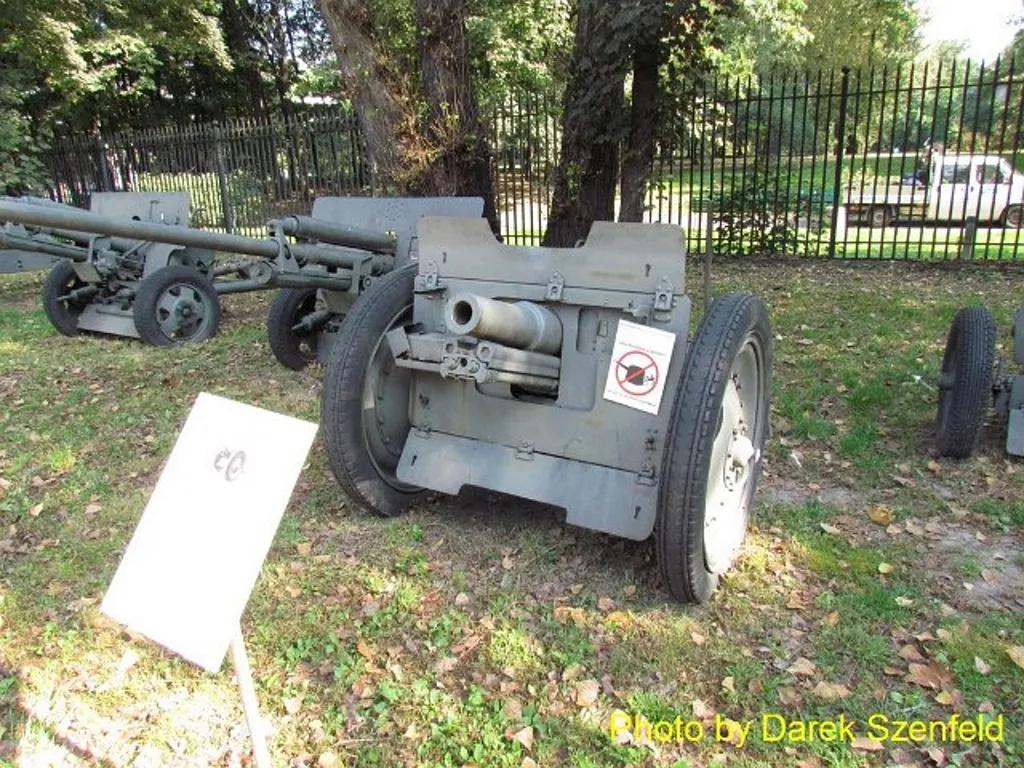
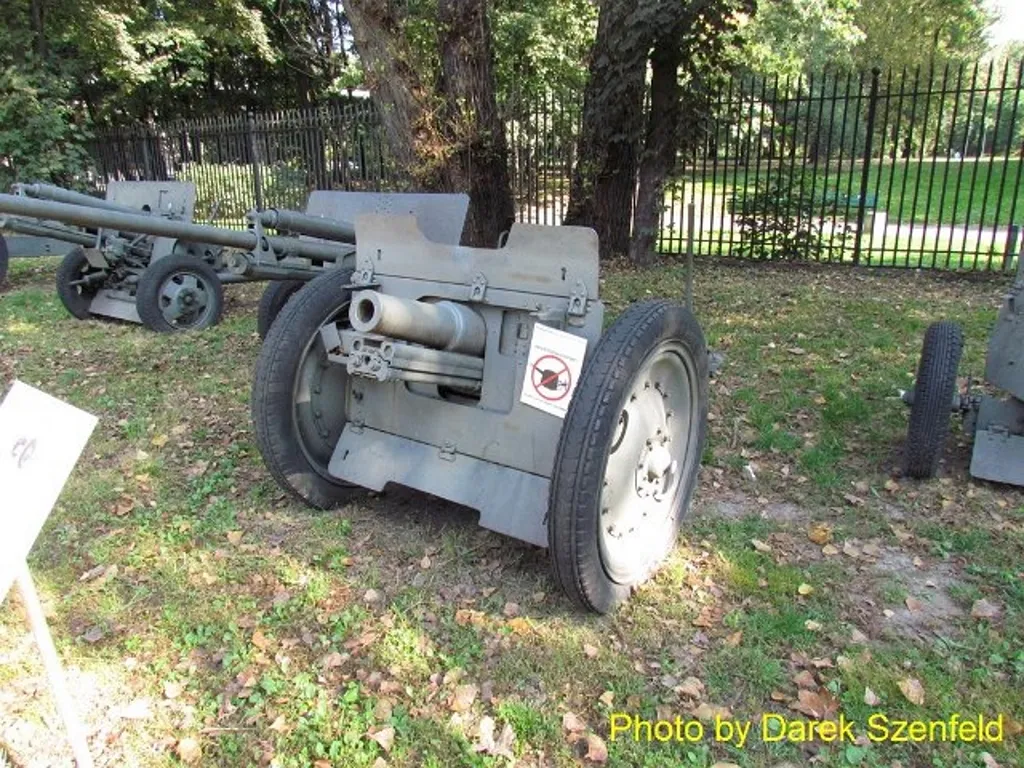
Fotogalskap av en 76 mm regimentskanon M1927, The 76 mm regimental gun M1927 (Russian: 76-мм полковая пушка обр. 1927 г.) was a Soviet infantry support gun. The gun was developed in 1927 by the design bureau of Orudiyno-Arsenalny Trest (OAT) and entered production in 1928. A total of 16,482 pieces were built. On June 22, 1941 the Red Army had 4,708 of these guns. In 1943 the gun was replaced in production by the 76 mm regimental gun M1943, but remained in service until the end of the war. The Germans placed captured guns into service as the 7.62 cm Infanteriekanonehaubitze 290(r) (infantry gun-howitzer), while in the Finnish army they were known as 76 RK/27.
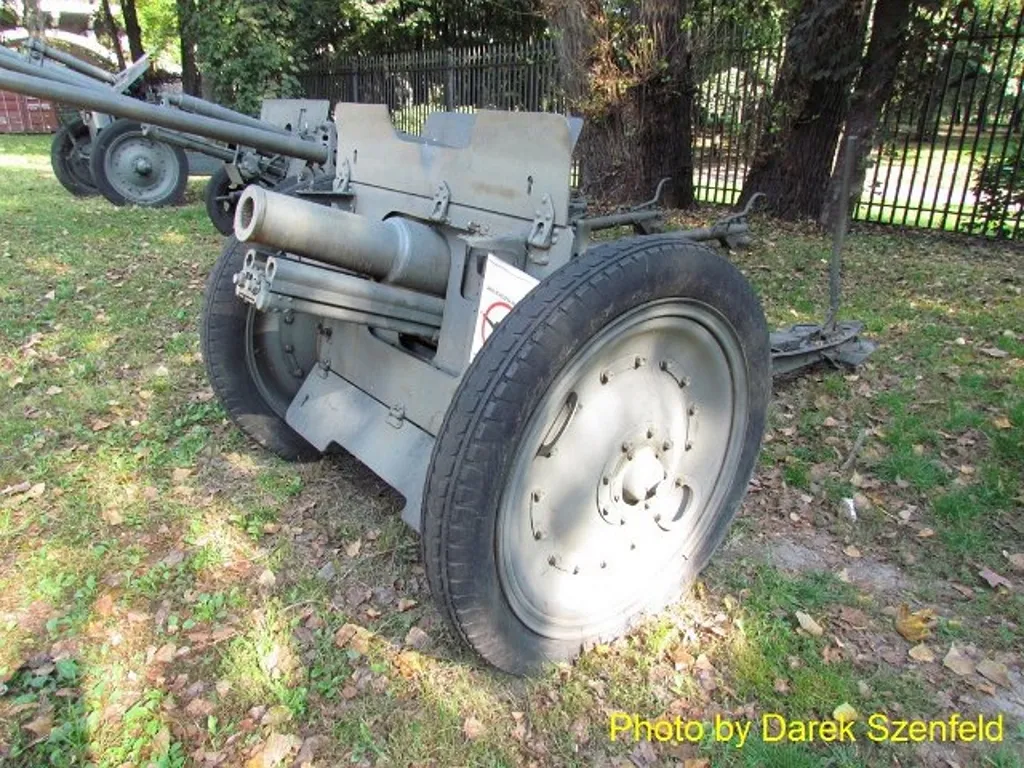
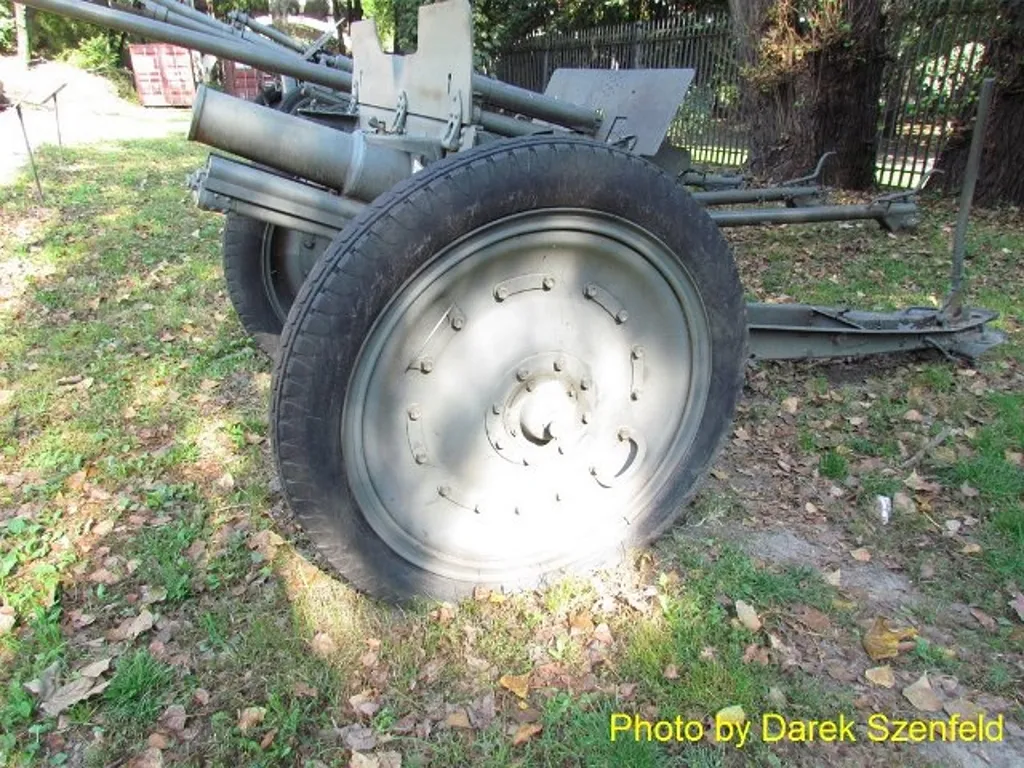
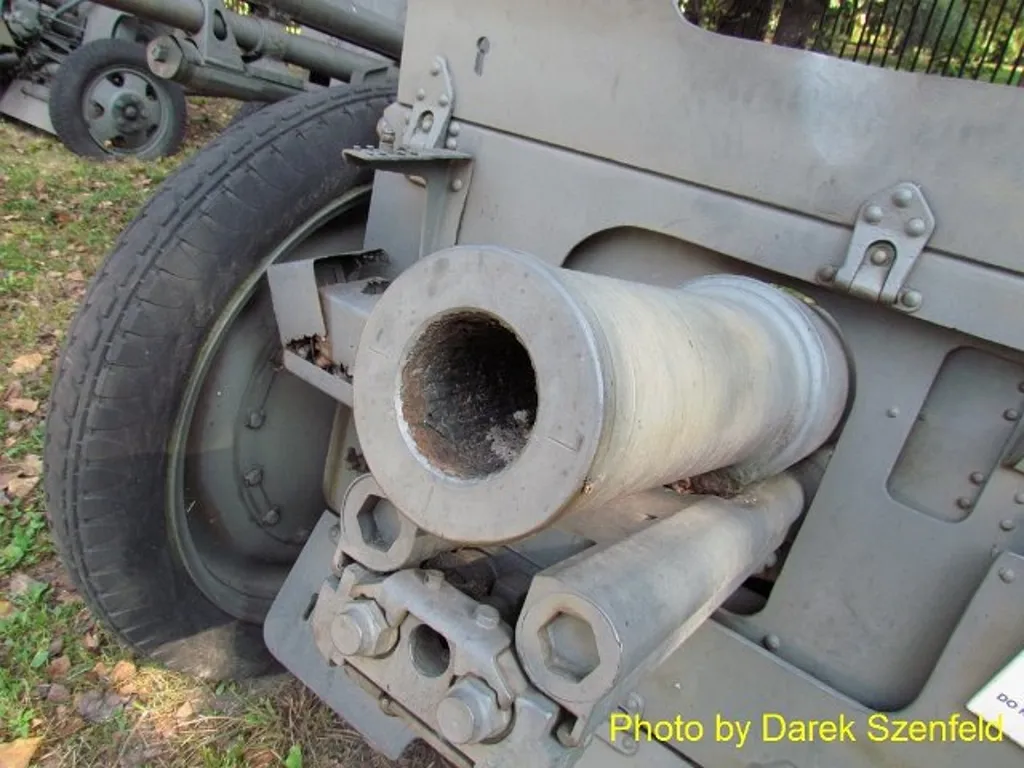
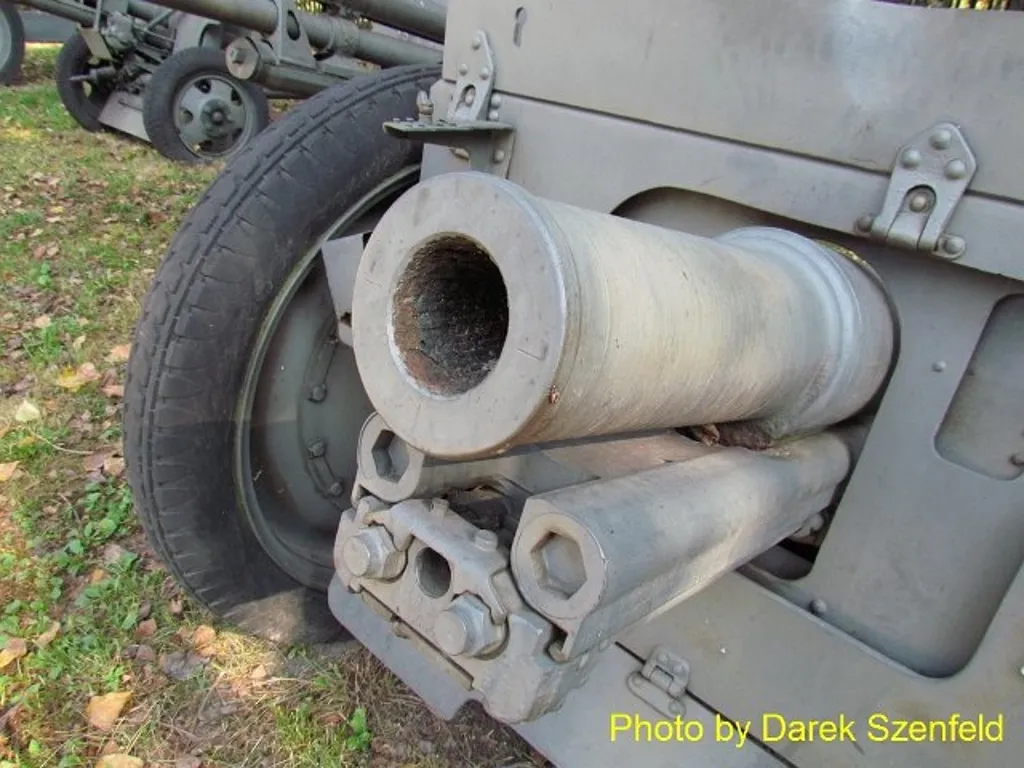
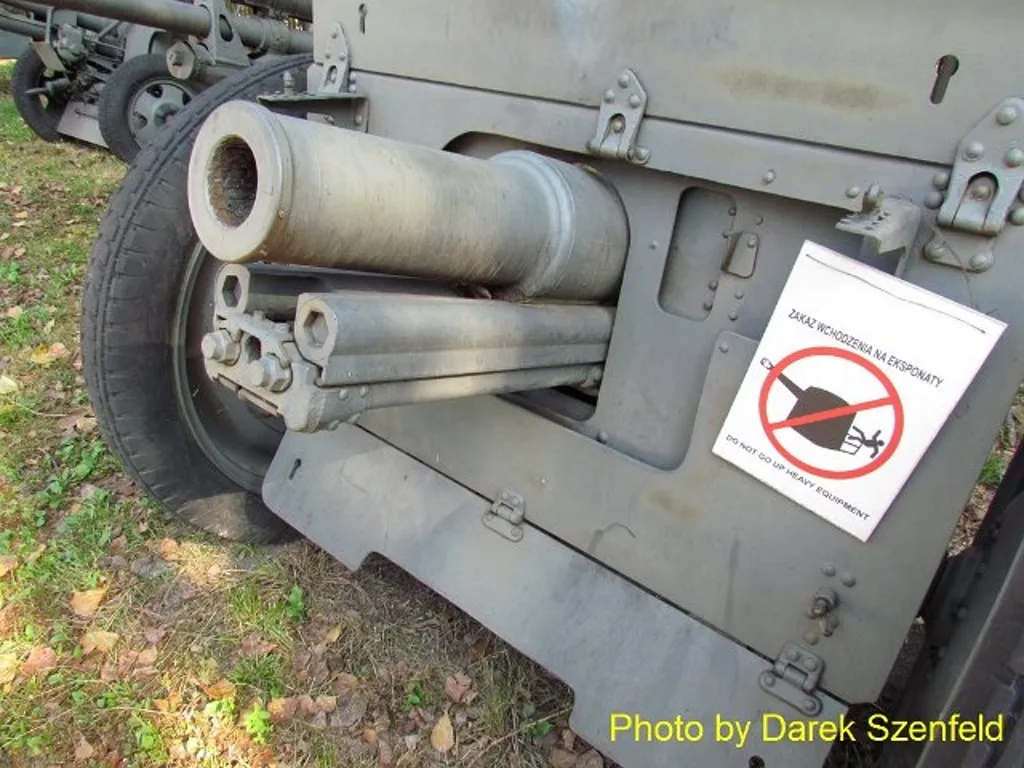
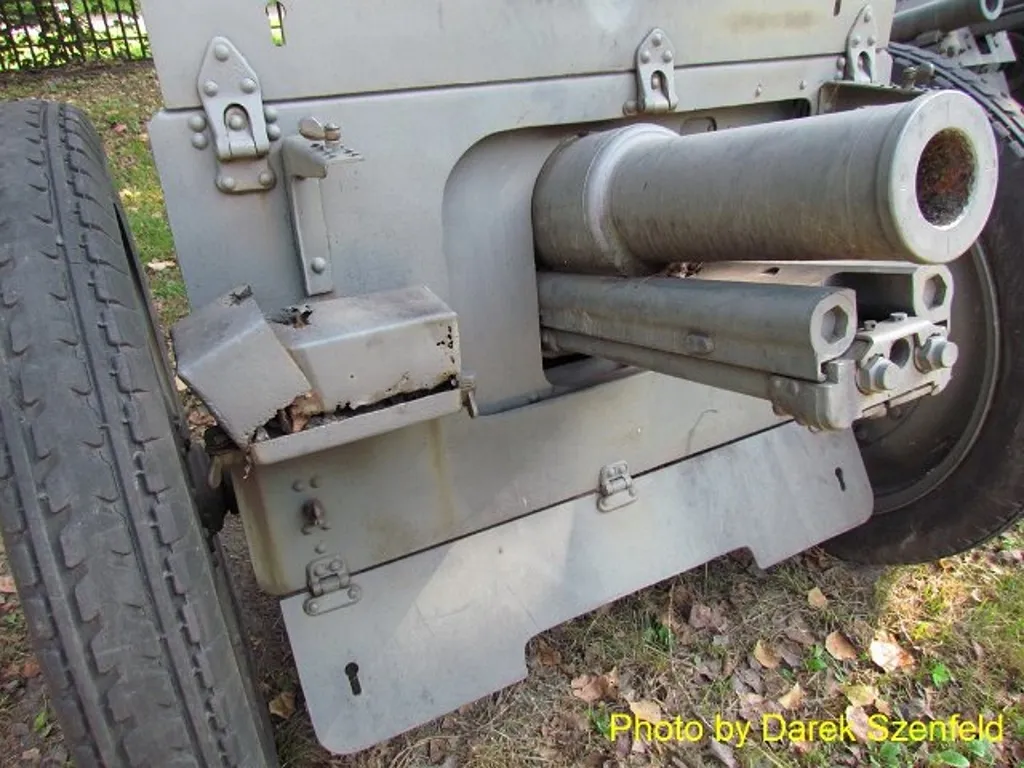
| 76,2 mm regimental gun mod.1927 | |
|---|---|
| Fotograf | Aleksey Martynenko |
| Lokalisering | Unknow |
| Bilder | 19 |
 Kjøp meg en kaffe
Les også:


The Loyal Shadow of the Soviet Infantry
Den 76 mm Regimental Gun M1927 was a ubiquitous sight on the Eastern Front. Unlike heavy divisional artillery that sat miles behind the lines, the “Polkovushka” (little regimental gun) lived in the trenches with the soldiers. Designed for close-range direct fire support, it was light enough to be pushed by its crew into firing positions to knock out machine-gun nests and bunkers. While its short barrel and low muzzle velocity limited its range, its ability to provide immediate high-explosive punch made it a beloved “accompanying gun” for Red Army rifle and cavalry regiments.
| Attribute | Technical Specification (M1927) |
|---|---|
| Rolle | Infantry Support / Regimental Gun |
| Kaliber | 76.2 mm (3 in) |
| Barrel Length | L/16.4 (1.25 meters) |
| Weight (Firing) | 780 kg (1,720 lbs) — Easily man-portable by crew |
| Rate of Fire | 10–12 rounds per minute |
| Muzzle Velocity | 387 m/s (1,270 ft/s) |
| Maximum Range | 4,200 meters (4,600 yards) |
| Breech Type | Interrupted screw |
Design Engineering: Simplicity for the Mud
- Low Velocity, High Versatility: Because the gun was intended for short-range support, it didn’t need a massive propellant charge. This allowed for a very light and thin barrel, which kept the overall weight of the weapon low enough for horse teams or even the crew themselves to move it through deep Russian mud.
- The Cartridge Lockout: Interestingly, the M1927 used the same 76.2mm shells as larger divisional guns but with a reduced powder charge. To prevent a crew from accidentally loading a high-power divisional shell (which would have literally exploded the light M1927 barrel), the gun’s chamber had a modified flange that would only accept regimental-specific casings.
- The “Tadpole” Evolution: Early models featured wooden-spoke wheels, but later production runs moved to rubber-tired wheels to allow for faster towing by trucks (GAZ-AA).
- Recoil System: It used a hydraulic recoil buffer and pneumatic recuperator located beneath the barrel, which was quite advanced for a gun that looked so “old-fashioned” with its simple pole-trail carriage.
Combat History: A Jack of All Trades
- Bunker Buster: Its primary mission was “direct fire.” A crew would wheel the gun to within 500 meters of a German pillbox and fire point-blank. At this range, even the low muzzle velocity was enough to collapse field fortifications.
- Emergency Anti-Tank: While not a dedicated AT gun, the M1927 was often the only heavy weapon available to a regiment during a surprise tank attack. In 1942, HEAT (High-Explosive Anti-Tank) rounds were issued, allowing it to penetrate up to 70-100mm of armor, making it a threat to German Panzers at close range.
- In German Hands: The Wehrmacht captured thousands of these guns during the early stages of Operation Barbarossa. They were so impressed by their lightweight utility that they pressed them into service as the 7.62 cm Infanteriekanonenhaubitze 290(r).
- The Tank Version: A modified version of this gun, the KT-28, served as the primary armament for early Soviet tanks like the T-28 multi-turreted medium tank and the T-35 heavy tank.
Visninger: 3195
Du kan også se :
 Howitzer 149-19 – Photos & Video
 220 mm TR mle 1915/1916 - Bilder & Video
 17 cm Kanone 18 – WalkAround
 QF 3,7-tommers haubits - Bilder og videoer
 QF 4,5-tommers haubitser - Bilder og video
 FH70 Howitzer - Bilder og Video
 M198 Howitzer - Bilder og Video
 122 mm haubitser M1910/30 - Bilder og video
 21cm Morser 18 Howitzer – Gå Rundt
 70mm Type 92 Howitzer – WalkAround