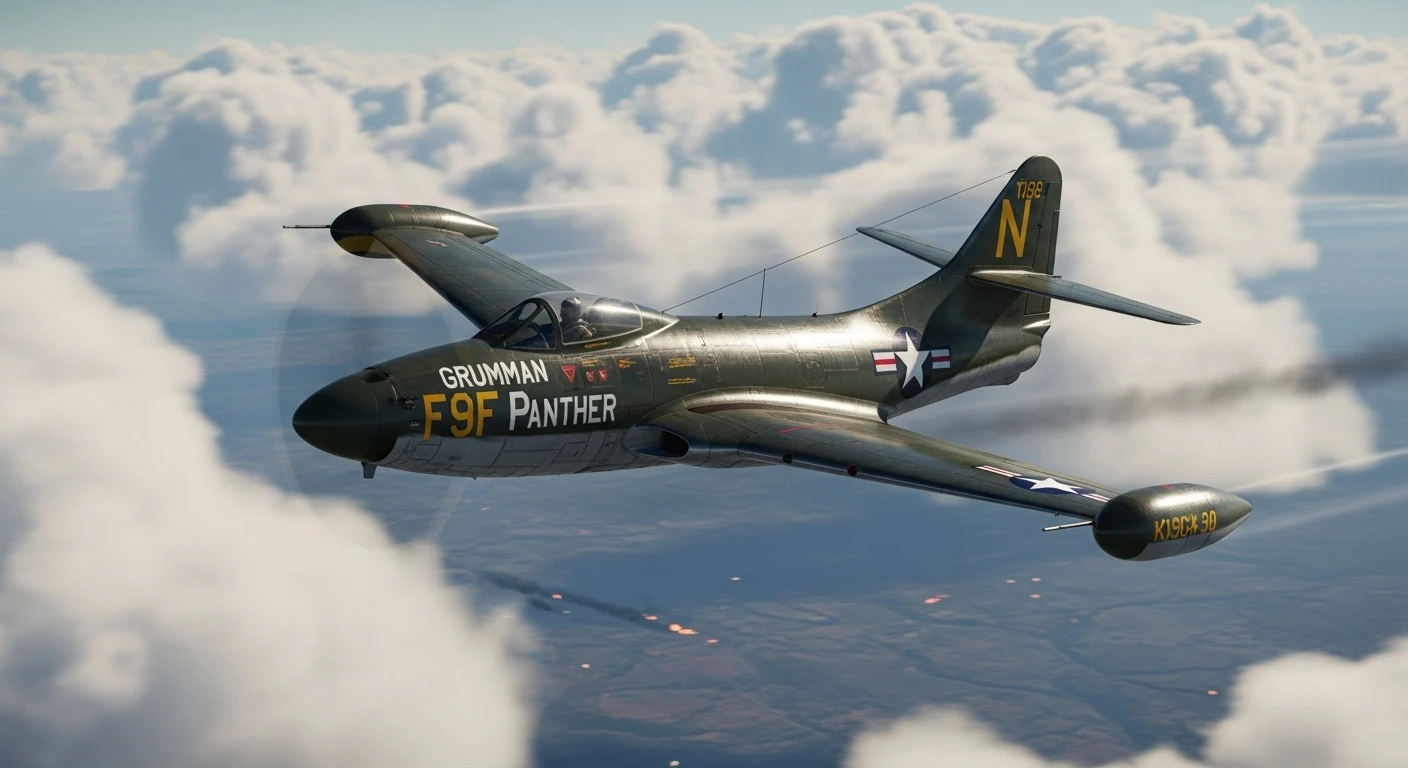
Grumman F9F Panther | |
|---|---|
| Paese | Usa |
| Ruolo | Cacciabombardardo |
| Primo volo | Il 21 novembre 1947 |
| Costruito | 1382 |
Le Grumman F9F Panther was the manufacturer’s first jet fighter and one of the United States Navy’s first successful carrier-based jet fighters. A single-engined, straight-winged day fighter, it was armed with four 20 mm (0.79 in) cannon and could carry a wide assortment of air-to-ground munitions. The Panther was used extensively by the U.S. Navy and Marine Corps in the Korean War. It was also the first jet aircraft used by the Blue Angels flight team, used by them from 1949 through late 1954. The aircraft was exported to Argentina and was the first jet used by the Argentine Naval Aviation. Total F9F production was 1,382. The design evolved into the swept wing Grumman F-9 Cougar.
| Grumman F9F-2 Panther Walk Around | |
|---|---|
| Fotografi | Cees Hendriks |
| Localizzazione | Inconsapevole |
| Foto | 36 |
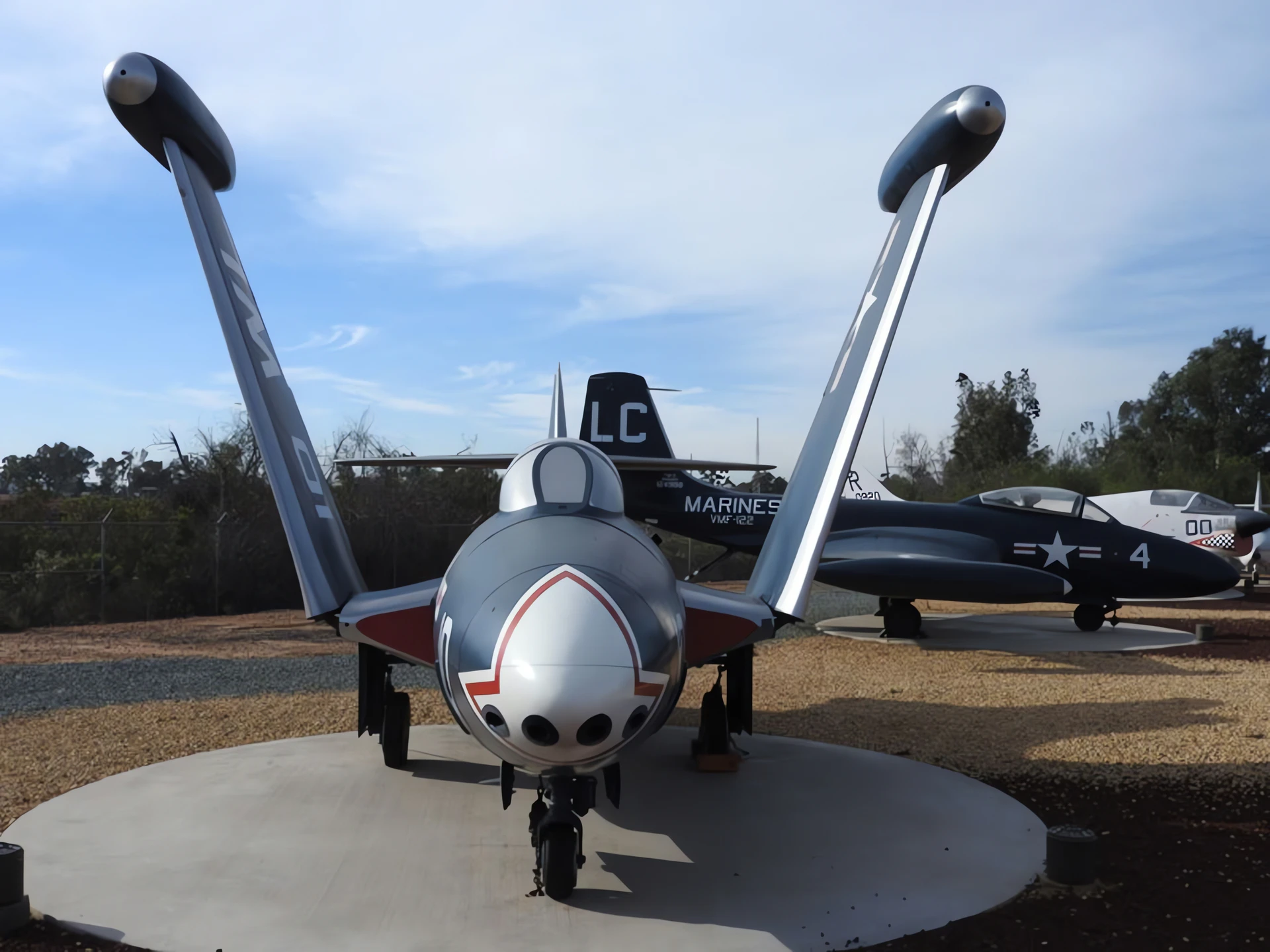
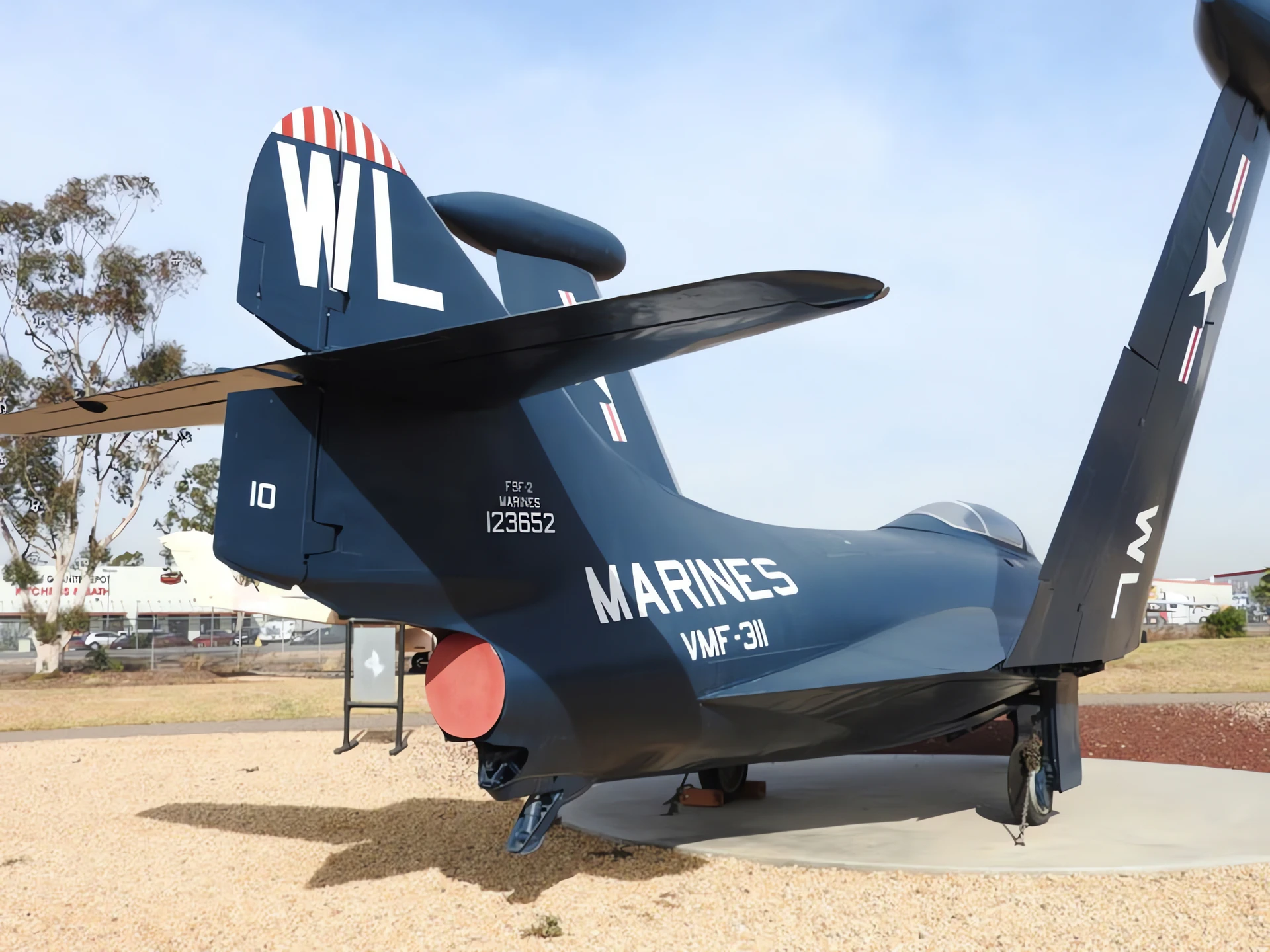
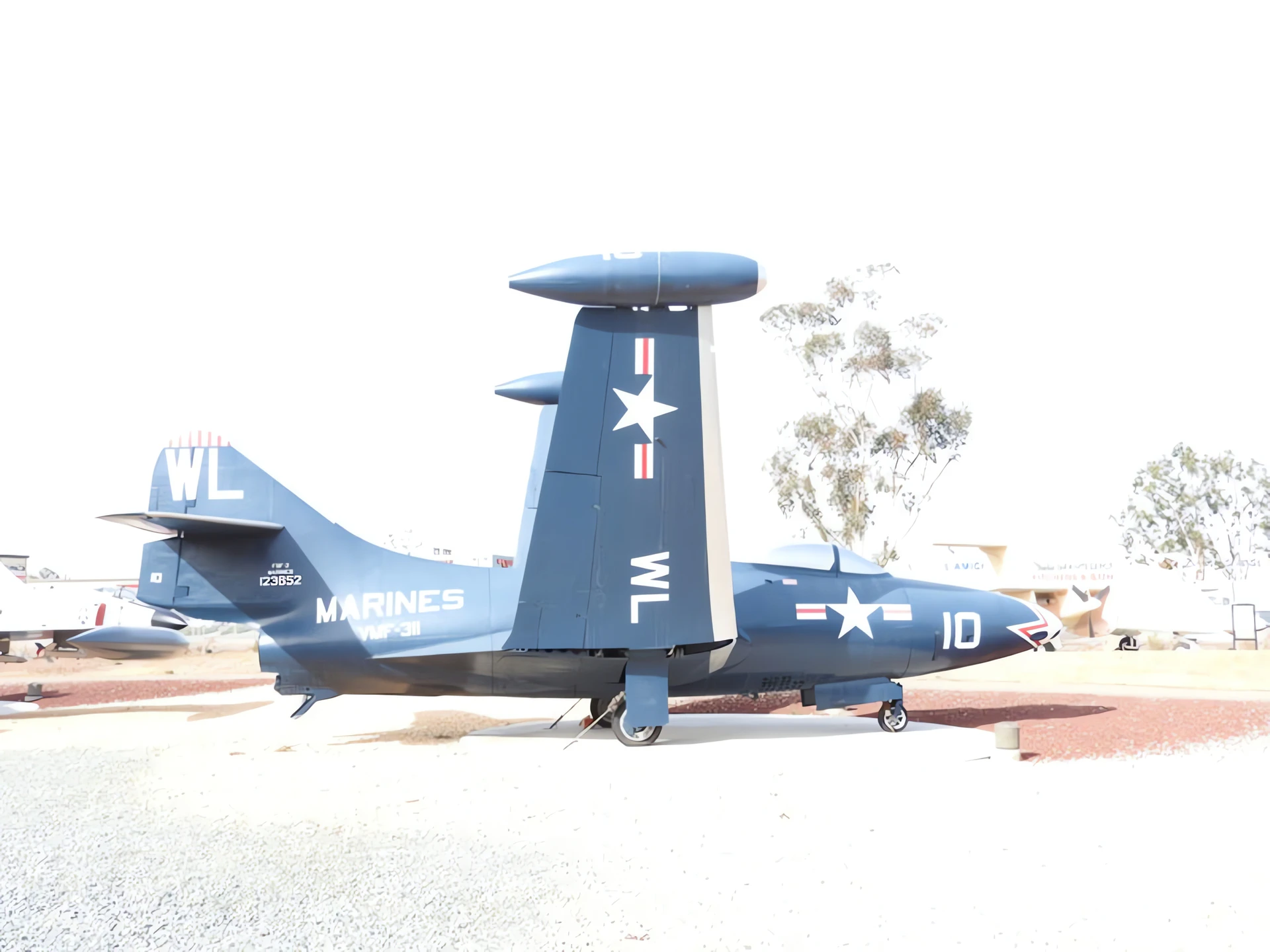
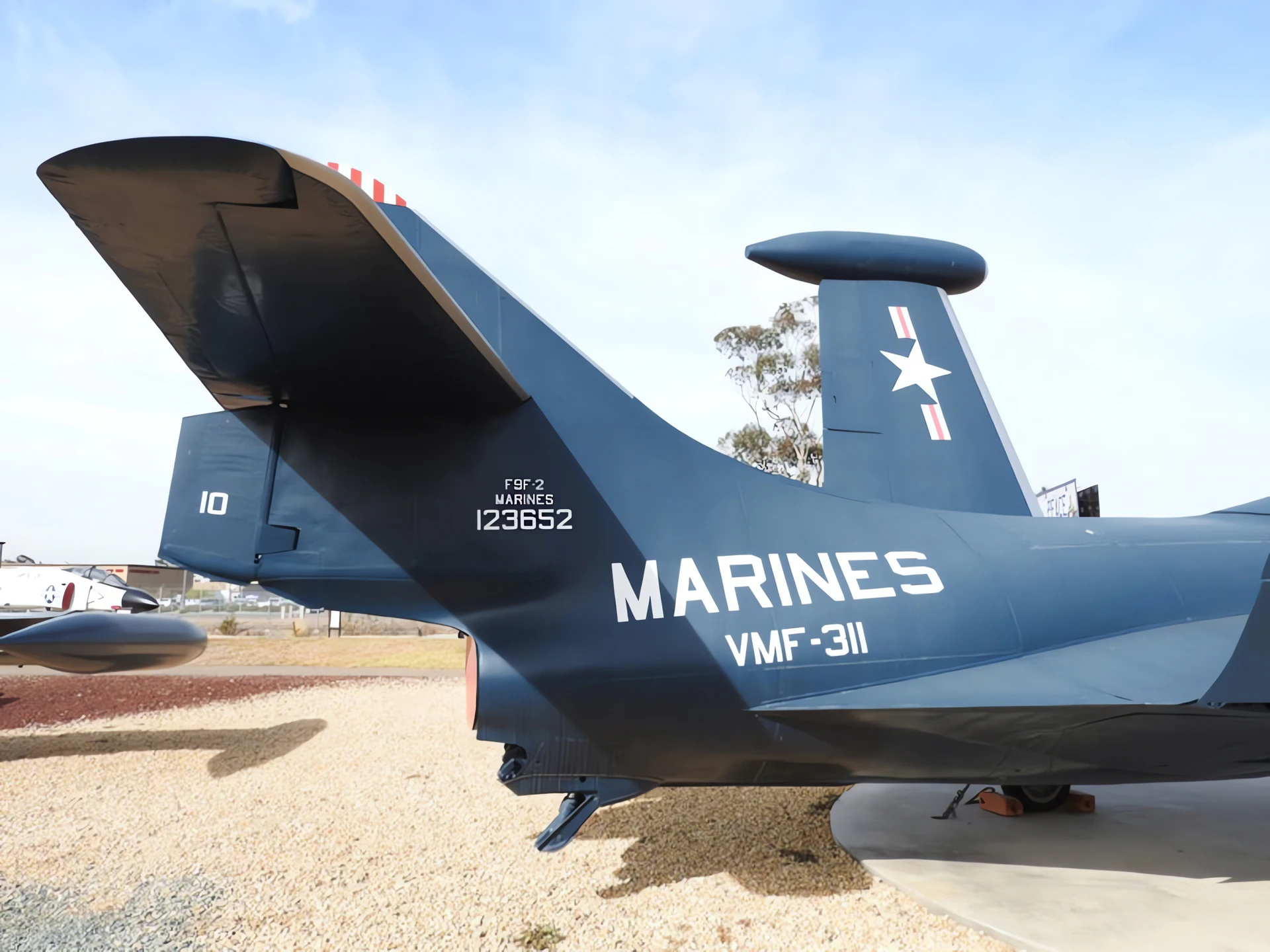
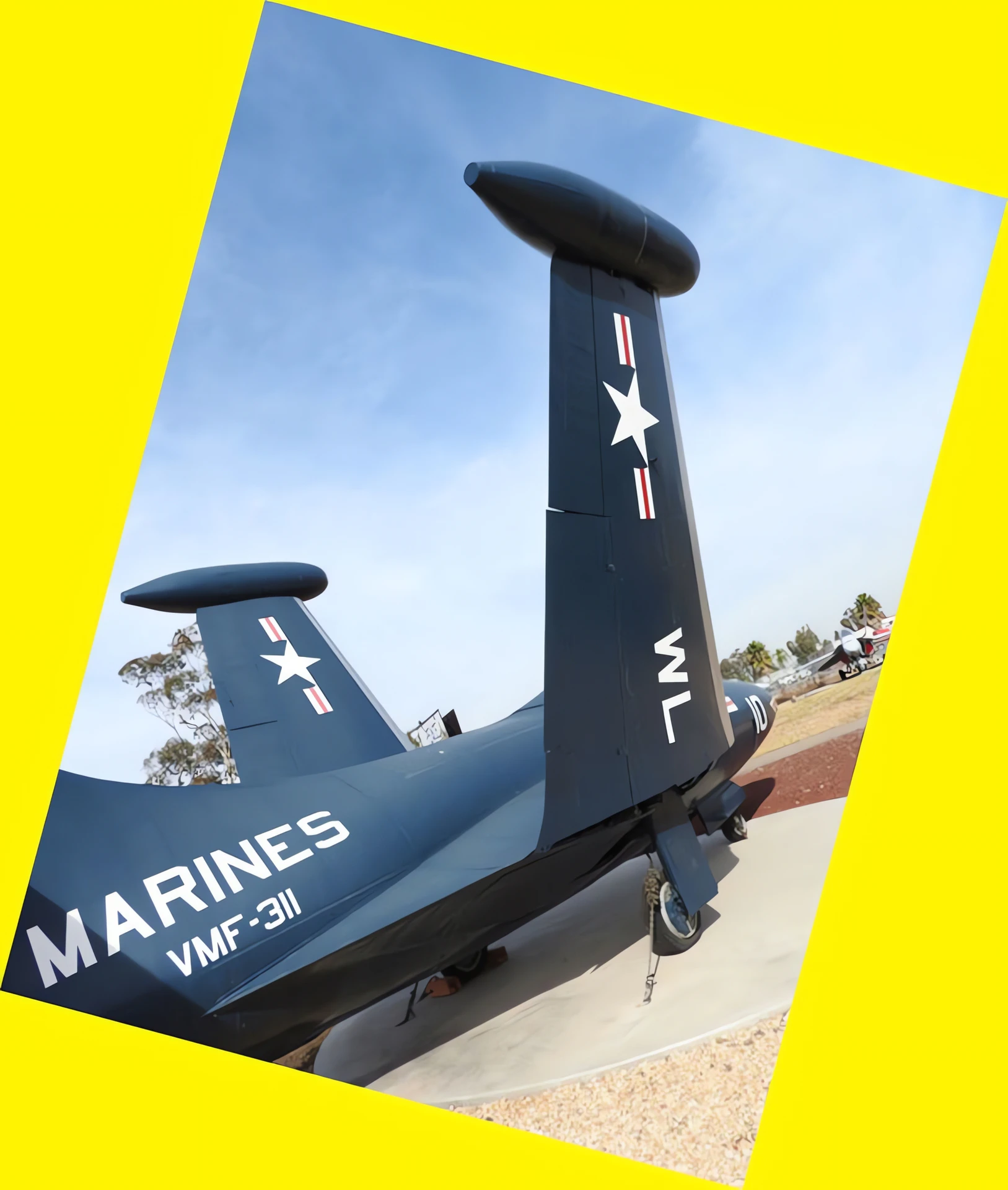
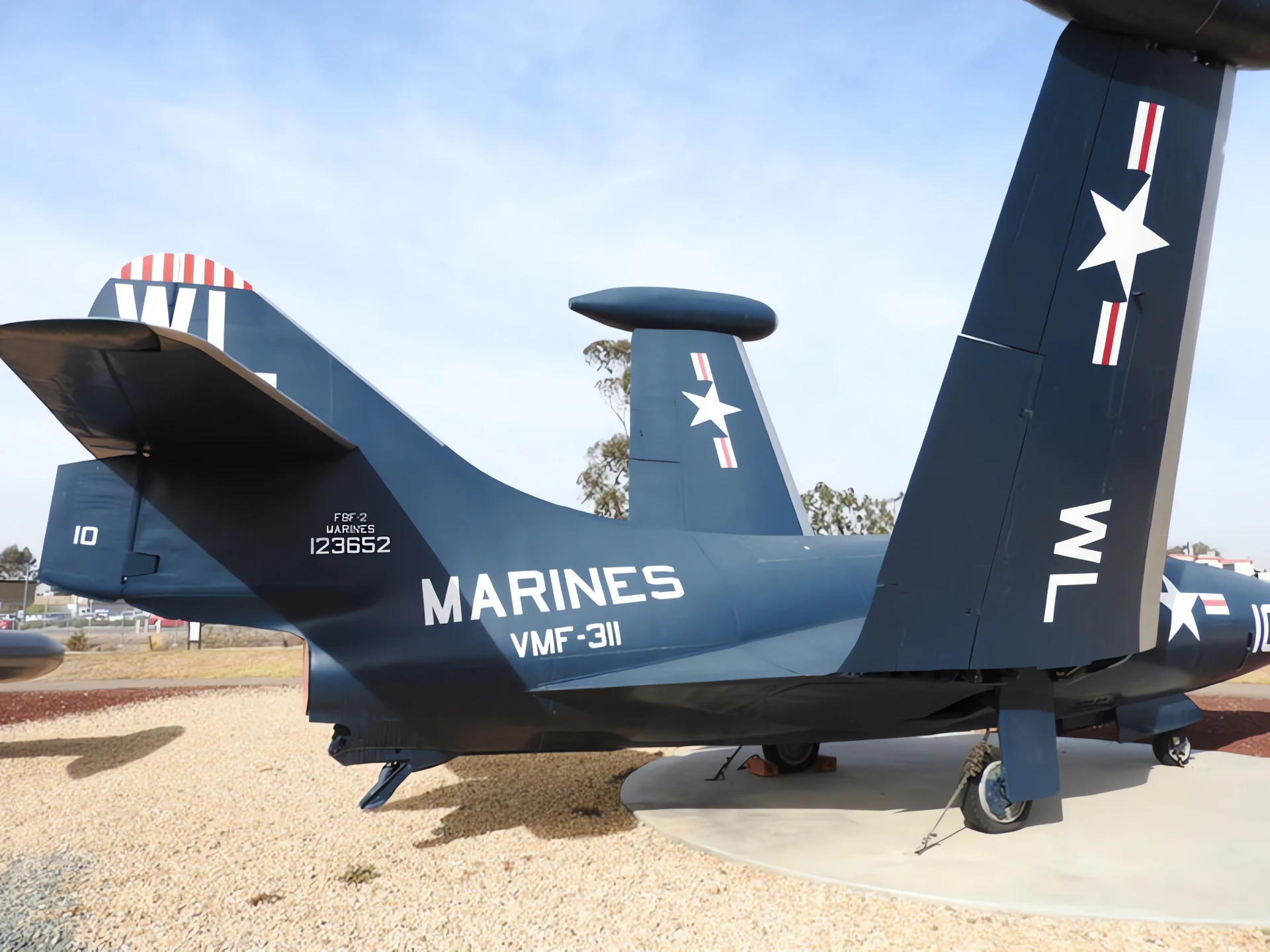
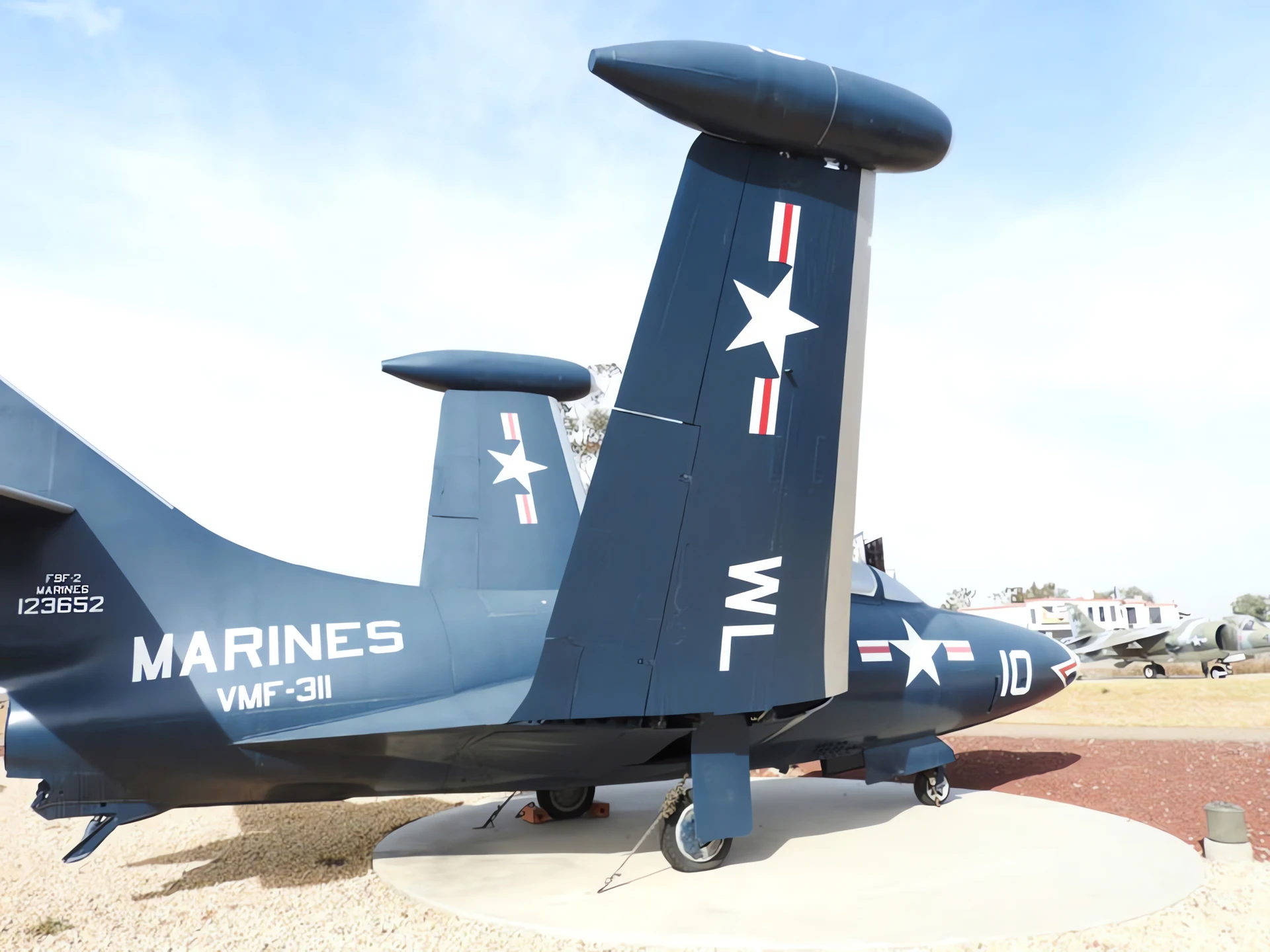
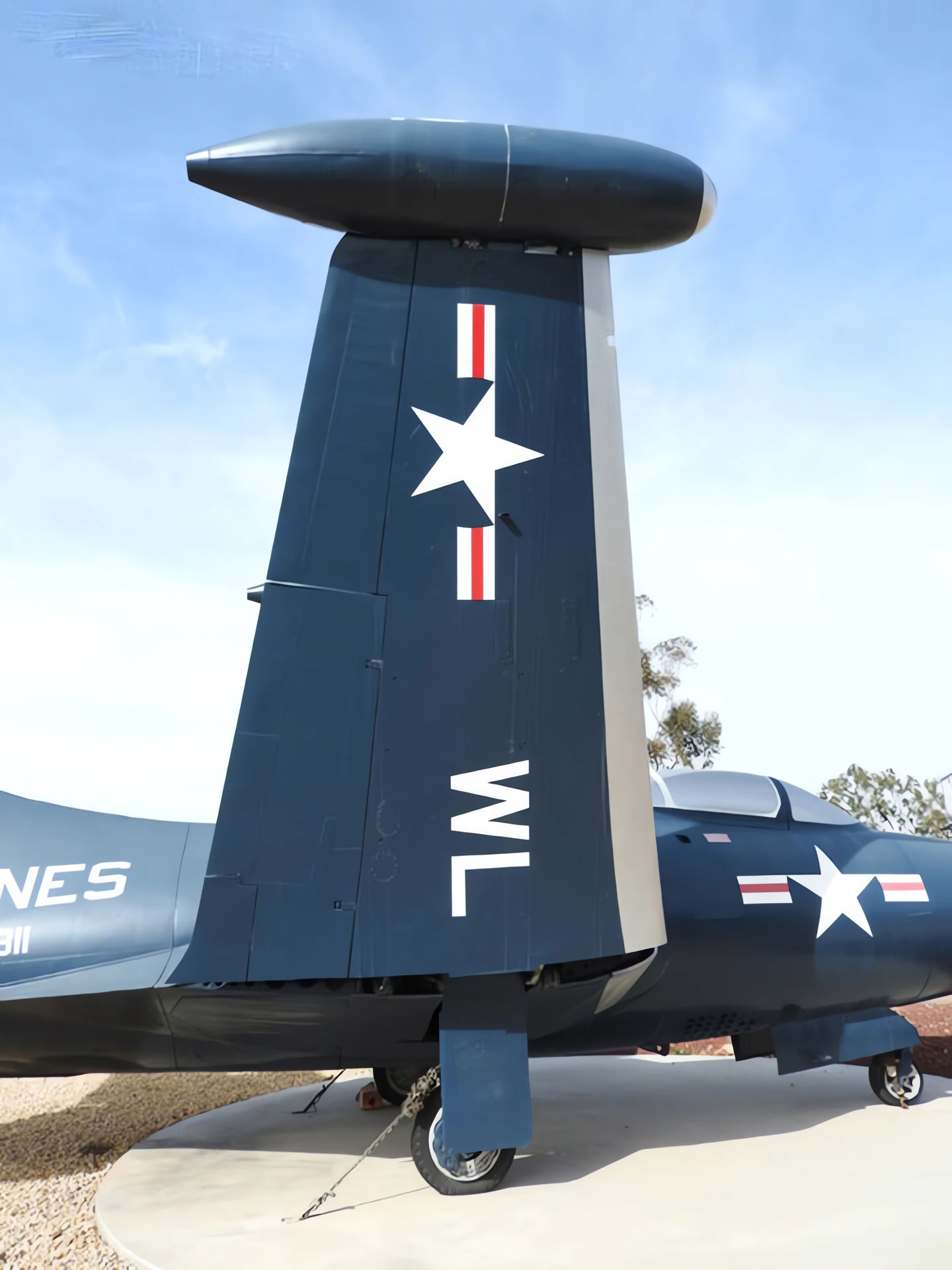
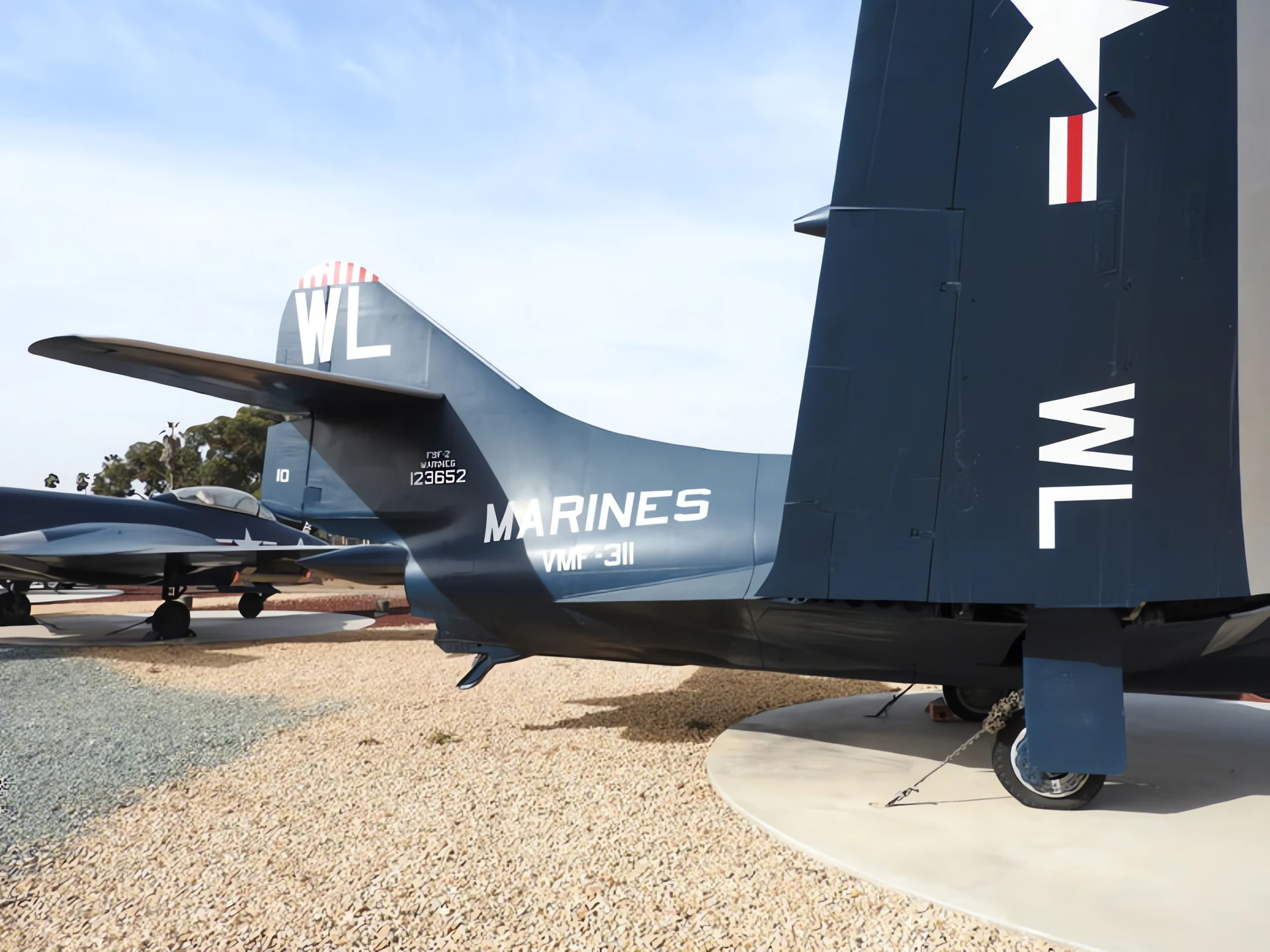

| Grumman F9F Panther/Cougar Walk Around | |
|---|---|
| Fotografo | Vladimir Jakubov |
| Localizzazione | Inconsapevole |
| Foto | 66 |

| F9F-4 Panther Walk Around | |
|---|---|
| Fotografo | Michael Benolkin |
| Localizzazione | Inconsapevole |
| Foto | 23 |
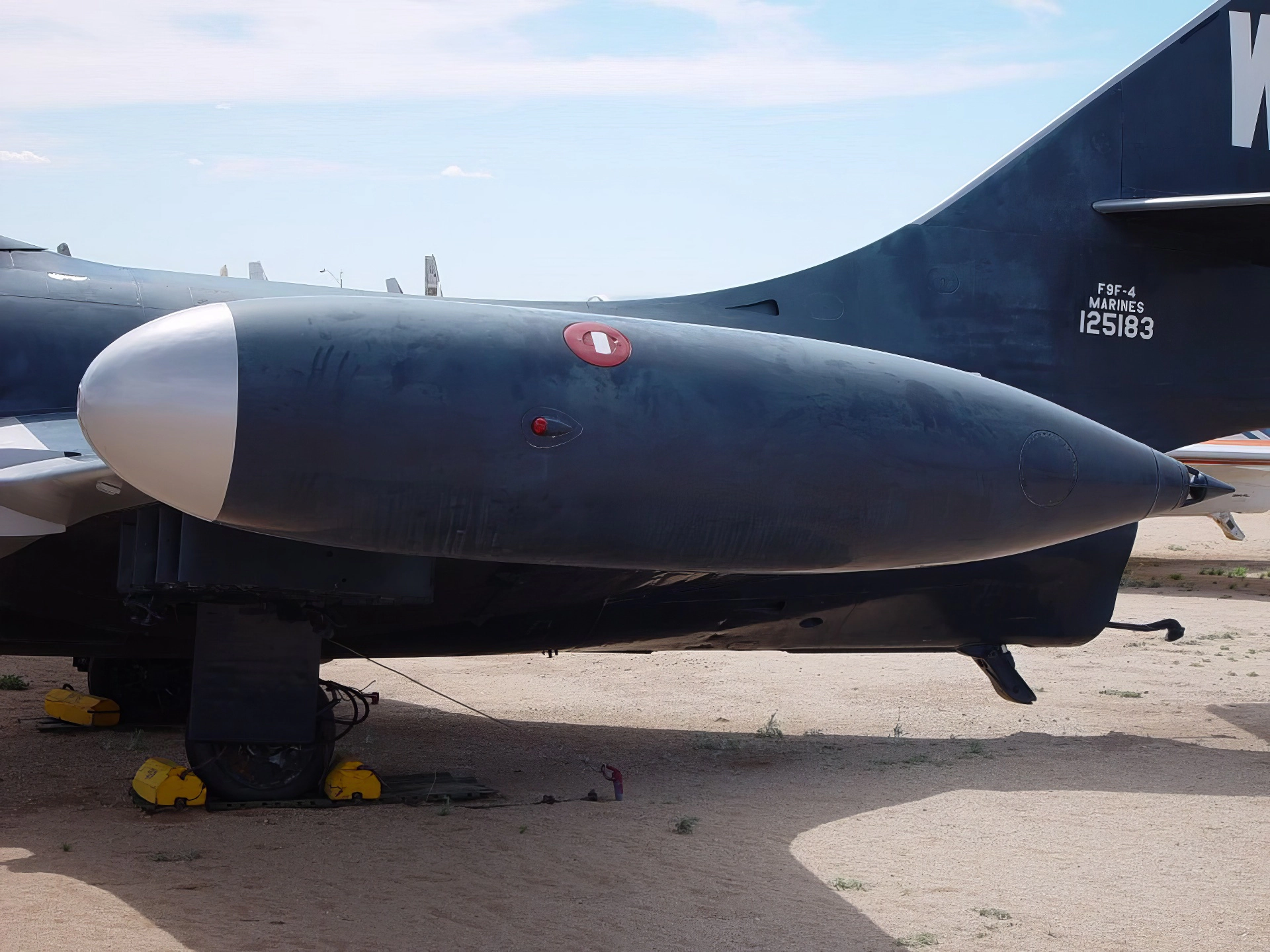
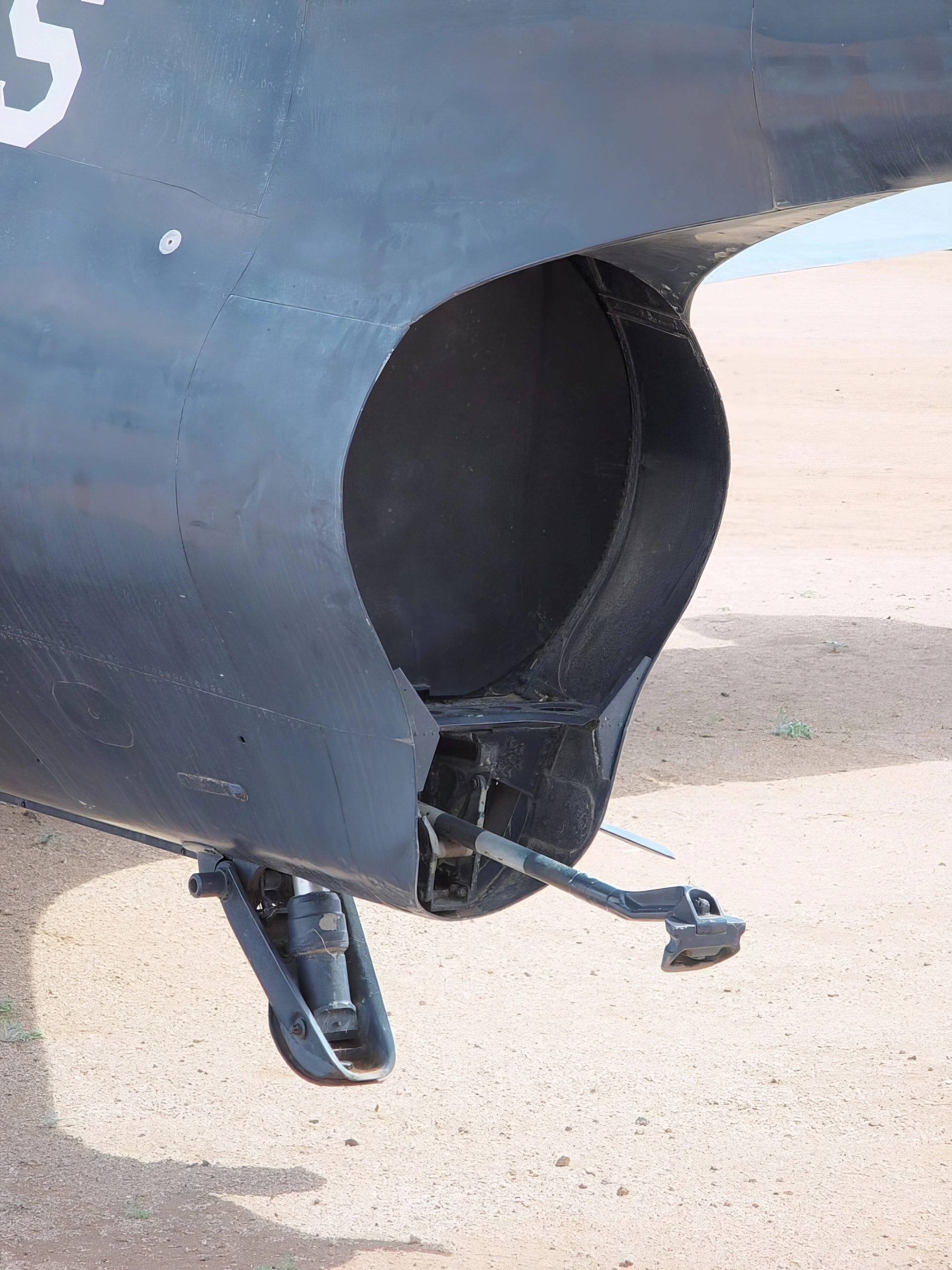
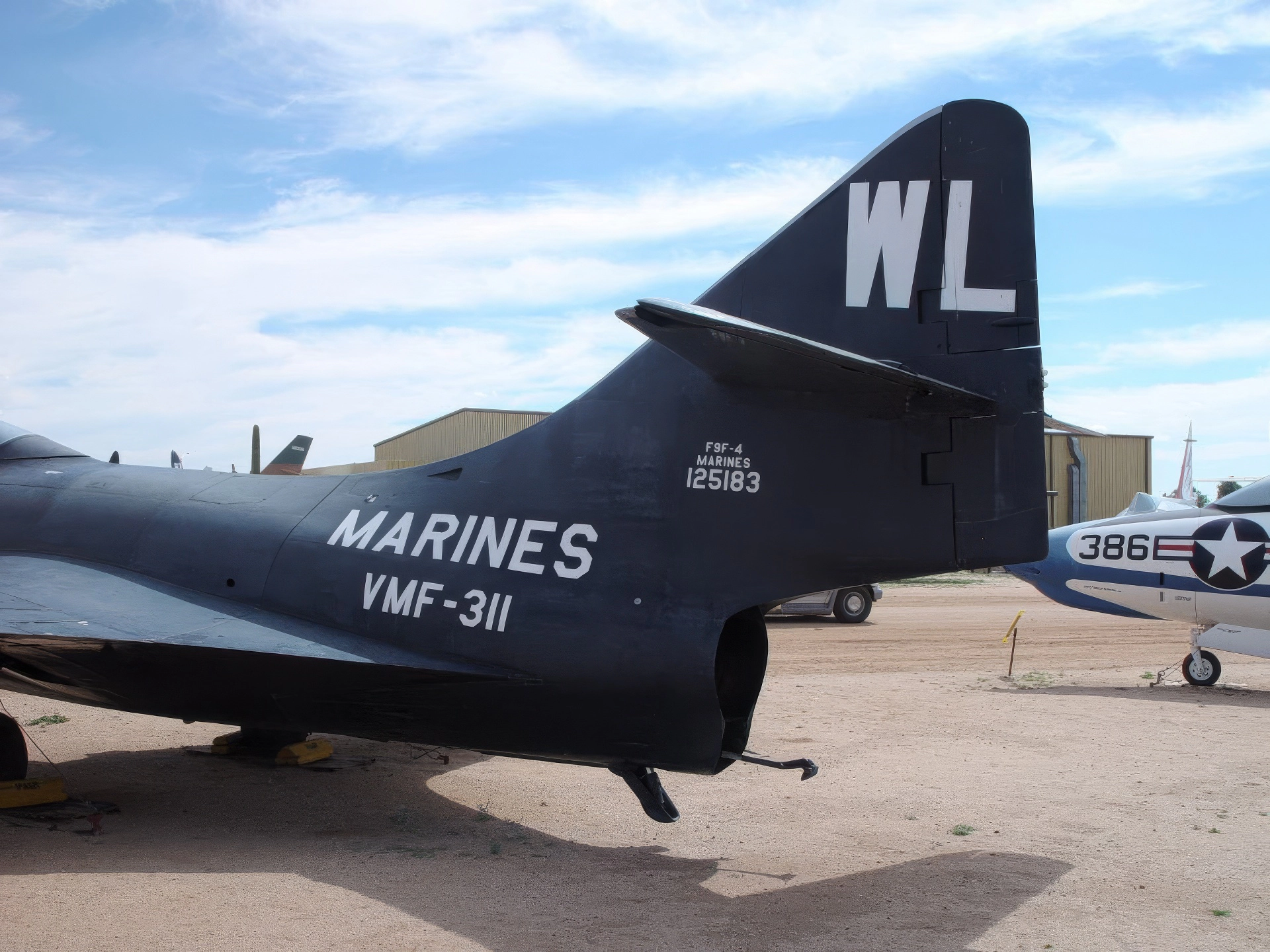
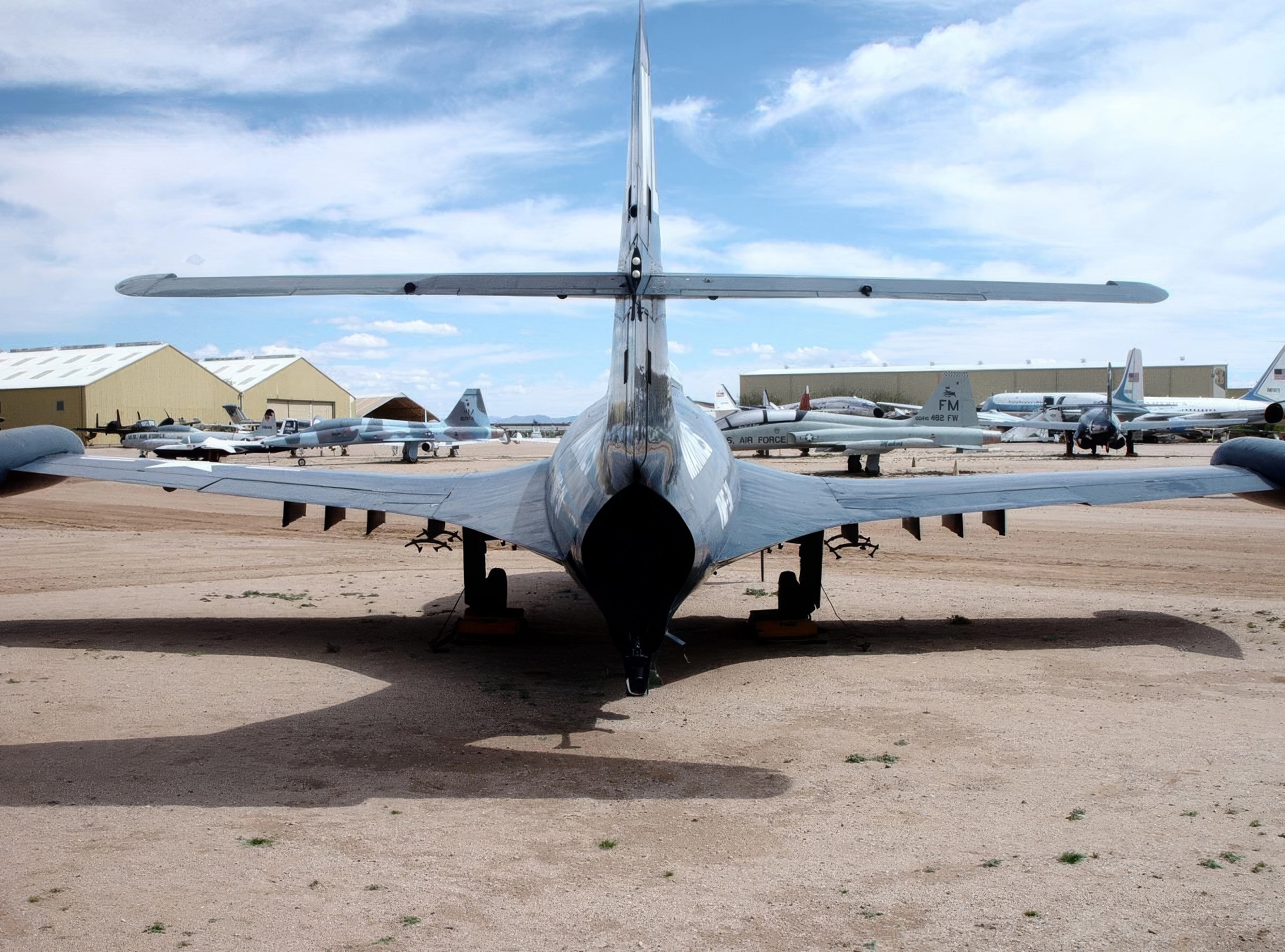
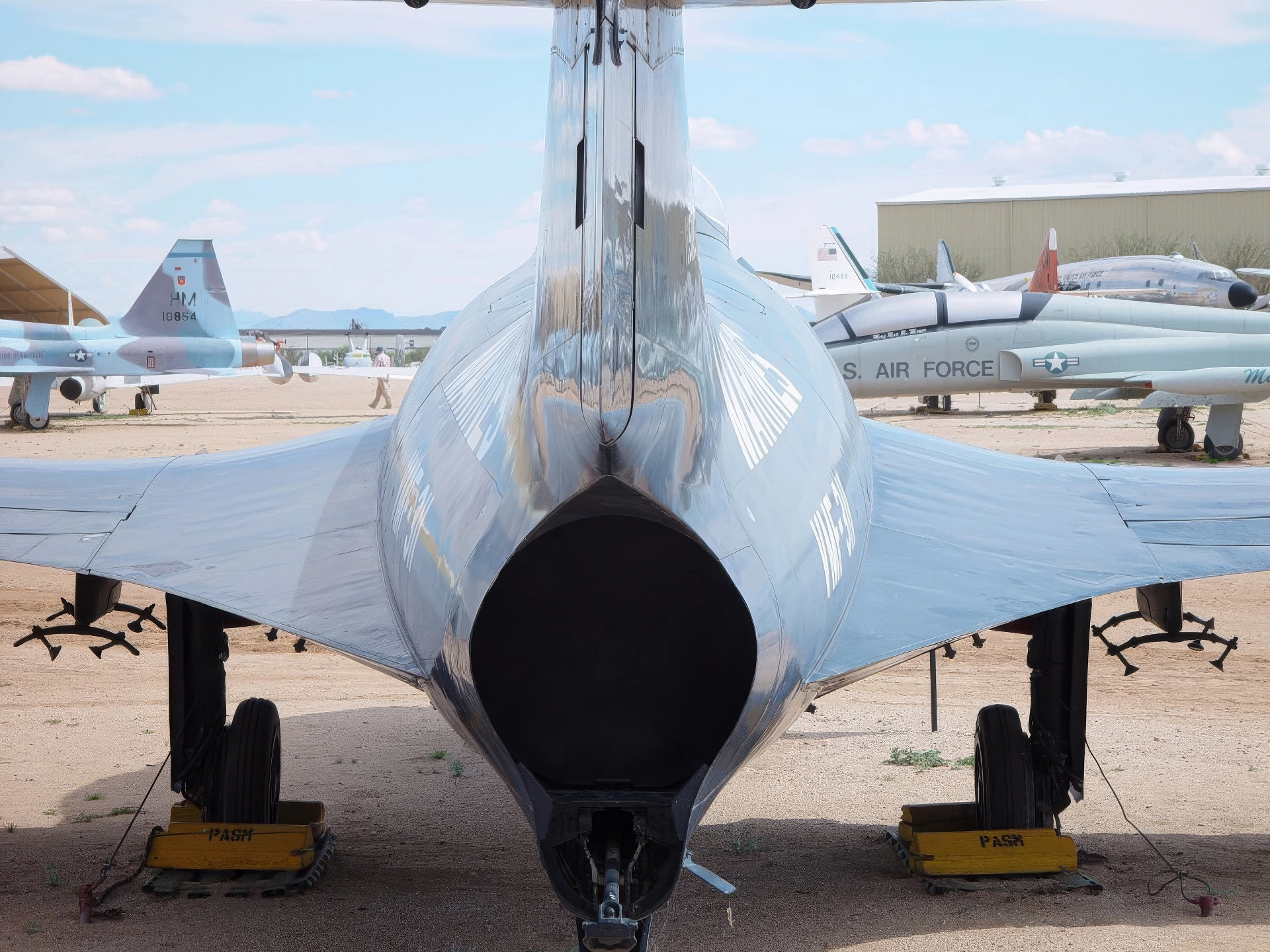
Vedi anche:


The First Jet Success for the “Iron Works”
Le Grumman F9F-2 Panther was the U.S. Navy’s first truly successful carrier-based jet fighter. Known for Grumman’s legendary “Iron Works” durability, the Panther was a straight-wing design that prioritized stable carrier approaches over raw supersonic speed. It became a symbol of the Korean War, where it served as the primary naval strike fighter, proving that jets could operate effectively from the pitching decks of aircraft carriers under combat conditions.
| Attribute | Standard Specification (F9F-2 Panther) |
|---|---|
| Ruolo | Carrier-based Fighter / Fighter-Bomber |
| Equipaggio | 1 (Pilot) |
| Motopropulsore | 1 × Pratt & Whitney J42-P-8 turbojet (License-built Rolls-Royce Nene) |
| Thrust | 5,000 lbf (22.2 kN) |
| Armamento principale | 4 × 20 mm M3 cannons (190 rounds per gun) |
| Velocità massima | 925 km/h (575 mph / 500 knots) |
| Artiglieria | Up to 907 kg (2,000 lbs) of bombs or 6 × 5-inch HVAR rockets |
| Service Ceiling | 13,600 meters (44,600 ft) |
Design Features & Naval Innovations
- Permanent Tip Tanks: The Panther is famous for its non-jettisonable wing-tip fuel tanks. Because early jet engines were incredibly thirsty, these tanks were essential for providing the range needed for carrier operations. They also improved the wing’s aerodynamic efficiency.
- The Rolls-Royce Heart: The F9F-2 was powered by the Pratt & Whitney J42, which was actually a license-built version of the British Rolls-Royce Nene. It was one of the most reliable turbojets of the era.
- Rugged Construction: Grumman built the Panther to be incredibly tough. Pilots frequently returned to carriers with significant battle damage to the fuselage and tail, earning the aircraft a reputation for pilot safety.
- Leading-Edge Slats: To allow a high-speed jet to land on the short decks of WWII-era carriers, the F9F used sophisticated leading-edge slats and large trailing-edge flaps to lower its stall speed.
Operational History: Korea and Beyond
- The First Jet Kill: On November 9, 1950, Lt. Cdr. William Amen, flying an F9F-2B, shot down a North Korean MiG-15, marking the first time a Navy jet had downed an enemy jet in history.
- The Blue Angels: The F9F-2 was the first jet aircraft used by the Blue Angels flight demonstration team, serving with them from 1949 to 1954.
- The “Bridges at Toko-Ri”: The Panther gained cinematic fame as the star of the 1954 film The Bridges at Toko-Ri, which realistically depicted the dangerous life of Navy carrier pilots during the Korean War.
- Evolution: The Panther was eventually “swept” to create the F9F-6 Cougar, which allowed the airframe to reach transonic speeds and compete more effectively with the MiG-15.
Views : 6015
Puoi anche vedere:
 Grumman AF Guardian – Foto e Video
 Grumman G-21 Goose – Foto e Video
 Grumman G-44 Widgeon – Foto e Video
 Grumman C-1 Trader – Foto e Video
 Grumman A-6A Intruder – Foto e Video
 Grumman HU-16 Albatross – Foto e Video
 Northrop Grumman E-2 Occhio di Falco - WalkAround
 Grumman F-14 Tomcat - WalkAround
 Grumman OV-1 Mohawk - Cammina in giro (Walk Around)
 Grumman FM-2 Wildcat - WalkAround