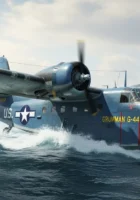
Grumman G-44 Widgeon sea

Grumman G-44 Widgeon

PaeseUsa
RuoloTrasporto anfibio
Primo volo1940
Costruito317+

Le Grumman G-44 Widgeon è un piccolo velivolo anfibio bimotore da cinque persone. È stato designato J4F dalla Marina e dalla Guardia Costiera degli Stati Uniti e OA-14 dall'United States Army Air Corps e dalle United States Army Air Forces.

fonte: Grumman G-44 Widgeon su Wikipedia

Continua a leggere

Punti di vista: 2475

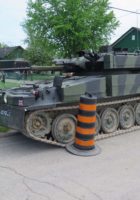
Scimitarra FV107

FV107 Scimitar

PaeseRegno unito
RuoloVeicolo da ricognizione
ProduttoreAlvis / BAE Systems Land & Armaments
CostruitoOltre 500

Le FV107 Scimitarra è un veicolo corazzato da ricognizione (a volte classificato come carro armato leggero) utilizzato dall'esercito britannico. È stato prodotto da Alvis a Coventry. È molto simile all'FV101 Scorpion, ma monta un cannone L21 RARDEN da 30 mm ad alta velocità invece di un cannone da 76 mm. È stato rilasciato ai reggimenti corazzati del Royal Armoured Corps nel ruolo di ricognizione. Ogni reggimento aveva originariamente uno squadrone da ricognizione ravvicinato di cinque truppe, ciascuna contenente otto scimitarre FV107.

fonte: FV107 Scimitarra Wikipedia

Continua a leggere

Visualizzazioni: 3032

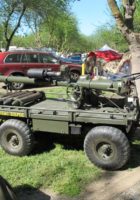
Mulo M274A2 con M40A2 da 106 mm

M274 ½-ton 4×4 utility platform truck

PaeseUsa
Ruolo1⁄2 tonnellate (454 kg) 4×4 camion piattaforma
Prodotto1956-1970
VariantiM274A1, A2, A3, A4

L'esercito degli Stati Uniti Camion M274, Piattaforma, Utility, 1/2 Ton, 4X4 o "Carrier, Armi Leggere, Fanteria, 1/2 ton, 4×4", noto anche come "mulo", "Military Mule", o "Mechanical Mule", è un veicolo a 4 ruote motrici, a benzina, a benzina che può trasportare fino a 1/2 tonnellate fuoristrada. È stato introdotto nel 1956 e utilizzato fino agli anni '80.

fonte: M274 Mule su Wikipedia

Continua a leggere

Punti di vista: 3018

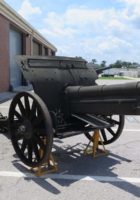
Tedesco 10,5 cm leFH 16 Field Howitzer

10.5 cm leFH 16

PaeseImpero tedesco – Germania nazista
RuoloObice di campo
In servizio 1916–45
CostruitoInconsapevole

Le 10.5 cm leichte Feldhaubitze 16 (10.5 cm leFH 16) was a field howitzer used by Germany in World War I and World War II. The 10.5 cm leichte Feldhaubitze 16 was introduced in 1916 as a successor to 10.5 cm Feldhaubitze 98/09, featuring a longer barrel and hence longer range. It had the same carriage as the 7.7 cm FK 16.

fonte: 10.5 cm leFH 16su Wikipedia

Continua a leggere

Visualizzazioni : 2211

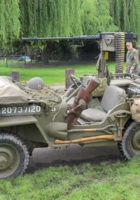
Ford GPW

Ford GPW

PaeseUsa
Ruolo1/4 tonnellate 4×4 camion utilitario
Prodotto1941 – 1945
Costruito278000

Il Willys MB e il Ford GPW, entrambi formalmente chiamati U.S. Army Truck, 1/4 ton, 4×4, Command Reconnaissance, comunemente noti come Jeep o jeep, e talvolta indicati come G503 sono veicoli militari leggeri, fuoristrada, fabbricati durante la seconda guerra mondiale (dal 1941 al 1945) per aiutare a mobilitare le forze alleate.

fonte: Ford GPW su Wikipedia

Continua a leggere

Views : 5455

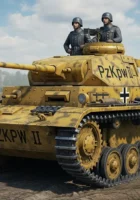
PzKpfw II war

Panzer II

PaeseGermania nazista
RuoloCarro leggero
Prodotto1935 - Gennaio 1944
Costruito1856

Le Panzer II is the common name used for a family of German tanks used in World War II. The official German designation was Panzerkampfwagen II (abbreviated PzKpfw II). Although the vehicle had originally been designed as a stopgap while larger, more advanced tanks were developed, it nonetheless went on to play an important role in the early years of World War II, during the Polish and French campaigns. The Panzer II was the most numerous tank in the German Panzer divisions at the beginning of the war.[2] It was used in both North Africa against the Western Allies and on the Eastern Front against the Soviet Union.

fonte: Panzer II su Wikipedia

Continua a leggere

Views : 9283

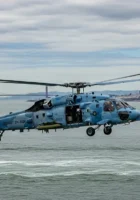
Sikorsky SH-60B SeaHawk LA

Sikorsky SH-60B SeaHawk

PaeseUsa
RuoloElicottero marittimo utility
Primo volo12 dicembre 1979
CostruitoInconsapevole

Le Sikorsky SH-60/MH-60 Seahawk (or Sea Hawk) is a twin turboshaft engine, multi-mission United States Navy helicopter based on the United States Army UH-60 Black Hawk and a member of the Sikorsky S-70 family. The most significant airframe modification is a hinged tail to reduce its footprint aboard ships. The U.S. Navy uses the H-60 airframe under the model designations SH-60B, SH-60F, HH-60H, MH-60R, and MH-60S. Able to deploy aboard any air-capable frigate, destroyer, cruiser, fast combat support ship, amphibious assault ship, or aircraft carrier, the Seahawk can handle anti-submarine warfare (ASW), anti-surface warfare (ASUW), naval special warfare (NSW) insertion, search and rescue (SAR), combat search and rescue (CSAR), vertical replenishment (VERTREP), and medical evacuation (MEDEVAC).

fonte: Sikorsky SH-60B SeaHawk su Wikipedia
Continua a leggere

Views : 4359

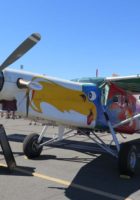
Pilatus PC-6 Porter

Pilatus PC-6 Porter

PaeseSvizzera
RuoloSTOL passeggeri e aerei di pubblica utilità
Primo volo4 maggio 1959
Costruito600

Il Pilatus PC-6 Porter è un aereo utility STOL monomotore progettato dalla Pilatus Aircraft of Switzerland. Volato per la prima volta nel 1959, il PC-6 continua la produzione al Pilatus Flugzeugwerke di Stans, in Svizzera. È stato costruito sia in versione a pistoni che turboelica ed è stato prodotto su licenza per un certo periodo da Fairchild Hiller negli Stati Uniti. Dopo circa 600 consegne in sei decenni, Pilatus produrrà l'ultima all'inizio del 2019.

fonte: Pilatus PC-6 Porter su Wikipedia

Continua a leggere

Visualizzazioni : 3853

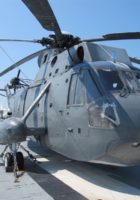
Sikorsky SH-3G Re del Mare

Sikorsky SH-3 Sea King

PaeseUsa
RuoloGuerra antisommergibile, ricerca e soccorso ed elicottero utility
Primo volo11 marzo 1959
CostruitoInconsapevole

Le Sikorsky SH-3 Re del Mare (designazione S-61) è un elicottero da guerra antisommergibile bimotore statunitense progettato e costruito dalla Sikorsky Aircraft. Un design storico, è stato il primo elicottero anfibio al mondo e uno dei primi rotorcraft ASW ad utilizzare motori turboalfase.

fonte: Sikorsky SH-3 Re del Mare su Wikipedia

Continua a leggere

Numero visioni : 3440

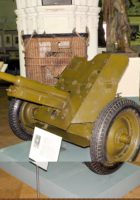
45mm 53-K PISTOLA AT Mod.1937

45 mm anti-tank gun M1937

PaeseURSS
RuoloCannone anticarro
Prodotto1937-1943
Costruito37000+

Le Cannone anticarro da 45 mm modello 1937 (designazione di fabbrica 53-K) era un cannone anticarro leggero a fuoco rapido utilizzato nella prima fase della guerra tedesco-sovietica. È stato creato dal progettista di artiglieria sovietico M.N. Loginov dopo l'arresto e l'esecuzione dell'ex progettista V. von Behring. A causa dell'insufficiente penetrazione dell'armatura fu sostituito in servizio dal cannone anticarro M1942 (M-42) a canna lunga da 45 mm.

fonte: Cannone anticarro da 45 mm M1937 su Wikipedia

Continua a leggere

Visualizzazioni : 3746