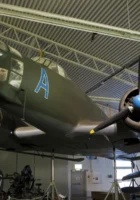
CATI 90 mm

Loyd Carrier

PaeseRegno unito
RuoloPortaerei corazzata
In servizioAnni 1939 -1960
Costruito26000+

Le Loyd Carrier era uno dei numerosi piccoli veicoli cingolati utilizzati dalle forze britanniche e del Commonwealth nella seconda guerra mondiale per trasportare attrezzature e uomini sul campo di battaglia. Accanto ai Bren, Scout e Machine Gun Carriers, spostarono anche armi di supporto alla fanteria.

fonte: Loyd Carrier su Wikipedia

Continua a leggere

Visualizzazioni : 1365

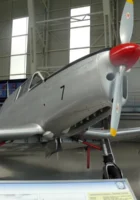
Nardi FN.305 A

Nardi FN.305

PaeseItalia
RuoloAddestratore di caccia e monoplano di collegamento
Primo voloIl 19 febbraio 1935
Costruito211

Le Nardi FN.305 was an Italian fighter trainer and liaison monoplane developed by the Fratelli Nardi company. The FN.305 was designed as a trainer and liaison aircraft and the prototype first flew on 19 January 1935. The FN.305 was a low-wing cantilever monoplane of mixed construction. It had tailskid landing gear, with the main gear retracting inwards. It was powered by a nose-mounted 200 hp (149 kW) Fiat A.70S inline piston engine. The prototype was a tandem two-seater with an enclosed cockpit. It was intended to produce both single-seat and two-seat variants and the next prototype was a single-seat fighter trainer followed by a two-seat basic trainer prototype which both had open cockpits.

fonte: Nardi FN.305 su Wikipedia

Continua a leggere

Visualizzazioni : 831

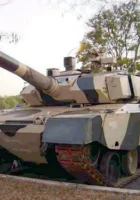
Engesa EE-T1 Osorio

EE-T1 Osório

Paese Brasile
Ruolo Carro armato da battaglia principale
Prodotto 1986
Costruito 2 prototipi
Le Engesa EE-T1 Osório È stato un prototipo di carro armato da battaglia brasiliano sviluppato da Engesa. Il carro doveva essere venduto prima ad arabi e ad altri paesi del Terzo mondo, iniziando la produzione e consentendo all'esercito brasiliano di effettuare in seguito i propri ordini senza dover finanziare i costi di sviluppo. Lo sviluppo del carro armato fu inizialmente finanziato privatamente da Engesa, ma le emissioni di flusso di cassa alla fine portarono il governo brasiliano ad estendere un prestito per assistere il programma. Furono costruiti due prototipi del carro armato, ma l'EE-T1 non fu mai adottato per il servizio.
fonte: EE-T1 Osório su Wikipedia
Continua a leggere

Visualizzazioni : 2016

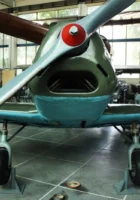
FIAT G.46-2

Fiat CR.46

PaeseItalia
RuoloAddestratore militare
Primo voloIl 25 giugno 1947
Costruito223

Le Fiat G.46 was a military trainer developed in Italy shortly after World War II. The G.46 was a conventional, low-wing monoplane with tailwheel undercarriage, the main units of which retracted inwards. The pilot and instructor sat in tandem under a long canopy. The first prototype, powered by a 205 hp (153 kW) Alfa Romeo 115-Ibis engine, made its maiden flight on 25 June 1947.

fonte: Fiat CR.46 su Wikipedia

Continua a leggere

Punti di vista : 639

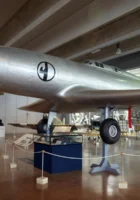
Campini-Caproni C.C.2

Caproni Campini N.1

PaeseItalia
RuoloAerei sperimentali
Primo voloIl 27 agosto 1940
Costruito2

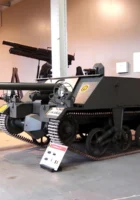
Le Caproni Campini N.1, also known as the C.C.2, was an experimental jet aircraft built in the 1930s by Italian aircraft manufacturer Caproni. The N.1 first flew in 1940 and was briefly regarded as the first successful jet-powered aircraft in history, before news emerged of the German Heinkel He 178’s first flight a year earlier. During 1931, Italian aeronautics engineer Secondo Campini submitted his studies on jet propulsion, including a proposal for a so-called thermo-jet to power an aircraft. Following a high-profile demonstration of a jet-powered boat in Venice, Campini was rewarded with an initial contract issued by the Italian government to develop and manufacture his envisioned engine. During 1934, the Regia Aeronautica (the Italian Air Force) granted its approval to proceed with the production of a pair of jet-powered prototype aircraft. To produce this aircraft, which was officially designated as the N.1, Campini formed an arrangement with the larger Caproni aviation manufacturer.

fonte: Caproni Campini N.1 su Wiki
Continua a leggere

Visualizzazioni : 1552

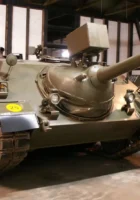
Jagdpanzer Kanone 90

Jagdpanzer Kanone 90

PaeseGermania Ovest
RuoloCacciacarri
Prodotto1965–1967
Costruito770

Le Kanonenjagdpanzer (KanJPz; noto anche come Jagdpanzer Kanone 90mm, "cacciacarri, cannone 90mm") era un cacciacarri tedesco della Guerra Fredda equipaggiato con un cannone anticarro da 90 mm preso dagli obsoleti carri armati M47 Patton. Il suo design era molto simile a quello del Jagdpanzer IV della seconda guerra mondiale.

fonte: Jagdpanzer Kanone 90 su Wikipedia

Continua a leggere

Visualizzazioni : 2255

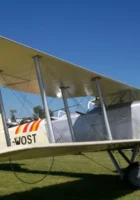
Breguet XIV

Breguet XIV

PaeseFrancia
RuoloBomber
Primo volo21 novembre 1916
Costruito8000+

Le Bréguet 14 · was a French biplane bomber and reconnaissance aircraft of World War I. It was built in very large numbers and production continued for many years after the end of the war. Apart from its widespread usage, the Bréguet 14 is known for being among the first mass-produced aircraft to use large amounts of metal, rather than wood, in its structure. This allowed the airframe to be lighter than a wooden airframe of the same strength, in turn making the aircraft relatively fast and agile for its size; in combat it was able to outrun many contemporary fighters. The Bréguet 14’s strong construction allowed it to sustain considerable damage, in addition to being easy to handle and possessing favourable performance. The type has often been considered to have been one of the best aircraft of the war.

fonte: Breguet XIV su Wiki

Continua a leggere

Visualizzazioni : 1356

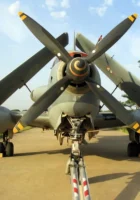
Breguet Aviation Br.1050 Alize

Bréguet 1050 Alizé

PaeseFrancia
RuoloAerei antisommergibile
Primo volo6 ottobre 1956
Costruito89

Le Bréguet Br.1050 Alizé Il "Tradewind") era un aereo da guerra antisommergibile francese. Fu sviluppato negli anni '50, liberamente basato sul secondo prototipo di aereo d'attacco Bréguet Vultur che era stato modificato nell'aereo da guerra antisommergibile Bréguet Br.965 Épaulard.

fonte: Bréguet 1050 Alizé su Wiki

Continua a leggere

Visualizzazioni : 1987

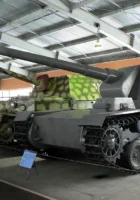
Sturer Emil 12.8cm Kanone L61

Sturer Emil

PaeseGermania nazista
RuoloCacciacarri pesante
In servizio1942-1943
Costruito2

Il 12.8 cm Selbstfahrlafette auf VK 30.01(H) "Sturer Emil" (tedesco per "Stubborn Emil") era un cannone anticarro semovente tedesco sperimentale della seconda guerra mondiale. Era basato sul telaio Henschel VK30.01 e armato con un cannone Rheinmetall K40 L/61 da 12,8 cm (basato sul FlaK 40 da 12,8 cm). Questa pistola poteva attraversare 7 ° su ciascun lato, elevare di 10 ° e premere -15 °. Trasportava 15 colpi per la pistola principale.

fonte: Sturer Emil su Wikipedia

Continua a leggere

Visualizzazioni : 2150

Junkers Ju 86 K-4

Junkers Ju 86

PaeseGermania nazista
RuoloBombardiere, aereo di linea, aereo da ricognizione
Primo volo4 novembre 1934
Costruito900

Le Junkers Ju 86 era un bombardiere monoplano tedesco e un aereo di linea civile progettato nei primi anni 1930 e impiegato da varie forze aeree su entrambi i lati durante la seconda guerra mondiale. Il modello civile Ju 86B poteva trasportare dieci passeggeri. Due sono stati consegnati a Swissair e cinque a Deutsche Luft Hansa. Inoltre, un singolo Ju 86Z civile è stato consegnato alla svedese AB Aerotransport.

fonte: Junkers Ju 86 su Wikipedia

Continua a leggere

Punti di vista: 1733