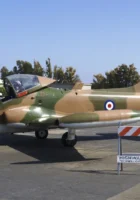
British Aircraft Jet Provost T.Mk.5A

BAC Jet Provost

PaeseRegno unito
RuoloAerei da addestramento militare
Primo volo26 giugno 1954
Costruito734

Le BAC Jet Provost è un aereo da addestramento a reazione britannico che è stato in uso con la Royal Air Force (RAF) dal 1955 al 1993. È stato originariamente sviluppato da Hunting Percival dal precedente addestratore di base Percival Provost con motore a pistoni, e successivamente prodotto dalla British Aircraft Corporation (BAC). Oltre ai molteplici ordini della RAF, il Jet Provost, a volte con armamento leggero, fu esportato in molte forze aeree in tutto il mondo. Il progetto è stato anche ulteriormente sviluppato in una variante di attacco al suolo più pesantemente armata sotto il nome di BAC Strikemaster.

fonte: BAC Jet Provost su Wikipedia

Continua a leggere

Numero visioni : 1147

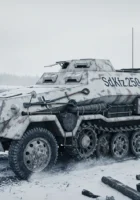
Sd.Kfz. 250 war

Sd.Kfz. 250

PaeseGermania
digitareVeicolo corazzato semicingolato per il trasporto di personale
In servizio1941–1945
Costruito6600+

Le Sd.Kfz. 250 (German: Sonderkraftfahrzeug 250; ‘special motor vehicle’) was a light armoured half-track, very similar in appearance to the larger Hanomag-designed Sd.Kfz. 251, and built by the DEMAG firm, for use by Nazi Germany in World War II. Most variants were open-topped and had a single access door in the rear. The Sd. Kfz 250 was adopted in 1939 to supplement the standard half-track. Production delays meant that the first vehicle did not appear until mid-1941.

fonte: Sd.Kfz. 250 su Wikipedia

Continua a leggere

Views : 4235

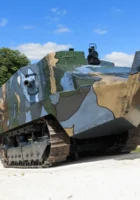
Schneider CA1

Schneider CA1

PaeseFrancia
digitareCarro pesante
In servizio1916–1918 (Francia) / 1921–1936 (Spagna)
Costruito400

Le Schneider CA 1 (originally named the Schneider CA) was the first French tank, developed during the First World War. The Schneider was inspired by the need to overcome the stalemate of trench warfare which on the Western Front prevailed during most of the Great War. It was designed specifically to open passages for the infantry through barbed wire and then to suppress German machine gun nests. After a first concept by Jacques Quellennec devised in November 1914, the type was developed from May 1915 onwards by engineer Eugène Brillié, paralleling British development of tanks the same year. Colonel Jean Baptiste Eugène Estienne in December 1915 began to urge for the formation of French armoured units, leading to an order in February 1916 for four hundred Schneider CA tanks, which were manufactured by SOMUA, a subsidiary of Schneider located in a suburb of Paris, between September 1916 and August 1918.

fonte: Schneider CA1 su Wkipedia

Continua a leggere

Visualizzazioni : 2272

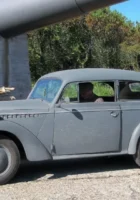
Opel Olympia

Opel Olympia

PaeseGermania
digitareAuto
Produzione1935–1970
CostruitoInconsapevole

Le Opel Olympia is a compact car produced by the German automaker Opel from 1935 to 1940, from 1947 to 1953 and again from 1967 to 1970. The 1935 Olympia was Germany’s first mass-produced car with an all-steel unitized body (monocoque). This revolutionary technology reduced the weight of the car by 180 kilograms (400 lb.) compared to its predecessor. Production of the unibody design required new production methods and materials. Spot welding, advanced types of steel, and a new production line layout were among the many advances introduced by the Olympia.

fonte: Opel Olympia su Wikipedia

Continua a leggere

Punti di vista: 1986

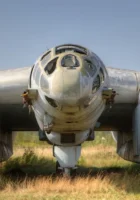
Bartini Beriev VVA-14

Bartini Beriev VVA-14

PaeseUnione Sovietica
digitareAerei anfibi ASW
Primo volo4 settembre 1972
Costruito2

Le Bartini Beriev VVA-14 Vertikaľno-Vzletayushchaya Amfibiya (aereo anfibio a decollo verticale) era un aereo ad effetto ala-in-terra sviluppato in Unione Sovietica durante i primi anni 1970. Progettato per essere in grado di decollare dall'acqua e volare ad alta velocità su lunghe distanze, doveva fare veri voli ad alta quota, ma anche avere la capacità di volare in modo efficiente appena sopra la superficie del mare, utilizzando l'effetto suolo aerodinamico. Il VVA-14 è stato progettato dal designer italiano Robert Bartini in risposta a un requisito percepito di distruggere i sottomarini missilistici Polaris della Marina degli Stati Uniti. L'ultimo aereo fu ritirato nel 1987.

fonte: Bartini Beriev VVA-14 su Wiki

Continua a leggere

Visualizzazioni : 3890

Ekranoplan di classe Lun

Ekranoplan di classe Lun

PaeseUnione Sovietica
RuoloVeicolo ad effetto suolo di attacco/trasporto
In servizio 1987–fine anni 1990
Costruito2

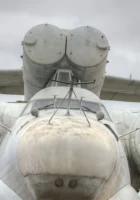
Le Ekranoplan di classe Lun (also called Project 903) is a ground effect vehicle (GEV) designed by Rostislav Alexeyev in 1975 and used by the Soviet and Russian navies from 1987 until sometime in the late 1990s. It flew using lift generated by the ground effect acting on its large wings when within about four metres (13 ft) above the surface of the water. Although they might look similar to traditional aircraft, ekranoplans like the Lun are not classified as aircraft, seaplanes, hovercraft, or hydrofoils. Rather, crafts like the Lun-class ekranoplan are classified as maritime ships by the International Maritime Organization due to their use of the ground effect, in which the craft glides just above the surface of the water.

fonte: Lun-class ekranoplan su Wikipedia

Continua a leggere

Punti di vista: 2187

Howitzer da 3,7 pollici

QF 3.7-inch howitzer

PaeseRegno unito
RuoloCannone da montagna
In servizio1917–Presente
CostruitoInconsapevole

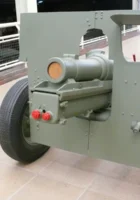
Ordnance, obice QF da 3,7 pollici è un cannone da montagna, utilizzato dagli eserciti britannici e del Commonwealth nella prima e nella seconda guerra mondiale e tra le due guerre.

fonte: Obice QF da 3,7 pollici su Wikipedia

Continua a leggere

Visualizzazioni : 1774

Corto Sunderland ML814

Short Sunderland

PaeseRegno unito
RuoloBombardiere militare in idrovolante
Primo voloIl 16 ottobre 1937
Costruito749

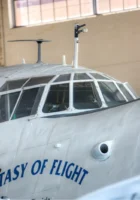
Le Corto S.25 Sunderland was a British flying boat patrol bomber, developed and constructed by Short Brothers for the Royal Air Force (RAF). The aircraft took its service name from the town (latterly, city) and port of Sunderland in North East England. Developed in parallel with the civilian S.23 Empire flying boat, the flagship of Imperial Airways, the Sunderland was developed specifically to conform to the requirements of British Air Ministry Specification R.2/33 for a long-range patrol/reconnaissance flying boat to serve with the Royal Air Force (RAF). As designed, it served as a successor to the earlier Short Sarafand flying boat. Sharing several similarities with the S.23, it featured a more advanced aerodynamic hull and was outfitted with various offensive and defensive armaments, including machine gun turrets, bombs, aerial mines, and depth charges. The Sunderland was powered by four Bristol Pegasus XVIII radial engines and was outfitted with various detection equipment to aid combat operations, including the Leigh searchlight, the ASV Mark II and ASV Mark III radar units, and an astrodome.

fonte: Breve Sunderland su Wikipedia

Continua a leggere

Visualizzazioni : 1410

Boeing X-32 (Prototipo)

Boeing X-32

PaeseUsa
RuoloConcept demonstrator aircraft
Primo volo18 settembre 2000
Costruito2

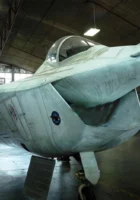
Le Boeing X-32 è un velivolo dimostratore concettuale progettato per la competizione Joint Strike Fighter. Ha perso contro il dimostratore Lockheed Martin X-35, che è stato ulteriormente sviluppato nel Lockheed Martin F-35 Lightning II.

fonte: Boeing X-32 su Wikipedia

Continua a leggere

Visualizzazioni: 1624