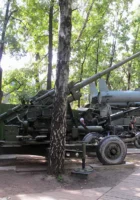
sovietico 100 mm KS-19

sovietico 100 mm KS-19

PaeseURSS
digitare

Pistola per la difesa aerea

Argomento

Album di 84 foto walk-around di un 100 millimetri KS-19

Cannone di difesa aerea da 100 mm KS-19 era un cannone antiaereo sovietico. Dopo la fine della seconda guerra mondiale, l'Unione Sovietica introdusse in servizio il KS-19 da 100 mm e il KS-30 da 130 mm.

fonte: Wikipedia>

Continua a leggere

Visualizzazioni : 2600

Dodge M37 Cargo 4x4

Dodge M37 Cargo 4×4

PaeseUsa
digitareCamion

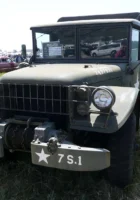
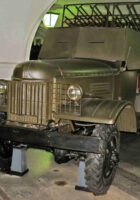
Galleria fotografica di una Dodge M37 Cargo, The Dodge M37 (G-741) era un camion a quattro ruote motrici da tre quarti di tonnellata. Ha sostituito i camion Dodge WC-51, WC-52 e WC-54 in servizio negli Stati Uniti ed è stato ampiamente utilizzato dalle forze armate degli Stati Uniti durante la guerra di Corea. Un certo numero di varianti sono state prodotte con configurazioni leggermente diverse: il camion comando M42, il veicolo di manutenzione telefonica V41, l'ambulanza M43, il camion utilitario chiuso M152 e l'autopompa antincendio R2.

fonte: Wikipedia

Continua a leggere

Visualizzazioni : 4536

SdKfz 7

Sd.Kfz. 7

PaeseGermania nazista
RuoloTrattore d'artiglieria a metà pista
Prodotto1938 – 1944
Costruito12187

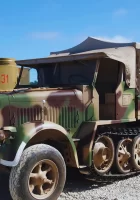
Le Sd.Kfz. 7 Il era un veicolo militare a metà pista utilizzato dalla Wehrmacht Heer tedesca, dalla Luftwaffe e dalle Waffen-SS durante la seconda guerra mondiale. Una designazione più lunga è Sd.Kfz. 7 mittlerer Zugkraftwagen 8t, "veicolo a motore di traino medio 8t".

fonte: SdKfz 7 su Wikipedia

Continua a leggere

Views : 6019

HMS INCROCIATORE DA BATTAGLIA HOOD - Forze al Valore 86002

Forze del Valore

Ref 86002
digitareBattlecruiser
Scala1/100
Argomento

HMS BATTLECRUISER HOOD

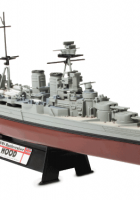
Un kit del brand Forze del Valore il kit : HMS BATTLECRUISER HOOD - Forze del Valore 86002.

HMS Hood (pennant number 51) was the last battlecruiser built for the Royal Navy. One of four Admiral-class battlecruisers ordered in mid-1916, her design – although drastically revised after the Battle of Jutland and improved while she was under construction – still had serious limitations. For this reason she was the only ship of her class to be completed. She was named after the 18th-century Admiral Samuel Hood

-Plastic and diecast metal construction. -Lower hull is metal. -Turrets rotate. -Guns elevate. -Comes with a display stand. -New packaging for 2012 no ties or screws, double blister construction.

fonte: HMS BATTLECRUISER HOOD on Forces of Valor

Continua a leggere

Visualizzazioni : 1232

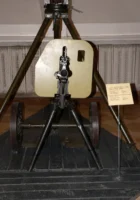
Mitragliatrice DS-39

Mitragliatrice DS-39

PaeseURSS
digitareMitragliatrice
Argomento

Album di 18 foto walk-around di un Mitragliatrice DS-39

La DS-39 era una mitragliatrice media sovietica, progettata da Vasily Degtyaryov, utilizzata durante la seconda guerra mondiale. Il lavoro sul design del cannone iniziò nel 1930 e fu accettato dall'Armata Rossa nel settembre 1939. Dal 1939 al 1941 ne furono prodotti circa 10.000 esemplari, ma l'arma non ebbe successo in servizio e la sua produzione fu interrotta dopo l'invasione tedesca del giugno 1941, con le fabbriche convertite per produrre le vecchie e più affidabili mitragliatrici russe M1910 Maxim.

fonte: Wikipedia

Continua a leggere

Visualizzazioni : 1483

BM-31 12 Katyusha

BM-31 12

PaeseURSS
digitareLanciarazzi Katyusha
Argomento

Album di 306 foto walk-around di un BM-31 12 Katyusha

Galleria fotografica di un lanciarazzi BM-31 12 Katyusha, Katyusha multiple rocket launchers are a type of rocket artillery first built and fielded by the Soviet Union in World War II. Multiple rocket launchers such as these deliver a devastating amount of explosives to a target area more quickly than conventional artillery, but with lower accuracy and requiring a longer time to reload. They are fragile compared to artillery guns, but are inexpensive and easy to produce. Katyushas of World War II, the first self-propelled artillery mass-produced by the Soviet Union, were usually mounted on trucks. This mobility gave the Katyusha (and other self-propelled artillery) another advantage: being able to deliver a large blow all at once, and then move before being located and attacked with counter-battery fire. Katyusha weapons of World War II included the BM-13 lanciatore, BM-8 leggero e pesante BM-31. Oggi, il soprannome è applicato anche ai più nuovi lanciarazzi sovietici montati su camion , in particolare il comune BM-21, e ai derivati.

fonte: Wikipedia

Continua a leggere

Visualizzazioni : 2484

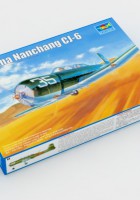
China Nanchang CJ-6 - Trombettista 02887

Trumpeter

Ref 02887
digitareKit modello
Scala1/48
Argomento

China Nanchang CJ-6

Un modello del marchio Trumpeter il kit: China Nanchang CJ-6 – Trumpeter 02887.

The kit consists of over 60 parts : – includes 4 clear parts – fuselage&wing with finely engraved panel lines

The Nanchang CJ-6 is an aircraft designed and built in China for use by the People’s Liberation Army Air Force (PLAAF) as a basic trainer. The CJ-6 is not a Chinese version of the Yakovlev Yak-18A. Power for the prototype was provided by a Czech-built horizontally-opposed piston engine, but flight testing revealed the need for more power, so a locally manufactured version of the Soviet AI-14P 260 hp radial, the Housai HS-6, was substituted along with a matching propeller, and with that change the CJ-6 was approved for mass production. A total production run estimated at more than 3,000 aircraft supplied CJ-6 aircraft for PLAAF training, as well as for export to countries including Albania, Bangladesh, Cambodia, North Korea, Tanzania, and Sri Lanka.

Source: Trumpeter
Continua a leggere

Visualizzazioni : 1091

Tedesco Pzkpfw.I Ausf.F (VK18.01)- In ritardo - HOBBY BOSS 83805

Hobby Boss

Argomento

Tedesco Pzkpfw.I Ausf.F (VK18.01)-Late

Scala1/35
Ref83805

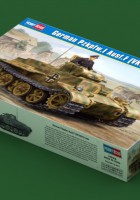
Un modello del marchio HobbyBoss il kit : German Pzkpfw.I Ausf.F (VK18.01)- Late – HOBBY BOSS 83805

Caratteristiche : the kit consists of over 290 parts – multi-directional slide molded lower hull w/fine detail – photo-etched parts included

Il secondo veicolo, l'Ausf F, era tanto diverso dall'Ausf C quanto dall'Ausf A e B. Inteso come carro armato di supporto alla fanteria, il Panzer I Ausf F aveva uno spessore massimo della corazza di 80 millimetri (3,15 pollici) e pesava tra 18 e 21 tonnellate. L'Ausf F era armato con due MG-34 da 7,92 millimetri. Trenta furono prodotti nel 1940 e un secondo ordine di 100 fu successivamente annullato. Per compensare l'aumento di peso, è stato utilizzato un nuovo motore Maybach HL45 Otto da 150 cavalli (110 kW), che consente una velocità massima su strada di 25 chilometri all'ora (15,5 mph). Otto dei trenta carri armati prodotti furono inviati alla 1ª Divisione Panzer nel 1943 e videro il combattimento nella battaglia di Kursk. Il resto è stato dato a diverse scuole dell'esercito per scopi di addestramento e valutazione.

fonte: Hobby Boss

Continua a leggere

Views : 2533

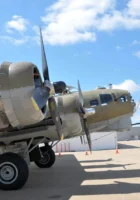
B-17 Fortezza Volante

B-17 Flying Fortress

PaeseUsa
RuoloBombardiere pesante
Prima moscaIl 2 settembre 1947
Costruito12731

Le Boeing B-17 Flying Fortress è un bombardiere pesante a quattro motori sviluppato negli anni '30 per lo United States Army Air Corps (USAAC). In competizione con Douglas e Martin per un contratto per la costruzione di 200 bombardieri, l'ingresso boeing (prototipo Model 299/XB-17) superò entrambi i concorrenti e superò le specifiche prestanti del corpo aereo. Anche se boeing perse il contratto (a favore del Douglas B-18 Bolo) perché il prototipo si schiantò, il corpo aereo ordinò altri 13 B-17 per ulteriori valutazioni. Dalla sua introduzione nel 1938, il B-17 Flying Fortress si è evoluto attraverso numerosi progressi di progettazione, diventando il terzo bombardiere più prodotto di tutti i tempi, dietro il B-24 e il multiruolo Ju 88.

fonte: Fortezza volante B-17 su Wikipedia

Continua a leggere

Visualizzazioni : 5932